Roosevelt Elk Herd Size in the Coast Range
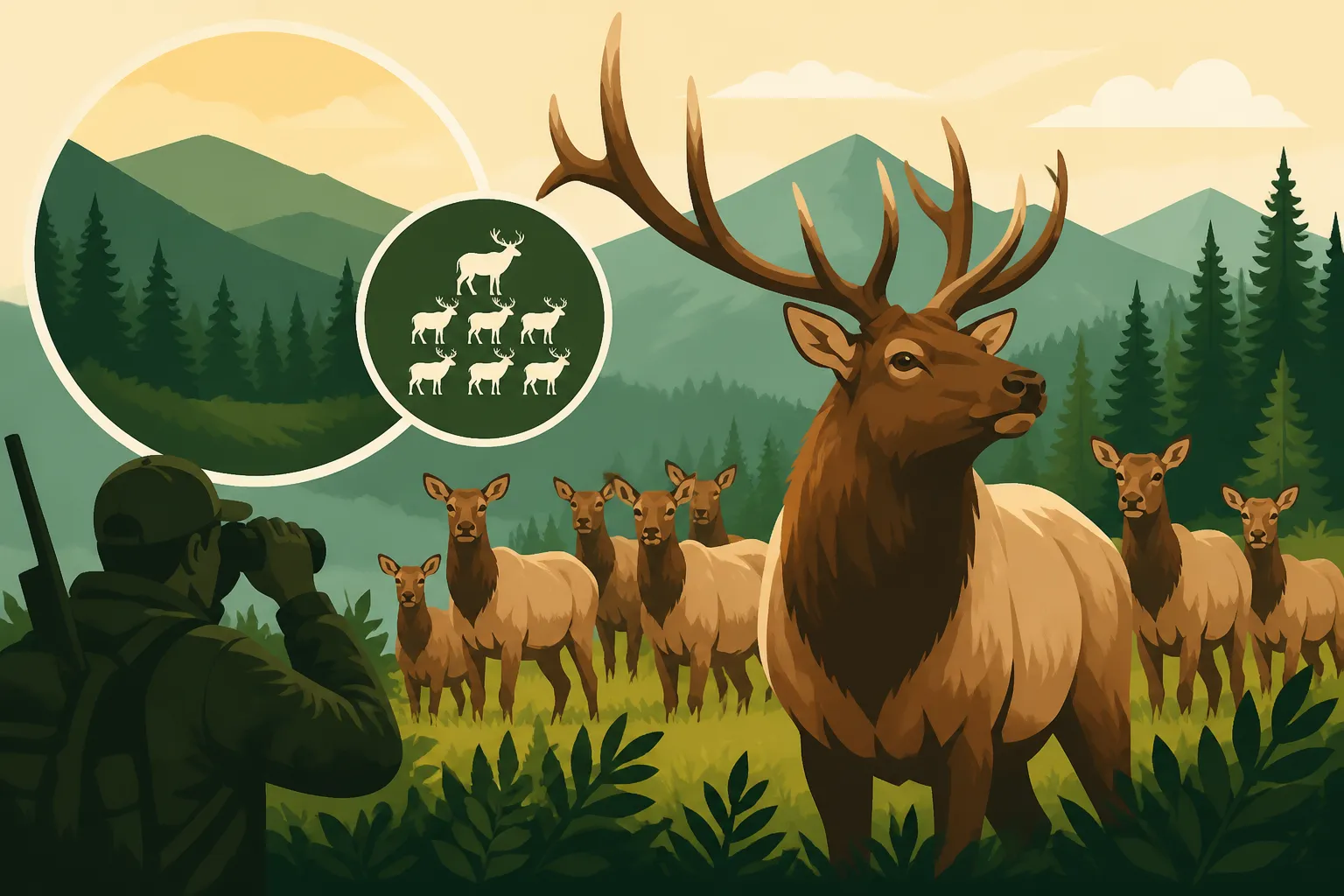
Hunting Roosevelt elk in Oregon's Coast Range can feel like searching for a ghost in a dense, green maze. You know they're there, but understanding their numbers, where they're concentrated, and what factors truly influence those populations across the vast, wet timber of Western Oregon is a constant challenge for even the most seasoned hunter. This guide will dive deep into the specific dynamics of Roosevelt elk herd size in the Coast Range, helping you decipher the complexities and better understand the magnificent animals you pursue.
Understanding Roosevelt Elk Populations in the Oregon Coast Range
Oregon's Coast Range is an iconic home for Roosevelt elk, offering a very different hunting experience than the open country of Eastern Oregon. These giants thrive in the thick, often steep, and perpetually damp forests, presenting unique challenges and rewards for hunters. When we talk about Roosevelt Elk in Western Oregon, we're talking about an animal deeply tied to this specific ecosystem, and their population dynamics are a direct reflection of it.
The Unique Habitat of Coast Range Roosevelt Elk
The Coast Range is characterized by its incredibly dense timber, abundant rainfall, and a mosaic of clearcuts, older growth, and riparian zones. This isn't the vast sagebrush and juniper country where you might spot a herd from miles away with your binoculars. Here, the elk are masters of cover, using the dense vegetation to their advantage for feeding, bedding, and escaping pressure. The sheer amount of food—from salal and huckleberry to various grasses and forbs—means that if conditions are right, elk can find sustenance in a relatively small area, making them harder to locate. This constant hiding also influences how we perceive their numbers; just because you don't see them doesn't mean they aren't there in robust numbers.
The topography itself plays a huge role. Steep canyons, tangled drainages, and brush so thick you can barely push through it define much of the Coast Range. This environment naturally concentrates elk in certain areas while making others nearly impenetrable. Hunters often find themselves working clearcut edges or creek bottoms, knowing that the animals are just a few yards into the seemingly impenetrable "dog hair" thickets. This natural cover provides a sanctuary, often leading to very localized pockets of higher elk density within larger, seemingly uniform forest blocks.
Moreover, timber practices—both public and private—continually shape the habitat. New clearcuts open up fresh browse and forage, attracting elk, while replanted areas, once they grow to a certain height, become excellent bedding and security cover. The challenge is that these changes are always ongoing, meaning a hot spot one year might be a dense, unhuntable stand of saplings the next. Hunters need to stay incredibly adaptable, always scouting new areas and understanding how the forest changes over time to predict elk movement and concentrations.
How Herd Size is Estimated in Dense Timber
Counting elk in an environment as dense and vast as the Coast Range is a monumental task. Unlike the wide-open spaces of Eastern Oregon where aerial surveys can be highly effective, trying to get an accurate visual count of Roosevelt elk from a helicopter in thick coastal timber is almost impossible. The canopy cover, combined with the elk's natural camouflage and secretive nature, means direct observation is very limited. This leads to unique methods for estimating herd size and population trends.
Wildlife biologists often rely on a combination of indirect methods. This includes pellet group counts, which track the accumulation of elk droppings over time in specific study plots. While not a direct count of animals, it provides an index of usage and relative abundance. They also use trail cameras, although deploying and monitoring them across such vast and rugged terrain is resource-intensive. Scouting With Trail Cameras on Oregon Public Land can offer insights into local animal activity, but scaling that to an entire unit is a different beast altogether.
Harvest data from hunters is another critical piece of the puzzle. When hunters report their success, including the unit and sex of the animal, it provides valuable information on herd health and distribution. This is why Oregon Mandatory Harvest Reporting and the $25 Penalty is so important; every bit of data helps wildlife managers piece together a picture of the overall population. However, even with harvest data, it's an estimate, as it doesn't account for all animals or their exact distribution. Understanding these limitations helps us appreciate that official herd size numbers are usually best interpreted as trends rather than absolute, precise figures.
Factors Influencing Roosevelt Elk Herd Dynamics
The health and size of Roosevelt elk herds in the Coast Range are never static. They are constantly fluctuating, driven by a complex interplay of environmental factors, predation, and human influence. Recognizing these influences can help hunters better predict elk behavior and understand why some areas might hold more animals than others in a given year.
Habitat Quality and Carrying Capacity
The availability and quality of forage and cover are paramount to supporting a robust elk population. In the Coast Range, this means a balance of nutritious browse in clearcuts and openings, alongside secure bedding and thermal cover in mature timber. When there's a good mix, herds tend to thrive. However, factors like extensive clearcutting without adequate replanting, or conversely, areas that have grown into dense, uniform young timber, can reduce overall habitat quality. Elk need both food and security, and when either is lacking, herd health can suffer.
Water is rarely a limiting factor in the wet Coast Range, but accessible minerals and specific forage types at different times of the year are crucial. Overgrazing can occur in localized areas if too many elk concentrate there, leading to a decline in future forage quality. Conversely, a series of mild winters with good forage production can lead to higher Elk Calf Survival and Predation in Oregon rates, boosting the herd. It’s a delicate balance that Mother Nature is always adjusting.
Disease can also impact carrying capacity. While less common in wild elk than in domestic animals, certain pathogens can spread through dense populations, particularly if animals are stressed by poor habitat or harsh conditions. Monitoring these factors is part of wildlife management, aiming to keep populations healthy and within the carrying capacity of their habitat. This dynamic interaction between elk and their environment means that herd size isn't just about how many animals are born, but how many the land can sustainably support.
Predation and Environmental Pressures
Predators play a natural and essential role in regulating elk populations. In the Coast Range, cougars and bears are the primary predators of elk, especially calves. Cougars are particularly effective ambush predators, and their populations, influenced by factors like the Cougars in Oregon After the Hound Ban, directly impact calf recruitment. While predation is a natural process, an imbalance can sometimes suppress herd growth, particularly in areas where elk habitat is fragmented or compromised.
Environmental pressures beyond predation also weigh heavily. Harsh winters, though less severe in the Coast Range than in Eastern Oregon, can still take a toll on calves and older animals, especially if prolonged or combined with poor forage. Major windstorms can create significant blowdown, altering travel routes and bedding areas for elk for years. Wildfires, while often opening up new forage eventually, can initially displace herds and degrade immediate habitat.
Ultimately, Roosevelt elk are incredibly resilient, but they are still susceptible to these natural forces. Understanding these pressures helps explain why herd sizes might fluctuate in specific Oregon's Wildlife Management Units and New Hunt Areas and why some years might offer better hunting prospects than others. Hunters often try to incorporate this understanding into their Public Land Scouting in Oregon Before the Draw Results, looking for areas less impacted by severe environmental events or where predator sign is less abundant, indicating a potentially healthier elk population.
Hunting Pressure and Management Strategies
Hunting is a vital management tool used to maintain healthy elk populations, balance herd numbers with available habitat, and distribute animals. The number of tags issued for both general season and controlled hunts in the Coast Range is carefully calculated by wildlife biologists based on their population estimates and management objectives. If a herd is below its objective, tag numbers might be reduced; if it's robust, more opportunities might be offered. This careful calibration ensures sustainable hunting and healthy herds for the long term.
Oregon General Season Versus Controlled Hunt Tags offer different levels of opportunity and impact on the herd. General season hunts, typically with over-the-counter tags, allow broader participation but may not target specific population segments as precisely as controlled hunts. Controlled hunts often have much fewer tags, require points to draw, and can be used to manage bull-to-cow ratios or target specific age classes of animals more effectively. These controlled hunts often focus on Oregon Roosevelt Elk Rifle Seasons in November or specific archery opportunities.
Hunter access also plays a significant role in where hunting pressure is concentrated. Areas with easy road access, especially on public lands or easily accessible industrial timberlands, tend to see higher hunter densities. Conversely, remote, rugged wilderness areas or private timber lands with restricted access can act as de facto refuges, allowing elk to grow older and larger. This creates a fascinating dynamic where herd size might appear smaller in easily accessible areas due to high harvest, while deeper in the backcountry, the animals could be thriving, but are simply harder to reach. When considering a hunt, tools like GoHunt can sometimes provide maps and data overlays that help identify public and private land boundaries, which is crucial for understanding access and potential pressure.
Interpreting Herd Size Data for Your Hunt
Understanding raw herd size numbers is one thing, but translating that information into actionable hunting strategy is where the real work begins. It’s not just about the biggest number on a report; it’s about what that number means for the specific unit you’re planning to hunt.
Official ODFW Population Reports
The Oregon Department of Fish and Wildlife (ODFW) publishes annual or biennial big game statistics reports, which include population estimates for Roosevelt elk in various management units. These reports are the primary source of official herd size data. They often break down numbers by region or specific unit, and critically, include data on bull-to-cow ratios and calf recruitment. A healthy bull-to-cow ratio (indicating good breeding potential) and strong calf recruitment (meaning more young animals are surviving) are often better indicators of a thriving population than just a total count.
However, interpreting these reports requires a critical eye. As discussed, the density of the Coast Range makes precise counts difficult, so these figures are often estimates based on modeling and trend data. A slight dip in one year's report might not signal a crisis, but a consistent downward trend over several years could indicate deeper issues. Conversely, a stable or increasing trend suggests robust populations. Many hunters use resources like these reports in conjunction with mapping tools like GoHunt to cross-reference population data with specific unit boundaries and terrain features, looking for high-potential areas.
Another crucial element to look for in ODFW reports is the "management objective." This tells you what ODFW wants the population to be for a given unit. If the current estimate is significantly below objective, it's likely they are managing for herd growth, possibly with reduced tag numbers. If the population is at or above objective, more tags might be available, indicating a healthy, huntable surplus. This context is vital for understanding why certain tag numbers are set as they are and what the long-term outlook for a unit might be.
Trends in Bull-to-Cow Ratios and Calf Recruitment
Beyond the total number of elk, paying close attention to the bull-to-cow ratio and calf recruitment rates provides a more nuanced picture of herd health and hunting potential. The bull-to-cow ratio tells you how many bulls are available per 100 cows. A healthy ratio ensures successful breeding and also provides opportunities for hunters to pursue mature bulls. A very low bull-to-cow ratio might suggest high hunting pressure on bulls, or poor survival, and could impact the quality of hunting in future years.
Calf recruitment, expressed as calves per 100 cows, is a direct measure of reproductive success and calf survival. High recruitment means the herd is successfully replacing itself and potentially growing. Low recruitment can be a red flag, indicating issues with predation, habitat quality, or disease. For a hunter, understanding these trends can influence tactics; a unit with strong calf recruitment might have more younger animals available, while a unit with good bull-to-cow ratios might offer better chances at a mature animal, albeit with often tougher drawing odds if it's a controlled hunt.
These trends are often more reliable indicators than a single year's total population estimate, especially in dense Coast Range terrain. A consistent pattern of good calf recruitment and a balanced bull-to-cow ratio over several years suggests a resilient and thriving herd, regardless of the exact raw numbers. This is where E-Scouting Oregon Units With Satellite Imagery combined with historical ODFW data, can help you identify areas with consistent elk presence and healthy demographics over time, informing your choice of where to apply for an Oregon Controlled Hunt Draw Explained.
| Factor Influencing Herd Size | Impact on Elk Population | Hunter Takeaway |
|---|---|---|
| Habitat Quality | Forage availability, cover for bedding/security. | Look for diverse habitat: clearcuts adjacent to dense timber. Avoid monocultures. |
| Predation | Calf survival, overall population control. | Areas with high predator presence might have lower calf recruitment; mature bulls may be more prevalent where calves are scarce. |
| Environmental Pressures | Winter severity, disease, wildfires, windstorms. | Research recent events in your chosen unit. Elk behavior shifts after major disturbances. |
| Hunting Pressure | Harvest rates, distribution of remaining animals. | Accessible areas may have fewer visible elk. Consider Oregon Coast Range Hunting Access into less-pressured zones. |
| Bull:Cow Ratio | Breeding success, quality of bull hunting. | Higher ratios suggest better trophy potential. Look for units managed for quality. |
| Calf Recruitment | Herd growth, future population health. | High recruitment means more young elk, indicating a robust, growing population. |
Practical Hunting Considerations Based on Herd Dynamics
Knowing the intricacies of Roosevelt elk herd sizes in the Coast Range isn't just academic; it directly translates into more effective hunting strategies. From where you choose to hunt to how you approach your calling, understanding these dynamics makes you a more informed and, hopefully, more successful hunter.
Choosing Your Hunting Unit Wisely
The first and most critical decision often hinges on which unit you decide to hunt, especially when considering Oregon Controlled Hunt Draw Explained. Herd size, along with bull-to-cow ratios and calf recruitment, should be a major factor in this choice. A unit with a high overall population estimate might seem attractive, but if it has a low bull-to-cow ratio, your chances of finding a mature bull might be slim. Conversely, a unit with a smaller overall population but a healthy bull-to-cow ratio could offer better quality hunting, even if the draw odds are tougher.
Consider the specifics of Oregon's Wildlife Management Units and New Hunt Areas and how habitat is distributed within them. Some units might have excellent pockets of habitat but be surrounded by less desirable areas, leading to concentrated elk. Using mapping tools like those from GoHunt or other robust GIS platforms to overlay habitat types, road systems, and wilderness boundaries can help you pinpoint these prime locations. A unit's proximity to private timberlands with limited access, for example, can often act as a sanctuary, causing elk to spill over into adjacent public lands during hunting season.
Don't forget the impact of hunter density. Even if a unit has great elk numbers, if it's heavily pressured, the elk will be incredibly wary and difficult to hunt. Sometimes choosing a unit with slightly lower overall numbers but significantly tougher terrain or more limited access can lead to a more rewarding experience, as the elk are less disturbed. This often means embracing the challenge of Packing Out an Elk in Oregon's Wilderness Units or Multi-Day Camps in Oregon's Roadless Country.
Adapting Hunting Tactics to Population Realities
The local herd dynamics should heavily influence your actual hunting tactics. If you're in an area with a high density of elk, but they are incredibly spooky due to pressure, Still-Hunting Blacktails in Wet Oregon Coastal Brush techniques, adapted for elk, might be more effective than aggressive calling. Moving slowly, silently, and paying meticulous attention to wind direction becomes paramount. These elk are listening, watching, and smelling for any sign of danger.
In contrast, if you're in a unit with a good bull-to-cow ratio and strong rut activity, Calling Roosevelt Elk in Oregon Rainforest Timber can be incredibly effective. Roosevelt bulls are known for their responsiveness, especially during the peak of the rut. Understanding Best Bugle Sequence for Early September Elk and how Cow Calls That Pull a Herd Bull Off His Cows can be powerful tools. However, if the herd is dispersed and not particularly vocal, or if the season is past the peak rut, spending too much time calling might be a wasted effort, and you'd be better off covering ground.
Even Rifle Choice for Oregon Elk and Deer can be influenced. In dense Coast Range timber where shots are often close and quick, a faster-handling rifle with reliable stopping power might be preferred over a long-range setup. Knowing the realistic shot opportunities based on terrain and elk behavior—which is tied to their density and wariness—is key. Ultimately, tailoring your approach to the specific behaviors and patterns of the elk in your chosen unit, which are shaped by population realities, will give you the best chance at success.
Disclaimer
This article is for general informational purposes only and does not constitute professional advice. Laws, prices and regulations vary by location and change over time. Consult a qualified professional for guidance on your specific situation.