How Fast a Pronghorn Runs
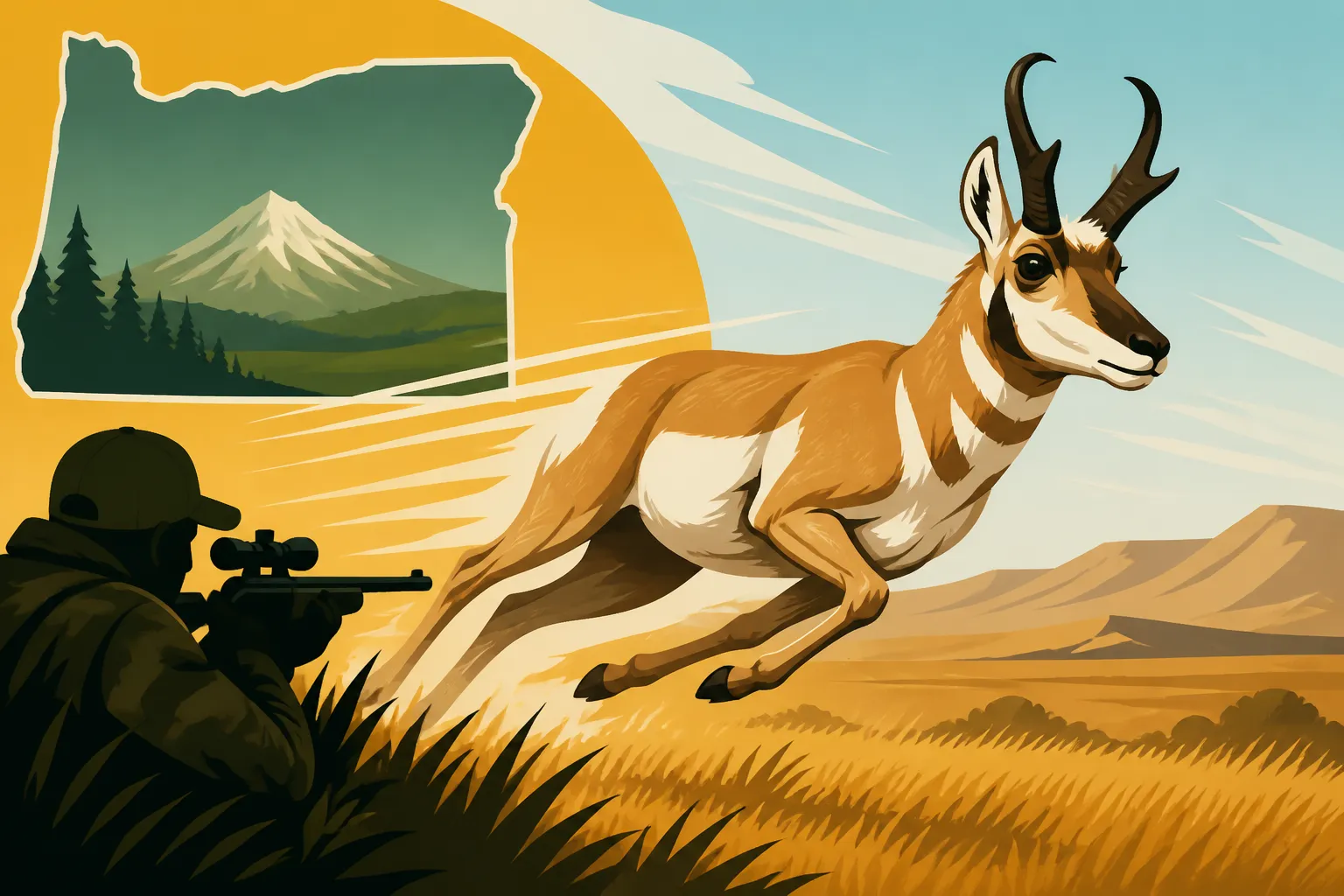
Many hunters who venture into Oregon's high desert country have experienced the sheer frustration and awe of watching a pronghorn seemingly evaporate across vast, open flats. One minute they're there, a distinct figure against the horizon, and the next they're a mere speck, leaving you wondering how anything could move so incredibly fast. This guide will take a deep dive into the incredible speed of the pronghorn, exploring what makes them such swift creatures, how that speed plays out in the wild, and what it means for hunters trying to outsmart them.
The Anatomy of Speed: What Makes a Pronghorn So Unbelievably Fast?
When you see a pronghorn bolt, it's not just a quick burst; it's an explosion of coordinated biological design. These aren't just fast animals; they are perhaps the most specifically evolved speed demons in North America, perfectly adapted for survival on wide-open plains where there's nowhere to hide from a predator. Understanding their physiological marvels really helps you appreciate their capabilities.
Unique Physiological Adaptations for High Performance
A pronghorn's body is a finely tuned machine, built from the ground up for running. Their respiratory and circulatory systems are nothing short of remarkable. They have disproportionately large lungs and a massive heart for their body size, allowing them to take in and process oxygen at an incredible rate. Think of them as natural-born athletes with supercharged engines. Their trachea is also much wider than you'd expect, further enhancing airflow. All these factors contribute to their phenomenal aerobic capacity, which is essential for sustained speed.
Beyond their internal organs, their skeletal and muscular structure is also specialized. Their legs are long and slender, designed for maximum stride length. The hooves are cushioned and provide excellent traction on varied terrain, though they truly excel on firm ground. What's more, their flexible spine acts like a spring, compressing and extending with each stride, much like a cheetah's, giving them extra propulsion. This combination of powerful muscles and a spring-like spine allows them to cover an astonishing amount of ground with each bound, maintaining a fluid, almost floating motion even at high speeds.
Endurance Versus Sprinting: The Pronghorn's Superpower
While animals like the cheetah might have a higher top-end sprint speed over very short distances, the pronghorn's true superpower lies in its endurance at high speeds. They can maintain blistering paces for several miles, literally running predators into the ground. A cheetah can sprint over 70 miles per hour, but only for very short bursts. A pronghorn, on the other hand, can cruise at 35-40 mph for sustained periods, and hit bursts well over 50 mph when truly pushed. This distinction is critical because it explains why simply "catching up" to a spooked pronghorn is often a fool's errand. They aren't just fast; they're incredibly efficient at being fast for a long time. This evolutionary advantage developed to escape ancient predators like the American cheetah, which are now extinct. Even without those specific threats, this adaptation has made them incredibly adept at surviving on the vast, open landscapes of the West, including Oregon's high desert. This also impacts how they handle things like fences; while they can clear some obstacles, their primary strategy is to run around or under rather than jump high like a deer, a testament to their flat-ground adaptations. Why Antelope Do Not Jump Fences delves deeper into this fascinating behavioral trait.
Pronghorn Speed in Action: Real-World Scenarios and Hunter Implications
Knowing how they're built for speed is one thing, but seeing it in action and understanding its implications for hunting is another. When you're out in the sagebrush, the pronghorn's speed isn't just a theoretical number; it's a dynamic force that dictates strategy and demands respect.
Maximum Recorded Speeds and Sustained Running
It's widely accepted that pronghorn can reach speeds of over 55 miles per hour, with some estimates even higher, putting them in contention for the fastest land animal in North America. Imagine seeing a blur of tan and white crossing the flats at highway speeds! What's even more impressive is their ability to maintain speeds in the 30-40 mph range for extended distances. This isn't just a quick dash; it's a sustained, high-octane evasion tactic. When a predator, or a hunter, puts pressure on them, they often kick into high gear, cover a mile or two in minutes, and then slow to a fast trot, constantly scanning for threats.
This behavior makes them incredibly challenging to hunt, especially if you try to push them. Their escape strategy often involves running several miles, then stopping at a safe distance to look back, using their incredible eyesight to spot what spooked them. They are always using that speed to create distance and evaluate the threat. You might get one burst out of them, but they'll often be so far away by the time they stop that another stalk becomes incredibly difficult, or they simply disappear over the next rise.
The Hunter's Challenge: Adapting to Their Speed
For the hunter, the pronghorn's speed presents a unique challenge. You can't just walk up on them, and a direct chase is almost always futile. Their speed is coupled with exceptional eyesight – often compared to a 10x binocular – making them notoriously difficult to approach. Pronghorn Speed, Eyesight and Behaviour covers this in more detail. This combination means you need to re-think your typical big game hunting tactics. Spot-and-stalk becomes an art form of using topography, wind, and patience.
Here's a small table comparing their speed to other common Oregon game species:
| Species | Top Sprint Speed (approx. mph) | Sustained Speed (approx. mph) | Primary Evasion Tactic |
|---|---|---|---|
| Pronghorn | 55+ | 30-40 | Long-distance running, open plains |
| Mule Deer | 45 | 15-20 | Bounding, quick bursts, broken ground |
| Elk | 35 | 10-15 | Crashing through cover, power |
| Blacktail Deer | 30 | 8-12 | Sneaking, hiding in dense brush |
| Black Bear | 35 | 10-15 | Power bursts, climbing, thick cover |
As you can see, the pronghorn is in a league of its own for sustained speed. This means success often comes down to advanced scouting and strategic positioning before the hunt even begins. Digital tools like GoHunt can be invaluable here, helping you analyze terrain features, identify potential travel corridors, and mark glassing points long before you set foot in the field. By understanding their speed, you can anticipate their movements and position yourself for an ethical shot rather than attempting a futile chase.
Environmental Factors and Limitations: When Speed Isn't Everything
While pronghorn are built for speed, even the fastest animal on the prairie isn't invincible. Environmental factors and the specific terrain of Oregon's high desert can sometimes mitigate their incredible velocity, presenting opportunities for the savvy hunter who understands these nuances.
Terrain Influence and Obstacles
Pronghorn are masters of the wide-open, relatively flat plains. Their long strides and powerful leg drive are most effective on firm, unobstructed ground. Introduce steep, rocky terrain, dense juniper thickets, or deep draws, and their top speed definitely decreases. They can navigate these areas, of course, but not with the same blistering pace as across an open alkali flat. This is where a hunter can potentially capitalize. If you can push a pronghorn into rougher country or use the terrain to break up their line of sight, you might gain an advantage. They tend to stick to the paths of least resistance, which are often the gentlest slopes and open lanes between cover. Oregon Pronghorn Range and Numbers shows just how much of their habitat is characterized by these open, flat expanses.
Fences are another interesting limitation. Unlike deer, which are exceptional jumpers, pronghorn prefer to go under or through fences rather than over. Their high-speed, long-stride running style isn't designed for vertical clearance. This behavioral quirk means that if a fence is too high or too tight to crawl under, it can actually funnel them into specific openings or force them to travel along the fence line, potentially presenting a shot opportunity. This is a unique consideration when hunting areas with extensive ranching or public land interspersed with private parcels.
Environmental Stressors and Their Impact
Even pronghorn, with their incredible physiology, are affected by environmental stressors. Extreme heat, prolonged drought, or deep, crusted snow can influence their behavior and, to some extent, their ability to maintain peak performance. In very dry conditions, for example, they might spend more time near sparse water sources, which can be identified through diligent scouting, perhaps using a platform like GoHunt to mark potential water points visible on satellite imagery. Water Sources That Hold Deer in Dry Country is a good read for understanding how different species rely on these vital resources.
While they are incredibly resilient, a pronghorn that has been pushed hard in extreme heat or has been struggling through heavy snow might not maintain its top-end speed for as long as one in ideal conditions. Their energy reserves will be depleted faster. However, it's important not to underestimate them; even a slightly fatigued pronghorn is still remarkably fast. These factors don't make them slow, but they might slightly alter the duration or pattern of their high-speed evasion, giving a hunter a tiny window of opportunity. Furthermore, their fawn survival rates can be impacted in harsh years, showcasing how even the fittest animals face environmental pressures. Pronghorn Fawn Survival in Dry Years dives deeper into how climate affects their populations.
Observing and Adapting: Using Speed to Your Advantage as a Hunter
Understanding the pronghorn's speed isn't just about admiring it; it's about learning to work with it, not against it. As a hunter in Oregon's high desert, your success hinges on strategic thinking, patience, and leveraging their behavior rather than trying to beat them in a footrace.
The Power of Glassing and Patience
Given their incredible eyesight and speed, trying to blindly walk around in pronghorn country is usually a recipe for busted stalks. The most effective approach is to become a master of glassing. This involves finding a good vantage point, often at first light or last light, and systematically scanning the landscape with high-quality binoculars or a spotting scope. Glassing Sage and Juniper for Eastern Oregon Mule Deer offers excellent advice that applies directly to pronghorn hunting. You're looking for that tell-tale flash of white, a distinct outline, or even just movement in the vastness.
Patience is paramount. You might spend hours behind glass before spotting a promising animal. Once you do, resist the urge to immediately move. Observe the pronghorn's patterns: where are they feeding? What's their direction of travel? Are there other animals with them? Are they heading towards water or bedding down? This careful observation helps you understand their rhythm and predict their next move, which is far more effective than reacting to a sudden bolt. Using a tool like GoHunt can help you mark your glassing points and potential travel routes, helping you build a comprehensive plan.
Predicting Movement and Planning Your Stalk
Knowing a pronghorn can cover ground at an astonishing rate means you need to think several steps ahead. If you spook one, it's likely to run a long distance, often stopping on the next prominent ridge to look back. Your goal shouldn't be to intercept them during their initial sprint, but to anticipate where they will go and position yourself there, or to use terrain features to cut them off.
Successful pronghorn stalks often involve long, circuitous routes that keep you out of sight, sometimes adding miles to your walk to cover just a few hundred yards on the animal. You'll use every dip, every rise, every juniper bush, and every rock outcropping as cover. Think about the wind, too; while their eyesight is phenomenal, their nose is also keen. Once you've identified a target and a stalk route, commit to it, moving slowly and deliberately. This meticulous planning is where digital scouting platforms really shine, allowing you to pre-plan potential routes and backup positions. E-Scouting Oregon Units With Satellite Imagery provides excellent strategies for this kind of planning.
When you do get within range, often the shot will be at a considerable distance due to their wary nature and the open country. Practicing with your rifle at longer ranges and understanding your ballistic data, possibly aided by a rangefinder in steep country, is crucial. Rangefinders in Steep Country emphasizes the importance of accurate distance measurement, especially when factoring in the speed and alertness of your quarry. The ultimate goal is to get as close as possible without being detected, allowing for an ethical and clean shot, rather than relying on speed to compensate for poor planning.
Disclaimer
This article is for general informational purposes only and does not constitute professional advice. Laws, prices and regulations vary by location and change over time. Consult a qualified professional for guidance on your specific situation.