Pronghorn Horn Growth and Shedding
One of the most common misunderstandings in the world of big game hunting revolves around pronghorn and what exactly is on top of their heads. Many folks mistakenly call them antlers, confusing them with deer or elk, but the truth is far more unique and fascinating. This guide aims to clear up that confusion, diving deep into the incredible cycle of pronghorn horn growth and their annual shedding process, giving you a better understanding of these amazing animals that roam Oregon's high desert.
The Unique Nature of Pronghorn "Horns"
Let's get this straight right from the start: pronghorn have horns, not antlers. This might sound like splitting hairs, but it's a fundamental biological difference that sets them apart from the deer, elk, and moose we often hunt. Antlers, like those on a mule deer or a Rocky Mountain elk, are solid bone and are shed and regrown entirely each year. Horns, typically found on animals like bighorn sheep or mountain goats, are permanent bony cores covered by a keratinous sheath that grows continuously throughout the animal's life. Pronghorn, however, are a marvelous blend of both, or perhaps, a category all their own.
Distinguishing Horns from Antlers
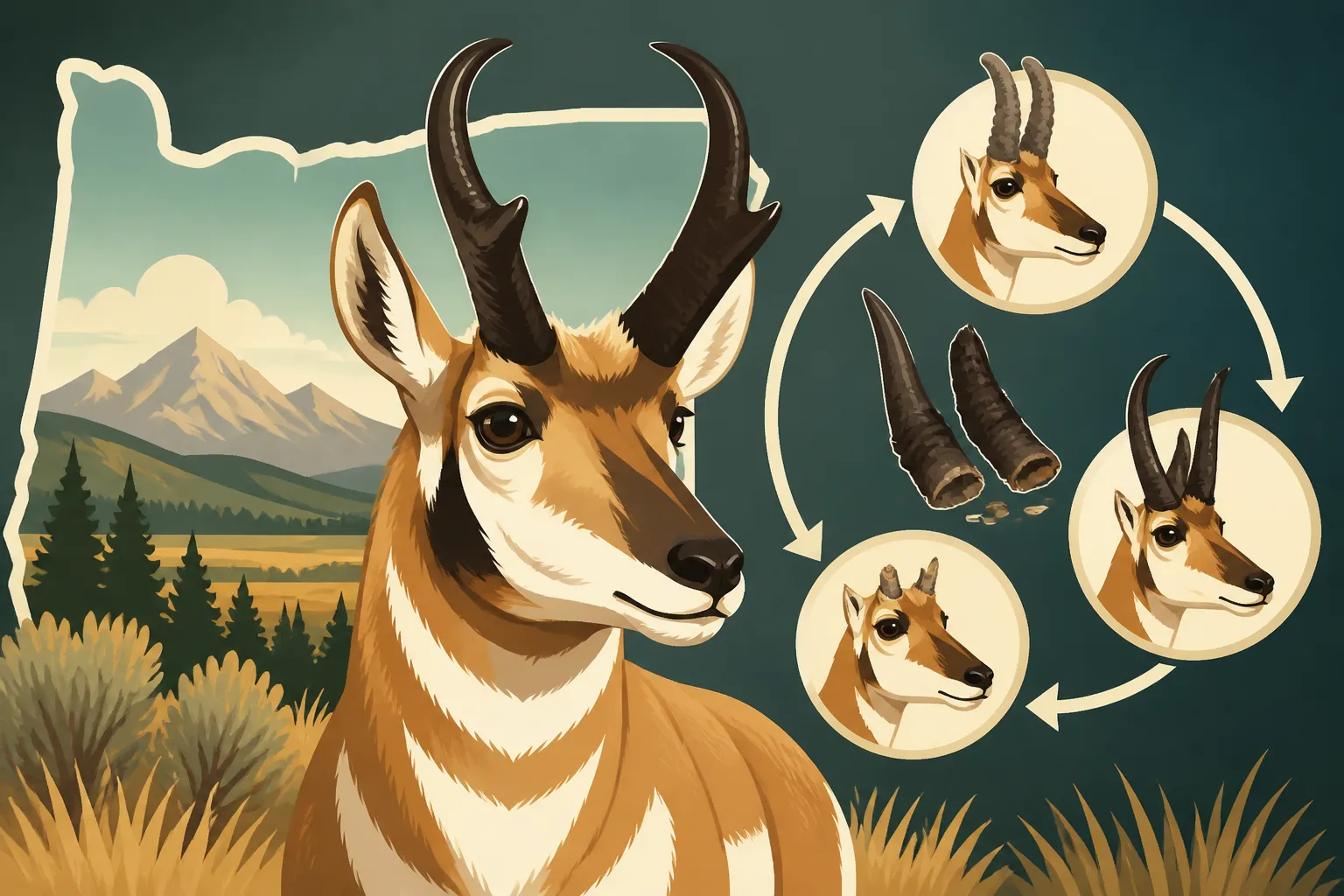
The key to understanding pronghorn is that their "horns" are actually a bony core covered by a keratinous sheath, much like true horns. However, unlike true horns that are permanent, the pronghorn sheds this outer keratin sheath annually. This is where the confusion often arises. Hunters see them drop a part of their headgear and assume it's an antler. But if you were to pick up a shed pronghorn horn, you'd find it's a hollow, fibrous sheath, not a solid piece of bone. This combination of a permanent bony core and a deciduous keratin sheath is what makes pronghorn horns truly unique in the animal kingdom. They're often referred to as "horn-antlers" or "pseudo-antlers" by scientists, but for us, it's simpler to remember they're horns with a twist. The permanent bony pedicel from which they grow remains attached to the skull, continuing to support the new growth year after year.
Structure of a Pronghorn Horn
When you look closely at a pronghorn horn, you'll notice its distinct shape and texture. The bony core that remains attached to the skull provides the structural base. Over this core, the keratin sheath grows, forming the familiar black outer layer. This sheath is what gives the pronghorn its distinctive "prong" or fork, typically pointing forward. The surface of the horn is often ridged or corrugated, reflecting the growth process. The tips are usually smooth and pointed, varying in length and curvature between individuals and age classes. Understanding this structure helps immensely when you're trying to Pronghorn Horn Growth and Shedding in the field, as it provides clues about the animal's age and health. The density and integrity of this sheath are vital for the buck's defense and display during the rut, making its annual renewal a critical part of their life cycle.
The Annual Growth Cycle
Just like antlers, pronghorn horns undergo an impressive annual growth cycle, though it's distinct in its mechanics. This cycle is influenced by a combination of genetics, nutrition, age, and environmental factors. For bucks, the new horn growth is a spectacular event that occurs rapidly over the spring and summer months, culminating in a hardened, impressive set of horns by late summer or early fall, just in time for the breeding season.
Shedding the Old Sheath
The shedding process typically begins in the late fall or early winter, usually after the breeding season has wound down. It's not a dramatic event like a bull elk smashing his antlers against a tree. Instead, the outer keratin sheath loosens from the underlying bony core. This process is driven by hormonal changes within the animal. You might see bucks rubbing their heads against bushes or small trees, which helps to work the old sheath loose. Sometimes, they'll even have one sheath still attached while the other has already fallen off, leading to a rather lopsided look for a short period. The shedding period can vary slightly from one individual to another, but generally, it's completed by December or January across most of Oregon's high desert. This shedding means that, unlike bighorn sheep, you can't typically age a pronghorn buck by counting growth rings on its horn.
Table: Typical Pronghorn Horn Cycle Timeline (Oregon)
| Stage | Approximate Timing (Eastern Oregon) | Key Characteristics |
|---|---|---|
| Shedding | Late November – January | Old keratin sheath loosens and falls off. |
| Regrowth Begins | January – February | New sheath begins forming over bony core. |
| Rapid Growth | March – July | Sheath grows in length and girth, developing prong. |
| Hardening/Maturing | August – September | Growth slows, horns harden, ready for rut. |
| Rut Peak | September – Early October | Bucks use horns for sparring and display. |
New Horn Development and Growth
Once the old sheath has shed, the bony core is exposed, and almost immediately, the process of regrowing a new keratin sheath begins. This initial growth is often soft and velvety, similar to developing antlers, though it’s the sheath itself, not the bone, that’s growing. This velvety layer is rich in blood vessels, delivering nutrients to the rapidly growing keratin. As spring progresses into summer, the horns grow in length and begin to develop their distinct prong shape. The velvet eventually wears off or is rubbed away, revealing the hardened, dark keratin sheath underneath. This entire process is remarkably fast, allowing bucks to have a full set of robust horns ready for the intense competition of the fall rut. Using tools like GoHunt's mapping features can help pinpoint areas where bucks might be concentrated during these different phases, allowing for more targeted scouting if you're interested in studying these animals. The health of the animal, its access to quality forage, and even the previous winter's severity can all play a role in how quickly and robustly these new horns develop.
Factors Influencing Horn Growth and Size
Just like with deer and elk antlers, many elements contribute to the overall size and quality of a pronghorn buck's horns. It's not just about age; a complex interplay of environmental and physiological factors determines whether a buck will sport impressive headgear or a more modest set. For hunters looking for a trophy, understanding these variables is key to knowing where to focus their efforts.
Age and Genetics
Age is, without a doubt, a primary factor. Younger bucks, typically 1 to 2 years old, will have smaller, often simpler horns, sometimes lacking a well-defined prong. As a buck matures, usually hitting his prime between 3 and 7 years old, his horns will reach their maximum potential in terms of length, mass, and prong development. After their prime, just like older deer or elk, a pronghorn buck's horn size might begin to decline slightly as their body focuses resources on survival rather than extreme horn growth.
Genetics also play an undeniable role. Some bucks are simply predisposed to growing larger, more impressive horns, passing those traits down through generations. While you can't control genetics in the wild, knowing that certain areas or herds consistently produce larger-horned animals can guide your scouting efforts. E-Scouting Oregon Units With Satellite Imagery can help you analyze habitat features that might correlate with healthy herds and potentially larger bucks, though it won't tell you about genetic predispositions directly. However, consistent observations over years in certain units, perhaps through herd data available on platforms like GoHunt, can sometimes give insights into the general genetic potential of a local population.
Nutrition and Habitat Quality
Nutrition is absolutely critical. Pronghorn bucks need a consistent supply of high-quality forage throughout the year, especially during the spring and summer months when horn growth is most rapid. A diet rich in protein, minerals (like calcium and phosphorus), and vitamins is essential for robust horn development. If a herd has access to lush, nutritious rangeland, you're more likely to see bucks with larger, heavier horns. Conversely, prolonged droughts, overgrazing, or poor habitat conditions can lead to stunted growth and smaller horns, even in prime-aged bucks.
Oregon's high desert, where pronghorn thrive, can be a harsh environment. Variations in rainfall and forage availability from year to year directly impact the health of the herd and, consequently, horn growth. Hunters often pay close attention to precipitation patterns in the months leading up to the season, as a wet spring often translates to better forage and potentially better horns. Understanding Pronghorn Range and Numbers in Oregon often ties directly into understanding the quality of available habitat. For instance, areas with diverse sagebrush, forbs, and grasses will support healthier herds than monocultures or degraded rangelands.
Environmental Stressors and Health
Beyond direct nutrition, various environmental stressors and overall health can significantly impact horn growth. A severe winter, for example, can deplete a buck's energy reserves, leaving less for horn development in the spring. Injury, illness, or heavy parasite loads can also divert vital resources away from horn production, resulting in smaller or malformed horns. Predation pressure, from coyotes or cougars, can also indirectly affect horn growth by causing constant stress and energy expenditure, although pronghorn are remarkably swift and have unique defenses against predators. You might want to review Coyote Calling in Open Sage Country to understand more about some of the challenges pronghorn face.
Even the density of the pronghorn population itself can be a factor. In areas with very high densities, competition for forage can become intense, leading to overall poorer nutrition and reduced horn quality across the herd. Managers often consider these factors when setting tag numbers for Oregon Pronghorn Season Dates, aiming to balance hunting opportunities with herd health and habitat sustainability. A healthy buck is typically a buck with a better chance at growing impressive horns, highlighting the importance of overall herd management and habitat conservation.
Field Identification: What to Look For
When you're out in Oregon's wide-open sagebrush country, scanning for that tell-tale flash of white, distinguishing a legal buck, assessing its age, or simply identifying a pronghorn from a distance becomes critical. Their unique horn structure provides some excellent clues if you know what to look for.
Judging a Buck's Horns
Judging a pronghorn buck's horns is often about assessing length, mass, and the development of the prong. At a distance, the overall height of the horns above the ears is a good initial indicator of length. A mature buck might have horns extending well beyond its ear tips. Mass refers to the thickness of the horn, especially at the base and up through the main beam. Thicker horns often indicate an older, more mature animal. The prong itself—the forward-pointing fork—is another key feature. On young bucks, the prong might be barely noticeable or just a slight bulge. On mature bucks, it will be distinct, often extending out prominently. Some bucks will have very long, sweeping prongs, while others might have shorter, blunter ones. It's helpful to spend time using binoculars or a spotting scope, really studying the differences in horn characteristics, just as you would when Glassing Rimrock at First Light for mule deer.
When looking for a trophy, you're generally seeking a combination of good length, significant mass, and a well-developed, forward-pointing prong. The distance between the tips and the overall symmetry also contribute to aesthetic appeal. Platforms like GoHunt often provide resources and forums where hunters share photos and discuss horn judging, which can be a valuable learning tool before you hit the field. Remember, while a "record book" pronghorn is exceptional, a truly rewarding hunt often comes from identifying and pursuing a mature animal that meets your personal criteria.
Telling Age and Sex by Horns
While both male and female pronghorn grow horns, there's a significant difference that makes sex identification relatively easy in the field. Buck pronghorn have prominent, black, well-developed horns with a distinct forward-pointing prong. Doe pronghorn, if they have horns at all, will have very small, often barely visible nubs, usually no more than 1-2 inches long, and they typically lack the distinct prong. In rare cases, a doe might grow slightly longer horns, but they will still be much smaller and thinner than a buck's.
Aging a buck by its horns is more nuanced.
- Fawns: No visible horns yet, just nubs or bumps.
- Yearlings (1.5 years old): Small, slender horns, often spike-like or with only a rudimentary prong. They might extend just past the ear tips.
- Young Adults (2.5-3.5 years old): Horns show more length and mass, and the prong becomes more defined. They start to look like miniature versions of mature buck horns.
- Mature Bucks (3.5-7.5 years old): This is when horns typically reach their peak. They'll have good length, significant mass, and a prominent, well-developed prong. The tips might be more pointed and the overall appearance robust.
- Older Bucks (8.5+ years old): Some older bucks will maintain impressive horns, but others might show a slight decline in mass or length, though they will still be distinctly mature.
Observing behavior can also assist in sex and age identification. During the rut, bucks are much more active, chasing does and sparring with other bucks. This behavior, combined with horn assessment, gives a solid picture of the animal you're looking at. For those hoping to draw a tag, understanding Oregon Pronghorn Application Odds can give you a realistic expectation of how many years you might need to apply before getting an opportunity to put these identification skills to the test.
Pronghorn Horn Oddities and Records
Sometimes, nature throws us a curveball, and pronghorn horns can develop in unusual ways. These oddities, combined with the pursuit of record-book animals, add another layer of fascination to these unique creatures.
Non-Typical Horn Growth
Just like with deer and elk antlers, non-typical horn growth can occur in pronghorn, though it's less common to see extreme variations. Non-typical horns might include extra points, unusual curves, or deformities that deviate from the classic, symmetrical pronghorn shape. These anomalies can be caused by injury to the horn sheath during growth, genetic factors, or even nutritional deficiencies. An injury to the pedicle (the bony core) or the developing horn can result in a deformed or twisted sheath. While not always desirable for trophy hunters seeking perfect symmetry, these non-typical horns are a testament to the resilience and occasional unpredictability of nature. Encountering a buck with unique, non-typical horns can be a truly memorable experience and offers a chance to observe nature's variations firsthand.
Record Book Categories and Scoring
For those interested in the pursuit of record-book pronghorn, recognized organizations like Boone and Crockett and Pope and Young (for archery harvests) have specific scoring systems. These systems consider various measurements to quantify a pronghorn's horn size. Key measurements typically include:
- Length of Main Beam: The measurement along the outer curve from the base to the tip.
- Length of Prong: Measured from the inner curve of the horn to the tip of the prong.
- Circumferences: Several measurements are taken around the horn's base and at specific points along its length to account for mass.
These measurements are then summed up to give a total score. There are usually minimum scores required for entry into their record books. Oregon has a rich history of producing impressive pronghorn, and a quick search of record books would show many exceptional animals harvested from the state's high desert. This pursuit often requires dedicated Public Land Scouting in Oregon Before the Draw Results and a deep understanding of pronghorn behavior and habitat, especially in the units known for producing larger bucks. Utilizing detailed mapping tools, such as those provided by GoHunt, can be instrumental in identifying potential high-quality habitats where record-book animals might reside.
Disclaimer
This article is for general informational purposes only and does not constitute professional advice. Laws, prices and regulations vary by location and change over time. Consult a qualified professional for guidance on your specific situation.