Coyote Calling in Open Sage Country
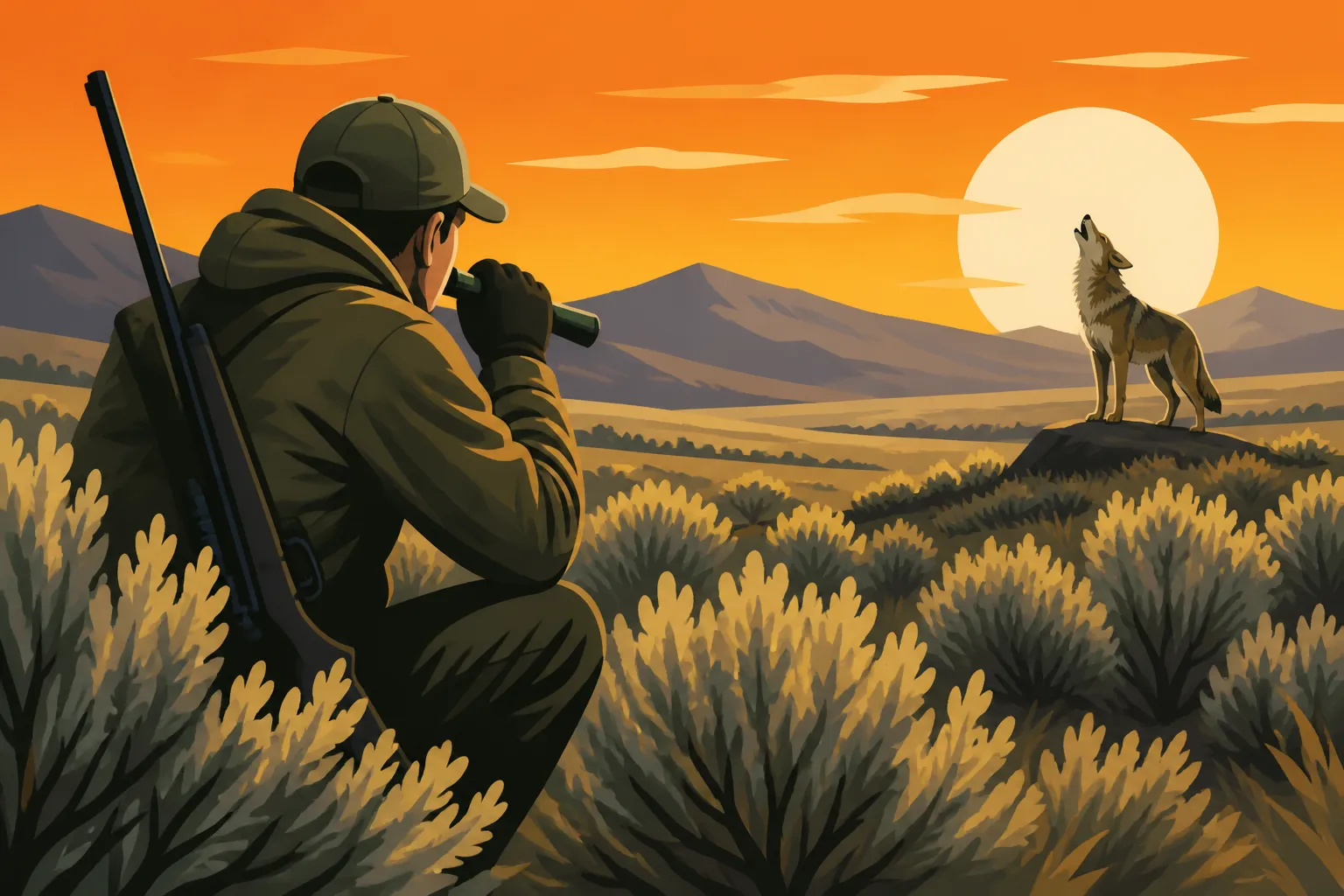
The vast, unbroken expanses of Oregon's sagebrush country can feel both exhilarating and utterly daunting when you're trying to call in a wily coyote. It’s easy to feel lost in the sheer scale of the landscape, wondering how to even begin luring a predator that can see you coming from a mile away and vanish just as quickly. This guide will walk you through proven strategies for successful coyote calling in these wide-open, high desert environments, focusing on understanding the terrain, mastering your gear, and executing effective calling sequences that get those coyotes to commit.
Understanding the Sagebrush Environment and Coyote Behavior
Hunting coyotes in open sage country is a completely different ballgame than calling them in dense timber or brush. The vast, often exposed terrain, punctuated by rolling hills, dry washes, and scattered juniper, demands a unique approach. To truly succeed, you first need to think like a coyote living in this environment.
Topography and Cover for Coyotes
Oregon's open sagebrush country, particularly east of the Cascades, is characterized by its expansive views, but don't let that fool you into thinking there's no cover. Coyotes are masters at using subtle terrain features to their advantage. They'll utilize every dip, rise, and patch of vegetation to travel unseen and approach unnoticed.
Imagine a coyote traveling across a broad flat. They aren't just trotting across in the open. They're likely following the contours of a dry creek bed, using the minimal elevation change of a low ridge, or weaving through taller sagebrush clumps. These small changes in elevation or cover, which might seem insignificant to a human, offer vital concealment for a coyote trying to close the distance on prey or respond to a call. When you're scouting, look for these natural travel corridors – these are often where a coyote will emerge or pause before committing. You might even consider how these animals use the land when you are Finding Mule Deer in Juniper Draws. The scattered juniper trees, rimrock bluffs, and even the larger sagebrush thickets act as perfect ambush points or bedding areas. A wise hunter will learn to identify these spots, both for setting up their stand and for anticipating where a coyote might appear.
Seasonal Movements and Prey Availability
Coyote behavior is heavily influenced by their never-ending quest for food, and in the open sage, that means focusing on the prey species prevalent in the high desert. Their diet shifts with the seasons, and understanding these shifts can dramatically improve your calling success.
During the spring and summer, coyotes are often focused on rodents like ground squirrels, marmots, and various mice, as well as young fawns and elk calves. This is when fawn distress or rabbit distress calls can be particularly effective, mimicking an easy meal for a hungry coyote, especially a lactating female or one trying to feed a litter. As summer transitions into fall, their focus might shift slightly to larger prey if available, but rabbits and rodents remain staples. By winter, food can become scarcer, making any distress call incredibly enticing. When you think about where to set up your stand, consider where these prey animals would naturally congregate. For instance, in areas with good grass or brush, you’ll find rabbits, making it a prime spot for a cottontail or jackrabbit distress call. Understanding Coyote Density in Eastern Oregon can also provide insight into population numbers and, subsequently, the competition for food, which can make coyotes more aggressive responders to calls.
Essential Gear and Setup for Open Sage Coyote Calling
Hunting coyotes in the wide-open sagebrush demands specialized gear and a methodical approach to your setup. Unlike dense timber, where shots are often close and fast, the open country frequently presents longer shots and requires superior observation skills.
Optics and Long-Range Shooting Considerations
In big, open country, your eyes are your most valuable tool, and good optics are their extension. You simply cannot effectively hunt coyotes in sagebrush without quality binoculars, and often, a spotting scope. I typically carry 10×42 binoculars as my primary scanning tool, letting me pick apart distant hillsides and sage flats for any movement. Often, I’ll supplement this with a spotting scope, especially if I'm glassing from a higher vantage point, trying to discern if that distant bump is a rock or a bedded coyote. This meticulous glassing is similar to techniques used for Glassing Sage and Juniper for Eastern Oregon Mule Deer, where patience and thoroughness are paramount.
When a coyote finally responds to your call in this environment, it might be at a significant distance. Therefore, your rifle setup is critical. A flat-shooting caliber like a .223 Remington, .22-250, or even a 6.5 Creedmoor, paired with a reliable scope that has holdovers or a ballistic reticle, is essential. Practicing shooting at various distances is non-negotiable. Don't forget a quality rangefinder; knowing the exact distance to your target, and to various landmarks around your setup, can make or break a shot, especially when the terrain plays tricks on your eyes. These rangefinders are just as critical as they are when using Rangefinders in Steep Country, where judging distance can be particularly challenging. A sturdy bipod or shooting sticks are also absolute must-haves for stability on those longer shots.
Electronic Calls vs. Mouth Calls and Decoys
Both electronic calls and traditional mouth calls have their place, but in open sage, electronic calls often take center stage due to their range, volume, and versatility. Brands like Foxpro and Lucky Duck offer a huge library of sounds, from various rabbit distresses to coyote howls, pup distress, and even bird sounds, allowing you to adapt on the fly. An electronic call lets you place the sound away from your position, drawing the coyote's attention there while you remain concealed. This separation is key in open country. It also frees up your hands for your rifle, which is a huge advantage when a coyote suddenly appears. If you’re unsure about what is permitted, it's worth checking out Electronic Calls and What Oregon Allows as regulations can vary.
While electronic calls are powerful, don't discount mouth calls. They are excellent as backups or for finishing a shy coyote that's hung up at long range. A simple cottontail or jackrabbit call can be very effective, especially if used softly to bring in a wary animal the last few yards. Decoys, particularly ones that offer movement like a flapping bird or a twitching rabbit ear, can be incredibly effective. They provide a visual focal point, distracting the coyote from your position and often encouraging them to commit that final distance, giving you a better shot opportunity. The movement catches their eye and makes the "prey" seem more realistic.
Concealment and Wind Management
In open country, where natural cover is sparse, concealment becomes an art form. You simply cannot afford to be silhouetted against the sky. Full camouflage that blends with the sagebrush and dry grasses is crucial. Don't overlook your face and hands – a head net and gloves are non-negotiable. Often, a small, portable ground blind or even just a strategically placed sagebrush clump can make all the difference. The goal is to break up your outline completely.
Perhaps even more critical than visual concealment is wind management. Coyotes have an incredible sense of smell, and they will bust you every single time if they catch your scent. Always, and I mean always, hunt with the wind in your face or at a slight crosswind. This dictates your approach to a stand and your setup. Before you even get out of your truck, assess the wind direction and plan your route and stand location accordingly. Using a wind checker puff bottle is a good habit. You might have to walk a little farther or take a less direct route, but ensuring your scent isn't blowing towards where you expect coyotes to approach is paramount. This careful planning, including thorough e-scouting with tools like GoHunt to identify potential access points and wind corridors, can save you a lot of wasted effort.
Effective Calling Sequences and Strategies
Once you understand the environment and have your gear dialed in, it's time to put it all together on the stand. Effective calling in open sage is about strategy, patience, and adaptability.
Setting Up for Success
Your approach to the stand in open country is just as important as the calling itself. Coyotes can see you from a long way off, so stealth is absolutely key. Plan your approach to use any available terrain features – draw bottoms, the backside of hills, or dense sage patches – to remain out of sight until you're in position.
Once you’ve reached your chosen spot, take a moment to choose your exact setup location. You want a vantage point that offers a wide field of view, ideally slightly elevated, but without silhouetting yourself. Look for a backdrop of brush or a low bank to break up your outline. Scan the entire area with your binoculars before you even think about setting up your call or raising your rifle. Many coyotes are already watching you, or could be bedded nearby, observing. Have your rifle ready, either on shooting sticks or a bipod, and ensure you have clear shooting lanes in multiple directions. Consider having your electronic call placed 50-75 yards upwind or crosswind from you to draw the coyote's focus away from your position. GoHunt can be invaluable in pre-scouting these vantage points and identifying potential approach routes for coyotes.
The Open Sage Calling Playbook
The vastness of sage country allows sound to travel far, so your calling needs to be dynamic. I generally start with softer, more subtle sounds and increase the volume and intensity as the stand progresses.
A good starting point is a rabbit distress call, like a dying jackrabbit or cottontail. This is a universal coyote attractant. Start with a short, soft series, then pause for a minute or two, constantly scanning. If no response, increase the volume slightly and extend the sequence. After a few minutes, if still nothing, I might switch to a pup distress call. This can be incredibly effective, triggering a strong maternal or territorial response, especially during spring and early summer when pups are vulnerable. Another great option is a coyote howl sequence, starting with some lonesome howls and then escalating to a challenge howl or even a full fight sequence. This can appeal to a coyote looking for a mate, challenging an intruder, or simply investigating other coyotes in their territory. Keep your sequences varied and listen carefully for any response. If you hear a distant howl, you know you're in the right ball park and can adjust your calling to mimic a challenging rival or a distressed pup in their direction.
Managing Call Volume and Duration
In open sage, sound carries a long way, so you need to be mindful of your call volume. Starting too loud can scare off a nearby coyote or make a distant one hang up prematurely. I always begin with a soft, pleading series of distress calls, mimicking a struggling animal. Then, I gradually increase the volume over the next 5-10 minutes, allowing the sound to reach further into the vast landscape.
Your stand duration is also crucial. Coyotes in open country can take their time responding, often circling downwind to catch a scent before committing. Don't give up too quickly. A typical stand might last 20-30 minutes, sometimes even longer if you feel you’re in a prime location or have seen distant activity. It’s a test of patience, but staying committed increases your chances. Vary your calling sequences within this time: a few minutes of rabbit distress, then a pause, maybe a pup distress, another pause, and perhaps a subtle howl. Silence, interspersed with scanning, is just as important as the calling itself. Many coyotes show up silently, seemingly out of nowhere, so constant vigilance is non-negotiable.
Here's a quick comparison of common coyote calls:
| Call Type | Primary Sound | When to Use It | Expected Coyote Response |
|---|---|---|---|
| Rabbit Distress | High-pitched squeals | Year-round, especially when food is abundant | Quick, direct approach, often curious or hungry |
| Fawn Distress | Bleats, bawls | Spring/early summer (fawning season) | Protective, aggressive, often fast approach |
| Pup Distress | Whimpers, yelps | Spring/early summer (pupping season) | Highly protective, curious, or territorial |
| Lone Howl | Long, drawn-out howl | To locate coyotes, challenge, or signal presence | Howl back, approach cautiously, or ignore |
| Challenge Howl | Aggressive, barking howl | To provoke territorial coyotes, especially males | Defensive, aggressive approach, can be very direct |
| Coyote Fight | Growls, snarls, yelps | To mimic competition, often attracts curious coyotes | Investigatory, sometimes aggressive, usually slower |
Reading Coyote Responses and Adapting Your Approach
Even with the perfect setup and calling sequence, coyotes in open sage are notoriously cunning. They've evolved to survive in a landscape where concealment is a luxury, so they're masters of observation and caution.
Identifying Hang-Ups and Shy Coyotes
One of the most common frustrations in open country calling is the "hang-up." This is when a coyote responds to your call, approaches to a certain distance, and then stops dead in its tracks, often just out of comfortable shooting range. They might circle, trying to get downwind to catch a scent, or simply stand there, observing the source of the sound, trying to decide if it's safe to commit.
Recognizing a hang-up is key. Look for body language cues: a coyote that's standing erect, ears swiveling, constantly scanning, is wary. If it stops behind a small rise or a cluster of junipers and only its head is visible, that's a classic hang-up. They're trying to figure things out without fully exposing themselves. They're telling you they're interested, but not quite convinced. Sometimes, you'll see them trot in and then slow to a crawl, meticulously sniffing the air. This behavior is incredibly common, and it’s why a good long-range rifle setup and patience are so important.
What to Do When They Won't Commit
When a coyote hangs up, you have to react quickly and intelligently. Your first instinct might be to increase the volume of your call, but that often just reinforces their suspicion. Instead, try changing the pitch or type of distress. If you were using a high-pitched rabbit distress, switch to a deeper, more drawn-out fawn distress. Sometimes, a subtle, almost whimpering pup distress can trigger a different, more powerful response, pulling them in the last few yards.
Another tactic is to introduce very subtle movement with a decoy. Even a slight twitch of a mechanical decoy's ear or tail can sometimes be enough to distract them and draw their focus, allowing you to get a shot. If all else fails, and the coyote is simply not moving, a short, soft coyote challenge howl might do the trick. This can either intimidate them into coming closer to investigate the "intruder" or cause them to commit in a different direction. Patience is paramount here. Don't rush the shot if they're still out of your comfort zone. Wait for them to take that one extra step, or for them to turn broadside. Sometimes, doing absolutely nothing and just staying hidden, while the decoy provides a distraction, will be the trick. Visualizing their likely escape routes through tools like GoHunt can help you anticipate their movements even when they're being shy.
After the Shot and Follow-Up
The moment of truth arrives when you finally take the shot. Even if a coyote drops in its tracks, always stay on your scope for a few extra seconds. Sometimes they'll just be stunned or playing dead, and they can spring up and vanish in an instant. Immediately scan the surrounding area. Coyotes often travel in pairs or small family groups, and another might be silently watching nearby, especially if it was a breeding pair or pups.
If the coyote doesn't drop immediately, or if you suspect a marginal hit, mark the exact spot where the animal was standing and its last known direction of travel. In open sage, this can be easier than in thick timber, but the small size of a coyote means they can disappear quickly. Wait a few minutes – 10 to 15 if you think it was a good hit, longer if it was questionable – before cautiously beginning your track. Look for any sign: disturbed ground, tufts of fur, or blood. If you find blood, proceed slowly and methodically, marking the last speck you found. It’s amazing how far a wounded coyote can travel, but with patience and a good tracking light if legal and necessary, you can often recover them. Remember to review Night Hunting Rules for Predators in Oregon if your follow-up extends past legal daylight hours.
Disclaimer
Hunting is an inherently dangerous activity. This guide provides information for educational purposes only and does not endorse illegal hunting practices. Always consult the most current Oregon Department of Fish and Wildlife (ODFW) regulations and secure appropriate licenses and tags before heading into the field. Safety should always be your top priority.