Night Hunting Rules for Predators in Oregon
The world of night hunting in Oregon can feel like navigating a maze in the dark, especially with all the nuances and specific regulations that come into play once the sun dips below the horizon. Many of us have felt that frustration, wondering if our passion for predator control has to end at dusk. This guide is here to shed some much-needed light on Oregon's night hunting rules for predators, breaking down the often-confusing regulations into clear, actionable information so you can hunt safely and legally.
Understanding the Landscape of Night Hunting in Oregon
Oregon's hunting regulations are designed to manage wildlife populations, ensure hunter safety, and maintain ethical standards. When it comes to hunting after dark, these considerations become even more critical, leading to a specific set of rules that can differ significantly from daytime hunting. It’s not just about what you hunt, but also where, when, and with what equipment.
When is Night Hunting Allowed?
One of the biggest misconceptions about hunting predators in Oregon is that it's universally illegal to hunt after dark. While big game hunting, like for deer or elk, is strictly limited to legal shooting hours (typically ½ hour before sunrise to ½ hour after sunset), the rules are different for certain predators. For specific species, Oregon does allow hunting at night, but it's crucial to understand which species fall into this category and the conditions under which it's permitted.
Generally, non-protected furbearers and predatory animals, such as coyotes, can be hunted at night. However, this isn't a blanket permission for all hours or all locations. It’s vital to consult the current Oregon Department of Fish and Wildlife (ODFW) regulations, often found in the annual Big Game, Small Game, and Furbearer regulations pamphlets, as these rules can change. The key is distinguishing between "legal shooting hours" for big game and the broader allowances for certain predators.
Defining Legal Shooting Hours for Predator Hunting
For most big game and many small game species in Oregon, "legal shooting hours" are precisely defined as the period from 30 minutes before sunrise to 30 minutes after sunset. This is etched in stone and rigorously enforced. Deviating from these hours for species like deer or elk can lead to severe penalties. However, when we talk about predator hunting, specifically for animals like coyotes, the concept of "legal shooting hours" can be more flexible, especially on private land or under specific permits.
The ODFW differentiates between game mammals (like deer, elk, bear) and unprotected mammals (like coyotes). Unprotected mammals, which are often the target of night hunting, do not always fall under the sunrise-to-sunset shooting hour restrictions. This is a significant distinction that opens up opportunities for night hunting, provided all other regulations regarding method, location, and equipment are followed. Always double-check the current year's regulations to ensure you're within the legal timeframe for your target species and location.
Defining "Predator" for Night Hunting Purposes
In Oregon, the term "predator" in a hunting context often refers to animals that can be hunted without a specific season or bag limit, or with very liberal seasons. For night hunting purposes, this typically means coyotes. While cougars are certainly predators, Oregon's specific rules regarding cougar hunting – which strictly prohibit the use of dogs or bait – also include limitations on hunting hours that generally do not extend into the night, making them a separate consideration from species like coyotes. Similarly, black bears, though predatory, are managed under specific seasons and hours.
Furbearers like bobcats and foxes are often grouped with predators due to their ecological role and similar hunting methods, but they are managed under different regulations than coyotes. For instance, bobcats have specific seasons and tag requirements, and their hunting hours often align more closely with general shooting hours. Understanding this distinction is paramount. When considering night hunting, it's almost always in reference to coyotes, which are classified as unprotected mammals and for which the most flexible night hunting rules apply. This clarification helps prevent accidental violations when targeting specific species after dark.
Legal Equipment and Methods for Night Hunting in Oregon
Once you understand which species can be hunted at night, the next hurdle is knowing how you can legally hunt them. Oregon has very specific rules about the types of equipment and methods you can employ after dark, particularly concerning artificial lights and electronic calls. It's not just about having the gear; it's about using it within the bounds of the law.
Permitted Light Sources and Devices
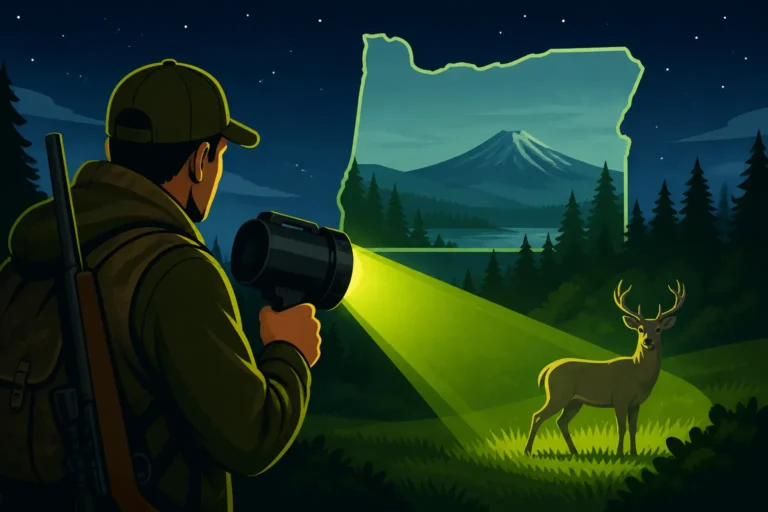
This is where things can get particularly tricky and where many hunters unintentionally run afoul of the law. Oregon law prohibits the use of artificial lights to spot, locate, or take game mammals (which include deer, elk, bears, cougars) at night. However, there's a critical exception: this prohibition typically does not apply to the hunting of unprotected predatory animals like coyotes and unclassified furbearers. This means that, for coyotes, you can often use artificial lights, but there are still nuances.
Many hunters employ powerful spotlights, red or green filtered lights, or even thermal and night vision optics for night predator hunting. Red and green lights are often favored because some believe predators are less sensitive to these wavelengths, making them less likely to spook. Headlamps with adjustable beams are also common, allowing hunters to keep their hands free for calling or operating a firearm. For those serious about understanding the fine print, reviewing ODFW's specific language on "hunting with artificial lights" is crucial. While thermal and night vision are generally permitted for unprotected predators, their use for big game or protected furbearers is strictly controlled. Always confirm the latest regulations before heading out, as interpretations or specific restrictions can evolve.
Firearm and Archery Restrictions at Night
While the general rule for big game is that you cannot use an artificial light attached to your weapon to aid in targeting, the rules for unprotected predators like coyotes are often different. For instance, it's typically permissible to use a scope-mounted light, a thermal scope, or a night vision optic mounted directly on your firearm when hunting coyotes at night. This enables precise shot placement, which is essential for ethical hunting in low-light conditions.
However, the caliber or type of firearm might still be subject to local ordinances or general hunting safety rules. For example, while centerfire rifles are commonly used for coyote hunting during the day, ethical considerations and safety dictates that the chosen firearm and ammunition should be appropriate for the target and the terrain, especially in the dark. For archers, while theoretically possible to hunt coyotes at night, the practical challenges and ethical concerns about target identification and shot placement make it far less common and more difficult. Regardless of your chosen method, ensuring you have a clear, ethical shot and a safe backdrop is paramount, even more so when visibility is limited.
Electronic Calls and Other Aids
Electronic calls are incredibly effective tools for predator hunting, day or night, and Oregon generally permits their use for predators like coyotes. Unlike some states that restrict electronic calls for certain game species or during specific seasons, Oregon hunters can typically use these devices to mimic prey animals (like rabbits or mice) or even other coyotes to draw them in. This is a game-changer for night hunting, as the sound carries well in still night air, and predators are often bolder after dark.
When considering what call to use, a good strategy is to think about the local prey base. Cottontail rabbit distress calls, fawn distress calls (during deer fawning season, if legal and ethical), or even pup distress calls can be highly effective. The use of electronic calls pairs exceptionally well with artificial lights, as the call brings the animal into a position where it can be illuminated and identified. Many advanced callers, such as those from brands like Foxpro or Primos, come with remote controls, allowing you to position the sound source away from your location, thus drawing the predator's attention away from you. This can make a significant difference in success rates. Remember, while the calls are legal, responsible use and adherence to all other hunting regulations are always required. For more detailed information, checking out resources on Electronic Calls and What Oregon Allows could be very beneficial.
Specific Predator Species and Regulations
While coyotes are the primary focus for night hunting, it's essential to understand that other furbearers and predators have their own distinct regulatory frameworks. Applying coyote rules to a bobcat hunt, for example, could land you in serious trouble.
Coyote Night Hunting Regulations
Coyotes are generally classified as unprotected predatory animals in Oregon. This designation grants hunters the most flexibility. There's typically no closed season for coyotes, no bag limit, and generally, they can be hunted day or night, year-round, on private land. On public lands, the rules for night hunting coyotes can be a bit more nuanced. While the use of lights for spotting and taking them is often allowed, hunters must still adhere to all other public land regulations, including any specific closures or restrictions imposed by the Bureau of Land Management (BLM), U.S. Forest Service (USFS), or Oregon Department of Forestry (ODF). Many platforms, including GoHunt, offer valuable digital mapping tools that can help identify land ownership and specific public land regulations, making it easier to plan your hunts.
When targeting coyotes at night, hunters often utilize calling sequences designed to lure them in. Discussions on tactics, like those covered in Coyote Calling in Open Sage Country, can be incredibly useful. Successful night hunting often involves setting up in areas known for coyote activity, such as open fields, clearcuts, or agricultural areas where they hunt rodents and other small prey. The thrill of calling in a coyote under the stars, seeing its eyes reflect in your spotlight, is a unique and challenging experience that epitomizes night predator hunting.
Bobcat Night Hunting Regulations
Unlike coyotes, bobcats are classified as furbearers and are managed with specific seasons and often require a furbearer tag. Historically, hunting bobcats at night with artificial lights has been prohibited, aligning them more closely with big game regulations than with coyotes. Bobcat seasons typically run during specific periods in the fall and winter, with strict adherence to legal shooting hours (½ hour before sunrise to ½ hour after sunset). It is absolutely critical to check the current ODFW Furbearer Regulations pamphlet for the exact season dates, bag limits, and legal hunting methods for bobcats.
Attempting to hunt a bobcat at night with artificial lights when it is illegal can result in severe penalties, including fines and potential loss of hunting privileges. While calling techniques for bobcats, as detailed in resources like Bobcat Range and Harvest, might be similar to coyote calling, the regulatory differences for night hunting are stark. Ethical hunters always prioritize knowing and adhering to these species-specific regulations.
Red Fox and Other Furbearers
Red fox, grey fox, and other furbearers like raccoons, skunks, and opossums also fall under specific furbearer regulations in Oregon. Similar to bobcats, these species generally have defined seasons and often require a furbearer tag. Most furbearer seasons in Oregon are limited to legal daylight shooting hours. The use of artificial lights at night for these species is typically not permitted. Always assume that if an animal is not explicitly listed as an "unprotected predatory animal" (like coyotes), then standard legal shooting hours apply, and night hunting with artificial lights is prohibited.
It’s crucial not to generalize the lenient coyote night hunting rules to all other furbearers or predatory species. The ODFW regulations are very clear on these distinctions, and ignorance of the law is not an excuse. If you are unsure about the regulations for a specific furbearer you wish to hunt at night, the safest approach is to contact ODFW directly or carefully review the official regulations pamphlet. This due diligence ensures you remain a responsible and legal hunter.
Safety and Ethical Considerations for Night Hunting
While understanding the legal framework is essential, responsible night hunting goes far beyond merely staying within the law. The reduced visibility and unique challenges of hunting after dark amplify the need for stringent safety practices and unwavering ethical conduct.
Identifying Your Target Clearly
This is arguably the most critical safety and ethical consideration when hunting at night. In the dark, even with powerful lights or advanced optics, misidentification is a significant risk. You must be 100% certain of your target before you pull the trigger. That distant pair of eyes reflecting in your spotlight could be a coyote, but it could also be a dog, a deer, or even another hunter. The consequences of misidentification are catastrophic and irreversible.
Experienced night hunters often advocate for a multi-stage identification process: first, confirm movement and general location with a broad sweep; second, narrow down the target with a more focused beam or magnified optic; third, look for specific identifying features like size, shape, gait, and eye color/spacing. Never shoot at just a pair of eyes. Wait until you can clearly distinguish the entire animal and confirm it's your intended target species. This deliberate approach not only prevents accidental harm to non-target animals but also protects human lives. Always consider resources like Using a Tracking Light Legally at Night in Oregon for further insight into legal lighting practices.
Backstop and Property Line Awareness
Hunting in the dark means your field of view is severely limited, making it incredibly difficult to verify what lies beyond your target. A safe backstop – a hill, a thick stand of trees, or open ground – is always important, but it's absolutely non-negotiable at night. A bullet can travel for miles, and without knowing what's behind your target, you risk striking buildings, livestock, or people far downrange. Hunters should always scout their hunting areas thoroughly during daylight hours to identify potential hazards and safe shooting lanes. Many hunters use mapping applications, like those found on GoHunt, to pre-scout and identify terrain features and potential risks.
Similarly, property line awareness becomes paramount. Without visible fences or clear markers, it's easy to accidentally trespass or shoot onto private property, especially when an animal is moving. Digital mapping tools with property line overlays are invaluable for this. Always know your boundaries and, if hunting near them, maintain a substantial buffer zone. Better yet, secure explicit permission if there's any chance your activities might stray onto private land, as highlighted in topics like Asking a Landowner for Access. This diligence protects you legally and maintains good relations with landowners, which is crucial for future hunting opportunities. Also, be mindful of specific distance rules, such as Oregon's 300-Foot Rule Beside an Open Road, which prohibit shooting within certain proximities to roads or dwellings.
Respecting Landowners and Other Hunters
Night hunting, by its very nature, can be disruptive. Loud calls, gunshots, and bright spotlights can be alarming to nearby residents, livestock, and even other hunters who might be camping or still in the field. When hunting on private land, ensure you have explicit, current permission from the landowner, and discuss your intention to hunt at night. Some landowners might have specific requests or concerns about noise or light pollution, which you should always respect.
If you're hunting public land, be aware of others. Avoid setting up near designated campsites, trailheads, or residential areas. Parking your vehicle considerately and being discreet with your lights until you're actively hunting are small courtesies that go a long way. The ethical hunter is always a good ambassador for the sport, ensuring that their actions don't negatively impact others or give hunting a bad name. Remember, night hunting is a privilege, not a right, and maintaining positive public perception and landowner relationships ensures these opportunities continue. Checking resources like Reading a Travel Management Area Map Before You Drive can help identify areas of potential conflict with other users.
Table of Predator Night Hunting Regulations in Oregon
| Species | Legal to Hunt at Night? | Artificial Light Use (Weapon Mounted) | Electronic Calls Permitted | Tag/License Required | Typical Season |
|---|---|---|---|---|---|
| Coyote | Yes (Unprotected) | Yes (Generally) | Yes | Hunting License | Year-Round |
| Bobcat | No | No | Yes | Furbearer Tag, Hunting License | Specific Furbearer Season |
| Red Fox | No | No | Yes | Furbearer Tag, Hunting License | Specific Furbearer Season |
| Gray Fox | No | No | Yes | Furbearer Tag, Hunting License | Specific Furbearer Season |
| Cougar | No | No | Yes (with restrictions) | Cougar Tag, Hunting License | Year-Round (Quota) |
| Black Bear | No | No | No | Bear Tag, Hunting License | Spring & Fall Seasons |
Note: This table provides a general overview. Always consult the most current ODFW regulations pamphlet for definitive and up-to-date rules, as they are subject to change.
Preparing for a Successful and Safe Night Hunt
Beyond knowing the rules and having the right gear, proper preparation is key to a successful and safe night hunt. The unique challenges of operating in the dark demand a higher level of attention to detail, from scouting to physical readiness and emergency planning.
Thorough Pre-Season Scouting
Scouting for a night hunt is different from scouting for a daylight hunt. During the day, you're looking for tracks, scat, travel corridors, and bedding areas. For a night hunt, you still need that, but you also need to understand the nocturnal habits of your target. Coyotes, for instance, might use different travel routes or hunt in different areas at night compared to their daytime patterns. This is where thermal optics can really shine during scouting, revealing hidden movements.
More importantly, pre-season scouting for night hunting involves meticulously identifying safe shooting lanes, potential backstops, and all property boundaries. What looks like an open field in daylight might have a farmhouse just beyond the tree line that you can't see at night. Use GPS devices and mapping apps, perhaps from a provider like GoHunt, to mark safe shooting zones, potential call stands, and escape routes. Pay attention to how the terrain changes the sound of your calls and how light reflects off different surfaces. This level of detail during daylight will significantly reduce risks and increase your effectiveness when the sun goes down.
Essential Gear Beyond the Basics
While we've discussed lights and calls, a night hunt requires a comprehensive gear list. This includes robust personal safety equipment. A high-quality first aid kit, as detailed in articles like First Aid Kit Items for a Remote Hunt, is non-negotiable. Temperatures often drop significantly after dark, even in mild seasons, so warm layers of clothing are crucial. Good quality boots, even if you’re not covering vast distances, are important for quiet movement and stability in uneven terrain.
Communication devices like two-way radios or satellite messengers (especially in areas with no cell service) are essential. Tell someone exactly where you're going and when you expect to return. Spare batteries for everything – your lights, calls, and GPS – are an absolute must. A dependable rangefinder can also be incredibly useful, helping you confirm distances to targets and landmarks in the confusing darkness. Don’t forget a comfortable chair or pad for long calling sessions, and a reliable headlamp for hands-free navigation.
Physical and Mental Readiness
Night hunting can be mentally and physically draining. Staying alert for extended periods in the dark, often in cold conditions, requires focus and endurance. Your senses will be heightened, but also challenged. Practice using your equipment in low-light conditions before you hunt. Get accustomed to manipulating your firearm, operating your light, and using your call without fumbling.
Mental readiness also means being prepared for unexpected encounters. Other nocturnal animals, domestic pets, or even people can be present. Maintaining situational awareness is crucial. If you’re hunting with a partner, establish clear communication signals and ensure both of you are aware of each other’s positions at all times. The stillness of the night can be broken by sudden, startling sounds, and a calm, prepared mindset will help you differentiate between a potential target and a harmless rustle in the brush. Just like preparing for an elk hunt, where Physical Training for an Oregon Elk Hunt is paramount, a night hunt demands its own form of readiness to ensure both safety and success.
Final Thoughts on Responsible Night Hunting
Night hunting predators in Oregon offers a unique and challenging experience for hunters who enjoy the thrill of the chase under the cloak of darkness. It also serves an important purpose in managing populations of species like coyotes, which can impact local livestock and game animals. However, this privilege comes with significant responsibilities.
Always prioritize safety above all else. Misidentification and unsafe shooting practices are far more dangerous in the dark. Be intimately familiar with the specific regulations for the species you are pursuing, and never assume that what's legal for a coyote applies to a bobcat or a bear. Respect private property, adhere to public land rules, and always be a considerate neighbor to those who live and recreate near your hunting grounds. The reputation of hunting in Oregon, and the continuation of these opportunities, rests on the shoulders of every hunter who ventures out after dark. Stay informed, stay safe, and hunt responsibly.
Disclaimer
The information provided in this guide is for general informational purposes only and is not a substitute for official Oregon Department of Fish and Wildlife (ODFW) regulations. Hunting laws and regulations can change frequently. Hunters are solely responsible for knowing and adhering to all current federal, state, and local hunting laws and regulations before engaging in any hunting activities. Always consult the most current ODFW regulations pamphlet or contact ODFW directly for the most accurate and up-to-date information.