First Aid Kit Items for a Remote Hunt
Heading out into Oregon’s vast and rugged backcountry for a hunt is an incredible experience, but it also comes with inherent risks. The reality is, when you’re miles from the nearest road, deep in the thick timber of the Coast Range, or navigating the sagebrush of Eastern Oregon, a simple sprained ankle or a bad cut can quickly turn a memorable trip into a dire emergency. You can’t just rely on quick cell service or a short drive to the urgent care. This guide is all about empowering you with the knowledge to assemble a truly effective first aid kit, ensuring you’re prepared to handle common injuries and illnesses when immediate professional medical help is a distant dream.
Why a Robust First Aid Kit Isn't Optional in Oregon's Backcountry
When you pull your truck off the pavement and head into the wilderness, whether it’s the dense forests of the Umpqua National Forest or the expansive plains near Hart Mountain, you’re stepping into an environment where self-reliance isn't just a virtue—it's a necessity. It’s easy to get caught up in gear lists for rifles, optics, and shelter, but a well-stocked first aid kit often gets overlooked until it's too late. Trust me, the unique challenges of hunting in Oregon's diverse landscapes demand a level of preparedness far beyond what you might carry for a day hike in a city park.
The Harsh Reality of Oregon's Wilderness
Oregon's public lands are nothing short of breathtaking, but they are also vast and unforgiving. Think about the sheer scale of places like the Eagle Cap Wilderness Hunting Access or the remote corners of the Rogue River-Siskiyou National Forest. Cell service is often non-existent, and even if you have a satellite communication device, it can still take hours, or even days, for help to reach you. This isn't just about serious trauma; it's about the everyday mishaps that become major problems when isolated.
Consider the common injuries that can happen during a hunt: a nasty gash from a slip with a knife while Field Dressing an Elk in Warm Early-Season Weather, a twisted knee from navigating blowdown, or severe blisters from long miles in ill-fitting boots. Even something as simple as a campfire burn or an allergic reaction to a bee sting can become critical without immediate care. The reality is that the further you venture from civilization, the more responsible you become for your own well-being and that of your hunting partners. Being able to stabilize an injury and prevent infection is paramount when the nearest hospital is hours away. Hunters who commit to tasks like Packing Out an Elk in Oregon's Wilderness Units know that every ounce of preparation counts.
Distance and Delay: The Enemy of Injury
It's a frustrating thought: you've spent countless hours scouting, endured the stress of the controlled hunt draw, and finally landed that coveted tag. Now you're deep in the country, miles from the nearest paved road, and a minor stumble turns into a severely sprained ankle. Without proper supplies, that hunt you planned for months, if not years, is over in an instant. This scenario plays out more often than you might think. Imagine trying to make your way back to the truck after Tracking Bucks in Fresh Eastern Oregon Snow with a badly sprained ankle and no way to support it.
The clock starts ticking the moment an injury occurs. In a remote setting, every minute counts, and delays in treatment can dramatically worsen outcomes. A good first aid kit isn't just about patching things up; it's about buying time. It allows you to manage pain, reduce swelling, prevent infection, and even stabilize a fracture until professional medical help can be reached. This ability to provide immediate care can prevent minor issues from escalating into life-threatening emergencies, making the difference between a rough trip home and a true survival situation. It's about being proactive, not reactive, especially when you're exploring the wilder parts of Oregon.
The Core Essentials: What Every Remote Hunt Kit Needs
Building a truly effective first aid kit for a remote Oregon hunt isn't about throwing a few band-aids into a ziplock bag. It requires thoughtful consideration of the most common issues you might face, alongside preparedness for more serious incidents. This isn't just a list; it's a foundation for your safety in the field.
Wound Care and Infection Prevention
Any time skin is broken in the backcountry, the risk of infection is immediate and real. Dirt, sweat, and exposure can quickly turn a small cut into a festering problem if not addressed properly.
First and foremost, you need a variety of bandages. This means a mix of adhesive bandages in assorted sizes for minor cuts and scrapes, several rolls of sterile gauze (2x2s, 4x4s), and at least one large non-stick pad for bigger wounds. Don't forget a roll of sterile gauze for wrapping. Medical tape is essential—I prefer cloth athletic tape for its durability and ability to hold dressings securely, especially on moving joints.
For cleaning wounds, antiseptic wipes (alcohol or iodine prep pads) are quick and easy. A small bottle of antiseptic solution, like Betadine or even a robust hand sanitizer (ensure it's at least 60% alcohol), can be crucial. Always carry several pairs of sterile gloves to protect both the injured person and the caregiver from potential contaminants. Small, sharp scissors are invaluable for cutting tape or clothing, and tweezers are a must-have for splinters or tick removal. A few safety pins can also come in handy for securing slings or bandages.
Here's a quick checklist for basic wound care:
| Item | Purpose | Quantity (minimum) |
|---|---|---|
| Adhesive Bandages | Minor cuts, scrapes | Assorted box |
| Sterile Gauze Pads (2×2, 4×4) | Cleaning, covering wounds | 10-12 pads |
| Non-Stick Pads (larger) | Larger wounds, burns | 4-6 pads |
| Gauze Roll | Wrapping, padding | 1-2 rolls |
| Medical/Athletic Tape | Securing dressings, support | 1-2 rolls |
| Antiseptic Wipes | Wound cleaning | 10-15 wipes |
| Antiseptic Solution | Deeper wound cleaning (e.g., Betadine) | 1 small bottle |
| Sterile Gloves | Protection for caregiver | 3-4 pairs |
| Small Scissors | Cutting tape, clothing | 1 |
| Tweezers | Splinters, tick removal | 1 |
| Safety Pins | Securing bandages | 4-6 |
Pain Management and Allergic Reactions
Pain can be debilitating and significantly hinder your ability to get yourself or a partner out of a tough spot. Having the right over-the-counter medications can make a huge difference.
Pain relievers are a given. I always pack both ibuprofen (like Advil or Motrin) for general aches, sprains, and reducing inflammation, and acetaminophen (like Tylenol) for fever and pain without anti-inflammatory effects. It’s wise to have both as they work differently and can be alternated if needed. Naproxen (Aleve) is another excellent anti-inflammatory that lasts longer, making it great for managing persistent aches over several hours.
Antihistamines are critical for allergic reactions. Diphenhydramine (Benadryl) can treat mild reactions to insect stings, plant irritants like poison oak, or even food allergies. If anyone in your hunting party has known severe allergies, carrying a prescribed epinephrine auto-injector (EpiPen) is non-negotiable and something they must carry personally. Ensure everyone in the group knows how to use it.
Blister & Foot Care
Few things can derail a hunt faster than debilitating blisters, especially when you're covering serious ground or facing challenging terrain. Chukar Country Footwear and Fitness demands top-notch foot care.
Moleskin is an old standby for a reason, but I find Leukotape even better for preventing and treating hot spots. It adheres incredibly well, even in wet conditions, and can stay put for days. Specialized blister pads like Compeed are also excellent for cushioning and promoting healing on existing blisters. Having a variety of options can be a real game-changer when your feet are taking a beating. Don't underestimate the mental and physical toll that ruined feet can take on an otherwise determined hunter.
Illness Management
Beyond injuries, you need to be ready for common illnesses that can strike unexpectedly. Dehydration or an upset stomach can leave you feeling completely drained and unable to perform when it matters most.
Anti-diarrhea medication (such as Loperamide, commonly known as Imodium) is a must-have. There's nothing worse than dealing with gastrointestinal distress in the backcountry, far from any facilities. Antacids (like Tums or Rolaids) can help with indigestion or heartburn, which can be exacerbated by camp food or stress.
Electrolyte packets (brands like Nuun, Liquid IV, or even just powdered Gatorade) are invaluable for preventing or treating dehydration, especially if you're working hard in warm weather or recovering from illness. They're particularly useful if you're exerting yourself in conditions like Field Dressing in 70-Degree September Heat. Finally, a basic, compact thermometer can help you monitor fevers, indicating whether an illness is worsening and requires more serious attention.
Beyond the Basics: Specialized Gear for Oregon's Unique Environment
While a solid basic first aid kit is essential, hunting in Oregon often presents unique challenges that call for specialized additions. Preparing for trauma, wildlife encounters, and environmental extremes will significantly enhance your safety net.
Trauma and Emergency Preparedness
For serious, life-threatening injuries, your basic kit needs to be augmented with specific trauma items that can control massive bleeding or stabilize severe fractures.
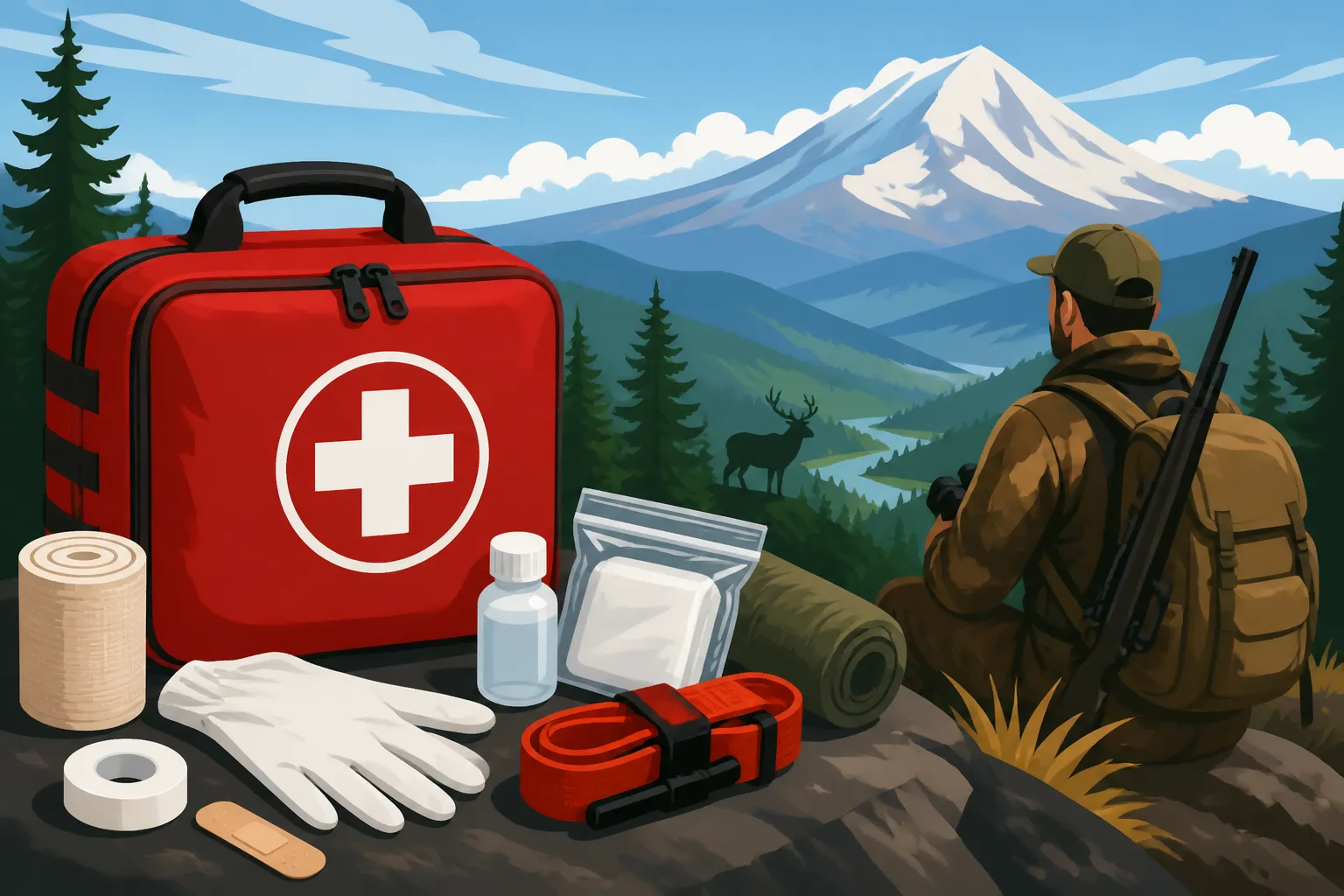
A pressure bandage, such as an Israeli Bandage, is designed to apply direct, sustained pressure to a deep wound, which can be critical for controlling arterial or venous bleeding. Equally important, if properly trained, is a tourniquet. I recommend familiarizing yourself with reliable brands like the CAT (Combat Application Tourniquet), as these are designed for rapid, one-handed application. Remember, tourniquets are for extreme, life-or-limb situations and require proper training to use effectively and safely.
For stabilizing suspected fractures or severe sprains, a SAM Splint is a flexible, lightweight, and reusable medical device that can be easily molded to support various injuries. Pair this with a strong elastic bandage (like an Ace wrap) for added compression and support. Finally, an emergency blanket (the reflective Mylar type) is vital. It can prevent hypothermia, treat shock, or provide warmth if you’re caught out in unexpected cold or wet weather, such as during Muzzleloader Loads and Wet-Weather Ignition in a late-season hunt.
Snake Bite Protocol in Eastern Oregon
If you’re hunting in Eastern Oregon, particularly in the lower elevations and arid regions known for mule deer and pronghorn, you need to be aware of rattlesnakes. While traditional snake bite "kits" with suction cups were once popular, they are widely considered ineffective and potentially harmful by medical professionals.
The true focus for snake bites should be prevention and rapid evacuation. Know where rattlesnakes live, be vigilant, and wear appropriate footwear and gaiters when traversing dense brush. If a bite occurs, the most critical "item" is your ability to communicate for help and get the victim to medical care as quickly as possible. This means having a satellite communicator. When researching specific areas, especially in the high desert, using resources like GoHunt can help you understand the terrain and typical wildlife encounters, including potential snake habitats. If you do encounter a snake, keep the bite site below the heart, remain calm, and head for emergency medical attention immediately. Do not attempt to cut or suck the venom.
Environmental Concerns
Oregon’s weather can be unpredictable, and hunters face various environmental challenges depending on the season and specific region.
Sunscreen is often overlooked, but whether you’re Glassing Sage and Juniper for Eastern Oregon Mule Deer on a clear, high desert day or hunting above the tree line in the Cascades, sun exposure can be intense. Sunburn isn't just uncomfortable; it can lead to dehydration and heatstroke.
Insect repellent is also a non-negotiable. Ticks, mosquitoes, and other biting insects are not only annoying but can transmit diseases. The risk of Lyme disease from ticks, though low in Oregon, is still present. For those Archery Elk Hunting Oregon's August and September Seasons, mosquitoes can be a serious nuisance, making a good repellent essential for comfort and focus.
Lastly, especially if you're relying on natural water sources, carrying water purification tablets or a compact water filter is a smart move. Even if you pack plenty of water, emergencies happen, and a reliable way to purify water can be a lifesaver. Hydration is always a concern in the backcountry, and having a backup plan for clean drinking water is pure common sense.
Packing and Personalizing Your Kit for Your Hunt
Having all the right items is only half the battle. How you pack it, your knowledge of how to use it, and how you adapt it to your specific hunt are equally vital. A static, one-size-fits-all kit simply won't cut it for the varied demands of Oregon hunting.
Organization and Accessibility
A jumbled mess of medical supplies at the bottom of your pack is useless in an emergency. Your first aid kit needs to be organized and easily accessible. I prefer a sturdy, bright-colored, waterproof bag or a dedicated first aid pouch that stands out. This isn't the place for a flimsy plastic bag. Brands like North American Rescue or Adventure Medical Kits make excellent pre-packaged kits or empty pouches you can customize.
Organize your items by category: all wound care together, all medications together, and trauma items readily available. Use smaller ziplock bags or clear pouches within the main kit to keep things segmented. The kit should always be in a consistent, easy-to-reach spot in your pack – not buried under extra layers or food. Many hunters opt for a smaller "personal" or "day hunt" kit that goes into their immediate hunting pack, and a larger, more comprehensive kit that stays at base camp or in the vehicle. The principle is simple: if you can't find it and use it quickly, it's not truly helping you.
Training and Knowledge
The most comprehensive first aid kit in the world is only as good as the person using it. Without proper training, even the best supplies can be ineffective or even harmful. I strongly encourage every backcountry hunter to take at least a basic first aid and CPR course. For those spending significant time in remote areas, a Wilderness First Aid (WFA) or even a Wilderness First Responder (WFR) course is an invaluable investment. These courses teach you how to improvise with limited resources, manage prolonged patient care, and make critical decisions when medical help is hours away.
Understanding your limitations is also crucial. Knowing when an injury or illness is beyond your skillset and requires immediate professional intervention is paramount. This is where communication devices become an extension of your first aid kit. A satellite communicator or even Two-Way Radios and Legal Use While Hunting (though with limited range) can bridge that gap between self-care and professional rescue. Many hunters find valuable discussions about training, gear choices, and real-world scenarios in hunting communities and forums, including those found on platforms like GoHunt.
Regular Review and Customization
Your first aid kit isn't a "set it and forget it" item. It needs regular review and customization. At least twice a year, go through your kit. Check expiration dates on all medications and sterile supplies and replace anything that's nearing its end. Inspect bandages and tape for damage or degradation.
More importantly, customize your kit for each hunt. Are you hunting early season deer in dry conditions? Then rehydration salts, sunscreen, and blister care might be prioritized. Are you planning a late-season rifle hunt where Boots for Wet Coastal Hunting are essential? Then extra dry bags for medical supplies, emergency blankets, and heavier-duty wound coverings might take precedence. Will you be dealing with Hunting Camp Fire Restrictions in Dry Years? Then burn creams become even more important.
Consider the specific needs of everyone in your party. Does someone have a unique allergy? Do they require daily prescription medication? These personal items must be included. Many seasoned hunters share their customized gear lists and strategies on platforms like GoHunt, which can be an excellent resource for ideas and refinements. And finally, always remember to pair your robust first aid kit with a thorough safety plan, including Leaving a Trip Plan With Someone at Home so someone knows where you're going and when to expect you back. It’s an extra layer of security that costs nothing but a few minutes of planning.
Disclaimer
The information provided in this article is for educational and informational purposes only and does not constitute medical advice. Always consult with a qualified healthcare professional for any health concerns or before making any decisions related to your health or treatment. In an emergency, always seek immediate professional medical attention. Wilderness first aid training is highly recommended for anyone venturing into remote areas.