Leaving a Trip Plan With Someone at Home
Heading into the vastness of Oregon’s hunting grounds, whether it’s the dense rainforests of the Coast Range or the expansive sagebrush country of the high desert, it’s easy to get caught up in the excitement of the hunt. But as many of us have learned the hard way, even the most seasoned hunter can face unexpected challenges, from a twisted ankle miles deep in the backcountry to a sudden, dramatic change in weather. One of the most critical, yet often overlooked, safety measures you can take is to leave a detailed trip plan with someone at home. This simple act isn't just a formality; it's a lifeline that can mean the difference between a swift rescue and a prolonged, agonizing wait for help if things go sideways.
Why a Detailed Trip Plan is Your Best Insurance Policy
When you’re out there, miles from the nearest paved road, sometimes even miles from a faint logging track, your biggest advocate is often the person waiting for you back home. Think about it: cell service is notoriously spotty across much of Oregon’s prime hunting country. A dead battery, a forgotten charger, or simply being in a canyon or thick timber can render your phone useless. If you don't show up when expected, and no one knows where you intended to be, the search area becomes massive, delaying critical response times.
The Realities of Oregon’s Wild Terrain
Oregon's diverse landscapes offer incredible hunting opportunities, but they also present formidable challenges. The steep, wet, and brushy slopes of the Coast Range, with their dense salal and sword fern, can hide a fallen hunter or make movement incredibly difficult if you're injured. Then there are the vast, open spaces of Eastern Oregon, where distances are deceiving, and a vehicle breakdown can leave you exposed to harsh elements with very few people passing by. Even a seemingly minor injury, like a sprained ankle, can turn into a life-threatening situation if you're alone and unable to self-extract. Imagine trying to navigate through a dense thicket with a hobbled leg, the sun setting, and temperatures dropping. Without a clear plan, your loved ones won't know where to direct search and rescue efforts, turning a localized incident into a sprawling, frantic search across hundreds of square miles. This is why having a detailed blueprint of your intentions is non-negotiable for responsible hunting in our state.
Bridging the Communication Gap When Things Go Wrong
We all hope for the best, but preparing for the worst is just plain smart. A comprehensive trip plan isn't about being pessimistic; it's about being pragmatic. It acknowledges the inherent risks of hunting in remote areas and empowers your emergency contact to act swiftly and effectively if you miss your check-in time. They become your first line of defense, providing crucial information to emergency services that would otherwise take hours or even days to gather. Without this information, search efforts are broad and unfocused, consuming valuable time and resources. Consider a scenario where you've gone to a new area and are trying E-Scouting Oregon Units With Satellite Imagery to find a spot for a multi-day spike camp. If you get into trouble, simply telling your spouse "I'm going to the Ochocos" is far too vague. A detailed plan narrows the search to a specific drainage or ridge line, significantly increasing the odds of a positive outcome.
What Information Your Trip Plan Should Include
Creating an effective trip plan is more than just scribbling down a few notes. It needs to be thorough, leaving little to guesswork. Think of it as a detailed itinerary for a non-hunter, covering every plausible scenario and providing all the information someone would need to retrace your steps or understand your intentions.
Your Personal Details and Contacts
Start with the absolute basics. This might seem obvious, but in a panic, even simple information can be hard to recall.
- Full Name and Contact Information: Your name, cell number (even if you expect no service, it's a potential communication point), and a secondary number if you have one.
- Emergency Contact Information: The names and phone numbers of at least two reliable people who are not going on the hunt with you. Make sure they know they are your emergency contacts and understand the plan.
- Medical Information: Any relevant medical conditions (e.g., allergies, diabetes, heart conditions), medications you take, and your blood type. This is vital for first responders.
- Vehicle Description: Make, model, color, license plate number, and any distinguishing features of the vehicle you'll be driving or parking at a trailhead. Note if you have a full tank of gas and extra fuel, or if you plan to use a particular rig to pack out game, like for Packing Out an Elk in Oregon's Wilderness Units.
Hunt Area and Route Specifics
This is the core of your plan, detailing exactly where you'll be and how you intend to get there and move around. The more precise you are, the better.
- Specific Unit and Hunt Area: Clearly state the Oregon Department of Fish and Wildlife (ODFW) hunting unit you'll be in, such as the Starkey Unit, or a specific herd range if applicable.
- Exact Entry/Exit Points: Provide GPS coordinates or detailed directions to your trailhead, parking spot, or access road. If you’re hunting a Travel Management Area, note any gates or special access points.
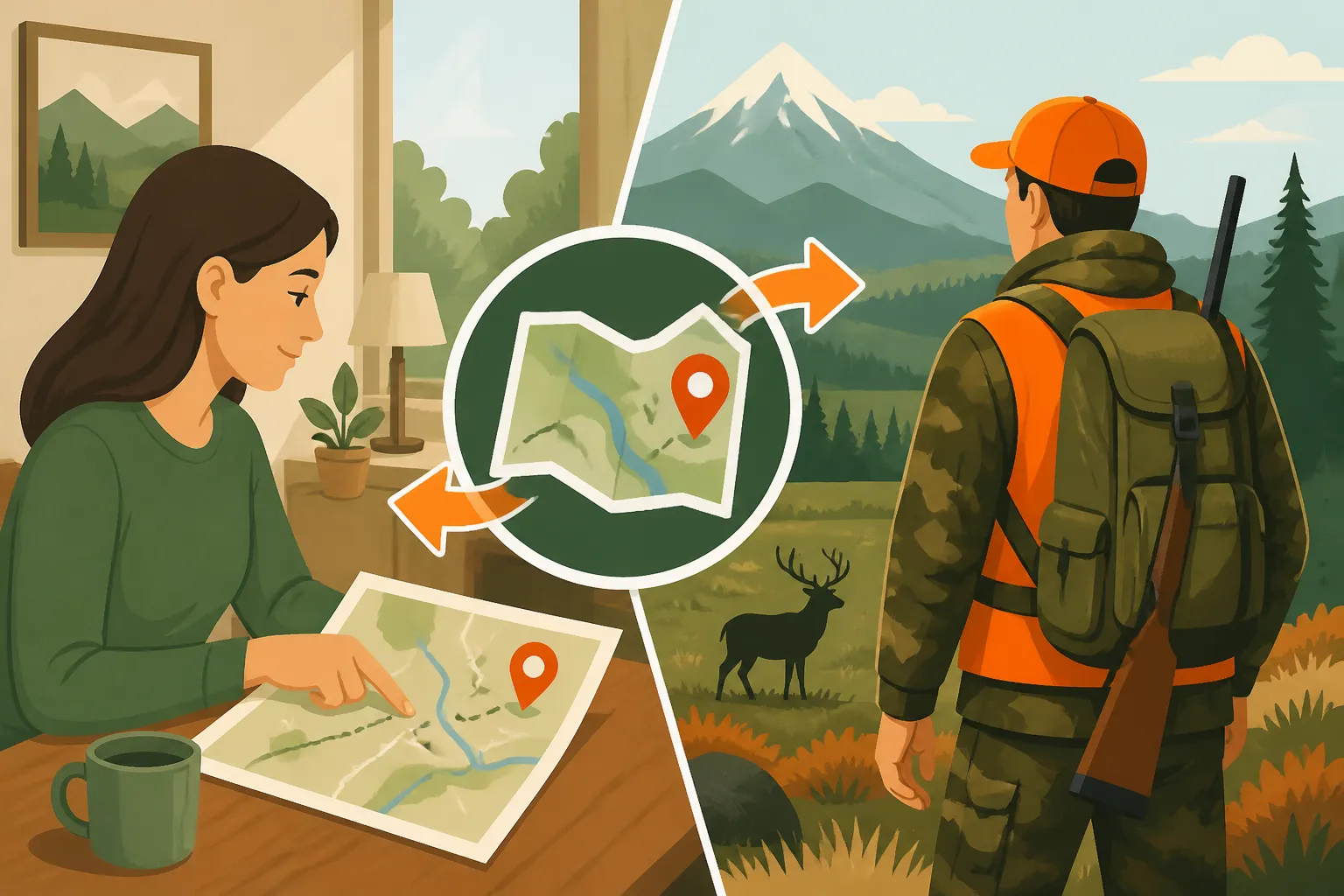
- Planned Route/Zones of Operation: This is where a mapping app like GoHunt can really shine. You can drop pins or draw polygons outlining your primary hunting zones, potential travel corridors, and backup areas. If you're going deep into a wilderness area for a Backpack Camps in Oregon Wilderness style hunt, sketch out your intended route day by day, including planned camps and water sources. Even if it's just general season deer hunting in a clearcut, mark the specific clearcuts or timber stands you plan to focus on.
- Camp Location: If you're setting up a base camp, provide its exact location, especially if it's off-grid. Include details on how to get there.
- Dates and Times: Your departure date and estimated time, your expected return date and time, and specific check-in times if you have any pre-arranged with your contact.
Gear Carried and Contingency Plans
Knowing what you have with you can help rescuers understand your capabilities and potential needs.
- Key Gear List: Mention important items like your tent, sleeping bag, stove, amount of food and water, water filter, fire starter, First Aid Kit Items for a Remote Hunt, two-way radio (if applicable, noting legal use while hunting), and any specific survival gear.
- Navigation Tools: Note if you're carrying a GPS device (and its type), a compass, paper maps, or relying solely on a phone app.
- Emergency Communications: If you have a satellite messenger (like a Garmin inReach or Zoleo) or a satellite phone, include its details and contact info. These devices are fantastic for providing peace of mind and are often lifesavers.
- Contingency Plans: What will you do if the weather turns? What if a specific road is closed? What if you encounter unexpected deep snow or a flooded creek? While you can't detail every possible contingency, acknowledging potential issues and your general approach to them can be helpful. For instance, if you're concerned about sudden snow, you might mention packing snowshoes or that you'll turn back if conditions worsen beyond a certain point. When going deep into the backcountry, also consider the maximum pack frame load weight for one hunter and if that will impact your ability to get out.
Sample Trip Plan Checklist
| Category | Information to Include |
|---|---|
| Personal Info | Full Name, Phone, Email, Hunter ID#, ODFW License#, Emergency Contacts (Name, Phone, Relationship), Medical Conditions, Medications, Allergies, Blood Type |
| Vehicle Info | Make, Model, Color, License Plate, Year, Distinguishing Features, Parking Location (GPS/Directions) |
| Hunt Details | ODFW Unit/Herd Range, Dates (Departure, Return), Expected Check-in Times, Primary Hunt Area (Map/GPS Coordinates), Secondary Hunt Areas, Main Camp Location (GPS/Directions) |
| Route/Movement | Intended Trailheads/Access Roads, Planned Route (daily if multi-day), Alternative Routes, Potential Bail-out Points |
| Gear List | Tent, Sleeping Bag, Cook System, Water Filter, Food Supply (days), Fire Starter, First Aid Kit, GPS Unit/Model, Satellite Messenger/Phone #, Two-Way Radio/Channels, Weapon Type, Ammunition |
| Weather/Hazards | Known Weather Forecast, Fire Danger/Restrictions, Road Closures (check Checking Oregon Fire Closures Before the Season and ODFW/Forest Service sites) |
| Other Notes | Plan for Getting Meat Out Before It Spoils in warm weather, expectations for cell service, any partners on the hunt |
Who Should You Leave Your Trip Plan With and How?
The person you entrust with your trip plan is crucial. This isn't just anyone; it needs to be someone responsible, reliable, and capable of taking action if you don't make contact as planned.
Choosing Your Reliable Contact Person
This individual needs to be more than just a friend or family member. They should ideally:
- Be Accessible: They need to be reachable during your hunt dates, not on their own remote vacation or without reliable phone service.
- Be Responsible and Level-Headed: In an emergency, panic helps no one. Your contact needs to be able to follow instructions, think clearly, and communicate effectively with authorities.
- Understand the Importance: They must grasp that this isn't just a courtesy, but a critical safety measure.
- Know the Protocol: Clearly explain to them what to do, and when to do it, if you miss a check-in. Don't leave them guessing. For example, instruct them to wait a specific number of hours past your expected check-in or return time before initiating calls or contacting emergency services.
It’s often a good idea to have a primary contact and a secondary backup, just in case your primary contact becomes unreachable. Ensure both individuals have the complete plan and understand their roles.
Effective Methods for Sharing Your Plan
Once you've crafted your detailed plan, getting it into the right hands in a usable format is key.
- Physical Copies: Print out at least two copies. One for your designated contact and one that you carry with you (perhaps laminated or stored in a waterproof bag) in your pack. This ensures you also have access to your own detailed plan if you need to review it or make a change.
- Digital Copies: Email it, share it via a cloud service (Google Drive, Dropbox), or use a messaging app. This provides a digital record and can be easily forwarded to emergency services if needed. Some hunting apps, like GoHunt, allow you to share your planned routes and waypoints directly with others, which is an incredibly efficient way to share highly detailed map data.
- Review Session: Before you head out, have a brief conversation with your contact. Walk them through the plan, point out key locations on a map (if you're using one), and reiterate the check-in times and the emergency protocol. Make sure they know who to call (local Sheriff's Office, OSP, or ODFW depending on the situation and location).
Updating Your Plan and Handling Emergencies
The best-laid plans often go awry, especially in the unpredictable world of Oregon hunting. Flexibility and communication are paramount.
When Your Plans Change Mid-Hunt
It’s rare for a hunting trip to stick precisely to the initial plan. Weather might force a change in location, you might find better sign in a different drainage, or a road could be unexpectedly closed. If your plans change significantly, and you have the means to communicate, always update your contact person.
- Satellite Communicators: This is where devices like Garmin inReach or Zoleo are invaluable. You can send short text messages with your new location, estimated return time, or any significant deviation from the original plan. Even if it's just a simple "Running late, found elk, still safe," it provides immense peace of mind.
- Spotty Cell Service: If you briefly get a bar of service, use it to send a quick text or make a short call to update your contact. Don't rely on it, but use any opportunity you get.
- Pre-arranged Protocols: Discuss with your contact beforehand how you’ll communicate changes. Maybe it's a specific code word or a pre-determined check-in phrase. The key is to avoid causing unnecessary alarm while still keeping them informed. When you’re Hunting Blacktails in Fog and Drizzle or tracking a buck after a fresh snow, conditions can change quickly, so being adaptable is important.
What to Do if You Don’t Hear Back
This is the scenario everyone dreads, but it's why the plan exists. Your designated contact needs clear instructions.
- Wait Period: Agree on a reasonable "grace period" after your scheduled check-in or return time. This accounts for minor delays, unexpected tough hiking, or simply losing track of time. For example, "If I haven't contacted you by 6 PM on Tuesday, wait until 9 PM before taking action."
- Initial Actions: After the grace period, the contact should first try to reach you via all available methods (phone, satellite device). They can also try other members of your hunting party if you included them in the plan.
- Contacting Authorities: If they still can't reach you, it's time to contact the local Sheriff’s Office or Oregon State Police (OSP). Provide them with the entire trip plan, including maps, vehicle details, and your last known location. Stress that you were expected to return by a certain time and have not made contact. Emphasize any medical conditions or specific dangers of the area (e.g., steep terrain, swift rivers). Your detailed trip plan will allow authorities to focus search and rescue efforts, potentially saving crucial hours, or even days, in the vast Oregon backcountry. This can be especially important if you are in a remote area for Calling Roosevelt Elk in Oregon Rainforest Timber or deep in Eastern Oregon looking for mule deer in juniper draws.
The Value of Communication Beyond the Hunt
Even after you're safely home, it’s good practice to let your contact know immediately. Don’t leave them wondering or initiating unnecessary alerts. A simple text or call saying, "I'm home, safe and sound!" closes the loop and reinforces the importance of this safety protocol for future adventures. Remember, the goal of a trip plan is peace of mind, for both you and those who care about you.
Disclaimer
The information provided in this guide is for informational purposes only and is not a substitute for professional safety advice or emergency preparedness training. Always prioritize your safety, carry appropriate gear, and understand the specific risks of your hunting location. Hunting regulations and emergency contact procedures in Oregon can change, so always consult the latest ODFW regulations and local authorities before your trip.