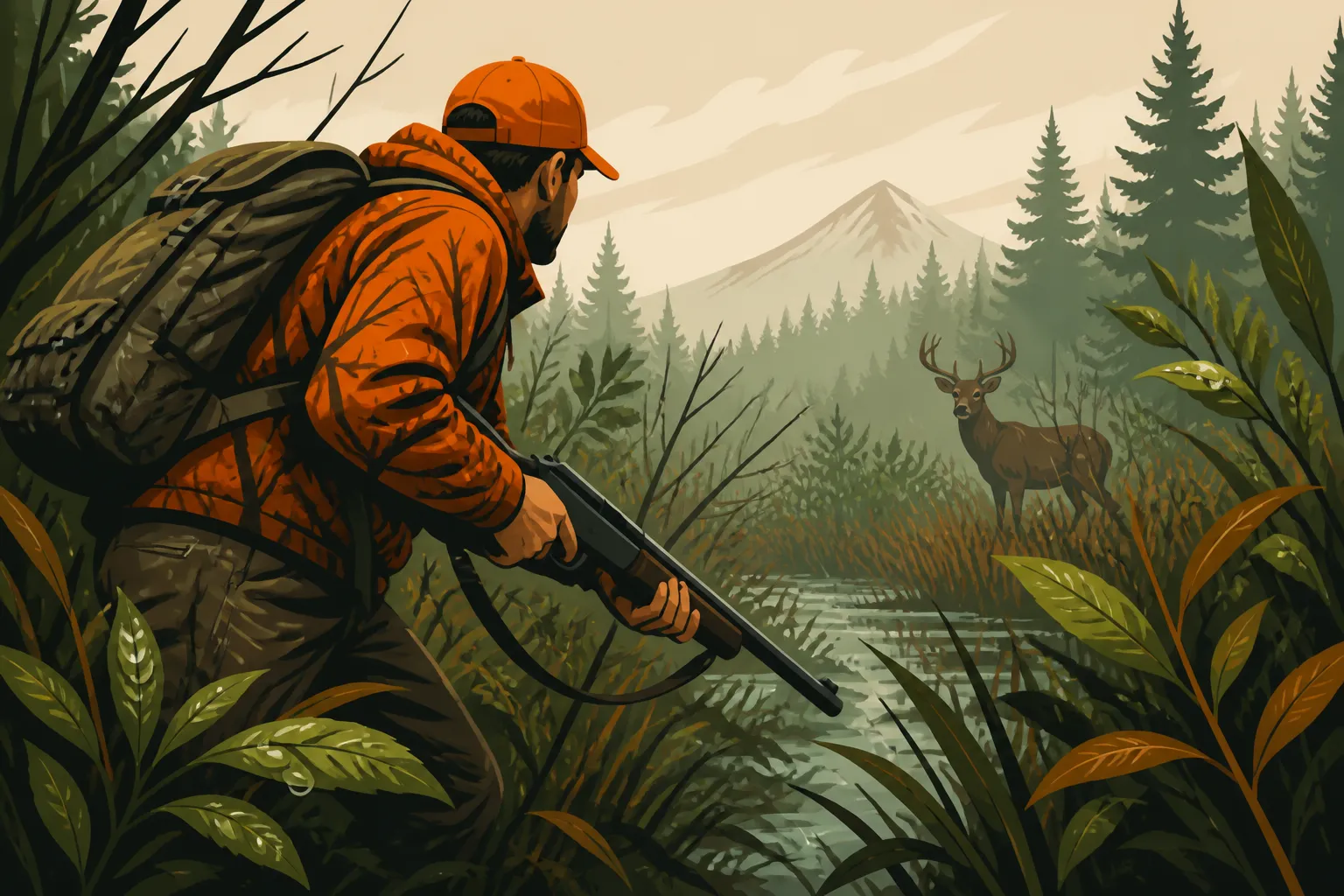
Still-Hunting Speed in Wet Brush
There’s almost nothing more frustrating than stepping into the Oregon woods after a good rain, trying to be as quiet as a ghost, only to have every branch crack, every leaf slosh, and every patch of mud announce your presence to every animal within a quarter mile. It feels like you're wearing an invisible bell, and any chance of a stealthy approach vanishes with the first noisy step. This guide aims to turn those wet, noisy conditions into your secret weapon, helping you master the art of still-hunting slowly and deliberately, getting you closer to game than you ever thought possible.
Understanding the Dynamics of Wet Brush Still-Hunting
Still-hunting in Oregon's diverse and often saturated environments is a true test of patience and skill. When the forest floor is damp, or the brush is thick with morning dew or recent rain, the dynamics shift dramatically, presenting both unique challenges and surprising opportunities for the observant hunter.
Why Wet Brush Presents a Unique Challenge
The primary challenge in wet brush is, of course, noise. Every single step can create a symphony of unwanted sounds – the squelch of mud underfoot, the sudden whap of a wet branch snapping back, the rustle of drenched ferns. This noise carries far further in the damp, quiet air, giving game a distinct advantage in detecting you long before you ever see them. It's not just the volume of the noise, but the type of noise; it’s often unnatural and sudden, triggering an animal's alarm system instantly.
Visibility can also be a tricky beast in wet conditions. While rain can reduce ambient light, making the woods feel darker, the moisture itself can also cause fog or mist, especially in thick timber or clearcuts along the coast. This can limit your line of sight, turning a normally open lane into a blurry mess. Then there's the scent factor: while rain can sometimes help wash away or diffuse human scent, it can also make the air heavier and carry scent along specific air currents differently. Animals like blacktail deer and Roosevelt elk are masters of their environment, and they know how to use these conditions to their advantage, often moving more cautiously or bedding in areas that offer them maximum protection against noisy, low-visibility threats. You're essentially trying to play a game of hide-and-seek where the "seek" part is inherently disadvantaged.
The Advantage of Slowing Down
Despite these challenges, wet conditions offer a unique advantage: they slow you down. And frankly, that's often exactly what we need. Most hunters move too fast, especially when still-hunting. The dampness forces a deliberate pace, making you more methodical, more observant, and ultimately, much more effective. When the world around you is wet and naturally muffled by the falling rain or lingering moisture, you can actually use the sporadic sounds of nature—a drip from a tree, the soft rustle of wind through wet leaves—to mask your own incredibly slow movements.
The core principle here is detection. The slower you move, the more time your eyes and ears have to process the environment around you. You’re not just walking; you’re analyzing every shadow, every texture, every flicker of movement. This allows you to pick up on subtle cues: an ear twitch, the flick of a tail, a patch of hide that looks "wrong" against the backdrop of the trees. A slower pace means you can often spot the animal before it spots you, giving you the critical seconds needed to set up a shot, or at least get a better look. It's about letting the landscape reveal itself, rather than trying to force your way through it. This patient approach pays dividends, especially when still-hunting blacktails in wet Oregon coastal brush where the vegetation is incredibly dense.
Optimal Still-Hunting Speed and Pace Adjustment
Still-hunting effectively in wet brush isn't just about moving slow; it's about moving smart. It’s a dynamic dance with the environment, constantly adjusting your rhythm to match the conditions and the behavior of the game you're pursuing.
The "One Step, Stop, Look, Listen" Rule
This isn't just a rule; it's a mantra for successful still-hunting in challenging conditions. Imagine you’re trying to walk across a minefield, where every movement needs to be perfectly calculated. That's the mindset. You take one deliberate step – not a shuffle, not a hurried stride – but a single, controlled movement where your foot lands exactly where you intend it to, ideally on soft ground or a stable rock. Then, you stop. Completely.
During that stop, your senses go into overdrive. First, you look. Scan from near to far, side to side, paying particular attention to areas where an animal might bed or feed. Use your binoculars, even in thick cover, to dissect patches of brush that look promising. Then, you listen. Turn your head slightly, letting your ears pick up the subtle sounds of the forest – a distant bird, the drip of water, or hopefully, the tell-tale snap of a twig that wasn't you. This entire process might take 10, 20, or even 30 seconds before you take the next step. It sounds excruciatingly slow, and it is, but it's how you avoid blowing out game and how you'll find success when hunting blacktails in fog and drizzle.
Factors Influencing Your Pace
There’s no universal speed for still-hunting in wet conditions; your pace must be a fluid response to your surroundings. One of the biggest factors is terrain. Are you climbing a steep, slippery hillside in the Coast Range? Your pace will naturally be slower and more cautious to prevent falls and reduce noise. Are you moving through a relatively flat, open burn where visibility is better but cover is sparse? You might pick up the pace slightly, though still maintaining stealth. Thick cover density dictates speed more than almost anything else. Pushing through a dense thicket of salal and sword fern requires an almost glacial pace, one careful foot placement at a time, to avoid thrashing and snapping branches.
Wind and rain intensity also play a critical role. A steady, light drizzle can actually be your friend, muffling your footsteps and masking your movement. In these conditions, you might be able to move a touch faster, or at least feel more confident in your stealth. However, a driving rain can reduce visibility so much that you need to slow down to compensate. A strong, consistent wind can also cover your noise, but it can also make animals more skittish or change their patterns, often causing them to bed down more securely. Always try to move into the wind or with a crosswind to keep your scent from blowing ahead of you. Finally, animal sign dictates your pace. If you're encountering fresh tracks, droppings, or rubs, especially in areas like a recently logged clearcut, your internal alarm should be blaring: slow down. You are in the immediate vicinity of game, and every subsequent step needs to be taken with extreme caution. This is particularly true when you’re reading a two-year-old clearcut for bucks. Tools like GoHunt can be invaluable here, allowing you to mark recent sign and plan your approach with greater precision, looking for subtle changes in elevation or cover that might indicate a bedding area.
Gear and Techniques for Silent Movement
The right gear, combined with mindful techniques, is your best friend when still-hunting in wet Oregon brush. It’s not just about staying dry; it’s about making sure your equipment doesn't betray you.
Footwear and Clothing for Stealth and Comfort
Your feet are your foundation, and in wet conditions, the wrong footwear can lead to misery and noise. Opt for waterproof boots that offer excellent traction but aren't overly bulky or stiff, which can make noise. A flexible sole allows you to feel the ground beneath you, helping you identify softer spots to step. Many hunters swear by boots like Kenetrek or Schnee's, known for their balance of durability, waterproofing, and comfort on long treks. When choosing boots for wet coastal hunting, consider how much ankle support you need for navigating slippery, uneven terrain.
For clothing, layers are paramount, but critically, those layers need to be quiet. Avoid noisy fabrics like stiff nylons or crinkly rain shells. Modern softshell materials or brushed tricot fabrics are excellent choices, as they are often water-resistant, breathable, and incredibly quiet. A good outer layer of rain gear that actually stays dry and doesn't sound like a plastic bag wrestling match is worth its weight in gold. Look for brands like Sitka or KUIU which have invested heavily in quiet, weather-resistant fabrics. Start with a moisture-wicking base layer, add an insulating mid-layer (fleece or merino wool is quiet and warm), and top it with your quiet, waterproof outer shell. Remember, saturated cotton is your enemy; it's cold, heavy, and takes forever to dry. The goal is to move silently, stay warm, and remain dry enough to be comfortable and focused.
Minimizing Noise from Your Equipment
Beyond your clothing, every piece of gear you carry has the potential to make noise. Your backpack is a prime offender. Before you even leave camp, empty your pack and repack it with noisy items wrapped in soft clothing or stuffed into compression sacks. Make sure nothing is rattling or clanking. Your water bottle, calls, knives, and other hard objects need to be secured. Some hunters even line their pack with a soft fleece blanket to absorb sound.
Your rifle sling can be another source of noise. A neoprene or padded sling is generally quieter than a rigid leather or nylon strap. Ensure it’s snug against the rifle so it doesn't swing and hit your stock or barrel as you move. A little electrical tape or even camouflage athletic tape can be used to secure swivels or other potential rattling points on your rifle itself. If you're carrying a bow, ensure all accessories are tight, and your arrows are secured in a quiver that doesn't allow them to rattle. Even small things like zippers on your pockets can be noisy; try to use quiet snaps or silent magnet closures if possible. Taking the time to silence your gear before heading into the woods will significantly increase your chances of getting close to game without alerting them. Checking your pack and gear with a resource like GoHunt's equipment lists can help you ensure you haven't forgotten anything essential, or overlooked a potential noise source.
Reading Animal Behavior in Wet Conditions
Animals react differently to wet weather, and understanding these behaviors is crucial for successful still-hunting. They adapt their movements, feeding habits, and bedding locations, giving you clues if you know what to look for.
How Rain and Moisture Affect Deer and Elk
When rain sets in, or the forest is simply soaking wet, deer and elk often alter their routines. While a light rain might get them moving, a heavy downpour usually sends them seeking shelter. They'll gravitate towards dense timber stands that offer a canopy overhead, providing some protection from the elements. Think about the thickest conifer stands, especially those with dense understory, in areas like the Coast Range. These spots provide thermal cover as well as a physical barrier from the rain. They might also move to the lee side of ridges or hills, finding protection from the wind and driving rain. When the rain lets up, even briefly, animals often emerge to feed, making dawn, dusk, and the periods immediately following a shower prime still-hunting times. Understanding this rhythm is key to archery elk hunting Oregon's August and September seasons, when sporadic rain can be common.
Their senses are also affected. While human scent might be washed away or diffused, their own incredible sense of smell is still highly effective, perhaps even more so with the heavy, damp air. However, their hearing can be slightly dulled by the patter of rain or the drip of water from trees, which is where your slow, deliberate movement can become an advantage. Their vision, however, remains sharp. They often become more vigilant, especially after a storm, constantly scanning for threats. Knowing this, your focus should be on moving quietly and slowly, using every piece of available cover to break up your outline, much like you would if you were glassing Eastern Oregon rimrock for mule deer in bright, clear conditions.
Identifying Fresh Sign in a Saturated Environment
Finding fresh sign in a wet environment requires a keen eye and a different approach than in dry conditions. Tracks become your most valuable indicator. In soft mud or damp soil, tracks can be incredibly clear. Look for sharp edges that haven't slumped or filled with water. If there's standing water in a track, the amount of sediment stirred up (or lack thereof) can tell you how recent it is. Remember, a deep, clear track often indicates a heavier animal or one moving quickly.
Droppings are another key. Fresh droppings will often appear shiny and moist, especially in the rain, and will hold their form well. Older droppings will be duller, might be flattened or spread out, and could be starting to decompose. Rubs and scrapes can also tell a story. While a rub on a tree might look the same wet or dry, the edges of the rubbed bark might show more recent exposure to moisture, or you might find fresh mud caked on the base of the tree from a deer that just left. For elk, look for fresh mud wallows; these are highly active during wet periods, and a warm, muddy, recently used wallow is a sign you're close. When blood trailing in Oregon rainforest understory, remember that rain can wash away or dilute blood, making it even harder to follow, but it also keeps the ground soft for tracks. Using a tool like GoHunt to mark significant signs on your map allows you to build a better picture of animal movement and focus your still-hunting efforts in the most promising areas.
Still-Hunting Speed by Cover Density
| Cover Density | Recommended Speed | Key Considerations |
|---|---|---|
| Open Timber/Light Brush | Very Slow (10-20 yards/minute) | Maximum visibility, but less cover to hide your movement. Focus on scanning ahead. |
| Moderate Brush/Mixed Timber | Extremely Slow (5-10 yards/minute) | Balance between visibility and cover. Use every tree and bush to break up your outline. |
| Dense Thickets/Heavy Clearcuts | Crawling Pace (1-5 yards/minute) | Prioritize silence above all else. Foot placement is critical. Expect close encounters. |
| Rainy/Windy Conditions | Adjust based on sound masking | Use natural noise to your advantage, but maintain visual vigilance. May allow slightly faster effective movement. |
| Fresh Sign/Bedding Areas | Nearly Stationary (0-1 yard/minute) | Every step is a gamble. Maximize observation, minimize movement. Think "stalk" more than "hunt." |
Trying to still-hunt when the woods are wet can test the patience of even the most seasoned hunter. But by embracing the challenges, slowing down to a methodical crawl, making smart gear choices, and understanding how game behaves in these conditions, you can turn a noisy, difficult hunt into a triumph of stealth and observation. Remember, the goal isn't just to move; it's to move unseen and unheard.
Disclaimer
Hunting is an inherently dangerous activity. Always prioritize safety, follow all local and state regulations, and ensure you are familiar with your equipment and surroundings. The information provided in this guide is for informational purposes only and should not replace professional training or official Oregon Department of Fish and Wildlife (ODFW) regulations. Conditions in the field can change rapidly, and hunters must use their own judgment and take responsibility for their actions.