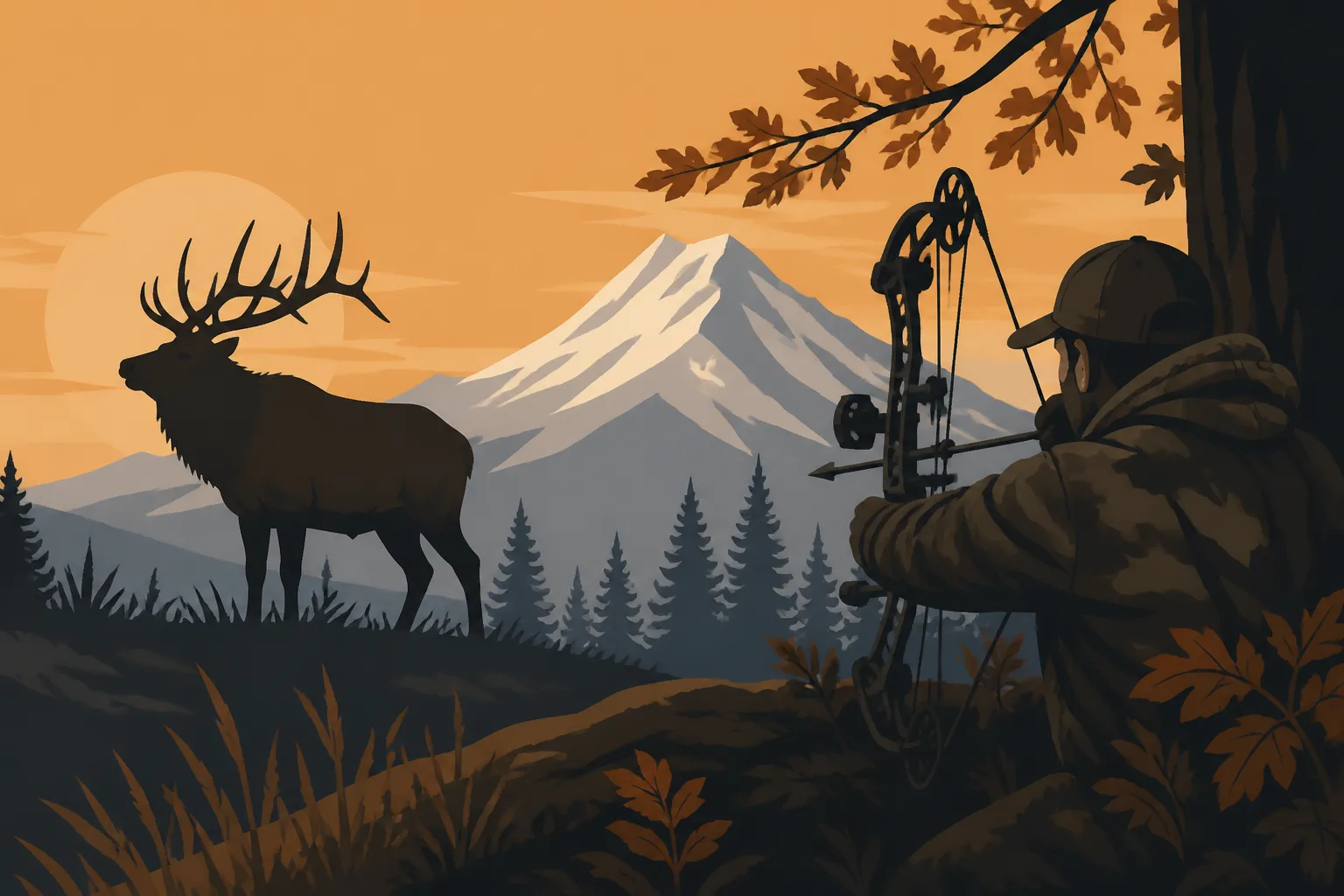
When Bulls Go Quiet in Late Archery Season
There's nothing quite like the sound of a bull elk bugle cutting through the crisp September air. It's the sound that pulls us into the woods, fueled by anticipation and the primal urge of the rut. But then, as late archery season rolls around in Oregon, that symphony often goes quiet. You're left standing in what felt like hot country just days before, and now all you hear is the wind in the trees and the distant rustle of squirrels. This sudden silence can be incredibly frustrating, leaving you wondering if the elk vanished or if your strategy is simply all wrong. This guide will delve into why bulls seem to disappear and go quiet during the latter half of Oregon's archery season and, more importantly, what you can do to adapt and still find success.
Understanding the Seasonal Shift in Bull Behavior
The wild, vocal displays of the early archery season are tied directly to the peak of the elk rut. As the calendar pages turn, so does the elk's primary focus, moving away from aggressive breeding and territorial battles.
The End of the Intense Rut Phase
When August transitions into September, and especially as we push past the middle of the month, that frenzied, constant bugling and the relentless chasing of cows that defined the early rut begins to wind down. Bulls, particularly the dominant herd bulls, are utterly exhausted. They’ve spent weeks, sometimes over a month, burning an incredible amount of energy, constantly breeding receptive cows, fighting off challengers, and hardly eating or resting. Imagine running a marathon, then fighting a boxing match, and then immediately doing it all again for weeks on end—that’s essentially what these bulls have been doing.
Their testosterone levels, which drive all that vocalization and aggressive behavior, start to naturally recede. Their bodies are screaming for recovery, for calories, and for a break from the high-stress environment of the rut. This shift means they are far less interested in challenging other bulls or advertising their presence to cows they've likely already bred. Instead, their instinct pushes them towards quieter, more secure areas where they can rest, feed, and begin the long process of regaining the weight they’ve shed. They might still make a few soft cow calls, or a quiet chuckle, but the ear-splitting bugles that echo through the canyons become rare, reserved only for very specific, often low-pressure, situations. This is a critical time for hunters to understand the nuance of elk communication, as discussed in Cow Calling Versus Bugling in Heavy Timber, because the louder, more aggressive calls of early season will likely fall on deaf ears or, worse, spook an already wary animal.
Pressure from Early Season Hunting
Another significant factor in the late-season silence is the sheer amount of human pressure. Oregon's archery elk season opens in late August, and for weeks, hunters are spread across public lands, often concentrating in popular units. Even if most hunters aren't successful, their presence is felt. Elk, especially older bulls, are incredibly intelligent and learn from experience. They quickly associate human scent, unnatural sounds, and constant intrusion with danger.
Early season calls, even well-executed ones, can become triggers for alarm rather than curiosity. A bull that might have responded aggressively to a bugle in the first week of September might now bolt at the slightest hint of a human imitation. This pressure drives elk into thicker, more remote, and often harder-to-reach pockets of timber. They become more nocturnal, moving primarily under the cover of darkness, bedding down in the deepest, nastiest thickets during daylight hours. Big bulls, having survived multiple hunting seasons and encounters, become masters of evasion. They'll seek out steep canyons, dense old-growth, or areas with difficult access where they feel secure from constant intrusion. Understanding this increased wariness is paramount, as your traditional early season tactics outlined in Archery Elk Hunting Oregon's August and September Seasons will need a serious overhaul to be effective.
Environmental Factors and How They Mute the Bugle
Beyond the biological urges of the rut and the impact of human presence, the natural world itself plays a huge role in shifting elk behavior and silencing their bugles as the season wears on.
Changing Weather Patterns
As we progress through September and into early October, Oregon's weather undergoes a significant transformation. The warm, dry days of summer give way to cooler temperatures, shorter daylight hours, and often, the first hints of autumn's rain and even early snow at higher elevations. Hard frosts become common, signaling a distinct end to the growing season for many plants. These changes directly impact elk activity and their willingness to vocalize.
Cooler weather means elk don't need to seek shade or frequent water sources as much during the middle of the day, making them less visible and active in open areas. They can remain bedded or move through timber without overheating. Wind, a constant companion in many parts of Oregon, also plays a silencing role. Bugles and calls don't carry as far in windy conditions, reducing the effectiveness and therefore the incentive for elk to vocalize. Heavy rain, particularly in the Coast Range or other dense timbered areas, makes elk focus on staying warm and dry, often hunkering down in thick cover. Sounds become muffled, and the general clamor of the weather makes vocal communication less efficient. In these damp conditions, it's not just the elk that go quiet; it’s also challenging to keep your gear functioning optimally, making tips on Keeping a Bowstring Dry in Coastal Rain particularly relevant. Elk will often seek shelter in the thickest timber, making them extremely difficult to locate without physically still-hunting their bedding areas.
Food Source Shifts
Elk diets are highly adaptive, and as the seasons change, so do their preferred forage. Early in the archery season, especially in August and early September, elk might be feasting on lush grasses, various forbs, and even agricultural crops in some areas. However, as cooler weather sets in and frosts become more frequent, many of these succulent plants begin to dry up, lose their nutritional value, or simply die back.
This forces elk to shift their feeding patterns and seek out alternative food sources. This might include acorns, which can be a huge draw in oak stands, or late-season berries like huckleberries if they're still available at lower elevations. More often, they'll transition to browse – the tender shoots and leaves of woody plants – or move into old burns where new growth is coming up, as highlighted in strategies for Hunting a Recent Burn for Elk. This change in diet often means a change in location. Elk will move from open meadows or clearcuts that were popular earlier in the season into darker, denser timber where browse is available, or onto specific slopes where acorns are falling. These new feeding areas are frequently in security cover, where the elk feel safe from predators (including hunters), further contributing to their overall quietness. Understanding these dietary shifts is crucial, as finding the food source is often key to finding the elk in late archery season.
Adapting Your Strategy When Bulls Go Silent
When the woods go quiet, trying to force a bull to bugle is often an exercise in futility. Instead, successful late-season archery hunters adapt their tactics to the elk's newfound wariness and focus on different indicators of their presence.
Shifting from Calling to Still-Hunting
The peak rut is over, and with it, the effectiveness of aggressive calling sequences. Attempting to locate elk by repeatedly bugling or cow calling in late archery season is often counterproductive; you're more likely to educate or spook an already wary animal. Instead, the most effective strategy becomes a patient, quiet, and deliberate approach: still-hunting.
Still-hunting involves moving through the elk's habitat at an incredibly slow pace, taking one or two steps, then pausing for several minutes to intently scan, listen, and smell. Think of yourself as a predator, blending into the environment. You're not looking for a response to a call, but for the elk themselves – a flicker of an ear, a patch of hide, a horizontal line in a vertical forest. Every shadow and downed log should be scrutinized. Pay close attention to the wind, ensuring it's in your favor, and use thermals to your advantage, especially as they switch morning and evening. You're looking for fresh sign – tracks in soft ground, newly rubbed trees (often indicating a bull scraping velvet or frustration, even if not actively bugling), and fresh droppings. These tell you an elk was here, and likely is here, even if silent. Learning the art of Still-Hunting Speed in Wet Brush is essential for this tactic, particularly in Oregon's often damp and noisy coastal forests.
Focusing on Thermal Hubs and Security Cover
Late in the archery season, an elk's number one priority shifts from breeding to survival and recovery. This means they will gravitate towards areas that offer maximum security and efficient movement. These spots are often referred to as "thermal hubs" or simply "security cover." These typically include dense stands of timber, steep and broken country, north-facing slopes, and deep canyons or drainages – places where human intrusion is minimal and escape routes are plentiful.
Thermal hubs are specific points where rising and falling air currents converge, offering an animal an advantage in detecting scent from multiple directions. In the morning, as the sun warms the slopes, air currents typically rise. In the evening, as temperatures drop, air currents fall. A savvy bull will bed in a spot where it can watch its backtrail and have the wind deliver scent from potential dangers moving uphill or downhill. These areas are chosen not just for thermal regulation but also for their ability to hide animals and provide immediate escape routes into even thicker cover. Approaching these spots requires extreme caution, often coming in from above or along benches, always with the wind in your favor. It’s not about finding them with a call, but by understanding their likely hideouts. While typically discussed in the context of mule deer, the principles of Finding Mule Deer in Juniper Draws can be adapted to understanding how elk utilize similar dense, security-rich habitats in timbered areas.
Leveraging Scouting and E-Scouting
Pre-season scouting is always a solid foundation, but when bulls go quiet, you need real-time, updated intelligence. This is where a combination of physical ground scouting and advanced e-scouting tools becomes indispensable. You need to identify new bedding areas, overlooked pockets of cover, hidden water sources, and the current preferred feeding areas that may have changed since early September.
Start with digital mapping tools like GoHunt, Gaia GPS, or onX Hunt. Utilize their various layers to pinpoint areas of dense canopy cover, recent logging operations (which can create new browse but also new access points for hunters), or old burn areas that might now be regenerating prime feed. Look for subtle saddles, benches, and drainages that act as natural travel corridors or offer overlooked security. GoHunt’s detailed maps and data, for instance, can help you visualize elevation changes, aspect, and proximity to water, which are all critical factors for late-season elk. Then, get boots on the ground. Walk those potential areas, looking for fresh sign: tracks, fresh droppings, and recently rubbed trees. Pay attention to the subtle cues that tell you elk are moving through a particular area. E-scouting can significantly reduce wasted time and effort, allowing you to focus your limited hunting days on the highest-probability areas, as thoroughly explained in E-Scouting Oregon Units With Satellite Imagery.
The Mental Game and Patience in Late Season Archery
Hunting silent bulls is as much a mental challenge as it is a physical one. It requires a significant shift in mindset from the adrenaline-fueled rut hunting of early September.
Managing Expectations and Frustration
It's natural to feel a pang of frustration when the woods, which were alive with bugles just days or weeks ago, suddenly fall silent. You might start second-guessing your locations, your calling, or even your general approach. But it's crucial to manage these expectations. Late-season archery hunting is a completely different beast than the peak rut. Success isn't measured by how many bulls you get to scream back at you; it's about the quiet, methodical pursuit, the fleeting glimpse of an antler tip through the timber, or the silent stalk that culminates in a shot opportunity.
You might go days without hearing a sound or seeing an elk. This is normal. Embrace the challenge, knowing that you're pursuing one of the wariest animals in one of the most demanding phases of the hunt. Enjoy the sheer beauty of the Oregon backcountry, the crisp air, and the quiet solitude. Remember that perseverance often pays off. The hunter who can stay positive, focused, and persistent through the long, silent hours is often the one who eventually finds success. It's about being a complete hunter, not just a skilled caller, and appreciating the quiet pursuit.
Perseverance and Low-Impact Tactics
Just because bulls go quiet doesn't mean they've disappeared from the face of the earth. They're still there, just far more wary and elusive. Your job now is to embrace perseverance and employ extremely low-impact tactics. This means slowing down even further, moving with absolute stealth, and being hyper-aware of every gust of wind, every snap of a twig, and every shadow.
Think like a seasoned predator. Minimize your scent, wear quiet clothing, and move only when you can do so silently. Use every bit of available cover, blending into the landscape rather than moving conspicuously through it. If you suspect elk are in a thicket, don't bust in carelessly. Instead, circle downwind, or position yourself to observe, waiting for a slight shift in wind or for them to move on their own. Sometimes, a subtle, soft cow chirp or a single light mew is all you need to elicit a response, not a full-blown bugle. But this must be done with extreme caution, often from a distance, or when you believe you're very close. It’s about being present, patient, and prepared to take advantage of the brief window of opportunity that might arise. Even a detailed understanding of the landscape, like Reading a Travel Management Area Map Before You Drive, can help you avoid pressured areas and find those overlooked, quiet havens where a bull might feel safe enough to reveal itself.
Strategy Shift Table for Late Archery Elk
| Feature / Strategy | Early Archery Season (Peak Rut) | Late Archery Season (Post-Rut/Quiet) |
|---|---|---|
| Bull Vocalization | High activity: Loud bugles, growls, chuckles, challenges. | Low activity: Very quiet, soft mews, occasional soft bugle. |
| Primary Tactic | Locating via bugling, aggressive calling, cow calling. | Still-hunting, silent stalking, observation. |
| Elk Behavior | More visible, often distracted by breeding, fighting. | Extremely wary, nocturnal, focused on security and food. |
| Preferred Habitat | Open meadows, clearcuts, transition zones for breeding. | Dense timber, steep canyons, north slopes, thick security cover. |
| Calling Strategy | Aggressive, challenging bugles; locator calls. | Minimal, soft cow mews; selective, subtle communication if any. |
| Movement Speed | Moderate to fast, covering ground to locate active bulls. | Extremely slow, deliberate, one step at a time. |
| Focus | Breeding activity, herd interaction. | Rest, recovery, feeding, security. |
| Key to Success | Effective calling and quick setups. | Patience, stealth, reading sign, understanding elk security needs. |
| Optics | Versatile for open and timbered country. | Critical for picking apart dark timber; see Optics for Dark Timber Versus Open Sage. |
| Physical Demands | High due to chasing and calling. | High due to long, slow stalks and accessing dense areas; see Physical Training for an Oregon Elk Hunt. |
Disclaimer
Please be aware that hunting regulations, seasons, and access rules in Oregon can change. Always consult the latest Oregon Department of Fish and Wildlife (ODFW) regulations pamphlet before heading into the field. This information is for educational and entertainment purposes only and should not replace official sources or responsible hunting practices. Safety should always be your top priority.