Bird Hunting After Big Game Season Ends
As the crisp air of late fall settles over Oregon, many of us feel that familiar twinge of bittersweet reflection. Big game seasons for deer and elk, which have consumed our thoughts and weekends for months, are winding down, leaving a bit of a void. It's easy to pack away the gear, hang up the rifle, and start dreaming of next year's draw results. But for those of us who just can't get enough of being out in Oregon's incredible landscapes, the end of big game season doesn't mean the end of hunting. In fact, it opens up a whole new world of fast-paced, action-packed bird hunting opportunities that can keep you afield well into winter.
The Post-Big Game Transition: Shifting Focus and Skills
After weeks, or even months, dedicated to the singular pursuit of a majestic bull elk or a wily mule deer, switching gears to bird hunting can feel a little jarring at first. The rhythm is different, the gear is lighter, and the quarry demands a whole new set of skills. But embracing this change is precisely what makes bird hunting such a rewarding extension of your season. It's not about replacing big game; it's about complementing it, offering a unique set of challenges and joys.
Adjusting Your Mindset from Stalking to Flushing
When you're chasing elk or deer, every step is calculated, every movement slow, every breath held. You're trying to melt into the landscape, to become invisible, to outsmart an animal whose senses are finely tuned to detect the slightest anomaly. Stealth is paramount. With bird hunting, especially for upland species like chukar or quail, the game changes dramatically. It's often about covering ground, pushing through cover, and being ready for explosive flushes. Instead of carefully picking your way through timber, you might be charging up a rocky hillside, heart pounding, listening for the tell-tale cackle of a chukar covey. The shift from patient, quiet stalking to active, sometimes noisy, pursuit requires a mental adjustment. You're still observing the landscape, still reading sign, but now you're looking for different clues: scat, feathers, dusting areas, and prime habitat where birds will hold. This invigorates your hunting senses in a completely different way, keeping you sharp and engaged even after the big game pressure is off.
Understanding the Different Gear Requirements
One of the most immediate changes you'll notice when transitioning from big game to bird hunting is the gear. Gone are the heavy magnum rifles, the powerful optics, and the bulky packs built for hauling out hundreds of pounds of meat. Bird hunting calls for a lighter, faster approach. Your primary tool becomes a shotgun, typically a 12 or 20 gauge, often fitted with more open chokes like improved cylinder or modified for quicker, spreading patterns. Ammunition shifts from single, precise bullets to a shower of pellets designed to hit a fast-moving target in the air. You'll also likely trade your waterproof, insulated hiking boots for something lighter and more agile, though still sturdy enough for rough terrain if you're chasing chukar.
Layering your clothing becomes even more critical because you'll be exerting yourself more consistently. Blaze orange is often a mandatory safety requirement for upland bird hunting on public lands, a stark contrast to the subdued earth tones preferred for big game. Instead of a large meat-hauling pack, you'll need a bird vest with plenty of pockets for shells, water, a first-aid kit, and a large game pouch for carrying your birds. For waterfowl, the gear changes again, requiring specialized items like waders, decoys, calls, and perhaps a blind. It's a fantastic excuse to expand your hunting kit and dive into new aspects of the sport.
Oregon's Upland Bird Bonanza: From Sagebrush to Timber
Oregon is a surprisingly diverse state for upland bird hunting, offering everything from high-desert chukar to dense timber grouse. Each species presents its own unique challenges and rewards, making it a perfect way to keep your hunting skills sharp and explore new corners of the state after the big game rush.
Chukar and Quail: The High Desert's Fast Flyers
If you're looking for a serious workout and some of the most exciting bird hunting Oregon has to offer, look no further than the chukar. These Asiatic partridges inhabit the steep, rocky, arid canyons and rimrock country of Eastern Oregon. Think of places like the breaks of the John Day River, the Owyhee Canyonlands, or parts of Hells Canyon. Chukar hunting isn't for the faint of heart; it involves significant elevation changes, traversing loose rock, and often covering many miles on foot. But the reward of a covey flush, with 20 or more birds exploding from cover, is truly exhilarating. They're notoriously tough birds, flying at incredible speeds, and often diving straight down canyon walls once flushed. Success often hinges on getting above them and driving them uphill for a better shot opportunity. This is where Chukar Country Footwear and Fitness becomes absolutely critical. You'll want boots with excellent ankle support and traction, and you need to be in decent shape.
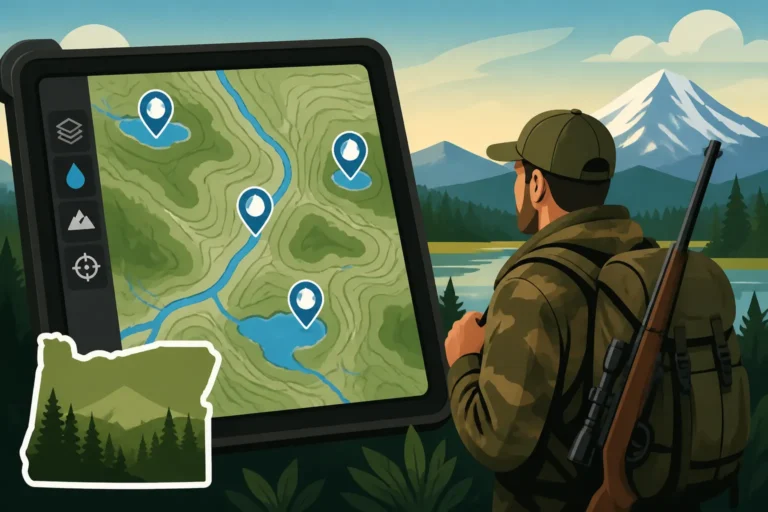
Alongside chukar, you'll find various species of quail in Oregon. Valley quail are widespread in the brushy draws and riparian zones of agricultural lands and lower elevations in Western and Eastern Oregon. Mountain quail prefer higher elevations, often found in dense timber edges and brushy areas within the Cascades and Coast Range. Hunting quail often involves working edges and thick cover, listening for their distinctive calls, and being ready for a sudden flush. A good bird dog, especially one that can hold a point, is an invaluable asset for both chukar and quail. When you're trying to locate prime habitat for these birds, resources like the GoHunt mapping system can be incredibly useful for identifying public land access and terrain features like steep canyons or draws that hold water. This kind of detailed satellite imagery can help you pinpoint promising spots before you even leave home.
Ruffed and Blue Grouse: The Forest Dwellers
For those who prefer the quiet solitude of the forest, Oregon's grouse populations offer a different kind of challenge. Ruffed grouse are found throughout Western and Eastern Oregon's timbered areas, favoring mixed deciduous and conifer forests with plenty of dense undergrowth. They're often called "thunder chickens" for their explosive, noisy flush that can startle even the most seasoned hunter. They're typically solitary birds or found in small family groups, and hunting them often involves still-hunting through quiet woods, listening for their distinctive drumming sound, or walking old logging roads and timber edges. They can be tricky to spot before they flush, blending perfectly with the forest floor.
Blue grouse, often called Dusky grouse in Oregon, inhabit higher elevations in the Cascades, Coast Range, and Blue Mountains, favoring open timber stands, mountain meadows, and old clearcuts. These birds are known for being much more approachable than ruffed grouse, sometimes even holding tight as you walk past, only flushing at the last second. They offer a great opportunity for hunters to explore new terrain, often coinciding with areas that hold big game earlier in the season. Learning about Ruffed Grouse in Oregon Forests and Blue Grouse at High Elevation can significantly improve your chances of success.
Pheasants and Turkeys: Other Upland Opportunities
While not as widespread or abundant as chukar or grouse, Oregon does offer limited pheasant hunting opportunities. These beautiful birds are primarily found in agricultural areas, particularly in the Umatilla Basin and parts of the Willamette Valley. Many of these areas are private land, but ODFW sometimes releases pheasants on certain wildlife areas to provide public hunting opportunities. It’s always worth checking the latest regulations and ODFW announcements for these special hunts.
Wild turkeys, specifically the Rio Grande subspecies, have seen a significant population increase and range expansion across Oregon in recent decades. While many hunters focus on the spring gobbler season, there is also a fall season that often overlaps with or extends beyond the close of big game seasons. Fall turkey hunting is a different beast than spring, often involving calling in flocks or "flushing and regrouping" tactics. Understanding Oregon Turkey Subspecies and Range is key to finding success.
Waterfowl Hunting: Embracing the Wet and Wild
When the rain truly sets in and the uplands become less inviting, Oregon's waterfowl hunting comes alive. The state is a major stop on the Pacific Flyway, offering incredible opportunities for ducks and geese, particularly in the late fall and winter months.
Ducks: Divers, Dabblers, and Decoys
Oregon is home to a wide variety of duck species, broadly categorized into dabbling ducks and diving ducks. Dabblers, like mallards, wigeon, and pintails, feed on the surface or by tipping up in shallow water, and are often found in marshes, flooded fields, and slow-moving rivers. Divers, such as canvasbacks, scaup, and buffleheads, prefer deeper water, plunging entirely underwater to feed on aquatic vegetation and invertebrates.
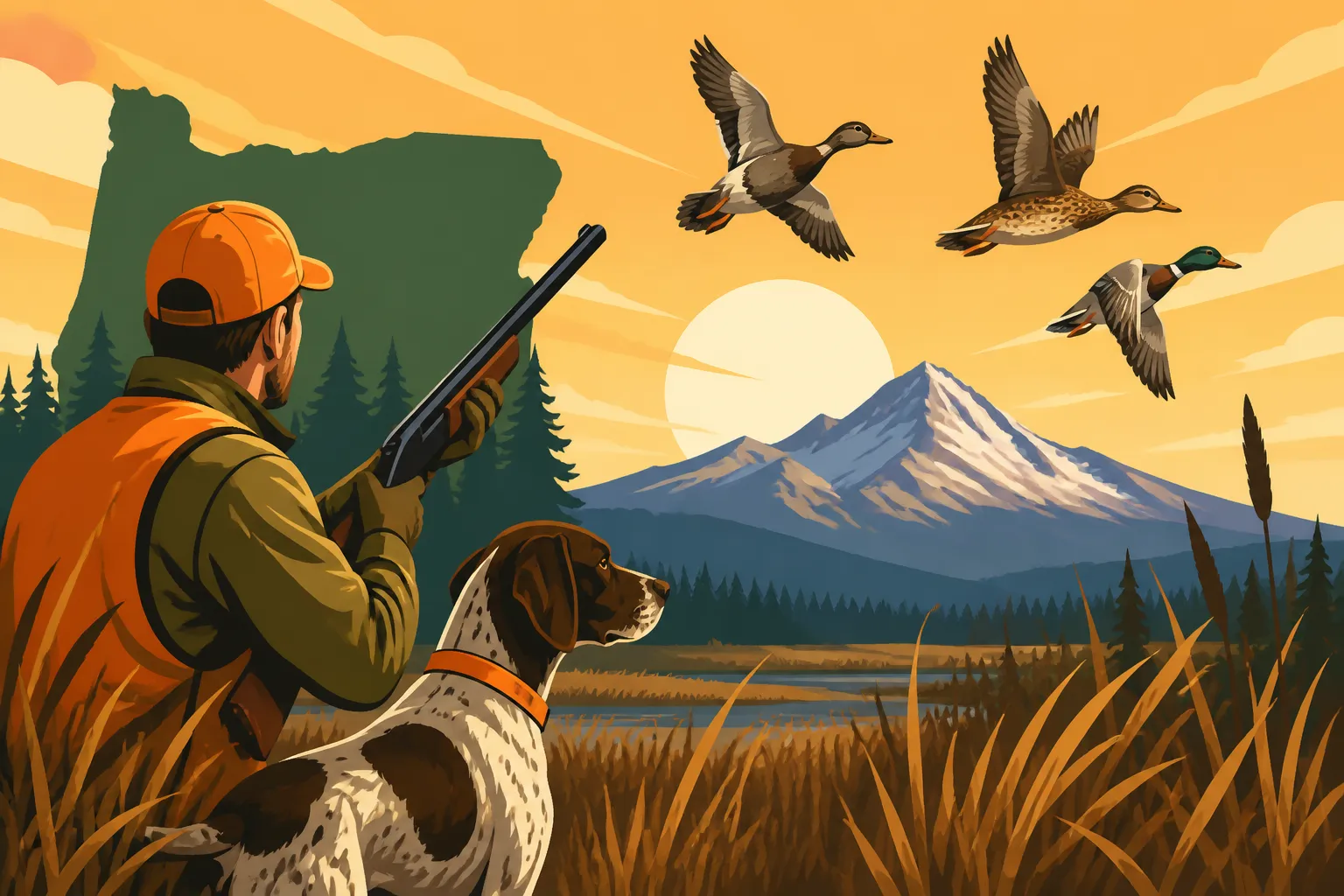
Hunting ducks usually involves setting up decoys to attract passing birds, using calls to mimic their sounds, and waiting patiently in a blind for them to commit. The Willamette Valley, with its numerous agricultural fields, wetlands, and rivers, is a hotspot for duck hunting. Other prime areas include the Klamath Basin, the Columbia River, and coastal estuaries. Effective duck hunting requires a good understanding of decoy spreads, calling techniques, and the behavior of different species. Having Oregon Duck and Goose Flyway Numbers helps you understand the bigger picture of migrations. The right shotgun, typically a 12 gauge with steel shot (due to lead restrictions in waterfowl hunting), and warm, waterproof clothing are essential. A well-trained retriever is not just a luxury but a vital part of a successful duck hunt, especially in cold water.
Geese: Giants of the Flyway
Hunting geese in Oregon is a truly grand affair, with species like Canada geese, snow geese, and cackling geese gracing the skies. Geese are often found in large flocks, feeding in agricultural fields or resting on large bodies of water. Field hunting for geese involves setting out large spreads of decoys, often dozens or even hundreds, to mimic a feeding flock. Hunters typically use layout blinds to conceal themselves within the decoy spread, waiting for incoming birds to drop in. Goose calling is a distinct skill, often requiring a different type of call and technique than duck calling.
Many of Oregon's agricultural areas, particularly in the Willamette Valley and along the Columbia River, offer fantastic goose hunting. Some farmers even welcome hunters to help manage goose populations that can cause significant crop damage. This is where programs like Oregon Open Fields Properties and How to Find Them can be incredibly valuable, sometimes listing private lands where goose hunting is encouraged to mitigate damage. GoHunt can also be an excellent resource for identifying potential public access points near known goose feeding areas or finding private land owners who might be open to controlled hunting access. The sheer size and power of a Canada goose make for an exciting retrieve and a substantial amount of delicious wild game meat.
Essential Gear and Tactics for Oregon Bird Hunting
Making the switch to bird hunting after big game season requires a thoughtful approach to gear and a willingness to learn new tactics. It's an opportunity to refine existing skills and develop new ones, extending your season and enjoyment of Oregon's diverse hunting landscape.
Shotguns, Ammunition, and Choke Choices
Your shotgun is the heart of bird hunting. While a 12 gauge is the most versatile for all bird species, a 20 gauge is lighter and perfectly adequate for most upland birds, especially if you prioritize carrying comfort in steep terrain. For smaller birds like quail or grouse in thick cover, some hunters even opt for a 28 gauge or a .410, offering a delightful challenge.
Ammunition choice is critical. For upland birds, lead shot is generally permitted (always check regulations for specific areas), with sizes ranging from #7.5 for smaller birds like quail to #4 or #5 for pheasants and larger grouse. For waterfowl, however, federal regulations mandate the use of non-toxic shot, typically steel, bismuth, or tungsten alloys. Steel shot, being lighter, requires larger shot sizes to achieve similar knockdown power (e.g., #3 or #2 steel for ducks, BB or BBB for geese).
Choke tubes are another key component. Unlike the tight groups you seek with a rifle, shotguns need to deliver a spreading pattern. For close-flushing birds in thick cover (like grouse), an improved cylinder (IC) or even skeet choke is ideal. For more open country or faster-flying birds like chukar or ducks, a modified (MOD) or even full (FULL) choke might be preferred. Having a selection of interchangeable chokes allows you to adapt to the specific conditions and species you're pursuing. It’s a completely different ballgame than thinking about Rifle Choice for Oregon Elk and Deer, requiring a different kind of precision.
The Indispensable Bird Dog
While you can certainly hunt birds without a dog, a well-trained bird dog elevates the experience to an entirely new level. Pointers will locate and hold birds, allowing you to walk in for a flush. Retrievers will find and bring back downed birds, minimizing loss and ensuring ethical harvest, especially crucial in dense cover or cold water. The bond you develop with a hunting dog, and the joy of watching them work, is a profound and enriching part of bird hunting. They cover ground you can't, use their superior nose to find birds you'd walk past, and turn what might be a frustrating search into a seamless retrieve. From a pure efficiency standpoint, a good dog means more birds in the bag and less wounded game left in the field.
Dressing for Success: Layers, Blaze Orange, and Footwear
Oregon's late fall and winter weather can be unpredictable, ranging from mild and sunny to cold, wet, and windy. Layering is paramount. Start with a moisture-wicking base layer, add insulating mid-layers like fleece or down, and top it with a waterproof and windproof outer shell. For upland hunting, especially when chasing chukar or navigating wet coastal forests, durable, comfortable, and waterproof boots are non-negotiable. If you've been reading up on Boots for Wet Coastal Hunting for big game, you're already on the right track.
Blaze orange is often required for safety in upland bird hunting. Check the Oregon Department of Fish and Wildlife (ODFW) regulations carefully for specific requirements, but generally, a certain amount of visible orange on your head and torso is mandatory when hunting game birds on public lands. This is for hunter safety, especially in areas where multiple parties might be afield.
Scouting and Regulations Beyond Big Game
Scouting for birds differs from big game but is no less important. Instead of looking for rubs, scrapes, or large travel corridors, you're looking for specific habitat features: water sources in arid country for chukar, dense brush lines for quail, pockets of specific timber types for grouse, or feeding fields for waterfowl. Satellite imagery and topographic maps, like those available on GoHunt, are invaluable for identifying these features. You can often scout visually by driving roads or hiking, looking for fresh sign like tracks, dusting bowls, or feathers.
The legal framework for bird hunting also has its own nuances. Beyond your general hunting license, you'll need an Oregon hunting license and an upland bird validation to hunt most game birds. For waterfowl, a federal migratory bird stamp (often called a Duck Stamp) and an Oregon waterfowl validation are required. Always carry your license and validations, and familiarize yourself with bag limits, shooting hours, and any specific unit or area regulations. Remember to also properly Reporting an Oregon Deer or Elk Tag for any big game tags you might have filled before moving on to birds, to avoid any penalties. This commitment to compliance is part of being a responsible hunter, no matter the species.
| Bird Species | Typical Habitat | Prime Seasons | Key Gear & Considerations | Challenge Level |
|---|---|---|---|---|
| Chukar | Steep, rocky, arid canyons, rimrock | Late Fall – Winter (Oct – Jan) | Sturdy boots, 12/20ga shotgun, #5 or #6 lead shot, plenty of water. High physical demand. | High (Physical) |
| Valley Quail | Brushy draws, riparian areas, agricultural edges | Fall – Early Winter (Sept – Jan) | 20/28ga shotgun, #7.5 or #8 lead shot, good dog. | Medium |
| Ruffed Grouse | Dense mixed deciduous/conifer forests, logging roads | Fall (Sept – Jan) | 20/28ga/.410 shotgun, #7.5 lead shot, quiet movement, sharp ears. | Medium (Stealth) |
| Dusky (Blue) Grouse | Higher elevation open timber, mountain meadows | Fall (Sept – Jan) | 12/20ga shotgun, #6 or #7.5 lead shot, good hiking boots. Often hold tight. | Low-Medium |
| Pheasant | Agricultural fields, dense cover, ODFW release sites | Fall (Oct – Dec) | 12/20ga shotgun, #4 or #5 lead shot, strong dog, blaze orange. | Medium-High |
| Wild Turkey | Mixed forests, oak woodlands, agricultural interfaces | Fall (Oct – Nov) | 12ga shotgun, #4 or #5 lead shot, calls, stealth. | Medium |
| Ducks (Dabblers/Divers) | Marshes, ponds, rivers, flooded fields | Fall – Winter (Oct – Jan) | 12ga shotgun, steel shot (various sizes), waders, decoys, calls, blind, retriever. | Medium (Setup/Conditions) |
| Geese (Canada/Snow) | Agricultural fields, large waterways | Fall – Winter (Sept – Feb) | 12ga shotgun, larger steel shot (BB/BBB), large decoys, layout blind, calls. | High (Logistics) |
Disclaimer
Always consult the most current Oregon Department of Fish and Wildlife (ODFW) hunting regulations for specific season dates, bag limits, licensing requirements, and area restrictions before planning any hunting trip. Regulations can change, and it is every hunter's responsibility to know and follow the law.