Tracking Bucks in Fresh Eastern Oregon Snow
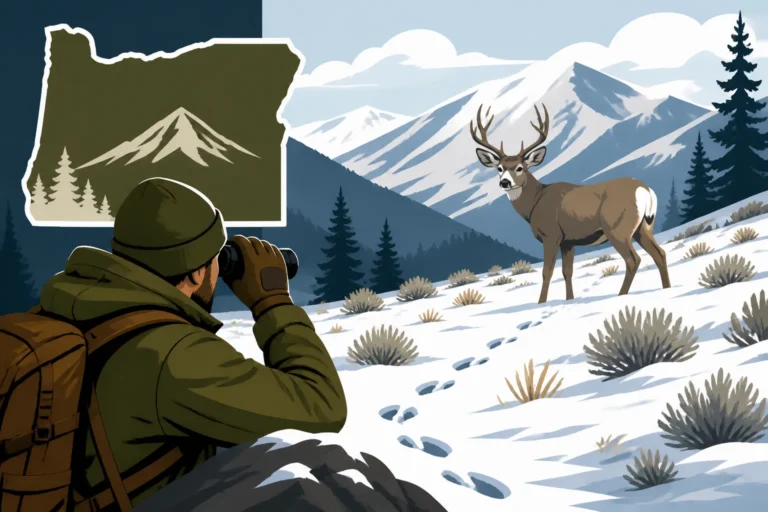
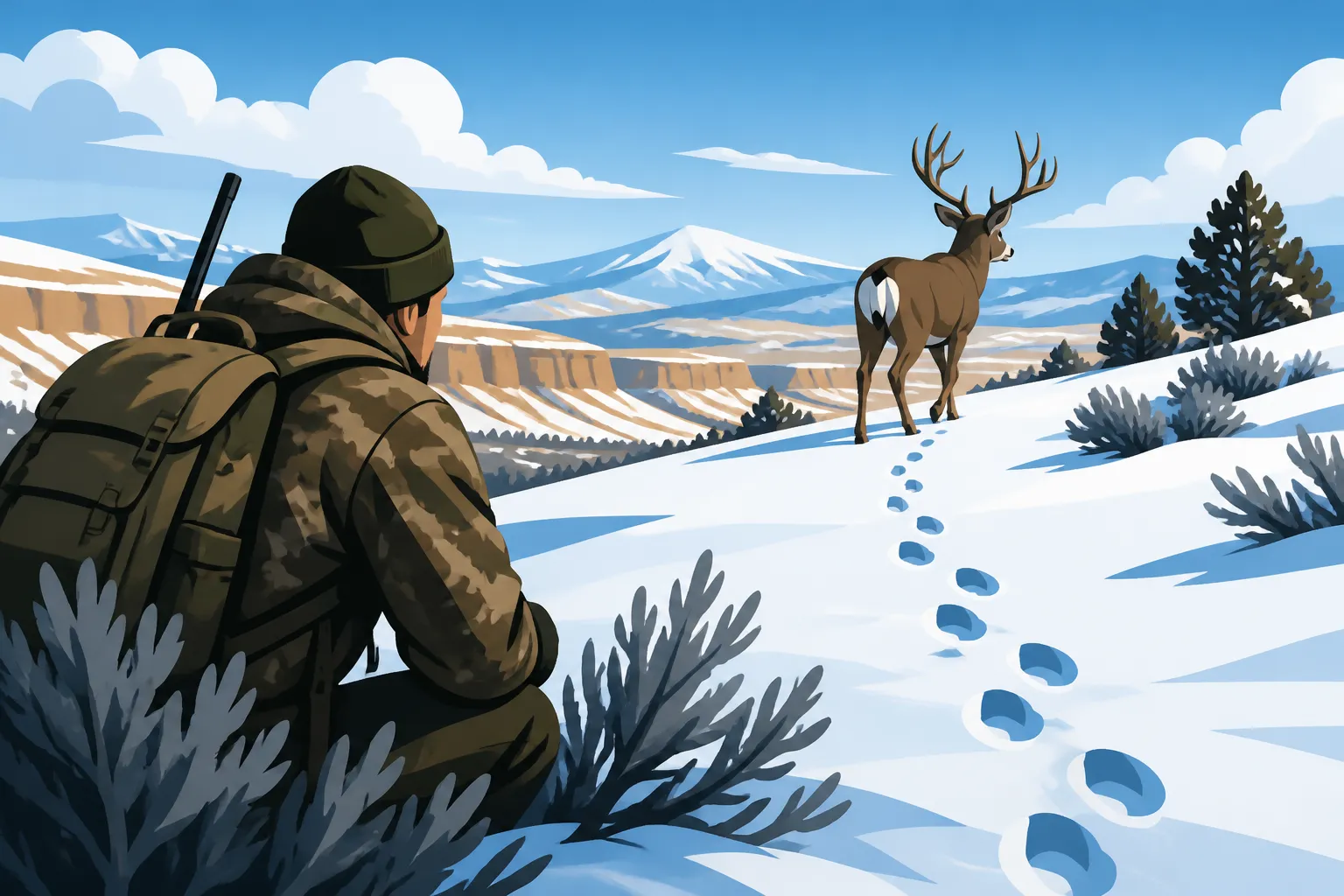
There’s something magical about a fresh blanket of snow in Eastern Oregon – it transforms the landscape into a pristine canvas, and if you’re a hunter, it fills you with the almost primal hope of a perfect tracking day. But let’s be real, that dream can quickly turn into a frustrating maze of crisscrossing trails, tracks that disappear into thickets, and silent departures from unseen deer. The goal here isn't just to find a track; it's about learning to confidently follow a buck’s precise story in the snow, from its earliest steps to where it finally beds, turning those elusive Eastern Oregon mule deer into a tangible pursuit.
Deciphering the Language of Snow Tracks
When that fresh snow hits, it's like the wilderness starts writing a whole new book. Every impression left behind isn't just a mark; it's a word, a sentence, or even a whole paragraph in the story of an animal's day. Learning to read these clues is the first, and arguably most important, step in becoming a successful snow tracker in Eastern Oregon.
Track Freshness and Clarity
One of the biggest head-scratchers when you first hit the snow is figuring out just how old those tracks are. Is this buck still just over that ridge, or did he pass through here last night before the temperature dropped? The frustration is real, especially when you're itching to get on a hot trail.
Fresh tracks, usually made within the last few hours, are remarkably crisp. The edges of the hoof print will be sharp, almost knife-like, showing distinct lines where the hoof sliced through the snow. You might even see the individual impression of the deer's dew claws, those small vestigial toes higher up on the leg, especially in deeper, softer snow. Look closely at the snow that was displaced by the hoof – it will look loose and recently disturbed, not packed down or frozen over. If there's any light frost, it won't have settled into the print yet.
Compare this to tracks that are a bit older, say from overnight or earlier that morning. Their edges will start to soften and round out. If the temperature has fluctuated, you might see signs of slight melting and refreezing, making the displaced snow look icier or more compacted. The dew claw impressions might be fainter or gone entirely. The type of snow plays a huge role here too. In wet, heavy snow, tracks can look fresh for longer because the snow holds its shape well. In powdery, dry snow, however, prints can lose their crispness much faster, especially if there’s even a slight breeze that blows fine snow into them.
Identifying a Buck's Track
Once you’ve got a handle on freshness, the next challenge is telling a buck from a doe or even a smaller fawn. It's not always a dead giveaway, but there are definite tells if you know what to look for. Generally, buck tracks will be noticeably larger than a doe's. We're talking wider, with a more splayed look, especially if it's a mature animal carrying some weight. Their stride will often be longer, too, reflecting their larger body size and more powerful gait.
A key indicator many experienced trackers swear by is the impression of the dew claws. A heavier, mature buck, particularly in deeper snow or when navigating downhill, will often have his dew claws register in the snow. A doe or a smaller deer, being lighter, might only show their main hoof prints. You might also notice a slight drag mark between prints if the snow is deep enough and the buck is heavy, though this can also happen with does. Pay attention to the overall impression of power and weight in the track.
The context of the track also matters. A buck might have a more direct, purposeful line of travel if he's heading from a bedding area to a feeding area, or cruising for does. Does and fawns, on the other hand, often meander more, especially when feeding, leaving a more erratic pattern.
Reading the Story Beyond the Track
The track itself is just the beginning of the story. Think of it as the spine of a book, but you need to read all the chapters around it. What else is the snow telling you? Look for associated signs like urine stains. Fresh buck urine in the snow will appear as a yellowish puddle, often dark against the white. Droppings can also be incredibly informative – their size, shape, and consistency can tell you about the deer's diet and how recently it passed. Fresh droppings will be soft and moist, freezing solid if left for a bit.
As you follow the trail, observe disturbances in the vegetation. Did the deer stop to browse a bitterbrush twig, leaving a tell-tale bite mark? Did it push aside some snow to get at a patch of cured grass? Even a slight depression in the snow, a bed that’s now empty but still holding the warmth of the animal, can give you a clear sense of how recently it was there. Piecing together these tiny details—the browse, the droppings, the beds, the subtle changes in direction—helps you build a full picture of the buck’s movements and intentions, almost like you're watching him in real-time. This is where the hunt truly becomes a mental chess match, and it's incredibly rewarding when you start to "think like a deer."
The Art of Silent Pursuit in Snow
Once you've found a promising track, the real work begins. Tracking a buck in fresh Eastern Oregon snow isn't a race; it's a meticulous, slow-motion ballet that demands patience, keen observation, and an understanding of the terrain. Rushing is almost guaranteed to lead to blowing out your buck.
Slow and Steady Wins the Race
This isn't just an old adage; it's the golden rule of snow tracking. Imagine you're trying to solve a complex puzzle, but the pieces are constantly shifting. If you move too fast, you’ll miss crucial details, or worse, jump the buck before you even know he's there. My personal rhythm is often about 20 steps, then stop. Stop and glass.
Use your binoculars not just to scan ahead for the deer itself, but to pick out the next set of tracks, to identify potential bedding areas, or to scrutinize a dense patch of juniper where the tracks might lead. This pause gives your eyes a chance to adjust, your ears to pick up subtle sounds, and your brain to process the information. It also gives the woods a chance to settle after your movement.
Always use the terrain to your advantage. In Eastern Oregon, this often means utilizing the folds of the land, the scattered junipers, and the rolling sagebrush to stay out of sight. Try to move below ridge lines, using the contours for cover. The wind is your best friend and worst enemy out here. Always hunt into the wind or with a slight crosswind. Snow can muffle sound, which is a blessing, but a buck's nose is still his primary defense. Pay attention to how the wind swirls around draws and ridges, and anticipate where your scent might carry. Knowing how to read a Reading a Travel Management Area Map Before You Drive can help you predict wind channels and access points effectively.
Maintaining the Trail
It’s surprisingly easy to lose a track, especially when a buck enters a patch of dense brush or crosses a rocky outcropping. My heart has sunk more than once when a perfectly clear trail suddenly vanishes. To avoid this frustration, consider using small, biodegradable markers if the trail becomes truly intricate or difficult to follow, just until you're past the tricky spot. More often, I rely on mental landmarks: that oddly shaped juniper, the cluster of sage, the unique rock.
If you do lose the track, don't panic. Go back to the last clear, confirmed track you saw. Mark that spot. Then, start a circular search pattern, slowly expanding outward from that point, looking for where the buck might have emerged or turned. Sometimes a buck will make a hard turn, or even backtrack a short distance to throw off predators.
When multiple deer trails converge or crisscross, it gets even tougher. This is where those earlier lessons on identifying a buck's track come into play. Look for the distinct size, stride, and dew claw impressions you noted earlier. Try to pick out the consistent characteristics of your buck's track. Sometimes, you just have to slow down even more and literally put your face to the snow to verify each print.
Approaching the Bedding Area
As you get closer to where a buck might be bedded, the signs in the snow will often change. The tracks might become more meandering, indicating he’s slowing down, looking for a spot. He might have started sampling more browse, moving less directly. Look for areas of dense cover – a thick stand of junipers, a hidden draw, or even the lee side of a ridge out of the wind. This is often where they’ll seek refuge, especially on Mule Deer Winter Range in Eastern Oregon.
The final approach to what you suspect is a bedding area requires extreme stealth. Every step needs to be deliberate. Check the wind constantly. Use your binoculars to pick apart every shadow, every clump of brush. Look for horizontal lines, the curve of an antler, the flick of an ear, or an eye reflecting light. This is where your Optics for Dark Timber Versus Open Sage selection truly earns its keep, allowing you to scrutinize every detail without exposing yourself. A buck will often bed with his back to cover, facing downhill or into his backtrail to see danger approaching. Anticipating this can give you an edge. Many hunters also use tools like GoHunt's mapping features to analyze terrain for south-facing slopes or sheltered draws that might hold deer, giving them a head start on where to expect beds.
Understanding Mule Deer in Winter
Successfully tracking bucks in Eastern Oregon snow means not just reading the tracks, but understanding the deer itself. Their behavior changes significantly when the landscape is covered in snow, driven by instincts to conserve energy and find sustenance.
Winter Behavior and Habitat Preference
Winter is a tough time for mule deer. Their primary goal is to survive, which means conserving precious energy. This directly impacts their movement. They will actively avoid deep, unbroken snow, which saps their strength with every step. Instead, they’ll gravitate towards areas where the snow is shallower, like windswept ridges, or south-facing slopes that get more sun exposure, causing the snow to melt faster.
Their diet shifts, too. While in summer they might munch on a wider variety of forage, winter sees them heavily reliant on browse species like bitterbrush, sagebrush, and juniper. Knowing this helps you predict their travel patterns. If you're tracking a buck, and the tracks lead into an area devoid of these food sources, it’s less likely he’s settling in for a long stay. Instead, he might be just passing through to a more suitable area. When scouting digitally, detailed satellite imagery on platforms like GoHunt can highlight these vegetation types, making your e-scouting efforts incredibly efficient, especially when paired with insights from E-Scouting Oregon Units With Satellite Imagery. They’ll bed in sheltered spots, often utilizing the warmth of the sun on a southern exposure, and almost always positioned to be out of the direct wind. Understanding these preferences is key to predicting where your buck will eventually stop. You can also gain an edge by knowing the usual haunts, such as Finding Mule Deer in Juniper Draws.
Wind, Sun, and Snowpack Influence
These three elements dictate much of a mule deer's life in winter. The wind is a crucial factor. Deer will almost always bed out of the wind, often on the lee side of a ridge or within a dense stand of timber. Their exceptional sense of smell means they rely on the wind to detect predators, so they'll often position themselves to have the wind at their back or crossing, allowing them to see what's in front and smell what's behind.
The sun provides vital warmth. South-facing slopes are often preferred bedding areas, especially on cold, clear days, as the sun can warm both the deer and the ground. These sun-exposed areas also tend to have less snow, making travel and feeding easier. This is a critical factor when you are out Glassing Sage and Juniper for Eastern Oregon Mule Deer, as these are often the first places to check.
Snow depth is perhaps the most critical determinant of mule deer movement. If the snow gets too deep, deer will move to lower elevations or less snow-covered areas. A crust on the snow, formed by melting and refreezing, can be devastating to deer, as it breaks through and cuts their legs. Hunters should be aware of these conditions as they not only affect deer behavior but also your ability to move silently and efficiently. Before heading out, checking local conditions on GoHunt or ODFW resources for any Winter Range Closures That Affect Late Hunts is also paramount, as many prime wintering areas are off-limits to protect vulnerable deer.
When and How to Strike
Mule deer in winter typically have a routine. They'll often feed actively at first light, then move to a bedding area to chew their cud and conserve energy during the mid-day. They might get up for a short browse later in the afternoon before settling into their final evening feeding and bedding spot.
For snow tracking, the mid-day bedding period is often your best bet to catch a buck stationary. If you pick up a fresh track first thing in the morning, following it diligently and stealthily, you increase your chances of finding that buck bedded down. When you do spot him, take your time. Assess the situation. Is he aware of you? What’s the wind doing? Can you get a clear, ethical shot? Practice making stable shots in cold weather conditions – a tripod for your rifle or a solid pack rest can make all the difference when you’ve been hiking for hours. When it comes to rifle choice, many of the same considerations for Rifle Calibers That Suit Oregon Elk apply equally well to mule deer, ensuring you have enough stopping power for a clean harvest.
It’s not uncommon to hear the howl of coyotes in Eastern Oregon, especially in open sage country. These predators are also on the hunt, and their presence can certainly influence deer movement. If you're skilled at Coyote Calling in Open Sage Country, you might even be able to draw them in, but be mindful of how their presence might push deer around.
Essential Gear and Safety for Snow Tracking
Tracking bucks in fresh Eastern Oregon snow is demanding, both physically and mentally. Having the right gear isn't just about comfort; it's about safety and increasing your chances of success. The conditions can change rapidly, and being prepared is non-negotiable.
Footwear and Clothing
Your feet are your foundation, and in snowy conditions, they need to be protected. Waterproof, insulated boots are not just recommended, they are absolutely mandatory. There's nothing that will ruin a hunt faster than cold, wet feet. Look for boots with good ankle support and aggressive tread for traction on varied terrain. If you're going to be traversing Boots for Steep Eastern Oregon Country, ensure your footwear can handle the incline and potential ice. Gaiters are also a lifesaver, keeping snow from falling into your boots and soaking your socks.
Layering is key for clothing. You'll be exerting yourself while tracking, building up heat, but then you'll stop and glass, and the cold will seep in quickly. A good base layer to wick moisture, an insulating mid-layer, and a waterproof, breathable outer shell are essential. Don't forget a warm hat and gloves – you lose a lot of heat through your head, and cold hands make manipulating your rifle or binoculars incredibly difficult.
Optics and Navigation
High-quality optics are your eyes in the field. A good pair of binoculars (10x or 12x) and possibly a spotting scope can help you pick apart distant cover, identify tracks, and scrutinize a bedded buck without putting yourself in a risky position. The ability to distinguish antler tines from a branch at hundreds of yards is invaluable. If you hunt areas that transition from dense juniper pockets to open sage flats, having versatile optics is crucial. Referencing tips for Optics for Dark Timber Versus Open Sage can guide your choices.
For navigation, a reliable GPS unit or a smartphone with a robust mapping application like GoHunt is essential. These tools allow you to mark tracks, pin suspected bedding areas, track your own progress, and most importantly, confirm land ownership to avoid trespassing. Many of us rely on detailed mapping applications, like those found within GoHunt, to not only identify land ownership but also mark tracks and potential bedding areas. Always carry a physical compass and a paper map as a backup – batteries die, and technology fails in the backcountry.
Safety in the Cold
Eastern Oregon winters can be brutal, and being out in the elements for hours, sometimes days, demands a strong focus on safety. Always, always let someone know your exact hunting plan, including your route, where you’ll be parking, and when you expect to return.
Carry emergency supplies: a reliable fire starter, extra high-energy food, ample water (or a way to melt snow and purify it), and a comprehensive first-aid kit. Consider carrying a satellite communication device for emergencies, especially if you venture into areas with no cell service. While less common in typical mule deer habitats, if you're tracking in steeper, higher elevation areas, be aware of potential avalanche danger. Learn how to recognize warning signs and avoid risky slopes.
Finally, ensure you are in good physical condition for the hunt. Tracking in snow, especially if it’s deep or on steep terrain, can be incredibly taxing. Preparing your body for the rigors of the hunt, as detailed in guides like Physical Training for an Oregon Elk Hunt, will make your experience safer and more enjoyable, allowing you to focus on the chase rather than your aching muscles.
Disclaimer
Always check the latest Oregon Department of Fish and Wildlife regulations before heading afield, as rules and seasons can change. This guide is for informational purposes only and does not substitute for proper training, experience, or official ODFW guidance.