Boots for Steep Eastern Oregon Country
There's nothing quite like the feeling of watching an Eastern Oregon sunrise paint the rimrock in hues of orange and red, except maybe the feeling of your feet screaming at you halfway through a hunt because you chose the wrong boots. That steep, unforgiving terrain, with its loose rock, sharp sagebrush, and relentless elevation changes, can turn a dream hunt into a miserable ordeal faster than a mule deer can disappear over a ridge. This guide is here to walk you through exactly what makes a boot suitable for the brutal demands of Eastern Oregon, helping you keep your feet happy and focused on the hunt, not the pain.
The Unique Demands of Eastern Oregon's Steep Terrain
Eastern Oregon isn't for the faint of heart, or the soft-footed. The landscape, whether you're chasing mule deer through a juniper forest or glassing for elk across vast sagebrush flats, presents a very particular set of challenges for your footwear. Ignoring these challenges is a surefire way to end up with blisters, twisted ankles, or worse, cutting your hunt short. You need boots that are partners in the field, not liabilities.
Rock, Rubble, and Scree
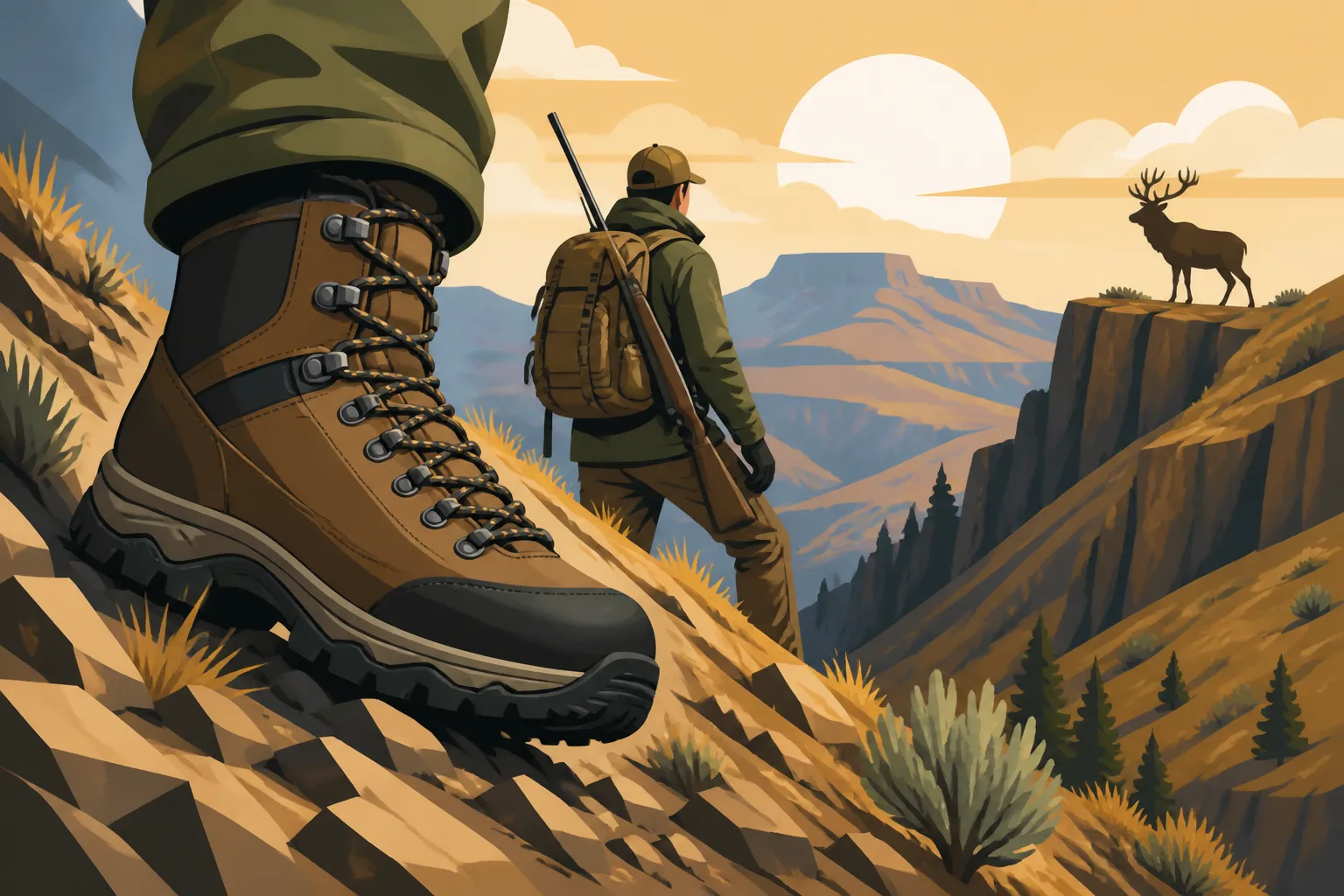
If you've spent any time hunting the high desert or the Blue Mountains, you know this challenge intimately. Every step can be on loose, unforgiving rock, whether it's the softball-sized rocks of a talus slope, the small, sharp shale of a steep ridge, or the endless stretches of pumice and basalt. It's a constant test of balance and stability. Imagine traversing a steep sidehill, with your weight shifting, and suddenly your boot buckles because the sole is too flexible to hold an edge on a sharp rock. Or picture yourself descending a long, rubbly draw, and every single impact sends a jarring shock up your foot and leg. Without proper support and sole stiffness, your feet and ankles are going to take a beating, leading to fatigue, soreness, and a very real risk of a sprained ankle. It's not just discomfort; it's a safety issue that can leave you stranded or hobbling miles back to the truck.
Extreme Elevation Changes and Long Hauls
Eastern Oregon isn't flat. It's a rollercoaster of steep ascents and equally brutal descents. You might gain a thousand feet in elevation in under a mile, only to drop it just as quickly into a canyon bottom. These constant ups and downs stress your feet in different ways. Going uphill, you need a boot that locks your heel in place to prevent rubbing and blisters, especially when carrying a heavy pack. Your toes also need enough room to splay naturally without jamming into the front of the boot. On the descent, the force of your body weight pushing forward can smash your toes against the front of an ill-fitting boot, leading to bruised toenails and extreme discomfort. And let's not forget the sheer mileage. A typical day might involve covering many miles over this grueling terrain, often with a pack loaded with water, gear, or even meat. Your boots need to minimize fatigue, absorb shock, and protect your feet from constant friction and impact over these Multi-Day Camps in Oregon's Roadless Country or even just long day hunts.
Variable Weather and Temperature Swings
While Eastern Oregon might be known for its high desert dryness, it's far from a one-climate zone. You can start a September morning with frost on the ground and be sweating in 70-degree heat by noon. A November hunt might see crisp, clear skies one day and a foot of snow the next, or a sudden, unexpected rain shower. Your boots need to be versatile enough to handle these swings. They need to keep your feet dry from external moisture – whether it's dew, rain, or melting snow – but also allow your feet to breathe so sweat doesn't build up inside, which can lead to cold feet in freezing conditions or painful blisters in warmer ones. The balance between waterproofing and breathability is a delicate one, but absolutely crucial for maintaining foot health and comfort throughout a multi-day hunt.
Key Features of Boots for Rugged Oregon Hunting
When you're staring down a steep, rocky canyon in Eastern Oregon, your boots are the most important piece of gear between you and success (or misery). These aren't just fashion accessories; they're tools, and they need to have specific features to excel in this demanding environment.
Sole Stiffness and Traction
This is often the first thing experienced Eastern Oregon hunters will tell you about. Flexible soles might feel comfortable in the store, but out on the rimrock or a scree slope, they're a liability. A stiff sole, often rated as "mountaineering" or "backpacking" grade, provides crucial stability and protection. It prevents your foot from bending and twisting excessively over uneven ground, significantly reducing fatigue and the risk of injury. When you're trying to gain purchase on a small ledge or digging your heel in on a steep descent, a stiff sole acts like a stable platform, giving you confidence with every step.
Equally important is the traction provided by the outsole's lug pattern. You need deep, aggressive lugs that can bite into loose dirt, gravel, mud, and even snow. Look for boots with multi-directional lugs that offer grip on both ascents and descents. Some boots incorporate a "climbing zone" at the toe for scrambling on rocks, and a pronounced heel brake for controlled descents. The rubber compound itself matters too; some are softer for better grip but wear faster, while others are harder for durability but might be a bit slicker on wet rock. Finding the right balance for your typical hunting grounds is key.
Ankle Support and Stability
A rolled ankle miles from the nearest road is no joke, especially when you're carrying a pack. This is why high-cut boots are practically a requirement for Eastern Oregon. They offer excellent ankle support, bracing your foot and ankle against lateral movement. Beyond just the height of the cuff, the design of the ankle collar and the lacing system play a huge role. A well-designed lacing system allows you to cinch the boot tightly around your ankle, providing a secure "lock" without creating pressure points. Some boots feature locking eyelets in the ankle area, allowing you to tension the lower and upper sections of the boot independently. This level of support helps to prevent your ankle from rolling when you step on an unseen rock or hit an uneven patch of ground. It also contributes to overall foot stability, making it easier to carry a heavy load and maintain balance in steep, broken country. This is vital whether you're chasing mule deer in a Finding Mule Deer in Juniper Draws or packing out a bull elk after a successful hunt.
Waterproofing and Breathability
You might think "dry climate, so waterproofing isn't a big deal," but that's a mistake. Morning dew can soak through lesser boots, a sudden rainstorm can turn trails into muddy slick-slides, and unexpected snow in the higher elevations can lead to soaked socks and cold feet. A reliable waterproof membrane, such as Gore-Tex or similar proprietary technologies, is essential. These membranes are designed to prevent external water from entering the boot while allowing moisture vapor (sweat) to escape.
However, there's always a trade-off. Highly waterproof boots can sometimes be less breathable, especially in warmer conditions. For early season hunts in September where temperatures can soar, excessive waterproofing might lead to sweaty feet, which quickly translates to blisters. For late-season hunts in colder, wetter conditions, maximizing waterproofing is paramount. Consider the time of year you'll be hunting most often. Some hunters opt for two pairs of boots: a lighter, more breathable pair for early season and a more robust, heavily waterproof and insulated pair for late season. Boots for Wet Coastal Hunting have different priorities for waterproofing, often needing more constant protection against rain than Eastern Oregon, but the principle of keeping your feet dry remains universal.
Materials, Fit, and Maintenance for Longevity
Investing in high-quality boots for Eastern Oregon is a commitment, and like any good relationship, it requires understanding and care. The materials, how they fit, and how you maintain them will dictate their performance and lifespan.
Leather, Synthetics, and Hybrids
The choice of materials significantly impacts a boot's weight, durability, breathability, and break-in period.
- Full-grain leather boots are the traditional workhorses. They are incredibly durable, mold to your feet over time, and offer excellent protection against abrasion and punctures from sharp rocks and brush. They are also highly water-resistant, especially when properly maintained with conditioners. The downsides? They can be heavy, and they typically require a significant break-in period, which can be brutal if not done carefully.
- Synthetics (nylon, Cordura, various composites) are lighter, more breathable, and generally require less break-in time. They are often cheaper upfront. However, they are typically less durable than full-grain leather, especially in harsh, rocky environments where they can fray or tear more easily. Their waterproofing can also degrade faster over time.
- Hybrid designs attempt to offer the best of both worlds, using leather in high-wear areas (like the toe and heel) and synthetics for the uppers to reduce weight and improve breathability. These can be a fantastic compromise for many Eastern Oregon hunters, offering a good balance of durability, comfort, and weight.
The Critical Importance of Fit
This cannot be stressed enough: a boot's features mean nothing if it doesn't fit your foot correctly. Poor fit is the number one cause of blisters, hot spots, and general foot misery. Don't just try boots on in the store while sitting down. Wear the thick, quality hunting socks you'll actually use. Walk around, find a ramp or stairs, and simulate uphill and downhill travel.
- Uphill: Your heel should remain locked in place with minimal slippage. Any rubbing here is a recipe for blisters.
- Downhill: Your toes should not jam into the front of the boot. You need about a thumb's width of space between your longest toe and the end of the boot when your heel is firmly seated. This prevents bruising and discomfort on long descents.
- Overall Comfort: The boot should feel snug but not constrictive, especially across the instep and around the ankle. If you have particularly high arches or other foot issues, consider investing in aftermarket insoles. These can drastically improve comfort and support, turning a good boot into a great one for your specific foot. When researching potential hunt areas on platforms like GoHunt, understanding the precise topography can even influence your boot choice, making an informed fit even more critical.
Breaking In and Maintenance
Never, ever take a brand-new pair of boots on a hunt, especially not an Eastern Oregon hunt. The break-in period is non-negotiable. Start with short walks, gradually increasing distance and terrain difficulty. This allows the materials to flex and mold to your foot, and, perhaps more importantly, allows your feet to adjust to the boots. It's an investment of time that will pay dividends in comfort later.
Once your boots are broken in, consistent maintenance is key to their longevity. After each hunt, clean off dirt and debris, especially from the seams and lugs. Allow them to air dry completely, away from direct heat sources. For leather boots, regular conditioning is crucial to keep the leather supple and prevent cracking. Re-waterproofing treatments should be applied periodically, especially if you notice water no longer beading up on the surface. Proper care ensures your boots continue to perform season after season, protecting your feet through every grueling mile of Eastern Oregon. Even if you're engaging with outfitters through services like BookYourHunt, they'll often advise you to have your gear, especially boots, ready and broken in well before the trip.
Choosing Your Boots: A Hunter's Decision
Selecting the right boots for Eastern Oregon isn't just about reading reviews or picking the most expensive pair. It's a personal decision that should align with your specific hunting style, the intensity of your hunts, and your budget.
Matching Boots to Your Hunt Style
Consider how you typically hunt Eastern Oregon. Are you primarily Glassing Eastern Oregon Rimrock for Mule Deer, spending hours stationary on a hillside, then making targeted stalks? Or are you a more active hunter, covering vast distances each day, still-hunting through timber, or hiking into remote Eastern Oregon Hunting Units and Access?
- For glassing-heavy hunts: You might prioritize boots that offer exceptional comfort for long periods of standing or sitting on uneven ground, along with robust ankle support for those occasional, intense stalks across rough terrain. Weight might be less of a primary concern if you're not covering huge daily mileage.
- For aggressive, high-mileage hunts: Lighter boots with excellent breathability and a precise fit to prevent blisters become paramount. However, you can't sacrifice too much durability or support in this environment. It's a careful balance. If you are doing Physical Training for an Oregon Elk Hunt, your boots should be a key part of that training, broken in and proven.
- For backcountry, multi-day excursions: Durability, robust weather protection, and the ability to comfortably carry a heavy pack are non-negotiable. These boots need to be built like tanks, ready for anything from a sudden snow squall to traversing miles of jagged lava rock.
Considering Your Budget and Investment
Quality hunting boots are not cheap, and for good reason. The technology, materials, and craftsmanship that go into making a boot capable of withstanding Eastern Oregon's abuse come at a price. View it as an investment in your comfort, safety, and ultimately, your hunting success. Think of the hidden costs of cheap boots: lost hunting days due to blisters, the pain of strained ankles, or the need to replace them after just one or two seasons. A high-quality pair, with proper care, can last for many years.
While specific prices vary widely, understand that entry-level "hiking boots" often won't cut it. You're generally looking at boots designed for serious backpacking or mountaineering, and they reflect that in their construction and pricing. Don't be tempted to skimp here; your feet are your primary mode of transportation in the backcountry, and they deserve the best protection you can afford.
Research and Reviews
The hunting community is a wealth of knowledge. Start your research online by looking at reputable outdoor gear review sites and forums. Pay close attention to reviews from hunters who specifically mention hunting in steep, rocky, or high-desert environments. While online reviews are a great starting point, remember that fit is highly individual. What works for one person's foot might not work for yours.
Talk to other hunters in your area. Ask them what boots they wear, what they like and dislike about them, and how they hold up to the specific conditions of Eastern Oregon. Visit local outdoor retailers and try on as many different brands and models as possible. Don't be afraid to ask questions. Sometimes, a lesser-known brand might have the perfect last shape for your foot, or a specific feature you hadn't considered. Choosing your boots is a process, but with careful consideration, you'll find the pair that carries you confidently through the challenging, yet rewarding, landscapes of Eastern Oregon.
| Feature | Priority for Eastern Oregon Rimrock | Priority for Eastern Oregon Timber | Priority for Eastern Oregon High Desert |
|---|---|---|---|
| Sole Stiffness | Very High (for edging & protection) | High (for stability on uneven ground) | Very High (for rock/cactus protection) |
| Traction | Aggressive, multi-directional lugs | Deep, wide-set lugs (mud, duff) | Aggressive, multi-directional lugs |
| Ankle Support | Very High (prevent rolling) | High (prevent rolling) | Very High (prevent rolling) |
| Waterproofing | Moderate to High (variable weather) | High (potential snow/rain/dew) | Moderate (less standing water, but dew/rain) |
| Breathability | High (can get hot) | Moderate (cooler, but exertion) | Very High (often hot & dry) |
| Durability | Extremely High (abrasion resistance) | High (puncture resistance) | Extremely High (abrasion resistance) |
| Weight | Moderate (balance support/fatigue) | Moderate to Heavy (durability) | Moderate to Light (long miles, heat) |
| Break-in Period | Essential | Essential | Essential |
Disclaimer
This article is for general informational purposes only and does not constitute professional advice. Laws, prices and regulations vary by location and change over time. Consult a qualified professional for guidance on your specific situation.