Physical Training for an Oregon Elk Hunt
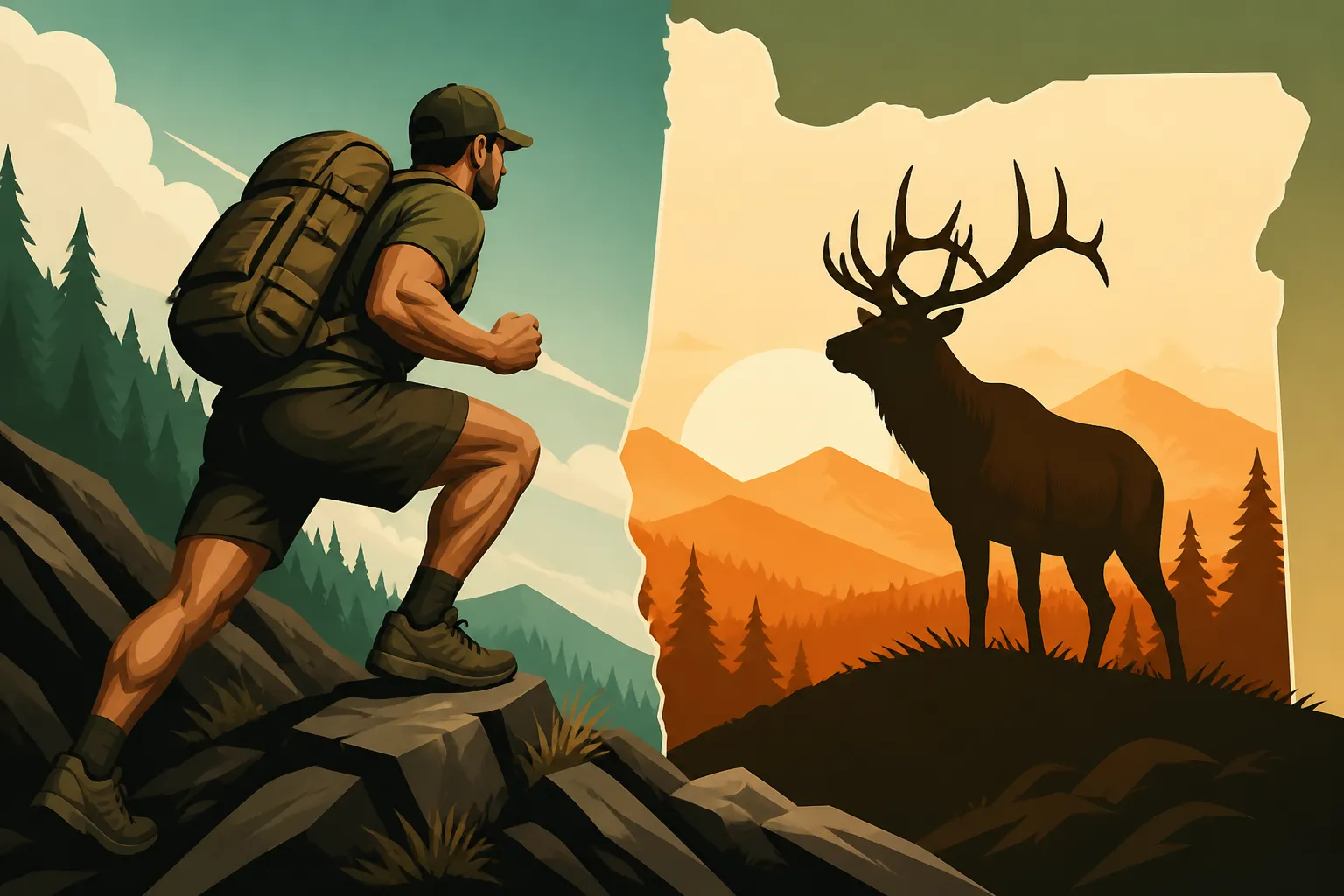
The reality of hunting elk in Oregon often hits hardest not in the shot opportunity, but in the sheer physical demands of the chase and, more dauntingly, the pack out. Many hunters underestimate the grueling combination of steep terrain, thick timber, unpredictable weather, and the immense effort required to get a thousand pounds of elk meat off a mountain. This guide is dedicated to helping you build the strength, stamina, and resilience needed to not only pursue Oregon's magnificent elk but to successfully bring your harvest home, transforming your dream hunt into a hard-earned reality.
Understanding the Physical Toll of Oregon Elk Hunting
Oregon’s elk country is stunningly beautiful, but it’s also undeniably brutal. Whether you're chasing Roosevelt elk in the dense, rain-soaked Coast Range or pursuing Rocky Mountain elk in the high desert mountains of Eastern Oregon, the terrain will test every fiber of your being. It’s not just about being able to walk a few miles; it’s about navigating truly challenging environments with heavy gear, often for multiple days, and then facing the monumental task of Packing Out an Elk in Oregon's Wilderness Units.
The Relentless Terrain and Elevation Challenges
Picture this: you’ve located a bull bugling across a canyon in the Wallowas, or maybe you’re still-hunting through thick clearcuts in the Siuslaw National Forest. The first challenge is simply getting there. Oregon's mountains are steep, unforgiving, and often riddled with blowdowns and slippery rockfalls. You’ll find yourself constantly gaining and losing elevation, sometimes climbing hundreds or even thousands of feet in a single push, only to descend just as rapidly. This isn't a walk in the park; it's more akin to a mountain endurance race with extra weight.
The ground underfoot can be treacherous. Wet forest floors are slick with moss and decaying leaves, while eastern Oregon’s rimrock country offers loose scree slopes and sharp volcanic rock. Every step requires balance, strength, and constant awareness. Ignoring these realities in your training plan is a recipe for exhaustion, injury, and a hunt cut short. Even if you're E-Scouting Oregon Units With Satellite Imagery to find flatter ground, the reality on the boots can be far more demanding than a map might suggest.
Carrying Heavy Loads: Gear and Game
Beyond the terrain, you’ll be carrying a significant amount of weight. Your pack, even for a day hunt, will likely hold essentials like water, food, first-aid, rain gear, optics, and potentially a rifle or bow. For those embarking on Multi-Day Camps in Oregon's Roadless Country or deeper Backpack Camps in Oregon Wilderness, that weight dramatically increases with sleeping systems, cooking gear, and more supplies. A fully loaded pack for a multi-day backcountry hunt can easily tip the scales at 50-70 pounds, or even more.
Then comes the real test: if you're fortunate enough to harvest an elk, the work truly begins. An adult elk can weigh anywhere from 500 to 1,000 pounds or more. Even with the gutless method and quartering, you're looking at multiple heavy pack loads, each potentially 80-120 pounds, that need to be carried out of the woods, often over the same rugged terrain you just traversed to get in. This isn't just a physical challenge; it's a mental one. Being strong enough to carry that weight, and enduring enough to make multiple trips, is what separates a successful hunter from one who has to leave meat behind or call for expensive professional help.
Building a Comprehensive Training Program
Preparing for an Oregon elk hunt isn't about getting "in shape" generally; it's about getting hunting shape. This means focusing on functional strength, cardiovascular endurance, and muscular stamina that directly mimics the demands of the hunt. Think of your body as a finely tuned machine that needs to perform specific tasks under stress.
Cardiovascular Endurance for Long Hauls
Cardiovascular fitness is the bedrock of any successful elk hunt. You need a strong heart and lungs to sustain effort over long distances and up steep inclines, especially at higher elevations where oxygen is thinner. Without a solid cardio base, every hill will feel like a mountain, and your ability to recover between pushes will be severely compromised.
Aim for a mix of steady-state cardio and high-intensity interval training (HIIT). Steady-state activities like hiking, running, or cycling for 45-90 minutes at a moderate pace (where you can hold a conversation but are still breathing hard) build your aerobic engine. Incorporate HIIT with short bursts of maximum effort followed by recovery periods to simulate the quick, intense climbs or sprints needed to get into position on a bugling bull. Activities like stair climbing, hill repeats with a weighted pack, or even just sprinting during your runs are excellent. If you can, do these activities on varied terrain to better simulate real-world conditions.
Strength Training for Pack Weight and Stability
Functional strength is paramount, especially in your legs, core, and back. These muscle groups are crucial for carrying heavy loads, maintaining balance on uneven ground, and performing the strenuous tasks associated with field dressing and packing. Don't just focus on big, isolated muscle groups; think about movements you'll make in the field.
Incorporate compound exercises that work multiple muscle groups simultaneously. Squats, deadlifts, lunges (especially with weight and variations like walking lunges), step-ups, and farmer's carries are incredibly beneficial. Pay special attention to your core with planks, twists, and back extensions, as a strong core prevents injury and provides stability when navigating difficult terrain with a pack. Overhead presses and rows will strengthen your shoulders and back, which are essential for managing pack straps and the sheer effort of pulling quarters. Consider adding grip strength exercises, as holding onto a rifle, bow, or a heavy pack often tests your hands and forearms.
Muscular Stamina and Injury Prevention
Muscular stamina is about being able to perform repeated efforts over an extended period without fatiguing. This differs from pure strength; it’s about endurance within your muscles. For elk hunting, this means your legs don't give out after the third mile, and your back can withstand hours of pack-carrying. Building this stamina often goes hand-in-hand with injury prevention.
Regular hiking, especially with a progressively heavier pack, is your best friend here. Start with a lighter pack and gradually increase the weight (e.g., add 5-10 pounds each week) until you can comfortably hike with 40-60 pounds for several hours. This conditions your body to the unique stresses of pack-carrying. Incorporate exercises that challenge your balance and proprioception, such as single-leg deadlifts, BOSU ball squats, or simply walking on uneven surfaces. This will help prevent ankle rolls and falls on challenging ground. Also, don't neglect flexibility and mobility work. Regular stretching, foam rolling, and dynamic warm-ups can significantly reduce the risk of strains and sprains, keeping you agile and resilient throughout your hunt.
Practical Training Routines and Gear Considerations
Building an effective training program requires consistency and a focus on practical application. It’s not just about what you do in the gym, but how you prepare your body for the specific environment it will encounter.
The Hiking-With-Weight Regimen
There's no substitute for hiking with weight. This is the cornerstone of elk hunting fitness. Begin your training several months before your hunt, ideally 4-6 months out. Start with comfortable hikes on varied terrain, carrying a daypack with water. Gradually increase your pack weight each week or two. Use items like sandbags, water jugs, or even just bags of cat litter inside your pack to add density. Aim to build up to hiking 5-10 miles with 40-60 pounds, ideally on terrain that mimics your hunting area. If you live in a flatter area, find stairs, inclines, or even just walk a treadmill at a steep grade.
Don't forget to practice Practicing Steep-Angle Shots after some strenuous activity. Your breathing will be heavy, your muscles burning, and that’s precisely when you need to be able to steady yourself for a shot. Integrating shooting practice into your physical training, even if it's just dry firing, can pay dividends. If you're a bowhunter, practice drawing your bow after a hard uphill climb. This simulates real-world conditions far better than a flat shooting range.
Essential Gear for Training and Hunting
Your training gear should closely match what you'll use in the field. This includes your boots, pack, and clothing. Breaking in your hunting boots during training hikes is non-negotiable. Don't wait until opening day to discover your brand-new boots cause blisters. Invest in quality hunting boots designed for rugged terrain and ensure they fit well with your preferred hunting socks. You want boots that are waterproof for wet western Oregon conditions and offer excellent ankle support on uneven ground. Check out our guide on Boots for Wet Coastal Hunting for more details.
Your pack is another critical piece of equipment. Train with the same pack you intend to hunt with, especially if it's a large frame pack designed for hauling meat. This allows you to learn how to properly load it, adjust the fit, and understand how it distributes weight on your body. Having reliable Rain Gear That Actually Stays Dry is also crucial, not just for the hunt but for training in inclement weather, so you can push through conditions without letting discomfort derail your progress. Brands like KUIU, Sitka, and First Lite offer excellent options that perform well. Also, consider good quality trekking poles. They save your knees on descents and provide stability on steep or loose ground, turning a potential fall into a controlled step.
Sample Weekly Training Schedule
Here’s a sample weekly schedule. Remember, consistency is key, and this should be adapted to your current fitness level and the time available.
| Day | Focus | Activity | Duration | Notes |
|---|---|---|---|---|
| Monday | Strength Training (Full Body) | Compound lifts: Squats, Deadlifts, Overhead Press, Rows. Incorporate core work (planks, Russian twists). | 60-75 min | 3-4 sets of 8-12 reps. Focus on proper form. |
| Tuesday | Ruck/Hike | Hike with a weighted pack (start light, gradually increase). Find varied terrain if possible (hills, uneven paths). | 60-90 min | Mimic hunting pace. Focus on foot placement. |
| Wednesday | Active Recovery/Mobility | Light cardio (swim, bike, walk), stretching, foam rolling. Focus on flexibility and range of motion. | 30-45 min | Important for injury prevention and recovery. |
| Thursday | Strength Training (Lower Body) | Lunges, Step-ups, Calf raises, Glute bridges. Add farmer's carries for grip and core strength. | 45-60 min | 3-4 sets of 10-15 reps. Focus on single-leg stability. |
| Friday | HIIT/Cardio | High-Intensity Interval Training: Sprints, stair climbs, hill repeats with bodyweight or light pack. Follow with steady-state cardio. | 45-60 min | Push hard during intervals. Simulates burst efforts during a hunt. |
| Saturday | Long Ruck/Hike | Extended hike with a weighted pack. Focus on covering distance and elevation. This is your "long training day." | 2-4+ hours | Gradually increase distance and weight. Practice nutrition/hydration strategies you'd use while hunting. |
| Sunday | Rest | Complete rest or very light activity like a leisurely stroll. | Variable | Allow your body to recover and rebuild. |
Note: Always consult with a healthcare professional before starting any new fitness program.
Beyond Physical: Mental Fortitude and Nutrition
While physical strength is crucial, an elk hunt demands equal parts mental toughness and smart self-care. The best physical preparation can be undone by poor nutrition, inadequate recovery, or a weak mindset when the going gets tough.
Mental Toughness and Resilience
Elk hunting in Oregon is a grind, both physically and mentally. You'll face disappointment, exhaustion, bad weather, and the ever-present challenge of staying motivated when the elk aren't cooperating. Mental fortitude is what keeps you pushing through when your legs are burning, when it’s pouring rain, or when you’ve been glassing rimrock for hours with no sign of a bull. You need to be prepared for the long game.
Practice mental resilience during your training. When you're on a long hike with a heavy pack and your body is screaming for a break, push yourself for another 10-15 minutes. Learn to embrace discomfort, not just tolerate it. Visualize success, but also mentally rehearse difficult scenarios, like getting turned around in dense timber or having to make multiple trips to Quartering and Packing an Elk Alone. The more you prepare your mind for the challenge, the less likely you are to crumble when faced with real-world adversity. Companies like GoHunt provide resources that can help with planning and understanding the terrain, which can boost confidence and reduce mental stress in the field.
Nutrition and Hydration Strategies
What you put into your body directly impacts your performance and recovery. During training, focus on a balanced diet rich in lean proteins, complex carbohydrates, and healthy fats. Proteins aid muscle repair and growth, carbs provide sustained energy, and fats are essential for hormone production and energy reserves. Avoid processed foods and excessive sugar.
In the field, your nutrition and hydration plan become even more critical. You'll be burning a tremendous amount of calories. Pack calorie-dense, easy-to-digest foods that don't require cooking or much preparation. Think nuts, dried fruit, jerky, energy bars, and easily mixable protein or electrolyte powders. Staying hydrated is paramount. Carry ample water, especially in arid Eastern Oregon, and consider adding electrolyte tablets to replenish what you lose through sweat. Even while Field Dressing an Elk in Warm Early-Season Weather, staying hydrated is key to maintaining energy and focus. GoHunt often features articles on wilderness nutrition, which can be a valuable resource for planning your hunt menu.
Prioritizing Rest and Recovery
Training hard is only one part of the equation; recovering adequately is just as important. Your muscles need time to repair and grow stronger. Without proper rest, you risk overtraining, injury, and burnout – exactly what you want to avoid before a demanding hunt.
Ensure you get 7-9 hours of quality sleep each night, both during your training cycle and especially in the weeks leading up to your hunt. Incorporate active recovery days into your schedule, such as light walks, stretching, or foam rolling. Listen to your body; if you're feeling overly fatigued or persistently sore, it's okay to take an extra rest day or dial back the intensity. A well-rested body is a stronger, more resilient body, ready to tackle the rigors of Oregon Elk Hunting Tactics for the November Rifle Seasons or any other demanding pursuit.
Disclaimer
The information provided in this article is for general guidance and informational purposes only and does not constitute professional medical advice. Always consult with a qualified healthcare professional or a certified fitness trainer before beginning any new exercise or nutrition program, especially if you have pre-existing health conditions or concerns. Hunting carries inherent risks, and physical preparation helps mitigate some, but not all, dangers.