Oregon Elk Hunting Tactics for the November Rifle Seasons
November in Oregon presents a unique and often challenging opportunity for rifle elk hunters. The weather can be brutal, ranging from torrential rain in the Coast Range to heavy snow in the Cascades and Blue Mountains. Many hunters feel overwhelmed by the vast public lands, the secretive nature of elk in late season, and the sheer physical demand of these hunts. This guide aims to break down the tactics, preparation, and mindset needed to pursue Oregon's magnificent elk during the rifle seasons.
Understanding Oregon's November Rifle Elk Seasons
Hunting elk in Oregon during the November rifle seasons is a classic pursuit, but it’s not for the faint of heart. The conditions are tough, but the rewards can be immense. It requires understanding the specific seasons, the animals you’re pursuing, and the terrain they inhabit.
The Landscape of Roosevelt and Rocky Mountain Elk Hunts
Oregon is unique in that it offers hunting opportunities for two distinct subspecies of elk: the Roosevelt elk, found primarily in the western part of the state, and the Rocky Mountain elk, which roam the eastern high deserts and mountain ranges. These two animals, while both elk, present very different hunting scenarios. Roosevelt elk in Western Oregon are often found in dense, old-growth timber, recent clearcuts, and steep, brushy canyons. Their habitat is typically wet, rugged, and characterized by low visibility. Pursuing them often involves still-hunting through thick cover, slowly picking apart the landscape, and relying heavily on close-quarters tracking skills.
On the other hand, Rocky Mountain elk in Eastern Oregon are more commonly found in open timber, sagebrush flats, and rimrock canyons. The terrain here can be expansive, requiring significant glassing time and long-range shooting capabilities. While there are pockets of dense timber, much of the hunting involves covering vast distances and utilizing optics to spot animals from afar. Understanding these fundamental differences is crucial for tailoring your tactics and gear to the specific area you plan to hunt. For a deeper dive into their distinctions, check out our piece on How Roosevelt and Rocky Mountain Elk Differ.
Key Dates and Season Lengths
The November rifle seasons are typically split into two main periods for general season hunters, especially for Roosevelt elk in Western Oregon (often referred to as Coast Range and Cascade hunts). Eastern Oregon Rocky Mountain elk hunts can also have specific controlled hunt dates in November, though many of these units are drawn in the spring.
Here's a general overview, though always consult the current ODFW hunting regulations pamphlet as dates can shift:
| Season Type | General Location | Typical November Dates (Approx.) | Key Characteristics |
|---|---|---|---|
| Roosevelt Elk First Season | Western Oregon (Coast/Cascades) | Early November (e.g., Nov 2-8) | Often coincides with colder, wetter weather; lower hunting pressure early in the week. |
| Roosevelt Elk Second Season | Western Oregon (Coast/Cascades) | Mid-November (e.g., Nov 9-15) | Higher hunting pressure; elk may be more pressured and harder to find. |
| Rocky Mountain Elk (Controlled) | Eastern Oregon (Blue Mts./High Desert) | Varies by Unit (Mid-Late Nov) | Fewer hunters, potentially better success odds, but requires drawing a tag. |
These seasons are short, often only lasting about a week each, making every day in the field incredibly valuable. Missing critical windows due to lack of preparation can be a huge frustration. Hunters need to be ready to go on opening day, fully understanding the Oregon Roosevelt Elk Rifle Seasons in November structure for their specific hunt unit.
Tag Allocation and General vs. Controlled Hunts
Oregon offers a mix of general season tags and controlled hunt tags for elk. For many November rifle hunters, especially those pursuing Roosevelt elk in the Coast Range and Cascades, a general season tag is purchased over-the-counter. This means no draw is required, making it accessible to a broader number of hunters. However, this accessibility often translates to higher hunting pressure, especially on public lands. You'll encounter more hunters, which can push elk into thicker cover or onto private timber lands.
Controlled hunts, on the other hand, require applying through the Oregon Controlled Hunt Draw Explained system in May and hoping to draw a limited entry tag. These tags are often for specific units, usually in Eastern Oregon for Rocky Mountain elk, and can offer better hunt quality due to reduced pressure and carefully managed herd numbers. While the odds of drawing a coveted Eastern Oregon elk tag can be low, especially for high-point units, the experience can be drastically different. Many dedicated hunters build up Oregon Preference Points and How They Work over years, hoping to draw one of these premier tags. If you're considering a controlled hunt in the future, it pays to research the Oregon Rocky Mountain Elk Season Structure and start building points.
Scouting Strategies for November Elk
Successfully hunting elk in November, especially during rifle season, isn't just about showing up with a gun. It's heavily dependent on intelligent scouting, both before the season even starts and once you're on the ground. Elk are creatures of habit, but they also adapt quickly to pressure, weather, and available resources.
Pre-Season E-Scouting with Digital Tools
Before you ever set foot in the woods, the most effective scouting begins from your couch. Digital mapping tools have revolutionized how we approach hunting, allowing us to virtually explore vast areas. Platforms like OnX Hunt, Gaia GPS, and even Google Earth are invaluable for identifying potential elk habitat. Look for key features: north-facing slopes with dense timber for bedding, south-facing slopes for thermal cover and early morning feeding, natural saddles, old logging roads, and clearcuts of various ages. Water sources are critical, especially in drier Eastern Oregon units.
Use satellite imagery to locate transition lines where different types of cover meet, as elk often travel along these edges. Pay attention to the aspect and elevation, noting areas that might hold snow earlier or later in the season. These tools can help you mark potential glassing knobs, access points, and escape routes. A good digital mapping application, like those often enhanced with data from services like GoHunt, can save you countless hours of unproductive walking. Our guide on E-Scouting Oregon Units With Satellite Imagery offers detailed steps on how to maximize these digital resources.
Boots-on-the-Ground Scouting in Fall
While digital scouting is powerful, nothing replaces actual boots on the ground. Ideally, this would happen in the weeks leading up to the November seasons. During these scouting trips, focus on confirming what you saw on your maps. Are those old roads still accessible? Is the timber as thick as it looked? More importantly, you're looking for fresh sign: tracks, droppings, rubs, and wallows.
During October, elk are often still in or recovering from the rut, and their patterns might be slightly different from November. However, identifying established travel corridors, key bedding areas, and water sources will remain relevant. Walk through the areas you've identified as likely holding elk. Note the prevailing wind directions, listen for distant bugles (even if faint), and get a feel for the topography. It's also a great time to check for closed gates or road conditions, especially if you'll be Reading a Travel Management Area Map Before You Drive. The more intimately you know your chosen area, the better prepared you'll be when the season opens.
Reading Sign in Late Season Conditions
November weather can make reading sign challenging, but it's an essential skill. Fresh tracks in wet mud or new snow are gold. Look for the distinct, large hoof prints of elk, noting their size and direction of travel. In soft ground, you might even see dewclaws. Pay attention to the stride length; a running elk will have a much longer stride than one casually walking. Droppings (scat) can also tell you about an elk's recent presence and diet. Fresh, moist piles are a clear indicator an animal has been in the area recently.
Rubs on trees, where bulls have scraped their antlers, are obvious signs. While many of these will be from the rut in September and October, fresh rubs indicate continued presence. Wallows, muddy depressions where elk roll, can be active well into the rifle seasons, especially if there’s a persistent spring or wet area. In thicker cover, look for broken branches or paths pushed through dense undergrowth – these "elk highways" often lead to bedding or feeding areas. Learning to differentiate fresh sign from old sign, especially in a perpetually damp environment like the Oregon Coast Range, is crucial for effective Blood Trailing in Oregon Rainforest Understory.
Locating Elk in Diverse Oregon Habitats
Finding elk in November is often a game of hide and seek. They've been pressured for months by archers and early season hunters, and now the rifle seasons bring even more disturbance. Understanding where they retreat and how their needs change with the weather is paramount.
Hunting Roosevelt Elk in Western Oregon's Dark Timber
Western Oregon's Coast Range and Cascade foothills are prime Roosevelt elk country, but it's a brutal landscape to hunt. The terrain is steep, the timber is incredibly dense, and visibility can be measured in yards, not miles. Elk here, especially pressured ones, become ghosts in the dark timber. They’ll gravitate towards the thickest, nastiest cover they can find – dense second-growth, old-growth pockets, deep canyons filled with brush, and the edges of recent clearcuts that offer both cover and forage.
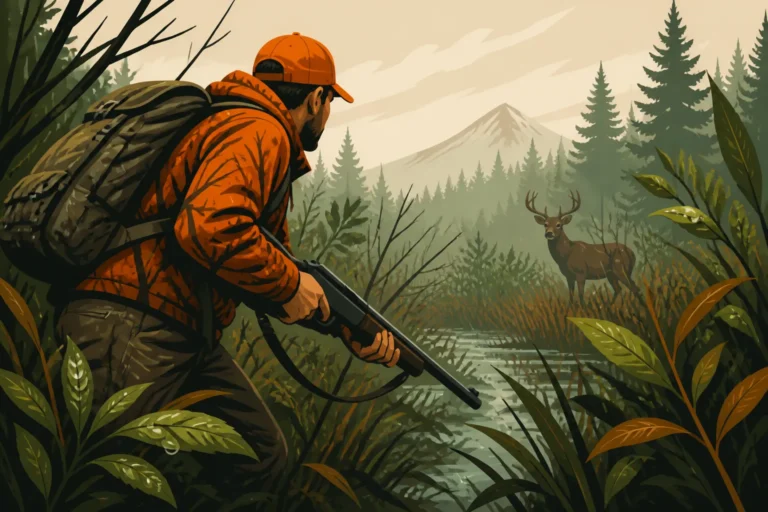
Successful tactics for Roosevelt elk in November often involve slow, deliberate still-hunting. This means moving at a snail's pace, pausing frequently to listen and scan ahead, letting your eyes adjust to the shadows. You're not just looking for an entire elk, but rather a horizontal line in a vertical world, a patch of brown hide, or the flicker of an ear. Pay particular attention to areas where dense cover meets more open feeding areas. These transition zones are high-traffic corridors. Hunting in fog and drizzle, common in Western Oregon, actually offers an advantage by muffling sound and giving you better scent control. Our guide on Still-Hunting Blacktails in Wet Oregon Coastal Brush offers principles that are highly applicable to Roosevelt elk in similar conditions.
Finding Rocky Mountain Elk in Eastern Oregon's Open Country
Eastern Oregon presents a vastly different challenge for Rocky Mountain elk. While there are certainly timbered areas, much of the habitat is more open, characterized by Ponderosa pine forests, juniper stands, and expansive sagebrush country. Elk here can travel vast distances, often utilizing thermal cover on north-facing slopes during the day and moving to south-facing slopes or open feeding grounds in the evenings and mornings.
Glassing is your best friend in Eastern Oregon. Find a vantage point that overlooks a large basin, a series of draws, or distant timber edges, especially those bordering private agricultural fields. Using high-quality binoculars or a spotting scope, methodically pick apart the landscape at first light and last light. Look for movement, subtle differences in color, or the glint of an antler. Elk often blend in incredibly well, so patience and a keen eye are essential. After spotting animals, plan your stalk using terrain features to stay out of sight. Remember that mule deer also inhabit similar areas, so tactics for Glassing Sage and Juniper for Eastern Oregon Mule Deer can be adapted for elk.
Identifying Key Features: Feed, Water, and Thermal Cover
Regardless of whether you're chasing Roosies or Rocky Mountain elk, understanding their basic needs – food, water, and cover – is fundamental. In November, these needs become even more pronounced due to colder temperatures and hunting pressure.
- Feed: Elk are grazers and browsers. In Western Oregon, they'll seek out green grasses in clearcuts, brave enough to venture out in lower light. They also browse on various shrubs and forbs within the timber. In Eastern Oregon, they'll utilize open fields, fresh regrowth in burns, and certain types of browse in timbered areas. Snow depth can dramatically impact food availability; shallower snow areas will concentrate elk.
- Water: Elk need water daily. Identify reliable water sources like springs, creeks, and stock ponds. Even in wet Western Oregon, elk will have preferred water points. In Eastern Oregon's drier units, water can be a significant draw, often concentrating animals. You might find more animals around hidden springs or small seeps. Many digital maps, especially those from providers like GoHunt, will highlight reliable water features.
- Thermal Cover: This is crucial in November. Elk seek dense cover that protects them from cold winds, snow, and rain. North-facing slopes with thick timber offer excellent thermal cover, often holding snow later. South-facing slopes, catching more sun, provide good winter foraging and sunning spots. Bedding areas will typically be in thick, secluded spots, often with good visibility downwind. These spots allow them to rest, chew their cud, and stay warm while keeping an eye (or nose) out for danger. Understanding these elements helps you predict their movement patterns throughout the day.
Hunting Tactics for Rifle Season Success
Once you've done your scouting and understand the terrain, it's time to put boots on the ground with a solid plan. November rifle season hunting requires a blend of patience, stealth, and sometimes, aggressive pursuit.
Still-Hunting and Tracking in Wet Conditions
For those hunting Roosevelt elk in Western Oregon, still-hunting is an art form. It's about moving incredibly slowly, taking a few steps, then stopping for several minutes to observe, listen, and let your eyes adjust. You're trying to pick apart the dense cover, looking for the tell-tale horizontal line of an elk's back or a patch of hide. The constant drizzle or rain of Western Oregon actually works in your favor, muffling your footsteps and washing away your scent. Focus on moving into the wind or crosswind, always paying attention to thermals, which often drop in the evenings.
Tracking becomes a vital skill in these conditions. Fresh tracks in mud or soft earth are your roadmap. Follow them cautiously, assuming the elk is just ahead and alert. Look for broken twigs, displaced leaves, and fresh droppings. If the tracks indicate a change in gait or direction, the elk may have sensed you. Patience is your greatest ally here; often, the successful still-hunter takes hours to cover a short distance. This method is incredibly effective for getting close to elk in the thickest cover, often resulting in close-range shot opportunities.
Setting Up Ambush Points and Glassing Strategy
In more open Eastern Oregon units, or even at the edges of clearcuts in Western Oregon, ambush hunting and strategic glassing can be highly effective. This involves finding a location that offers a wide view of feeding areas, travel corridors, or bedding grounds, and then waiting patiently. Set up before first light, well-hidden, and with the wind in your favor. Use binoculars or a spotting scope to systematically scan the area, focusing on patches of timber, the edges of meadows, or draws where elk might appear.
Effective glassing isn't just about looking; it's about seeing. Break down the landscape into smaller sections, searching for any anomaly – a dark lump that isn't a rock, a flash of white rump, or a movement in the brush. Once you spot elk, the real work begins. Assess their direction of travel, their behavior, and the terrain between you and them. Plan a stalk that keeps you out of sight and downwind. In some areas, multiple hunters can work together, with one glassing from a high point and directing a stalker on the ground. For more on maximizing your vision, consider the advice in Optics for Dark Timber Versus Open Sage.
The Role of Calling in Late Season
While the peak of the rut is long over by November, calling can still play a role, albeit a different one. The aggressive bugling of September is usually replaced by more subtle cow and calf calls. In November, elk are often focused on feeding and conserving energy, but they are still social animals. Soft cow chirps, mews, and lost calf calls can sometimes pique the curiosity of other elk, especially cows and spikes, which might still be found in smaller bachelor groups or with the main herd.
A soft, pleading cow call can sometimes pull a lone bull or a satellite bull off his cows, or draw in a small group of cows and calves. It's less about challenging a bull's dominance and more about playing on their social instincts. Over-calling can spook wary late-season elk, so use calls sparingly and subtly. A good strategy is to call once or twice, then remain silent for an extended period, listening intently for a response or for moving animals. This can be especially effective when you suspect elk are bedded in thick cover, as a soft call might make them stand up for a look, offering a shot opportunity. Our article on Cow Calls That Pull a Herd Bull Off His Cows provides excellent insight into this softer calling approach.
Essential Gear and Preparation for Cold, Wet Hunts
Oregon's November weather is notoriously unpredictable. One day you might have crisp, clear skies, and the next, you're facing driving rain, heavy snow, or even freezing fog. Being unprepared for these conditions can quickly turn a hunt into a miserable (and potentially dangerous) experience.
Clothing and Layering for Oregon's Variable Weather
Layering is absolutely critical for November elk hunting in Oregon. You need to be able to adapt to changing temperatures, exertion levels, and precipitation.
- Base Layers: Start with moisture-wicking synthetic or merino wool base layers. These pull sweat away from your body, keeping you dry even when you're working hard climbing hills. Avoid cotton at all costs, as it retains moisture and will make you cold.
- Mid Layers: A fleece jacket, a puffy synthetic jacket, or another merino wool layer provides insulation. These layers trap warm air close to your body. You'll likely shed these during strenuous activity and put them back on when glassing or sitting.
- Outer Layers (Rain Gear): This is non-negotiable, especially in Western Oregon. Invest in high-quality, waterproof and breathable rain gear – jacket and pants. Look for Gore-Tex, Pertex Shield, or similar proprietary waterproof membranes. It needs to keep you dry through hours of steady rain and keep the wind out. A good set of rain gear like that offered by Sitka Gear or Kuiu can be a game-changer. For advice on what truly holds up, check out Rain Gear That Actually Stays Dry.
- Accessories: Waterproof gloves or mittens, a warm beanie, and a neck gaiter are essential. Your hands, feet, and head are critical for regulating body temperature.
Remember, you'll be actively moving, often through brush, so durability is also a factor. Avoid noisy fabrics that can spook game.
Rifle and Optics Considerations for November
Your rifle setup needs to be reliable, accurate, and suited for the conditions.
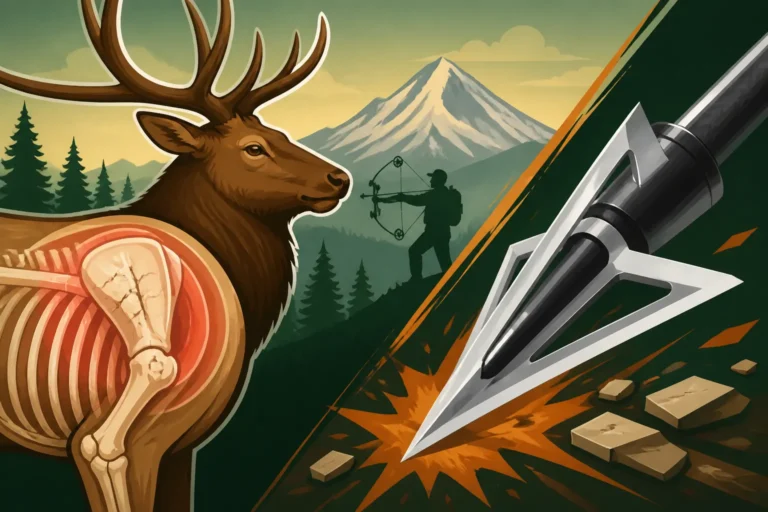
- Rifle Caliber: For elk, you need sufficient stopping power. Popular choices in Oregon include .30-06, .300 Win Mag, .338 Win Mag, 7mm Rem Mag, and .270 WSM. Whatever you choose, ensure you are proficient and can make ethical shots. Modern bullets like Nosler Partitions, Barnes TTSX, or Hornady ELD-X offer excellent performance on elk. Our guide to Rifle Calibers That Suit Oregon Elk provides more detailed options.
- Optics: Your scope needs to be clear, bright, and hold zero in rugged conditions. Variable power scopes (e.g., 3-9x, 4-12x) are versatile for both close-quarters timber shots and longer ranges in open country. A good set of binoculars (10×42 or 10×50) is indispensable for glassing, especially in Eastern Oregon. Ensure all optics are waterproof and fog-proof. A rangefinder is also vital, especially for judging distances in steep, broken terrain.
- Maintenance: Before your hunt, clean your rifle thoroughly, ensure all screws are tight, and sight it in with the ammunition you plan to use. Zero it for 100 or 200 yards, depending on your preferred hunting style. In wet conditions, a light coat of oil on external metal parts can help prevent rust. Consider carrying a small lens cloth to wipe moisture off your scope and binocular lenses.
Survival and Safety Essentials
Beyond hunting gear, a comprehensive survival kit is non-negotiable when hunting in Oregon's remote areas, especially in unpredictable November weather.
- Navigation: A reliable GPS device or smartphone with downloaded maps (like those available through GoHunt's mapping subscription), a compass, and a paper map are essential. Know how to use them all. Batteries die, screens break, so always have a backup.
- Fire Starting: Waterproof matches, a lighter, and a fire starter (like a ferro rod) are crucial. Dry tinder is hard to find in wet conditions, so pack some dryer lint or cotton balls soaked in petroleum jelly.
- Shelter: A lightweight tarp or emergency bivy sack can provide critical protection if you're unexpectedly stranded overnight.
- First Aid: A well-stocked first aid kit should include bandages, antiseptic wipes, pain relievers, blister treatment, and any personal medications.
- Communication: A fully charged cell phone (though service is often non-existent), a satellite messenger (like a Garmin inReach or Zoleo), or a two-way radio system can be lifesavers. Always leave a detailed trip plan with someone responsible at home.
- Water & Food: Pack more water than you think you'll need, or a reliable water filter/purifier. High-energy snacks (nuts, jerky, energy bars) are vital to keep you fueled in cold conditions.
- Lighting: A headlamp with spare batteries is a must for early morning hikes and packing out in the dark.
Being physically fit is also a critical part of preparation. Oregon elk hunting can be extremely demanding, with steep climbs, long hauls, and heavy loads. The better shape you're in, the safer and more enjoyable your hunt will be.
Post-Harvest Considerations and Ethical Practices
Taking an elk is just the beginning of the real work. The effort required to process and pack out an animal in November can be as demanding, if not more so, than the hunt itself. Ethical practices and proper meat care are paramount.
Field Dressing and Meat Care in Cold Weather
Once an elk is down, the priority is to field dress it quickly and efficiently to start the cooling process. In November, temperatures are generally cooler than early archery seasons, which is a huge advantage for meat preservation. However, prolonged exposure to rain or mud can still contaminate meat.
- Immediate Field Dressing: Roll the elk onto its back if possible (or on its side), prop it open, and gut it completely. Remove all organs. Be careful to avoid puncturing the stomach or intestines.
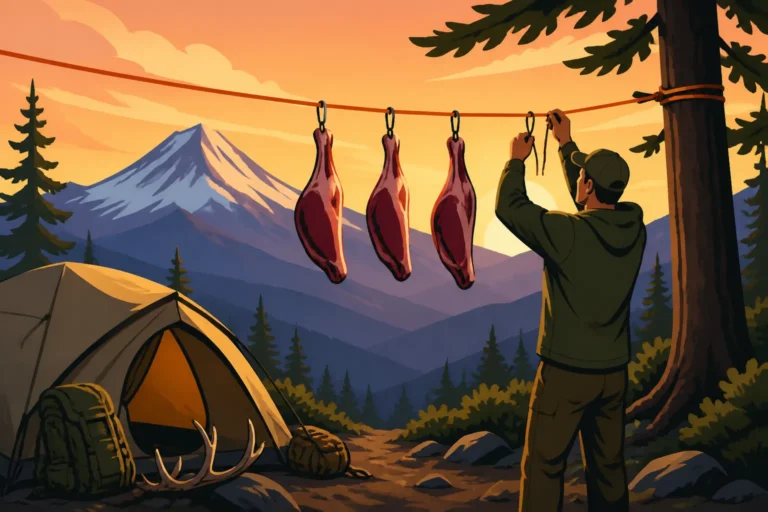
- Cooling: If the weather is truly cold (below 40°F / 4°C), you may not need to quarter immediately if you can get the whole carcass to a processor within a few hours. However, in most remote Oregon hunting scenarios, you'll need to break it down. Hang the carcass or quarters if possible to allow air circulation, especially if there's any residual heat.
- Cleanliness: Carry clean game bags (synthetic or cotton mesh) to protect the meat from dirt, leaves, and insects. Never use plastic bags as they trap heat and moisture, promoting bacterial growth. Wipe away any blood or dirt from the meat surfaces with a clean cloth or paper towel; avoid using water directly on the meat unless absolutely necessary. Our guide on Field Dressing an Elk in Warm Early-Season Weather offers a baseline for quick action that applies to all conditions.
Packing Out Your Elk in Challenging Terrain
Packing out an entire elk, especially a bull, from rugged Oregon terrain is an enormous undertaking. It's physically exhausting and often requires multiple trips or a team effort.
- Quartering: For remote kills, the gutless method or traditional quartering are often necessary. Separate the four quarters, backstraps, tenderloins, neck meat, and any other salvageable meat. A mature bull can yield 200-300 pounds of boned-out meat, plus the hide and skull. This means multiple heavy loads, often 60-80 pounds per trip, over difficult terrain. Our article on Quartering and Packing an Elk Alone provides detailed steps for tackling this solo.
- Pack Frames: A sturdy external frame pack is invaluable for packing out heavy loads. Distribute weight evenly and ensure the load is secure.
- Terrain Navigation: Plan your pack-out route carefully, considering the easiest (not necessarily shortest) path back to your vehicle or camp. This might involve following game trails, old logging roads, or contours that minimize steep climbs. Use your headlamp if packing out in the dark, and be mindful of footing in wet, muddy, or snowy conditions. Remember that Pack Frame Load Weight for One Hunter should be realistically assessed to prevent injury.
- Teamwork: If possible, hunt with a partner or a group. Sharing the load makes the pack-out much safer and more efficient.
Mandatory Harvest Reporting and Regulations
Oregon takes its harvest reporting seriously. After you successfully harvest an elk, you are legally obligated to report it to the Oregon Department of Fish and Wildlife (ODFW).
- Reporting Deadlines: There are specific deadlines for reporting, typically by January 31st for most fall hunts, and for some, by April 15th of the following year. Failing to report on time can result in a $25 penalty.
- Online System: The easiest way to report is through ODFW’s online licensing system. You'll need your tag number and specific details about your harvest (e.g., sex of the animal, hunt unit, date).
- Why it Matters: Harvest reporting is crucial for ODFW to manage wildlife populations effectively. It helps them track success rates, understand herd health, and make informed decisions about future tag allocations and season structures. This data is vital for ensuring sustainable hunting opportunities for future generations. For full details on avoiding the penalty, see Oregon Mandatory Harvest Reporting and the $25 Penalty. Always ensure you are familiar with all relevant ODFW regulations, including those on game salvage and weapon specific rules.
Navigating Public and Private Land Access
Oregon offers a wealth of hunting opportunities, but understanding where you can legally hunt and how to gain access to certain lands can be confusing. It's a mix of vast public forests and BLM lands, alongside extensive private industrial timber holdings and smaller private parcels.
Understanding Oregon's Public Land Opportunities
Oregon boasts millions of acres of public land managed by the U.S. Forest Service (USFS) and the Bureau of Land Management (BLM). These lands are generally open to hunting, offering incredible opportunities for DIY elk hunters.
- National Forests: The Willamette, Siuslaw, Deschutes, Umatilla, Wallowa-Whitman, and Rogue River-Siskiyou National Forests are just some of the large tracts of public land. These areas offer diverse habitats, from dense coastal rainforests to high-desert Ponderosa pine. Access is typically via a network of forest roads, though many areas require significant hiking into roadless or wilderness sections.
- Bureau of Land Management (BLM): BLM lands are often found in Eastern Oregon's high desert, providing crucial habitat for Rocky Mountain elk. These lands are generally more open, with a mix of sagebrush, juniper, and scattered timber. Access usually involves gravel roads, but navigation can be challenging without good maps.
- Oregon Department of Fish and Wildlife (ODFW) Wildlife Areas: ODFW manages several wildlife areas across the state. While some are primarily for waterfowl or upland birds, others offer big game hunting, often with specific regulations or permits. Always check the individual wildlife area rules before heading out. For a detailed guide on finding public land, consult Public Land Hunting in Oregon: Forest, BLM and State.
Accessing Industrial Timber Lands
A significant portion of prime elk habitat in Oregon, particularly in the Coast Range and Cascades, is owned by large industrial timber companies like Weyerhaeuser, Hancock Forest Management, and others. Access to these lands can be complex and often requires special permits or fees.
- Permit Systems: Many timber companies operate permit systems, where hunters can purchase annual permits for specific units or entire regions. These permits often provide gate codes or access to otherwise closed roads. Prices and availability vary, and permits can sell out quickly. It's crucial to check with the specific timber company well in advance of the season.
- Walk-In Only: Some timber company lands may be open for walk-in access without a permit, particularly smaller parcels or those without active logging operations. However, motorized access typically requires a permit. Always look for signage indicating access rules.
- Fire Closures: Industrial timber lands are often subject to fire season closures, which can impact early fall hunting. Always check for current fire restrictions and closures before planning your hunt. Resources like GoHunt often include overlays showing public and private land boundaries, which is invaluable for identifying these timber holdings. Our article Hunting Clearcuts on Private Timber Land delves deeper into navigating these systems.
Cooperative Programs and Landowner Relations
Oregon has several programs designed to improve hunter access, including the Access and Habitat (A&H) program and Open Fields.
- Access and Habitat Program: This ODFW program works with private landowners to open or improve access for hunters. A&H areas are marked with specific signage, and rules can vary by property. Some are walk-in only, others might allow vehicles on specific days. These opportunities are fantastic for finding less pressured elk. You can find more information about these sites through Oregon's Access and Habitat Program Lands.
- By-Permission Land: Outside of formal programs, some private landowners may grant permission to hunt their property if you simply ask. This requires respectful, face-to-face interaction, a solid hunting plan, and a commitment to abide by their rules and leave no trace. Always ask well in advance of the season, and be prepared for rejection; perseverance and politeness often pay off. Leaving gates as you found them and being mindful of livestock or other property is key to maintaining these relationships.
Understanding the patchwork of land ownership and access rules is a critical component of successful and ethical elk hunting in Oregon. Always carry detailed maps and know exactly where you are to avoid trespassing.
Disclaimer
The information provided in this guide is for general informational purposes only and is not a substitute for official regulations. Hunting regulations, seasons, and access rules can change frequently. Always consult the most current Oregon Department of Fish and Wildlife (ODFW) hunting regulations pamphlet, relevant land management agency rules, and local ordinances before engaging in any hunting activities. It is the hunter's responsibility to know and follow all applicable laws and regulations.