Hunting Clearcuts on Private Timber Land
It's easy to feel overwhelmed by the sheer amount of private timber land in Oregon, often marked with "No Trespassing" signs or complicated permit systems, leaving many hunters scratching their heads about how to even begin. But here's the thing: those clearcuts, seemingly barren and impassable, are absolute magnets for deer and elk, offering some of the best hunting opportunities if you know how to navigate them. This guide cuts through the confusion, offering practical strategies and insights for successfully hunting these valuable, often overlooked, private timber clearcuts.
Understanding Oregon's Private Timber Lands and Access
Oregon is a state rich in timber, and much of that land is privately owned by large forestry companies. Unlike public land, access here isn't a given; it's managed, and understanding how these companies operate is the first step to unlocking some incredible hunting opportunities. Ignoring the rules or assuming access is a surefire way to get yourself in hot water and potentially jeopardize future access for everyone.
Major Timber Companies and Their Policies
Several major players dominate the private timber landscape in Oregon, and each has its own unique approach to public access. Companies like Weyerhaeuser, Hancock Forest Management, and Stimson Lumber manage vast acreages, especially in the Coast Range, Cascades, and parts of Eastern Oregon. Their policies can range from comprehensive fee-based permit systems to designated free walk-in areas, and sometimes even lottery systems for specific properties. For instance, Weyerhaeuser often uses an online permit system, sometimes with tiered options for different recreational activities or access levels. Hancock, on the other hand, might offer permits through local vendors or specific regional offices, and their availability can be quite limited. These policies aren't static; they can change annually, so what was true last year might not be this year. It's crucial not to assume and always verify current rules.
The Varying Landscape of Private Access
The reality of hunting private timber land is that access isn't uniform across the state or even between different tracts owned by the same company. You might find a section of Weyerhaeuser land in the Coast Range with a strict annual permit requirement, while another section near the Cascades could be a designated free walk-in area. These variations are often due to a multitude of factors, including specific land management plans, local community relations, fire danger, and even seasonal logging operations. It's not uncommon to encounter "Walk-In Only" areas right next to sections that require a permit, creating a complex patchwork of regulations. Understanding these nuances is critical for avoiding trespass issues and ensuring you're hunting legally. Often, these companies also participate in Oregon's Access and Habitat Program, which opens up additional lands to hunters, sometimes through specific agreements.
Finding Maps and Information
Gone are the days when a crumpled paper map was your only guide. Today, digital mapping tools are indispensable for navigating private timber lands. Services like onX Hunt have revolutionized how we identify land ownership, showing clear boundaries between public and private holdings. However, even with these tools, it's absolutely vital to cross-reference with the specific timber company's official resources. Their websites are usually the best place to find the most up-to-date information on permit sales, access maps, and any seasonal closures, especially during periods of high fire danger. Checking these resources before each season, and even before each trip, is paramount. Many hunters also find platforms like GoHunt invaluable for consolidating information on hunting units, draw odds, and often, links to specific timber company access portals, making the permit acquisition process a bit smoother. It's worth remembering that access rules can change frequently due to logging activity, weather, or fire season, making constant vigilance a must. Knowing the specifics about Timber Company Access Fees and Gates in Oregon is a key part of this preparation.
Reading Clearcuts for Optimal Hunting Success
Clearcuts, while appearing chaotic, are dynamic ecosystems. They are not merely empty spaces; they are areas undergoing rapid regeneration, creating a smorgasbord of forage and cover that deer and elk absolutely thrive on. Learning to "read" a clearcut means understanding the subtle signs that indicate where game animals are feeding, bedding, and traveling.
Identifying Key Features Within a Clearcut
Even a freshly logged clearcut isn't uniform. There are always subtle features that concentrate game. Look for "islands" of unlogged timber, often left around drainages, steep slopes, or areas deemed too difficult to log efficiently. These islands provide crucial thermal cover and security, often acting as bedding areas or travel corridors. Creek bottoms, even if dry, offer a natural path of least resistance and sometimes lingering moisture, attracting game. Rock outcrops or old stumps can serve as natural high points for deer to bed, offering a commanding view. Pay close attention to varying heights of regenerating growth; areas with denser, taller saplings provide more cover than those with sparse, shorter growth. Old skid roads, once used for logging, often become deer and elk trails, especially if they offer an easier grade for travel. These subtle variations are the key to finding animals in what might otherwise look like a uniform landscape.
Understanding Deer and Elk Behavior in Regenerating Areas
Deer and elk are creatures of efficiency, and clearcuts, especially those a few years into regeneration, offer a buffet of new growth. Blacktail deer, in particular, are drawn to the tender shoots of huckleberry, salal, and various forbs that explode after logging. They'll browse heavily in these areas, especially during the early morning and late evening. Elk will also feed on these, but they are generally less tolerant of wide-open spaces and prefer clearcuts that offer quick access to dense timber for security. They might feed out into the openings during low-light conditions or under the cover of fog, then quickly retreat to the thick stuff when daylight or pressure increases. Understanding Blacktail Deer Habitat in Oregon Clearcuts is crucial, as their patterns differ significantly from elk. Pressure from other hunters also plays a huge role; heavily hunted clearcuts will see game move mostly at night or stick exclusively to the dense edges.
Impact of Clearcut Age on Game Activity
The age of a clearcut is perhaps one of the most significant factors influencing how game animals use it. A very young clearcut, perhaps 1-3 years old, is like a fresh salad bar; it offers abundant, palatable forage but very little cover. Deer and elk will use these for feeding, but often only in low light or when very hungry, and they'll rarely bed there. As the clearcut matures to 4-10 years, the regenerating trees, like Douglas fir and hemlock, start to offer significant cover, especially if they’ve grown densely. This "dog hair" thicket provides excellent security, and game will often bed down within these areas, transitioning between feeding in slightly younger growth and retreating to the security of the thicker patches. Beyond 10-15 years, the clearcut starts to resemble young timber, with reduced browse availability at ground level but increasing canopy cover. This means different hunting strategies are needed. For specific insights, learning how to recognize Reading a Two-Year-Old Clearcut for Bucks can give you an edge.
Strategies for Hunting Blacktail Deer in Clearcuts
Blacktail deer are masters of the thick stuff, and while clearcuts can seem open, they use the regenerating growth to their advantage. Successfully hunting them in these environments demands patience, keen observation, and an understanding of their elusive nature.
Still-Hunting and Glassing Techniques
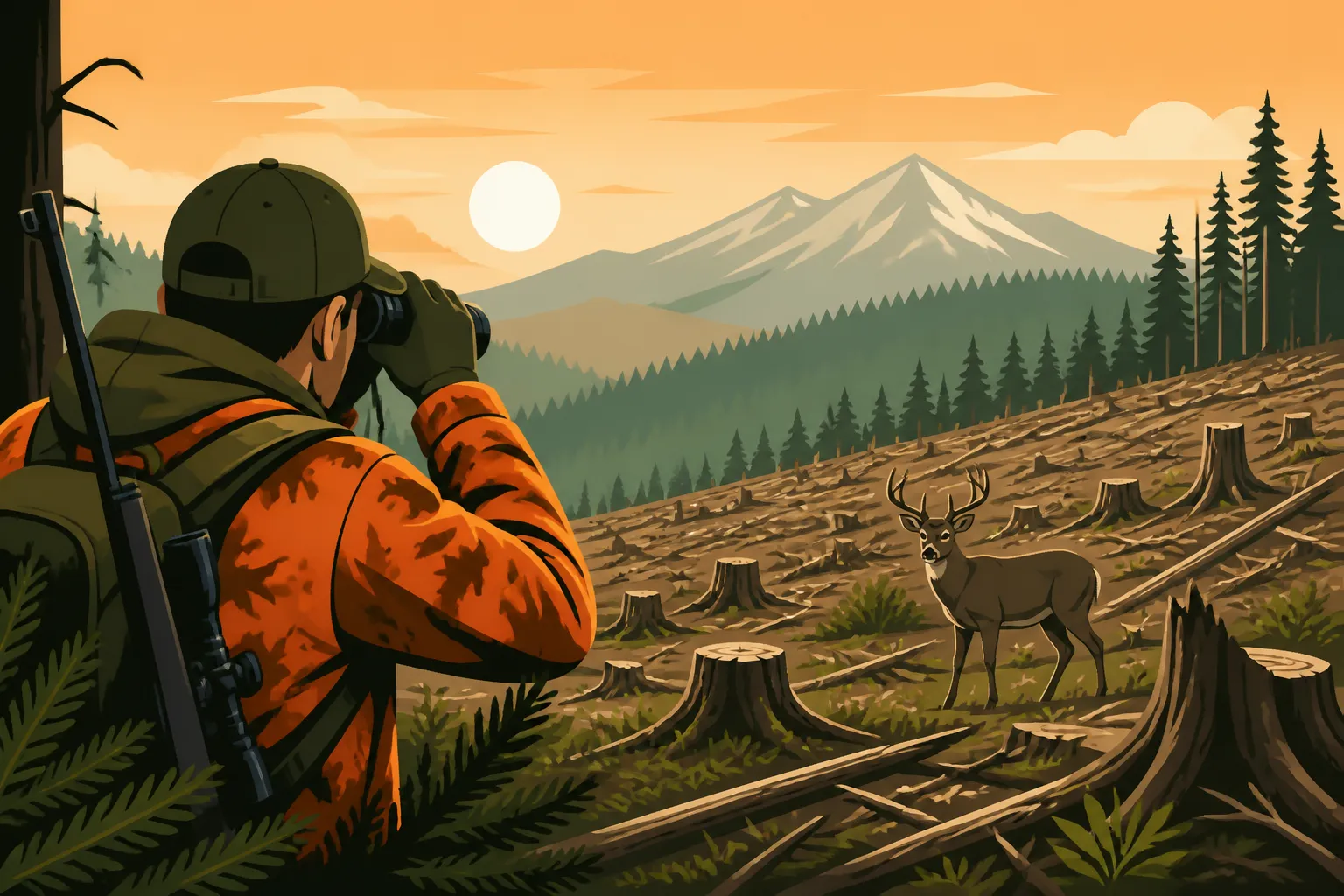
When hunting blacktails in clearcuts, a combination of still-hunting and glassing is often the most effective approach. Still-hunting involves moving incredibly slowly, taking a few steps, then stopping for several minutes to scan for movement or parts of an animal. This works best when the clearcut has some regenerating growth that breaks up your outline and muffles your footsteps. Move with the wind, or at least a crosswind, to keep your scent from blowing ahead. For larger clearcuts, glassing from a high vantage point at dawn and dusk is paramount. Find a spot that offers a wide view of the clearcut and its edges. Use good quality binoculars (10×42 or 12×50) and meticulously pick apart the shadows and patches of growth. It's often the flick of an ear, a horizontal line in a vertical world, or a subtle change in color that gives away a buck. Patience here is key; spend significant time glassing before moving on. For effective slow movement, consider strategies for Still-Hunting Speed in Wet Brush.
Utilizing Edge Cover and Transition Zones
Blacktails are classic edge animals. They rarely venture far into wide-open spaces, preferring to stay close to the security of dense timber or thick regenerating brush where they can disappear in an instant. The edges where a clearcut meets mature timber are prime locations. These transition zones offer both browse from the clearcut and critical cover from the forest. Bucks will often cruise these edges, especially during the rut, looking for does. Focus your attention on the irregular edges, fingers of timber that extend into the clearcut, or small patches of unlogged cover within the cut itself. These are natural travel corridors and bedding areas. Setting up to watch these areas, especially where trails enter and exit, can be highly productive. Understanding Reading Clearcut Edges for Blacktail Bucks will help you identify these hotspots more efficiently.
Timing Your Hunt: Mornings, Evenings, and Weather
Blacktail deer are most active during the low-light hours of dawn and dusk. This is when they'll typically move out of their bedding areas in the dense cover to feed in the clearcut. Planning your approach to be in position before first light and staying until well after sunset can significantly increase your odds. However, weather also plays a huge role in blacktail activity. Overcast days, light rain, or fog can extend their feeding periods and make them feel more secure in the open. During heavy rain, they might move less, but the sound of the rain can also mask your approach, making still-hunting more effective. Conversely, bright, sunny days often push them deeper into the densest cover. Don't shy away from hunting during less-than-ideal weather; sometimes, the nastier the weather, the better the hunting, especially if you're prepared with the right gear. Techniques for Hunting Blacktails in Fog and Drizzle can be particularly useful here. The Blacktail Rut Timing in Western Oregon also presents unique opportunities in these areas.
Hunting Elk in Clearcut Environments
While blacktails thrive in the dense, regenerating growth, elk use clearcuts differently, often seeking out larger, older cuts for specific forage, or utilizing their vast size to move more openly in search of food. Their presence in a clearcut, however, is often more transient than deer, demanding different scouting and hunting tactics.
Locating Elk Sign in Large Clearcuts
Elk are big animals, and they leave big sign. In large clearcuts, you're looking for wallows, fresh tracks in damp soil (especially along old logging roads or tractor paths), abundant droppings, and rubs on smaller trees. Elk will often browse on new growth in clearcuts, much like deer, but their preferences might lean towards grasses and specific shrubs. Pay close attention to areas where the clearcut transitions into thicker timber or riparian zones. These are often where elk will stage before moving into the open or where they'll retreat for security. Look for patterns in their sign; are they consistently using a particular path to enter or exit? Is there a fresh wallow nearby indicating a herd has been in the area recently? Sometimes, the sheer volume of sign can tell you if you’re in a core area or just a fleeting travel route.
Using Terrain to Your Advantage
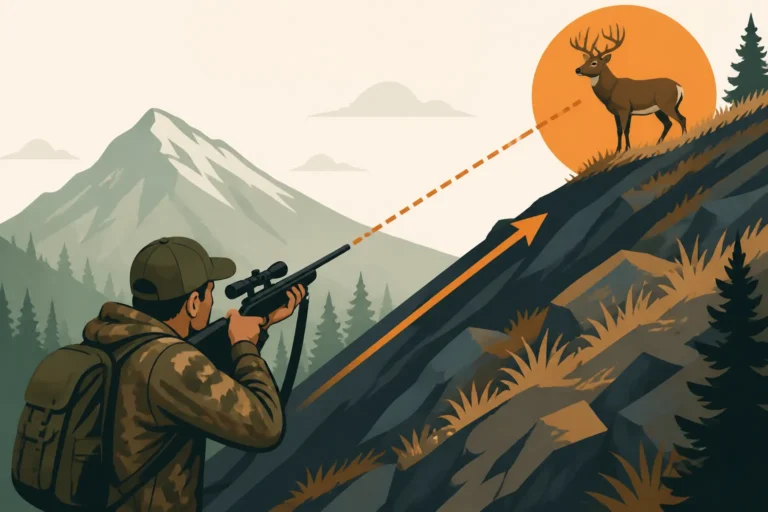
Elk, despite their size, are incredibly adept at using terrain for cover and travel. In clearcuts, this often means they will gravitate towards draws, saddles, and benches that offer a less exposed route across an open area or a secure place to bed down within sight of good forage. An unlogged finger of timber stretching into a clearcut, or a particularly steep ravine with dense regrowth, can act as a crucial security blanket for them. When approaching a clearcut where you suspect elk, use these terrain features to your advantage. Stay on the backside of ridges, use the natural contours of the land to break up your silhouette, and always approach from downwind. Elk have incredible noses, and a swirling wind can quickly give you away, especially in an open setting where scent can carry for long distances.
Calling Strategies in Openings
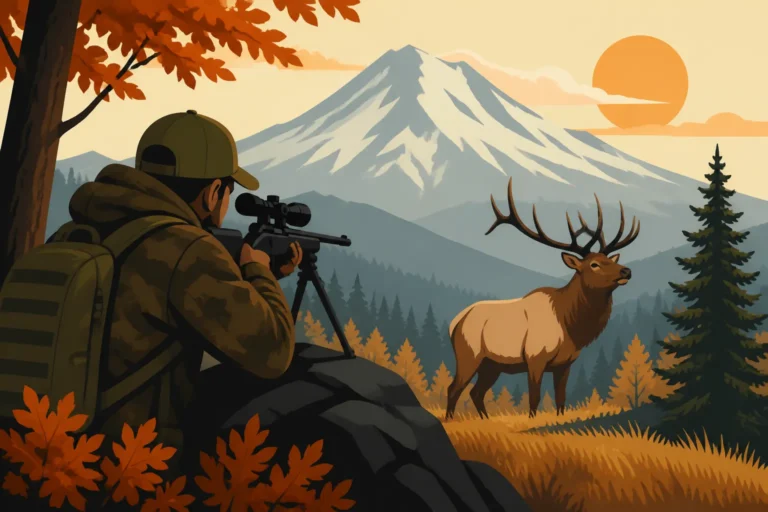
Calling for elk in a wide-open clearcut can be challenging, as there's less cover to conceal your movement or provide a sense of security for an incoming animal. However, it's not impossible, and certain scenarios can still yield results. Subtle cow calls or mews can sometimes bring in curious animals, especially during the early archery seasons before they get heavily pressured. If you hear a bull bugle from a clearcut edge, responding with a soft, questioning cow call might pique his interest, prompting him to move a little closer to investigate. The key is to be extremely mindful of your setup. You need to position yourself where you have good cover to break up your outline, excellent visibility of where the elk might appear, and a clear shooting lane. Having a partner act as a caller 50-75 yards behind you can also work wonders, drawing the bull's attention away from your position. For more specific techniques, consider exploring Cow Calling Versus Bugling in Heavy Timber, as many of those principles can be adapted.
Navigating Permits and Respecting Private Land Rules
The biggest hurdle for many hunters on private timber land is simply understanding and adhering to the permit systems and rules. Failing to do so isn't just a legal risk; it threatens future access for everyone.
Obtaining Timber Company Permits
Acquiring a permit for private timber land is often a straightforward process, but it requires diligence. Many of the larger companies, like Weyerhaeuser or Stimson Lumber, have dedicated online portals where you can purchase permits, review maps, and check for closures. These permits often come with specific dates, areas, and rules that must be followed. Some smaller companies or individual landowners might require you to contact them directly, sometimes leading to a more personal "by-permission" arrangement. It's not uncommon for permits to sell out, especially for popular hunting units, so it's wise to plan ahead and purchase them as soon as they become available. Resources like GoHunt often link directly to permit sales pages or provide crucial information on when and where permits become available, streamlining your research significantly. Always print out your permit or have it readily accessible on your phone, along with the relevant maps, in case you encounter a land manager or law enforcement officer in the field.
Understanding "Walk-In Only" Restrictions
"Walk-In Only" areas are a golden opportunity that many hunters overlook due to the perceived inconvenience. These zones, often found on both large timber company lands and within Oregon's Access and Habitat Program properties, typically restrict motorized vehicle access beyond a certain point or gate. While this means more effort for you, it also means significantly less hunting pressure. Animals in these areas tend to be less wary and might exhibit more natural behaviors during daylight hours. The challenge, of course, is packing out game from potentially miles deep within the property. This demands a different level of physical fitness and planning. Ensure you understand the specific boundaries and entry points for these areas, as driving even a few feet past a "Walk-In Only" sign can result in a hefty fine. Always double-check maps provided by the timber company or state, and utilize mapping apps to stay within legal boundaries. For more on this, investigate Walk-In Only Gates on Industrial Timber.
The Importance of Leave No Trace Principles
Hunting on private timber land is a privilege, not a right. Our actions as hunters directly impact whether these lands remain open to public access. Adhering strictly to Leave No Trace principles is absolutely critical. This means packing out every piece of trash, including spent shell casings, energy bar wrappers, and even biodegradable items like orange peels. Avoid damaging gates, fences, or roads, and leave them exactly as you found them. If a gate is closed, ensure it's closed and secured behind you, even if you found it open. Never drive off-road or create new trails unless explicitly permitted. Respect all signage, whether it's for active logging operations, fire closures, or sensitive wildlife areas. Our ethical responsibility extends beyond just legality; it's about being good stewards of the land and demonstrating respect for the landowner, helping ensure that these vital hunting grounds remain open for future generations.
| Timber Company (Example) | Primary Access Method(s) | Typical Fee Range (Annual) | Where to Find Info | Special Notes |
|---|---|---|---|---|
| Weyerhaeuser | Online permits, some free walk-in | $100 – $300 | Weyerhaeuser Recreation website, GoHunt | Often tiered permits; check specific unit |
| Hancock Forest Management | Online permits, sometimes local vendors | $50 – $200 | Hancock Forest Management website | Limited permits, can sell out fast |
| Stimson Lumber | Online permits, some free walk-in | $75 – $250 | Stimson Lumber website, GoHunt | Policies vary by region and year |
| Giustina Resources | Limited private permission, specific units | N/A (contact directly) | Giustina Resources website | Less public access, more restrictive |
Note: Permit availability, fees, and policies can change annually. Always verify current information directly with the timber company or through official resources like the Oregon Department of Fish and Wildlife (ODFW) website or reputable hunting platforms like GoHunt.
Essential Gear for Clearcut Hunting
Hunting clearcuts in Oregon's diverse terrain demands gear that can withstand rugged conditions and help you make the most of the often-open landscape. Being prepared means having the right tools for observation, navigation, and comfort.
Optics for Long-Range Observation
Clearcuts are, by nature, open areas, making quality optics an absolute necessity. A good pair of binoculars, at least 10×42, is indispensable for meticulously picking apart the brush and scanning distant slopes for game. Many experienced clearcut hunters prefer 12×50 or even 15×56 binoculars for their increased light-gathering capabilities at dawn and dusk, when animals are most active. A spotting scope with a sturdy tripod can also be a game-changer, allowing you to identify game at extreme distances and thoroughly assess an animal before committing to a stalk. Remember, you're not just looking for an entire animal; you're looking for an ear flick, a patch of hide, or a horizontal line that doesn't belong in a vertical world. Investing in the best optics you can afford will pay dividends in these environments.
Footwear and Rain Gear for Rugged Terrain
Oregon's clearcuts are not for the faint of heart, or for flimsy gear. The terrain is often steep, uneven, and riddled with stumps, downed trees, and thorny brush. Sturdy, waterproof boots with excellent ankle support are non-negotiable. Look for boots designed for mountaineering or serious backcountry hunting, as they will provide the necessary protection and traction. Layering is key for clothing, as you'll be exerting a lot of energy climbing and descending, but standing still for long periods while glassing. And this is Oregon, so reliable rain gear is paramount. A truly waterproof and breathable jacket and pants will make the difference between a miserable hunt and a productive one, allowing you to stay out longer in the face of inevitable coastal rain or mountain showers. You don't want to get soaked on day one. Make sure you read up on Rain Gear That Actually Stays Dry and consider robust options for Boots for Wet Coastal Hunting.
Navigation Tools and Safety Equipment
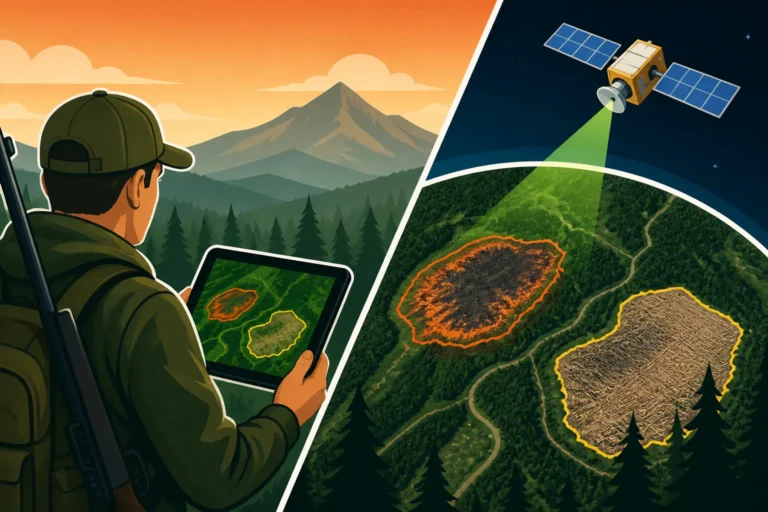
Even seasoned hunters can get disoriented in the maze of clearcuts, logging roads, and new growth. A reliable GPS device, coupled with a fully charged smartphone running a robust mapping app like onX Hunt, is essential. Always download offline maps before you head out, as cell service is often nonexistent. While digital tools are great, always carry a physical map and compass as a backup. Knowing how to use them can literally be a lifesaver. Beyond navigation, a comprehensive first-aid kit is non-negotiable, particularly when hunting in remote areas. Consider carrying an emergency signaling device, such as a satellite messenger (Garmin inReach or Zoleo), which allows you to communicate and call for help even without cell service. Since many clearcuts are remote, make sure someone knows your hunting plan, including your intended area and return time. Utilizing E-Scouting Burns and Clearcuts From Satellite can help you plan your navigation even before you hit the ground.
Disclaimer
Hunting is an inherently risky activity. The information provided in this guide is for informational purposes only and should not replace proper research, safety training, or adherence to all local, state, and federal hunting regulations. Always verify land access rules and permit requirements with the Oregon Department of Fish and Wildlife (ODFW) and specific timber companies before venturing out. Hunt safely and ethically.