Blacktail Deer Habitat in Oregon Clearcuts
Finding blacktail deer in Oregon's dense, ever-changing clearcuts can feel like searching for a needle in a haystack, especially with the constant evolution of these landscapes. It’s not simply a matter of walking into any logged area; success hinges on a deep understanding of the specific habitat features these elusive deer seek out. This comprehensive guide will peel back the layers of Oregon's clearcuts, revealing the precise elements that attract and hold blacktail deer throughout the seasons, helping you decipher their preferences and improve your hunting strategy.
Understanding Blacktail Deer Needs in Dynamic Clearcuts
Oregon’s clearcuts are far from static environments; they are constantly evolving ecosystems that offer a mosaic of opportunities and challenges for blacktail deer. Understanding this dynamic landscape is key to predicting where these wary animals will be at any given time.
The Lifecycle of an Oregon Clearcut and Blacktail Preference
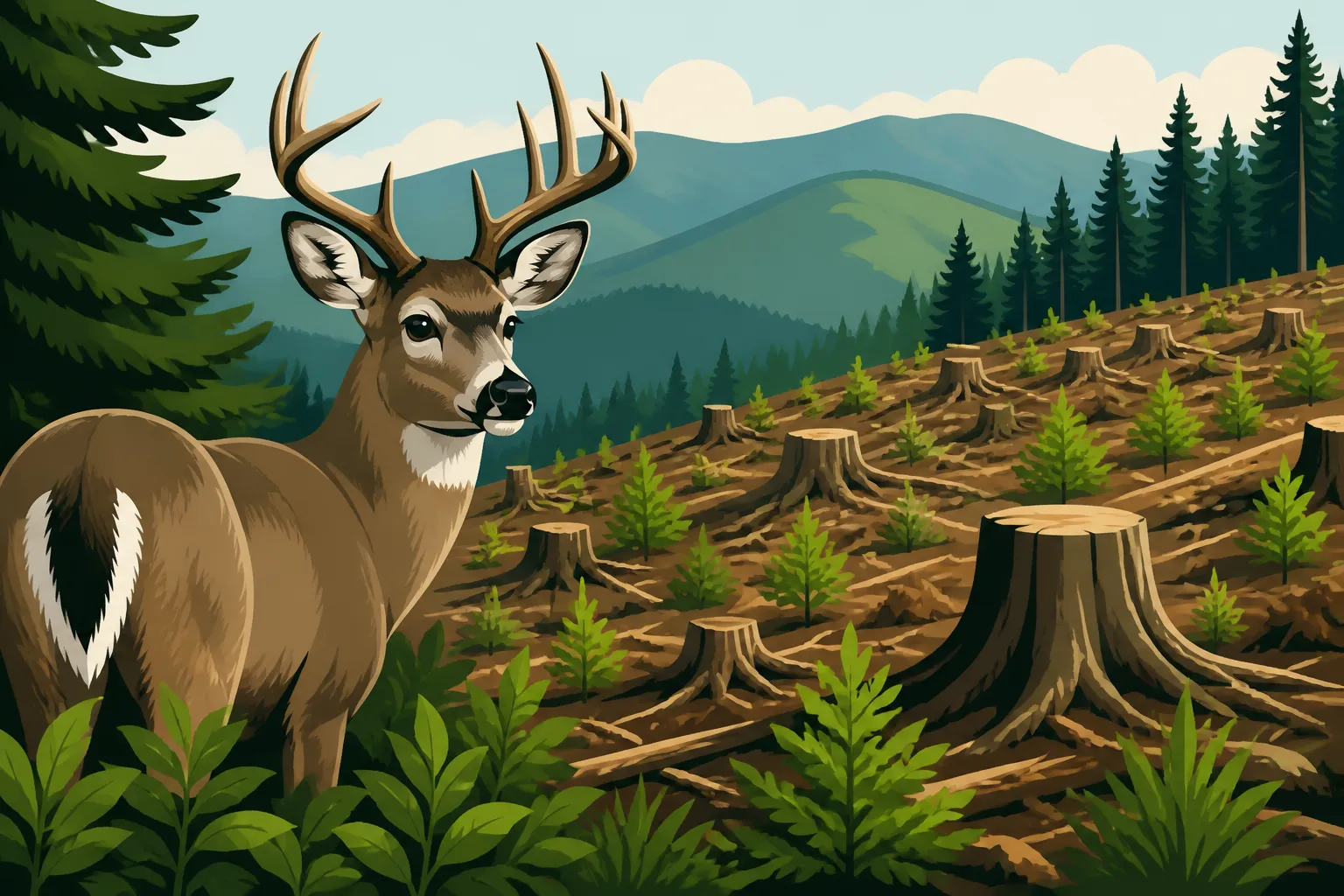
A clearcut begins its life as a stark, open expanse after timber harvesting. Initially, it might seem devoid of life, but within a few years, it transforms into a vibrant, bushy nursery. Right after logging, you’ll find a lot of slash and disturbed soil. This isn't usually prime blacktail country, as there's little food or cover. However, as the ground recovers and young plants begin to colonize, the area becomes increasingly attractive. A clearcut that's anywhere from three to fifteen years old often presents the sweet spot. At this stage, young trees like Douglas fir, hemlock, and cedar are growing vigorously, but crucially, the understory is bursting with browse, forbs, and grasses that blacktails absolutely adore. The dense network of growing saplings and brush also provides excellent concealment.
Later in its lifecycle, as the planted trees grow taller and begin to form a closed canopy, the clearcut becomes less appealing. The shade cast by the maturing trees chokes out the understory, reducing the available food. While blacktails might still use these areas for travel or temporary bedding if adjacent to better browse, they won't hold the same numbers as younger, more diverse clearcuts. Savvy hunters often focus on areas where timber companies have recently replanted or where natural regeneration is taking hold. Knowing how to read a two-year-old clearcut for bucks can make all the difference in locating deer that are just starting to benefit from the new growth.
Food Sources Abundant in Regenerating Areas
One of the primary reasons blacktail deer are drawn to clearcuts is the explosion of palatable food sources. When the forest canopy is removed, sunlight floods the forest floor, triggering a burst of growth in plants that were previously suppressed. This includes a wide array of forbs (leafy plants), grasses, and young browse. You'll often find abundant huckleberry, salal, and Oregon grape, which are year-round staples for blacktails, providing both sustenance and moisture. Fireweed is another common sight in newly disturbed areas, and deer will readily munch on its tender shoots.
Beyond these staples, clearcuts also foster the growth of deciduous shrubs and trees like vine maple, willow, and alder. The tender new growth on these plants is highly nutritious, especially in spring and summer. Young conifer needles, particularly from Douglas fir and hemlock, are also part of their diet, offering a consistent food source when other options are scarce. The constant cycle of growth in these areas means there's always something new for blacktails to eat, making them critical feeding grounds. This rich buffet explains why these areas can hold significant numbers of deer, if they also offer adequate security.
The Crucial Role of Cover and Security
While clearcuts are a smorgasbord for blacktails, deer are inherently wary creatures that prioritize security. A wide-open clearcut, no matter how much food it offers, won't hold deer if there's no immediate escape cover. This is where the adjacent mature timber, unlogged islands within the clearcut, or dense, regenerating brush really come into play. Blacktails will venture into the open clearcut to feed, especially during low light conditions, but they need to feel that a safe haven is just a few bounds away.
The thick, thorny tangles of blackberry, salal, and huckleberry that often colonize clearcuts provide excellent hiding spots, even if they're not tall trees. These dense patches, sometimes called "dog hair thickets," offer surprisingly good concealment from predators and hunters alike. Furthermore, residual timber patches, sometimes left for wildlife corridors or future logging cycles, act as vital security blankets. These provide thermal cover in harsh weather and a sense of safety where deer can bed down, chewing their cud while keeping an ear out for danger. Understanding this critical balance between food and cover is essential for identifying the best spots, often found at the edge cover blacktails bed in.
Decoding Clearcut Edges and Topography
The "edge" of a clearcut isn't just a line on a map; it's a dynamic zone where different habitats meet, creating prime opportunities for blacktail deer and, by extension, for hunters. Understanding how deer utilize these transitions and the underlying topography can significantly enhance your hunting success.
The Power of the "Edge Effect"
The edge of a clearcut represents the best of both worlds for blacktail deer: easy access to abundant forage and close proximity to dense security cover. This phenomenon is known as the "edge effect," and it's a fundamental principle of wildlife management. Deer will frequently travel parallel to these edges, especially in the early morning and late evening, moving between their bedding areas in the older timber and their feeding grounds in the regenerating clearcut. These transition zones are where you'll often find the freshest tracks, the most active browse, and even rubs left by bucks.
The type of edge also matters. A "soft" edge, where the clearcut gradually blends into the forest through a shrubby transition zone, is often more appealing than a "hard" edge, which is an abrupt wall of timber. Soft edges offer more gradual concealment and more varied food sources. When you're scouting, pay close attention to fingers of timber that extend into a clearcut, or draws that provide a natural funnel for deer moving between different habitat types. These subtle features can act as natural highways for deer. Being able to read clearcut edges for bucks is a critical skill for any serious blacktail hunter.
Utilizing Topography for Blacktail Advantage
Beyond just the horizontal layout of edges, the vertical dimension—topography—plays a huge role in how blacktail deer use clearcuts. Hills, ridges, draws, and benches all provide distinct advantages that deer exploit. For instance, south-facing slopes, especially in winter, are often preferred bedding areas because they receive more direct sunlight, offering thermal warmth. Conversely, in the heat of early season or during warm spells, north-facing slopes and shaded draws offer cooler bedding and travel corridors.
Deer also use terrain for concealment. A small fold in the ground, a dip, or a bench just below a ridge crest can provide enough cover for a deer to bed down unseen, even in a seemingly open clearcut. They'll often bed on benches or slight rises where they have a commanding view of the downhill slope, while remaining hidden from above. Understanding how to use the terrain to your advantage, moving quietly along contours or glassing from high points, can help you spot deer that would otherwise remain hidden in plain sight.
Timber Patches and Stringers as Safe Havens
Within the expanse of a clearcut, you'll sometimes find isolated pockets of unlogged timber, or narrow strips of trees, often called "stringers," that follow drainages or property lines. These aren't accidental; they might be riparian buffers, unstable slopes, or simply areas deemed uneconomical to log. For blacktail deer, these are invaluable safe havens. They offer immediate, dense cover within the food-rich clearcut environment, making them prime bedding locations.
Deer will often move out from these patches to feed in the surrounding clearcut, retreating quickly if disturbed. During a hunting day, these stringers and islands are excellent places to still-hunt slowly or to set up for an ambush. They concentrate deer movement and provide the security that deer crave. Even a patch of timber no bigger than a football field can hold several deer, especially if it's surrounded by good feed. When you're e-scouting burns and clearcuts from satellite, always zoom in and look for these smaller, unlogged features within the broader clearcut boundary; they're often overlooked gems.
Seasonal Movement and Clearcut Usage
Blacktail deer are creatures of habit, but those habits shift with the seasons, heavily influenced by food availability, breeding cycles, and weather patterns. How they utilize clearcuts changes dramatically from spring green-up to the winter snows.
Spring and Summer: Growth and Concealment
As spring arrives and the clearcuts burst into vibrant green, blacktail deer move in to capitalize on the abundance of new growth. This is a crucial time for does, who are either heavily pregnant or have recently dropped their fawns. The lush, regenerating vegetation provides not only highly nutritious forage but also excellent concealment for fawns. Does will seek out dense thickets within clearcuts or on their edges to hide their young, relying on the natural camouflage and scent-dampening qualities of the dense brush.
During the summer months, blacktails continue to gorge themselves on the rich clearcut buffet. Bucks are busy growing antlers, needing constant protein and energy, and does are nursing fawns. They’ll often bed deep within the thickest parts of the clearcut during the day, taking advantage of the shade and security, emerging in the cooler hours of morning and evening to feed more openly. This dense summer cover can make scouting difficult, but fresh tracks and browse lines still tell a story of their presence.
Fall Hunting Seasons: Food Transition and Rut Behavior
As fall approaches, the clearcut habitat undergoes another transformation. Many of the lush forbs and grasses begin to dry up or lose their nutritional value. Blacktails will shift their focus to remaining green browse, hard mast like acorns if available from nearby oaks, and any persistent soft mast such as late-ripening huckleberries. However, the most significant change for hunters during the fall is the onset of the blacktail rut timing in Western Oregon.
During the rut, bucks become far more active, less cautious, and more focused on finding receptive does. Clearcuts, particularly those with a good mix of dense cover and open feeding lanes, become prime cruising grounds for bucks. Does will still use these areas to feed, and bucks will follow. Rubs and scrapes will appear along trails and edges within the clearcut, signaling buck activity. The decreased leaf cover in late fall can also improve visibility, sometimes making it easier to spot deer moving through what was once impenetrable brush.
Winter Range and Clearcut Limitations
While clearcuts offer some winter browse, especially if snow levels aren't too deep, they often become less desirable as primary winter habitat. In areas with significant snowfall, deer are typically pushed to lower elevations and into older, denser timber stands for thermal cover. The thick canopy of mature forests offers protection from cold winds and heavy snow, providing crucial thermal regulation for deer trying to conserve energy. Blacktails will also seek out areas with exposed south-facing slopes, even in clearcuts, that melt off quickly and provide access to any remaining browse.
For hunters, this often means understanding winter range closures that affect late hunts. Many areas are closed to human entry during critical winter periods to protect deer and elk from disturbance during their most vulnerable time. Even in areas that remain open, deer movement will be significantly reduced in harsh weather. They will conserve energy, moving only as much as necessary to feed, and often sticking to the most sheltered pockets of timber or dense regrowth within clearcuts that offer the best protection from the elements.
Scouting and Hunting Clearcuts Effectively
Hunting clearcuts successfully demands a blend of modern technology and traditional woodsmanship. It’s about leveraging every tool at your disposal to understand these complex environments.
Pre-Season E-Scouting and Map Analysis
Before you even step foot in the woods, the most productive scouting often begins at home with digital mapping platforms. Tools like GoHunt or other satellite imagery providers allow you to virtually explore vast tracts of land, identifying clearcuts, their relative age (based on vegetation growth), and key features. Look for clearcuts that are several years old, showing signs of robust regrowth—these will appear greener and denser than freshly logged areas or mature timber. Pay attention to how clearcuts connect to older timber, looking for natural pinch points, draws, and saddles that deer might use for travel.
Identifying potential bedding areas (dense timber pockets, north-facing slopes for summer, south-facing for winter) and connecting them to feeding areas (young, regenerating clearcut sections) is your primary goal. Use elevation contours to pinpoint benches or subtle breaks in the terrain that offer deer concealment. Mark these points on your map for later on-the-ground investigation. This detailed E-scouting burns and clearcuts from satellite imagery can save you countless hours of unproductive walking, helping you prioritize where to focus your physical scouting efforts.
Boots-on-the-Ground Reconnaissance
Once you've narrowed down potential clearcuts through E-scouting, it's time for boots-on-the-ground reconnaissance. This is where you confirm your assumptions and discover the subtle details that satellite imagery can't reveal. Walk the edges of clearcuts, paying close attention to fresh tracks leading in and out of the timber. Look for deer scat, which indicates recent activity and gives clues about their diet. Examine browse lines on young plants—are there nibbled branches or torn leaves indicating deer feeding?
Look for rubs on small trees or saplings, especially in the fall; these are direct signs of buck activity. In thicker areas, look for game trails that weave through the dense brush; these are often highways for deer. Still-hunting blacktails in wet Oregon coastal brush can reveal a lot, as fresh sign is easily seen and heard. Remember, blacktails are masters of using the terrain and vegetation for concealment, so be patient and observant. A quick walk through a clearcut won't give you the full picture; you need to move slowly, stopping often to glass and listen.
Hunting Strategies for Clearcut Success
Hunting blacktails in clearcuts often means adapting your strategy to the challenging environment. One of the most effective methods is still-hunting: moving extremely slowly and deliberately, taking a few steps, then pausing to glass and listen for several minutes. This allows you to cover ground effectively while maintaining a high level of situational awareness. Focus on moving into the wind to keep your scent from spooking deer, and use the terrain to your advantage, keeping skylines to a minimum.
Another powerful tactic is to glass from a distance. Find a vantage point that overlooks a clearcut or a series of clearcuts and use good optics to slowly pick apart the terrain. Look for subtle movements, horizontal lines (the back of a deer) in a vertical world of trees, or the flick of an ear. Early morning and late evening are prime times for deer to be out feeding in the open. When approaching a deer in thick cover, understanding how close you can get in coastal timber before being detected is crucial. The dense vegetation and limited visibility often translate to close-range shot opportunities, so be prepared for quick decisions. Remember, success in these dense areas often comes down to patience, stealth, and a keen eye for detail. The still-hunting speed in wet brush often needs to be glacial to avoid busting deer.
Challenges and Considerations in Clearcut Hunting
Hunting blacktail deer in Oregon’s clearcuts presents a unique set of challenges that require adaptability and a keen awareness of your surroundings and local regulations.
Navigating Dense Undergrowth and Visibility Issues
One of the most immediate and physical challenges of clearcut hunting is the sheer density of the vegetation. Regenerating clearcuts are often choked with thick brush, downed timber, and thorny plants like blackberry. This makes for incredibly slow, strenuous going. Good quality, durable hunting pants that resist tearing, along with waterproof, sturdy boots, are non-negotiable. It's a workout, pure and simple, and you'll often come out scratched and muddy.
The dense undergrowth also severely limits visibility. Shot opportunities are often at close range, fleeting, and require quick target acquisition. You might only see a small part of a deer—a leg, a patch of hide, or a rack—before it disappears. This demands excellent close-quarters shooting skills and a deep understanding of shot placement. It's a different game than open-country hunting, where long shots are common. You need to be prepared for the physical toll and the mental challenge of deciphering an environment where deer can be just yards away and still completely hidden.
Public vs. Private Timber Land Access
A significant portion of Oregon's clearcuts, especially in Western Oregon, are located on private industrial timberlands owned by companies like Weyerhaeuser or Hancock Tree Farm. Access to these lands can vary dramatically. Some companies operate permit systems, where hunters purchase a permit for a specific unit or property. Others might offer walk-in access only, or restrict access entirely during certain times of the year, particularly during fire season or active logging operations. Before planning a hunt on clearcuts, it is absolutely essential to research the landowner's specific rules and regulations.
Platforms like GoHunt provide valuable layers that show land ownership, helping you distinguish between public lands (National Forests, BLM) and private holdings. Always respect "No Trespassing" signs and ensure you have explicit permission or a valid permit before entering private land. The rules for hunting clearcuts on private timber land are often more stringent, but the rewards can be significant if you find accessible, well-managed areas. Remember, your responsibility as a hunter includes understanding and respecting property boundaries and access requirements.
Timber Company Practices and Future Habitat
Timber companies are constantly managing their land, and their practices directly impact blacktail deer habitat. After logging, they replant trees, often spray for competing vegetation, and might conduct pre-commercial thinning as the stands mature. These activities continually reshape the clearcut environment. For instance, a clearcut that was prime habitat five years ago might now be too dense and shaded after thinning, pushing deer to newer clearcuts or forest edges. Conversely, a freshly thinned area might open up the canopy again, spurring a new burst of understory growth.
Understanding these cycles, even generally, helps you predict future deer movements. Some companies also use prescribed burns to reduce fuel loads and promote new growth, which can temporarily disrupt but ultimately enhance blacktail habitat. This constant state of flux means that successful clearcut hunters must be adaptable and commit to ongoing scouting. What worked last year might not work this year, making every season a new puzzle to solve, but an exciting one if you enjoy the challenge of truly understanding the landscape.
| Clearcut Age/Stage | Blacktail Usage | Hunting Tactics |
|---|---|---|
| 0-2 Years Old | Limited food/cover, few deer. | Avoid, or scout edges if adjacent to good cover. |
| 3-15 Years Old | Prime! Abundant browse, good concealment. | Still-hunt slowly, glass from vantage points, focus on edges and draws. |
| 15-30 Years Old | Declining food, dense sapling cover, some travel. | Focus on edges, small openings, or areas of natural disturbance. |
| 30+ Years Old | Mature forest, little understory, used for bedding/travel. | Hunt adjacent edges, use as bedding for deer feeding in younger clearcuts. |
| Residual Timber/Stringers | Excellent bedding, escape cover. | Still-hunt, ambush along travel corridors, focus on transitions. |
Disclaimer
Please remember that hunting regulations, seasons, and access rules can change. Always consult the most current Oregon Department of Fish and Wildlife (ODFW) regulations pamphlet before planning any hunt. Ensure you have all necessary licenses and tags. Be safe, ethical, and respectful of the land and wildlife.