Summer Versus Winter Deer Distribution
If you've spent any time hunting deer in Oregon, you know the frustration of scouting a prime spot in August, only to find it completely devoid of animals come October. It's a classic scenario, and it stems from a fundamental truth about deer: they don't stay in one place year-round. Understanding how deer distribution shifts between summer and winter in Oregon is absolutely critical for consistent success, and this guide will unpack those seasonal movements to help you decode where deer are hiding, no matter the time of year.
The Seasonal Rhythm of Oregon Deer Movement
Deer, whether it's the regal mule deer of Eastern Oregon or the elusive Columbian blacktail on the western side, are creatures intrinsically tied to their environment. Their daily and seasonal movements are dictated by a complex interplay of factors, often presenting a significant challenge for hunters who can't be in the woods every day to track their patterns.
Why Deer Don't Stay Put: Understanding Environmental Pressures
Deer don't just wander aimlessly; every move they make is a calculated response to a set of environmental pressures. Foremost among these is food availability. As seasons change, so does the abundance and nutritional value of various forage plants. Lush summer browse gives way to sparser, less palatable winter fare. Thermal regulation is another huge factor; deer need to find areas that provide relief from scorching summer heat or brutal winter cold and deep snow. Consider the vast difference between an open, sunny ridge in August and that same ridge covered in several feet of snow in January.
Predation pressure also plays a significant role. While deer are constantly aware of predators like cougars and coyotes, certain times of the year, like fawning season or deep winter when deer are vulnerable, can concentrate them in areas that offer better protection. Even human hunting pressure can temporarily displace deer, especially during general seasons. All these elements combine to push and pull deer across the landscape, making them dynamic rather than static residents in any given patch of timber or sagebrush.
The Concept of Seasonal Ranges: Summer Versus Winter
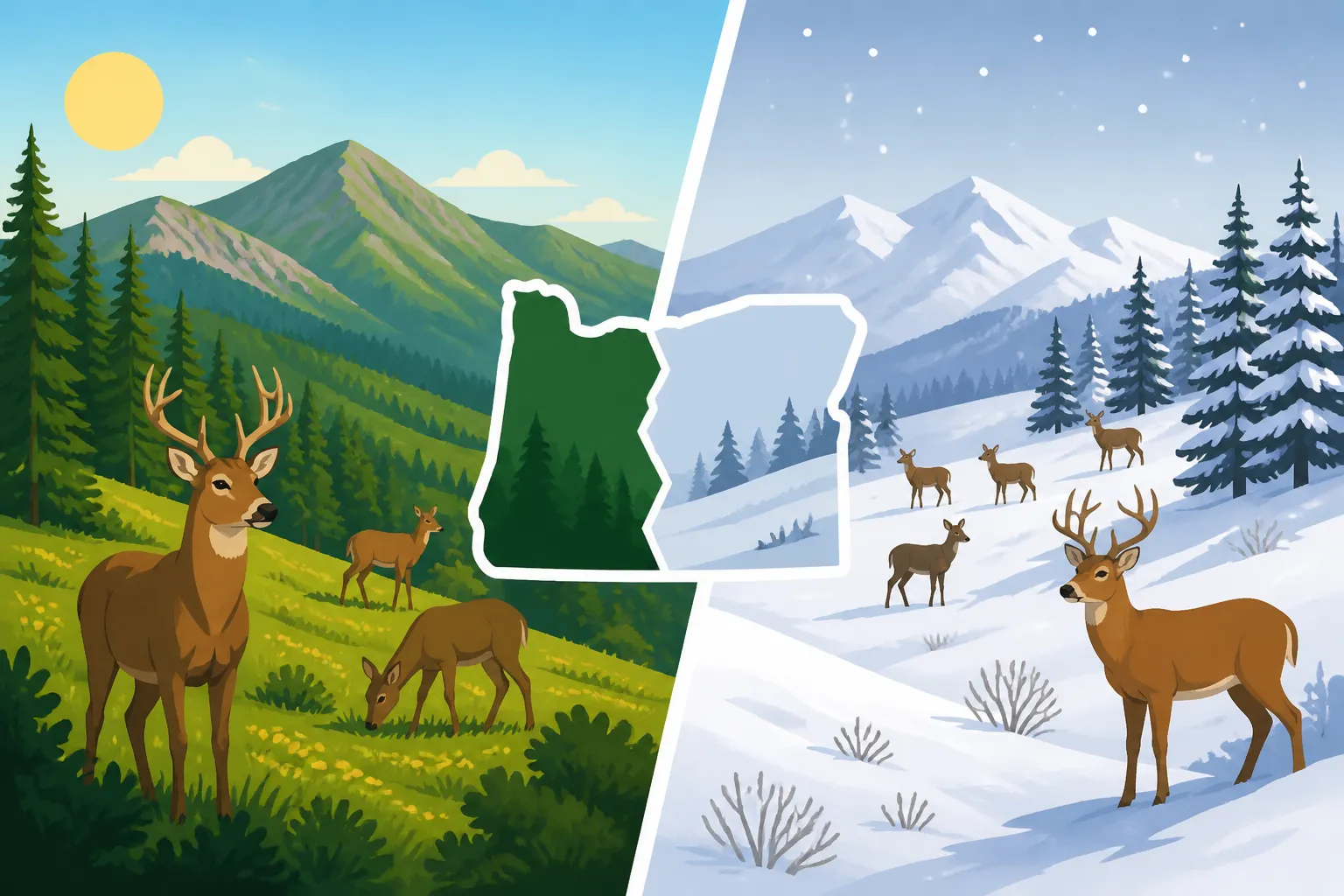
To simplify these complex movements, wildlife biologists and experienced hunters often talk about "seasonal ranges." Essentially, these are distinct geographic areas that deer occupy at different times of the year. Summer ranges are typically higher in elevation, providing abundant food, cooler temperatures, and fawning cover. Deer are generally more dispersed during these months, taking advantage of the widespread bounty.
Conversely, winter ranges are critical, often lower-elevation areas that offer crucial thermal cover and access to more limited food sources when snow blankets the higher country. These ranges are vital for survival, as deer expend massive amounts of energy trying to stay warm and find sustenance. The transition between these two ranges can involve significant migratory journeys, especially for mule deer in Eastern Oregon, while blacktails in the western part of the state tend to make shorter, more subtle shifts. Understanding the boundaries and characteristics of these ranges is fundamental to successful year-round scouting and hunting.
Unpacking Summer Deer Distribution in Oregon
When summer arrives in Oregon, bringing with it warmth and a proliferation of plant life, deer begin to spread out, taking advantage of the abundant resources. Their distribution during these months is quite different from their winter patterns.
High-Elevation Havens and Lush Forage
As the snow melts and the mountains green up, many deer, especially mule deer, gravitate towards higher elevations. These cooler, often shadier environments provide a respite from the valley heat and offer a smorgasbord of fresh, nutritious browse. Think about those lush alpine meadows or the upper reaches of timbered ridges in the Wallowas or the Blue Mountains. Deer are less concentrated here because food is plentiful and they don't have to compete as intensely for resources. You'll find them feeding on forbs, young shoots, and succulent leaves that are unavailable at lower elevations.
Blacktail deer in Western Oregon also seek out prime summer forage, often moving into the higher reaches of the Coast Range or Cascades, but their elevational shifts are generally less dramatic than their mule deer cousins. They’ll still be seeking out regenerating clearcuts, dense patches of brush, and areas with good water sources, but their overall travel distance between seasonal ranges might be shorter. The key is that they are maximizing their intake of high-quality forage to build fat reserves for the coming winter and, for bucks, to grow impressive antlers.
Cover and Seclusion: The Importance of Thick Areas
While food is paramount, summer deer distribution is also heavily influenced by the need for cover and seclusion. This is particularly true for does with fawns, who seek out thick, often impenetrable patches of brush, dense timber stands, or rocky outcrops to hide their vulnerable young from predators. These areas provide both physical concealment and a sense of security.
Even mature bucks, especially during antler growth, prefer to spend their summer months largely out of sight. They're often found in dense timber, north-facing slopes, or shaded draws where they can bed down and digest their food in peace. This is why summer scouting can sometimes feel frustrating – deer are there, but they are often deep in the cover, moving primarily during the cooler hours of dawn and dusk. Learning to identify these bedding areas and understanding how deer use the terrain to stay hidden is a skill that will serve you well when the season opens.
Water Sources and Green-Ups
Water is a non-negotiable requirement for all wildlife, and its availability significantly influences summer deer distribution, especially in the drier regions of Eastern Oregon. As summer progresses and temperatures climb, many smaller springs and ephemeral streams dry up, forcing deer to concentrate around more reliable water sources. This could be a perennial creek, a natural spring, or even a stock tank. Identifying these dependable water points, perhaps with the help of a tool like GoHunt's mapping features, can be incredibly valuable for locating deer in arid environments.
In Western Oregon, where water is generally more abundant, deer will still favor areas where green-ups persist longer, such as shaded creek bottoms or draws with underlying moisture. These spots often hold more palatable forage later into the summer. The interplay of water and lush vegetation creates pockets of prime habitat where deer will linger, providing a good starting point for your scouting efforts.
Understanding Winter Deer Distribution and Survival
As autumn transitions into winter, Oregon's deer populations undergo a dramatic shift. The comfortable, dispersed existence of summer gives way to a more concentrated, survival-focused strategy.
The Descent to Critical Winter Ranges
When the first significant snows hit the high country, deer instinctively begin their migration to lower elevations, specifically to what are known as critical winter ranges. These are designated areas, often managed by the Oregon Department of Fish and Wildlife (ODFW), that provide the best chance for deer to survive the harsh winter months. These lower-elevation spots generally experience less snow accumulation, making it easier for deer to move around and access limited forage. South-facing slopes are particularly crucial, as they receive more direct sunlight, melting snow faster and offering some thermal benefit.
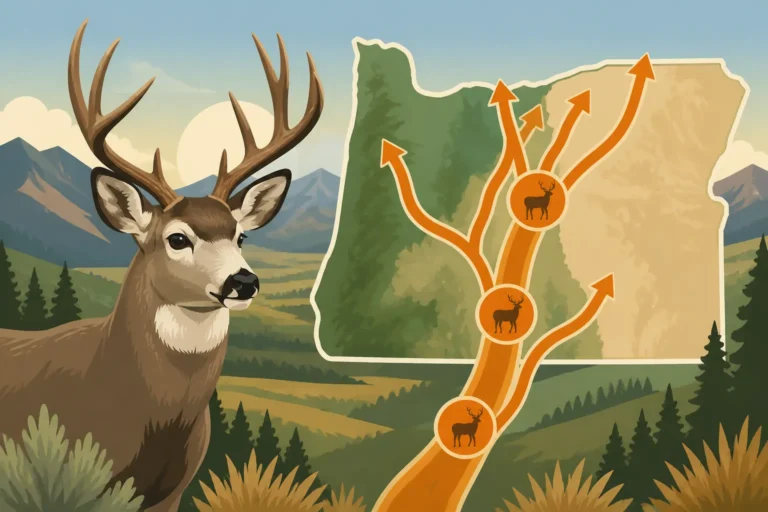
For Eastern Oregon mule deer, this descent can be a long, arduous journey, sometimes covering dozens of miles along established migration corridors. Animals from the Wallowa-Whitman National Forest, for instance, might move down to lower, drier sagebrush country. Understanding these specific winter range locations is not just important for hunting, but also for respecting the seasonal closures often implemented by ODFW to protect these vulnerable animals. You can find detailed maps of these areas through resources like GoHunt's online platform, which often layers ODFW data, highlighting crucial Mule Deer Winter Range in Eastern Oregon.
Thermal Cover and Forage Scarcity
Winter ranges aren't just about less snow; they're also about thermal cover. Dense conifer stands, especially those with thick understory, provide crucial shelter from biting winds and heavy snowfall. These areas act like natural insulated blankets, helping deer conserve precious body heat and energy. Deer will often bed in these protected pockets during the day, minimizing movement to avoid burning calories.
Forage becomes incredibly scarce in winter, forcing deer to rely on tougher, less nutritious browse like bitterbrush, juniper, and dormant woody shrubs. They might also paw through shallow snow to access dried grasses or lichens. Every calorie counts, and every movement is costly. This extreme scarcity means that wintering deer are often less selective about what they eat, simply focusing on survival. Knowing which specific plants remain accessible and palatable in winter conditions can help you locate these hardy animals.
Predator Avoidance and Energy Conservation
The challenges of winter are compounded by increased vulnerability to predators. Deer are weaker, slower, and often grouped in more concentrated areas, making them easier targets for cougars and coyotes. Consequently, winter deer distribution is also heavily influenced by the need for safety. They will often stay in close proximity to dense cover, ready to escape if threatened, and move as little as possible to conserve energy.
Severe winters can be brutal, leading to significant fawn mortality and even adult deer deaths. During these times, deer become almost entirely focused on energy conservation, often bedding for long periods and moving only to feed or seek water. Hunters need to be particularly mindful of these conditions, as pushing deer hard during deep winter can be detrimental to their survival, even after the season is over. The goal is to understand their patterns to ethically pursue them during open seasons, not to add undue stress during their most challenging months.
Regional Nuances: East Versus West Oregon Deer Shifts
Oregon is a state of incredible ecological diversity, and this diversity is reflected in the distinct seasonal movements of its deer populations. The patterns observed in the vast sagebrush country of Eastern Oregon are quite different from those in the dense, wet forests of the Coast Range.
Eastern Oregon Mule Deer: Epic Migrations
Eastern Oregon's mule deer are renowned for their impressive, often long-distance migrations between summer and winter ranges. These migrations are a direct response to the harsh, snowy winters that blanket the higher elevations and the hot, dry summers of the lowlands. Deer will spend their summers spread out in the abundant forage of the Blue Mountains, the Steens, or the Ochoco National Forest. But as autumn deepens and the snowline drops, they embark on journeys that can span dozens of miles, following ancient corridors to their traditional wintering grounds.
These winter ranges are crucial, lower-elevation areas, often dominated by sagebrush and juniper, where snow depths are typically shallower and vital bitterbrush is more accessible. Think of the large, protected winter ranges found around the John Day River basin or in parts of the Great Basin. Understanding these specific migration routes and the timing of these movements is paramount for hunters pursuing mule deer. ODFW, often in partnership with organizations, works to protect these corridors. Digital mapping tools, such as those offered by GoHunt, can be invaluable here, often displaying layers that show known mule deer migration patterns and winter range boundaries, helping you pinpoint where deer will be at different times of the year. The health of these herds is heavily tied to their ability to successfully complete these migrations, and any disruption can negatively impact Why Oregon Mule Deer Numbers Are Falling.
Western Oregon Blacktail Deer: Shorter, Subtler Shifts
In contrast to their long-distance-traveling cousins, Western Oregon's Columbian blacktail deer typically exhibit much shorter and less dramatic seasonal shifts. The milder climate of the Coast Range and Western Cascades means that snow accumulation is generally less severe and often doesn't persist for long periods at lower and mid-elevations. This allows blacktails to remain within smaller, more localized home ranges throughout the year.
While they may not undertake epic migrations, blacktails still adapt their distribution. In summer, they disperse into areas of lush new growth in regenerating clearcuts, dense patches of salal and sword fern, and the rich understory of older timber. As winter approaches, instead of moving vast distances, they'll often shift to south-facing slopes, lower-elevation timber stands, or dense thickets that offer thermal cover and protection from the incessant rain and wind. They’ll also seek out areas where forage, though less abundant, is still accessible. For hunters, this means the challenge isn't tracking a long migration, but rather understanding the subtle vertical and horizontal movements within a specific area, and focusing on Blacktail Deer Habitat in Oregon Clearcuts which changes in appeal with the seasons.
Transitional Zones and Overlap Areas
Between the distinct summer and winter ranges exist transitional zones, often referred to as "staging areas" or "migration corridors." These are the places where deer pause during their seasonal journeys, either to feed and rest before continuing to higher elevations in spring, or to gather and stage before dropping down to winter ranges in the fall. These areas can be incredibly productive for hunters, especially during early and late archery or rifle seasons, as they catch deer in flux.
Furthermore, there are areas where the ranges of mule deer and blacktail deer can actually overlap, particularly in the Cascade foothills or central Oregon. While rare for them to fully interbreed, understanding the specific habitat preferences of each species in these overlap zones is key. Blacktails generally prefer denser cover and lower elevations than mule deer. Being able to identify the distinct signs of each species, and knowing their general patterns, will help you focus your efforts. These overlap areas can sometimes lead to unique hunting opportunities, but also require a keen eye to differentiate between the two species.
How Hunters Can Adapt to Seasonal Deer Movements
Knowing that deer move isn't enough; successful hunters need practical strategies to adapt their efforts to these seasonal shifts. This involves a combination of pre-season work, leveraging modern technology, and developing a keen understanding of deer sign.
Pre-Season Scouting for Shifting Patterns
Effective pre-season scouting is absolutely non-negotiable for understanding deer distribution, and it needs to be an ongoing process, not just a couple of weeks before opening day. Start by observing deer activity in the spring and early summer. Where are does dropping fawns? Where are the velvet-antlered bucks feeding? These observations provide clues to summer range. Then, as fall approaches, look for changes. Are new rubs appearing? Are certain areas, like high-elevation basins, suddenly seeing less activity?
A great way to monitor these shifts is by deploying trail cameras. Setting up cameras on migration routes, at water sources, or along natural funnels between bedding and feeding areas can give you invaluable data on deer presence, timing, and even antler growth. If you’re not sure about the rules, be sure to check Trail Camera Rules on Oregon Public Land before you hang them. Place cameras in areas you suspect will be transitional zones, or on the edges of known summer or winter ranges, to catch animals as they move through. This real-time data allows you to track their progress down the mountain as the seasons change, giving you a significant edge when hunting season arrives.
E-Scouting and Digital Mapping Tools
In today's hunting world, digital mapping tools are powerful allies in deciphering seasonal deer distribution. Platforms like GoHunt, onX Hunt, or BaseMap allow you to e-scout from the comfort of your home, examining topography, identifying potential migration corridors, and marking key habitat features. You can overlay different map layers, such as public land boundaries, historical burn areas, or even winter range designations (which some platforms incorporate from ODFW data).
Look for saddle points, benches, draws, and prominent ridges that could serve as natural travel routes. Identify areas of dense timber (potential thermal cover) juxtaposed with open feeding grounds. Pay close attention to south-facing slopes for wintering deer, and north-facing slopes for cool summer bedding. Many of these apps allow you to mark potential water sources, feeding areas, and bedding locations. This detailed satellite imagery can show you old clearcuts that provide Reading a Two-Year-Old Clearcut for Bucks, or open sage country that holds mule deer. By spending time dissecting the terrain virtually, you can develop a comprehensive understanding of how deer might use a given area throughout the year, greatly improving your chances when you hit the ground. For more on this, check out E-Scouting Oregon Units With Satellite Imagery.
Interpreting Sign in Different Seasons
Successfully adapting to seasonal deer movements also requires a nuanced understanding of deer sign, and how that sign changes throughout the year. In summer, you might find fresh tracks near water sources, rubs on small saplings (from velvet shedding), and evidence of heavy browsing on lush vegetation. Look for scattered droppings in feeding areas where deer are dispersed.
As fall progresses and deer begin to move, the sign will become more concentrated. Rubs will be larger and more aggressive, marking territory during the pre-rut and rut. Scrapes, fresh tracks in mud or soft earth, and heavily browsed transition areas indicate active movement towards winter ranges. In winter, finding tracks in snow becomes paramount. Pay attention to track depth (indicating snow depth), direction of travel, and signs of bedding in sheltered spots. Browse lines will be evident on the limited winter forage. Learning to differentiate between fresh sign (which is often crucial for hunting) and older sign is a skill developed over many hours in the field, but it's vital for knowing if deer are currently using an area or if they simply were there months ago.
Management and Conservation of Oregon's Deer Herds
Understanding deer distribution isn't just about hunting success; it's deeply intertwined with the broader efforts to manage and conserve these valuable resources for future generations. The state of Oregon, through its various agencies, plays a critical role in this ongoing endeavor.
ODFW's Role in Protecting Seasonal Ranges
The Oregon Department of Fish and Wildlife (ODFW) is the primary agency responsible for managing Oregon's wildlife populations, including its deer herds. A significant part of their strategy involves identifying and protecting critical seasonal ranges, particularly winter ranges. These areas are often subject to specific regulations, such as road closures, to minimize disturbance to deer during their most vulnerable months. You'll find information on these in the annual hunting regulations or through ODFW's online resources, which detail Oregon Winter Range Closures That Affect Late Hunts.
ODFW also undertakes habitat improvement projects, such as prescribed burns or planting specific forage species, to enhance the quality of these seasonal ranges. They monitor deer populations through aerial surveys, radio-collar studies, and harvest data to make informed decisions about tag allocations and season structures. These efforts are crucial for ensuring that deer have the resources they need to thrive, even as human pressures and environmental challenges increase.
Challenges: Habitat Loss, Development, and Climate Change
Despite ODFW's efforts, Oregon's deer herds face significant challenges. Habitat loss due to urban sprawl, agricultural expansion, and industrial development fragments crucial seasonal ranges and migration corridors. A highway, a new housing development, or even a fence line can cut off deer from vital resources, making their seasonal movements more perilous or impossible. This is a major factor in the broader trend of Oregon Mule Deer and the Herd Range Decline.
Climate change adds another layer of complexity. Longer, hotter droughts impact forage quality and water availability, especially in Eastern Oregon. Unpredictable snowfalls or early thaws can disrupt natural migration timing, leaving deer stranded or forcing them into less ideal habitats. Increased severity of wildfires can destroy critical cover and food sources, though in some cases, new growth after a fire can initially benefit deer. These large-scale environmental shifts require adaptive management strategies to ensure the long-term health of Oregon's deer populations.
How Hunters Contribute to Data and Conservation
As hunters, we are not just consumers of the resource; we are also vital partners in conservation. The fees paid for hunting licenses and tags directly fund ODFW's wildlife management programs, including habitat acquisition, research, and law enforcement. Every time you purchase an Oregon hunting license, you're investing in the future of wildlife.
Furthermore, mandatory harvest reporting is a critical component of ODFW's data collection. When you report your deer harvest, you provide valuable information on success rates, sex ratios, and harvest locations, which helps biologists assess herd health and adjust future seasons. Failing to report your harvest carries a penalty, so make sure to always submit your data by the deadline, as discussed in Oregon Mandatory Harvest Reporting and the $25 Penalty. Beyond direct financial contributions and reporting, ethical hunting practices, respecting private land, and participating in public land stewardship initiatives further solidify our role as conservationists, ensuring that Oregon's deer continue to roam its diverse landscapes for generations to come.
Summer Versus Winter Deer Distribution Factors
To help clarify the core differences in deer distribution across Oregon, here's a handy comparison table. This isn't exhaustive, of course, but it highlights the primary factors that dictate where you'll find deer at different times of the year.
| Feature | Summer Deer Distribution | Winter Deer Distribution |
|---|---|---|
| Elevation | Generally higher, seeking cooler temperatures and lush feed | Generally lower, seeking shallower snow and thermal cover |
| Forage | Abundant, high-quality, widely dispersed | Scarce, lower quality, concentrated in specific areas |
| Cover | Dense, secluded areas for fawning and antler growth | Thermal cover (dense conifers, sheltered draws) paramount |
| Movement | Dispersed, individual or small groups, less urgency | Concentrated, larger groups, minimal movement to conserve energy |
| Water | Often plentiful, but can concentrate around perennial sources in dry areas | Crucial, often found in sheltered areas with less ice/snow |
| Predation Pressure | Present, but fawns are primary targets; deer more agile | Increased vulnerability due to weaker condition, concentrated herds |
| Human Pressure | Less direct hunting pressure (scouting season) | High hunting pressure during open seasons, then ODFW closures for survival |
| Key Concerns | Heat stress, maintaining good body condition, fawning | Snow depth, cold stress, energy depletion, access to food |
| Habitat Focus | Green-ups, clearcuts, alpine meadows, north slopes | South-facing slopes, bitterbrush flats, juniper stands, dense timber |
Disclaimer
The information provided in this guide is for general informational purposes only and is not intended as legal advice regarding hunting regulations. Hunting laws and regulations in Oregon are subject to change, and it is the hunter's responsibility to consult the most current Oregon Department of Fish and Wildlife (ODFW) regulations pamphlet and any in-season updates before engaging in any hunting activities. Always ensure you are in compliance with all local, state, and federal laws.