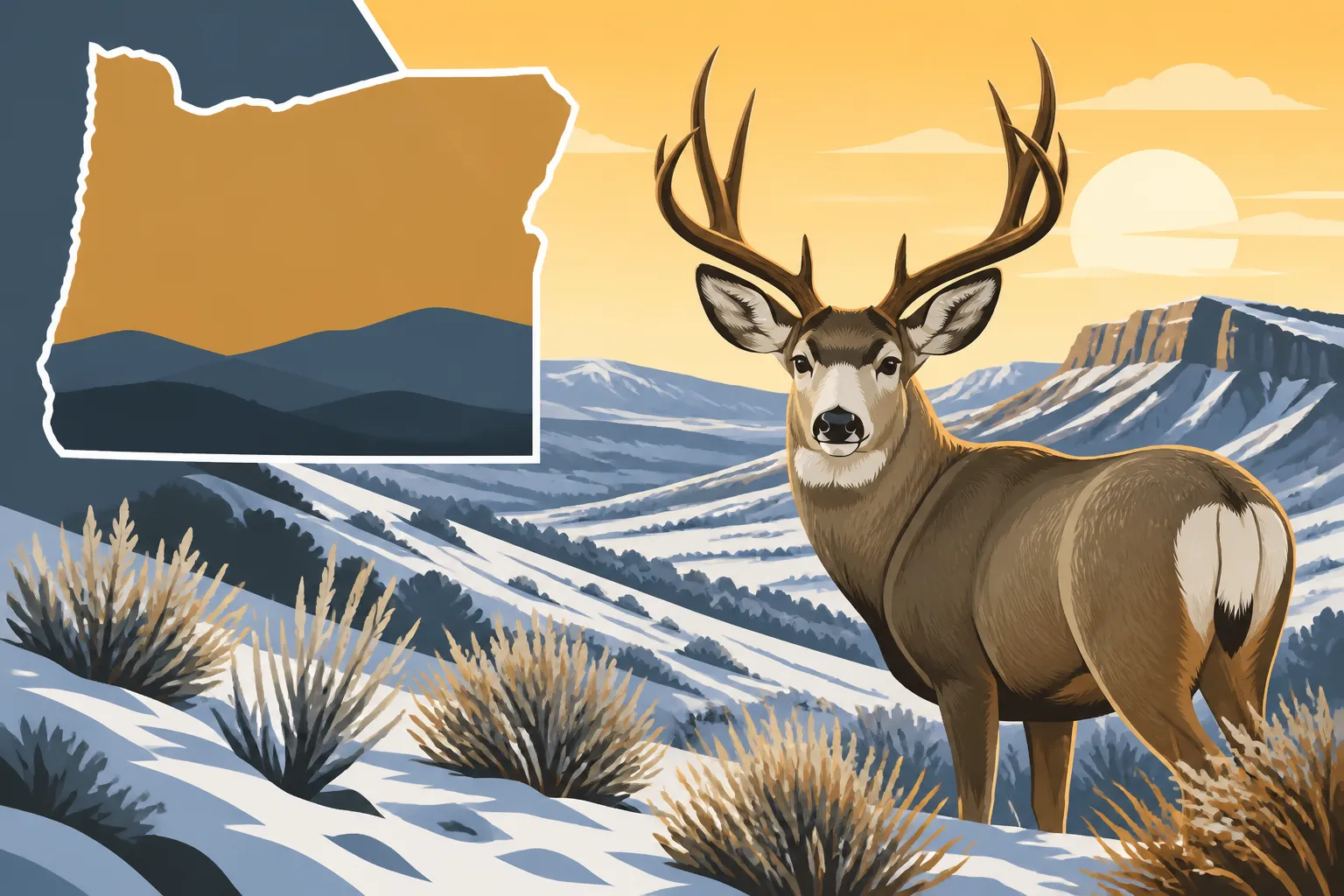
Mule Deer Winter Range in Eastern Oregon
For many of us who chase mule deer in Oregon, understanding their movements, especially as the calendar pages turn cold, can feel like trying to solve a cryptic puzzle. Just when you think you have them patterned in their summer haunts, a cold snap hits, and they vanish, leaving you scratching your head. This guide is dedicated to demystifying those seasonal shifts, focusing specifically on the crucial winter ranges of Eastern Oregon mule deer, so you can better anticipate their behavior and contribute to their long-term health.
Understanding Mule Deer Migration in Oregon
Mule deer are creatures of habit and necessity, their lives dictated largely by the changing seasons and the availability of food and cover. Their annual migration is one of the most remarkable and often overlooked aspects of their existence, and for hunters, grasping these movements is paramount to consistent success and ethical pursuit.
Why Mule Deer Migrate
The primary driver behind mule deer migration is survival. As the high country, their summer paradise, begins to freeze and bury itself under feet of snow, the once abundant forage becomes inaccessible. Temperatures plummet, and the energy expenditure required to simply exist in these harsh conditions becomes unsustainable. To escape this environmental squeeze, deer instinctively move to lower elevations where snow depths are less severe, temperatures are milder, and critical forage—even if less nutritious—remains exposed and accessible. It’s a desperate, age-old journey to find a winter haven, a place where they can conserve energy and survive until spring. Without these migrations, entire herds would perish.
Seasonal Movement Patterns
Mule deer in Eastern Oregon typically exhibit predictable patterns, though these can vary significantly based on the specific herd and local geography. Generally, animals spend their spring and summer months in higher elevation mountain forests, subalpine meadows, and rimrock country. As late autumn approaches and the first significant snowfalls begin to dust the peaks, individual deer and small groups will start to drift downwards. This isn't usually a single, dramatic exodus but a gradual movement, often following drainages and historical migration corridors. Bucks, particularly older ones, might linger longer at higher elevations, fueled by the rut, but eventually, they too will heed the call of winter. The bulk of the migration typically occurs from late October through December, with deer often settling into their winter ranges by the end of the year, depending on the severity of the weather. These established routes and destinations are vital, passed down through generations.
The Impact of Weather on Migration
While the general timing of migration is seasonal, the speed and intensity of the movement are almost entirely dictated by weather. A mild fall with limited snowfall can mean deer remain at higher elevations much later into the hunting season, making them harder to locate in their traditional wintering grounds. Conversely, an early, heavy snowstorm can trigger a rapid, mass migration, pushing animals down quickly. Sudden, deep snow in the high country effectively "flips a switch," forcing deer to move quickly to lower, more open areas. Prolonged cold snaps, even without heavy snow, can also accelerate migration by making high-elevation forage too energy-intensive to reach or digest. Understanding these nuances is critical. A hunter armed with knowledge of the latest weather patterns, perhaps by checking detailed forecasts for different elevations, stands a much better chance of predicting where the deer might be. This dynamic relationship between deer and weather is a constant challenge for hunters and wildlife managers alike, making each season unique.
Identifying Critical Winter Range Characteristics
Not just any low-elevation ground will do for wintering mule deer. These animals require very specific habitat features to survive the leanest months. Understanding what constitutes "good" winter range is key to both finding deer and appreciating the immense pressure these areas face.
Vegetation and Forage Availability
During winter, forage becomes scarce, and its quality diminishes significantly. Mule deer seek out areas where nutritious browse remains accessible above the snow line. Key species include bitterbrush, sagebrush, serviceberry, and various types of juniper. These plants, though not as palatable or nutritious as summer greens, provide critical energy and moisture. Ideal winter range offers a diverse mix of these hardy shrubs, allowing deer to pick and choose as conditions change. You'll often find deer "browsing lines" on bitterbrush plants, showing where they've been feeding. Additionally, south-facing slopes, which receive more direct sunlight, tend to melt snow faster and promote slightly more growth, offering crucial access to vegetation when other areas are locked under ice. This is often where deer will concentrate, pawing through shallow snow to get at the dormant vegetation.
Shelter and Thermal Cover Needs
While food is essential, so is shelter from the elements. Mule deer, especially fawns and older animals, are highly susceptible to cold stress. Good winter range provides thermal cover—dense stands of conifers like ponderosa pine or juniper that block wind and trap warmth, or even thick stands of sagebrush. These areas act as natural windbreaks, reducing energy expenditure needed to stay warm. Deer will often bed down in these sheltered spots, out of the direct blast of winter storms. Furthermore, southern aspects, as mentioned, are warmer due to sun exposure, providing vital heat when temperatures drop. A combination of accessible forage on sun-drenched slopes and nearby dense cover is the ideal winter setup for these animals. You might find deer moving between open feeding areas and sheltered bedding grounds throughout the day, depending on the severity of the weather.
Topography and Aspect Preferences
The terrain itself plays a huge role in determining winter range suitability. Mule deer gravitate towards areas with varied topography but specifically favor south- and southwest-facing slopes. Why? These aspects catch the most sun throughout the short winter days, helping to melt snow and warm the ground. This means less energy spent pawing through snow for forage and less heat loss while bedding. Think of expansive sagebrush flats that gently slope to the south, bordered by rimrock or juniper draws. These features provide both open areas for sunning and scattered cover for security. Deep canyons and steep, north-facing slopes, conversely, tend to hold snow longer and stay colder, making them less desirable for deer attempting to conserve energy. When scouting, especially with tools like GoHunt or other satellite imagery applications, paying close attention to these topographic features can reveal potential wintering hotspots. You can often predict where deer will concentrate simply by studying the contours and sun exposure on a map.
Key Eastern Oregon Mule Deer Wintering Areas
Eastern Oregon is a vast and diverse landscape, but specific regions stand out as vital winter havens for its mule deer populations. Understanding these broader areas and their specific characteristics can guide your research and scouting efforts.
High Desert Plateaus and Basins
Much of Eastern Oregon is characterized by expansive high desert plateaus and broad basins, dominated by sagebrush steppe and scattered juniper. These lower elevation areas, often below 5,000 feet, become critical during winter. Units like those found in the Interstate or Warner herd ranges are classic examples. The relatively flat or gently rolling terrain allows snow to blow clear in many spots, exposing critical browse species. The sheer vastness of these areas also provides security for large numbers of deer. However, these open landscapes offer less thermal cover than timbered regions, making heavy snows combined with biting winds particularly tough on the herds. Hunters often find deer scattered across these vast landscapes, using subtle draws and scattered juniper stands for cover. This type of country demands a lot of glassing, often with high-quality optics, to locate animals moving in the open. Understanding the specific characteristics of these areas is paramount to hunting success.
Juniper and Sagebrush Ecosystems
The iconic juniper and sagebrush ecosystems are the backbone of Eastern Oregon's mule deer winter range. These environments provide a mosaic of food and cover. Juniper trees offer crucial thermal and security cover, breaking up the wind and providing a place for deer to escape detection. The berries of some juniper species can also provide a small amount of forage. Sagebrush, particularly big sagebrush, is a primary food source, staying accessible above snow and providing vital nutrients. Areas where these two plant communities intermingle, especially on south-facing slopes or in broken rimrock country, are magnets for wintering deer. Imagine rolling hills dotted with juniper patches, interspersed with vast seas of sagebrush. This habitat provides both sustenance and safety. You can often pinpoint deer moving between these types of cover at first light and last light, making them prime spots for a patient hunter. Using tools like GoHunt to identify these distinct habitat types is an invaluable part of E-Scouting Oregon Units With Satellite Imagery.
Specific Herd Ranges and Units
Eastern Oregon is broken down into various wildlife management units and, more recently, larger "herd ranges" that reflect mule deer populations. These larger designations, like the Northern Malheur or Murderers Creek Herd Ranges, encompass vast tracts of land, each with its own specific wintering areas. For example, deer from the higher elevations of the Blue Mountains might winter down in the lower Umatilla or Ukiah units. Animals from the Steens Mountain might descend into the Alvord Desert or Catlow Valley.
| Eastern Oregon Herd Range/Unit | Primary Winter Range Description | Key Forage/Cover | Notable Challenge |
|---|---|---|---|
| Warner (e.g., Warner Valley) | Expansive sagebrush flats, juniper ridges, rimrock breaks. South-facing slopes are key. | Bitterbrush, big sagebrush, juniper. | Deep snow can still limit access to forage in certain areas. |
| Interstate (e.g., Juniper Mtns) | Rolling hills, juniper canyons, lava flows, open sagebrush. | Mountain mahogany, various sagebrush species, junipers. | Extensive private land checkerboards; access can be complex. |
| Silver Lake (e.g., Fort Rock) | Open sage flats, Ponderosa pine stringers, lava flows, dry lake beds. | Bitterbrush, desert grasses, Ponderosa pine cover. | Limited water sources; drought impacts forage quality. |
| Murderers Creek | Steep canyons, scattered Ponderosa pine and Douglas fir, open sage benches. | Serviceberry, bitterbrush, bunchgrasses, coniferous cover. | Remote, rugged terrain; heavy snow in high country forces long migrations. |
| Malheur (e.g., Malheur River) | River breaks, open rangeland, extensive sagebrush. | Alkali sagebrush, greasewood, rabbitbrush. | Winter range is often shared with livestock, potential for competition. |
Knowing which units contribute deer to specific winter ranges is crucial for hunters planning late-season trips or simply trying to understand the full migration puzzle. The Oregon Department of Fish and Wildlife (ODFW) provides maps and information outlining these herd ranges and their designated winter areas, which are often subject to Oregon Roads Closed to Protect Wintering Deer regulations to reduce disturbance. When you're looking at specific units, whether it's the Silver Lake Unit Mule Deer or others like the Warner Unit Combined Into One Oregon Hunt (as part of the new herd range structure), understanding their role in the overall mule deer migration pattern is invaluable.
Challenges and Conservation of Winter Range
The critical nature of mule deer winter range makes it especially vulnerable to a host of environmental and human-induced pressures. These challenges directly impact herd health and hunter opportunity, making conservation efforts paramount.
Habitat Loss and Fragmentation
Perhaps the most significant threat to mule deer winter range in Eastern Oregon is habitat loss and fragmentation. Development, both urban and agricultural, encroaches on historical wintering grounds, turning vital sagebrush-steppe into housing developments, pastures, or energy infrastructure. Roads and fences further fragment these landscapes, disrupting traditional migration corridors and creating barriers that deer struggle to cross, especially fawns. These fragmented habitats reduce the effective size of available winter range, concentrating deer into smaller areas and increasing competition for limited resources. This can lead to increased stress, higher susceptibility to disease, and lower fawn survival rates. It's a contributing factor to the broader issue of Why Oregon Mule Deer Numbers Are Falling and has led to the development of Oregon's 2024 Mule Deer Plan which emphasizes habitat protection.
Predation and Disease Pressures
On winter range, mule deer are at their most vulnerable. Concentrated groups of deer can become easier targets for predators, including coyotes, cougars, and a growing wolf population in parts of Eastern Oregon. While predation is a natural part of the ecosystem, its impact can be amplified when deer are already weakened by limited forage and harsh weather. Furthermore, the close proximity of deer on winter range can facilitate the rapid spread of diseases. Things like epizootic hemorrhagic disease (EHD) or adenovirus hemorrhagic disease (AHD) can quickly devastate a herd, especially when animals are stressed. Oregon has been proactive in monitoring for diseases like Chronic Wasting Disease (CWD), though it has not yet been detected in the state, making vigilance on winter range all the more important. These pressures, combined with reduced habitat, put immense strain on the survival of Mule Deer Fawn Recruitment Rates.
Conservation Efforts and ODFW Initiatives
Recognizing the critical importance of winter range, many organizations, including the Oregon Department of Fish and Wildlife (ODFW), are actively engaged in conservation efforts. These initiatives focus on habitat restoration, such as removing encroaching juniper to allow sagebrush and native grasses to flourish, or seeding with bitterbrush after wildfires. ODFW also implements specific regulations, like those mentioned about road closures on winter range, to minimize human disturbance during the most vulnerable period for deer. Partnering with private landowners through programs that incentivize habitat preservation and provide wildlife-friendly fencing is another crucial component. Organizations like the Oregon Hunters Association (OHA) also contribute significantly through volunteer efforts and funding for habitat projects. When using resources like GoHunt, you'll often find layers showing ODFW land or designated wildlife areas which are managed with these conservation goals in mind. These efforts are not just about protecting deer; they're about preserving the entire sagebrush ecosystem that so many species rely upon.
How Hunters Can Adapt to Winter Range Dynamics
For the dedicated hunter, understanding mule deer winter range isn't just academic; it's a practical necessity for improving success rates and ensuring ethical hunting practices. Adapting your strategy to these seasonal shifts can make all the difference.
Scouting and E-Scouting for Winter Range
Effective scouting is a year-round endeavor, but focusing on potential winter range before the season can give you a significant advantage. This involves both boots-on-the-ground exploration and extensive e-scouting. During the off-season, physically explore lower elevation, south-facing slopes, juniper draws, and areas with good bitterbrush and sagebrush concentrations. Look for old tracks, droppings, and browse lines that indicate historical winter use.
E-scouting tools, such as the detailed map layers offered by GoHunt, are invaluable for this. You can analyze topography to identify sun-drenched slopes, pinpoint dense cover, and locate accessible forage areas without ever leaving your home. Look for "green-up" spots or areas with less snow accumulation as shown on satellite imagery. Pay attention to how different features like rimrock, juniper pockets, and drainages connect, as these often serve as natural travel corridors. The better you understand the landscape on a map, the more efficiently you can scout in person. Don't forget to leverage insights from public land managers or local contacts who often have a pulse on specific winter range conditions. This meticulous approach is an extension of effective Public Land Scouting in Oregon Before the Draw Results and helps you find those elusive wintering deer.
Hunting Ethics and Winter Range Respect
Hunting mule deer on winter range comes with a unique set of ethical responsibilities. These animals are under immense stress during the cold months, burning precious calories just to stay alive. Aggressive pursuit, repeated disturbance, or pushing deer out of critical thermal cover can have severe, even fatal, consequences. A true conservation-minded hunter understands that respecting the animals' vulnerability during winter is paramount. This means minimizing disturbance, making quick, clean shots, and, if you do harvest an animal, extracting it as efficiently and quietly as possible.
It also means being acutely aware of your presence. Avoid driving off-road in winter range areas where soft ground can be damaged or deer can be unnecessarily spooked. Be mindful of areas designated as critical winter range by ODFW, especially those with vehicle restrictions or seasonal closures. Understanding and adhering to regulations designed to protect these fragile ecosystems is a non-negotiable part of ethical hunting. Your actions can directly impact the survival of the herd.
Understanding Winter Range Closures and Regulations
To protect vulnerable mule deer during their most challenging season, ODFW often implements specific winter range closures and regulations. These can include seasonal road closures, area closures, or even restrictions on human entry into designated critical habitats. These measures are designed to reduce stress on wintering deer, prevent harassment, and allow them undisturbed access to limited forage and cover.
It is absolutely crucial to be aware of these regulations for the units you plan to hunt. Information on closures is typically available on the ODFW website, in hunting regulations pamphlets, and often marked by signage in the field. Tools like GoHunt also integrate these closure boundaries into their mapping platforms, making it easier for hunters to stay compliant. Ignoring these closures not only risks legal penalties but, more importantly, can severely impact the survival of the very animals you seek. Always check the latest ODFW updates and maps for specific unit regulations before heading out. Understanding details like Oregon's 300-Foot Rule Beside an Open Road and where Motorized Travel Is Banned in a TMA is critical to hunting legally and ethically in these sensitive areas.
Disclaimer
Please remember that hunting regulations, seasons, and access rules can change frequently. Always consult the most current Oregon Department of Fish and Wildlife (ODFW) regulations pamphlet and official ODFW resources before planning any hunt. This guide is for informational purposes only and should not be considered a substitute for official ODFW documentation.