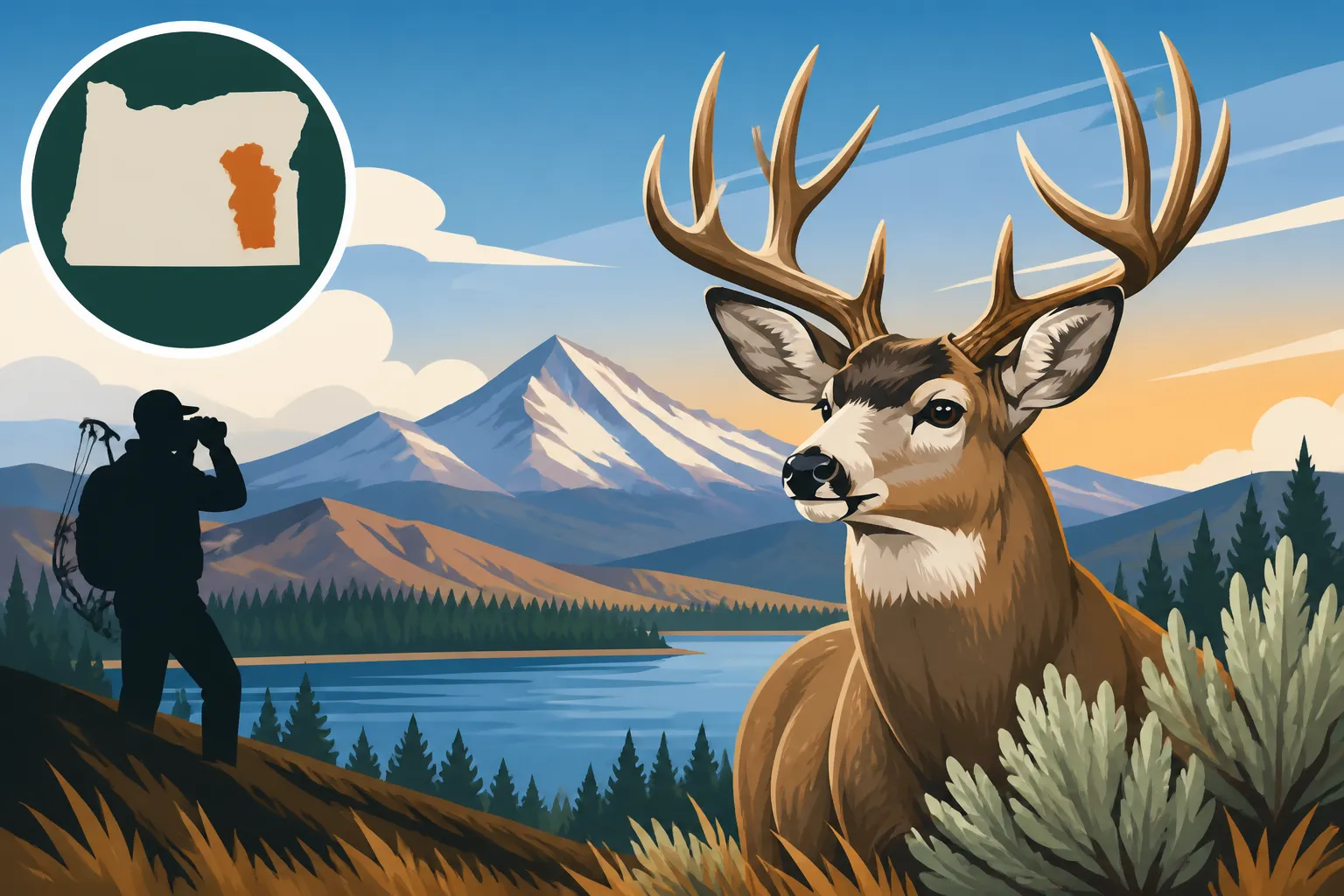
Silver Lake Unit Mule Deer
Hunting mule deer in Oregon's high desert can be one of the most challenging, yet rewarding, pursuits a hunter can undertake. The Silver Lake Unit, in particular, offers a vast, rugged landscape that often leaves hunters feeling overwhelmed by its sheer size and subtle complexities. This guide aims to demystify the Silver Lake Unit, offering comprehensive insights into its unique terrain, mule deer behavior, and effective strategies to increase your chances of success in this beautiful but demanding region.
Understanding the Silver Lake Unit for Mule Deer
The Silver Lake Unit, nestled within Oregon's high desert country, presents a distinct set of challenges and opportunities for mule deer hunters. It's a landscape shaped by ancient volcanic activity, covered in vast expanses of sagebrush, dotted with juniper trees, and bisected by rimrock canyons. Understanding its geography and the specific behaviors of its resident mule deer is the first step toward a successful hunt.
Geographic Overview and Habitat
Imagine a land where the horizon seems to stretch forever, interrupted only by the dark green crowns of junipers and the occasional jagged rimrock formation. That's the Silver Lake Unit. Located in south-central Oregon, this unit is characterized by its arid, high-desert environment. You'll find elevation changes, but not necessarily towering peaks; instead, it's a country of rolling hills, broad sage flats, and deep, often hidden, draws. Key features include the vast tracts of BLM land, sections of Fremont-Winema National Forest, and numerous private ranches. The habitat is quintessential mule deer country, offering abundant browse and cover in the juniper stands and the protective shadows of the rimrock. Mule deer here are masters of blending into this stark environment, using every fold in the ground and every patch of cover to their advantage. Finding Mule Deer in Juniper Draws is an art form in this unit, requiring patience and a keen eye.
The unit's diverse terrain means you're not just looking for deer in one type of setting. You might find them feeding on the edges of agricultural fields in the early morning, bedding down in dense juniper thickets during midday, or traversing the more open sagebrush flats to reach water sources. Understanding these different micro-habitats and how deer utilize them through the day and across the seasons is crucial. The sparse water sources, particularly in drier years, can also dictate deer movement, concentrating them in predictable areas.
Mule Deer Population and Health
Oregon's mule deer herds, including those in the Silver Lake Unit, have faced various challenges over the years. Factors like habitat changes, predation, and severe winters have all played a role in fluctuating populations. While the Silver Lake Unit is known to hold mule deer, it's certainly not a "gimme" hunt. Hunters often report seeing smaller herds and fewer mature bucks compared to decades past. This reality underscores the need for thorough scouting and realistic expectations. For a broader understanding of the statewide situation, you might want to read about Oregon Mule Deer and the Herd Range Decline.
Despite these challenges, the mule deer in Silver Lake are generally healthy and resilient. They are often less pressured than deer in more accessible units, leading to more natural behavior. However, their numbers mean you'll likely need to cover a lot of ground and work hard to locate them. Hunters should keep an eye on official population reports, usually found in the annual hunting regulations, to get the most up-to-date picture of herd health and any specific management efforts in the unit. These deer are tough, adapted to their harsh environment, and often grow impressive antlers, making them a highly sought-after trophy for many hunters willing to put in the effort.
Transition from Old Unit Names
For those who have hunted Oregon for many years, the shift from traditional unit names to new hunt areas can be a bit disorienting. The Silver Lake Unit itself has remained largely consistent in its geographic boundaries, but it's part of a larger conversation about how the state manages its big game. Oregon's wildlife management has moved towards a "herd range" concept for mule deer, which aims to manage deer across broader landscapes rather than strict unit lines. This means that while you're hunting the Silver Lake Unit, understanding its place within a larger herd range can offer additional context about deer movement patterns, wintering grounds, and overall population health.
When researching or applying for tags, it's vital to ensure you're referencing the most current maps and regulations. Digital tools like onX Hunt are incredibly useful here, as they typically update with the latest boundary information, allowing you to visually confirm where the Silver Lake Unit begins and ends. This helps prevent accidental boundary violations and ensures you're applying for and hunting in the correct area. Always double-check the Oregon Department of Fish and Wildlife (ODFW) regulations pamphlet for the most precise details regarding unit boundaries and hunt codes, which can sometimes be tricky to interpret.
Navigating Access and Terrain in Silver Lake
The vastness of the Silver Lake Unit means that understanding land ownership and access points is paramount. Unlike some western Oregon units with dense timber and clearcut hunting, Silver Lake is an open, high-desert landscape that requires a different approach to navigation and identifying huntable ground.
Public Land Opportunities
The Silver Lake Unit boasts significant tracts of public land, primarily managed by the Bureau of Land Management (BLM) and the U.S. Forest Service (USFS) within the Fremont-Winema National Forest. These lands are generally open to hunting, offering abundant opportunities for those willing to explore. BLM lands often consist of rolling sagebrush plains and scattered juniper, providing excellent glassing opportunities and good cover for mule deer. National Forest lands, especially in higher elevations, might offer denser timber stands, often Ponderosa pine, which can hold deer during different parts of the season.
Access to these public lands can vary. Many areas are crisscrossed by a network of unimproved dirt roads, while others are truly remote and require significant hiking. It's crucial to utilize detailed maps, such as those found on onX Hunt or through services like GoHunt, which clearly delineate public and private land boundaries. Pay close attention to inholdings – private parcels completely surrounded by public land – as these can sometimes offer additional access if permission is secured, or present challenges if you inadvertently trespass. Always have a plan for how you'll access the areas you intend to hunt, and consider bringing a reliable GPS device in addition to your phone app, as cell service is often nonexistent in large portions of the unit.
Understanding Road Systems and Travel Management
Like many units in Oregon's high desert, the Silver Lake Unit has a complex road system. Some roads are well-maintained gravel, while many others are nothing more than two-track trails that can become impassable with rain or snow. It's common to find roads that are seasonally closed, particularly in winter, to protect vulnerable mule deer on their Mule Deer Winter Range in Eastern Oregon. These closures are vital for deer survival and must be respected. Always check for current road conditions and closures with the local USFS or BLM office before heading out, especially if hunting late in the season.
Additionally, some areas within the Silver Lake Unit may be designated as Travel Management Areas (TMAs), which restrict motorized vehicle use to designated routes. These areas are established to enhance wildlife habitat, reduce disturbance, and provide quality hunting experiences. Understanding Reading a Travel Management Area Map Before You Drive is non-negotiable. Violating TMA rules can result in hefty fines and damage hunter-landowner relations. The best approach is to identify roads marked as open, park your vehicle, and proceed on foot, which often leads to less pressured deer and a more rewarding hunt.
Private Land Considerations
While public land dominates much of the Silver Lake Unit, there are also significant parcels of private land, primarily ranching operations. These private lands can sometimes offer excellent hunting opportunities, particularly if they contain valuable water sources or prime habitat. However, hunting on private land always requires explicit permission from the landowner. Never assume access, even if gates are open or signs are absent. It's always best to try and contact landowners well in advance of the season.
Some private timber companies also own land within or adjacent to the unit, and they may have their own permit systems or specific access rules. Checking their websites for current policies is a good practice. Respecting private property, closing gates, and leaving no trace are essential not just for your own hunt, but for ensuring future access for all hunters. Developing good relationships with local landowners can open doors to incredible hunting experiences that are otherwise inaccessible.
Effective Hunting Strategies for Silver Lake Mule Deer
Hunting mule deer in the Silver Lake Unit demands patience, perseverance, and a strategic approach tailored to its open, high-desert environment. This isn't a unit where you'll be crashing through thick timber; instead, it's a game of long-distance observation and smart movement.
E-Scouting and Pre-Season Planning
Before you even set foot in the unit, serious e-scouting is critical. Tools like onX Hunt and GoHunt become your best friends. Start by studying satellite imagery to identify key features:
- Water Sources: Look for ponds, springs, or creek beds, especially those with green vegetation. These can be magnets for deer in dry country.
- Juniper Thickets: These provide cover for bedding and feeding. Focus on the thicker, darker patches, particularly on north-facing slopes which offer cooler temperatures.
- Rimrock and Breaks: Steep, broken terrain offers escape routes and thermal cover. Deer often bed just below the rimrock, using the terrain to their advantage.
- Elevation Changes: Identify subtle rises and dips in the land. Even a small ridge can hide a moving deer.
- Access Points: Mark potential parking spots and trails, considering travel management restrictions.
You can also use online resources to research historic fire burns, which can create new browse and attract deer years later. Pre-season planning should also include understanding the general habits of Mule Deer Fawn Recruitment Rates and Mule Deer Migration Corridors in Oregon, as these broader patterns can influence where deer might be found within the Silver Lake Unit at different times of the year.
| Scouting Method | Description | Pros | Cons |
|---|---|---|---|
| E-Scouting | Using satellite imagery (e.g., onX Hunt), topo maps. |
Time-efficient, covers vast areas, identifies key features. | Doesn't show real-time conditions, requires interpretation. |
| Trail Cameras | Placing cameras in potential travel corridors or water holes. | Provides real-time activity, identifies specific animals. | Requires physical presence, rules on public land vary. |
| In-Person Scouting | Physically exploring the unit before the season. | Best for understanding terrain, finding fresh sign. | Time-consuming, physically demanding, limited area coverage. |
| Research/Reports | Reading ODFW reports, forum discussions. | Offers broad insights into herd health, trends. | General information, not specific to your hunting spot. |
On-the-Ground Tactics
Once you're in the Silver Lake Unit, the name of the game is glassing. This open country is perfectly suited for it. Find a vantage point that allows you to see vast expanses of sagebrush and juniper-studded hillsides. Glassing Sage and Juniper for Eastern Oregon Mule Deer is a skill you must hone. Use quality binoculars (10x or 12x) mounted on a tripod for stability, and a spotting scope for evaluating distant deer. Spend long periods behind the glass, slowly picking apart every patch of cover. Look for horizontal lines, flicking ears, or the distinct shape of an antler tines against the uniform vertical lines of juniper. Mule deer often bed down in unexpected places, sometimes right in the open, relying on their camouflage to remain unseen.
Once you spot deer, the approach becomes critical. Use the terrain to your advantage, staying out of sight as much as possible. Wind direction is always important, as mule deer have an incredible sense of smell. Still-hunting, moving slowly and deliberately, pausing frequently to observe, can be effective in areas with broken topography or dense juniper cover. Remember, these deer are often wary, and a botched stalk can send them bounding out of the country. Be prepared for long shots, but always strive to get as close as ethically and practically possible for a clean kill.
Seasonal Considerations
The Silver Lake Unit offers different hunting experiences depending on the season. Early archery and rifle seasons often mean warmer weather and deer that are still in their summer patterns, potentially higher up in the timbered areas or near reliable water sources. The challenge here is the heat, which can make long hikes and meat care difficult. Field dressing quickly and getting meat cooled is paramount in Field Dressing in 70-Degree September Heat.
Later rifle seasons, particularly if snow starts to fall, can push deer down from higher elevations onto their winter ranges. This can concentrate deer, but also means dealing with colder temperatures, potential road closures, and often thicker clothing which impacts stealth. The later seasons might also coincide with portions of the rut, when bucks become more active and less cautious, though the main rut for blacktails in western Oregon (Blacktail Rut Timing in Western Oregon) differs from mule deer. Always check the specific season dates for the Silver Lake Unit, as these can vary year to year.
Essential Gear and Preparation for the Silver Lake Unit
Hunting the Silver Lake Unit is not a casual endeavor. The expansive, often unforgiving landscape demands meticulous preparation and the right gear to ensure both safety and success.
Optics and Glassing Equipment
In a unit where covering ground with your eyes is more important than with your boots, high-quality optics are non-negotiable. A good pair of 10x or 12x binoculars is the starting point, but consider investing in a pair that's lightweight and comfortable for long hours of glassing. Mounting your binoculars on a tripod will dramatically reduce fatigue and allow you to pick out subtle details you'd miss freehand. A spotting scope, usually 20-60x magnification, is invaluable for confirming whether that distant speck is indeed a deer, and for evaluating its size. You might want to consider Optics for Dark Timber Versus Open Sage for a broader discussion on selecting the right glass for varying terrain, though for Silver Lake, the "open sage" advice applies directly.
Beyond the primary glass, a rangefinder is essential for accurate shot placement in open, undulating terrain where judging distance can be deceiving. The high desert often has optical illusions, making animals appear closer or farther than they truly are. Don't forget lens cleaning cloths and covers to protect your valuable optics from dust and moisture.
Physical Fitness and Navigation
The Silver Lake Unit might not have towering mountains, but its vastness and often uneven terrain require solid physical fitness. You'll likely be hiking many miles over rolling hills, across sagebrush flats, and in and out of draws, often at elevations that can test your endurance. Training for an Oregon elk hunt, though different terrain, shares the same core fitness principles you'll need for long days of glassing and stalking. Being able to hike quietly and efficiently for hours will greatly improve your odds.
Reliable navigation is paramount. While a smartphone app like onX Hunt is incredibly powerful, always carry a backup. This could be a dedicated GPS unit, or even a traditional map and compass (and know how to use them!). Mark your vehicle, potential water sources, and any deer sightings or sign you encounter. Losing your way in the high desert can quickly become a serious situation, especially as darkness falls or weather turns. Make sure your phone and GPS batteries are fully charged, and consider bringing a portable power bank.
Water and Emergency Preparedness
This is the high desert, and water is a precious commodity. Never underestimate your hydration needs. Carry more water than you think you'll need, and research potential water sources in your chosen hunting area during your e-scouting phase. A quality water filter or purification tablets can be a lifesaver if you find a dubious water source. Dehydration can quickly sap your energy and decision-making abilities, turning a challenging hunt into a dangerous one.
Beyond water, a well-stocked first-aid kit is essential. Remote areas mean help can be hours away. Include items for blisters, cuts, sprains, and any personal medications. A headlamp with extra batteries, fire-starting materials, a whistle, and emergency signaling devices (like a satellite messenger or personal locator beacon) are also critical. Cell service is unreliable, so don't count on it for emergencies. Let someone at home know your exact hunting plan and when you expect to return. Being prepared for the unexpected is not just good practice; it's a necessity for hunting the remote corners of the Silver Lake Unit.
Disclaimer
This article is for general informational purposes only and does not constitute professional advice. Laws, prices and regulations vary by location and change over time. Consult a qualified professional for guidance on your specific situation.