Motorhome Access on Forest Roads
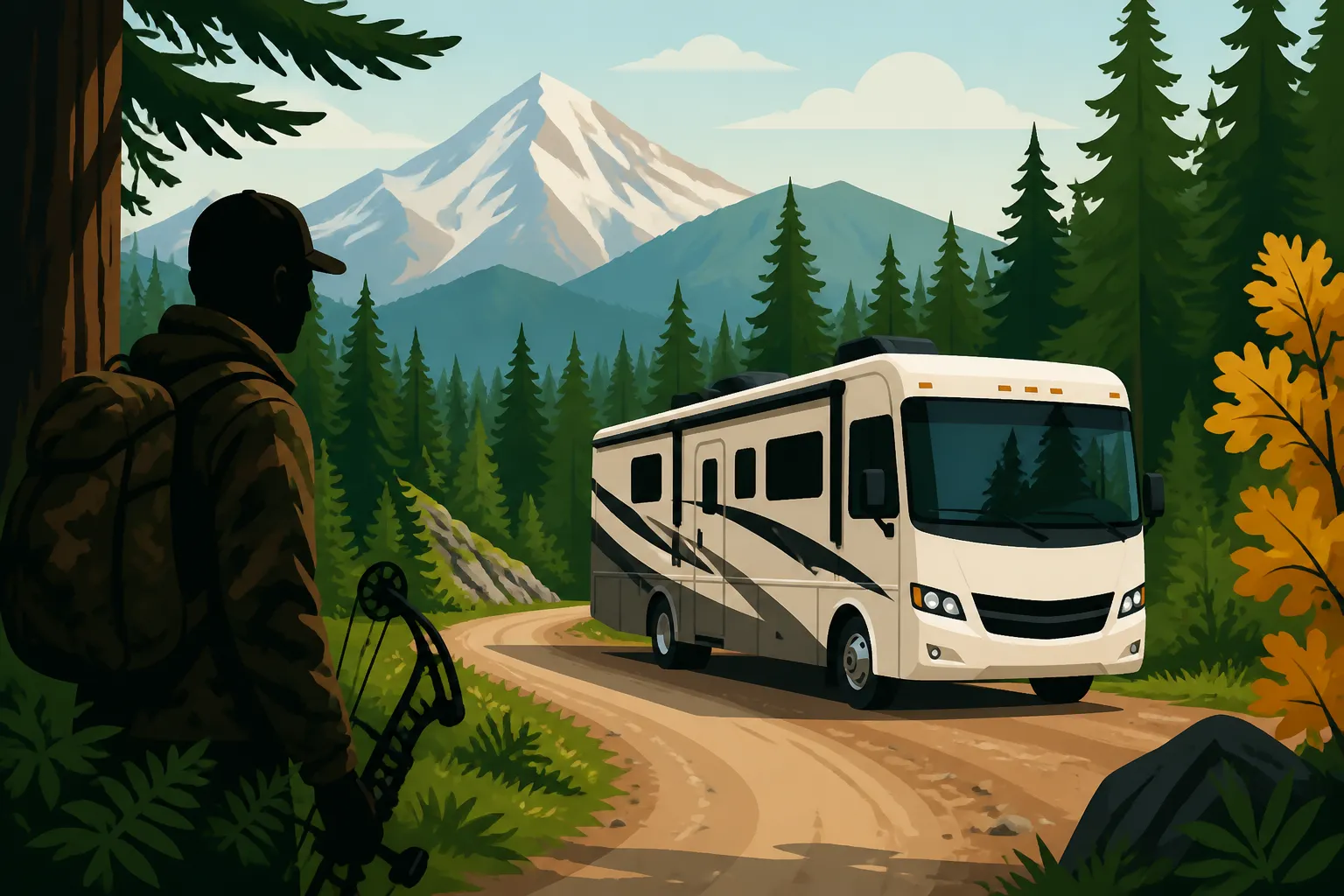
Oh, the dream! Loading up your trusty motorhome, pointing it towards the wild heart of Oregon, and finding that perfect, secluded spot deep in the forest for your hunting adventure. It sounds idyllic, doesn't it? But then reality hits: narrow, rutted roads, low-hanging branches, and the constant fear of getting your home-on-wheels hopelessly stuck miles from anywhere. It's a very real concern that can turn a grand adventure into a logistical nightmare. This guide is here to help you navigate the often-tricky world of motorhome access on Oregon's forest roads, making sure your rig—and your hunt—go as smoothly as possible.
Understanding Oregon's Forest Roads and Their Challenges for Motorhomes
Before you even think about turning the key, it's crucial to understand what you're up against when it comes to Oregon's extensive network of forest roads. These aren't your typical paved highways, and treating them as such is a surefire way to encounter trouble.
The Reality of Forest Service and BLM Roads
Oregon is blessed with millions of acres of public land managed by the Forest Service and the Bureau of Land Management (BLM), and these lands are crisscrossed by countless roads. Some are well-maintained gravel roads that might occasionally see a grader, offering relatively smooth passage for many vehicles. Others, however, can quickly devolve into little more than two muddy tracks with grass growing down the middle.
You'll encounter everything from bone-jarring washboards that threaten to shake your motorhome apart to deep potholes that could swallow a small car tire. Sharp, blind turns are common, often with loose gravel that makes controlling a heavy rig tricky. And let's not forget the natural hazards: downed trees from recent windstorms, rock slides after heavy rain, or even sections of road that have simply washed out, leaving impassable gaps. It's incredibly frustrating to spend hours driving only to find your route blocked by an unexpected obstacle, especially when you're piloting a large RV. These roads are designed primarily for resource management, not necessarily for comfortable recreational travel, and their conditions can change literally overnight.
Vehicle Size and Weight Restrictions
One of the biggest hurdles for motorhome owners is the sheer size of their vehicle. While a pickup truck or SUV might breeze down many forest roads, a 30-foot RV is a different beast entirely. You might encounter sections where the road narrows dramatically, squeezing between rock outcroppings or dense stands of timber. Overhanging branches, particularly in the wet, dense forests of Western Oregon, can scrape and damage your RV's roof, awning, or air conditioning units. Even if the road is wide enough, the vertical clearance can be an issue.
Then there's the weight. Motorhomes are heavy, and while many forest roads can handle standard vehicle weight, bridges, culverts, or sections of road built over soft ground might have strict weight limits. Ignoring these can lead to structural damage to the road, or worse, to your rig. A long wheelbase can also be problematic on sharp turns or steep, undulating terrain, where you might "high-center" your vehicle, leaving your wheels spinning uselessly in the air. The stress of trying to navigate these tight, uneven spots with a large rig can quickly suck all the enjoyment out of your trip.
Essential Pre-Trip Planning for Motorhome Hunters
Success with a motorhome on Oregon's forest roads isn't about luck; it's about meticulous preparation. Skipping this step is a recipe for a bad day, or even a ruined hunt.
Detailed Map Reconnaissance is Key
Before your wheels ever hit the gravel, you need to be intimately familiar with your intended route. Relying solely on a basic GPS or mapping app like Google Maps that often assumes paved roads is a massive mistake. You need specialized mapping tools. Start with official Forest Service Motor Vehicle Use Maps (MVUMs) – these are the definitive guides to legal travel on federal lands and clearly show which roads are open to motorized vehicles and any seasonal restrictions. Don't forget to check Reading a Travel Management Area Map Before You Drive as well.
However, MVUMs don't always give you real-time condition reports or indicate difficulty. This is where advanced digital mapping applications like onX Hunt and GoHunt become absolutely indispensable for motorhome users. These apps allow you to layer different map types, including satellite imagery, which can reveal valuable details like road surfaces (paved, gravel, dirt), width, and potential obstacles. You can scout for large pull-outs or clearings that might serve as suitable turnaround points or dispersed campsites. Look for significant elevation changes, tight switchbacks, or areas where the road appears heavily overgrown. Use these tools to identify alternative routes, potential dead ends, and most importantly, spots where you can safely pull off or turn around if the road gets too dicey. E-Scouting Oregon Units With Satellite Imagery can provide a crucial advantage here.
Checking Road Conditions and Closures
Once you have a potential route mapped out, you absolutely must verify current road conditions. Conditions on forest roads are dynamic; a route that was perfectly passable last month could be a quagmire after a week of rain, or blocked by snow or downed timber. The best first step is to call the local Ranger District office for the specific National Forest or BLM field office that manages the area you plan to visit. Their staff often have the most up-to-date information on road closures, current hazards, and recent maintenance. Don't be shy about asking direct questions about road width, surface type, and any known issues that might affect a large RV.
It's also critical to check for fire season closures. During dry years, large swathes of public land, including many forest roads, can be closed to all public entry to prevent wildfires. These closures can be implemented quickly and without much warning. Always check the relevant Forest Service or BLM websites for alerts before you head out. These agencies often have dedicated sections for road and area closures. The information in Checking Oregon Road Closures Before You Go provides additional avenues for staying informed. The last thing you want is to drive hours with your motorhome, only to be met by a "Road Closed" sign due to fire danger.
Identifying Suitable Campsites and Turnaround Points
For anyone operating a large motorhome, simply finding a spot to pull over can be a challenge. You can't just nose into any roadside ditch or small clearing. When planning your route, actively scout for potential campsites or large pull-outs. These need to be big enough to accommodate your entire rig, allow you to level it out reasonably, and, crucially, offer a way to get back out without a complicated, multi-point turn. The nightmare scenario is driving down a progressively worsening road, only to reach a point where you cannot go forward and cannot safely turn around.
Look for areas with sufficient space away from the main thoroughfare, ideally with a relatively flat and firm surface. Consider spots where you can pull completely off the road to avoid blocking traffic or creating a hazard. Digital maps like onX Hunt are excellent for identifying these larger clearings or wider sections of road. Keep in mind that dispersed camping regulations often require you to be a certain distance from designated roads or water sources, and some areas may have specific rules regarding vehicle length or overnight stays. Always be mindful of Camping Limits on Oregon National Forest and understand that popular areas might be crowded during peak hunting seasons, making prime motorhome spots harder to find.
On-the-Ground Tactics for Motorhome Navigation
Once you're actually out there, navigating Oregon's forest roads with a motorhome requires a blend of caution, skill, and patience. It's not a race; it's about getting to your destination safely and without incident.
Driving Techniques for Rough Terrain
Driving a heavy, tall, and long vehicle like a motorhome on rough, unpaved forest roads demands a different approach than driving a pickup. Slow and steady wins the race. Reduce your speed significantly, especially on washboard sections or over rocks and ruts. High speeds amplify bumps and can cause damage to your suspension, interior furnishings, or even your holding tanks. You might consider airing down your tires slightly (check your tire manufacturer's recommendations and always re-inflate to highway pressure before getting back on pavement) to improve traction and cushion the ride, but be extremely careful not to go too low, risking a bead separation.
When approaching inclines or declines, anticipate what's ahead. Use lower gears on ascents to maintain momentum without stressing your engine, and on descents to control your speed using engine braking, saving your service brakes. If you encounter tight turns or especially tricky sections, don't be afraid to get out and scout on foot first. A second set of eyes, a spotter, can be invaluable for guiding you through narrow passages, around obstacles, or when backing up. This simple step can prevent costly damage to your rig.
Parking and Setup Considerations
Finding a spot for your motorhome isn't just about fitting it in; it's about safety, stability, and minimizing your impact. Once you've identified a promising location, ensure the ground is relatively level. Use your leveling jacks or blocks to get your RV as stable as possible; nobody wants to wake up feeling like they're sleeping on a boat. Before you extend your slides or awning, do a quick check for overhead hazards like low branches that could snag or tear.
Consider your access and egress. Can you get out easily if conditions change, or if an emergency arises? Avoid parking directly in deeply rutted areas where heavy rain could trap you. Be mindful of fire regulations, especially during dry seasons. If you're running a generator, ensure it's in a cleared area, and always have a shovel and fire extinguisher handy. Remember the principles of Dispersed Camping in Oregon During Hunting Season to minimize your footprint, pack out all your trash, and leave your site cleaner than you found it.
Managing Supplies and Logistics
Living in a motorhome deep in the forest means you are completely self-sufficient for a period. This requires careful planning of your resources. Water is paramount for drinking, cooking, and sanitation. Figure out your daily consumption and factor in enough for your entire stay, plus a buffer. Fuel for your motorhome and any auxiliary vehicles (like an ATV or side-by-side) needs to be carefully calculated, considering the distance to the nearest gas station. This is where tools like GoHunt can help you pinpoint towns and services on your map.
Propane for heating and cooking, and battery power for lights and essential electronics, also need to be managed. If you're relying on solar, consider tree cover. Emptying grey and black water tanks will require a trip to a designated dump station, which are typically found in established campgrounds or RV parks, often a significant drive from remote forest locations. Knowing the location of these services in advance is crucial for extending your stay.
Legalities and Respectful Use
As responsible hunters and outdoor enthusiasts, understanding and adhering to the rules is paramount, especially when operating a large vehicle in sensitive forest environments.
Understanding Motor Vehicle Use Regulations
Oregon's public lands have specific regulations concerning motorized travel, designed to protect natural resources and ensure public safety. The most important document to consult is the Motor Vehicle Use Map (MVUM) for the specific area you're visiting. These maps clearly delineate which roads are open to motorized vehicles, which are restricted, and which are entirely closed. Many areas operate under "Travel Management Area" (TMA) rules, which can impose strict seasonal or permanent closures on certain roads or limit the types of vehicles allowed. For example, some roads might be open to smaller vehicles but explicitly closed to larger RVs or trailers.
It's absolutely essential to stay on designated roads. Creating new tracks, driving cross-country, or attempting to bypass closed gates is illegal and environmentally damaging. You can face significant fines and penalties. Familiarize yourself with signs and markers indicating road status, such as "Road Closed" signs, numeric designations, or physical barriers. Be especially aware of Where Motorized Travel Is Banned in a TMA and understand that these restrictions are in place for good reasons, whether it's to protect fragile wildlife habitat, prevent erosion, or ensure public safety. Always refer to your Downloading Oregon TMA GeoPDF Maps or Using the Oregon Hunting Map Online to ensure you're on a legal route.
Leave No Trace Principles for RVs
The "Leave No Trace" philosophy is even more critical when you're bringing a motorhome into the backcountry. Your presence, by virtue of your vehicle's size, has a greater potential impact. Proper waste disposal is non-negotiable. All trash, food scraps, and anything else you pack in must be packed out. Never bury or burn trash; it's often illegal and attracts wildlife. Use designated dump stations for your grey and black water tanks; never discharge them into the environment.
Minimize your impact on the campsite itself. Drive and park on durable surfaces like established clearings or gravel, avoiding fragile vegetation. Keep your stay to a reasonable duration, especially in popular dispersed camping areas, to allow others access and reduce concentrated impacts. Respect quiet hours, keep generator noise to a minimum, and be considerate of other hunters or recreationists who might be seeking solitude. Leave your campsite cleaner than you found it, erasing any evidence of your stay. This ensures that these incredible public lands remain accessible and enjoyable for everyone, for generations to come.
| Road Type | Description | Motorhome Suitability | Key Considerations |
|---|---|---|---|
| Paved Forest Roads | Main arteries, usually well-maintained, often connecting towns or major recreation sites. | Excellent | Generally smooth, easy to navigate. Watch for deer/elk, seasonal debris, and occasional potholes. |
| Main Gravel Roads | Often wide, relatively smooth, graded periodically. High traffic in hunting season. | Good | Watch for washboards, dust, and other vehicles. Can handle most motorhomes comfortably. Scout for suitable pull-offs. |
| Secondary Gravel Roads | Narrower, rougher, less frequently maintained. More potholes, ruts, and overhanging branches. | Moderate | Requires slower speeds and careful driving. Check for clearance, narrow sections, and turnaround opportunities. A spotter is highly recommended for tricky spots. |
| Primitive Dirt/Two-Track | Unmaintained, often rough, deeply rutted, muddy when wet. Can be overgrown. | Poor/Very Risky | Avoid with a motorhome. High risk of getting stuck, damaged, or creating environmental impact. These are typically for 4×4 vehicles with high clearance only. Do not attempt unless you're prepared for potential recovery operations. |
| Closed/Decommissioned | Explicitly marked as closed, gated, or revegetated. | Prohibited | Do NOT enter. These are closed for environmental protection, resource management, or safety. Violating closures can result in significant fines. Always adhere to Motorized Travel Rules on Oregon BLM Land and other regulations. |
Disclaimer
This article is for general informational purposes only and does not constitute professional advice. Laws, prices and regulations vary by location and change over time. Consult a qualified professional for guidance on your specific situation.