Species Oregon Hunters Take Most
For anyone new to the Oregon hunting scene, or even seasoned hunters looking to expand their horizons, it can feel like everyone's chasing the same few animals. Trying to figure out what species are truly the most commonly pursued, beyond just the Instagram-worthy trophies, can be a real head-scratcher. This guide aims to clear up that confusion, offering an honest look at the game animals Oregon hunters actually spend the most time and effort pursuing, from the perennial favorites to the accessible hidden gems.
The Perennial Favorites: Deer and Elk Hunting in Oregon
When you picture hunting in Oregon, chances are deer and elk are the first animals that come to mind. And for good reason! These two species represent the core of big game hunting in the state, drawing thousands of applicants and countless hours in the field every year. The pursuit of deer and elk is deeply ingrained in the hunting culture here, representing tradition, challenge, and the ultimate reward of wild game meat.
Deer: Blacktails and Mule Deer
Oregon offers two distinct deer species, each with its own allure and challenges. The Columbian Blacktail Deer of Western Oregon are perhaps the most accessible for many Oregon residents, primarily found west of the Cascades. These deer are masters of dense cover, making them a true hunter's deer. You'll find them in the thick, often wet, coastal clearcuts and mature timber. Hunting blacktails often involves a slow, deliberate Still-Hunting Blacktails in Wet Oregon Coastal Brush approach, working through the tangled undergrowth. Despite their challenging habitat, their prevalence makes them a consistent target. Many hunters dedicate their seasons to figuring out Blacktail Deer Hunting in Oregon's Coastal Clearcuts, meticulously studying patterns like Reading Clearcut Edges for Blacktail Bucks and understanding Blacktail Rut Timing in Western Oregon to find success.
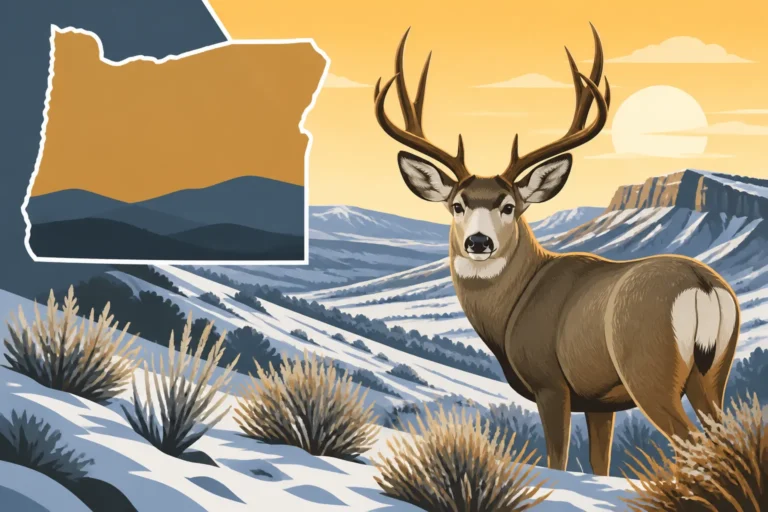
East of the Cascades, the Oregon Mule Deer reigns supreme. These iconic deer, with their large ears and bounding gait, are sought after by hunters willing to put in the miles in the high desert, juniper flats, and rimrock country. While mule deer numbers have seen a decline in recent years, making controlled hunt tags harder to come by, the dream of a big muley buck keeps hunters applying. Success often hinges on effective long-range glassing tactics, such as Glassing Sage and Juniper for Eastern Oregon Mule Deer, and being ready for a longer shot than you might take in the dense western timber. The vast, open landscapes require a different kind of persistence, often involving extensive e-scouting on platforms like GoHunt to pinpoint potential hotspots and understand land ownership boundaries before ever setting foot in the unit.
Elk: Roosevelt and Rocky Mountain
Oregon is unique in that it's home to both subspecies of elk found in North America: the mighty Roosevelt and the majestic Rocky Mountain elk.
The Roosevelt Elk in Western Oregon are giants of the rainforest. These impressive animals inhabit the dense, wet timber of the Coast Range and Western Cascades. Hunting Roosevelts is a true test of physical endurance and mental fortitude. The thick cover means close encounters are common, and getting a shot often involves navigating steep, brushy terrain where visibility is limited. Their bugles echo through the mist, creating an intoxicating, albeit challenging, hunting experience. Learning effective calling strategies, like Calling Roosevelt Elk in Oregon Rainforest Timber, is key, but often it comes down to pure grit and persistence in some of the toughest country imaginable.
In Eastern Oregon, the Rocky Mountain Elk in Eastern Oregon dominate the landscape, from the Blue Mountains to the various high desert ranges. These elk often inhabit more open, high-elevation country, making glassing a primary tactic. While still incredibly challenging, the slightly more open terrain compared to Roosevelt country can sometimes offer different hunting dynamics. Tags for Rocky Mountain elk in many units are highly coveted and difficult to draw, often requiring years of Oregon Preference Points and How They Work. Hunters meticulously pore over unit data and draw odds, often using resources like GoHunt, to strategize their application for these highly desired hunts. The higher success rates in some eastern units compared to the western ones make them a beacon for many who dream of a bull elk.
Beyond the Big Two: Bear and Cougar
While deer and elk capture much of the big game spotlight, Oregon hunters also regularly pursue two formidable predators: black bears and cougars. These hunts often offer a different kind of thrill and challenge, sometimes as a dedicated pursuit, and sometimes as an opportunistic bonus while hunting other species.
Black Bear: Abundant and Accessible
Oregon's Black Bear Populations Across Oregon are robust, with bears found in significant numbers across both the Coast Range and the Cascade Mountains. Unlike many other states, Oregon hunters pursue bears without the aid of bait or hounds, making it a true spot-and-stalk or still-hunting endeavor. This makes Bear Hunting in Oregon Without Bait or Hounds a unique challenge. Oregon offers both spring and fall bear seasons, providing hunters with extended opportunities.
Many hunters will purchase a bear tag specifically for their deer or elk hunt, hoping for an opportunistic encounter. Imagine spending a crisp morning still-hunting for blacktails in a coastal clearcut and stumbling upon a beautiful cinnamon-phase bear foraging for berries – that's a common scenario. Others dedicate full trips to spring bear hunting, focusing on green-up slopes where bears emerge from hibernation to feed on fresh vegetation. Success often depends on patience, careful glassing of open areas, and being prepared to move quietly through heavy cover. The reward is delicious meat and a beautiful hide, making it a highly valued game animal.
Cougar: The Elusive Predator
The Cougars in Oregon After the Hound Ban represent one of the most elusive and challenging animals to hunt in the state. Since the ban on using hounds for cougar hunting, success rates are considerably lower, and the pursuit demands a specific skillset. Cougar hunting in Oregon often involves covering miles of country looking for tracks in fresh snow or mud, or employing specialized calling techniques.
While not as commonly taken as deer, elk, or bear, the cougar is a consistent target for a dedicated niche of Oregon hunters. It’s a hunt that requires immense patience and a deep understanding of cat behavior. Finding a cougar means knowing their preferred terrain, their prey patterns, and being able to identify fresh sign. For those who manage to harvest a cougar, it's considered an apex achievement in self-sufficient hunting, a testament to skill and persistence in a hunt that offers very few guarantees.
Upland Birds and Waterfowl: Accessible & Abundant Opportunities
While big game hunting often gets the most attention, a significant portion of Oregon's hunting community dedicates itself to upland birds and waterfowl. These pursuits often offer longer seasons, more accessible opportunities, and fantastic table fare, making them a consistent draw for many hunters.
Upland Birds: Turkeys, Chukar, Quail, and Grouse
The world of Oregon Wild Turkeys and Upland Birds provides diverse and exciting hunting experiences. Spring turkey hunting has become incredibly popular in Oregon, with hunters fanning out across the state's oak woodlands and timbered hillsides to call in gobblers. The thrill of a tom turkey responding to a call and strutting into view is addictive, making it a must-do for many.
For those who crave a physical challenge, chasing Chukar and Quail Country in Oregon in the rugged canyons and rimrock of Eastern Oregon is a demanding but incredibly rewarding pursuit. These fast-flying birds test your stamina and shooting skills, often requiring significant hiking in steep terrain. On the flip side, ruffed grouse and blue grouse offer more accessible opportunities in the timbered regions of both eastern and western Oregon, often found while hunting other species or on dedicated bird walks. These hunts are a great way to introduce new hunters to the sport or extend a season once big game tags are filled.
Waterfowl: Ducks and Geese
Oregon's position on the Pacific Flyway makes it a prime destination for Oregon Duck and Goose Flyway Numbers. Waterfowl hunting is a rich tradition, especially in areas like the Willamette Valley, which is famous for its goose hunting on agricultural fields, often under the Oregon Open Fields Properties and How to Find Them program. Hunters spend countless hours scouting, setting decoys, and braving early morning chills for the chance at a limit of ducks or geese.
From the coastal estuaries to the vast interior wetlands and agricultural areas, opportunities abound. Duck hunting often involves blind setups near marshes or rivers, while goose hunting might take place in stubble fields. These hunts are often social affairs, shared with friends, good dogs, and plenty of hot coffee. The extended seasons for ducks and geese provide consistent opportunities throughout the fall and winter, making them a cornerstone of many Oregon hunters' annual schedules.
The Less Common, but Highly Sought-After Species
Beyond the regularly pursued animals, Oregon also harbors a few incredibly rare and highly coveted species that represent the pinnacle of draw-based hunting. While very few hunters will ever draw one of these tags, the dream keeps thousands applying year after year.
Pronghorn: Speedsters of the High Desert
The Oregon Pronghorn on the High Desert are magnificent animals, truly unique to the sagebrush plains of Eastern Oregon. Known for their incredible speed and keen eyesight, hunting pronghorn is a bucket-list item for many. However, tags for these animals are extremely limited and require a significant number of Oregon Preference Points and How They Work to draw, often taking many years.
When a hunter is lucky enough to draw a pronghorn tag, the hunt itself is an exhilarating experience. It typically involves extensive glassing across vast, open landscapes, followed by carefully planned stalks to get within range of these wary animals. The challenge is immense, but the reward of harvesting one of these distinctive creatures from their stunning high desert habitat is unforgettable. Applying for a pronghorn tag is often a yearly ritual, with hunters using tools like GoHunt to analyze draw odds and maximize their chances, even if those chances are slim.
Bighorn Sheep and Mountain Goat: Once-in-a-Lifetime Draws
At the very top of Oregon's hunting pyramid sit the California Bighorn Sheep in Oregon's Canyon Country and the Rocky Mountain Goats in Oregon's Wallowas. These are true once-in-a-lifetime tags, meaning if you draw one, you can never draw it again in Oregon. The odds of drawing are infinitesimally small, often in the realm of thousands to one, making them more akin to winning the lottery than a typical hunt drawing.
Bighorn sheep inhabit the rugged, steep canyon country of Eastern Oregon, while mountain goats cling to the highest, most unforgiving peaks of the Wallowa Mountains. These hunts are not just about finding the animal, but about physically accessing some of the most remote and challenging terrain in the state. Hunters who are fortunate enough to draw these tags often spend months, or even years, preparing, scouting, and planning for what will likely be the hunt of their lives. These species, though rarely harvested, represent the ultimate dream for many Oregon hunters, embodying the wildness and challenge that defines the state's diverse hunting landscape.
Here's a quick look at the relative popularity and accessibility of Oregon's game species for hunters:
| Species | General Accessibility | Season Length | Typical Hunter Pursuit | Key Challenges |
|---|---|---|---|---|
| Blacktail Deer | High | Moderate | High | Dense cover, still-hunting, low visibility |
| Mule Deer | Moderate (Controlled) | Moderate | High | Draw odds, vast open country, long-range shots |
| Roosevelt Elk | Moderate (Controlled) | Moderate | High | Extremely dense cover, steep terrain, wet weather |
| Rocky Mountain Elk | Low (Controlled) | Moderate | High | Very tough draw odds, high elevation, physical demand |
| Black Bear | High | Long (Spring/Fall) | Moderate/High | Spotting in cover, no bait/hounds, opportunistic |
| Cougar | Moderate | Year-round | Moderate | Extreme elusiveness, no hounds, tracking skills |
| Wild Turkey | High | Moderate | High | Calling skills, scouting, wary birds |
| Chukar/Quail | High | Long | Moderate | Rugged terrain, fast birds, physical endurance |
| Grouse | High | Long | Moderate | Forest navigation, spotting in timber |
| Ducks/Geese | High | Long | High | Decoy setup, blind construction, weather |
| Pronghorn | Very Low (Controlled) | Short | Low (High demand) | Extremely tough draw odds, wary animals, long stalks |
| Bighorn Sheep/Mtn Goat | Extremely Low (Once-in-a-lifetime) | Short | Very Low (Extreme demand) | Near-impossible draw, extreme terrain, physical limits |
Disclaimer
This article is for general informational purposes only and does not constitute professional advice. Laws, prices and regulations vary by location and change over time. Consult a qualified professional for guidance on your specific situation.