Blacktail Deer Hunting in Oregon’s Coastal Clearcuts
Hunting blacktail deer in Oregon's coastal clearcuts can feel like chasing ghosts through a maze of tangled undergrowth and impenetrable timber. Many hunters struggle with identifying where these notoriously shy deer hide, how they move through such fragmented habitats, and what strategies actually work in the dense, wet, and often steep terrain. This comprehensive guide is here to cut through the confusion, offering proven tactics and insights to help you consistently find and successfully hunt blacktails in the challenging, yet rewarding, coastal clearcut environment.
Understanding the Elusive Coastal Blacktail
The Columbian blacktail deer, specifically, is a creature perfectly adapted to the rugged, often unforgiving landscape of Western Oregon. They're not your wide-open country mule deer, nor are they the big, heavy-antlered Rocky Mountain elk you might find in eastern parts of the state. Blacktails are masters of stealth, using the dense cover of the Coast Range and Western Cascade foothills to their supreme advantage. Their elusive nature is precisely why they present such a formidable, yet exciting, challenge for hunters.
The Unique Challenges of Blacktail Habitat
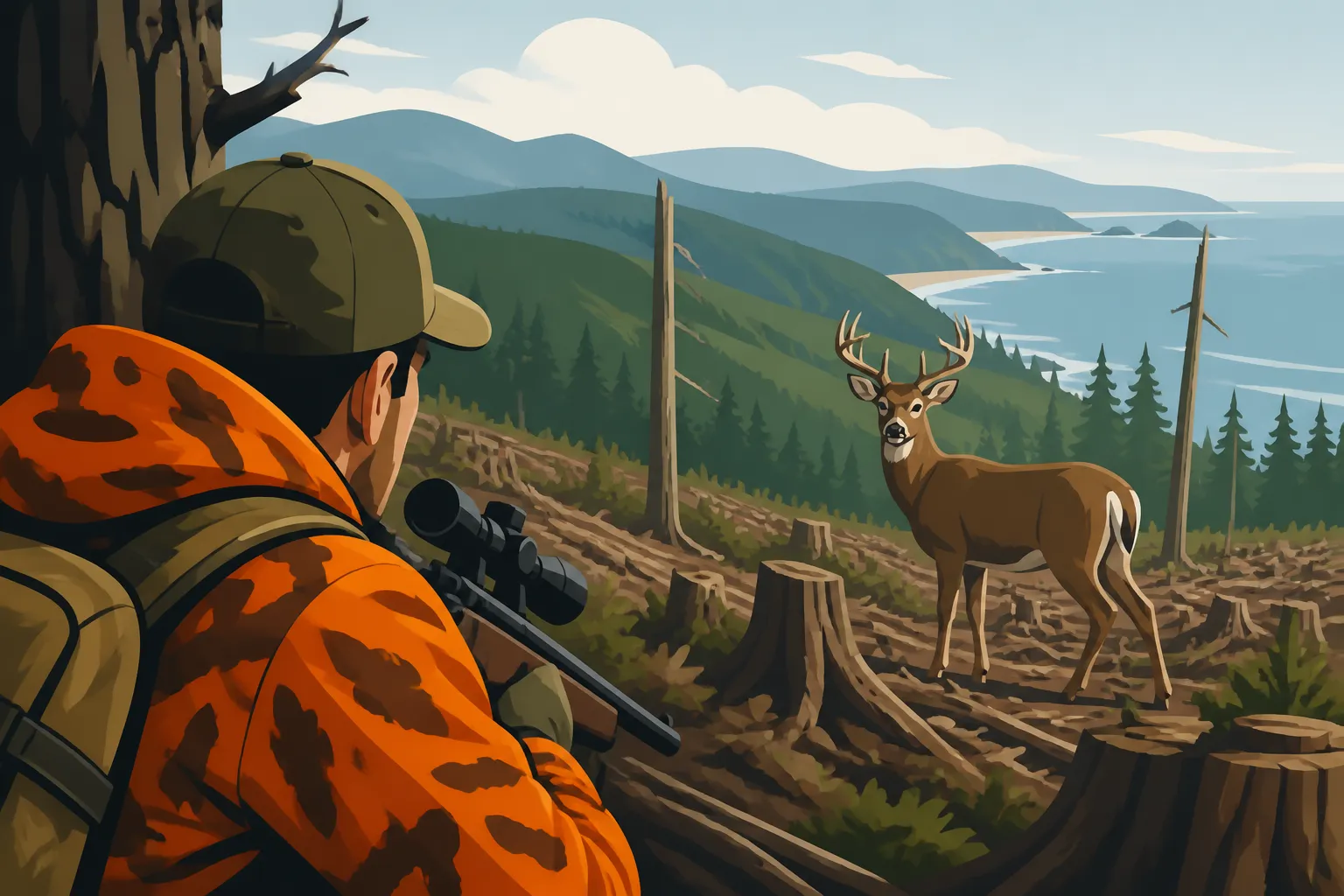
When you step into a coastal clearcut, you're not just walking into a patch of logged land; you're entering a highly dynamic and often brutal ecosystem. The defining characteristics of this habitat—dense vegetation, steep and broken terrain, and relentless rainfall—all conspire to make blacktail hunting a unique beast. You're constantly pushing through thick stands of salal, sword fern, huckleberry, and oftentimes, young alder and conifer saplings that seem specifically designed to grab your clothing and obscure your vision.
The sheer thickness of the cover means visibility can be severely limited. What looks like an open patch on a satellite map quickly reveals itself to be chest-high brush once you’re on the ground. This dense environment means blacktails rarely expose themselves for long, preferring to slip through the shadows. The terrain itself adds another layer of difficulty. We're talking about steep slopes that can quickly turn into muddy, slick death traps in the rain, littered with blowdown and hidden stumps. Navigating this silently, let alone packing out a deer, demands significant physical exertion and careful foot placement. It’s a far cry from a leisurely stroll through open woods, and anyone who’s spent time in the coastal range knows the frustration of trying to move quietly through a thicket only to feel like an elephant crashing through the jungle.
Blacktail Behavior in Clearcuts
Blacktails are intimately tied to cover, and clearcuts, despite their name suggesting openness, actually provide a complex mosaic of both food and shelter. Unlike deer in more arid regions, blacktails don't necessarily need vast tracts of timber to feel secure. Instead, they thrive on the edges and the transition zones within and around clearcuts. They know every fold in the terrain, every thicket of salmonberry, and every downed log that offers concealment.
During the day, especially once hunting pressure starts, blacktails will often bed down in dense pockets of cover right inside a clearcut, or just on its immediate edge. They'll choose spots where they have good scent detection from prevailing winds, excellent visual cover, and multiple escape routes into even thicker stuff. When they feed, it's typically during low-light hours—dawn, dusk, and often throughout the night, especially under cloudy skies or during a gentle rain. They'll browse on the fresh growth that flourishes in clearcuts: huckleberry, salal, various forbs, and tender conifer shoots. You'll often see them skirt the very edge of a clearcut, or feed into smaller finger clearings, always with a quick bolt to safety in mind. Understanding this behavior is critical; it’s less about finding them out in the open, and more about intercepting them as they move between feeding and bedding areas, or catching them browsing in protected spots. They are constantly using the topography and the vegetation to their advantage, rarely exposing themselves unnecessarily.
Scouting Coastal Clearcuts for Blacktail Sign
Effective scouting is paramount when hunting blacktails in coastal clearcuts. You can't just wander in on opening day and expect success. The sheer volume of cover makes blind hunting inefficient and frustrating. What you need is a strategic approach that combines modern technology with old-school boots-on-the-ground effort to pinpoint where these deer are consistently living and moving.
E-Scouting and Map Analysis
Before you ever set foot in the woods, the best place to start your blacktail clearcut hunt is right at your computer or on your phone with a good mapping application. Tools like GoHunt or similar satellite imagery platforms are absolute game-changers for dissecting the coastal landscape. Start by identifying potential clearcuts. Look for areas with different shades of green or brown, indicating variations in timber age and density. Newer clearcuts will often appear lighter, while those grown in with young alders and conifers will look denser, but still distinct from mature timber.
Once you’ve found a clearcut, zoom in and analyze its features. Look for distinct edges where the clearcut meets mature timber. These "soft edges" with gradual transitions or fingers of cover often act as travel corridors. Identify any saddles, draws, or benches within or adjacent to the clearcut. These are natural funnels where deer will often travel. Pay close attention to small pockets of residual timber or thick brush within the clearcut itself; these are prime bedding areas or security cover. Sometimes, a logging road or old skid trail running through a clearcut can be an excellent access point and a natural travel route for deer, or even a subtle Reading Green Roads on an Oregon Travel Management Map clue for you to investigate further. Use topographic maps to understand the steepness of the terrain and identify potential natural breaks or benches where deer might prefer to walk or bed. This initial digital reconnaissance allows you to eliminate unproductive ground and focus your in-person efforts on high-probability areas.
Boots-on-the-Ground Reconnaissance
E-scouting only gets you so far; eventually, you need to get your boots muddy. Nothing beats walking the ground to confirm your suspicions and find fresh sign. Focus your efforts on the edges of clearcuts, paying particular attention to where the young growth meets the mature timber. Deer often follow these lines, using the dense timber for cover and the clearcut edge for browse. Look for rubs on small trees or saplings, indicating bucks are working an area. Scrapes, though less common with blacktails than other deer species, can also be present, especially during the rut.
Fresh tracks are a clear indicator of recent deer activity. Look for them in muddy spots, along old logging roads, or where deer might cross soft ground. Droppings can also tell you about deer presence and diet. The freshest droppings will be moist and shiny. As you walk, pay attention to browse lines—where deer have consistently nipped off the tops of plants like huckleberry or salal. Don't be afraid to venture a little way into the denser pockets of brush within the clearcut or along its immediate edge. Sometimes, you'll jump deer that were bedded just a few yards into the thick stuff. Finding Edge Cover Blacktails Bed In is key to understanding how they use a clearcut for security. Remember, blacktails are masters of using even the smallest patches of cover, so don't overlook any dense thicket, even if it seems too small to hold a deer. The goal of this ground-level scouting is to confirm deer are actively using these areas and to identify specific travel routes, feeding spots, and bedding locations that you can later target during your hunt.
Reading the Landscape: Clearcut Age and Blacktail Use
Not all clearcuts are created equal when it comes to blacktail hunting. The age of the clearcut plays an absolutely critical role in how deer utilize it. Understanding this dynamic is like having a secret decoder ring for the coastal forest. A clearcut that’s just been logged will hold deer differently than one that’s 5 years old, or one that’s a decade old and growing into a thicket. Being able to "read" the age of the clearcut and predict deer behavior based on it is a skill that takes time to develop, but it's one of the most important tools in a blacktail hunter's arsenal.
Freshly Logged Clearcuts 0-2 Years Old
When timber has just been felled, the landscape is a scene of raw disturbance. It's often littered with logging slash, stumps, and exposed earth. While the initial disturbance might push deer out temporarily, these areas quickly become valuable for blacktails in specific ways. In the first year or two, the sheer lack of immediate ground cover makes deer wary of lingering in the open. However, the newly exposed soil allows for a flush of new growth, often pioneer species that deer will browse.
You might not find deer bedding right in the middle of these fresh clearcuts, but they will certainly cross them, especially at night or during low-light conditions, to access different parts of their home range. Think of them as open highways rather than destination spots. They might quickly browse on emerging shoots, but they won't typically feel secure enough to spend much time here. Hunting these areas often involves setting up on the very edge, overlooking the fresh cut where it meets established cover, hoping to catch a deer transitioning. For instance, if you're Reading a Two-Year-Old Clearcut for Bucks, you'll be looking for tracks and signs of quick crossings, not deep bedding areas. The key here is patience and positioning, anticipating movement rather than finding resident deer.
Young Clearcuts 2-10 Years Old
This age range is often considered the "sweet spot" for blacktail deer in coastal clearcuts, and for good reason. After a few years, the initial flush of pioneer plants has given way to a robust growth of various shrubs, forbs, and young conifers. Species like huckleberry, salal, thimbleberry, and blackberry thrive in the increased sunlight, providing an abundant and diverse food source for deer. Critically, this vegetation also starts to provide substantial cover. The plants grow tall and dense enough to hide a deer, offering both visual security and thermal protection from the elements.
Within these young clearcuts, you'll find deer feeding actively, often during the day, as long as there are pockets of cover nearby. They'll bed down in the thickest parts, using slight depressions or benches for added concealment. The density of these areas can be incredible, making it challenging to spot a deer, but also providing them with the sense of security they crave. Hunters should focus on identifying the densest patches of cover, especially those with good escape routes or those bordering mature timber. These clearcuts are where you're most likely to find resident deer actively using the habitat for both food and shelter, making them prime hunting grounds.
Older Clearcuts 10+ Years Old and Beyond
As clearcuts continue to age, the dynamics shift once more. The young conifers that were once ankle-high browse are now 10-20 feet tall, forming a dense canopy that starts to shade out the understory. This shading reduces the availability of sunlight-dependent browse species, making the clearcut less attractive as a primary food source. However, these older clearcuts transform into incredibly important security cover and bedding areas. The thick, young timber becomes almost impenetrable to humans, offering deer a sanctuary where they feel safe from predators.
While deer might not feed extensively in the middle of these areas, they will absolutely use them for bedding, particularly during periods of high pressure or harsh weather. They'll often feed in adjacent younger clearcuts or natural openings, then retreat into the impenetrable older growth for the day. Hunting these older clearcuts effectively often means focusing on their edges, particularly where they transition into more open feeding areas or younger clearcuts. It also means recognizing them as critical staging and bedding grounds, where a still-hunt might be incredibly slow and stealthy, targeting the occasional deer moving within, or along the protective edge of, the dense growth. If you find a blacktail bedded in such a thicket, it will often be completely obscured, relying on its nose and ears to detect you long before you see it.
Effective Hunting Strategies for Coastal Blacktails
Hunting blacktails in coastal clearcuts demands a blend of patience, stealth, and adaptability. The sheer thickness of the cover, combined with the deer's natural wariness, means that traditional hunting methods often need to be tweaked or combined to yield success. There's no one-size-fits-all approach, and what works one day might be ineffective the next, depending on weather, pressure, and the specific clearcut you're in.
Still-Hunting the Clearcut Edges
Still-hunting is arguably the most effective and rewarding strategy for coastal blacktails, especially along clearcut edges. This isn't about covering ground quickly; it's about moving at a snail's pace, often taking minutes to cover mere yards. The goal is to move so slowly and deliberately that you detect the deer before it detects you. Think "stop, look, listen, take one step." This method is particularly effective in the wet conditions common in the Coast Range, where the damp ground and foliage can help muffle your footsteps, as detailed in guides like Still-Hunting Speed in Wet Brush.
Focus your still-hunting efforts on the transition zones where the clearcut meets dense timber, or where younger browse-heavy patches meet older, thicker bedding areas. Look for subtle changes in the terrain—a dip, a small bench, or a finger of timber extending into the cut. These are natural travel routes. Use your binoculars constantly, not just for long distances, but to pick apart patches of brush just 20-30 yards ahead. Look for horizontal lines (a deer's back) in a vertical world of trees, or a flick of an ear, or a patch of hide. The key is to constantly pause, scan meticulously, and listen for the tell-tale crunch of leaves or the rustle of brush that might betray a deer's presence. When you approach a new clearcut, always start on the downwind side, or use a crosswind, to prevent your scent from spooking deer ahead of you.
Stand Hunting and Ambush Tactics
While coastal clearcuts might not scream "stand hunting," strategic ambush tactics can be incredibly productive, especially during the rut or in areas with predictable deer movement. This involves identifying key pinch points, travel corridors, or specific feeding areas that deer consistently use and then positioning yourself discreetly to intercept them. This could be a natural saddle between two clearcuts, a narrow strip of timber connecting two patches of good browse, or a well-used game trail leading into a prime feeding area.
Success with this method hinges on meticulous pre-scouting. Look for fresh tracks, droppings, and well-worn trails that indicate consistent use. Identify natural funnels where deer movement is concentrated. Once you've found such a spot, the goal is to set up well before dawn or stay until after dusk, remaining absolutely still and quiet. A small, portable ground blind or simply using natural cover (like a fallen log or a dense clump of ferns) can provide the necessary concealment. The advantage here is that you're letting the deer come to you, minimizing your own movement and scent disturbance. This works particularly well for those patient hunters who are willing to sit and observe, waiting for that perfect moment.
Driving Small Patches of Cover
Driving small patches of cover can be an effective strategy, particularly when hunting with a group, but it requires careful planning and safety considerations. This method is best suited for small, isolated pockets of thick cover—often too dense to still-hunt effectively—that you suspect are holding deer. It involves having one or more "pushers" quietly move through the cover, while "standers" are strategically positioned on the downwind side, covering escape routes.
The key is communication and knowing the terrain intimately. Pushers should move slowly and deliberately, pausing often, rather than crashing through the brush. The goal is to nudge deer out, not to send them rocketing away. Standers must be in safe positions, with clear lanes of fire and a solid understanding of where other hunters are. Safety is paramount; clear communication, bright orange clothing, and a pre-determined plan are essential. This method is particularly useful in dense clearcuts where deer might be bedded deep in the thickest brush, and it can be a great way to tag a buck that's unwilling to leave its sanctuary without a little encouragement. Remember the importance of having a clear shot path and always identifying your target beyond a doubt, especially in dense coastal timber.
Essential Gear for Coastal Clearcut Hunting
Hunting in Oregon's coastal clearcuts is demanding, and your gear needs to be up to the task. The environment is notoriously wet, rugged, and often chilly. Having the right equipment isn't just about comfort; it's about safety, effectiveness, and endurance. Skimping on critical items can lead to a miserable, unproductive, or even dangerous hunt.
Clothing and Rain Protection
Let's face it: if you're hunting the Oregon coast, you're going to get wet. The Pacific Northwest is famous for its rain, and while a little drizzle can be great for still-hunting by muffling your steps, prolonged exposure to wet and cold can quickly lead to hypothermia and a prematurely ended hunt. Layering is absolutely crucial. Start with a moisture-wicking base layer (merino wool or synthetic, avoid cotton!) to pull sweat away from your skin. Add a warm insulating layer, such as a fleece or puffy jacket, depending on the temperature.
Your outer layer, however, is the most critical: it needs to be completely waterproof and windproof, yet breathable. Look for high-quality rain gear with Gore-Tex or similar proprietary waterproof-breathable membranes. Pay attention to sealed seams, adjustable cuffs, and a good hood that stays put. Brands like Sitka, Kuiu, and even good quality local outdoor stores offer excellent options. Investing in quality Rain Gear That Actually Stays Dry will make or break your comfort and ability to stay in the field. Don't forget waterproof pants or bibs, and waterproof gaiters to keep water out of your boots and off your pant legs as you push through wet brush. Staying dry means staying warm, and staying warm means staying focused on the hunt.
Optics and Navigation
In the dense, cluttered environment of a coastal clearcut, quality optics are indispensable. A good pair of binoculars, preferably 8x or 10x, will allow you to pick apart thick brush, identify deer, and spot subtle movements that you'd otherwise miss with the naked eye. Look for binoculars with good low-light performance, as much of your hunting will happen at dawn, dusk, or under heavy cloud cover. A rangefinder is also incredibly useful, not just for confirming shot distance in open areas, but for judging distances in the often deceptive, undulating terrain. When a deer steps out of the brush, knowing the exact yardage can be the difference between a clean shot and a missed opportunity. Having a reliable Rangefinders in Steep Country can boost confidence greatly.
For navigation, a GPS unit or a reliable mapping app on your phone (such as GoHunt, OnX Hunt, or Gaia GPS) is non-negotiable. Coastal clearcuts are often a labyrinth of old logging roads, new growth, and dense timber, and it's remarkably easy to get disoriented, especially in fog or low light. These apps allow you to mark your vehicle, track your path, identify property boundaries, and pinpoint clearcut ages and terrain features. Download offline maps before you head out, as cell service is often nonexistent. A portable power bank for your phone is also a smart addition to keep your navigation tools charged.
Weapon Choice and Considerations
The dense cover and typically shorter shooting distances in coastal clearcuts influence weapon choice. While a long-range magnum rifle might be overkill, accuracy and quick follow-up shots are key. For rifle hunters, a mid-range caliber like a .308 Winchester, 6.5 Creedmoor, or .270 Winchester with a quality bullet is more than sufficient. You'll likely be taking shots under 150 yards, often much closer, so focus on a rifle you can handle comfortably and accurately in tight spaces. A compact rifle with a shorter barrel can be easier to maneuver through thick brush, as discussed in Rifle Choice for Oregon Elk and Deer.
Archery hunting in these conditions is incredibly challenging but also immensely rewarding. A compound bow set up for accuracy and quick target acquisition, with a broadhead designed for penetration through potential brush, is essential. Heavy bone can be an issue, so a tough, fixed-blade broadhead is often preferred. Keeping your Bowstring Dry in Coastal Rain is also a crucial consideration for archers. Whatever your weapon, practice shooting from various awkward positions—crouching, kneeling, leaning around trees—as these will be common scenarios in the field.
Post-Harvest Considerations in the Rainforest
Successfully taking a blacktail in Oregon's coastal clearcuts is just the beginning of the hunt. The real work often starts after the shot, and the challenging environment that made the hunt so difficult will now test your mettle even further. Dealing with steep terrain, dense vegetation, and potentially warm, wet weather demands a plan for field dressing and packing out your prize to ensure the meat is salvaged properly.
Field Dressing and Meat Care
Once your deer is down, the clock starts ticking, especially in warmer early-season weather or if you're deep in the timber. Field dressing should be a priority. While the traditional gutting method is fine, many experienced hunters in dense, rugged terrain opt for the gutless method. This technique involves quartering the animal and removing the backstraps, tenderloins, and boneless meat without opening the body cavity. This can be significantly faster, cleaner, and lighter for packing, as it leaves much of the heavy entrails behind. It's a skill worth practicing at home or with a mentor. When it comes to Field Dressing an Elk in Warm Early-Season Weather, the principles apply directly to deer, especially preventing hair contamination and ensuring rapid cooling.
After the meat is off the bone, it's crucial to get it cooled down as quickly as possible. This means getting it off the ground, ideally hung in game bags in a shady, breezy spot. If you're deep in the woods, even laying the quarters on logs or brush to allow air circulation can help. Never stack meat directly on the ground or on top of each other. The coastal environment, with its high humidity, can create conditions ripe for bacterial growth, so every effort to cool the meat is important.
Navigating Blowdown and Obstacles
Packing out a blacktail from a coastal clearcut is often the most physically demanding part of the entire hunt. You'll encounter steep, slippery slopes, dense blowdown, and thick brush that seems to conspire against every step. If you're hunting solo, a sturdy pack frame is non-negotiable. Break the deer down into manageable loads. Two trips are always better than one back-breaking, potentially dangerous single trip.
When traversing blowdown, take your time. Step over smaller logs, but for larger ones, it's often safer to go around or find a sturdy spot to climb over. Watch your footing constantly, as wet logs and mossy rocks are incredibly slick. Be mindful of hidden holes or tangled roots. If you're following an old logging road or game trail, stick to it, even if it seems like a roundabout way, as it will likely be the path of least resistance. Packing out an animal, whether it's an Packing Out an Elk in Oregon's Wilderness Units or a blacktail, is a marathon, not a sprint. Pace yourself, take breaks, and stay hydrated. Having a good headlamp is essential if you anticipate packing out after dark. Safety first; a fall with a heavy pack on a steep slope can lead to serious injury.
Timing Your Hunt: Rut, Weather, and Seasons
Understanding the rhythms of the coastal blacktail's year and the specific regulations governing their seasons is fundamental to a successful hunt. Timing isn't just about showing up when the season is open; it's about knowing when deer are most active, how weather influences their movement, and what opportunities the various tag structures present.
Blacktail Rut Timing and Behavior
The blacktail rut in Western Oregon is a magical, albeit often fleeting, period for hunters. Unlike the more dramatic rut of Rocky Mountain elk, the blacktail rut is often a more subtle affair, driven by does coming into estrus. Generally, the rut peaks in mid-November for most areas of Western Oregon, though it can start subtly in late October and extend into early December. This timing varies slightly based on elevation and specific location, but by Veterans Day weekend, bucks are typically actively seeking does.
During the rut, bucks, which are normally solitary and reclusive, become more active and less cautious. They'll cover more ground, cruising clearcut edges, timber fringes, and known bedding areas in search of receptive does. This is when rattling can be effective, though less so than for mule deer or whitetails. Gentle antler tines or even just pushing through brush to mimic a buck fight might draw in an inquisitive buck. Understanding Blacktail Rut Timing in Western Oregon gives you a critical window where bucks are more vulnerable, focusing on reproduction rather than constant vigilance. Look for fresh rubs and scrapes that indicate a buck is in the area and actively marking his territory.
Hunting in Fog and Drizzle
The coastal environment often presents hunters with fog and drizzle, conditions that many might consider unfavorable. However, for blacktail hunting, these conditions can actually be your friend. Light rain or mist dampens the forest floor, muffling your footsteps and making it significantly easier to move quietly through the dense underbrush without alarming deer. It also helps to settle your scent, reducing how far your presence carries on the wind.
Deer often become more active and less wary during light rain or fog. They might move out into more open areas of a clearcut to feed, feeling more secure under the cloak of limited visibility. Fog reduces human visibility, but deer, with their superior sense of smell and hearing, are still very much aware of their surroundings. This means a hunter needs to move even slower and more deliberately. A common frustration is that Hunting Blacktails in Fog and Drizzle can be disorienting, and it's easy to get lost or disoriented, making reliable navigation tools even more important. The key is to embrace these conditions, move with extreme stealth, and use your optics to peer through the mist, looking for any subtle sign of movement or form.
General Season Dates and Tag Considerations
Oregon offers a general season for blacktail deer in Western Oregon, which typically runs for an extended period, often from late September through early November. This general season usually allows for a buck-only harvest. The specific dates and regulations, including bag limits and legal methods, are published annually in the Oregon Big Game Regulations, which you absolutely must review each year. There are also specific "controlled hunts" for blacktails that require drawing a tag, offering opportunities in different units or with different weapon types (e.g., muzzleloader).
Understanding the general season dates allows you to plan your scouting and hunting trips. Many hunters focus their efforts around the general season opener, or later in the season as the rut approaches. Non-residents face specific tag allocations and costs, so it's vital to research these well in advance. Keep in mind that pressure can be higher on opening weekends and holidays, so consider hunting during weekdays if you can. Always carry your valid hunting license and tag, and be prepared to immediately validate your tag upon harvest. Familiarize yourself with the boundaries of the unit you are hunting, using resources like the Oregon Hunting Map, to ensure you are in the correct area for your tag.
| Clearcut Age | Blacktail Use & Behavior | Recommended Strategy | Notes |
|---|---|---|---|
| 0-2 Years | Primarily travel routes; brief browsing on new shoots; highly exposed. | Edge hunting (ambush), quick crossings. | Deer are very wary, minimal cover. Focus on adjacent timber lines and natural funnels. |
| 2-5 Years | Excellent feeding, moderate cover. Bucks will frequent, especially early/late. | Still-hunting edges, ambush points, glassing. | High browse availability. Deer feel more secure, but still prefer moving under cover. Good for spot-and-stalk if cover allows. |
| 5-10 Years | Peak feeding and good bedding cover. Often the "sweet spot" for resident deer. | Still-hunting deep within, ambush points, small drives. | Dense vegetation for both food and concealment. Deer will spend significant time here. Challenging to spot, requires slow, methodical movement. |
| 10-15 Years | Less feeding, becoming critical bedding/security cover as trees grow taller and denser. | Still-hunting (very slow), driving small patches. | Understory browse diminishes as canopy closes. Deer use for security and bedding, often moving out to younger clearcuts to feed. Focus on transition zones. |
| 15+ Years | Primarily dense security cover. | Limited, mostly as part of larger timber blocks. | Too dense for most feeding, but offers absolute sanctuary. Deer will be extremely hard to push out. Best approached as part of a larger timber complex providing Blacktail Deer Habitat in Oregon Clearcuts for security rather than food. |
Disclaimer
Hunting is an inherently dangerous activity. This guide provides general information and strategies, but local conditions, regulations, and personal skill levels vary. Always prioritize safety, understand and adhere to all Oregon Department of Fish and Wildlife (ODFW) regulations, and consider taking a hunter education course. The author and publisher are not responsible for any accidents, injuries, or legal infractions incurred while hunting.