Oregon’s 300-Foot Rule Beside an Open Road
One of the trickiest aspects of hunting in Oregon is navigating the regulations that dictate where and how you can legally discharge a firearm, especially when you're near a road or developed area. It's easy to get confused, and a simple mistake can lead to a hefty fine or worse. This guide will meticulously break down Oregon's 300-foot rule, clarifying its specific applications and helping you hunt responsibly and within the law, particularly when open roads are part of your hunting landscape.
Understanding Oregon's 300-Foot Safety Zone for Hunting
When you hear about a "300-foot rule" in Oregon hunting, it's crucial to understand exactly what it applies to. Many hunters mistakenly believe it's a blanket restriction that means you can't shoot within 300 feet of any open road. While there are rules about roads, the 300-foot rule primarily pertains to safety zones around occupied dwellings, structures, and livestock, not necessarily every single stretch of pavement or gravel. This distinction is vital for every ethical and legal hunt.
The Specifics of the 300-Foot Rule
Oregon Revised Statute (ORS) and Oregon Administrative Rules (OAR) outline these critical safety regulations. The most pertinent part for hunters is typically OAR 635-008-0125, which explicitly states that "It is unlawful to discharge a firearm or bow and arrow from within 300 feet of any occupied dwelling, house, residence or other building, or any livestock without permission of the owner or person in possession." This means that the 300-foot rule is a buffer, a safety perimeter, around people's homes, barns, or any building they might occupy, and their animals. It's not a universal no-shooting zone around every road; rather, it applies to structures and livestock that frequently are located right beside those open roads.
Imagine you're driving down a county road, spot a legal deer, and pull over. If there's a farmhouse or even a hunting cabin within 300 feet of where you're aiming, you absolutely cannot take that shot without explicit, prior permission from the owner. This rule is designed to prevent accidents, property damage, and unnecessary conflict between hunters and property owners. It’s a matter of safety and respect, ensuring that residential areas, even those in rural settings often accessed by open roads, are protected from stray projectiles. This includes places where people might live or work, such as a remote ranch house or even a Forest Service cabin.
Differentiating from the 8-Foot Road Rule
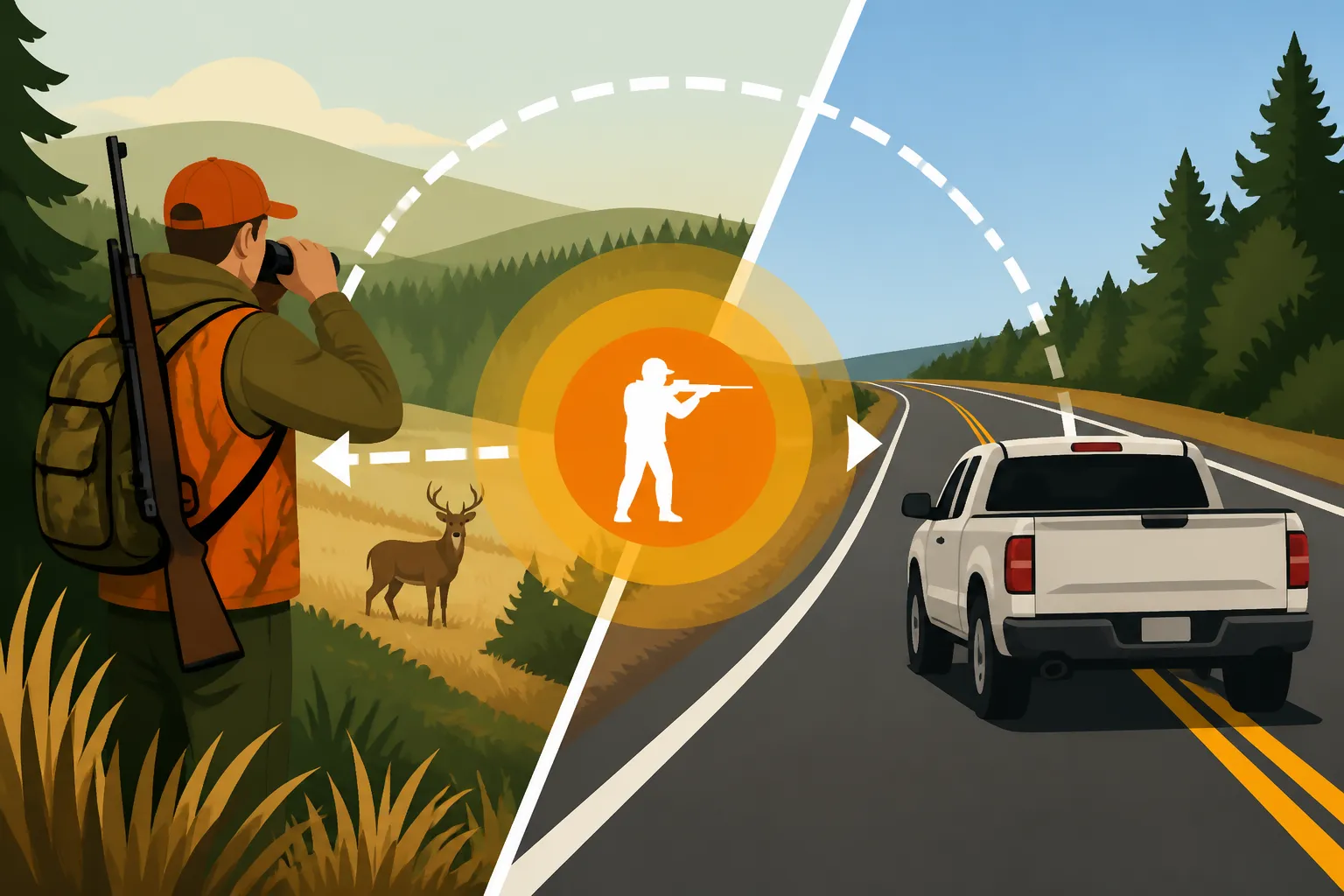
It's common for hunters to confuse the 300-foot rule with Oregon's "8-foot rule" concerning roads. These are two distinct regulations, though both are important for hunting ethically and legally near roadways. The 8-foot rule states that it is unlawful to discharge a firearm or bow and arrow from within 8 feet of the improved portion of any public road or highway. The "improved portion" generally refers to the traveled part of the road, including the gravel or asphalt, and typically extends to the shoulder. This rule is about where you stand or shoot from in relation to the road itself.
So, while you can't stand 5 feet off the gravel shoulder of a county road and shoot across it, that's the 8-foot rule. The 300-foot rule, on the other hand, comes into play when there's a building or livestock nearby, regardless of how far you are from the road itself, as long as you're within 300 feet of that structure or animal. You could be 50 feet off a public road on public land, legally clear of the 8-foot rule, but if you're still within 300 feet of a dwelling, you're in violation of the 300-foot rule. Understanding this difference is crucial for avoiding legal trouble and ensuring everyone's safety out in the field.
What Constitutes an "Open Road" and Restricted Zones
The term "open road" can feel a bit ambiguous when you're looking at a tangle of public and private access points on a hunting map. For the purpose of Oregon hunting regulations, an "open road" generally refers to any public road or highway that is not officially closed to public vehicle traffic. This includes everything from paved state highways to gravel county roads and many Forest Service or Bureau of Land Management (BLM) roads. However, the specific legal status of a road can dramatically impact how hunting regulations, including the 300-foot rule and the 8-foot rule, apply.
Public Versus Private Road Distinctions
A public road in Oregon is one maintained by a governmental entity (state, county, federal) and generally open for public travel. These are the roads where the 8-foot rule explicitly applies to prevent shooting from or across them. Importantly, the 300-foot rule for dwellings and livestock always applies, regardless of whether you're on a public or private road, if a structure or animal is within that distance. The key is the presence of the dwelling or livestock, not the type of road you're near.
Private roads, on the other hand, are owned and maintained by private entities, like timber companies or individual landowners. These roads may have gates, "No Trespassing" signs, or require permits for access. While the 8-foot rule doesn't typically apply to shooting from a private road (as it's not a "public" road), you still cannot shoot from private land across a public road without violating regulations. More importantly, the 300-foot rule still applies to any dwellings or livestock along that private road. Just because you have permission to be on private land doesn't give you permission to disregard the safety buffer around homes or animals, unless the landowner explicitly grants it for their own dwelling or livestock. When hunting timber company lands, you'll often encounter a mix of open and closed private roads. Understanding this complex web often requires advanced mapping tools. Many hunters rely on services like GoHunt for detailed satellite imagery and property boundaries that clarify these distinctions, helping them identify public land accessible via roads and areas near structures.
Travel Management Areas and Road Closures
Oregon's expansive Oregon's Travel Management Areas Explained often include a vast network of roads, many of which are subject to seasonal or permanent closures. These are usually public roads within National Forests or BLM lands. When a road in a Travel Management Area (TMA) is officially closed to motorized traffic, it typically means vehicles are prohibited, but foot traffic, mountain biking, or horse travel might still be allowed. This brings up an important point: even if a public road is closed to vehicles, it often retains its legal status as a "public road." This means the spirit of the 8-foot rule (not shooting from or across it) still generally applies. You're expected to maintain a safe distance and not use the road as a shooting platform.
For example, you might be still-hunting deep in a TMA and come across a closed Forest Service road. If you spot an elk across that road, you need to ensure you're not within 8 feet of its improved portion if you plan to shoot. More critically, if there's a remote, occupied Forest Service cabin or a summer grazing allotment with livestock near that closed road, the 300-foot rule absolutely applies, requiring you to be 300 feet away and have permission. Always check your maps for TMAs and closure notices, whether through printed ODFW maps or digital tools like GoHunt, to understand the current access rules. Learning how to identify these on a map is vital, and reading a detailed guide on Reading Green Roads on an Oregon Travel Management Map can provide additional clarity.
Practical Application and Real-World Scenarios
Understanding the letter of the law is one thing; applying it in the heat of the moment during a hunt is another entirely. The rules concerning hunting near roads and structures are designed for safety, but they can be a source of real frustration if you're not prepared. Let's walk through some common scenarios to illustrate how Oregon's 300-foot rule plays out in practice, helping you avoid mistakes and hunt confidently.
Spotting Game Near a Road or Dwelling
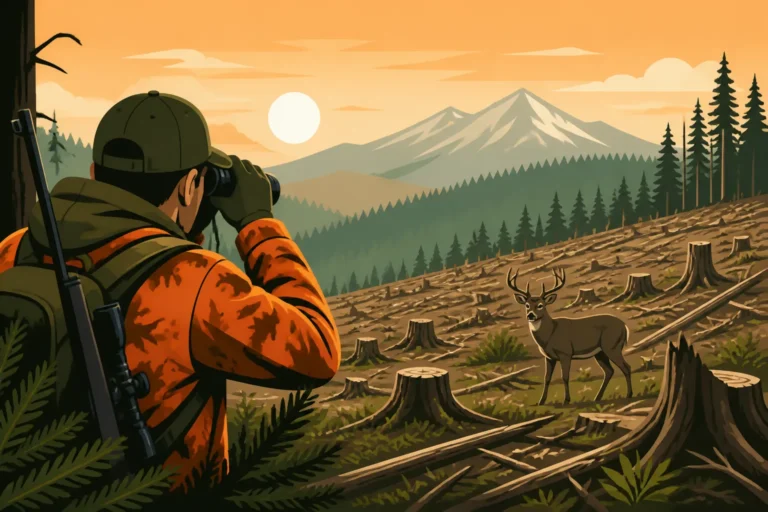
Imagine you're driving a gravel forest road, far from any major towns, and suddenly, there's a beautiful blacktail buck feeding in a clearcut just off the road. Your heart starts pounding. You pull over, grab your rifle, and quickly assess the situation.
- Scenario 1: Clear Shot, No Structures. You're 30 feet off the improved portion of the public gravel road, so you're clear of the 8-foot rule. You've checked your surroundings, and there isn't a single house, barn, or even a remote trapper's cabin within 300 feet of where you intend to shoot. This is a green light, assuming all other regulations (tag, season, legal animal) are met. You take your time, make a good shot, and have a legal harvest.
- Scenario 2: Too Close to a Dwelling. Same scenario, but as you quickly scan, you notice a small, weathered hunting cabin tucked back in the trees, maybe 150 feet from your shooting position. Even if you're on public land and legally off the main road, the 300-foot rule immediately kicks in. You cannot take that shot without explicit permission from the cabin's owner. This is where many hunters get into trouble. They assume "public land" means "free to shoot anywhere," but safety zones around private property, even remote ones, are non-negotiable. You might need to back off, find another angle, or simply pass on the shot if the safe approach isn't feasible. Tools like the GoHunt app are incredibly helpful here, as they overlay property boundaries and often show structures, allowing you to quickly verify your position relative to any potential dwelling.
It’s always better to err on the side of caution. If there's any doubt about a structure being occupied or whether you're within the 300-foot buffer, find another opportunity. The ethical hunter prioritizes safety and legality over a hasty shot.
Hunting Deep in Public Land, But Finding the Unexpected
Sometimes, the 300-foot rule can surprise you in areas you thought were completely wild. You might backpack miles into what you believe is pristine wilderness, only to stumble upon a remote, privately owned inholding with a small cabin or a group of horses grazing. This is where the homework you did before the hunt truly pays off.
- Using Your Maps: Prior to heading out, spend time with detailed maps, whether physical topo maps or digital mapping applications like GoHunt. These tools often show private inholdings within larger tracts of public land. Learning E-Scouting Oregon Units With Satellite Imagery can reveal these hidden cabins or fences. During your hunt, keep your GPS handy. If you unexpectedly find yourself near a structure or livestock, immediately check your position relative to that 300-foot boundary.
- Permission is Key: If you find yourself within 300 feet of an occupied structure or livestock, you need permission. This isn't just a courtesy; it's the law. This situation highlights the importance of understanding Finding Property Lines on Oregon Public Land. What if you don't know who owns the cabin? In such a case, you absolutely cannot shoot. Contacting the local ODFW office or Forest Service ranger district beforehand to ask about known private inholdings in your hunting area can save you a lot of grief. Remember, the rule isn't just about firing within 300 feet; it's about discharging a firearm from within 300 feet. Your position, not just the target's, is paramount.
Passing up a shot is tough, especially after a long stalk, but violating the 300-foot rule can lead to significant penalties, including fines, loss of hunting privileges, and even confiscation of your weapon and game. It’s simply not worth the risk.
Navigating Public and Private Land with the 300-Foot Rule
Oregon offers an incredible diversity of hunting grounds, from vast national forests and BLM lands to private timber company holdings and even small parcels enrolled in public access programs. Each type of land comes with its own set of rules, and how these intersect with the 300-foot rule, especially when near open roads, is crucial to grasp. Ignoring these nuances can quickly turn a successful hunt into a legal nightmare.
Public Land Hunting: A Closer Look
Hunting on public lands like National Forests and BLM properties is a cornerstone of Oregon's hunting culture. These areas typically feature an extensive network of roads, ranging from well-maintained gravel to barely-there two-tracks. When you're on these public lands, the 300-foot rule primarily concerns structures or livestock that might exist within or adjacent to them.
For example, many public lands have active grazing allotments where cattle or sheep are present, especially in Eastern Oregon's high desert. If you're chasing mule deer and find yourself near a herd of cattle, you must ensure you're at least 300 feet away from them before taking a shot, unless you have explicit permission from the rancher. Similarly, while less common, remote Forest Service cabins or research stations on public land would also fall under the 300-foot rule if they are occupied. Always consult your maps, and if you see signs of a structure or livestock, assume the 300-foot rule is active. Understanding Motorized Travel Rules on Oregon BLM Land can also help clarify where you can drive and where you might need to proceed on foot, increasing your awareness of surrounding areas.
Private Land Access: Permits, Permission, and the 300-Foot Buffer
Hunting on private land in Oregon, especially industrial timberland, often involves a permit system through companies like Weyerhaeuser or Hancock Forest Management. Even with a permit, you're not exempt from the 300-foot rule. These private lands frequently have active logging operations, employee housing, or leased cabins, all of which would be considered "occupied dwellings or buildings."
If you're hunting on private timber land and spot a camp trailer or crew truck within 300 feet, you're looking at a no-shoot zone. The onus is on you, the hunter, to know your surroundings. This is where having premium mapping software like GoHunt becomes indispensable. Its detailed land ownership layers can help you identify property boundaries and potential structures, allowing you to plan your hunt routes to avoid these conflict areas. Even if you have a permit to hunt a specific block of timber, always be vigilant for signs of human activity or livestock. If you encounter dwellings or livestock, you would need separate permission from their specific owners, not just your general timberland permit, to be within 300 feet. This becomes particularly important if you are trying to hunt through programs like the Oregon Open Fields Properties and How to Find Them, where you might be near agricultural operations. When approaching any private land, it's always best practice to review guidelines on Asking Permission on Oregon By-Permission Land to ensure you're respecting landowner rights and staying legal.
Ensuring Compliance and Safe Hunting Practices
Navigating Oregon's hunting regulations, particularly the 300-foot rule, boils down to a commitment to safety, respect for private property, and diligent preparation. While the rule itself is straightforward – 300 feet from occupied dwellings, buildings, or livestock without permission – its application in the diverse and often complex landscapes of Oregon requires constant vigilance from every hunter.
The Role of Mapping and Technology
In today's hunting world, digital mapping applications like GoHunt are invaluable tools for compliance. They provide layers that show public and private land boundaries, topography, and often even identify structures. Before you even leave home, you can E-Scouting Oregon Units With Satellite Imagery to identify potential conflict zones near roads, like remote cabins, barns, or grazing areas. You can mark these areas on your map, creating mental or digital no-go zones that will keep you legal and safe.
In the field, these apps allow you to pinpoint your exact location in real-time. If you find yourself in a situation where you question your proximity to a dwelling or livestock, a quick glance at your phone or GPS device can give you the answer. Relying on guesswork is simply not acceptable when it comes to firearms and public safety. Always download your maps for offline use, as cell service is often spotty in many prime Oregon hunting areas.
Prioritizing Permission and Communication
The phrase "without permission" is a cornerstone of the 300-foot rule. If you find yourself within the 300-foot buffer of a structure or livestock, seeking and receiving explicit permission from the owner or person in possession is your only legal option. This isn't always practical in the field, which reinforces the importance of scouting and planning. However, if an unexpected situation arises and you can identify the owner, a polite request might grant you the necessary clearance.
Remember, this isn't just about avoiding a ticket; it's about being a responsible hunter. A positive relationship between landowners and the hunting community depends on mutual respect and adherence to safety rules. Violations of the 300-foot rule can erode public trust and lead to stricter regulations for everyone. Always be aware of your surroundings, be prepared to pass on a shot, and always prioritize safety over opportunity. Your actions reflect on all Oregon hunters.
Disclaimer
Please note that hunting regulations can change frequently. While this guide provides a comprehensive overview of Oregon's 300-foot rule, it is essential to consult the most current Oregon Department of Fish and Wildlife (ODFW) hunting regulations pamphlet and related statutes before engaging in any hunting activities. This content is for informational purposes only and does not constitute legal advice. Always ensure you are fully compliant with all state and federal laws.