Shot Placement on a Quartering Bull
One of the most heart-stopping moments in Oregon elk hunting is when that bull you've been chasing finally offers a shot, but it's not the perfect broadside you dreamed of. Instead, he's angled, presenting a "quartering" shot that can make even seasoned hunters second-guess themselves. That split-second decision can be the difference between a clean harvest and a long, agonizing tracking job. This guide is here to walk you through the complexities of shot placement on a quartering bull, helping you understand the anatomy, the angles, and how to make an ethical, effective shot when the opportunity arises.
Understanding Quartering Angles and Anatomy
The term "quartering" simply means the animal isn't standing perfectly broadside or facing directly away or towards you. It's somewhere in between, presenting a diagonal view of its body. This angle significantly changes how you need to visualize the internal organs, which is absolutely critical for a humane harvest. Many hunters practice endlessly on broadside targets, but real-world hunting rarely offers such textbook opportunities.
The Challenge of Angled Shots
The biggest challenge with a quartering shot is accurately locating the vital organs – primarily the heart and lungs – which are generally tucked behind the shoulder. When an elk is quartering, these vitals shift relative to your line of sight. What looks like a good shoulder shot on a broadside animal might only wound a quartering one if you haven't adjusted your aim. The sheer size and muscle mass of an Oregon bull, especially a big Roosevelt in the coastal timber or a Rocky Mountain bull in the Blue Mountains, can make this even more intimidating. A bullet or arrow needs to travel through a considerable amount of tissue, and any slight miscalculation can result in hitting non-vital areas like the paunch, leg bones, or the thick scapula, leading to a wounded animal and immense frustration. It's a scenario that often causes hunters to second-guess their ability, and rightly so, if they haven't prepared for it.
Key Anatomical Landmarks to Visualize
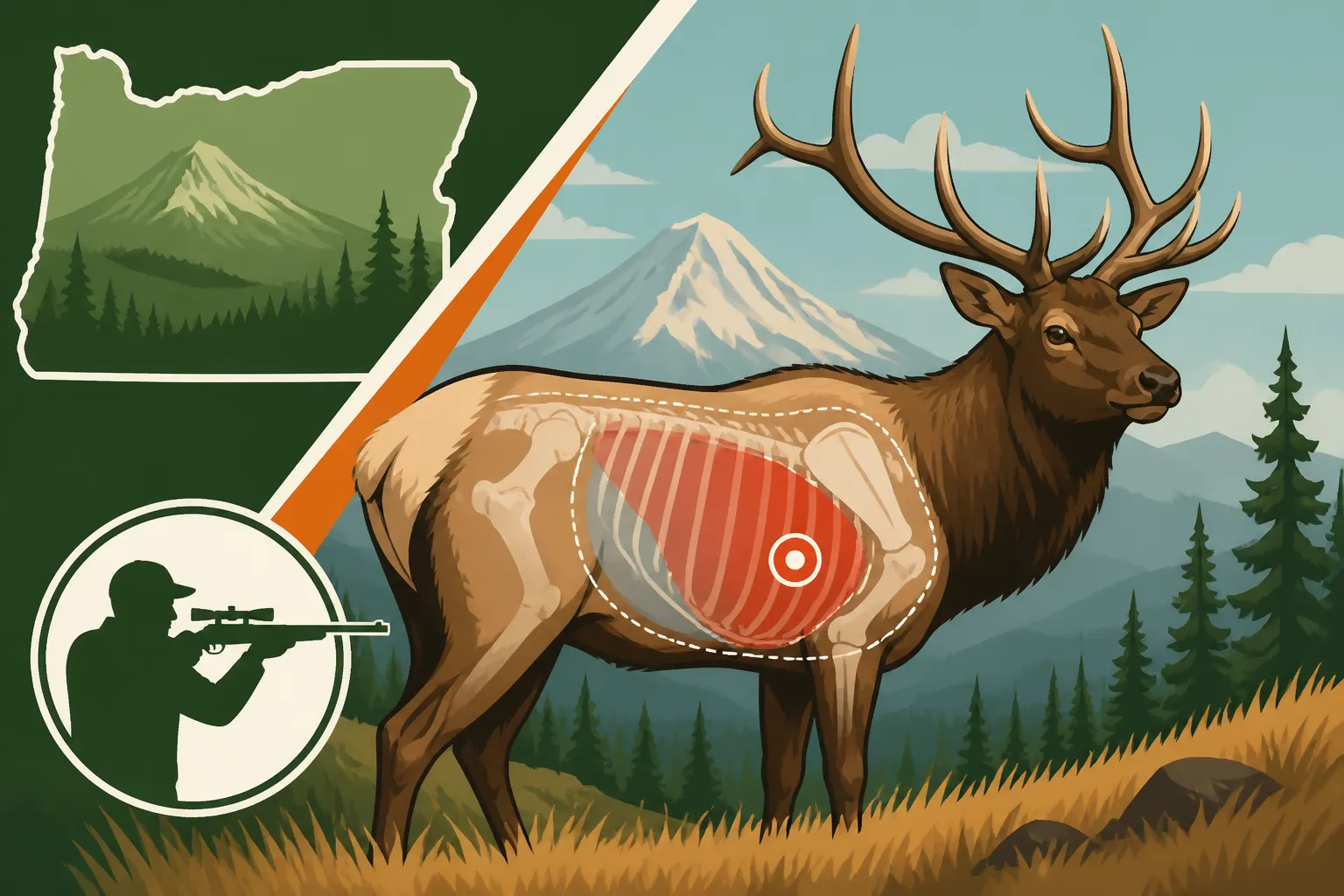
Before you even think about aiming, you need to have a rock-solid understanding of elk anatomy. Forget the hide; you need to visualize the skeletal structure and the major organs underneath.
- Shoulder Blade (Scapula): This large, flat bone protects a significant portion of the lungs. On a quartering animal, especially one quartering to you, the scapula can become an obstacle. Avoid hitting it if possible, as it can deflect your projectile or absorb too much energy.
- Heart: Located low in the chest, just above the sternum, usually behind the front leg. It's a relatively small target.
- Lungs: These are your primary target, a much larger area encompassing most of the chest cavity behind the shoulder. A double-lung shot causes rapid blood loss and typically humane dispatch.
- Liver: Sits just behind the lungs and slightly further back, protected by the ribs. A liver shot is lethal but much slower, and often results in a difficult Blood Trailing in Oregon Rainforest Understory.
- Paunch/Stomach: Located further back in the abdominal cavity. A paunch shot is almost always non-lethal in the short term, leading to suffering and a lost animal. It's the shot every ethical hunter wants to avoid.
- Spine: Runs along the top of the body. A direct spine shot can drop an animal instantly but is a very small, high-risk target if aiming for the vitals.
When a bull is quartering, imagine an invisible line running through its body, from where your projectile enters to where it would exit. Your goal is to intersect the heart and lungs along this diagonal path. Using tools like GoHunt's 3D anatomy models can be incredibly helpful for visualizing these internal structures at various angles before you ever step into the field. This kind of preparation can really build your confidence when facing that real-world moment of truth.
Optimal Shot Placement for Different Quartering Angles
Not all quartering shots are created equal. Some angles offer excellent opportunities for ethical kills, while others are best passed up. Understanding these nuances is paramount to responsible hunting.
Quartering Away: The Best Angle
A quartering away shot is often considered one of the best angles, sometimes even preferable to a pure broadside shot for rifle hunters, as it opens up the rib cage and minimizes the chance of hitting heavy bone upfront. The animal is angled away from you, exposing the ribs on the side closest to you, and offering a clear path to the vitals.
Placement: Your aim should be to enter the body cavity behind the last rib on the side closest to you, and angle the shot forward towards the opposite shoulder. Think about aiming for the "off-side" armpit. This trajectory will typically pass through both lungs and often the heart, creating devastating internal damage and a quick, ethical kill. The exit wound, if you get one, will be on the opposite side, usually through the soft tissue behind the shoulder or even the opposite shoulder itself. This angle also avoids the heavy bone of the scapula on the entry side. For archers, this shot can be fantastic, as it often presents a clean path for the arrow without hitting heavy bone that might impede penetration. However, ensure your Bow Draw Weight for Elk is sufficient for deep penetration on these large animals.
Hypothetical Scenario: You're still-hunting a timbered ridge in the McKenzie Unit, moving slowly through the Douglas fir and alder, when you spot a bull at 80 yards, feeding, slightly quartering away. His head is down, exposing his flank. Instead of aiming for the middle of the shoulder as you might on a broadside shot, you visualize that diagonal line. You aim for a point just behind the ribs on the near side, knowing your bullet will travel forward and cross both lungs, possibly catching the heart, before lodging in or exiting the off-shoulder. You squeeze the trigger, and the bull reacts exactly as you expect, stumbling and crashing within sight.
Slightly Quartering To: A Risky Proposition
This is where things get tricky, and many hunters make mistakes or take unnecessary risks. A bull that is slightly quartering towards you means his head and front shoulder on your side are angled somewhat towards you. While some of the vitals might be exposed, a large portion of them are now shielded by the heavy bone of the front leg and shoulder blade on the near side.
Placement: If you absolutely must take this shot (and often, waiting for a better angle is the wiser choice), your aim needs to be extremely precise. You're looking to slip your projectile in front of the shoulder blade on the near side, aiming directly for the vitals. This means aiming for the pocket just behind the shoulder joint, but forward enough to avoid the heavy leg bone. The trajectory would be slightly back and towards the opposite side. The challenge is that even a small error can result in hitting the shoulder blade, the humerus (upper leg bone), or the neck, none of which are ideal. For rifle hunters, a powerful caliber and good bullet construction are vital to penetrate bone if you misjudge. For archers, this shot is generally discouraged due to the high risk of hitting heavy bone and getting insufficient penetration. This is where knowing your Rifle Choice for Oregon Elk and Deer and its capabilities becomes crucial.
Hypothetical Scenario: You’re in a blind overlooking a wallow in the Starkey Unit. A decent 5×5 bull slowly approaches, but he keeps facing slightly towards you, his right shoulder slightly angled to your position. He pauses at 60 yards, chewing. You contemplate the shot. If you aim behind the shoulder, you might only hit paunch. If you aim directly at the shoulder, you risk hitting heavy bone. You realize the small "window" just in front of his shoulder where his neck meets his body, but slightly lower, could offer a path to the vitals without hitting the shoulder joint. However, the margin for error is razor-thin. If you're using a rangefinder, remember that Rangefinders in Steep Country can help, but they don't solve for challenging angles. In this situation, the best advice often is to pass and wait for the bull to turn, or to try a soft cow call to get him to shift. It's tough to let a bull walk, but it's tougher to live with a poor shot.
Steep Quartering Shots: Knowing When to Pass
When a bull is heavily quartering towards or away from you, or almost facing directly towards or away, the vital target area becomes significantly smaller and more obscured.
- Steep Quartering To: This is almost a frontal shot. The vitals are heavily protected by the brisket, sternum, and heavy shoulder bones. The only reliable shot would be a head-on chest shot, aiming for the center of the chest to penetrate the lungs and heart. This is incredibly risky due to the small target, the immense bone density, and the potential for a horrendous wound if you miss slightly. Most experienced hunters will pass on this angle unless at extremely close range and with an absolutely steady rest, which is rare in a real hunting situation.
- Steep Quartering Away (Rear-Angled): While a slight quartering away is good, a steep quartering away shot, where the animal is almost facing directly away, presents a different challenge. Your target is now the back of the lungs, and while accessible, it means the projectile will likely travel through a lot of gut before reaching the vitals. This is a very undesirable shot as it contaminates meat and can still result in a slow kill due to gut trauma before the vitals are impacted.
General Rule: If you cannot confidently visualize the bullet or arrow passing through both lungs, it's almost always best to pass on the shot. Patience is a virtue in hunting, and an ethical hunter waits for the best possible opportunity. This might mean watching a magnificent bull walk away, but it ensures you don't wound an animal unnecessarily.
Post-Shot Considerations and Tracking
Making the shot is only half the battle. What happens immediately after, and how you react, can significantly impact your success in recovering your animal.
Reacting to the Shot: What to Watch For
The bull's reaction to your shot is your first, best indicator of where you hit him. Every hunter experiences that surge of adrenaline, but forcing yourself to pay attention to the details is crucial.
- The "Mule Kick": Often, a deer or elk hit in the vitals will react with a sudden kick or jump, sometimes called a "mule kick." This is a good sign, often indicating a solid lung or heart hit.
- Running Hard, Head Down: A vital-hit animal often runs hard for a short distance, sometimes with its head down, before crashing.
- Hunching Up, Walking Slowly: This is usually a sign of a gut shot. The animal will often hunch its back, walk slowly, and may eventually lie down. This indicates a very long Following Up a Marginal Hit will be necessary.
- No Visible Reaction: Sometimes an animal might not react much, especially if they are far away or the shot was exceptionally clean and fast. Don't assume a miss; always assume a hit until proven otherwise.
After the shot, mentally mark the exact spot the animal was standing and the direction it ran. Look for any immediate signs like hair, blood, or bone fragments. Even if you think you made a perfect shot, give the animal time. For a suspected vital hit, waiting 30-60 minutes before tracking is a good rule of thumb. For a questionable hit or gut shot, waiting 4-6 hours, or even until morning if it's late in the day, is often advised to allow the animal to bed down and expire.
Blood Trailing and Recovery
Even with the best shot, an elk can travel a surprising distance, especially a big Roosevelt bull. Tracking can be challenging, particularly in the dense, wet forests of Western Oregon or the vast sagebrush of Eastern Oregon.
When tracking, look for:
- Color of Blood: Bright red, frothy blood indicates a lung hit. Dark red blood with stomach contents or green matter points to a gut shot. Very dark, almost black blood might indicate a liver hit or muscle tissue.
- Amount of Blood: A heavy blood trail usually means a good hit. Sparse blood can indicate a non-vital hit or an exit wound that's sealed up.
- Tracks and Disturbance: Pay attention to disturbed leaves, broken branches, or overturned rocks that might indicate the animal's path.
- Sounds: Listen intently for any crashing or labored breathing.
GoHunt offers mapping tools that can be invaluable in these situations. You can mark your shot location, the last known position of the animal, and the direction of travel, making it easier to coordinate with hunting partners or return to a starting point. This kind of technology really enhances your chances of a successful recovery, especially in unfamiliar terrain. Don't be afraid to slow down and meticulously search. If the blood trail peters out, grid search the area in the direction the animal was traveling. In areas like the Coast Range, where the undergrowth is thick, knowing techniques for Blood Trailing in Oregon Rainforest Understory becomes an absolute necessity.
The Gutless Method and Rapid Processing
Once you've located your bull, the clock starts ticking, especially if you're hunting in warmer early-season weather. Ethical recovery means getting the meat cooled down as quickly as possible. The "gutless method" is a fantastic technique for field dressing a large animal like an elk, especially if you're alone or in steep country. Instead of completely opening the body cavity, you quarter the animal and remove the meat with the hide still on the animal. This method helps in Getting a Carcass Off the Ground Fast and keeps the meat cleaner.
It's physically demanding work, so ensure you've done your Physical Training for an Oregon Elk Hunt! After you've quartered the animal, carefully place the meat in game bags and get it off the ground. For those long pack-outs, techniques like the Gutless Method on a Bull Elk can significantly reduce the weight and bulk of your load. As you begin the journey out, remember to keep the meat cool. Even during the drive home from Eastern Oregon, properly cooling meat in a truck bed with ample ice is essential to prevent spoilage. Once you're out of the field and the meat is cooling, don't forget your legal obligation for Oregon Mandatory Harvest Reporting and the $25 Penalty.
Shot Placement on a Quartering Bull: Quick Reference
This table provides a concise overview of how to approach different quartering shot angles on an elk.
| Angle of Bull to Hunter | Optimal Entry Point | Aim/Exit Trajectory | Best Practice | Risk Factors |
|---|---|---|---|---|
| Slightly Quartering Away | Behind front leg, just behind ribs on near side (closest to you). | Angle shot forward towards opposite (off-side) shoulder/armpit. | High success, good for rifle and archery. | Minimal, if target is properly visualized. |
| Slightly Quartering To | In front of shoulder, into the "pocket" where neck meets body, low. | Angle shot back and towards opposite (off-side) flank. | High precision required, often best to pass. | High risk of hitting heavy shoulder bone, leg bone, or missing vitals. |
| Steep Quartering Away | Behind last rib on near side, further back into vitals. | Angle shot forward to middle of chest. | Ethical if vitals are clear, but risks gut contamination. | Projectile may travel through gut, contaminating meat. |
| Steep Quartering To (Near Frontal) | Center of chest, aiming for center mass. | Straight back, through brisket to vitals. | Only at very close range, with extreme precision. | Extremely high risk of non-lethal wound; small vital window, heavy bone. |
| Broadside | Directly behind front leg, one-third up from belly line. | Straight through, hitting both lungs. | Ideal shot for all weapons, largest vital target. | Minor, if animal is calm and range is appropriate. |
Disclaimer: Hunting involves inherent risks. This guide provides general information on shot placement. Always prioritize safety, understand and follow all local hunting regulations, and make ethical decisions in the field. The information here is not a substitute for proper hunter education, extensive practice, and real-world experience. Every shot is unique, and personal judgment should always be exercised.