Oregon Muzzleloader Equipment Rules
Navigating the specifics of muzzleloader hunting in Oregon can often feel like trying to solve a complex puzzle. The rules and regulations aren't always crystal clear, and making sure your gear is compliant with Oregon Department of Fish and Wildlife (ODFW) guidelines can be a real headache. Many of us appreciate the challenge and tradition of hunting with a muzzleloader, but figuring out the nuances of ignition systems, legal projectiles, and approved sights sometimes feels like more work than the hunt itself. This guide aims to demystify Oregon's muzzleloader equipment rules, offering a thorough breakdown so you can hit the woods with confidence and compliance.
Navigating the Specifics of Oregon Muzzleloader Regulations
It’s easy to get frustrated when diving into the dense language of hunting regulations. You’ve invested in your muzzleloader, practiced at the range, and now you just want to go hunt. But before you step afield, understanding the why behind Oregon’s specific muzzleloader rules can make them a bit easier to swallow. These regulations aren't just arbitrary roadblocks; they're designed to maintain the "spirit of the hunt," ensuring fair chase, promoting traditional skills, and offering unique hunting opportunities that differentiate muzzleloader seasons from modern firearm seasons.
Why the Rules Exist and What They Aim to Achieve
At its core, muzzleloader hunting, especially in designated "muzzleloader-only" seasons, is about embracing a more primitive and challenging approach. The rules are structured to level the playing field, making the hunt more dependent on your stalking skills, patience, and marksmanship rather than the technological advantages of modern firearms. This emphasis on traditional hunting fosters a deeper connection to the history of hunting and provides a distinct experience for those who choose it. It’s an opportunity to slow down, get closer to the game, and truly earn your harvest.
These regulations also serve a crucial management purpose by offering additional hunting opportunities without overly impacting big game populations. By creating seasons where equipment is restricted, ODFW can manage hunter pressure and success rates. For example, the limited range and slower reloading time of a legal muzzleloader naturally reduce harvest efficiency compared to a high-powered rifle, which helps balance conservation goals with hunter opportunity. It also prevents the perceived unfair advantage that modern optical or projectile technologies might offer in a season specifically designed for traditional weapons.
Moreover, these rules are about safety and ethical hunting. By setting minimum caliber requirements, for instance, ODFW ensures that hunters are using appropriate firearms for big game, minimizing the risk of wounding animals. The restrictions on certain modern components aim to preserve the primitive aspect that defines the season, creating a distinct experience separate from general rifle or archery seasons. It's about preserving a specific tradition and ensuring everyone participating in a muzzleloader-only hunt is operating under similar, challenging conditions.
Key Equipment Definitions and What They Mean for You
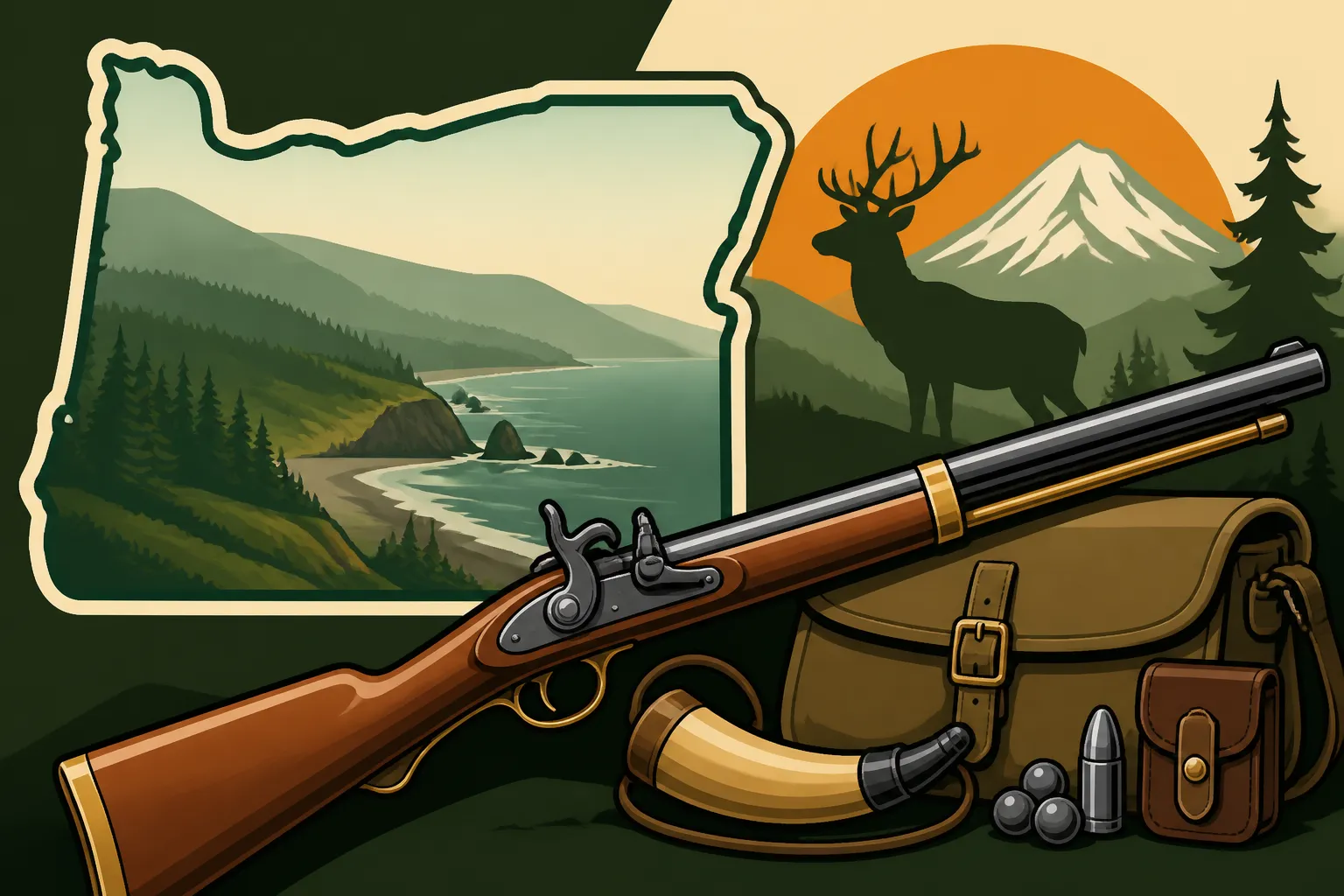
Before we dive into the nitty-gritty of specific components, it's essential to understand the basic definitions Oregon uses for muzzleloading equipment. First, a "muzzleloader" is specifically defined as a firearm that is loaded from the muzzle, meaning the bullet and powder are loaded down the barrel from the front. This immediately distinguishes it from any breech-loading firearm, which loads from the rear of the barrel. So, those modern "break-action" rifles that look like muzzleloaders but load a cartridge from the breech are absolutely not legal muzzleloaders in Oregon.
Next, consider caliber. Oregon has clear minimums for big game: your muzzleloader must be at least .40 caliber for deer and .50 caliber for elk. This isn’t just a suggestion; it’s a hard rule designed for humane and ethical harvesting. Using an undersized caliber means less kinetic energy transferred to the animal, increasing the risk of a non-lethal hit and a prolonged, difficult blood trail. Always confirm your muzzleloader meets these minimums, and honestly, for elk, many experienced hunters prefer something a bit larger than the bare minimum, like a .54 or even a .58 caliber for better knockdown power.
When it comes to ignition systems, Oregon identifies percussion caps, musket caps, and flintlock mechanisms as legal. The big distinction, which causes a lot of confusion, comes with 209 primers. While 209 primers are common in modern inline muzzleloaders, Oregon regulations state that they are only lawful in muzzleloader hunts "unless the primer is exposed to the elements." This "bare primer" rule is critical and will be detailed further, but it’s a primary differentiator for what constitutes a legal muzzleloader in dedicated seasons. For projectiles, the rule is simple: a single projectile. This means no buckshot or birdshot for big game. We’ll delve into the specifics of round balls, conical bullets, and sabots shortly, as sabots, in particular, have very specific limitations.
Essential Muzzleloader Components and Permitted Modifications
Now that we've covered the basics, let's zero in on the specific components of your muzzleloader and what is, or isn't, permitted in Oregon. This is where many hunters make honest mistakes, often due to variations in regulations across different states or different hunting seasons within Oregon itself. Paying close attention to these details will save you a lot of grief and ensure your hunt is fully legitimate.
Ignition Systems: Percussion Caps, Flints, and 209 Primers
The type of ignition system your muzzleloader uses is one of the most critical aspects of Oregon's regulations for dedicated muzzleloader seasons. Traditional percussion caps (like No. 10, No. 11, or musket caps) are always lawful, as are flintlock mechanisms. These systems truly embody the "primitive weapon" ethos, requiring more care in wet weather and offering a more traditional firing sequence. Many hunters choose these for their authenticity and the challenge they present.
However, the 209 primer is where most modern inline muzzleloaders run into trouble in Oregon's muzzleloader-only seasons. While 209 primers offer superior ignition reliability, especially in damp conditions, Oregon's regulation is quite specific: 209 primers are only lawful if they are "exposed to the elements." This means the primer must be visible and directly exposed to the environment on the nipple or breech plug, much like a traditional percussion cap. Many contemporary inline muzzleloaders fully enclose the 209 primer within the breech mechanism for weather protection and enhanced reliability, and these are generally not considered legal for muzzleloader-only hunts.
This "bare primer" rule is designed to ensure that muzzleloaders used in these special seasons retain a degree of primitive challenge, making them more susceptible to moisture and requiring more attentiveness from the hunter. If your modern inline muzzleloader completely encloses the 209 primer, you likely cannot use it for Oregon's designated muzzleloader-only hunts. You’ll need a setup where the primer is externally visible and engaged, or switch to a traditional percussion or flintlock system. It’s a detail many hunters overlook, but it’s absolutely crucial for compliance. When reviewing unit rules on platforms like GoHunt, double-check the specific ignition requirements for the hunt type you're targeting. For advice on keeping these systems firing in damp conditions, check out our guide on Oregon Muzzleloader Loads and Wet-Weather Ignition.
Projectiles: Conical Bullets, Round Balls, and Sabots
Another area ripe for confusion is the type of projectile allowed. Oregon requires a single projectile for big game, meaning no shotgun-like loads. Traditional round balls, often patched with a lubricated cloth, are always a lawful choice for muzzleloader hunting. They are accurate at closer ranges and perfectly suitable for deer and elk, especially when combined with sufficient caliber and powder. Conical bullets, which are modern, solid lead or copper projectiles specifically designed for muzzleloaders, are also generally lawful and offer improved ballistic performance and terminal energy compared to round balls.
The real sticking point for many hunters, however, comes with sabots. A sabot is a plastic sleeve that allows a smaller-than-bore-diameter bullet (often a .45 or .40 caliber bullet in a .50 caliber barrel) to be fired accurately from a muzzleloader. These projectiles dramatically improve accuracy and range for many muzzleloaders, making them perform much closer to modern rifles. However, Oregon regulations explicitly restrict their use: sabots are only lawful when taking deer or elk during seasons restricted to muzzleloaders in areas west of Highway 97.
This is a critical geographical and seasonal distinction. If you are hunting east of Highway 97, or if you are hunting during a general rifle season with your muzzleloader (where scopes might be allowed), sabots are generally not permitted. This rule significantly impacts projectile choice for many hunters in Eastern Oregon and those who choose to use a muzzleloader during general seasons. It reinforces the "primitive" nature of muzzleloader-only hunts in the western part of the state, while elsewhere, hunters are expected to use full-bore projectiles (round balls or conicals) that match the barrel diameter. This limitation means you need to meticulously research and test alternative projectiles to ensure accuracy and ethical performance for your hunt.
Sights and Optics: Open Sights, Peeps, and Magnification
The rules concerning sights and optics are perhaps the most straightforward but also the most impactful on your hunting style and effective range. For muzzleloader-only seasons in Oregon, the regulations are crystal clear: only open sights, peep sights, or fiber optic sights are allowed. This explicitly prohibits the use of telescopic sights, scopes, red dot sights, or any other magnifying optical accessories. This is a fundamental aspect of maintaining the "primitive weapon" challenge these seasons are designed to offer.
The absence of magnification means hunters must develop superior marksmanship skills and are forced to get much closer to their quarry for an ethical shot. While modern scopes can extend a rifle's effective range to hundreds of yards, a muzzleloader with open or peep sights is typically most effective within 75-125 yards, depending on the shooter's skill and practice. This limitation inherently encourages more active stalking, careful wind assessment, and a deeper understanding of animal behavior to close the distance. It makes every successful shot a testament to traditional hunting prowess. For tips on developing your accuracy, check out our guide on Sighting In Before the Season Opens.
If, however, you choose to hunt with your muzzleloader during a general rifle season, the sight restrictions typically do not apply. In this scenario, you can use a magnified scope on your muzzleloader, allowing it to perform more like a modern rifle in terms of target acquisition and accuracy at range. The trade-off is that you're competing directly with hunters using powerful modern rifles, and the specific "primitive weapon" advantage of dedicated muzzleloader seasons is gone. The intent behind the scope restriction in muzzleloader-only seasons is purely to preserve that unique, skill-based hunting experience. When facing the steep and varied terrain Oregon offers, remember that practicing with your open sights for different distances and angles is paramount, as discussed in Practicing Steep-Angle Shots.
General Season Versus Controlled Hunt Specifics
Understanding the distinction between Oregon's general hunting seasons and its controlled hunts is absolutely vital for any hunter, but especially so for muzzleloader enthusiasts. The equipment rules we've discussed often depend heavily on which type of season you're participating in. What's legal in one might be a violation in another, and misinterpreting this can quickly lead to trouble.
Muzzleloader Only Controlled Hunts: The Strictest Rules
Oregon offers specific controlled hunts designated for muzzleloaders, and these are where the strictest equipment rules apply. These hunts are highly sought after because they offer unique opportunities, often in units or during times of the year with less overall hunter pressure compared to general rifle seasons. This is where the "bare primer" rule for 209 primers is rigidly enforced, and where the sabot restrictions (especially east of Highway 97) and the absolute prohibition of magnified optics come into play. These hunts are truly designed for the traditionalist, rewarding meticulous preparation and an intimate understanding of your weapon's limitations and your own skills.
Participating in these hunts requires applying through the Oregon Controlled Hunt Draw Explained process, often requiring preference points and careful unit selection. Resources like GoHunt can be invaluable for analyzing draw odds and understanding unit characteristics to make informed decisions for your application. The strict equipment rules mean that everyone in the field during these specific seasons is operating under the same set of challenges, fostering a unique sense of camaraderie among hunters who embrace this traditional approach. It truly levels the playing field and ensures that success comes from skill and effort, not technological advantage.
General Season Muzzleloader Hunting: When More Flexibility Applies
While many hunters actively seek out the muzzleloader-only controlled hunts, it's also entirely lawful to use a muzzleloader during Oregon's general rifle seasons. If you choose this path, the equipment rules for your muzzleloader are generally much more flexible. During a general rifle season, you can typically use an inline muzzleloader with an enclosed 209 primer, sabots statewide (not just west of Highway 97), and even a magnified scope or other optic on your firearm. Essentially, your muzzleloader is treated much like any other rifle, albeit with the inherent disadvantage of slower reloading times.
This flexibility allows hunters who simply prefer muzzleloaders, or who don't draw a controlled tag, to still enjoy their preferred weapon system without being as constrained by the "primitive" rules. However, the trade-off is significant: you'll be hunting alongside rifle hunters who benefit from much greater range, accuracy, and quick follow-up shots. The advantage of reduced hunter density that comes with muzzleloader-only seasons is gone. It's a personal choice whether to embrace the additional challenge and stricter rules of a muzzleloader-only hunt or to enjoy the expanded equipment options during a general season. You might even consider it a good stepping stone to fully traditional muzzleloading. For comparison, you can look at the typical offerings during Oregon Roosevelt Elk Rifle Seasons in November to see what kind of competition you'd face.
The Importance of the Annual Regulation Booklet
Let me be absolutely clear: the most important piece of equipment you can carry is the current year's Oregon Big Game Regulations booklet. Regulations change. Every year. What was legal last season might not be this season, and relying on old information, internet forums, or even well-meaning friends can lead to costly mistakes. ODFW meticulously publishes a new set of regulations annually, typically available online and at license vendors. It is your legal responsibility to know and understand these rules.
Make it a ritual: every year, as soon as the new regulations are released (typically around late spring; check the Oregon Regulation Pamphlet Release Date), download or pick up a copy. Read it cover to cover, paying particular attention to the sections on big game, specific weapon requirements, and any unit-specific rules for your chosen hunting area. While online resources and apps like GoHunt can help you research hunt units and odds, the official ODFW regulation booklet is the final authority. Misinterpreting a rule, missing a deadline for applying for your Oregon Annual Hunting Licence Cost, or being unaware of a specific restriction can result in fines, loss of hunting privileges, or worse, an unethical hunt. Always cross-reference any information with the official ODFW documentation to ensure you're fully compliant. Remember to also look at Oregon's Wildlife Management Units and New Hunt Areas for any boundary changes.
Practical Considerations and Common Mistakes to Avoid
Beyond simply knowing the rules, applying them practically in the challenging environments Oregon offers is key. Many common mistakes stem not from intentional disregard, but from a lack of understanding of how these rules translate to real-world hunting scenarios. By planning ahead and understanding the nuances, you can avoid frustrating blunders and ensure a smooth, enjoyable hunt.
Keeping Your Muzzleloader Dry and Functional in Oregon Weather
Oregon is famous for its abundant rainfall, especially in the Coast Range and Cascades. Water and black powder are sworn enemies, and a single drop in the wrong place can ruin your shot, leading to a misfire or a hangfire, which can be disastrous during a critical moment. Protecting your muzzleloader from moisture is paramount. Common solutions include taping the muzzle with electrical tape (always remove it before shooting!), using a small balloon over the bore, or specialized muzzle caps. These prevent rain or snow from entering the barrel and fouling the powder charge.
Equally important is protecting the ignition system. Whether you're using percussion caps or a flintlock, ensure they are kept dry until ready to prime. Carry spare caps or flints in a waterproof container. For the entire lock and breech area, consider a waterproof cover or simply tucking the firearm carefully under your Rain Gear That Actually Stays Dry while still allowing for quick deployment. Corrosion is another major concern. Black powder and its substitutes are highly corrosive, so even if you don't fire your muzzleloader, a thorough cleaning immediately after each hunt is crucial to prevent rust and maintain its functionality. Remember our article on Oregon Muzzleloader Loads and Wet-Weather Ignition for more tips on this.
Understanding Load Requirements and Ballistics for Oregon Game
Oregon’s regulations specify that only black powder or an approved equivalent (like Pyrodex or Triple Seven) can be used in muzzleloaders. Smokeless powder is strictly prohibited due to the significant safety risks it poses in muzzleloaders and its departure from the primitive weapon intent. When choosing your powder charge, always adhere to your muzzleloader's manufacturer's recommendations. Overloading can be dangerous, while underloading can result in insufficient power for an ethical kill.
Matching your projectile and powder charge to the game you're pursuing is also critical for ethical hunting. For deer, a .40 caliber projectile is the minimum, but a .50 caliber often offers a more forgiving margin of error. For elk, a .50 caliber is the minimum, but many seasoned hunters prefer heavier conical bullets and robust powder charges for deeper penetration and greater stopping power on such a large, tough animal. Understand that muzzleloaders have significantly different ballistic characteristics than modern rifles; their projectiles drop faster and lose energy quicker. Your ethical shot range will likely be limited to 100-150 yards, sometimes less with open sights. This mandates careful stalking to get within reliable range, emphasizing why understanding Shot Placement on a Bull at Close Range is so important.
Pre-Season Prep and Range Practice with Legal Equipment
The worst time to discover your muzzleloader isn't legal, or that your load isn't accurate, is on opening morning with a trophy animal in your sights. Pre-season preparation and extensive range practice with your exact legal setup are absolutely non-negotiable. This means shooting with the same powder, the same projectile, and the same sights you plan to use in the field. Don't practice with sabots and a scope if your hunt only allows conicals and open sights.
Practice shooting from various field positions – offhand, kneeling, prone – not just from a comfortable bench. Get a feel for the rifle's recoil and how to manage the smoke plume that will temporarily obscure your target. Become proficient at the loading process under pressure; can you reload quickly and smoothly for a potential follow-up shot, even with cold fingers or in dim light? Knowing your precise point of impact at 50, 75, 100, and 125 yards is critical. Muzzleloader hunting often demands more physical effort, requiring you to close the distance on game. Combined with scouting areas using tools like E-Scouting Oregon Units With Satellite Imagery and understanding access from Reading a Travel Management Area Map Before You Drive, thorough preparation ensures your skills and equipment are perfectly matched for the challenge of hunting in Oregon. It’s not just about the rules; it’s about respect for the animal and the tradition. Finally, understand what kind of game you'll be pursuing, such as the challenges facing Oregon Mule Deer and the Herd Range Decline.
Muzzleloader Equipment Rules Comparison Table
To help clarify the differences between hunting with a muzzleloader in a dedicated controlled hunt versus using one during a general rifle season, here's a quick comparison:
| Feature | Muzzleloader-Only Controlled Hunts (Primary Rules) | General Rifle Seasons (Using a Muzzleloader) |
|---|---|---|
| Ignition System | Exposed percussion cap, musket cap, or flintlock ONLY. 209 primers only if exposed to elements. | Any legal ignition system, including fully enclosed 209 primers. |
| Projectiles | Single projectile. Sabots are only legal for deer/elk west of Highway 97. Conical bullets & round balls are generally lawful. | Single projectile. Sabots are generally lawful statewide. Conical bullets & round balls are generally lawful. |
| Sights | Open sights, peep sights, or fiber optic sights ONLY. NO telescopic or magnified optics. | Any legal sight, including telescopic and magnified optics. |
| Caliber Minimum | .40 for deer, .50 for elk. | .40 for deer, .50 for elk. |
| Season Purpose | Preserves a primitive, challenging hunting experience with limited equipment. | Offers an alternative weapon choice during standard rifle seasons. |
Disclaimer
The information provided in this guide is for general informational purposes only and is not a substitute for the official Oregon Department of Fish and Wildlife (ODFW) hunting regulations. Hunting laws and regulations can change annually. It is the responsibility of every hunter to consult and comply with the most current ODFW Big Game Regulations prior to engaging in any hunting activity.