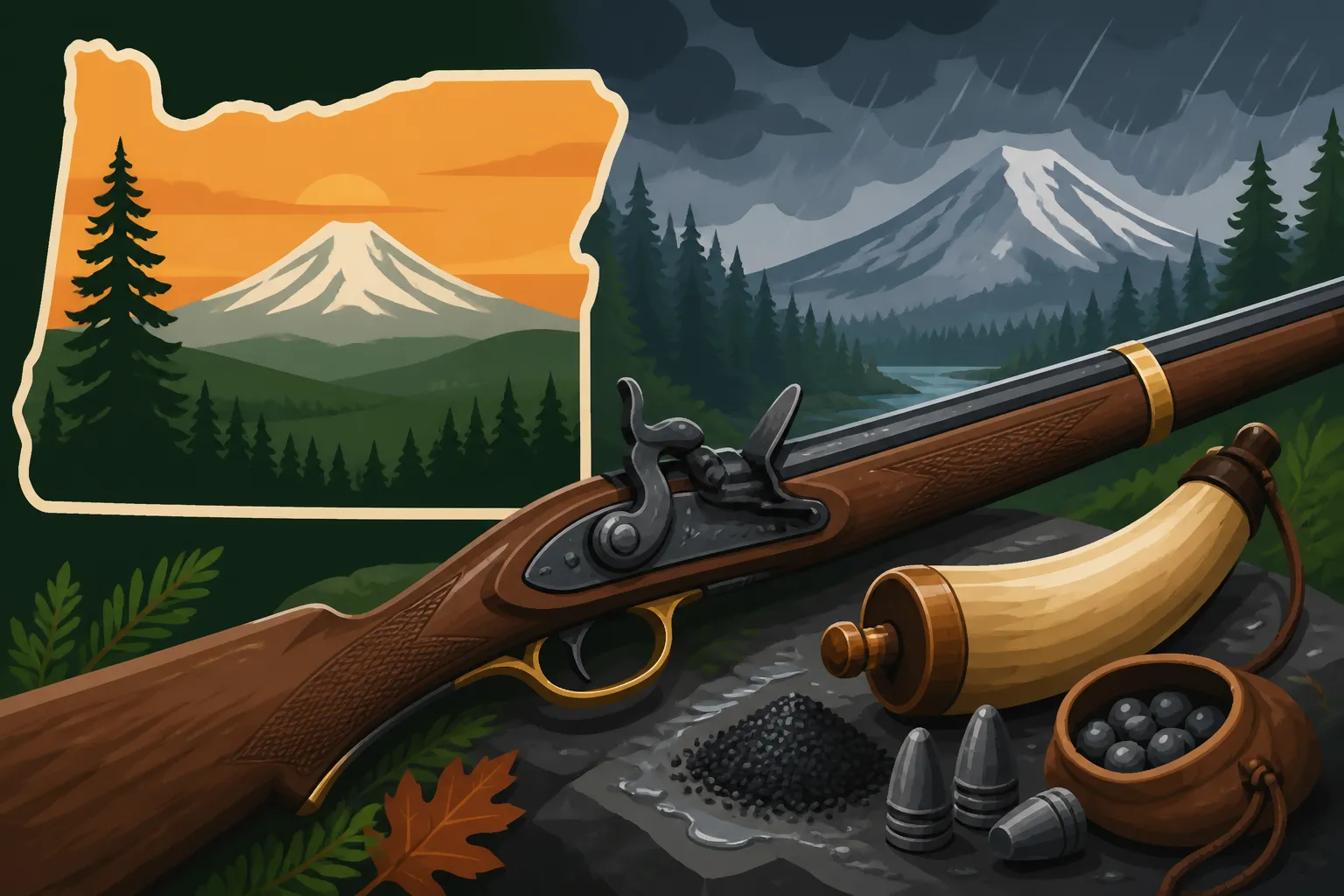
Muzzleloader Loads and Wet-Weather Ignition
There’s almost nothing more disheartening on an Oregon hunt than finally getting a shot opportunity on a magnificent bull or a nice buck, only to hear a sickening click instead of a resounding boom from your muzzleloader. The dense coastal fog, the relentless Cascade drizzle, or an unexpected high-desert downpour can absolutely wreak havoc on your ignition system, turning a perfectly placed shot into a frustrating lost chance. This guide aims to help you understand the nuances of muzzleloader loads and, critically, how to ensure reliable ignition even when Oregon’s famously wet weather tries its best to foil your hunt.
Understanding Oregon's Muzzleloader Regulations and Seasons
Before we even get into the nitty-gritty of powders and projectiles, it's absolutely vital to be intimately familiar with Oregon's specific regulations for muzzleloader hunting. The rules can be pretty particular, and they're designed to maintain the primitive weapons experience, which means you can't just slap any modern tech onto your front-stuffer and call it good. Missing a detail here can not only ruin your hunt but also land you in hot water with a game warden.
Key Equipment Rules for Oregon Muzzleloader Hunters
Oregon's Department of Fish and Wildlife (ODFW) has clear guidelines on what constitutes a legal muzzleloader for hunting big game. Generally, we're talking about traditional-style muzzleloaders that are loaded from the muzzle, can only be charged with a single projectile and a single charge of powder, and use an exposed percussion cap or flintlock ignition. This means no 209 shotshell primers with enclosed breeches unless specifically allowed for certain hunts, and certainly no sabots unless you're in an "any legal weapon" season or a specific controlled hunt allows it. You'll want to read the most current Oregon Hunting Regulations for the specific year you're hunting to ensure compliance, as rules can occasionally be tweaked. For instance, some regulations may dictate minimum bullet diameter, usually .40 caliber or larger for deer and .50 caliber or larger for elk, and specify that projectiles must be unjacketed lead or a lead alloy. This focus on traditional equipment directly impacts your choices for both powder and projectile, pushing you towards options that might be more susceptible to moisture without proper precautions. Understanding these rules is the first critical step in ensuring your equipment is legal and ready for the field. If you're considering a muzzleloader hunt, a deep dive into Oregon Muzzleloader Equipment Rules is an absolute must.
Muzzleloader Season Dates and Unit Considerations
Oregon offers specific muzzleloader seasons, often as controlled hunts, meaning you'll need to apply for a tag in the draw. These seasons typically occur at times when weather can be highly unpredictable – think crisp, potentially rainy or snowy fall days. Knowing your specific hunt unit and its typical weather patterns during your chosen season is paramount. For example, a muzzleloader hunt in the Coast Range during late October will almost certainly involve rain and heavy humidity, demanding a completely different level of weatherproofing than a high-desert hunt in early November which might be drier but equally susceptible to sudden snowstorms. Using resources like GoHunt can be incredibly beneficial here, as they often provide detailed weather histories and unit breakdowns that can help you anticipate conditions. The ODFW website also offers detailed season dates and unit boundaries. Remember, these controlled hunts are often limited opportunity, so securing a tag for Oregon Muzzleloader Controlled Hunts means you’ve already won a small victory; don't let the weather snatch away your hard-earned chance. Early season scouting, ideally with tools like satellite imagery, can also inform you of the terrain and vegetation, helping you anticipate where moisture might linger and how best to navigate it.
Choosing the Right Muzzleloader Load for Oregon's Conditions
The heart of your muzzleloader's performance lies in its load: the projectile, the powder, and the priming system. Each component plays a vital role, and making the right choices, particularly for Oregon's frequently damp climate, can be the difference between success and a frustrating misfire.
Projectile Types: Sabots vs. Conicals
When it comes to projectiles for your muzzleloader, you're primarily looking at two main categories: sabots and conical bullets. Sabots, which encase a smaller, often jacketed bullet in a plastic cup, are known for their ballistic efficiency and accuracy at longer ranges. They allow you to shoot modern rifle bullets from a muzzleloader, offering superior expansion and flatter trajectories. However, Oregon's muzzleloader regulations often restrict the use of sabots to "any legal weapon" seasons or specific controlled hunts, emphasizing the use of traditional lead or lead alloy projectiles. This usually means you'll be leaning towards conicals for dedicated muzzleloader seasons. Conical bullets are solid lead or lead alloy projectiles that load directly down the bore, often engaging the rifling directly. They tend to be heavier, hit harder at closer ranges, and are generally simpler in design. For the typical dark timber or brushy country often encountered during Oregon's muzzleloader seasons, where shots are generally under 100 yards, a heavy conical can be incredibly effective. The sheer mass of a good conical like a PowerBelt or a traditional Minnie ball-style bullet can punch through brush and deliver devastating energy to a Roosevelt elk. While sabots might offer better long-range performance in open country, the critical factor for Oregon muzzleloader hunters is legality and reliable performance in the dense, wet environments where most opportunities arise. For a deeper look at the pros and cons, check out Sabot Versus Conical Bullets.
Powder Choices: Black Powder vs. Substitutes
The type of powder you choose is arguably the most critical factor for reliable ignition, especially in adverse weather. Historically, black powder was the only option, and it's still widely used. True black powder (like Goex, Swiss, or Schuetzen) ignites easily, burns quickly, and is relatively forgiving with varying loads. However, it's also hydroscopic, meaning it readily absorbs moisture from the air, which can lead to misfires if not meticulously protected. Cleaning up after true black powder is also a more involved process due to its corrosive nature.
Then there are black powder substitutes, which have become incredibly popular due to their easier cleanup and less corrosive properties. Brands like Pyrodex, Hodgdon Triple Seven, and Alliant Black MZ are common. These substitutes are generally less hydroscopic than true black powder, offering a slight advantage in damp conditions. However, they can be a bit trickier to ignite, often requiring a hotter spark or a stronger primer. For instance, Triple Seven can sometimes be prone to "crud rings" in the barrel, which can make subsequent loading difficult without frequent swabbing. Pyrodex, while excellent, can still suffer from moisture absorption. When hunting in Oregon, particularly in the wet western regions or during a snowy Eastern Oregon hunt, protecting your powder from moisture is paramount regardless of which type you choose. Many experienced hunters will pre-measure powder charges into small, waterproof vials to ensure consistency and dryness. This preparation is non-negotiable for a reliable shot when it counts.
Here's a quick comparison of common powder types:
| Powder Type | Pros | Cons | Wet Weather Performance |
|---|---|---|---|
| True Black Powder | Easy ignition, consistent performance | Highly hydroscopic, corrosive, messy cleanup | Very sensitive to moisture, needs extreme protection |
| Pyrodex (P, RS, Select) | Easier cleanup, less corrosive, good power | Still somewhat hydroscopic, can be harder to ignite than true BP | Better than true BP, but still needs care |
| Hodgdon Triple Seven | High energy, less residue, easy cleanup | Can form "crud ring", less forgiving ignition, sensitive to compression | Good, but ignition is crucial for reliability |
| Alliant Black MZ | Non-corrosive, easy cleanup, consistent | Can be less powerful than others, potentially harder to find | Generally good, but consistent priming helps |
Priming Systems and Their Role in Reliability
The priming system is the spark plug of your muzzleloader, and its reliability is absolutely crucial for igniting your powder charge, especially when conditions are less than ideal. In Oregon, most muzzleloaders approved for primitive weapons seasons will use either percussion caps (#11 or musket caps) or flintlock mechanisms.
Percussion caps are small copper or brass cups containing a tiny charge of impact-sensitive explosive. When the hammer strikes the cap, it detonates, sending a flash of hot gas into the powder charge through the nipple. Musket caps are generally larger and produce a hotter, more robust spark than #11 caps, making them a preferred choice for many hunters seeking maximum reliability, especially with less ignitable powder substitutes or in cold, wet weather. The challenge with percussion caps is protecting them from moisture. A damp cap simply won't fire. Many hunters will apply a thin layer of waterproof grease or nail polish over the cap once it's seated on the nipple, creating a barrier against rain and humidity.
Flintlock mechanisms rely on a flint striking a frizzen to create sparks, which then fall into a pan of finely ground black powder (the prime) that ignites and, in turn, flashes through a touch hole to the main charge. Flintlocks are notoriously sensitive to moisture. A wet flint, a damp frizzen, or wet prime in the pan can all lead to failure. Flintlock hunters in Oregon often go to extreme lengths to protect their lockwork, using leather covers or even small pieces of waterproof tape over the pan, removing them only at the moment of the shot. While flintlocks offer a unique challenge and aesthetic, their inherent vulnerability to moisture makes them a less common choice for those prioritizing absolute reliability in Oregon's often-soggy hunting grounds. Regardless of your system, the goal is a consistent, hot spark that can overcome any marginal dampness in your powder charge. Using high-quality primers and ensuring they are stored in waterproof containers until needed is a foundational step.
Battling the Rain: Wet-Weather Ignition Strategies
Oregon weather is beautiful, but it's also frequently damp, wet, and outright rainy, especially during prime hunting seasons. Muzzleloaders, by their very design, are more susceptible to moisture issues than modern cartridge firearms. This means proactive strategies are essential to ensure your muzzleloader fires when you need it most.
Protecting Your Muzzleloader from Moisture
This is where the rubber meets the road. Simply carrying your muzzleloader in the rain is a recipe for a misfire. You need a multi-layered approach to moisture protection. First and foremost, a good gun case or a scabbard with a flap that covers the action is critical when transporting your rifle or moving through heavy brush. Once you're actively hunting, however, a more dynamic approach is necessary. Many hunters swear by a simple system: a quality gun sock or a specialized muzzleloader cover that fully encases the lock and nipple area, often secured with elastic or Velcro. This keeps direct rain off the critical ignition components. Even a heavy-duty contractor bag or a large freezer bag can be cinched around the action in a pinch. The muzzle also needs protection. A piece of electrical tape, a finger cot, or a dedicated muzzle cover will prevent rain and debris from entering the bore, which can cause a serious obstruction if the water reaches the powder.
Beyond external covers, consider the internal protection. Some hunters will put a small amount of waterproof grease, like bore butter or even petroleum jelly, around the base of the nipple where it meets the barrel, or around the percussion cap itself once it's seated. This creates a seal that prevents water from seeping into the breech or under the cap. Don't forget your ramrod; keeping it clean and dry is also important to prevent moisture from being pushed down the bore during loading. When sitting in a stand or glassing from a ridge, try to keep your muzzleloader pointed down, sheltered under a tree, or even tucked inside your rain gear when possible. The constant drip from branches can be just as insidious as direct rainfall. Think of it like Keeping a Bowstring Dry in Coastal Rain – it's all about diligent, ongoing protection of critical components.
Reliable Ignition in Damp Conditions
Even with the best protection, some moisture might find its way to your priming system or powder. This is where your choice of components and your technique come into play. As mentioned, musket caps often provide a hotter spark than #11 caps, which can be beneficial in damp conditions or with harder-to-ignite powder substitutes like Triple Seven. Carrying extra, bone-dry primers in a completely waterproof container (think a small, sealed pill bottle or a dedicated primer caddy with an O-ring seal) is non-negotiable. If you suspect your current cap is compromised, swiftly and safely replace it.
For flintlock users, having an extra, freshly sharpened flint and keeping your prime dry is paramount. Many flintlock hunters will use a small, sealed vial for their prime, pouring a fresh charge into the pan just before taking a shot, and immediately covering the pan with a leather frizzen cover. After a long period in the rain, or if you've been particularly exposed, it's wise to consider changing your percussion cap or refreshing your prime, even if you don't think it's wet. A fresh, hot spark is your best insurance. When preparing your loads, ensure your powder is packed firmly and consistently against the projectile. Air gaps can lead to inconsistent ignition or even dangerous pressure spikes. If you're going to be out in seriously wet weather for an extended period, carrying a small, waterproof tinder box with some easily ignitable material (like cotton balls soaked in Vaseline) can be a literal lifesaver for starting a small fire to dry out a compromised gun if necessary (within fire restrictions, of course).
Field Care and Maintenance in Wet Environments
Hunting in Oregon's often-wet environments means your muzzleloader will inevitably get damp, if not soaked. Proper field care isn't just about performance; it's about protecting your investment from rust and corrosion. Every evening, or whenever you get a break from the weather, take a moment to wipe down your muzzleloader with a dry cloth, paying special attention to the barrel, the lock, and any exposed metal parts. A silicone-treated cloth can add a layer of protection. If you've been in truly heavy rain, consider removing your percussion cap and running a dry patch down the bore to absorb any moisture. A quick application of a light gun oil to external metal surfaces will help repel water overnight.
If you're in a multi-day camp, especially if you have a wall tent with a stove, take advantage of the warmth to thoroughly dry your rifle. Disassemble the breech plug if your rifle allows, and dry the interior of the barrel and the igniter channel. However, never force anything, especially if you're not comfortable with field stripping. The goal is to get it as dry as possible without introducing more problems. Remember, black powder and its substitutes are corrosive, so even if you're just wiping it down, a full cleaning should happen as soon as you return from your hunt. Neglecting field care in wet conditions can lead to pitting, rust, and significantly degraded performance over time. This kind of diligence is similar to the care taken when quartering an animal and Getting Meat Out Before It Spoils – it’s about acting quickly and correctly to preserve your hard work.
Preparing for Your Oregon Muzzleloader Hunt
A successful muzzleloader hunt in Oregon isn't just about what you do in the field; it's heavily reliant on what you do beforehand. Preparation means not only dialing in your rifle but also conditioning yourself and your gear for the challenging conditions you're likely to face.
Range Practice in Adverse Weather
Many hunters hit the range on a sunny, calm day and call it good. For muzzleloader hunting in Oregon, that's simply not enough. You must practice in the rain, in the wind, and in cold temperatures. Your powder, primer, and projectile combination can behave differently under varying atmospheric conditions. A powder that ignites perfectly on a warm, dry day might struggle in cold, damp air. Practice seating your caps with wet hands, or fumbling with a muzzle cover in a downpour. This isn't just about ensuring ignition; it's about familiarity. Can you load a second shot efficiently if your hands are numb and wet? Can you see your sights clearly when they're fogged with condensation?
This kind of realistic practice builds confidence and identifies potential weaknesses in your setup or technique before it matters most. It's also an excellent time to test different waterproofing methods for your action and muzzle. See which ones hold up best. Use your hunting clothes and boots during this practice to understand how they perform when wet and cold. This critical step can reveal issues with your gear or technique that would be disastrous to discover on opening day when a trophy animal is standing broadside.
Essential Gear for a Wet Muzzleloader Hunt
Beyond your rifle and ammunition, several pieces of gear are absolutely essential for a comfortable and effective wet-weather muzzleloader hunt in Oregon. First, high-quality rain gear is non-negotiable. Forget the cheap stuff; invest in a waterproof and breathable jacket and pants from brands like Sitka, Kuiu, or even reliable outdoor brands like Patagonia or Columbia. Layering is key, as you'll be exerting yourself and then potentially sitting still in cold, wet conditions. Wool or synthetic base layers that wick moisture are crucial. Wet cotton is cold cotton. Think about Rain Gear That Actually Stays Dry and consider models with pit zips and good hoods.
Next, footwear. You need waterproof boots with excellent traction, preferably insulated if you're hunting in colder seasons. Gaiters are also a game-changer for keeping water, snow, and mud out of your boots and off your pant legs. Good wool socks are also essential. Beyond clothing, pack extra dry gloves, a waterproof backpack cover, and a dry bag for anything critical like your phone, map, and first-aid kit. A compact, lightweight tarp can also be incredibly useful for quickly setting up a temporary shelter to dry out or glass from during a downpour. And don't forget a headlamp with fresh batteries, as Oregon's dense forests get dark quickly, especially under heavy cloud cover. When planning your kit, remember that being cold and wet saps your resolve and makes critical decisions harder.
Hunting Tactics for Muzzleloader Season in Oregon
Muzzleloader seasons in Oregon often fall during times when animals are beginning their migration to winter ranges or are still in small bachelor groups. The inherent limitations of a muzzleloader (single shot, shorter range, slower reload) mean your hunting tactics need to be more deliberate and focused on close encounters. This is where patience and stealth truly pay off. Still-hunting slowly through dense timber or along clearcut edges is often very effective. The quiet nature of still-hunting allows you to get closer to animals without spooking them, increasing the chances of a high-percentage shot.
Considering the conditions, tracking can be a particularly useful skill. Wet ground, soft forest duff, or fresh snow provide ideal conditions for reading sign. A fresh track in the mud after a rain can lead you directly to bedded animals. Utilizing terrain features like ridge lines, saddles, and dense cover to conceal your approach is vital. Also, pay close attention to wind direction; in the wet forests, thermal currents can be unpredictable, making it easy for your scent to be carried to an animal. Using tools like GoHunt to analyze historical animal movement or terrain features like benches and draws can help you identify high-probability areas for a close encounter. Being prepared to take a quick, ethical shot when the opportunity arises, and having the discipline to wait for the perfect moment, are hallmarks of a successful muzzleloader hunter.
Troubleshooting Common Muzzleloader Issues in the Field
Even the most meticulous preparation can't account for every variable. Muzzleloaders are, by their nature, less forgiving than modern firearms, and encountering an issue in the field can be incredibly frustrating. Knowing how to safely and effectively troubleshoot common problems can salvage your hunt and prevent dangerous situations.
Dealing with Misfires and Hangfires
The dreaded click instead of a boom is a muzzleloader hunter's worst nightmare. When it happens, the first and most crucial rule is safety. Never immediately assume it's a dud. Misfires can often be hangfires – a delayed ignition where the primer fires, but the powder charge takes a few agonizing seconds to ignite. Keep the muzzle pointed in a safe direction, preferably downrange, and wait a full 30 to 60 seconds before doing anything else. This might feel like an eternity when you're adrenaline-charged, but it's absolutely critical for safety.
After the waiting period, if it hasn't fired, cautiously open the breach (if applicable) or remove the percussion cap. Inspect the cap – is it dented but unfired, or did it fire but fail to ignite the powder? If it's the latter, the nipple or touch hole might be fouled or clogged, preventing the flash from reaching the main charge. Replace the cap with a fresh, dry one. Ensure it's seated firmly. Try firing again, always maintaining a safe muzzle direction. If it still doesn't fire, you're likely looking at a damp or compromised powder charge. At this point, you'll need to unload the rifle safely. This experience underscores why keeping extra, bone-dry primers readily accessible is so important.
Clearing a Loaded Muzzleloader Safely
Unloading a misfired muzzleloader that's still charged with powder and a projectile requires extreme care. The safest method, if you have one, is a CO2 discharger or an unloader tool. These devices use a small burst of compressed gas or a specialized tool to safely push the projectile and powder out through the muzzle. If you don't have such a tool, or if the projectile is truly stuck, it often means firing the gun into a safe backstop or in the ground, assuming you can get it to ignite. This is a last resort and should only be done in a completely safe, controlled environment, far away from camp or other hunters.
Another method, which should be approached with caution and only if you are fully confident in your rifle's design and your skills, is to remove the breech plug (if your muzzleloader has a removable one) and then carefully pour out the powder and tap out the projectile. Never attempt this without fully understanding your specific rifle's mechanics and safety warnings. If you're unsure, or uncomfortable with any of these methods, the safest course of action is to take the loaded muzzleloader to a qualified gunsmith to have it unloaded. The frustration of a misfire is nothing compared to the risk of an accident. Always remember the fundamental rules of firearm safety, even when troubleshooting.
Post-Hunt Cleanup for Optimal Performance
The moment you get back from your Oregon muzzleloader hunt, whether you harvested an animal or not, a thorough cleaning is non-negotiable, especially if your rifle was exposed to any moisture. Black powder and most substitutes are corrosive, and neglecting cleanup for even a day can lead to rust and pitting in the bore, degrading accuracy and performance over time. Start by removing the breech plug (if applicable) and nipple. Soak these small parts in a cleaning solution designed for black powder, like a mixture of hot soapy water or a specialized solvent.
For the bore, use a brass brush with the cleaning solution, scrubbing thoroughly to remove all powder residue. Follow with wet patches until they come out clean, then dry patches until they're completely dry. Finally, run a patch saturated with a rust preventative oil through the bore. Clean the lock mechanism and all external surfaces, wiping them dry and applying a light coat of oil. If your rifle was significantly exposed to rain, consider completely disassembling it to clean and dry every component. Proper cleanup is an investment in your rifle's longevity and your future hunting success. It’s not a chore to put off, but a critical step to ensure your muzzleloader is ready for the next adventure, much like how you would handle Butchering Your Own Deer at Home to ensure quality meat. Using a good cleaning kit specifically for muzzleloaders is crucial; the bore needs attention, and the breach plug and nipple can get seriously fouled.
Disclaimer
Please remember that hunting regulations and conditions in Oregon can change. Always consult the current Oregon Department of Fish and Wildlife (ODFW) regulations pamphlet before heading into the field. This guide provides general information and should not be considered a substitute for official regulations or professional instruction. Hunt safely and ethically.