Shot Placement on a Bull at Close Range
Few things get your heart pounding like a bull elk suddenly appearing out of the timber, larger than life, right there in front of you. That moment of truth, often happening at spitting distance, demands razor-sharp focus and impeccable shot placement. This guide is all about dissecting those critical close-range opportunities, ensuring you know exactly where to aim when a massive bull is practically breathing down your neck in the Oregon woods.
Understanding Elk Anatomy for the Kill Shot
Before you can confidently place a shot, you need to understand what you're actually aiming for and how it all fits together inside that magnificent animal. An elk is a big, powerful creature, and its vital organs are protected by a significant bone structure. Knowing where those vitals lie, and what might deflect or stop your projectile, is absolutely crucial for a quick, ethical harvest, especially when dealing with a bull at close range.
The Critical Heart-Lung Kill Zone
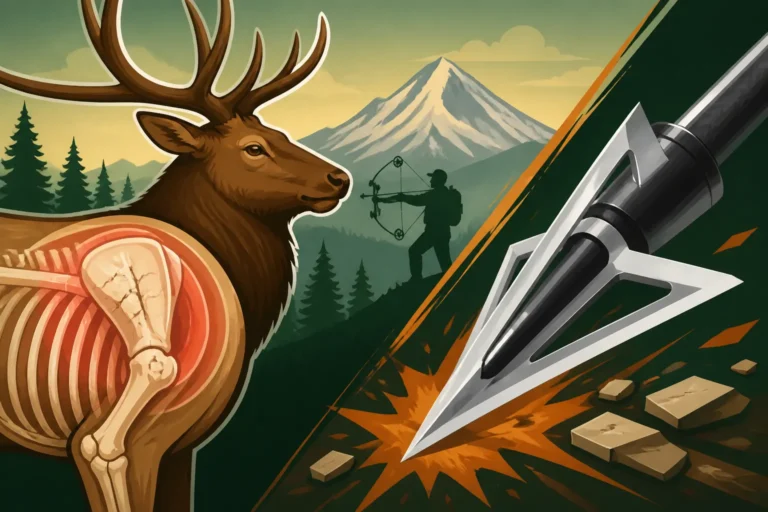
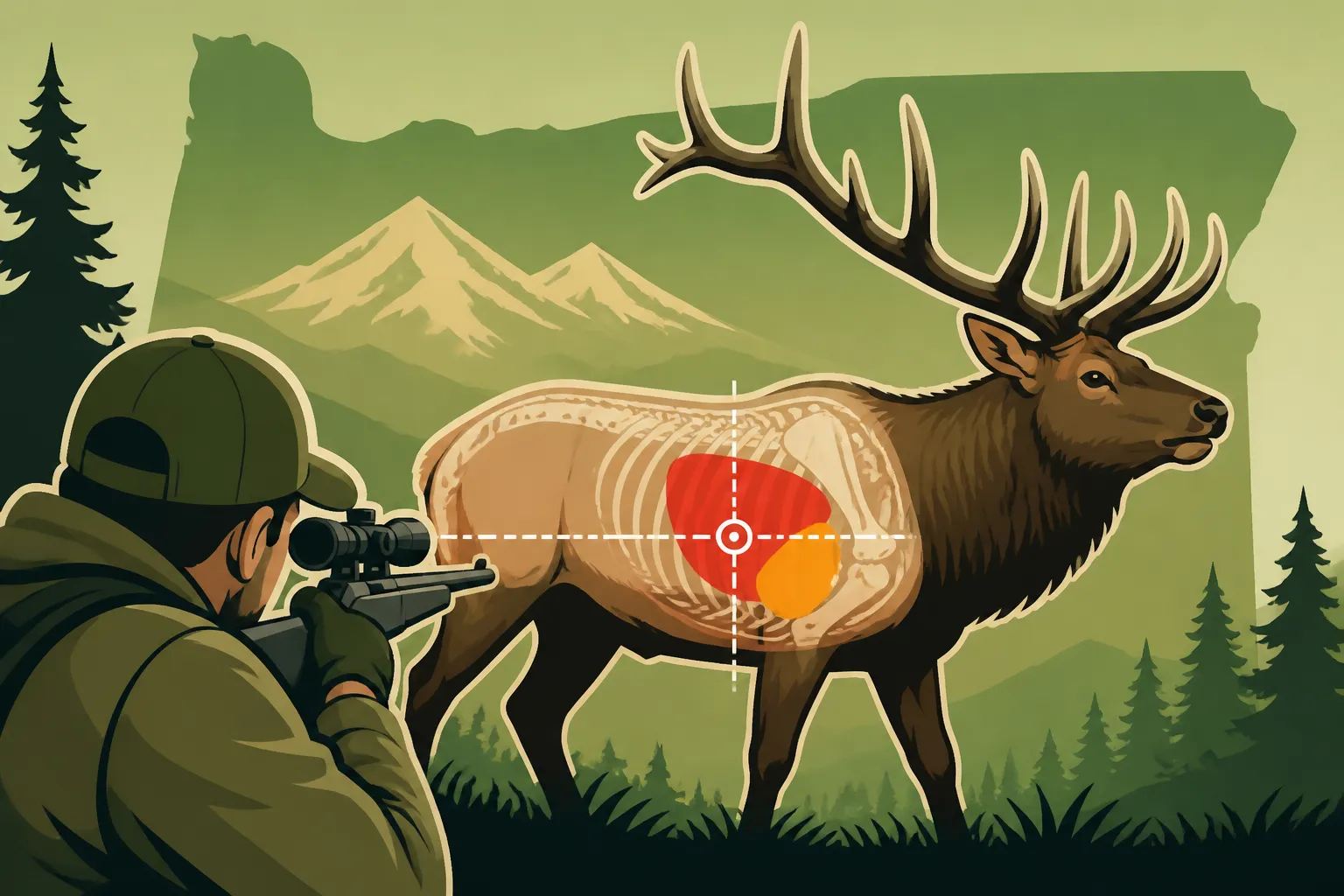
The primary objective for any ethical hunter is to hit the heart and lungs. This area, often referred to as the "boiler room," causes massive hemorrhage and rapid blood loss, leading to a swift and humane dispatch of the animal. On a broadside elk, this zone is located directly behind the shoulder blade, extending vertically from about one-third of the way up the body from the bottom of the chest cavity to roughly halfway up. Horizontally, it stretches from just behind the shoulder all the way back to about two-thirds of the way along the body cavity.
The lungs are massive, filling a large portion of the chest cavity, and are relatively easy to hit if you're behind the shoulder. The heart, while smaller, sits low in the chest, just above the sternum and slightly forward, nestled between the front legs. A shot placed precisely in the lower third of this zone, tight behind the shoulder, will often catch both the heart and the bottom of the lungs, leading to a quick collapse. Remember, the elk's vitals are further forward than many new hunters realize. Don't aim for the middle of the body; aim for the forward portion of the chest.
Major Arteries and Spinal Column
While the heart and lungs are the primary target, understanding the secondary vital areas can provide a backup or, in some cases, a preferred target depending on the shot angle. The major arteries and veins running through the chest cavity are vital for blood circulation, and disrupting them contributes significantly to internal hemorrhage. A hit to these large vessels can be just as effective as a direct heart shot, accelerating the loss of blood pressure and oxygen to the brain.
Another critical area, though often a more difficult and less forgiving target for hunters, is the spinal column. A shot that severs the spinal column, particularly in the neck or upper shoulder area, will drop an elk instantly by disrupting its central nervous system. However, this is a much smaller target, and a slight miss can result in a wounded animal rather than a clean kill. For this reason, most seasoned hunters advise against intentionally targeting the spine unless all other vital shot angles are completely blocked and you are absolutely confident in your ability to hit a small, specific target. The risk of simply grazing the spine or hitting a non-vital section is too high for most close-range scenarios where the heart-lung shot is available.
Bone Structure and Shot Obstructions
Elk possess a robust skeletal structure designed for strength and protection. The shoulder blade (scapula) is a large, flat bone that covers a significant portion of the vital area from the outside. Directly behind it, the humerus, or upper leg bone, adds another layer of defense. These bones can be incredibly dense, especially in a mature bull.
At close range, even with powerful modern firearms, hitting the heavy shoulder bone can cause your projectile to deflect, fragment, or expend too much energy before reaching the vitals. This is why the classic advice is to aim behind the shoulder, not on it. However, if the bull is quartering slightly, the shoulder blade might still be in the path to the far lung or heart. When aiming, visualize the path of your bullet or broadhead and try to find a clear window to the vit vitals. If a shot directly behind the shoulder isn't an option due to angle, sometimes a slightly quartering-away shot can angle in front of the far shoulder, still hitting the vitals. Understanding the internal layout of these bones is key to avoiding a superficial wound or a lost animal. It takes practice and a solid understanding of anatomy to consistently place your shot where it needs to be. For more in-depth knowledge on this, consider resources like those provided by GoHunt to study detailed animal anatomy models and plan your approach.
Angle Considerations for Close-Range Shots
The angle at which an elk presents itself is paramount in determining ethical shot placement. What might be a perfect shot at one angle could be a disastrous decision at another. At close range, angles can be deceptive, and the split-second decision you make could mean the difference between a clean kill and a long, difficult blood trail, especially in Oregon's thick cover.
Broadside and Quartering Away
The broadside shot is universally considered the ideal presentation for deer and elk, especially at close range. From this angle, the heart and lungs offer the largest, most unobstructed target. You want to aim about one-third of the way up the body, directly behind the front leg. This shot path allows your bullet or broadhead to pass through both lungs and potentially the heart, creating maximum damage and rapid blood loss. With a broadside bull, you can often pick a specific tuft of hair to aim at, making precision easier.
A quartering-away shot is also highly effective, and often more common in hunting scenarios where the animal is moving or feeding. In this situation, the elk is angled slightly away from you, exposing more of the rib cage on the far side and presenting a good angle to penetrate the vitals. For a quartering-away shot, aim slightly further back than broadside, allowing your projectile to angle forward and exit through the opposite shoulder or chest. This path often ensures penetration through both lungs and the heart, creating a devastating wound channel. Visualize an imaginary line extending from your aiming point to the opposite front leg; this should put you right in the vitals. Always be mindful of the degree of quartering; too much, and you risk a gut shot or hitting the hindquarters.
Quartering To and Head-On Shots
These shot angles are generally the most challenging and, for many hunters, should be avoided, especially at close range where the bull's immediate reaction might be to bolt. A quartering-to shot means the elk is angled slightly towards you, with its head and shoulders partially facing your direction. The challenge here is that the heavy shoulder bone and potentially the brisket bone present a formidable barrier to the vitals. To achieve a kill shot, you would need to aim just inside the shoulder on the near side, angling back towards the far lung or heart. This is a much smaller target, and the risk of hitting non-vital muscle or bone is significantly higher.
A head-on shot, where the elk is facing you directly, is almost always considered unethical for big game like elk. The only vital target is the brain or spine in the neck, which are incredibly small and heavily protected by dense bone. A miss, even by inches, can result in a superficial wound to the jaw or neck, causing prolonged suffering without a quick kill. Unless you are an extremely skilled marksman in a very specific, controlled situation, it's best to pass on these shots. Your best bet is always to wait for the animal to turn, offering a better, more ethical presentation. Patience is a virtue in elk hunting, and waiting for the right shot is part of being a responsible hunter.
Steep Up-Angle and Down-Angle Shots
Hunting in Oregon often involves steep, rugged terrain, which means you'll frequently encounter elk above or below you. These vertical angles significantly change the internal location of the vitals relative to your line of sight. When shooting downhill at an elk, the entry point will be higher on the body than a flat-ground shot, but your projectile will angle downwards, catching the heart and lungs. Conversely, when shooting uphill, your entry point will be lower, and the projectile will angle upwards through the chest cavity.
It's crucial to practice these types of shots, perhaps by using a 3D target or a visual aid that helps you understand how the bullet or arrow path changes. A common mistake is aiming too low on a downhill shot or too high on an uphill shot, leading to a single-lung hit or missing the vitals entirely. For a downhill shot, aiming slightly higher than you normally would for a broadside shot, about halfway up the body, will still angle down through the vitals. For an uphill shot, aiming a bit lower, perhaps in the lower third of the chest cavity, will angle up to the heart and lungs. Always visualize the internal path of your projectile, ensuring it passes through both lungs. These complex scenarios are why thorough Public Land Scouting in Oregon Before the Draw Results is so important, allowing you to anticipate potential shot angles in the actual terrain.
Shot Placement Scenarios in Oregon's Terrain
Oregon's diverse landscapes, from dense coastal rainforests to wide-open sagebrush flats and challenging timber stands, dictate how and when you might encounter a bull elk at close range. Each environment presents unique challenges and opportunities for shot placement that demand specific considerations.
Dense Timber Encounters
Hunting the deep, dark timber of Oregon's Coast Range or Cascades, particularly for Roosevelt elk, often means extremely close-range encounters. A bull might materialize silently out of the fog or thick underbrush at 20 yards or less, giving you mere seconds to react. In these situations, the shot window might be small, and visibility limited by trees, branches, or thick ferns. The key here is quick target acquisition and a disciplined trigger squeeze.
When a bull appears in dense timber, your priority is to identify a clear shooting lane to the vitals. This often means waiting for the animal to take one more step, clearing a small tree or patch of vine maple. If it's a broadside or quartering-away shot, aim for that sweet spot just behind the shoulder, keeping in mind that the animal might be moving through patchy sunlight and shadow. Be extra vigilant for small twigs or branches that can deflect a bullet or arrow, especially at closer ranges where velocity is still high and deflection can be significant. Sometimes, the best shot isn't the first one offered, but the one you wait an extra second for. Calling Roosevelt Elk in Oregon Rainforest Timber can often bring a bull in close, making these precise shots even more critical.
Open Country Opportunities
While less common for truly "close-range" encounters with bulls, Eastern Oregon's open sage and juniper country can occasionally present opportunities for closer shots, especially when elk are pushed out of timber pockets or moving between feeding areas. Here, visibility is usually excellent, giving you more time to evaluate the shot. However, the open terrain also means elk are more likely to detect you and bolt quickly.
In these open scenarios, you might have the luxury of ranging the animal precisely and confirming your ethical shot. Broadside and quartering-away shots are still preferred. The absence of dense cover reduces the risk of deflection, but wind can become a factor affecting arrow flight or bullet drift, even at relatively close distances. If a bull is standing still, take the extra moment to settle your breathing and ensure your crosshairs are rock steady on the vitals. The greater visibility also means you'll have an easier time observing the bull's reaction to the shot and initiating a Blood Trailing in Oregon Rainforest Understory if necessary, though the terrain might be more forgiving for tracking than dense timber.
Dealing with Obstructions and Brush
Perhaps the most frustrating scenario in close-range elk hunting is when a bull is just a few yards away, but a critical branch or bush obscures the vitals. It’s an agonizing moment where adrenaline screams "shoot!" but ethics demand patience. At close range, even a small twig can deflect a bullet enough to cause a poor hit, and an arrow can be easily knocked off course.
Your absolute best strategy here is patience. Do not shoot through brush. Wait for the bull to move, to take one step forward or back, or to shift its head and neck. Often, elk will offer a small window as they move through cover. If that window doesn't appear, or if the animal is clearly aware of you and about to bolt, it's always better to pass on the shot. A missed opportunity is infinitely better than a wounded animal you cannot recover. Sometimes, a subtle cow call or a soft chuckle can cause a bull to pause or take that one crucial step to clear an obstruction. Utilizing modern mapping tools from platforms like GoHunt can help you identify open shooting lanes or clearings in dense cover during your pre-hunt scouting, giving you a better understanding of potential shot opportunities.
Ethical Considerations and Follow-Up
The ethical responsibility of a hunter extends far beyond simply pulling the trigger. It encompasses preparation, shot selection, and the unwavering commitment to recover any animal that has been hit. Especially at close range, where the encounter is often intense and sudden, maintaining a strong ethical compass is paramount.
Knowing Your Limits and the Animal's Well-being
Every hunter has a personal "effective range" and skill level. At close range, it's easy to assume any shot is a good shot, but that's not always the case. Your limits might involve your ability to quickly acquire a target, remain calm under pressure, or accurately assess a shot angle. If you're feeling rushed, shaky, or unsure of the shot placement, it's always better to let the animal walk. No trophy or freezer full of meat is worth compromising an animal's well-being.
Consider the animal's posture, its awareness of your presence, and any potential movement. A bull that's about to bolt offers a much less forgiving target than one that's standing calmly. The goal is a quick, humane death, and that comes from a well-placed shot into the vitals. If the angle is poor, or if you can only see a small, non-vital portion of the animal, simply hold your shot. Re-evaluate, try to reposition if possible, or accept that this might not be your day. This commitment to ethical hunting is a core part of the Oregon Hunter Education Requirements.
Immediate Reaction and Tracking Protocol
The moment your projectile hits a bull elk, the next few seconds are critical. Observe the animal's immediate reaction intently. Did it buckle, kick, or run off stiff-legged? Did you hear a distinct "thwack" of a solid hit, or a dull "thud" indicating a less-than-ideal impact? These clues are invaluable for determining shot placement and predicting how far the animal might travel.
After the shot, mark the exact spot where the elk was standing and the location where you were when you shot. This helps establish a mental line of sight for tracking. Even if you see the animal fall, wait a minimum of 15-30 minutes for a suspected heart-lung shot, or much longer (hours) for a questionable hit, before beginning to track. This allows the animal time to bed down and bleed out, preventing it from being pushed further into the timber. When you do start tracking, look for blood, broken branches, disturbed leaves, or anything that indicates the elk's path. Oregon's dense undergrowth can make Blood Trailing in Oregon Rainforest Understory incredibly challenging, so take your time, go slowly, and mark your trail as you go. If light is fading, pull out and resume tracking at first light to avoid pushing a wounded animal into the night.
When to Hold the Shot
Learning when not to shoot is perhaps the most important lesson in hunting. At close range, the temptation to take a shot can be overwhelming, but there are clear scenarios where holding fire is the only ethical choice:
- Obstructed Vitals: If branches, trees, or brush completely obscure the heart-lung area, do not shoot.
- Uncertain Angle: If you cannot clearly visualize the projectile's path through the vitals due to a steep angle or extreme quartering, wait for a better presentation.
- Moving Animal: While a short, calm walk might offer a moving shot opportunity for some, if the bull is running or moving erratically, the chances of a clean hit drop dramatically.
- Unsteady Rest: If you don't have a stable shooting platform and feel shaky, wait. Close range doesn't automatically mean easy.
- No Clear Exit Strategy: If you're in incredibly dense, tangled blowdown and believe a hit animal might vanish into an unrecoverable maze, sometimes it's better to pass unless you are absolutely certain of a clean, immediate kill.
- Lack of Confidence: If your gut tells you it's not a good shot, listen to it. That intuition is often the best guide.
By adhering to these principles, you honor the animal and uphold the integrity of the hunt. This disciplined approach means you might walk out with an unfilled tag, but you'll do so with your ethics intact.
Gear Considerations for Close-Range Accuracy
Your equipment plays a significant role in ensuring effective shot placement at any range, but particularly when a massive bull elk is standing mere yards away. The right tools, coupled with proper practice, enhance your ability to make a clean, ethical kill shot. While personal preference always comes into play, certain characteristics of rifles, ammunition, and archery setups are more advantageous for those heart-pounding close encounters in Oregon.
Rifle and Ammunition Selection
For rifle hunters, a caliber that delivers sufficient energy and bullet construction that performs well on heavy bone at close ranges is key. While many calibers are suitable for elk, a cartridge known for its knockdown power and controlled expansion is ideal. This is not the time for varmint bullets that fragment easily. Consider cartridges like the .30-06 Springfield, .300 Win Mag, .338 Win Mag, or even a stout .270 Win with the right bullet. These calibers, paired with premium, heavy-for-caliber bullets designed for deep penetration and controlled expansion, will reliably punch through an elk's hide and muscle, and break bone if necessary to reach the vitals.
Bullet choice is arguably more important than caliber at close range. Look for bonded, monolithic, or partition-style bullets that retain their weight and resist premature fragmentation. Brands like Nosler Partition, Barnes TSX/TTSX, Hornady Interbond, or Federal Terminal Ascent are excellent choices. They are designed to hold together and drive deep, ensuring that if you do hit the shoulder blade, you still have a good chance of reaching the lungs or heart. Practice shooting your chosen load at various distances, including very close, to understand its impact and ensure your rifle is properly sighted in. For more details on what rifles suit Oregon elk, check out our guide on Rifle Calibers That Suit Oregon Elk.
Bow Setup for Close Encounters
Archery hunting for elk often means all encounters are close range, typically within 20-50 yards. Your bow setup needs to be optimized for precision and penetration. A sufficient draw weight (Oregon law requires a minimum of 40 pounds for elk) and properly spined arrows are fundamental. Heavy arrows (450+ grains total weight) tend to carry more kinetic energy and momentum, aiding in penetration, especially through tough hide and bone.
Broadhead selection is paramount for archery. Fixed-blade broadheads are often favored for their reliability and deep penetration, especially if bone is encountered. Mechanical broadheads have come a long way, but some hunters still prefer fixed blades for elk due to their robust construction. Look for sharp, durable broadheads with a wide cutting diameter that can create a significant wound channel. Ensure your broadheads are razor sharp; a dull broadhead will push tissue instead of cutting, reducing penetration. Practice shooting broadheads extensively to ensure they fly true with your field points. Understanding Broadhead Choice for Heavy Bone is crucial for archery elk hunters.
Optics and Rangefinding for Quick Decisions
At close range, your optics are less about magnification and more about quick target acquisition and clarity. For rifles, a scope with a wide field of view and a low minimum magnification (e.g., 2-10x or 3-9x) is ideal. This allows you to quickly find the animal in your scope when it appears suddenly in dense cover, without having to zoom out. Clear glass is essential for identifying shooting lanes and vitals in challenging light conditions, common in Oregon's early mornings and late evenings.
For archery, a good quality sight with sharp pins or a clear single pin is all you need. Focus on consistency and proper form. While a rangefinder might seem less critical at extremely close ranges, it's still invaluable. In the heat of the moment, judging distances, especially under 40 yards, can be surprisingly difficult. A bull that looks to be 20 yards might actually be 30, and that difference can be significant for an arrow's trajectory. A quick range verification can give you the confidence needed to make a precise shot. Modern mapping applications, like those found on GoHunt, can also provide approximate distances and topographic data, helping you plan your approach and anticipate shot opportunities. This advanced E-Scouting Oregon Units With Satellite Imagery can save you valuable time in the field.
Optimal Shot Placement by Angle
Understanding the theory is one thing, but visualizing where to aim for different angles is what brings it all together. This table summarizes the recommended aiming points for the most common shot presentations on a bull elk.
| Shot Angle | Recommended Aiming Point | Key Considerations |
|---|---|---|
| Broadside | One-third of the way up the body, directly behind the front leg. | The ideal shot. Aim for the "sweet spot" to penetrate both lungs and heart. Provides the largest, most forgiving target. Focus on a specific tuft of hair for precision. |
| Slight Quartering Away | Slightly further back than broadside, aiming for the far shoulder/leg. | Excellent shot, often encountered. Visualize the projectile exiting the opposite front leg area. Ensures penetration through both lungs and heart, creating maximum damage. Be cautious of extreme quartering. |
| Steep Down-Angle | Higher on the body than broadside, about halfway up, still behind the shoulder. | Accounts for the downward trajectory. The projectile will angle down through the top of the lungs and out the lower chest, hitting heart. Avoid aiming too low, as you might miss vitals. |
| Steep Up-Angle | Lower on the body than broadside, about one-third of the way up, behind the shoulder. | Accounts for the upward trajectory. The projectile will angle up through the bottom of the lungs and heart. Avoid aiming too high, as you might only get a single lung or miss entirely. |
| Quartering To | Aim for the crease of the near shoulder, angling towards the far lung/shoulder. (Cautious) | Generally discouraged at close range. Only consider if absolutely necessary and you are highly confident. Target is much smaller due to dense bone protection. High risk of non-lethal hit. If unsure, wait for a better angle. |
| Head-On | Brain or upper spine in the neck. (Highly Discouraged) | Almost always unethical for elk. Extremely small, heavily protected vital areas. High risk of wounding the animal without a quick kill. Pass on this shot and wait for a broadside or quartering-away opportunity. Your ethical responsibility is to ensure a humane harvest. |
Remember, these are guidelines. The ultimate decision on shot placement rests on your ability to assess the situation in real-time, understand the anatomy, and make an ethical choice. This knowledge, combined with practice and a clear understanding of Oregon Elk Hunting Tactics for the November Rifle Seasons, will prepare you for success.
Final Thoughts on Mastering Close-Range Bull Elk Shots
Taking a bull elk at close range is an exhilarating experience that tests your nerves, your skill, and your ethical resolve. These aren't just moments of high adrenaline; they are moments demanding absolute precision and a deep understanding of your quarry. The responsibility to make a clean, humane kill rests squarely on your shoulders.
By thoroughly understanding elk anatomy, practicing various shot angles, and recognizing the unique challenges presented by Oregon's diverse terrain, you can significantly increase your chances of success. Remember, patience is your most powerful tool. Waiting for the perfect broadside or quartering-away presentation, even if it means letting a bull walk, is always the most ethical decision. Equip yourself with reliable gear, but never let equipment overshadow the fundamental importance of marksmanship and ethical judgment.
Whether you're calling a bull in close during Archery Elk Hunting Oregon's August and September Seasons or still-hunting through the dense coastal timber, being prepared for that sudden, close-range encounter will define your hunting success. When that magnificent bull steps out, your confidence in knowing exactly where to aim will make all the difference, ensuring a swift and respectful harvest, and filling your freezer with prime Elk Meat Yield From a Roosevelt Bull.
Disclaimer
The information provided in this guide is for educational purposes only and is not a substitute for professional instruction, local regulations, or common sense. Always consult the most current Oregon Department of Fish and Wildlife (ODFW) regulations and hunt pamphlets before engaging in any hunting activities. Hunting involves inherent risks, and safety should always be your top priority.