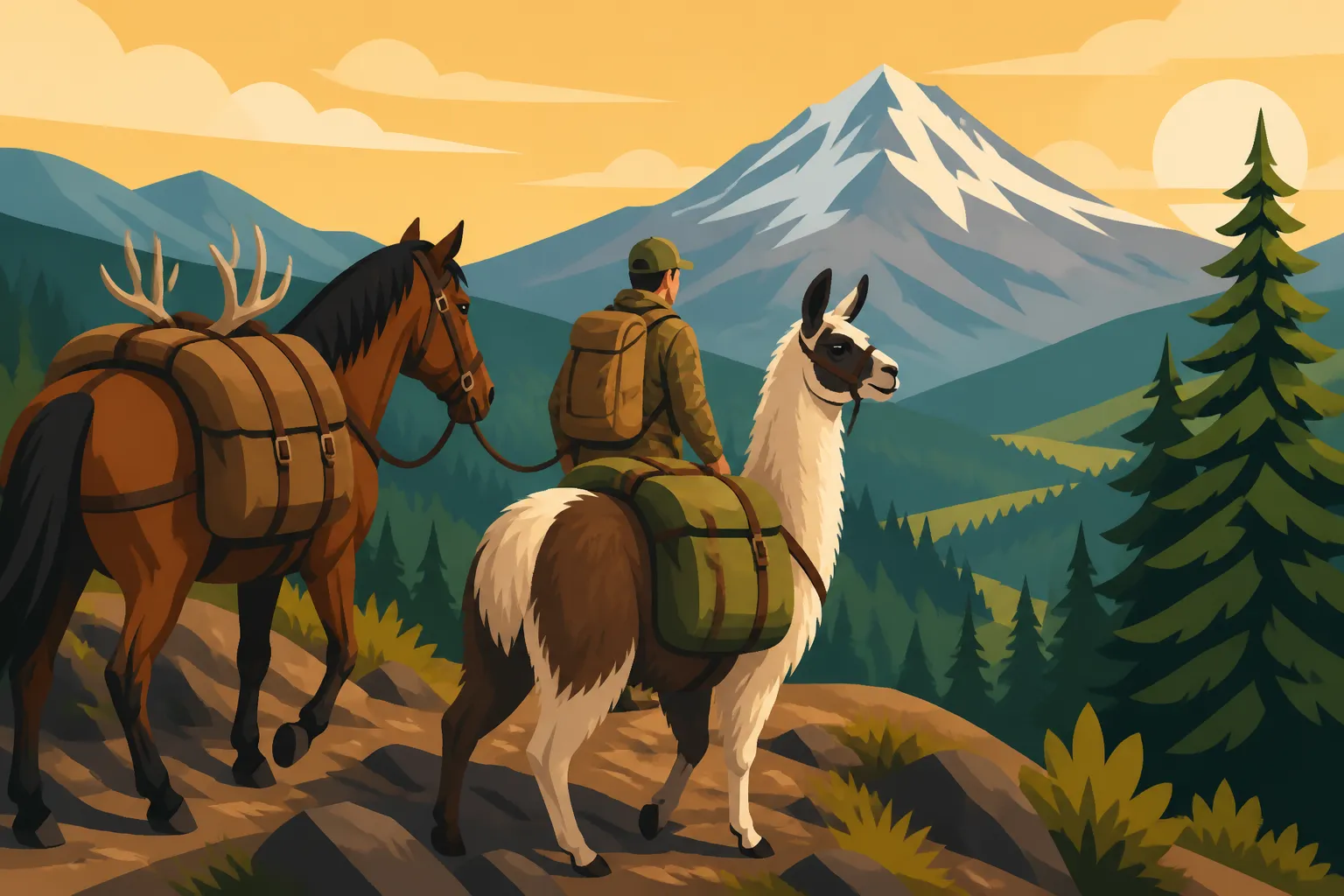
Horse and Llama Packing Into Oregon Backcountry
Getting deep into Oregon's vast backcountry for big game often feels like an impossible feat, especially when you envision packing out a bull elk through miles of rugged terrain. The sheer physical demand of hauling heavy loads on your back can limit how far you're willing to go, forcing you to settle for more accessible, and often more crowded, areas. This comprehensive guide will walk you through everything you need to know about using horses, mules, or llamas to unlock remote hunting opportunities in Oregon, making those hard-to-reach spots not just accessible, but truly enjoyable.
Why Pack Animals Are a Game Changer for Oregon Backcountry Hunting
Venturing beyond the road systems in Oregon offers a completely different hunting experience. It's where the biggest animals often hide, undisturbed by the constant presence of human activity. However, the further you go, the more challenging the logistics become, especially when considering the weight of essential gear and, hopefully, a harvested animal. This is precisely where pack animals step in, transforming a grueling suffer-fest into a more manageable and rewarding adventure.
Overcoming Distance and Terrain Challenges
Oregon's public lands are diverse, ranging from the dense, wet forests of the Coast Range and Cascades to the vast, arid sagebrush and rimrock country of Eastern Oregon. Many of the most promising hunting grounds are tucked away behind miles of wilderness or designated roadless areas, making foot travel incredibly arduous, particularly with a heavy pack. Pack animals allow you to cover significant distances with much less personal exertion. Imagine trekking 10-15 miles into a remote basin where vehicles are banned; doing that with your camp and a week's worth of food on your back is a monumental task. With a string of reliable pack animals, that distance becomes a manageable day's journey. They handle steep ascents, rocky trails, and dense brush with an efficiency that human legs simply can't match, opening up vast tracts of land that would otherwise remain largely untouched. This dramatically expands your effective hunting range and allows you to explore areas that see significantly less pressure from other hunters.
The Advantage for Heavy Game Recovery
The moment of truth arrives, and you've got a bull elk down miles from the nearest road. This is often where the real work begins, and for many hunters, the thought of packing out an entire animal on their back is enough to deter them from venturing too far in the first place. An average mature bull elk can weigh upwards of 700-800 pounds live weight, yielding hundreds of pounds of bone-in meat, hide, and antlers. Trying to pack this out yourself, even with a strong partner, often means multiple, brutal trips over rough terrain, increasing the risk of spoilage if temperatures are warm. With pack animals, a single animal can comfortably carry 150-200 pounds, sometimes more, depending on its size and training. This means you can bring out quarters, boned-out meat, and your trophy much more efficiently, often in one or two trips, drastically reducing the physical toll and the time it takes. For anyone considering Packing Out an Elk in Oregon's Wilderness Units, having stock ready to go is an unparalleled advantage.
Expanding Your Hunting Horizons in Remote Units
Many of Oregon's premier hunting opportunities, especially for species like Rocky Mountain elk and mule deer, are found in units with extensive wilderness or roadless designations. Areas like the Eagle Cap Wilderness or parts of the Wallowa-Whitman National Forest offer incredible potential, but they demand a serious commitment to access. By utilizing pack animals, you gain the ability to establish multi-day camps deep within these areas, providing you with more time on the ground where the animals are less pressured. Instead of making long, exhausting day trips from a truck camp, you can be glassing at first light from a Backpack Camps in Oregon Wilderness location, maximizing your effective hunting hours. This capability not only improves your chances of success but also elevates the entire hunting experience, immersing you fully in the wild places that Oregon is famous for.
Choosing Your Trail Partner: Horses, Mules, or Llamas
Deciding which pack animal is right for your Oregon hunting adventure involves weighing several factors, including the terrain you'll encounter, the amount of gear you need to haul, your experience with animals, and the overall demeanor you prefer in a trail companion. Each type of animal brings its own unique set of advantages and considerations to the rugged Oregon backcountry.
The Power and Reach of Horses and Mules
Horses and their hybrid cousins, mules, are the traditional workhorses of the backcountry. Known for their strength, speed, and ability to cover vast distances, they are superb choices for hunters with substantial loads or those needing to access distant areas quickly. Mules, in particular, are celebrated for their incredible sure-footedness on steep, rocky, and treacherous trails, often surpassing horses in their ability to navigate difficult terrain safely. They can carry significant weight – a well-conditioned mule can comfortably carry 200 pounds or more, making them ideal for packing out entire elk quarters or large wall tents and camp stoves. Their larger stride also means they can cover ground more rapidly than llamas, which is a real benefit when you have a long way to go or need to get meat out quickly.
However, horses and mules require more feed and water, which can be a logistical challenge in some dry Eastern Oregon units. They also need more extensive care and handling, including proper shoeing, saddling, and experienced horsemanship. If you're new to stock, a seasoned mule or horse might be less forgiving of mistakes. Furthermore, their larger size means they have a greater impact on trails and require more space for highlining or pasturing in camp, necessitating careful consideration of Certified Weed-Free Feed Requirements to prevent the spread of invasive species. Despite these demands, for big loads and long distances into prime elk country in the Blue Mountains, a string of mules is often the preferred choice for seasoned hunters.
The Agile and Low-Impact Llama
Llamas offer a different, often more accessible, approach to backcountry packing. These South American camelids are incredibly agile, quiet, and have a significantly lower environmental impact than horses or mules. Their soft, padded feet leave minimal trace, and their browsing habits are less destructive to vegetation. Llamas are fantastic for navigating tight, brushy trails in Western Oregon's dense timber, where a larger animal might struggle or spook. They are also incredibly efficient, requiring less water and feed than equids, and can subsist on native vegetation for short trips, though supplemental feed is always a good idea. A typical pack llama can comfortably carry 60-80 pounds, which is a substantial amount for a smaller, lighter animal. While they might not haul an entire elk in one go, a string of three or four llamas can certainly get the job done in a couple of trips, or even one if you bone out the animal efficiently.
One of their biggest advantages is their relatively easy handling. Llamas are generally calm, intelligent, and less prone to spooking than horses. They don't require shoeing or specialized tack, making them a simpler option for those new to stock. You can often lead them with a halter and lead rope, and they usually follow quietly. However, their slower pace and lower weight capacity mean they are better suited for shorter trips, smaller game, or situations where multiple trips are acceptable. They are an excellent choice for solo hunters or small groups tackling blacktail deer in the Coast Range, where stealth and maneuverability are paramount. For more on their suitability for different hunts, consider how they fit into strategies like Archery Elk Hunting Oregon's August and September Seasons in rugged, dense areas.
Considerations for Your Oregon Hunt Type
The best pack animal for you really depends on the specific demands of your hunt in Oregon.
| Feature | Horses/Mules | Llamas |
|---|---|---|
| Weight Capacity | 150-250+ lbs per animal | 60-80 lbs per animal |
| Speed/Distance | Faster, cover more ground per day | Slower, best for shorter distances |
| Terrain | Excellent on varied terrain, mules superior on steep/rocky | Agile, great in tight brush and rocky areas |
| Feed/Water | Require significant feed & water | More efficient, can browse for short trips |
| Handling | Requires experience, more prone to spooking | Easier to handle, generally calm, quiet |
| Impact | Larger hoof impact, more trail wear | Low impact, soft padded feet |
| Cost | Higher initial cost, more upkeep | Lower initial cost, less upkeep |
| Stealth | Can be noisier with gear | Very quiet on the trail |
If you're planning an ambitious Rocky Mountain elk hunt deep into the Wallowa Mountains, aiming for a full week and hoping to pack out a massive bull, then horses or mules are likely your best bet for their sheer hauling power and ability to cover long distances. Conversely, if your focus is on still-hunting blacktails in dense coastal timber or going after spring bear in the Cascades, where you prioritize quiet movement and navigating through thick cover, llamas might be the ideal companion. They're also fantastic for scouting trips where you need to carry camera gear, camp, and perhaps a small deer. Thinking about the nuances of your hunt, like whether you're chasing big bulls in open country or trying to get close to a blacktail, should guide your choice.
Essential Gear for a Successful Pack Trip
Embarking on a backcountry hunt with pack animals isn't just about throwing your gear onto an animal and heading out. It requires specialized equipment to ensure the safety and comfort of both your animals and yourself, and to protect your valuable hunting gear. Investing in the right packing system and animal care items is crucial for a smooth and successful trip into Oregon's remote areas.
Packing Systems: Saddles, Panniers, and Covers
At the heart of any pack string is the packing system itself. For horses and mules, this typically involves a sturdy pack saddle, like a Decker or Sawbuck, designed to distribute weight evenly across the animal's back. These saddles are built differently from riding saddles and are specifically made to attach panniers. Panniers are essentially large bags or boxes, usually made of canvas, Cordura, or rigid plastic, that hang on either side of the pack saddle. It's vital to have panniers that are durable, waterproof, and sized appropriately for the items you'll be carrying. You'll also need waterproof covers or tarps to protect everything from Oregon's unpredictable weather, especially in the western half of the state, where rain is always a possibility, even in early fall. Beyond the panniers, a top pack or duffel can be secured on top of the saddle, allowing for additional items like sleeping bags or lighter bulkier gear.
For llamas, the setup is simpler. Llama pack saddles are typically lightweight frames that fit snugly over their humps, with panniers specifically designed to attach to these frames. These panniers are often softer and less bulky than those for horses, reflecting the llama's lower carrying capacity and agility in tighter spaces. Regardless of the animal, proper rigging is paramount. You'll need ropes and cinches to secure everything tightly and prevent loads from shifting, which can cause discomfort to the animal or even lead to a lost pack in rugged terrain. Learning how to tie effective hitches, like the "diamond hitch" for horse packing, is an essential skill to master before your trip. The goal is a balanced, stable load that won't chafe or hurt the animal, ensuring they can navigate difficult trails safely.
Animal Care and Safety Equipment
Your pack animals are an investment and vital partners in your hunt, so their care and safety equipment should be a top priority. A dedicated animal first aid kit is non-negotiable, containing items for treating cuts, abrasions, colic, or lameness. This should include antiseptic wipes, vet wrap, wound salve, pain relievers, and perhaps even a hoof pick and shoeing hammer if you're using shod animals. In addition to medical supplies, you'll need gear for managing your animals in camp. A highline system, complete with sturdy rope, tree savers, and Picket Pins, is crucial for securing your animals overnight, preventing them from wandering off or foraging in sensitive areas. Highlining Stock at a Backcountry Camp is a skill worth practicing before you hit the trail.
Remember that Oregon's Certified Weed-Free Feed Requirements mean you can't just throw regular hay in your panniers. You'll need certified weed-free pellets or hay cubes to comply with regulations and prevent the spread of invasive plant species in our pristine wilderness areas. This is a critical detail that many overlook. Additionally, halters and lead ropes are necessary for leading your animals, and hobbles or bells can be useful for animals that are prone to wandering or to locate them quickly in the morning. A good set of hobbles allows them to graze freely while still restricting their movement enough to keep them close. Finally, reflective gear for both you and your animals is a wise addition, especially if you anticipate traveling in low light conditions or if you need to find a lost animal in the dark.
Hunter's Gear: Beyond the Pack
While the focus is often on the pack animals, remember that your personal gear needs to be thoughtfully selected, too. Since the animals are doing the heavy lifting, you can often afford a few more creature comforts than on a pure backpacking trip, but durability and functionality are still key. Good rain gear is essential for Oregon hunting, as downpours can happen unexpectedly, especially in the fall. Layering clothing is critical for adapting to temperature swings from frosty mornings to warm afternoons. You'll also want reliable navigation tools – a GPS, detailed topographic maps, and a compass – in addition to any digital mapping apps like those found on GoHunt, which can be invaluable for e-scouting and navigating in unfamiliar territory.
Consider the specifics of your hunt. If you're planning a base camp for a week, a comfortable sleeping system, a reliable cooking setup, and perhaps even a Wall Tent and Stove Camp Setup might be feasible with pack animals, making for a much more enjoyable experience than simply bivy camping. Don't forget a quality first aid kit for yourself, a water filter, and enough food to sustain you for the duration of your trip. While the animals carry the bulk, you'll still be carrying your rifle or bow, daypack, optics, and immediate necessities, so ensure your personal load is comfortable for walking the miles to and from your animals. For comprehensive planning, resources like GoHunt offer detailed insights into unit topography and access points, helping you to refine your gear list and strategy.
Meticulous Planning for Your Oregon Pack Hunt
A successful pack trip into Oregon's backcountry isn't just about having the right animals and gear; it's about meticulous planning. From understanding the regulations to preparing yourself physically and mentally, every step before you leave home contributes to a safer, more productive, and enjoyable hunt.
Navigating Permits, Regulations, and Access
Oregon's vast public lands are managed by various agencies, including the U.S. Forest Service, Bureau of Land Management (BLM), and Oregon Department of Fish and Wildlife (ODFW). Each may have specific rules regarding pack stock, camping, and fire restrictions, especially in designated wilderness areas. Before you even load your animals, you need to know the specific regulations for the unit you plan to hunt. For instance, Oregon Wilderness Rules That Ban Motorized Carts are generally clear, but rules on group size limits for stock parties, specific campsites, or grazing restrictions might vary. Always check with the local ranger district for the most up-to-date information. Many popular trailheads in wilderness areas, like those accessing the Wenaha-Tucannon or Eagle Cap Wilderness, may require a wilderness permit, often available at kiosks or online.
Beyond wilderness rules, fire restrictions are a perennial concern in Oregon, especially during the dry late summer and early fall hunting seasons. A small oversight can lead to devastating consequences, so always check Checking Oregon Fire Closures Before the Season and follow all guidelines. Additionally, familiarizing yourself with the unit boundaries and any private land enclaves is critical to avoid trespassing. Tools like GoHunt can be immensely helpful for overlaying land ownership maps with hunting unit boundaries, ensuring you have a clear understanding of where you can and cannot go. Remember, ignorance of the law is not an excuse, and a little homework can save you a lot of trouble down the line.
Strategic E-Scouting and Route Selection
With pack animals, your ability to reach remote locations expands dramatically, but that doesn't mean you can just wander aimlessly. Strategic e-scouting is more important than ever. Utilize online mapping tools and satellite imagery, such as those found on GoHunt, to identify potential travel corridors, water sources, and suitable camp locations. Look for areas with gentler slopes for your animals, avoid overly dense blowdowns or rockslides if possible, and note any natural barriers like cliffs or deep canyons that could impede your progress. Pay close attention to historical burn areas, as they can offer new growth for game but also present challenges with downed timber. For those looking to refine their approach, learning about E-Scouting Oregon Units With Satellite Imagery can provide an edge.
When selecting your route, consider the condition of the trails, if any exist. Some trails are well-maintained, while others might be overgrown and difficult for pack stock. Scout out alternative routes in case your primary path is impassable. Identifying reliable water sources for your animals is non-negotiable; horses and mules drink a lot, and while llamas are more efficient, they still need water. Plan your daily travel distances realistically, especially with animals carrying weight, accounting for elevation gain and ruggedness. Having a clear, well-scouted route reduces stress, saves time, and prevents you from getting into situations that could be dangerous for your animals or yourself.
Physical and Mental Preparation for the Backcountry
While pack animals carry the heavy loads, don't underestimate the physical demands of a backcountry pack trip. You'll still be walking miles each day, often leading animals over uneven terrain, and potentially dealing with the unexpected. Being in good physical condition is paramount. This means more than just being able to walk; it involves strong core muscles, good balance, and endurance for sustained effort. Think about training that mimics hiking with a daypack, navigating varied terrain, and handling potential animal issues. For a deeper dive, consider resources on Physical Training for an Oregon Elk Hunt which often aligns well with the demands of a packing trip.
Mentally, you need to be prepared for the realities of wilderness hunting. The weather in Oregon can change on a dime, especially in the high country. You might face rain, snow, or sudden temperature drops. Animals can be unpredictable, requiring patience and quick thinking. There will be long days, challenging moments, and the possibility of not filling your tag. Develop a resilient mindset, be flexible with your plans, and always prioritize safety. Having a solid trip plan that you've shared with someone back home is also a critical safety measure. Packing into the backcountry is an adventure, but a prepared mind and body make it a much more enjoyable and successful one.
On the Trail: Handling and Management of Pack Stock
Once your planning is done and your gear is ready, the true test of a pack trip begins on the trail. Proper handling and management of your pack animals are crucial for safety, efficiency, and maintaining a positive experience for everyone involved, especially in Oregon's rugged and sometimes unpredictable landscapes.
Loading and Balancing Your Animal's Load
The process of loading your pack animal might seem straightforward, but it's an art that takes practice. The golden rule is balance: the weight in the panniers on each side of the animal must be as equal as possible. An unbalanced load will shift, rub, cause discomfort or injury to the animal, and greatly increase the chances of the pack coming loose on the trail. Start with heavier items at the bottom of the panniers, distributing weight evenly. For horses and mules, aim for about 75-100 pounds per side for a total of 150-200 pounds or more, depending on the animal's size, conditioning, and the terrain. For llamas, 30-40 pounds per side is a good target.
Once the panniers are filled, secure them to the pack saddle. Then, any additional top packs or bulkier items like a sleeping bag or tent can be placed on top and secured with ropes using appropriate hitches. The diamond hitch is a classic for horse packing because it cinches the entire load down firmly. Practice this at home, not at the trailhead, where an excitable animal or new situation can add stress. It’s also wise to use waterproof covers over all your gear, as Oregon’s weather, particularly in the western half, can be famously damp. Ensure no straps are dangling or rubbing, which could spook an animal or cause injury. A well-loaded animal moves confidently and efficiently, making for a much smoother journey into your hunting area.
Trail Etiquette and Safe Travel Practices
Navigating Oregon's public lands with pack animals requires adherence to specific trail etiquette and safe travel practices, especially when encountering other trail users. Always yield to hikers; pull your animals to the downhill side of the trail, allowing them to pass safely. When passing other stock users, communicate clearly and pass cautiously, ensuring enough space between animals. Keep your pack animals under control and on the trail to minimize impact and respect wilderness regulations. Remember that Group Size Limits in Wilderness Areas might apply, so be aware of how many animals and people are in your party.
Maintain a safe following distance between your animals. A good rule of thumb is at least one animal length to prevent crowding, kicking, or panicking. Watch the trail ahead for potential hazards like downed timber, deep mud, or narrow passes. It's often better to dismount and lead your animals through tricky sections. When crossing streams or rivers, ensure the crossing is safe and guide your animals carefully. In bear country, which is much of Oregon, consider hanging noisemakers or bells on your lead animal to alert wildlife to your presence. These practices not only ensure your safety and the safety of your animals but also contribute to a positive experience for everyone sharing the backcountry.
Dealing with Unexpected Situations
Despite the best planning, unexpected situations are an inherent part of backcountry travel. Animals can spook, loads can shift, and injuries can occur. Remaining calm and having a plan are your best assets. If an animal spooks, try to control it with a firm but gentle hand, moving slowly and speaking in a reassuring tone. Often, it's a small branch or a shadow that startles them. If a load shifts, stop immediately in a safe spot and re-balance or re-tie the load. Never try to fix a shifted pack while moving. Always carry extra rope and a multi-tool for on-the-spot repairs.
Animal injuries, though hopefully rare, can happen. This is where your animal first aid kit and knowledge come into play. Small cuts and abrasions can be cleaned and bandaged. More serious injuries might require a decision to turn back or even, in extreme cases, humanely dispatching an animal, though this is a last resort. Knowing the signs of colic in horses or mules, or lameness, is crucial for early intervention. Being able to read your animals' behavior and anticipate problems can often prevent major incidents. It's also wise to carry a satellite communication device like a Garmin inReach or a Zoleo for emergencies, as cell service is non-existent in much of Oregon's backcountry. This allows you to contact help if you or an animal faces a serious issue, offering peace of mind when you're miles from civilization.
Establishing a Responsible Backcountry Camp with Animals
Setting up a safe and responsible camp is just as important as the journey itself when you're hunting with pack animals in Oregon's backcountry. Your camp needs to accommodate your stock, protect your gear and food, and minimize your impact on the delicate wilderness environment.
Setting Up a Sustainable Stock Camp
When choosing a campsite, look for a relatively flat, well-drained area with access to water but not directly on the water's edge. This helps protect riparian zones. You'll also need ample space for your animals, whether you're planning to highline them or set up an electric fence picket. Remember the guidance on Highlining Stock at a Backcountry Camp: choose two sturdy trees that are large enough to withstand the tension, set your highline rope between them, and tie your animals on with quick-release knots. Ensure the line is high enough that they can't get a leg over it, and place it away from your sleeping area to minimize disturbance. This prevents them from walking through your camp or trampling vegetation unnecessarily.
Another critical consideration is feed. If you’re staying for multiple days, you'll need to pack in Certified Weed-Free Feed Requirements to comply with Forest Service and BLM rules designed to protect native plant communities. This means pellets or certified hay cubes, not local forage, to prevent the introduction of invasive species. Scatter any dropped feed to avoid creating concentrated feeding areas. When breaking camp, meticulously clean up all feed, manure, and any other traces of your stay. The goal is to leave no trace, making it appear as if you were never there. Choosing a camp location that has been used before is often a good practice, as it concentrates impact rather than spreading it.
Food Storage and Wildlife Protection
With pack animals, you're often carrying more food than a typical backpack hunter, which means more attractants for wildlife, especially bears. Proper food storage is absolutely essential to prevent habituating animals to human food, which can lead to dangerous encounters and often the unfortunate demise of the animal. All human food, animal feed, and scented items (like toiletries) should be stored in bear-resistant containers, hung from a tree with a proper bear bag hang (at least 10 feet off the ground and 4 feet from the tree trunk), or stored in an electric bear fence enclosure. Never store food in your tent or within easy reach of your camp.
Beyond bears, smaller critters like mice, squirrels, and marmots can chew through gear to get to food, causing significant damage. Take precautions to secure your panniers and food bags, especially overnight. Keep your cooking area separate from your sleeping area, and never leave food scraps or dirty dishes unattended. All waste, including gray water from washing dishes, should be dispersed away from camp and water sources. Hunting in Oregon's backcountry is about blending in with nature, and respecting wildlife means keeping them wild and not giving them a reason to associate humans with an easy meal.
Minimizing Your Impact on Oregon's Wilderness
The privilege of hunting in Oregon's magnificent backcountry comes with the responsibility to minimize your impact. This means adhering strictly to Leave No Trace principles, which are even more critical when you have pack animals. When traveling, stay on established trails to prevent widening them or creating new ones. If off-trail travel is necessary, spread out to avoid creating a new path. Choose durable surfaces for camping, like bare dirt, rock, or dry grass, rather than sensitive areas with lush vegetation.
Human waste should be buried in a cathole 6-8 inches deep and at least 200 feet from water, trails, and camp. All trash, including small items like tape or zip ties, must be packed out. This also extends to animal waste; while it's impractical to pack out all manure, spreading it out and scattering it helps it decompose faster and prevents unsightly piles. When you break camp, take the time to naturalize the area. Replace any rocks or logs you moved, rake over areas where animals stood, and leave the site better than you found it. By being diligent in your efforts, we ensure that these wild places remain pristine and accessible for future generations of hunters and outdoor enthusiasts.
Disclaimer
Please be aware that hunting regulations, fees, and access policies in Oregon can change. Always consult the most current Oregon Department of Fish and Wildlife (ODFW) regulations, Forest Service, and Bureau of Land Management guidelines before planning any hunting trip. It is your responsibility to know and follow all applicable laws.