Certified Weed-Free Feed Requirements
Navigating the regulations for hunting in Oregon can feel like a maze, especially when you're planning a trip into the backcountry with pack animals. One rule that often catches hunters off guard, or at least causes a good bit of head-scratching, is the requirement for certified weed-free feed. This guide is here to untangle those rules, explain why they matter, and ensure your next adventure doesn't hit a snag because of what you're feeding your stock.
Understanding Oregon's Weed-Free Feed Regulations
It’s easy to feel like these rules are just another layer of bureaucracy, a hurdle to jump before you can even get out into the woods. But when you dig a little deeper, you realize these regulations are put in place for a really important reason: protecting the very wild places we love to hunt. Invasive plant species are a serious threat, and our pack animals can, unintentionally, be the primary vectors for their spread.
Why These Rules Exist: Protecting Our Wild Lands
Imagine packing into a pristine high-mountain basin for a remote elk hunt. You’ve spent months planning, scouting, and training. What you might not realize is that the hay you brought from home, perfectly good for your horse, could carry seeds of invasive weeds like diffuse knapweed, yellow starthistle, or cheatgrass. These are plants that don't belong in Oregon's native ecosystems, and they can wreak havoc. They outcompete native grasses and forage that elk, deer, and other wildlife rely on, reducing the overall carrying capacity of the land.
Once established, invasive weeds are incredibly difficult and expensive to eradicate. They can alter fire regimes, destroy critical habitat, and severely impact the health of a herd by limiting their food sources. The small effort of sourcing certified weed-free feed pales in comparison to the long-term ecological damage that can result from introducing just a few foreign seeds into a sensitive wilderness area. It’s about being a responsible steward of the land, leaving it as good, if not better, than we found it.
What "Certified" Actually Means
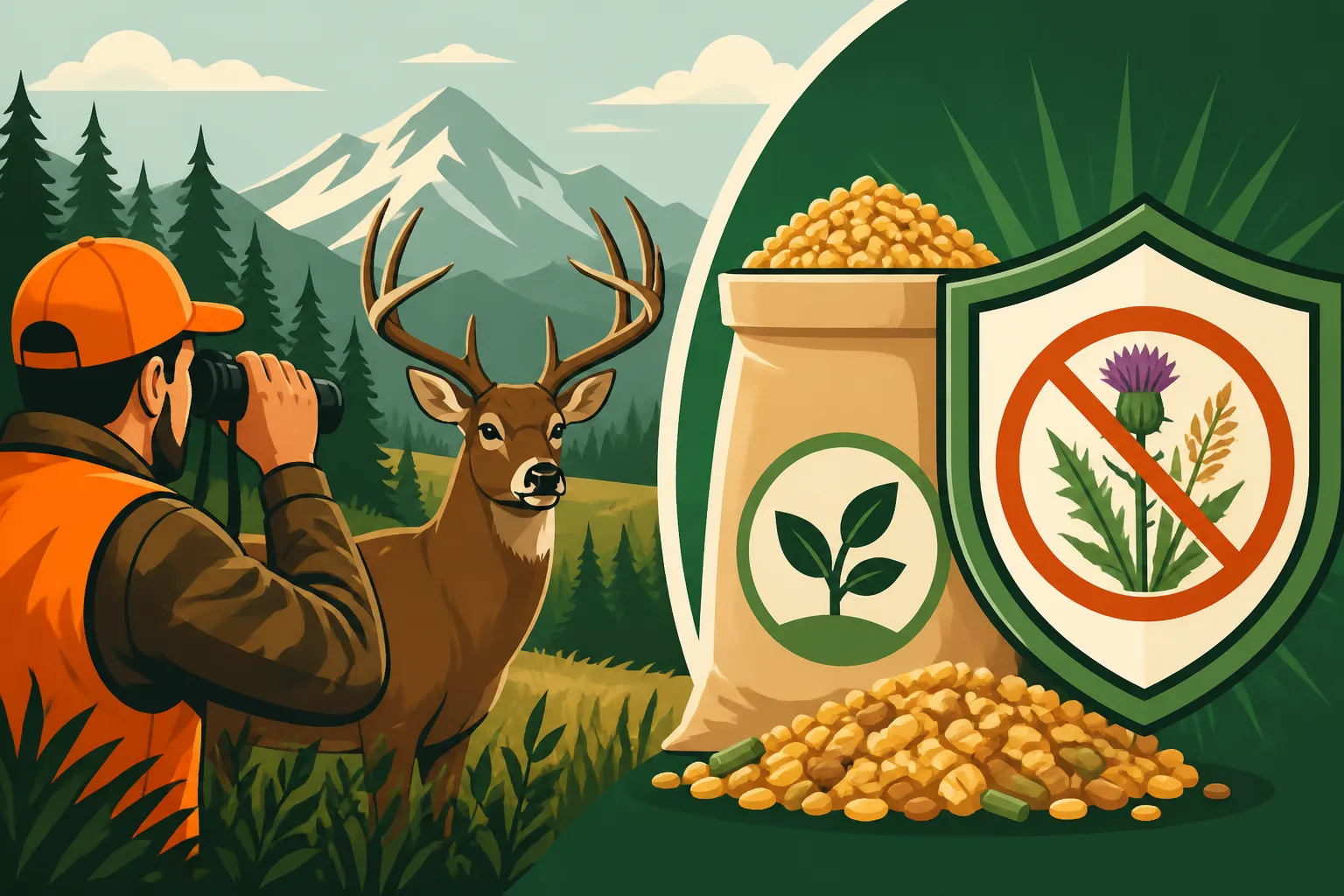
So, what exactly does "certified weed-free" entail? It’s not just a casual inspection; it's a rigorous process. Certified weed-free forage, whether it's hay, straw, or processed cubes, has been inspected by a qualified inspector, typically from the Oregon Department of Agriculture or a local County Weed Board, to ensure it meets specific standards. These standards dictate that the feed must be free of designated noxious weed seeds and plant parts.
The inspection usually happens in the field before harvest or at the baling site. Once deemed free of noxious weeds, the bales or bags are then typically banded or tagged with a special "Blue Tag" or similar certification label from the North American Invasive Species Management Association (NAISMA) or an equivalent state agency. This tag is your proof. It signifies that the forage has met strict criteria, minimizing the risk of introducing invasive species into sensitive areas. Without that official tag or documentation, even if you believe your hay is clean, it won't meet the regulatory requirements on many public lands.
Where and When Weed-Free Feed is Required in Oregon
The biggest question most folks have is, "Where do I actually need this stuff?" It's a fair question, as the rules aren't universally applied across every acre of public land in Oregon. However, they are increasingly common in the very places hunters with stock animals want to go: the wild, remote, and often designated wilderness areas.
Specific Areas and Land Management Agencies
Generally, you’ll find certified weed-free feed requirements on lands managed by the U.S. Forest Service (USFS) and the Bureau of Land Management (BLM), especially within designated Wilderness Areas. This includes vast tracts of incredible hunting country in places like the Wallowa-Whitman National Forest, the Umatilla National Forest, and the Deschutes National Forest. If your plan involves packing into the Eagle Cap Wilderness, the Hells Canyon Wilderness, or other designated roadless areas, you can bet these rules will apply.
Some state parks or wildlife areas managed by the Oregon Department of Fish and Wildlife (ODFW) may also have similar requirements, so it's always wise to check the specific regulations for the area you intend to visit. Hunting into a Multi-Day Camps in Oregon's Roadless Country or utilizing Horse and Llama Packing Into Oregon Backcountry means you are almost certainly operating under these restrictions. Before you even load your animals, spend some time doing your homework. Websites like GoHunt often integrate mapping layers that can help you identify land management designations, and you can cross-reference these with the Forest Service or BLM websites for the most up-to-date local rules. This E-Scouting Oregon Units With Satellite Imagery can save you a lot of grief.
Types of Feed Covered by the Regulations
It’s not just your traditional baled hay that falls under these regulations. Any forage brought in for your stock needs to be considered. This typically includes:
- Baled Hay: The most common form of feed for horses and llamas. Ensure it carries the official weed-free certification tag or band.
- Hay Cubes or Pellets: These processed feeds are generally a safer bet as the manufacturing process often destroys weed seeds. However, it's crucial to confirm they are indeed certified or produced by a facility that guarantees weed-free inputs. Always check the bag for any indication of weed-free status or ask your supplier for proof.
- Straw for Bedding: While not feed, straw is often used for bedding and can also carry weed seeds. In some areas, certified weed-free straw may also be required if you're bringing it in for stock bedding in sensitive environments.
- Other Forage: If you're bringing in anything else for your animals to consume, be it grain, silage, or commercial feed mixes, it's best to confirm its weed-free status, especially if you're venturing into wilderness areas.
To help you visualize the difference, here’s a quick comparison:
| Feed Type | Certification Requirement (Generally) | Key Identification | Risk of Weed Introduction |
|---|---|---|---|
| Loose Hay (non-cert.) | High risk, generally prohibited | No visible tags, unknown source | High |
| Certified Baled Hay | Required in designated areas (Wilderness, certain USFS/BLM lands) | Official "Blue Tag" or state certification band | Low |
| Hay Cubes/Pellets | Often a safe alternative, but verify 'weed-free' claim on packaging | Label stating "weed-free" or source certification | Low-Moderate |
| Non-Certified Straw | High risk, may be prohibited for bedding in sensitive areas | No visible tags | High |
| Certified Straw | Required in some areas for bedding | Official "Blue Tag" or state certification band | Low |
| Commercial Feeds | Generally low risk, but check ingredients for whole grains | Standard feed bag, often processed and clean | Low |
This table provides a general guideline. Always refer to the most current regulations for your specific hunt unit and land management agency.
How to Source and Verify Weed-Free Feed for Your Oregon Hunt
Finding certified weed-free feed isn't always as simple as picking up a bale at the local co-op, especially if you live in an area where demand for it isn't high among livestock owners. It takes a little planning, but it's absolutely doable.
Finding Reputable Suppliers
Your first stop should be your local agricultural extension office or county weed board. They often maintain lists of certified hay producers in the region or can direct you to state resources. Many feed stores in and around popular hunting destinations in Oregon are well-versed in these requirements and will stock certified hay, especially closer to the hunting seasons. Don't be shy about asking. If you're planning a trip to a general area like the Wallowas, call ahead to feed stores in towns like Enterprise, Joseph, or La Grande.
Online resources can also be invaluable. Organizations like NAISMA provide resources and directories for certified forage. Some larger agricultural supply companies might also carry certified products, which can sometimes be ordered and shipped. Remember, when you're making your purchase, explicitly ask for "certified weed-free" feed and ensure it comes with the necessary documentation. Platforms like GoHunt, with their active community forums and regional insights, can sometimes be a great place to ask for recommendations for local suppliers from other hunters who frequently use pack animals in Oregon’s backcountry. For those considering What It Costs to Hire a Packer With Stock, your outfitter or packer will handle all these logistics, but it's still good to be aware.
Essential Documentation and Inspection
Once you've sourced your feed, the work isn't quite done. You need to be prepared to prove its certified status if asked. The standard form of proof is the aforementioned "Blue Tag" or state-specific certification band that should be affixed to each bale. If you're buying processed cubes or pellets, the bag itself should state "certified weed-free" or have a clear indication of its origin from a certified source.
It's critical to keep all receipts and certification documents with you throughout your hunt. Forest Service or BLM rangers and OSP (Oregon State Police) often patrol trailheads and popular ingress points into wilderness areas, and they will ask to see your documentation. Don’t just rely on the tags on the bales; having a printed copy of the certificate from the grower or feed store provides an extra layer of verification. Make sure your animals consume all certified feed while in the designated area. If you end up with leftovers, you'll need to pack them out and dispose of them properly to avoid any accidental spread. Managing your feed and Highlining Stock at a Backcountry Camp correctly are both crucial for minimizing your environmental impact.
Practical Tips and Common Pitfalls
These regulations, while important, can add another layer of complexity to an already demanding endeavor. But with a bit of foresight and planning, you can navigate them without much fuss.
Planning Ahead for Remote Trips
If you're planning on Oregon Wilderness Areas Open to Hunting or heading deep into a unit like the Wallowa-Whitman National Forest Hunting, obtaining certified feed on short notice can be a real headache. Stores in smaller, more remote towns might have limited stock or none at all, particularly if you're outside peak hunting season. The best approach is to source your feed well in advance, preferably from a trusted supplier near your home or a larger town along your route that is known to stock it. This way, you can verify the certification, ensure you have enough, and avoid last-minute panic.
Consider buying enough certified feed for your entire trip, including the travel days if your animals will be eating on the trailer. Plan for proper storage to keep it dry and protected from contamination. Remember, the goal is to prevent any weed seeds from making it into the backcountry, so keeping your certified feed separate from any other non-certified forage is key. If you're doing Backpack Camps in Oregon Wilderness with pack goats or llamas, their feed needs to be just as compliant.
Consequences of Non-Compliance
It might be tempting to just roll the dice and hope no one checks, but trust me, it’s not worth the risk. The consequences of being caught with uncertified feed on lands where it's required can range from a stern warning to significant fines. Forest Service and BLM officers take these regulations seriously because they understand the long-term ecological damage that invasive species can inflict.
At best, you might be turned away from the trailhead, effectively ending your hunt before it even begins. Imagine driving hours, packing all your gear, only to be told you can't enter because of your hay. At worst, you could face fines, be required to dispose of your uncertified feed on the spot (which creates its own waste problem), and have your trip completely derailed. This is why paying attention to details, whether it's Reading a Travel Management Area Map Before You Drive or verifying your feed, is so critical for a successful hunt. These rules are non-negotiable in many areas, and adherence is part of being a responsible public land user.
Disclaimer
The information provided in this guide is for general informational purposes only and is not legal advice. Hunting regulations, including those pertaining to weed-free feed, can change frequently. It is the responsibility of every hunter to consult the most current Oregon Department of Fish and Wildlife (ODFW) regulations, as well as the specific rules for the land management agency (e.g., U.S. Forest Service, BLM) governing their intended hunting area, before planning and undertaking any hunt. Failure to comply with regulations can result in fines, penalties, and loss of hunting privileges.