Oregon Controlled Hunt Draw Explained
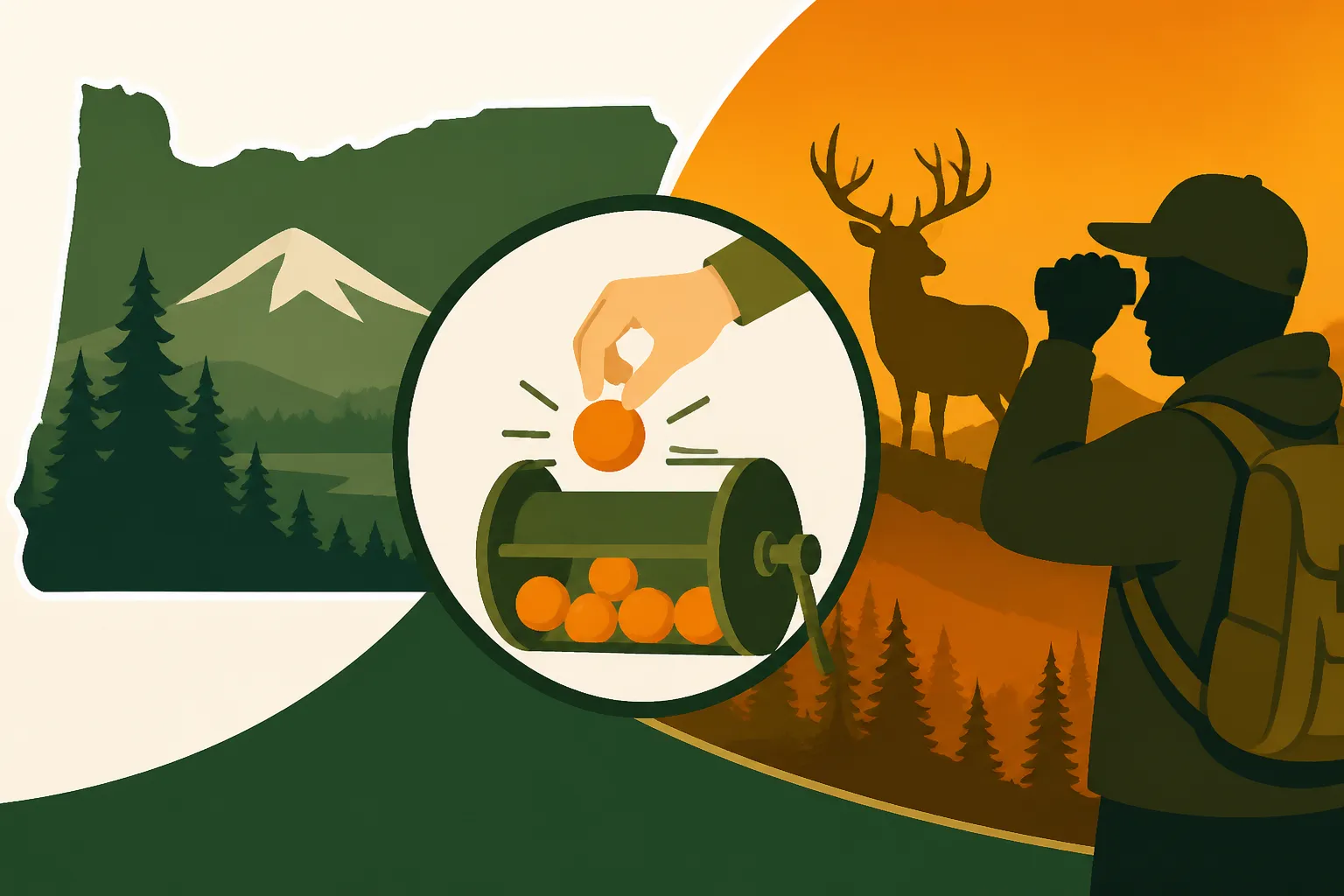
The Oregon controlled hunt draw can feel like a high-stakes lottery, a complicated riddle wrapped in a bureaucratic enigma that leaves even seasoned hunters scratching their heads. The frustration is real – pouring over regulations, poring over maps, dreaming of that one coveted tag, only to have the system feel completely opaque. This guide is here to unravel the mysteries, to break down the Oregon controlled hunt draw process into digestible, practical information so you can navigate the application, understand the point system, and hopefully, increase your chances of drawing that dream tag.
Understanding the Foundation of Oregon's Controlled Hunts
Before diving into the nitty-gritty of applications and points, it’s really helpful to grasp why Oregon even has controlled hunts in the first place. It’s not just to make things complicated, I promise! There's a sound, long-term strategy behind it all, aiming to strike a balance between providing opportunities for us hunters and ensuring the health and sustainability of our incredible wildlife populations.
Why Controlled Hunts Exist in Oregon
At its core, the controlled hunt system in Oregon is a critical tool for conservation and herd management. Think about it: if every hunter could just walk into a store and buy a tag for, say, a prime bull elk unit in the Blue Mountains, those herds would be decimated in a season or two. The pressure would be immense, leading to overharvesting, disrupted breeding patterns, and ultimately, a decline in animal numbers and quality. Controlled hunts allow the Oregon Department of Fish and Wildlife (ODFW) to manage specific game populations on a more granular level. They can set precise tag quotas for individual units or hunt areas, ensuring that the harvest aligns with biological objectives for that particular herd.
This system also plays a huge role in maintaining the "quality" of the hunting experience. Nobody wants to hunt in an area where animals are so sparse or wary from constant pressure that seeing one is a miracle, let alone harvesting one. By limiting hunter numbers, controlled hunts often lead to higher success rates, older age-class animals, and a generally more satisfying, less crowded experience in the field. This is particularly true for sought-after species like mule deer in Eastern Oregon or big bull elk units. Without these controls, areas like the Steens Mountain, for example, would see an unsustainable influx of hunters, rapidly eroding the experience and the herd's integrity. It's a long-game strategy, and while sometimes frustrating when you don't draw, it's ultimately for the benefit of both the wildlife and us hunters down the road.
The Difference Between General Season and Controlled Hunts
It's easy to get these two confused, especially if you're new to Oregon hunting or coming from a state with different regulations. The simplest way to think about it is accessibility and opportunity. General season hunts, often called "over-the-counter" (OTC) tags, are exactly what they sound like: you buy your license and then purchase a tag directly without going through a draw. For many species in Oregon, particularly certain deer and elk seasons in specific regions, these tags are readily available until quotas are met or the season closes. For example, there are general season Western Oregon deer tags and even general season Western Oregon elk tags that don't require you to enter a draw. This provides consistent, accessible hunting opportunities year after year, which is fantastic for those who prioritize getting out in the field annually without the uncertainty of a lottery.
Controlled hunts, on the other hand, are where the draw system comes into play. These tags are limited in number and require you to apply well in advance, entering a lottery alongside thousands of other hopeful hunters. You put in for specific units or hunt codes, and whether you get a tag depends on your preference points and pure luck. These hunts are typically for areas with very healthy populations, exceptional trophy potential, or those areas where harvest needs to be strictly managed to prevent over-pressurization. Think of the highly sought-after Eastern Oregon mule deer hunts or prime Rocky Mountain elk units; these nearly always fall under controlled hunts. While general seasons offer a reliable path to hunting annually, controlled hunts offer the chance at those "dream hunts" with potentially higher success rates and often bigger, older animals, albeit with the added challenge of drawing the tag. It's about weighing immediate opportunity against the long-shot pursuit of a truly exceptional experience.
Navigating the Application Process for Controlled Hunts
Applying for controlled hunts can feel like a rite of passage for Oregon hunters, often filled with anticipation, a little anxiety, and a healthy dose of research. While the system is designed to be user-friendly, missing a critical step or misunderstanding a choice can cost you a valuable year or even your accumulated points. Let's walk through the essential elements to ensure your application is submitted correctly and strategically.
The Critical May 15th Deadline and How to Apply
Let me tell you, there are few things more frustrating than spending hours researching units, dreaming of a particular hunt, and then realizing you missed the application deadline. The single most important date for any Oregon controlled hunt applicant is May 15th. Mark it on every calendar, set multiple phone reminders, tattoo it on your arm if you have to! This is the absolute cutoff for submitting your controlled hunt applications. There are no extensions, no do-overs, and no exceptions if you miss it. If you're looking for information on specific deadlines, our guide on Oregon Controlled Hunt Application Deadline might be helpful.
The application process itself is primarily done through the ODFW's online licensing system. It's fairly straightforward once you get the hang of it, but it's not something you want to rush through at 11:59 PM on May 15th. You'll need to log into your account, navigate to the "Controlled Hunt Application" section, and then carefully select your desired hunt choices. It’s crucial to double-check hunt codes and unit names. A common mistake I've seen over the years is folks mixing up hunt codes or accidentally applying for a unit adjacent to the one they intended, simply due to a typo or a hurried click. Before you finalize anything, review your selections several times. Print out a summary if the system allows, or at least take a screenshot. This simple step can save you a year of regret. While the ODFW site is the official portal, many hunters use resources like GoHunt's application tools to research odds and then confidently enter their selections into the ODFW system.
Making Your Choices: First, Second, and Third Options
When you're filling out your controlled hunt application, you'll be prompted to make up to three choices for each species (deer, elk, antelope, etc.). This isn't just a matter of listing your top three dream hunts; there's a specific strategy involved because of how the draw system works with preference points. Your first choice is the most critical. This is the hunt code that all your accumulated preference points will be applied to. If you draw your first choice, your preference points for that species will be purged, essentially resetting you to zero for future draws. This is why it's so vital to put your truly most desired, often highest-point-requirement hunt as your first choice.
Your second and third choices operate differently. Preference points do not apply to these choices. Instead, they are entered into what's essentially a random lottery draw, often referred to as the 25% random pool (which we'll delve into shortly). This means that even if you have 10 preference points, they won't help you draw your second or third choice. Because of this, many hunters use their second and third choices for hunts with very low point requirements, hunts that often have leftover tags, or "opportunity" hunts that they might be able to draw purely by chance, regardless of their points. It’s a way to try for an additional tag without risking your valuable preference points. If you happen to draw your second or third choice, your preference points for that species remain intact and carry over to the next year. Understanding this crucial distinction is key to strategizing your application. For more specific details on the number of choices allowed, you can look up How Many Choices on an Oregon Application.
The Non-Refundable Application Fee
Applying for controlled hunts in Oregon isn't entirely free, and it's a detail that sometimes catches new applicants off guard. For each species you apply for (deer, elk, pronghorn, etc.), there's a non-refundable application fee. Currently, this fee is typically $10 per species. So, if you apply for both controlled deer and controlled elk, you'll be charged $20 in application fees. It's a relatively small sum in the grand scheme of things, especially compared to the cost of a full license and tag, but it's important to factor into your budget and application process.
This fee is non-refundable whether you draw a tag or not. It's essentially an administrative charge to cover the costs associated with processing thousands upon thousands of applications, maintaining the draw system, and supporting ODFW's broader wildlife management programs. Think of it as a small investment into the future of Oregon's hunting opportunities. While some hunters might grumble about paying for a chance, this revenue contributes directly to the agency's efforts in data collection, habitat improvement, and enforcement – all things that benefit us in the long run. Just be sure you've budgeted for these fees when you sit down to apply, as they are a mandatory part of getting your name into the hat for those coveted controlled tags. Our guide on the Oregon Controlled Hunt Application Fee goes into more detail.
Demystifying Oregon's Preference Point System
The preference point system is arguably the most talked-about, debated, and often frustrating aspect of Oregon's controlled hunt draw. It’s designed to reward loyalty and persistence, giving hunters who have applied for years a better chance at drawing a quality tag. However, it’s not always as straightforward as it seems, and understanding its nuances is critical to successful long-term hunting strategies.
How Preference Points Are Earned and Accumulated
Let's break down how you actually get these magical preference points. For each species (deer, elk, pronghorn, etc.), you earn one preference point for every year you apply for a controlled hunt and do not draw your first choice. It's a simple accrual system: apply, don't draw your primary pick, and boom, you get a point added to your tally for that species. This point then carries over and gives you a statistical advantage in the next year's draw for that same species. The idea is that the more points you have, the higher your odds of eventually drawing a highly desired tag.
There's also a fantastic option for those years when you might not be able to hunt, or you just want to focus on accumulating points without committing to a specific hunt choice. You can purchase a preference point directly during the application period without submitting any hunt choices at all. This is often referred to as "buying a point" or a "point-only application." This still counts as applying and adds a point to your record, ensuring you don't lose your place in line and keep building that valuable bank of points. This option is crucial for hunters who are strategically building points for a once-in-a-lifetime type hunt or simply trying to get ahead of the dreaded "point creep" – a phenomenon where the number of points required to draw a popular unit steadily increases over time. Remember, these points are species-specific; a deer point won't help you draw an elk tag, and vice-versa. You can learn more about this by checking out Oregon Preference Point Purchase Window.
The 75/25 Split: Understanding the Draw Mechanics
Here's where the draw system gets a bit more complex, and it’s where many misunderstandings occur. Oregon uses what's often called the "75/25 split" for allocating controlled hunt tags. This means that for any given controlled hunt, approximately 75% of the available tags are awarded to applicants based on their accumulated preference points, while the remaining 25% of the tags are awarded purely by random draw, regardless of how many points an applicant has.
Let's unpack the 75% side first. This is where your hard-earned preference points truly shine. ODFW will rank all applicants for a given first-choice hunt code by the number of points they have. The applicants with the highest number of points will draw those 75% of tags first. This system heavily favors those who have been consistently applying and accumulating points. For extremely popular units, it might take 15, 20, or even more points to get into that 75% pool. Our guide on How Oregon Awards 75 Percent by Points offers an in-depth explanation.
Then there's the 25% random draw. This portion is a lifeline for hunters with fewer points, or even zero points. If you don't have enough points to get into the top 75% for your first choice, your application is then automatically entered into a random drawing for the remaining 25% of the tags. This is pure luck of the draw. It means that even a first-time applicant with no points has a chance, albeit a slim one, to draw a highly sought-after tag. It also means that your second and third choices, which don't utilize points, are effectively entered into this 25% random pool. This dual system attempts to balance rewarding long-term applicants with providing some immediate opportunity for everyone. For more details on the random draw, see The 25 Percent Random Draw in Oregon.
What Purges Your Hard-Earned Points
This is a critical piece of information that every Oregon hunter needs to understand thoroughly, because a misunderstanding here can be incredibly disappointing. In Oregon, your accumulated preference points for a specific species are purged (reset to zero) if you successfully draw your first-choice controlled hunt tag for that species. This is the big one. If you put in for a premium elk unit as your first choice and you draw it, congratulations! But know that your elk preference points will go back to zero for the next year. This encourages a fair rotation and gives other hunters a chance to eventually draw those high-demand tags.
However, and this is a common point of confusion, your preference points are NOT purged if you draw your second or third choice. If you happen to get lucky and draw an elk tag as your second or third choice, your accumulated elk preference points will remain intact and carry over to the next year. This is a huge strategic advantage, allowing hunters to try for a bonus tag in lower-demand units without sacrificing their long-term point strategy for a truly premium first choice. Understanding this distinction is vital for making informed decisions about your application strategy. Don't let your hard-earned points vanish unexpectedly! Our post What Happens to Points When You Draw has more information on this.
It's also worth noting that your points will expire if you do not purchase a license or apply for a point-only option for that specific species for a continuous period of more than five years. So, make sure to at least buy a point every few years if you're taking a break from hunting!
Strategies for Maximizing Your Oregon Draw Odds
Drawing a controlled hunt tag in Oregon often feels like a puzzle, but with a bit of strategy, research, and long-term planning, you can significantly improve your chances. It’s not just about accumulating points; it’s about making smart choices with those points.
Researching Units and Hunt Choices for Success
The old adage "knowledge is power" absolutely applies to the Oregon controlled hunt draw. Simply picking a unit that sounds good or is close to home isn't going to cut it if you're serious about drawing a quality tag. Thorough research is your most potent weapon. Start with the official ODFW hunt regulations and statistics reports. These documents provide crucial data on past draw odds, success rates, and tag allocations for every controlled hunt. Look for trends: Is a unit's point requirement steadily increasing (point creep)? Are success rates declining, indicating lower animal populations or increased pressure?
Beyond the raw ODFW data, several private platforms offer invaluable tools. GoHunt's Insider membership, for example, is a widely used resource that compiles ODFW data, analyzes draw odds, and provides comprehensive unit profiles, helping you visualize your chances based on your current point total. They often have proprietary algorithms that predict point creep and future draw success. This kind of platform can help you identify units that are trending upwards in points, or conversely, units that might be overlooked but offer good opportunities. When you're trying to figure out where to apply, it's also incredibly helpful to look at the terrain. Resources like E-Scouting Oregon Units With Satellite Imagery can give you an edge in understanding the lay of the land without ever stepping foot in the unit. Combine this digital scouting with talking to other hunters, local ODFW biologists if possible, and scrutinizing harvest reports. The goal is to build a complete picture of a unit's draw difficulty, hunting experience, and potential success before you ever click "submit" on your application.
Applying as a Party: Pros and Cons
Oregon allows hunters to apply for controlled hunts as a party, which means a group of two or more hunters can link their applications together. This can be a fantastic way to ensure you and your hunting buddies can share an experience in the field, but it comes with some important caveats, especially regarding preference points. The biggest takeaway for party applications is that your collective preference points for a given species are averaged. If you have 10 points and your buddy has 2, your party will apply with an average of 6 points for that specific species (10+2 / 2 = 6).
The main "pro" of applying as a party is obvious: if you draw, everyone in your party draws a tag for that hunt. This is invaluable for groups that prioritize hunting together, ensuring no one is left out. It also means you pool your research and effort. However, the "con" is that point averaging can significantly lower your effective point total if one member has substantially fewer points. In our example, the hunter with 10 points effectively "donates" points to the lower-point hunter, reducing their overall draw odds for a high-point unit. If the higher-point hunter could have drawn that tag on their own, they might miss out by applying with a lower-point partner. Furthermore, if any member of the party draws their first choice, then everyone's preference points for that species are purged, regardless of their individual point totals. This is a crucial point of confusion and can lead to frustration if not understood upfront. For a deeper dive into how this affects your application, consider reading Oregon Party Application Point Averaging. Therefore, party applications are best suited for groups where all members have similar point totals, or where the desire to hunt together outweighs the potential individual loss of points for a particularly high-point hunter.
Understanding Point Creep and Long-Term Planning
"Point creep" is a phrase that strikes fear into the hearts of many an Oregon hunter, and it’s a very real phenomenon that directly impacts your long-term draw strategy. Simply put, point creep refers to the gradual but consistent increase in the number of preference points required to draw a particular controlled hunt tag year after year. As more hunters apply for desirable units and accumulate points, the "minimum" or "average" points needed to draw those tags inevitably goes up. What might have taken 8 points five years ago could now require 10 or 12 points.
This makes long-term planning absolutely essential, especially for those highly coveted, once-in-a-lifetime hunts. You can't just look at last year's draw odds and assume they'll hold true for next year. When researching units, pay close attention to the historical point trends. Is a unit seeing a steady increase of 1-2 points per year? Then you need to factor that into your strategy. If you're sitting on 15 points and a unit took 12 points last year, you might feel safe. But if that unit has a history of 1-point creep annually, in three years, it might take 15 points.
This is where buying points even when you don't plan to hunt becomes a powerful strategy. By consistently acquiring a point each year, you ensure you're keeping pace with or even slightly ahead of the creep. For comprehensive insights into this topic, our guide on Oregon Point Creep in Popular Units offers more context. It's a game of patience and projection. Tools like GoHunt are invaluable here, as they often have predictive analytics for point creep, helping you gauge when you might realistically draw a tag based on historical trends. Don't let point creep catch you unprepared; plan several years in advance for those dream hunts.
| Application Component | Detail | Notes |
|---|---|---|
| Application Deadline | May 15th, 11:59 PM PT | No exceptions. Miss it, miss out. |
| Application Fee | $10 per species applied for | Non-refundable, supports ODFW programs. |
| Hunt Choices | Up to 3 per species (First, Second, Third) | Points apply ONLY to First Choice. |
| Preference Points | Earned for non-draw of First Choice, or by Point-Only application | Species-specific, accumulate annually. |
| Point Purge | Occurs ONLY if you draw your FIRST-CHOICE tag | Points remain if you draw Second/Third Choice. |
| Draw System | ~75% of tags awarded by points, ~25% by random draw | Balances rewarding loyalty with providing random opportunity. |
| Draw Results Release | Typically mid-June | Check ODFW online licensing system. |
Post-Draw: Understanding Results and Next Steps
The agonizing wait after the May 15th deadline can feel endless. You've applied, you've strategized, and now all you can do is hope. But what happens when the results finally drop? Whether you're celebrating a drawn tag or contemplating next year's strategy, knowing what to do next is crucial.
When to Expect Oregon Draw Results
The period between the application deadline and the release of draw results is one of the most nail-biting times for any hunter. While ODFW doesn't provide an exact minute or hour, they are generally pretty consistent with their timeline. You can typically expect the Oregon controlled hunt draw results to be released in mid-June. Specifically, the third week of June is often when successful applicants start seeing charges on their credit cards and notifications popping up in their online accounts. Our detailed post on Oregon Draw Results Release Date provides current and historical insights into when you can expect that exciting (or heartbreaking) email.
The best way to check your status is by logging into your ODFW online licensing account. Once results are public, there will usually be a clear notification on your dashboard or under your "Controlled Hunt Applications" section indicating whether you were successful or not. Don't be surprised if the ODFW website is a little slow or busy on the day results are first released, as thousands of anxious hunters are all trying to log in at once! Resist the urge to call ODFW directly, as their lines will be jammed. Patience is a virtue here, just like in hunting itself. You'll know soon enough if your efforts paid off.
What Happens If You Draw a Tag
Congratulations, you drew! That rush of excitement is fantastic, but it's important to quickly shift gears from application mode to preparation mode. The very first thing you need to do is purchase your tag. Even though you drew, the tag isn't automatically issued or paid for. You'll typically have a window of time after the draw results are released to log back into your ODFW account and pay for your controlled hunt tag. If you fail to purchase the tag by the specified deadline, you will forfeit it, and it might go into a secondary drawing or be offered as an unsold tag. Don't let that happen!
Once your tag is purchased, immediately dive into the specific regulations for your hunt. Each controlled hunt has a unique hunt code that corresponds to specific dates, boundaries, weapon restrictions, and often even harvest limitations (like antler point restrictions). Rely solely on the general season regulations can lead to serious violations. Pay close attention to unit maps, looking for private land boundaries, wilderness areas, or special access rules. Now is also the time to begin your intensive scouting and planning, whether that's physically getting boots on the ground or extensively E-Scouting Oregon Units With Satellite Imagery. Finally, and this is a critical piece often overlooked until it's too late: understand the Oregon Mandatory Harvest Reporting and the $25 Penalty. Regardless of whether you fill your tag or not, you are legally required to report on your hunt by the specified deadline after the season closes. Failure to do so will result in a $25 penalty on your next license purchase, so mark that date down too!
What Happens If You Don't Draw
It's a familiar ache for many of us: you check the ODFW portal, and there's that disappointing message—"unsuccessful." Don't let it get you down too much; it's a reality for a vast majority of applicants, especially for popular hunts. The good news is, if you didn't draw your first choice, you automatically earn another preference point for that species, pushing you one step closer to that dream tag next year. This is the silver lining in every unsuccessful draw notification.
Take a moment to confirm that your preference points have indeed updated in your ODFW account. Sometimes it takes a few days for the system to reflect the new point. Once confirmed, it's time to start planning for next year, armed with your newly accumulated point. Revisit your research, perhaps refine your unit choices based on the latest draw odds, and consider how point creep might impact your chances moving forward. In the meantime, don't forget about general season opportunities! Just because you didn't draw a controlled tag doesn't mean your hunting season is over. Oregon offers many fantastic general season deer, elk, bear, and other hunts that you can still purchase over-the-counter. This can be a great way to get out, hone your skills, and keep fresh meat in the freezer while you patiently build points for that special controlled hunt.
Special Considerations and Common Pitfalls
While the core of the Oregon controlled hunt draw system is fairly consistent, there are specific situations and common mistakes that deserve extra attention. Understanding these can prevent costly errors and ensure a smoother, more successful application journey.
Non-Resident Tag Allocation and Costs
For hunters coming from outside Oregon, the controlled hunt draw system presents additional layers of complexity and cost. Oregon has specific rules designed to prioritize resident hunters while still offering opportunities for non-residents. The most significant rule is the 5% non-resident tag cap. For most controlled hunts, a maximum of 5% of the available tags can be allocated to non-resident hunters. This means competition is incredibly fierce, and draw odds are significantly lower for non-residents, especially for high-demand units. You can find more information about this cap in our post Oregon's 5 Percent Nonresident Tag Cap.
Beyond the limited tag numbers, non-resident license and tag fees are substantially higher than resident fees. For example, a non-resident elk tag can cost several times what a resident pays. Our guide on Oregon Nonresident Tag Cost for Deer and Elk details the specifics. This higher cost, combined with the lower draw odds, means non-residents often need a much higher number of preference points to draw a desirable tag compared to their resident counterparts. There's also a specific Nonresident Guided Hunt Tag Program. This program allocates a very small number of additional tags specifically for non-residents who book a hunt with a licensed Oregon outfitter. While this can increase draw odds for those willing to pay for a guided experience, it's an expensive route. If you're a non-resident, your strategy needs to be even more meticulous: either focus on accumulating a very high number of points for popular units, or research lower-demand units that might offer a more realistic chance.
Youth and Senior Hunter Considerations
Oregon recognizes the importance of encouraging young hunters and supporting those who have dedicated years to the sport, offering specific programs and pricing for youth and seniors. For youth hunters (typically under 18, though specific age ranges apply to different tags/licenses), Oregon offers reduced license and tag fees. This makes it more affordable for families to introduce their children to hunting. Additionally, youth often have access to special youth-only controlled hunts or dedicated youth hunt weekends, which are designed to provide less competitive opportunities and a positive first experience. The Mentored Youth Hunter Program also allows unlicensed youth to hunt alongside a licensed adult, further easing the entry barrier. You can check out Oregon Youth Hunting Licence Cost for more details. However, youth hunters must still meet hunter education requirements and follow all other hunting regulations, including applying through the controlled hunt draw for specific tags.
For senior hunters, Oregon also provides some benefits, primarily in the form of reduced license fees for qualifying residents (often 70 years and older). This acknowledges their many years of contribution and participation in Oregon's hunting heritage. While senior hunters participate in the same controlled hunt draw as other adults, the reduced license fee makes it more accessible. It’s always best for seniors to check the most current regulations for specific age cutoffs and applicable discounts. Both youth and senior hunters should ensure they are familiar with the standard hunter education requirements for Oregon, which are mandatory for most big game hunting. Our resource on Oregon Senior Resident Licence Rules provides a good overview.
Avoiding Common Application Mistakes
It might seem obvious, but rushing through the application process can lead to frustrating mistakes that cost you a year of hunting or even precious preference points. Here are some of the most common pitfalls I’ve seen over the years:
Firstly, missing the May 15th deadline is, without a doubt, the number one mistake. There's simply no recourse for a late application. Set multiple reminders and aim to submit your application well in advance.
Secondly, incorrect hunt codes or unit selections. It’s incredibly easy to accidentally click the wrong hunt code or misread the regulation pamphlet. A slight variation in a number or letter can put you in an entirely different unit or for a different weapon type. Double-check your choices against the official ODFW hunt code list and the maps. Use the "search by map" function if available on the ODFW portal to visually confirm your unit.
Thirdly, misunderstanding the preference point purge rules. As discussed earlier, drawing your first choice resets your points. Many hunters inadvertently burn a high number of points on a less-desired first choice, not realizing the implications. Carefully consider your first choice, making sure it’s truly the hunt you want to spend those points on.
Finally, failing to buy a point when you don't plan to hunt. If you skip applying entirely and don't purchase a point-only option, you'll fall behind in the point accumulation race. This is particularly damaging if you've already accrued several points and want to keep pace with point creep. Make it a habit to either apply or buy a point every year for the species you intend to hunt in the future. A quick review of your application before clicking submit can save you a world of headache and disappointment.
Disclaimer
The information provided in this guide is for general informational purposes only and is not intended as legal advice. Hunting regulations, fees, and draw processes are subject to change by the Oregon Department of Fish and Wildlife (ODFW). While every effort has been made to ensure accuracy, hunters are solely responsible for consulting the most current official ODFW regulations pamphlet and website before applying for licenses, tags, or participating in any hunting activity. Failure to comply with ODFW regulations can result in penalties, fines, and forfeiture of hunting privileges.