The 25 Percent Random Draw in Oregon
Hunting in Oregon, especially for sought-after big game like elk and mule deer, often feels like navigating a labyrinth of regulations, preference points, and draw odds. It's frustrating to pour over statistics, only to feel like certain tags are forever out of reach unless you've been building points for decades. This guide aims to shed light on a crucial, often misunderstood part of the Oregon big game draw: the 25 percent random draw, offering a glimmer of hope and a fair shake to every applicant, regardless of their accumulated points.
Understanding the Two-Tiered Oregon Draw System
If you've ever applied for a controlled hunt in Oregon, you know the feeling of anxiously waiting for June draw results. What many hunters don't fully grasp is that Oregon's draw isn't a single, monolithic lottery. Instead, it's divided into two distinct pools: a preference point-based draw and a completely random draw. This dual system is designed to balance rewarding loyal, long-term applicants with preference points, while still giving everyone, including new hunters or those with fewer points, a legitimate chance at drawing a tag. It's a system that tries to cater to both the seasoned veteran and the hopeful newbie, and understanding both components is key to maximizing your chances.
The Foundation: 75 Percent Preference Point Allocation
The vast majority of controlled hunt tags – a full 75 percent – are allocated based on Oregon's preference point system. This is the part of the draw where all those years of applying, even if you didn't draw a tag, really pay off. When you apply for a controlled hunt, if you don't draw your first choice, you typically get a preference point for the next year. These points accumulate, and the more points you have, the higher your odds of drawing a specific, highly coveted tag in this 75 percent pool.
For many hunters, especially those chasing trophy bull elk or premier mule deer buck tags in Eastern Oregon, accumulating these points is a long-term strategy. They might spend years, even a decade or more, faithfully applying for the same high-demand unit, slowly building their point total until they reach the "point creep" threshold where they're almost guaranteed a tag. This system rewards persistence and dedication, ensuring that those who put in the time eventually get their shot at those premium hunts. It's a predictable, albeit slow, path to success for many, and it forms the backbone of how Oregon manages its most sought-after big game opportunities. For a deeper dive, check out our guide on Oregon Preference Points and How They Work.
The Wild Card: 25 Percent Random Draw Allocation
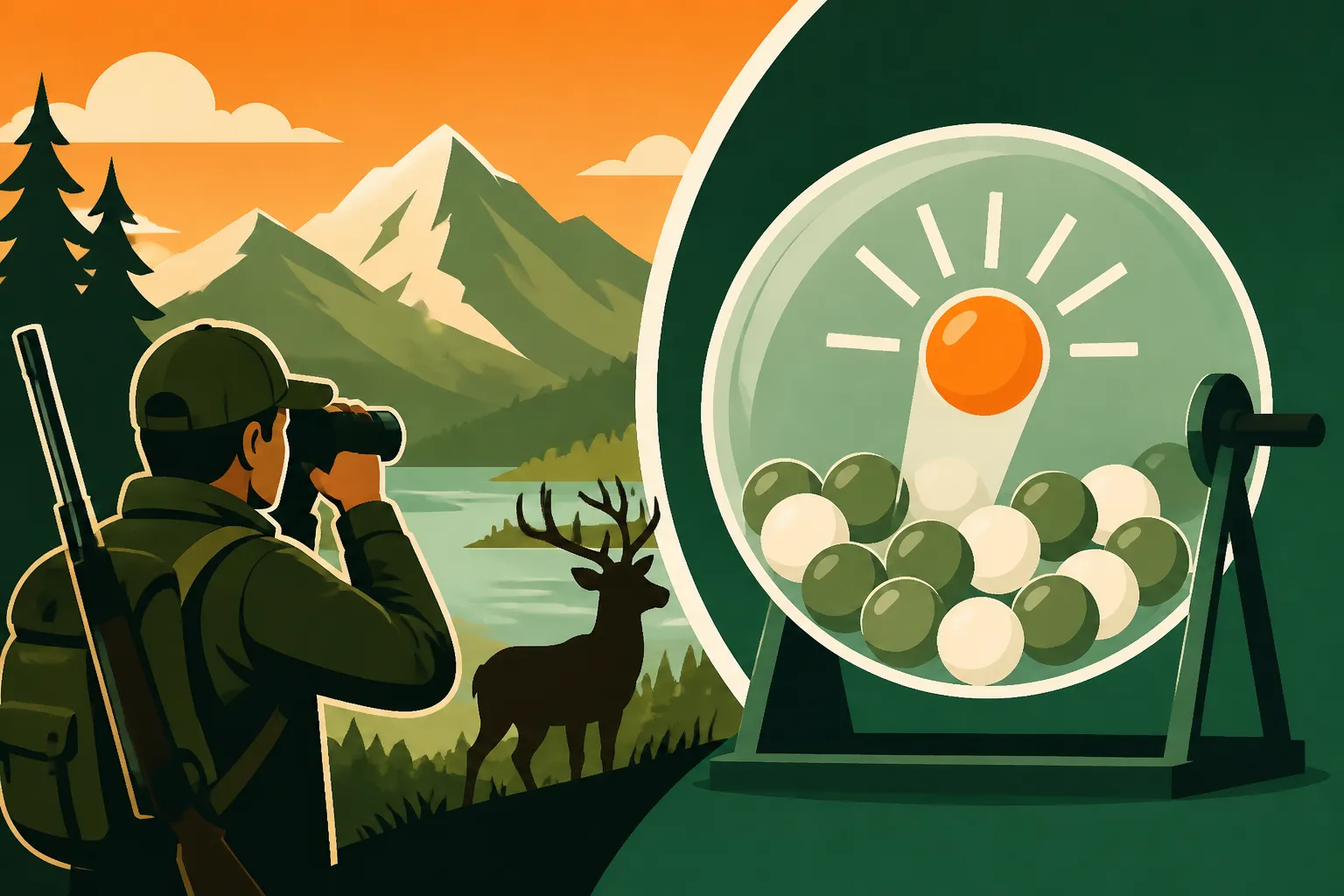
Once the 75 percent of tags have been distributed based on preference points, the remaining 25 percent are thrown into a separate, completely random lottery. This is where the magic, or sometimes the heartbreak, truly happens. Every single applicant who applied for that specific hunt code and didn't draw in the preference point pool, regardless of how many points they have (or don't have!), is entered into this random draw. This means a hunter with zero preference points has the exact same chance of drawing one of these 25 percent tags as a hunter with 20 points who simply wasn't quite high enough to get a tag in the 75 percent pool.
This random component is often seen as a lifeline for new hunters, youth hunters, or those who simply haven't accumulated many points over the years. It allows for unexpected success stories, like someone drawing a premium tag in their first year of applying. It also creates opportunities for hunters who might be trying out a new unit, or who put in for a really high-point tag as a long shot on their first choice. This randomness injects an element of pure luck into the system, ensuring that the playing field isn't entirely dominated by those with the highest point totals. It truly embodies the idea that on any given year, anyone could get lucky.
How the Random Draw Actually Operates
It's easy to misunderstand how the random draw works, especially since it's intertwined with the preference point system. The key is to visualize it as a two-stage process that happens behind the scenes after the Oregon Controlled Hunt Draw Explained has collected all the applications. The sequence of events is critical to grasp, as it directly impacts your strategy for submitting your First, Second and Third Choice on an Oregon Application.
The Journey of Your Application Through Both Pools
Imagine your application as a digital ticket entering a series of drawings. First, all applications for a specific hunt choice are evaluated against the 75 percent preference point pool. Here, the system essentially sorts all applicants from highest points to lowest points. If you have enough points to fall within the top 75 percent of successful applicants for that tag, congratulations, you've drawn! Your journey ends there, and you receive your tag. This process is repeated for everyone's first, then second, then third choices.
Now, what about those who didn't make the cut in the preference point draw for their chosen hunt? Their applications aren't discarded. Instead, they are automatically shuffled into a secondary draw pool for that same hunt code. This is the 25 percent random pool. In this stage, the system disregards all preference points entirely. It's a completely blind draw, like pulling names out of a hat. Every remaining application for that tag has an equal chance, whether it belongs to a hunter with one point or a hunter with fifteen. This mechanism means that even if you're consistently a few points shy of drawing a desirable tag through the preference system, you still have a legitimate shot each year at one of those randomly allocated tags.
The "All or Nothing" Nature of the Random Selection
One important distinction of the 25 percent random draw is its "all or nothing" character. Unlike the preference point system, where drawing a tag purges your points (a topic we cover in depth in What Happens to Points When You Draw), the random draw doesn't directly interact with your point bank in the same way. If you draw a tag through the random 25 percent portion, you will still burn the points for that specific hunt. However, the reason you drew wasn't because of your point accumulation, but purely due to luck in the lottery.
This aspect makes the random draw particularly appealing for hunters who want to take a swing at a high-point unit without completely sacrificing their point accumulation strategy for future years. If you apply for a tough draw with few points, and you happen to get lucky in the 25% draw, it's a bonus. You got a coveted tag you likely wouldn't have gotten otherwise, and you still used your points, as any drawn tag would. The beauty is that the actual mechanism of getting that tag wasn't based on an unattainable point total, but rather the fairness of a truly random chance. It’s a testament to Oregon’s commitment to providing some opportunity to everyone, not just those with decades in the system.
Strategic Thinking for the Random Draw
Understanding the 25 percent random draw isn't just academic; it can significantly influence how you approach your annual controlled hunt application. It's about balancing ambition with realism and making informed choices that might just land you that dream tag, even if your point total isn't sky-high. Many experienced hunters leverage this random chance as a core part of their strategy, especially when considering their second and third choices.
Aiming High with Your First Choice
Given the existence of the random draw, some hunters choose to use their first choice on a unit that typically requires an astronomical number of preference points – a hunt they realistically know they won't draw in the 75 percent pool. Why do this? Because it gives them a shot, however small, at one of those 25 percent randomly allocated tags. For instance, if you've only got five elk points, but there's a particular unit in the Blue Mountains known for its huge bulls that usually takes 20+ points, you might still put it down as your first choice. You almost certainly won't draw it on points, but you have the exact same chance as anyone else in the random drawing.
This "swing for the fences" strategy requires a backup plan. You'd likely need to have a more realistic second or third choice, perhaps a general season tag, or a controlled hunt with much better odds for your point level, that you'd be happy to draw. Tools like GoHunt's draw odds data can be invaluable here. They often break down draw success rates by point levels for both the 75% and 25% pools, allowing you to see just how slim or decent those random odds might be for your chosen unit. It helps to temper expectations while still nurturing that hopeful spark.
Maximizing Your Second and Third Choices
The 25 percent random draw truly shines when it comes to strategically filling out your second and third choices on your application. Remember, if you don't draw your first choice, your application moves to your second choice, then your third. Critically, preference points generally only count towards your first choice. This means that for your second and third choices, the draw system largely functions as a random lottery for everyone who hasn't already drawn a tag.
This is where you can get really smart. You might use your first choice for a unit where you have a strong chance of drawing with your points, securing a solid tag. Then, for your second choice, you could throw in for a desirable, but higher-point, hunt, banking on the random draw. Even if you have very few points, your second and third choices are often primarily decided by this random element, effectively giving you multiple chances at different hunts. Analyzing historical data from ODFW or services like GoHunt that show the number of applicants versus tags for these choices can give you an edge in finding those hidden gems where random odds might be surprisingly favorable. Understanding Oregon's 5 Percent Nonresident Tag Cap can also inform nonresident choices, as it affects the overall tag pool.
Dealing with Point Creep and Unpredictability
One of the biggest frustrations for many hunters is "point creep," where the minimum number of points required to draw a popular tag slowly increases year after year. This pushes many desirable hunts further and further out of reach for hunters who aren't accumulating points at the same rate. The 25 percent random draw offers a partial antidote to this frustration. It ensures that even as point creep makes the 75 percent pool tougher to crack, there's always a consistent portion of tags that remain available purely by chance.
This unpredictability can be both a blessing and a curse. While it gives hope, it also means that planning your hunts years in advance solely based on points becomes a bit more complex. You might have 10 points for a mule deer tag that now takes 12 points in the 75% draw, but you still have a shot in the random 25% pool. Tools from GoHunt or other reliable sources that analyze past draw results, including the success rates for the random pool, can help you make more informed decisions. It's about embracing the uncertainty while still making calculated choices. Don't forget to check out guides like Oregon Unit Names Versus New Hunt Codes to ensure you're applying for the correct hunt area.
The Broader Impact on Oregon's Hunting Landscape
The inclusion of the 25 percent random draw isn't just a technicality in how tags are distributed; it fundamentally shapes the hunting culture and opportunities available across Oregon. It creates a dynamic tension between strategic, long-term point building and the thrill of immediate, unexpected success, impacting everyone from seasoned residents to hopeful nonresidents trying their luck with Oregon Nonresident Tag Cost for Deer and Elk.
Keeping Hope Alive for All Hunters
Perhaps the most significant impact of the random draw is that it democratizes opportunity to a certain extent. Without it, many new hunters, or those who simply can't commit to applying every single year, would quickly become disheartened by the sheer number of preference points required for desirable hunts. Imagine starting out today and seeing that the elk tag you want requires 15 points – that's a 15-year commitment just to potentially draw in the preference pool! The random draw ensures that even if you're years away from accumulating enough points for a popular unit, you still have a legitimate chance this year.
This fosters a more inclusive hunting community, allowing more people to experience the excitement of drawing a coveted tag sooner than they might otherwise. It mitigates the feeling of being "locked out" of the best hunts by a seemingly insurmountable point barrier. This aspect is especially important for youth hunters entering the system, providing them with early opportunities that could spark a lifelong passion for hunting.
Balancing Equity and Experience
The 75/25 split in Oregon's draw system is a thoughtful attempt to balance two often-competing objectives: equity and rewarding experience. The 75 percent preference point system acknowledges the dedication and patience of hunters who have consistently contributed to the system by applying year after year. It recognizes their investment of time and provides a more predictable pathway to a quality hunt.
Conversely, the 25 percent random draw injects an element of pure chance, ensuring that opportunities aren't solely determined by accumulated points or years of experience. This provides a fair shot for everyone, regardless of their history with the draw system. This dual approach aims to maintain broad hunter satisfaction and engagement, giving everyone a reason to apply annually, whether they are building points for a future dream hunt or hoping for a lucky break this season. It's a delicate balance, but one that Oregon strives to achieve to keep its hunting legacy vibrant and accessible.
Strategic Considerations for Non-Residents
For non-resident hunters, the random draw takes on even greater significance. With Oregon's 5 Percent Nonresident Tag Cap on many controlled hunts, and often higher point requirements for the preference draw, the 25 percent random pool represents a crucial pathway to drawing a tag. Non-residents, who typically have fewer opportunities to build points over many years in multiple states, can leverage this random chance.
While the odds might still be long for the most competitive hunts, understanding that 25% of tags are truly random means that meticulous research into units with slightly better non-resident random draw odds can pay off. It encourages non-residents to apply, knowing that their application isn't just a point-building exercise, but a genuine lottery ticket for a significant number of tags each year. This makes the controlled hunt system more attractive and fair for those coming from out of state, fostering diversity within the Oregon hunting population.
Table: Comparison of Oregon's Draw Pools
| Feature | 75% Preference Point Draw | 25% Random Draw |
|---|---|---|
| Primary Basis | Accumulated preference points | Pure chance / lottery |
| Eligibility | All applicants for the hunt | All applicants not drawn in 75% pool |
| Point Impact | Higher points = higher chance | Points are disregarded; equal chance for all in this pool |
| Target Audience | Long-term, patient point builders | New hunters, low-point hunters, anyone else not drawn |
| Predictability | Relatively high (with sufficient points) | Very low (pure luck) |
| Benefit | Rewards commitment, ensures access for persistent hunters | Offers immediate opportunity, keeps hope alive for all |
| Typical Tags | Most high-demand, trophy-quality tags | Mix of all tags, including high-demand ones for lucky few |
This table clearly illustrates the distinct roles and benefits of each component of the Oregon draw, highlighting why both are essential to the overall system.
Disclaimer
The information provided in this guide is for general informational purposes only and does not constitute official legal or regulatory advice. Hunting regulations, tag allocations, and draw procedures can change frequently. Always consult the most current Oregon Department of Fish and Wildlife (ODFW) regulations pamphlet and official ODFW website before planning your hunt or submitting applications. It is the hunter's responsibility to understand and comply with all applicable laws and regulations.