How Oregon Awards 75 Percent by Points
Navigating Oregon's controlled hunt draw system can feel like trying to solve a Rubik's Cube blindfolded, especially when you're trying to figure out how your hard-earned preference points actually factor into your chances. It's not just about accumulating points; it's about understanding how the Oregon Department of Fish and Wildlife (ODFW) uses those points to allocate a significant portion of tags. This guide is here to untangle the complexities, specifically explaining how Oregon awards 75 percent of its controlled hunt tags based on preference points, giving you a clearer picture of your odds and how to strategize your applications.
Understanding Oregon's Controlled Hunt Draw System
Oregon's big game hunting landscape is a mix of general season tags, which you can often buy over-the-counter, and controlled hunt tags, which require you to apply through a lottery system. The controlled hunts are where the real strategic thinking comes in, especially for highly sought-after species like elk and mule deer in prime units. These hunts are "controlled" to manage specific game populations, balance hunter pressure, and ensure sustainable harvest levels.
The system is designed with what appears to be a dual purpose: rewarding loyalty and persistence through preference points, while also offering a glimmer of hope to new or less experienced hunters through a random draw. However, many hunters find themselves scratching their heads, wondering if their points are truly helping or if it's all just a roll of the dice. It's a system that tries to cater to both the long-term dedicated applicant and the hopeful beginner, often leaving everyone a bit confused about their actual standing.
The Role of Preference Points in Oregon
At its core, a preference point is essentially a non-drawing application for a controlled hunt. Every year you apply for a controlled hunt tag and don't draw your first choice, you generally receive one preference point for that species, assuming you applied correctly and paid the fee. If you choose to apply for a "point only" during the designated application period, you also accumulate a point. These points are designed to give you a statistical advantage in future draws. The more points you have, the theoretically better your chances of drawing a tag in highly coveted units.
However, the "theory" often clashes with the "reality" due to a phenomenon known as "point creep." This is where the minimum number of points required to draw a specific tag steadily increases over time because more and more hunters are accumulating points. So, while you might be diligently building your points, so is everyone else, and the goalpost keeps moving. This means a tag that took 10 points to draw five years ago might now require 15 or more, making the wait feel endless for some hunters. For a deeper dive into how these points work and how to build them, check out our guide on Oregon Preference Points and How They Work.
General Season Versus Controlled Hunts
It's crucial to distinguish between the two primary ways to hunt big game in Oregon. General season tags, like many of the blacktail deer tags in Western Oregon or certain elk tags in the Cascades, are typically available over-the-counter (OTC) until they sell out. These hunts often involve higher hunter densities and might be in less productive areas, but they guarantee you a chance to hunt every year without the anxiety of a draw.
Controlled hunts, on the other hand, are limited-entry opportunities. They are typically for specific units, species, and weapons (e.g., rifle elk in the Starkey Unit, mule deer in the Whitehorse Unit, or pronghorn). These hunts are highly coveted because they often offer better success rates, higher quality animals, or a less crowded hunting experience. Hunters willingly enter the draw, often building points for years, hoping to draw one of these tags. Understanding the trade-offs between these two types of hunts is a fundamental first step in crafting your annual hunting strategy. For a more comprehensive breakdown, read our article on Oregon General Season Versus Controlled Hunt Tags.
Deciphering the 75 Percent Point-Based Allocation
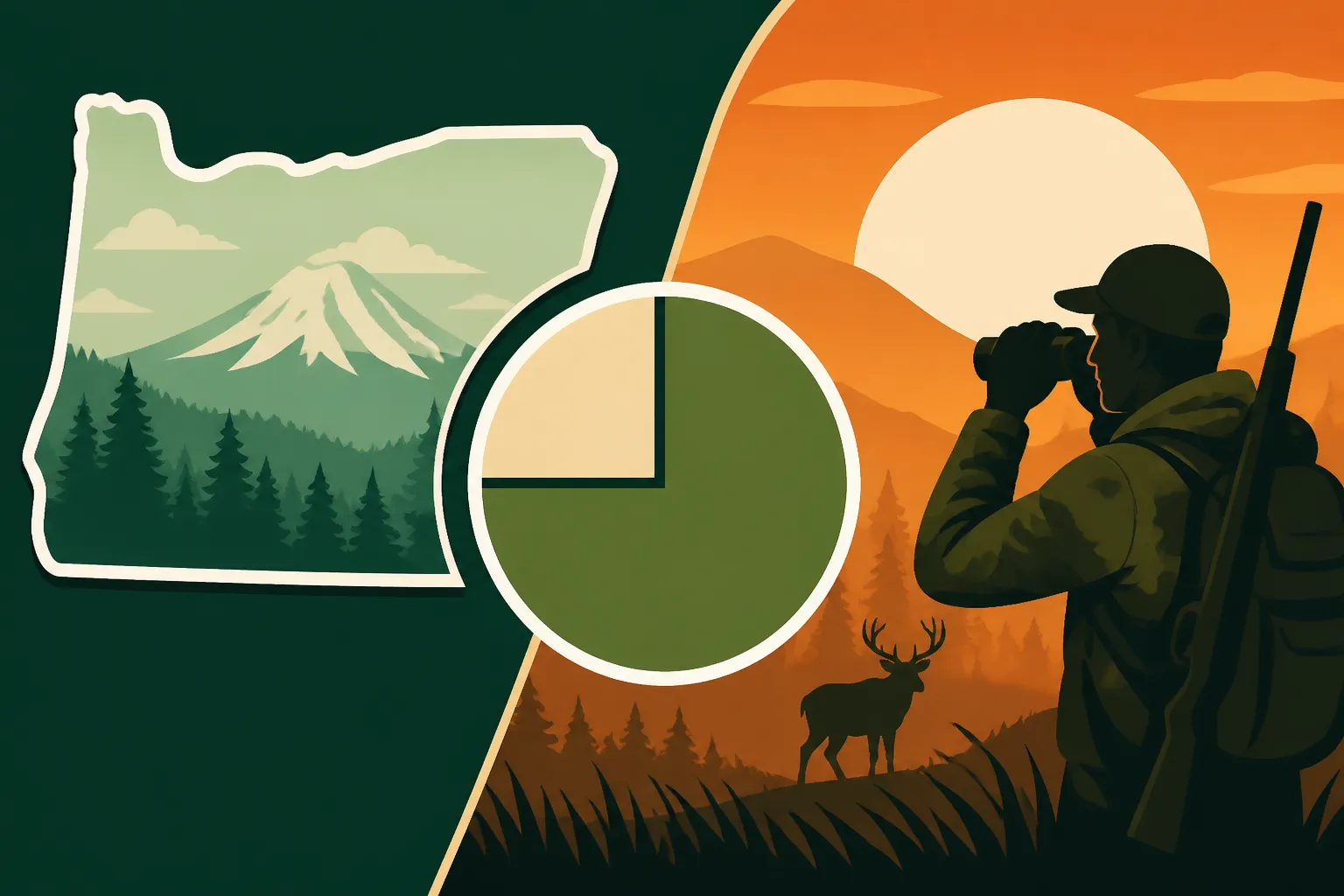
This is where the rubber meets the road for Oregon's draw system. ODFW explicitly states that for most controlled hunts, 75 percent of the available tags for a given hunt choice are allocated to applicants based on their preference point totals. This rule is designed to give a significant advantage to those who have been consistently applying and building points over many seasons. It means that the vast majority of tags for any given hunt are essentially reserved for the highest point holders who applied for that specific hunt as their first choice.
Let's imagine a hypothetical scenario to make this clearer. Suppose there are 100 tags available for a popular bull elk hunt in the Starkey Unit. Under the 75% rule, 75 of those tags (75% of 100) will be awarded to the 75 applicants who have the highest number of preference points and listed that hunt as their first choice. ODFW will essentially sort all first-choice applicants for that hunt from highest points to lowest. They then draw down the list, awarding tags until 75 percent of the total tags are gone.
The Mechanics of the Point Draw
The process generally unfolds like this: ODFW first determines the total number of tags to be issued for each controlled hunt. Then, 75% of these tags are set aside for the preference point drawing. All applicants who listed that hunt as their first choice are then ranked by their preference points. The system then awards tags, starting with the applicant with the highest number of points, and continues down the list until 75% of the tags have been distributed.
What happens if there's a tie for the last available tag within this 75% pool? For example, if there are five applicants with 15 points vying for the last three tags in the 75% allocation, ODFW will conduct a random draw among those tied applicants to fill those remaining three spots. So, while points are paramount for this portion of the draw, a small element of chance can still creep in at the margins when points are tied. It's crucial to understand that your first choice application is the only one that truly leverages your accumulated preference points. Subsequent choices do not use your points in the same way, as we'll discuss later. If you're looking for a step-by-step guide to submitting your application, our resource on How to Apply for an Oregon Controlled Hunt offers valuable insights.
Point Creep and Its Impact on the 75% Rule
As mentioned earlier, point creep is the persistent upward trend in the number of preference points required to draw a particular controlled hunt tag. This phenomenon has a direct and often frustrating impact on the 75% point-based allocation. Even though 75% of tags are set aside for high-point holders, the definition of "high points" is constantly shifting.
For instance, if a specific bull elk hunt required 12 points to guarantee a draw five years ago within the 75% pool, today it might require 15 or 16 points. This happens because more hunters are accumulating points each year, and the demand for quality tags often outpaces the supply. As a result, even if you’ve been consistently building points, you might find yourself in a perpetual chase, never quite catching up to the escalating point requirements. This can lead to years, sometimes decades, of applying without success for the most coveted hunts. Many frustrated hunters turn to resources like GoHunt, which provides detailed draw odds and historical point data, to better understand these trends and plan their strategy accordingly. For more information on this challenging aspect of the draw, read our article on Oregon Point Creep in Popular Units.
The 25 Percent Random Draw and Your Chances
While the 75% allocation often feels like an exclusive club for the most patient and point-rich hunters, there's a vital component of the Oregon draw that offers a genuine chance to everyone, regardless of their point total: the 25% random draw. After ODFW allocates 75% of the tags based on preference points, the remaining 25% of the tags are then distributed through a pure random lottery.
This means that even if you have zero preference points for a species, or only one or two, you still have a legitimate shot at drawing a tag within this 25% pool. Your name goes into the hat alongside everyone else who applied for that specific hunt as their first choice, and the system simply picks names at random until all the remaining tags are awarded. This truly levels the playing field for a quarter of the available tags, providing hope and excitement for every applicant.
A Shot at Beginner's Luck
The 25% random draw is often affectionately referred to as the "beginner's luck" portion of the Oregon draw. For new hunters, or those who are just starting to build their preference points, it's a huge psychological boost. It means you don't have to wait a decade to even dream of hunting a trophy unit. You might not have the 15+ points needed for the 75% draw, but you absolutely have the same chance as someone with 14 points in the 25% random draw.
This component allows hunters to apply for their "dream hunts" from day one, knowing that there's always a possibility, however slim, that their name will be pulled. It injects a much-needed element of pure chance into a system that can otherwise feel heavily skewed towards those with the longest application history. The suspense of waiting for the Oregon draw results, typically released in June, becomes a true rollercoaster of emotions, as every applicant holds a lottery ticket for that 25% random pool. Our detailed article on The 25 Percent Random Draw in Oregon further elaborates on how this portion of the draw works.
Strategic Application for Both Tiers
Understanding both the 75% point-based allocation and the 25% random draw allows for a more strategic approach to your applications. Many hunters will target hunts that require a high number of points, knowing their accumulated points give them a strong advantage in the 75% pool. However, for those with fewer points, or even high-point holders looking for an additional chance, applying for a hunt with a slightly lower point requirement or one where the random odds are slightly better, can be a smart move.
Some hunters might even apply for a highly desired hunt as their first choice, hoping for that long-shot 25% draw, even if their points aren't competitive for the 75% pool. The key is to analyze the draw odds for each hunt carefully. For example, if a hunt consistently takes 10+ points in the 75% draw, but still has decent random odds, it might be worth a shot for a lower-point applicant. Conversely, a hunter with 12 points might look for a hunt where 10-11 points typically draw in the 75% pool, giving them a high probability of success. Remember the critical Oregon Controlled Hunt Application Deadline and get your choices in on time!
Maximizing Your Odds in the Oregon Draw
Successfully navigating Oregon's controlled hunt draw system is less about magic and more about methodical research and a well-thought-out strategy. With the 75% point-based allocation heavily favoring high-point holders and the 25% random draw offering a glimmer of hope to all, your best bet is to become an expert on the data.
Researching Hunt Statistics and Unit Data
The single most impactful thing you can do to improve your odds is to meticulously research the hunt statistics from previous years. ODFW publishes detailed draw reports, showing the number of applicants, the points held by successful applicants, and the minimum and maximum points drawn for each hunt. These reports are your roadmap. Pay close attention to the "points to draw" for the 75% pool for your target species and units. This will tell you if you have a realistic chance based on your current point total.
Additionally, don't just look at draw odds; dive into the unit data itself. What are the harvest success rates? What is the current population trend for mule deer or elk in that specific unit? Is access good or are there significant private land holdings? Understanding the unit's characteristics will not only help you pick a tag you can draw but also one where you have a good chance of success once you're hunting. Tools like GoHunt's Insider platform are built for exactly this purpose, allowing you to easily sort through years of data, analyze point trends, and cross-reference with harvest statistics and unit characteristics. It’s an invaluable resource for hunters trying to make informed decisions. A good starting point for this research is our guide on Reading an Oregon Big Game Statistics Report, which will help you understand the numbers, and don't forget to familiarize yourself with Oregon's Wildlife Management Units and New Hunt Areas.
Applying for Points and Managing Your Strategy
Many seasoned Oregon hunters use a dual strategy: applying for "point only" in some years to build their bank, and then applying for a tag when their points reach a competitive level for a desired hunt. The ODFW offers a specific Oregon Preference Point Purchase Window where you can simply buy a point without applying for a tag, ensuring you continue to build your advantage without risking drawing a tag you're not ready for or don't want.
When you do decide to apply for a tag, consider your first, second, and third choices carefully. While points only count for your first choice in the 75% draw, your subsequent choices can still be drawn from the 25% random pool or if there are leftover tags. Party applications are another strategic consideration; our article on Party Applications in the Oregon Draw explains how these work, typically averaging the points of all members, which can be beneficial or detrimental depending on the point disparity within your group. Think long-term: Are you building points for a once-in-a-lifetime hunt, or are you hoping to hunt a quality unit every few years? Your point strategy should align with your hunting goals.
Understanding the "Why" Behind the System
Ultimately, Oregon's complex draw system, with its 75% point-based allocation and 25% random draw, is a tool for wildlife management. ODFW utilizes this system to regulate hunter numbers, distribute pressure, and manage harvest quotas for various big game species across different units. It's a balancing act between providing hunting opportunities and ensuring the long-term health and stability of Oregon's wildlife populations.
While the system can be frustrating, especially with point creep making desirable tags harder to draw, it serves a critical role in conservation. Every hunter's application, whether successful or not, contributes to this management effort. Remember that successful draw applicants have a mandatory requirement to report their harvest, which provides ODFW with crucial data for future season setting. For more details on this, see our article on Oregon Mandatory Harvest Reporting and the $25 Penalty. Understanding the bigger picture helps contextualize the sometimes-challenging nuances of the draw and encourages responsible participation in Oregon's hunting heritage.
| Allocation Type | Percentage of Tags | Criteria for Drawing | Key Advantage |
|---|---|---|---|
| Preference Point | 75% | Highest accumulated preference points (first choice) | Rewards long-term applicants with a higher chance |
| Random Draw | 25% | Pure random chance among first-choice applicants | Offers all applicants a shot, regardless of points |
Disclaimer
The information provided in this guide is for general informational purposes only and should not be considered legal advice. Hunting regulations and draw systems are subject to change. Always consult the official Oregon Department of Fish and Wildlife (ODFW) regulations and resources for the most current and accurate information before applying for tags or going afield.