Using a Tracking Light Legally at Night in Oregon
There’s almost nothing more gut-wrenching as a hunter than making a shot on an animal and then, as twilight fades to true darkness, losing the blood trail. The thought of an animal suffering, or worse, going unrecovered, is a nightmare scenario. Many hunters struggle with the confusion surrounding legal hunting hours and the use of artificial lights, especially when the clock ticks past sunset and a recovery effort is still underway. This guide is here to clear up that confusion, diving deep into Oregon's regulations so you can confidently and legally use a tracking light at night to find your game, ensuring an ethical recovery every single time.
Understanding Oregon's Regulations on Artificial Lights
Oregon's hunting regulations can feel like a labyrinth at times, especially when it comes to specific tools and nighttime activities. The key distinction we need to focus on is between hunting and tracking/recovering wounded game. This difference is critical for staying on the right side of the law when darkness falls.
The Strict Rules Against Hunting with Artificial Lights
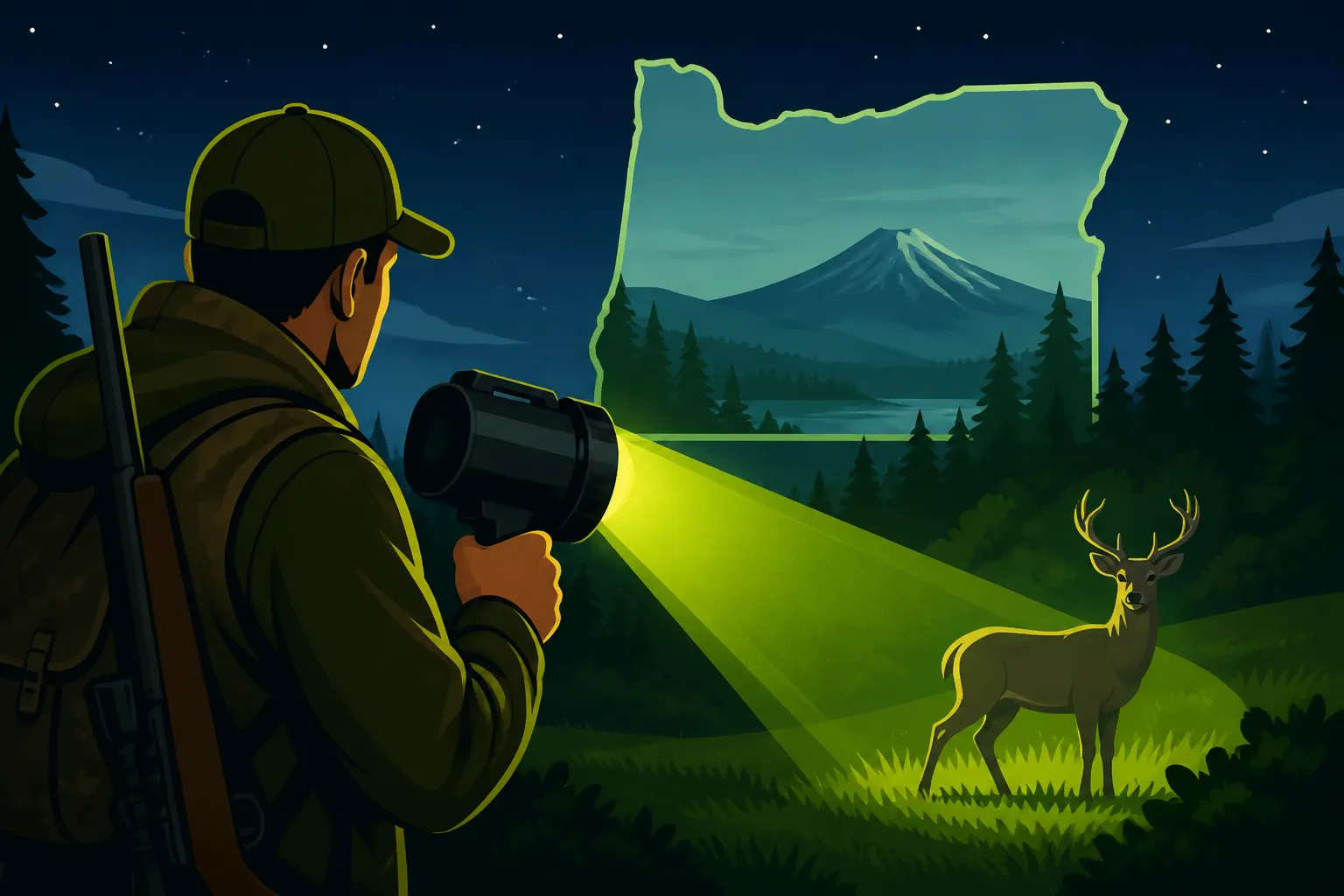
First and foremost, it's vital to understand that hunting big game in Oregon with the aid of an artificial light is strictly prohibited. This rule is in place for very good reasons: it prevents spotlighting, which gives hunters an unfair and often unethical advantage, and it promotes fair chase principles. The Oregon Department of Fish and Wildlife (ODFW) regulations are clear: "No person shall hunt wildlife with the aid of an artificial light." This includes spotlights, vehicle headlights, or even high-powered headlamps used to locate an animal you intend to shoot.
The official definition of "hunting hours" for big game in Oregon typically runs from one-half hour before sunrise to one-half hour after sunset. During these hours, artificial lights can be used as a means of travel to and from your hunting area, but not to actively search for or shoot game. Step outside these hours, and the use of a light for hunting purposes becomes a definite violation. This is why when you're out there, even driving to a trailhead before dawn, you need to be mindful of how your lights are being used and perceived.
When a Tracking Light Becomes Permissible
Now, here's where the critical exception comes into play. Oregon law makes a clear allowance for the use of an artificial light specifically for the purpose of tracking wounded game after lawful hunting hours. This is a huge relief for ethical hunters. The intent here is purely for game recovery, not for taking a new animal. If you've made a shot during legal hunting hours and the animal runs off into the approaching darkness, you are legally permitted to use a light to follow the blood trail and recover the animal.
This provision acknowledges the hunter's ethical responsibility to retrieve wounded game. It's a pragmatic rule that understands the reality of hunting: animals don't always drop in their tracks, and trails can disappear quickly as light fades. The key is that the shot must have occurred during legal hunting hours, and your purpose with the light is solely for recovery. This isn't a loophole to start hunting after dark; it's a responsible allowance for what happens when a shot doesn't go exactly as planned. Remember, the ODFW wants you to recover your animal, and they provide this specific leeway to help ensure that happens. If you're ever in doubt, the current Oregon Big Game Regulations pamphlet is your go-to resource, usually released around the time of the Oregon Regulation Pamphlet Release Date.
Practical Application and Best Practices for Night Tracking
Even with the legal green light, tracking a wounded animal in the dark presents unique challenges and requires a thoughtful approach. It’s not just about turning on a powerful flashlight; it’s about safety, ethics, and maximizing your chances of a successful recovery.
Prioritizing Safety and Ethical Conduct
When you're out there in the dark with a light, you're not just tracking an animal; you're also a visible presence in the woods. Safety absolutely must be your top priority. Always assume there could be other hunters in the area, even after hours. Wear highly visible orange or reflective clothing. If you're using a powerful handheld light, sweep it methodically, but avoid shining it directly into areas where you know other hunters might be without first announcing your presence.
Ethical conduct also means making sure you actually have wounded game to track. A marginal hit is a terrible thing to consider, but it happens. Before initiating a night track, you should have a reasonable expectation that the animal is indeed wounded and not just spooked. If you’re questioning whether your shot connected, it's often better to back out and return at first light. If you must track, avoid making unnecessary noise or disturbing the area any more than required for your recovery efforts. Your goal is swift, humane recovery, not further disturbance. Remember, good practice includes knowing Following Up a Marginal Hit and when to take those critical steps.
Preparing for an Effective Night Track
Going into the woods after dark, especially when emotionally charged after a shot, demands preparation. Never go alone if possible. A team of two or three is ideal: one person can focus on the blood trail, another can observe surroundings and provide additional light, and a third can help with flagging and navigation.
Your gear list for a night track should be robust:
- High-Quality Tracking Light(s): Don't skimp here. A bright, durable headlamp is essential to keep your hands free. Supplement it with a powerful handheld flashlight with a focused beam.
- Spare Batteries/Power Bank: Critically important. Nothing worse than a dead light when you’re deep in the woods.
- Flagging Tape: Use plenty of it to mark the trail frequently, especially when blood signs are sparse. This helps you retrace your steps or pick up the trail if you lose it.
- GPS Device or Mapping App: Tools like GoHunt are invaluable here. Mark your last known blood sign, your shot location, and your vehicle. This helps immensely with navigation and ensuring you don't cross property boundaries, which can be tricky in areas with mixed public and private land. Before you head out, make sure you've E-Scouting Oregon Units With Satellite Imagery to get a good lay of the land, which is just as important at night as it is during the day.
- First Aid Kit: A good, comprehensive First Aid Kit Items for a Remote Hunt is non-negotiable for any backcountry excursion, especially at night.
- Warm Layers: Even if it was warm during the day, temperatures can drop significantly after dark.
Consider notifying someone at home that you're going out to track. A quick text message indicating your general area and estimated return time is a great idea, tying into the broader safety principle of Leaving a Trip Plan With Someone at Home. While not always legally required to notify ODFW or law enforcement immediately for every night track, it's a good practice if you anticipate a very long recovery, potential issues with private property, or if you will need to continue tracking the next morning before legal hunting hours.
Navigating Common Challenges and Misconceptions
Despite the legal clarity, using a tracking light at night can still feel like a grey area to many hunters. Let’s tackle some common challenges and misconceptions head-on to ensure you’re operating with full confidence and responsibility.
The Clear Line Between Tracking and Hunting
The most pervasive misconception is that any use of a light after dark for anything hunting-related is illegal. This simply isn't true when it comes to recovery. However, it's critical to understand where the line is drawn. If you encounter another animal while tracking your wounded game at night, you cannot use your light to identify, stalk, or shoot that new animal. Your light's purpose is strictly for finding the animal you previously shot.
Imagine a scenario: you’re tracking a wounded elk deep in the Oregon Coast Range Hunting Access after sunset. You’ve got your powerful headlamp on, diligently following sparse blood. Suddenly, you hear movement and spot a different, bedded elk in your beam. It would be a serious legal violation to raise your rifle or bow with the intent to take that animal, even if it’s a legal bull and you have a tag. Your light is for recovery, not for a new "taking." "Taking" in Oregon generally refers to killing, capturing, or attempting to kill or capture wildlife. The law is designed to prevent abuses like "jacklighting" where animals are frozen by the light and then shot. Keep your weapon safely slung or secured, and focus solely on the trail of your wounded animal. This distinction is paramount to upholding the integrity of the regulation.
Legal vs. Ethical Considerations
Just because the law allows it doesn't mean it's always the easiest or most ethically straightforward decision. Sometimes, the blood trail disappears entirely, or the terrain becomes too dangerous to navigate safely in the dark. In these situations, the ethical hunter must weigh the desire for immediate recovery against personal safety and the potential to spoil the trail further.
There’s an age-old debate: push hard into the night, or back out and return at first light? If the signs are solid and the animal appears to be mortally wounded, continuing the track is often the most humane option for a quick recovery. However, if the trail is poor, the terrain is treacherous (think steep canyons in Eastern Oregon, or thick, thorny brush in the Coast Range), or you're running out of energy, it might be more responsible to pull back. Mark your last sign extremely well with multiple pieces of flagging tape and a precise GPS waypoint (easy to do with apps like GoHunt), and then regroup for a fresh start at dawn. This decision requires experience and good judgment. You're balancing the animal's welfare with your own safety and the effectiveness of your efforts.
Consider potential issues like private property boundaries. If your tracking leads you onto land you don't have permission to be on, you must cease tracking and gain permission before proceeding. A mapping app with public/private land layers is indispensable here. For example, if you're hunting adjacent to timber company land, having a clear understanding of Hunting Clearcuts on Private Timber Land and associated access rules is crucial.
| Scenario | Legal Use of Light? | Notes |
|---|---|---|
| Actively searching for game to shoot | No | Illegal spotlighting. |
| Tracking wounded game after legal hours | Yes | Legal and ethical for recovery purposes only. |
| Traveling to/from hunting area (no game) | Yes | Permissible for navigation, not for active hunting. |
| Identifying a new animal for a shot | No | Even if you have a tag, using a light to aid in a new shot after hours is illegal. |
| Field dressing recovered game | Yes | Legal to use light for processing an animal you've recovered. Essential for Field Dressing an Elk in Warm Early-Season Weather. |
| Scouting at night | No | This falls under hunting activity if you're looking for game. |
Tools and Techniques for Effective Night Tracking
Having the right mindset and understanding the regulations is half the battle; the other half is knowing how to effectively use your tools and techniques to make that recovery possible. Darkness adds a layer of complexity, but a systematic approach can turn the odds in your favor.
Maximizing Your Tracking Light's Effectiveness
Not all lights are created equal for tracking. While a wide beam headlamp is great for general navigation, a dedicated tracking light should have a tighter, more focused beam that can penetrate brush and illuminate subtle signs. Look for lights with adjustable brightness settings, allowing you to dial down the intensity to prevent glare on wet blood, or crank it up for long-distance scanning. Some lights even offer different color filters, though white light is generally best for blood.
When you're actively tracking, your technique matters. Instead of just pointing the light straight ahead, sweep the beam methodically from side to side, focusing on the ground ahead of you. Blood can appear as a dark, almost black smear, or a glinting reddish-brown. Look for disturbed leaves, bent grass, broken twigs, or even hair. Sometimes, the blood will spray upwards onto ferns or low branches, especially if the animal was running quickly through thick Blood Trailing in Oregon Rainforest Understory. Take your time. Move slowly, literally on your hands and knees if the sign is extremely faint. It's easy to rush, but patience is your best friend when the light is limited.
Utilizing Technology and Teamwork
Modern technology has revolutionized tracking. As mentioned, a reliable GPS device or a smartphone app like GoHunt with offline maps is indispensable. Before you even head out, load your unit maps and mark potential escape routes, natural funnels, and any significant terrain features. When you find initial blood, mark your shot location and the first sign. Every time you find a distinct blood sign, consider marking it as a waypoint. This creates a virtual breadcrumb trail that helps you stay oriented and know exactly where you last saw sign if you lose the trail.
Working as a team, especially in the dark, is far more efficient and safer. One person can focus entirely on the blood trail, moving slowly with a powerful handheld light, calling out "blood" or "sign." Another person can walk slightly ahead and to the side, scanning the wider area for movement or larger splashes of blood, using their own headlamp. A third person can be responsible for placing flagging tape at each significant sign, tying them to trees at eye level, ensuring they're visible but not obtrusive to others. This method allows for systematic coverage and reduces the chances of overlooking a critical piece of evidence. Communication is key: use low voices, and have clear signals for "stop," "found something," or "lost it." If you end up needing to pack out an animal in the dark, coordinating your efforts will make Packing Meat Out in the Dark much more manageable.
Disclaimer
Please be aware that hunting regulations, including those concerning the use of artificial lights, can change. Always consult the most current Oregon Department of Fish and Wildlife (ODFW) regulations pamphlet before heading afield to ensure you are compliant with all state laws. This guide provides general information and best practices, but it is your responsibility as a hunter to know and adhere to all applicable rules and regulations.