Blood Trailing in Sword Fern and Salal
There are few feelings as gut-wrenching as knowing you've made a good shot on an animal, only to watch it vanish into the seemingly impenetrable coastal undergrowth of Oregon. The dense tangles of sword fern and salal can swallow a blood trail whole, turning what should be a straightforward recovery into a heart-pounding, often demoralizing, search. This guide is dedicated to equipping you with the strategies, gear, and mindset needed to confidently and ethically blood trail in these incredibly challenging environments, ensuring you maximize your chances of recovery.
Understanding the Unique Challenges of Oregon's Coastal Undergrowth
Hunting in Oregon's coastal forests is a beautiful, rugged experience, but it comes with a distinct set of challenges, especially when it comes to tracking a wounded animal. The vegetation is truly unlike anywhere else, creating a unique set of obstacles for even the most experienced hunter.
The Impenetrable Maze of Sword Fern and Salal
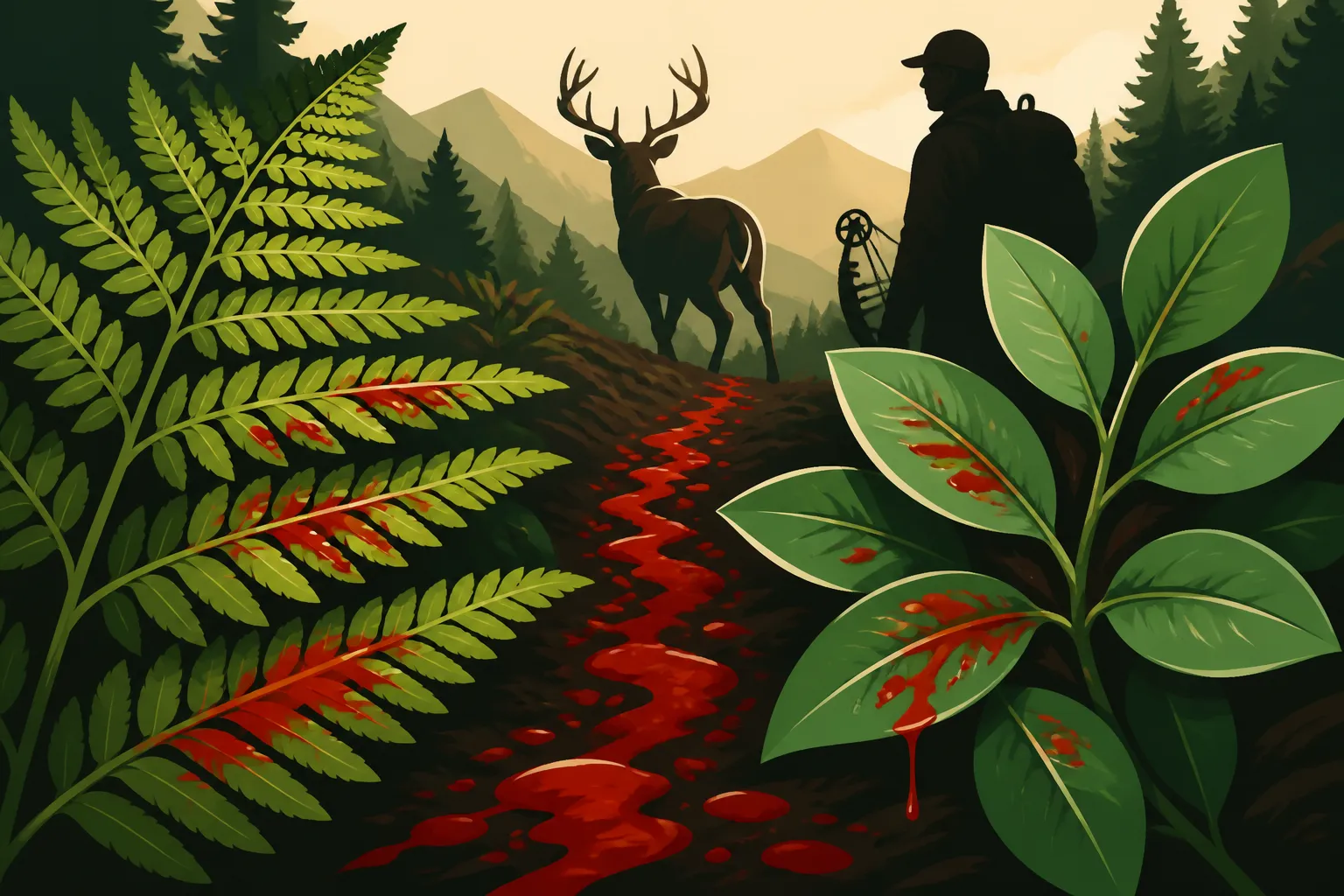
Anyone who's spent time pursuing blacktail deer or Roosevelt elk in the Coast Range knows the struggle of pushing through sword fern and salal. These aren't just patches of brush; they form an almost solid wall of green, often growing chest-high or even taller. Sword ferns, with their stiff, overlapping fronds, create a dense canopy that hides anything beneath it. Salal, a robust evergreen shrub, weaves itself into an even tougher, woody tangle. When an animal pushes through this, the vegetation springs back, often erasing any visible path or making it incredibly difficult to spot disturbed leaves or faint tracks.
Imagine you've just made a great shot on a bull elk, and he's taken off into a draw absolutely choked with this stuff. You run to the spot, expecting to pick up a clear trail, but all you see is a wall of green. The sheer density means blood isn't just falling to the ground; it's often wiped off on the fronds and leaves, spreading the sign out horizontally and vertically, making it incredibly hard to distinguish from the natural dampness or leaf litter. It's not uncommon for an animal to travel a mere 20 or 30 yards into such a thicket and simply disappear from sight, leaving you feeling helpless as you stare into the green void. This is where patience and meticulous attention to detail become paramount, as a rushed search will almost certainly end in failure.
The Role of Moisture and Leaf Litter
Oregon's coastal environment is famously wet, and while that's great for the lush forests, it's a nightmare for blood trailing. Constant drizzle, heavy morning dew, or recent rain can quickly wash away or dilute blood, making it practically invisible on the forest floor. Dark blood on dark, wet leaves is incredibly hard to differentiate, especially as it soaks in. Even if it doesn't wash away, the moisture causes blood to spread out and become less distinct, losing its tell-tale frothy or clotted texture that helps identify the wound.
Beneath the fern and salal, the forest floor itself is often a thick, spongy carpet of decomposing leaves, moss, and duff. This deep, soft layer cushions footsteps, meaning tracks are often faint or nonexistent. Blood that drops onto this absorbent material can be quickly soaked up and vanish, leaving little to no surface evidence. Furthermore, the constant shedding of needles and leaves from the overhead canopy means any blood trail, even a strong one, can be covered by new litter within hours, especially if a breeze is moving through the timber. This combination of dense cover, high moisture, and absorbent ground makes blood trailing in western Oregon a supreme test of skill and perseverance.
Essential Gear and Preparations for a Successful Trail
Successful blood trailing in challenging environments like Oregon's coastal forests isn't just about sharp eyesight; it's about being prepared with the right tools and knowing how to use them effectively. Thinking ahead can make all the difference between recovery and a lost animal.
Lighting and Visual Aids
When darkness falls, or even within the perpetually dim coastal timber, good lighting is your most critical ally. A powerful headlamp is non-negotiable, freeing your hands to push brush or mark the trail. Look for one with multiple settings, including a bright spot beam for distance and a wide flood beam for close-up scanning. Some hunters swear by specialized tracking lights, often called "blood lights," which use specific wavelengths of light (sometimes UV or specific greens/reds) to make blood glow or stand out against foliage. While they can be helpful, it's crucial to understand Oregon's rules regarding night tracking; generally, a tracking light can be used, but you cannot carry a firearm or bow with it after legal shooting hours. For instance, Oregon regulations specifically address Using a Tracking Light Legally at Night in Oregon, making it important to know the letter of the law.
Beyond artificial light, don't underestimate your binoculars. Even in thick cover, taking a moment to scan 10-20 yards ahead for disturbed vegetation, a patch of contrasting color, or an unusual shine from wet blood can sometimes help you pick up the trail where you might miss it looking down. Sometimes, the animal's path will be just barely visible through the canopy, and a good set of optics can help you spot subtle clues.
Marking the Trail and Communication
This is where your inner detective comes out. Every single piece of sign you find—a drop of blood, a broken twig, a scuffed leaf, a piece of hair—needs to be marked. Fluorescent flagging tape is cheap, lightweight, and absolutely essential. Tie pieces of flagging to branches at eye level, not just where you find blood, but also at the last confirmed sign. This creates a breadcrumb trail that allows you to back up and re-evaluate if you lose the sign. Space your flags close enough so you can always see the previous one as you move forward. Don't be afraid to use a lot of it; you can always pick it up on the way out.
For pinpoint accuracy, especially when hunting alone or in unfamiliar territory, a GPS device or a robust mapping app on your smartphone is invaluable. Many hunters use apps like GoHunt to mark the exact shot location, the last known position of the animal, and every spot where significant blood or sign is found. This creates a digital record of the trail, allowing you to visualize the animal's path and return to precise locations if needed. If you're hunting with a partner, two-way radios are a game-changer. They allow you to communicate your findings without shouting and spooking the animal, or to coordinate a line search. Remember to check your radios before heading out, as battery life and reception can be unpredictable in the deep woods. For safety, especially on remote hunts, always Leaving a Trip Plan With Someone at Home so someone knows where you are and when to expect you back.
Footwear, Protection, and Patience
You'll be pushing through dense, often wet, undergrowth, possibly for hours. Durable, waterproof boots with excellent traction are non-negotiable. Think beyond just "waterproof" and consider truly rugged boots designed for wet conditions, because your feet will be constantly battling moisture from the ground and the saturated vegetation. Good gaiters can also prevent water and debris from getting into your boots. You'll want tough, thorn-resistant clothing – a good pair of rain gear that actually stays dry, like that discussed in Rain Gear That Actually Stays Dry, is crucial, as you'll be soaked from pushing through wet brush even if it's not raining. Gloves will protect your hands from thorns, sharp branches, and the constant wetness.
Finally, and perhaps most importantly, bring patience. Blood trailing in sword fern and salal is a slow, methodical process. It's easy to get frustrated, especially when the trail seemingly vanishes. Take deep breaths, step back, and re-evaluate. Resist the urge to rush, as rushing almost guarantees you'll miss a crucial sign. This isn't a sprint; it's a marathon of meticulous observation.
Step-by-Step Blood Trailing Techniques
The moment an animal takes off after a shot, a cascade of emotions hits you – excitement, hope, and often, a touch of anxiety. But in the dense coastal brush, that anxiety can quickly turn into despair if you don't have a systematic approach. Here's how to tackle it.
The Shot Site: Your Starting Point
Never, ever rush to the spot where you last saw the animal run. Your first priority is the shot site. This is ground zero for information. Mark the exact spot you were standing when you shot, and then carefully, methodically, approach the spot where the animal was standing or took the hit. Look for everything:
- Impact Point: Can you see where the arrow or bullet struck the animal?
- Hair: What color and length is it? Short, dark hair might indicate a paunch hit; long, dark hair from the back; light hair from the belly or legs.
- Blood Color and Consistency: Is it bright red and frothy (lung)? Dark and chunky (liver)? Pinkish and watery (muscle)? Greenish-brown with stomach contents (gut)? This initial assessment gives you vital clues about the wound and how far the animal might travel.
- Arrow/Bullet: If you shot with an arrow, is it still in the animal, or did it pass through? If it passed through, can you find the arrow? The blood and tissue on the arrow itself are incredibly valuable.
- Footprints/Scuffs: Look for signs of the animal's initial reaction – a sudden jump, a scuffle, or a quick turn.
Mark the shot location with flagging tape and perhaps another piece for the direction the animal traveled. This reference point is absolutely critical. Knowing what kind of hit you likely have will inform your waiting time. A lung shot might mean only 30 minutes to an hour before recovery, while a gut shot could mean waiting 6-8 hours, or even until morning, to allow the animal to bed down and expire.
Grid Search and Systematic Progress
Once you've thoroughly processed the shot site, you need to find the initial blood trail. In sword fern and salal, this often isn't as simple as following a line of red. Start by marking your last known blood or sign. If you have partners, spread out in a line, about 5-10 yards apart, and slowly walk forward, eyes glued to the ground and the vegetation. This is often called a "line search" or "grid search."
Don't just look for blood. Look for any disturbance: a bent fern, a broken salal branch, a scuffed patch of moss, an overturned leaf exposing a lighter underside. These subtle signs, combined with tiny flecks of blood, are often all you'll get. Work in tight, methodical patterns. If you find a new spot of blood, mark it with flagging tape, and then continue your line search from that point. This ensures you never lose the last piece of evidence. Sometimes, the animal might have changed direction, and a line search helps you discover that deviation sooner. When the cover is particularly thick, as it often is, you may even need to crawl on your hands and knees to see below the dense canopy. For very difficult terrain, consider the strategies for Blood Trailing in Oregon Rainforest Understory to enhance your success.
Interpreting the Sign and Advancing Slowly
Every piece of sign tells a story. The color, volume, and consistency of blood are your primary indicators.
- Bright red, frothy blood: This often indicates a lung hit, usually a lethal shot. The animal may not go far.
- Dark red, thick, or chunky blood: Often a liver hit, which is also lethal but takes longer. The animal might travel a fair distance.
- Greenish-brown, foul-smelling blood, possibly with stomach contents: A gut shot. This is the hardest trail and requires the most patience. The animal needs a long time (6-8+ hours) to expire. Pushing a gut-shot animal will only make it run further and harder, making recovery nearly impossible.
- Sparse, pinkish, or watery blood: Typically a muscle wound or a graze, not immediately lethal. These trails are the toughest to follow and often require backing off and regrouping. This is a critical point where knowing Following Up a Marginal Hit can be invaluable.
As you advance, mark every single piece of sign. If you're using a digital mapping tool like GoHunt, be sure to mark every speck of blood or scuffed leaf you find. This helps you visualize the animal's path and provides a clear record, especially when considering property lines or seeking permission from landowners, which you can often verify with GoHunt's property line layers. Always assume the animal is still alive and take a cautious, slow approach. If the blood stops, don't keep plowing forward. Go back to the last confirmed sign, and restart your search from there, expanding your grid.
Dealing with Lost Trails and Grid Expansion
It will happen. The blood trail will vanish. Don't panic. Go back to your last piece of flagged sign. From that point, begin to expand your search in ever-widening circles or squares. Take a step back and think: Where would a wounded animal go? Often, they seek the thickest cover available, or they might head downhill towards water.
Here's a crucial tip for dense coastal cover: look up. When an animal, especially an elk, crashes through sword fern and salal, it often leaves blood on low-hanging branches, fern fronds, or even the trunks of small trees. Sometimes, the clearest sign isn't on the ground, but at eye level or above, where the blood was wiped off. Scan thoroughly, from ground level to about chest height.
If the trail is truly cold and you've exhausted your search, consider waiting until morning if conditions allow. Cool, damp nights can preserve a blood trail that might have been impossible to find in the fading light. In some legal scenarios, bringing in a certified tracking dog can be a last resort. Always check current Oregon hunting regulations regarding the use of tracking dogs. Remember, patience is your greatest weapon against the frustrating tendency of coastal cover to swallow a trail.
Advanced Strategies and Recovery Considerations
Even with the best preparation and a systematic approach, blood trailing in Oregon's thick coastal areas remains one of hunting's ultimate challenges. Understanding animal behavior and knowing how to safely and efficiently recover your game once found can make all the difference.
Animal Behavior After the Shot
Animals, especially deer and elk, react predictably in some ways when wounded. They will almost always seek the thickest cover available to them, using the dense vegetation of the Coast Range to their advantage. Often, they will try to go downhill, gravitating towards drainages or creek bottoms where cover is often even more dense. They might also head towards known water sources, especially if they are heavily wounded. Understanding these tendencies can help you predict their likely escape route when the blood trail becomes intermittent or vanishes.
A "death run" from a well-hit animal might seem like panic, but it's often a desperate burst of adrenaline before they quickly expire. Animals with vital hits may run hard for a short distance and then collapse. Conversely, an animal with a less lethal wound, like a gut shot or muscle hit, might travel a long distance at a slower pace, leaving less blood. This is why properly assessing the initial blood sign is so critical. For example, knowing proper Shot Placement on a Quartering Bull can help you determine the likely wound channel and predict the animal's behavior. If you're confident it's a solid hit, but the animal is still moving steadily, give it more time to ensure it expires before pushing it further.
Handling the Recovery and Meat Care
The moment you find your animal is a mix of relief and renewed effort. First, ensure the animal is indeed deceased. Approach cautiously, observing from a distance for any breathing or movement. Once confirmed, the clock starts ticking on meat care, especially in Oregon's often mild to warm coastal climate. Even in November, a sunny day can quickly heat a carcass. Prompt Field Dressing an Elk in Warm Early-Season Weather is essential to cool the meat rapidly and prevent spoilage. Get the guts out, open the cavity, and prop it open with sticks to allow maximum airflow. If you have ice packs or snow, pack them into the cavity immediately.
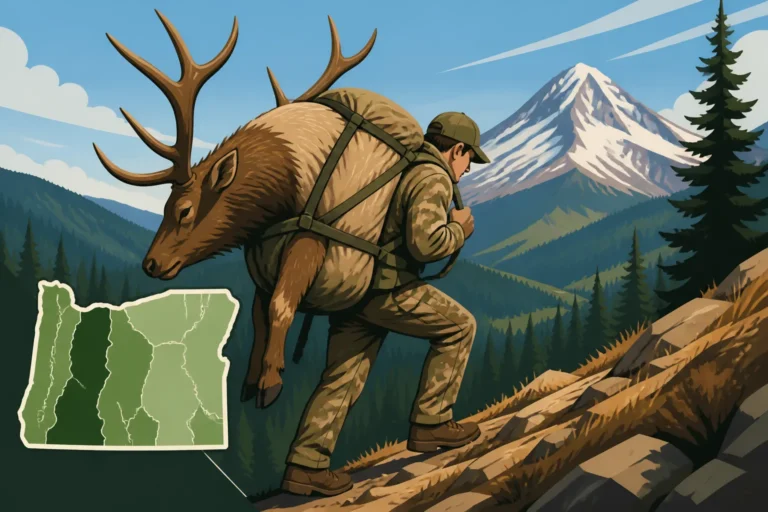
Packing out an elk or deer from these dense areas is a beast of a task. Often, the terrain and vegetation make dragging impossible. You'll likely need to quarter the animal. For an elk, this can mean multiple trips with a pack frame. Being able to perform Quartering and Packing an Elk Alone is a valuable skill, as help isn't always available in the remote backcountry. The goal is always Getting Meat Out Before It Spoils, which means efficient processing and transport are paramount. Even if you're only a few miles from the truck, that dense fern and salal can turn a short walk into an all-day ordeal. Consider where you found the animal in relation to accessible roads or trails, and use your GoHunt app to plan the easiest (or least difficult) extraction route. In some cases, for very remote recoveries, you might even consider What It Costs to Hire a Packer With Stock if permitted and feasible.
Legal and Ethical Considerations
Your ethical responsibility to recover a wounded animal is paramount. It’s a core tenet of responsible hunting. However, this must always be balanced with legal compliance. Always be aware of Oregon's specific hunting regulations. As mentioned, there are rules governing Using a Tracking Light Legally at Night in Oregon, which generally means you cannot be armed with a firearm or bow when using a light to track after legal shooting hours. This might require you to return in the morning, unarmed, to find the animal, then retrieve your weapon to dispatch it if still alive, or call a game warden for assistance.
Respect for private property is another crucial aspect. Even if you're on a hot trail, you cannot trespass onto private land without explicit permission. This is where your mapping app like GoHunt, with its property line layers, becomes critical. Before you ever head into an area, familiarize yourself with land ownership boundaries. If a trail leads onto private land, you must attempt to gain permission from the landowner before proceeding. Ignoring property lines is not only illegal but also damages the reputation of all hunters. Upholding these ethical and legal standards ensures hunting remains a respected and sustainable activity in Oregon.
Blood Sign Interpretation Table
Understanding what different types of blood indicate can save you precious time and guide your trailing strategy.
| Blood Type | Color | Consistency | What it Indicates | Trailing Strategy |
|---|---|---|---|---|
| Lung Shot | Bright red, frothy | Frothy, sometimes bubbly | Heart/Lung hit; usually lethal and quick | Aggressive, systematic trailing. Animal likely won't go far. |
| Liver Shot | Dark red | Thick, chunky | Liver hit; lethal but slower | Give 4-6 hours before continuing. Animal may travel further. |
| Gut Shot | Greenish-brown, dark | Thin, often contains stomach matter or feces | Stomach/Intestine hit; lethal but very slow | Crucial: Give 6-8+ hours, or overnight, to let animal expire. Push too early and it's gone. |
| Muscle/Artery Wound | Pinkish-red | Thin, sometimes sparse drops | Muscle or superficial artery hit; not always lethal | Can be very challenging. May require more time, wider searches, or re-evaluating the shot. |
| Bone Marrow | White/Yellowish | Fatty, waxy | Bone strike (e.g., leg bone); often accompanies other blood | Indicates a hit but not necessarily vital unless also with other blood types. |
Disclaimer
The information provided in this guide is for educational purposes only and is not a substitute for official Oregon Department of Fish and Wildlife (ODFW) regulations. Hunting laws and regulations can change, so always consult the most current ODFW hunting regulations pamphlet before heading afield. It is the hunter's responsibility to understand and comply with all applicable laws.