Cougars in Oregon After the Hound Ban
Hunting cougars in Oregon has fundamentally changed since the hound ban, leaving many hunters frustrated and searching for effective, ethical methods to pursue these elusive predators. It's a challenging endeavor, demanding patience, keen observation, and a deep understanding of cat behavior. This comprehensive guide will explore the history of cougar hunting in Oregon, delve into how these apex predators have adapted, and provide actionable strategies for hunters navigating the complex landscape of cougar management without the aid of hounds.
The Historical Context of Oregon's Hound Ban
The conversation around cougar hunting in Oregon is inextricably linked to a pivotal moment in the state's hunting history: the passage of Ballot Measure 18. This measure didn't just alter how cougars are hunted; it reshaped the very fabric of predator management and public perception of hunting in Oregon. For decades, hunters had relied on traditional methods, often involving trained dogs, to track and tree cougars, a practice deeply ingrained in the culture of predator control.
Understanding Ballot Measure 18 and Its Impact
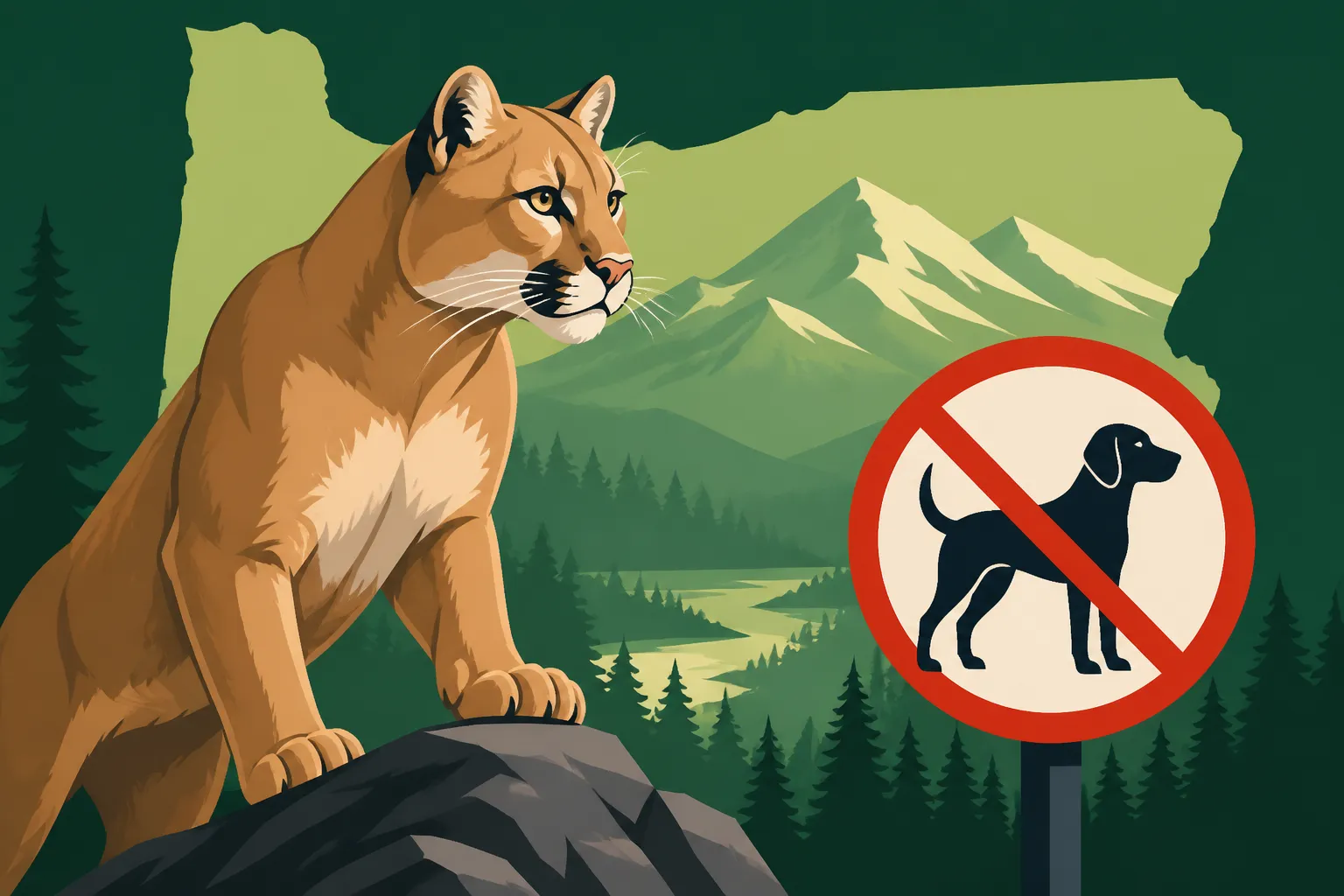
In 1994, Oregon voters passed Ballot Measure 18, which prohibited the hunting of cougars and black bears with the aid of dogs. This was a seismic shift. Prior to 1994, hound hunting was a common and effective method, allowing hunters to pursue cats through challenging terrain that would be nearly impossible for a human to navigate on foot. The ban effectively removed a tool that had been used for generations, leading to significant changes in both hunting practices and cougar management strategies. Hunters accustomed to the chase and the distinct baying of hounds suddenly found themselves in an entirely new game, forced to re-evaluate their tactics from the ground up. This ban also had ripple effects on the state's bear hunting, fundamentally altering how hunters could pursue that species as well.
The immediate impact was a dramatic decrease in the number of cougars harvested annually. Without hounds, locating and successfully harvesting a cougar became exponentially more difficult. Many hunters, especially those who had primarily used hounds, simply stopped pursuing cougars, unsure how to approach the task with the new restrictions. The measure also sparked a continuous debate between wildlife agencies, conservation groups, and hunting advocates, a debate that continues to this day about the efficacy and ethics of various hunting methods. For a deeper dive into the legalities, check out our guide on Why Oregon Cougar Hunters Cannot Use Hounds.
The Rationale Behind the Ban and Public Perception
The campaign for Ballot Measure 18 was largely driven by animal welfare groups and a segment of the public concerned about the perceived "fair chase" aspect of hound hunting. Arguments centered on the idea that cornering an animal with dogs was inhumane and offered the animal no chance to escape. Proponents of the ban often highlighted images of treed cougars, arguing that such hunts lacked a sporting challenge.
On the other side, wildlife managers and many hunters argued that hound hunting was a necessary tool for effective cougar population control. They pointed to the fact that cougars are incredibly elusive, with vast territories and a natural ability to avoid human detection. Hounds, they contended, were the only practical way to manage populations, especially in areas where cougars might pose a threat to livestock, pets, or even human safety. The public perception, however, swayed towards the humane concerns, leading to the ban. This outcome underscores the complex relationship between scientific wildlife management, hunting traditions, and the evolving moral compass of the general public. It's a constant tightrope walk for wildlife agencies like the Oregon Department of Fish and Wildlife (ODFW) to balance these often-conflicting viewpoints while still aiming for healthy ecosystems.
How Cougar Behavior Changed Post-Ban
The cougar is a master of adaptation, a creature perfectly designed for stealth and survival. When the rules of the game changed with the hound ban, these apex predators, naturally, changed too. It wasn't an overnight switch, but a gradual, subtle shift in their day-to-day existence that has made them even more challenging to pursue. Hunters observing the woods closely began to notice distinct changes in movement patterns, activity levels, and how cougars utilized their vast territories.
Increased Elusiveness and Nocturnal Activity
One of the most significant changes observed after the hound ban was an increase in the already formidable elusiveness of cougars. Without the constant pressure from hounds, which could track them through thick brush and over long distances, cougars became even more adept at avoiding human contact. They learned to rely more heavily on their natural stealth, moving with almost ghost-like silence through the forest.
This adaptation has also led to a noticeable increase in nocturnal activity. While cougars were always active at night, many now seem to prefer the cloak of darkness for their primary hunting and travel. This makes sense; the cover of night offers protection from human detection and capitalizes on the habits of their prey, much of which is also most active during twilight and darkness. Hunters, therefore, have to adjust their strategies, focusing more on sign left during the day rather than expecting a daylight encounter. This shift towards increased nocturnal movement makes it harder to use traditional glassing techniques, common for other species, emphasizing the need for different detection methods. When you're trying to Find Cougar Tracks Without Hounds, understanding this shift in their active hours is absolutely crucial.
Shifting Prey Patterns and Habitat Use
The absence of hound pressure has also allowed cougars to become more comfortable operating within certain areas, potentially leading to shifts in their prey patterns and habitat use. Before the ban, a cougar might have been forced to move through its territory more quickly or avoid certain areas where hunters with dogs were known to operate. Now, they can settle into areas with rich prey populations more confidently.
This means cougars might spend more time in areas dense with deer, particularly blacktail deer in Western Oregon, or mule deer in Eastern Oregon, depending on their specific range. Their territories, while still large, might be used with greater efficiency, focusing on areas with consistent food sources. Hunters often report seeing cougar tracks in the immediate vicinity of elk and deer winter ranges, or near concentrated populations of smaller game like raccoons or rabbits, especially in the more fragmented landscapes near human settlements. Understanding Cougar Territory Size and Movement is vital for predicting where these shifts might occur. This also means scouting for prey animal behavior is more important than ever. If deer or elk are suddenly acting skittish in a particular area, or you find signs of recent kills, it's a strong indicator that a cougar might be in the vicinity.
Oregon's Current Cougar Population and Management
Managing cougar populations in a state as diverse as Oregon is a constant balancing act. On one hand, you have the ecological role of cougars as apex predators, helping to keep deer and elk herds healthy by culling the weak. On the other, you have concerns from ranchers, pet owners, and even some hunters about the potential impacts on livestock, domestic animals, and game populations. The Oregon Department of Fish and Wildlife (ODFW) navigates these pressures with a multi-faceted approach, continually monitoring populations and adapting management strategies.
Population Estimates and Trends Across the State
Estimating cougar populations is notoriously difficult due to their elusive nature, vast territories, and low densities. Unlike deer or elk, which can often be counted through aerial surveys or herd composition counts, cougars require more intensive and less direct methods. ODFW utilizes various techniques, including genetic analyses from scat and hair samples, camera trap surveys, and models based on harvest data and habitat suitability, to arrive at their best estimates.
Current estimates suggest a healthy and stable cougar population across much of Oregon, with numbers fluctuating but generally remaining robust since the hound ban. Western Oregon, particularly the Coast Range and portions of the Cascades, often holds higher densities due to ample prey and dense cover, which provides ideal cougar habitat. Eastern Oregon's rugged rimrock and juniper country also supports significant populations, though often more spread out. While precise numbers are always a challenge, the general trend indicates that cougars are thriving. You can find more detailed regional breakdowns in ODFW's official reports, which regularly update Oregon Cougar Population Estimates.
ODFW Management Strategies and Quotas
ODFW's cougar management strategy is largely driven by a combination of public safety concerns, wildlife population health, and hunter opportunity. Since the hound ban, the primary tool for population management has been regulated hunting, combined with depredation permits issued in response to livestock or pet attacks. Oregon uses a quota system for cougar tags, typically broken down by management zone or wildlife unit.
Each year, ODFW sets a general statewide harvest guideline and then allocates specific harvest quotas for different regions, units, or even zones. Once a certain number of cougars are harvested in a particular zone, that zone may be closed to further cougar hunting for the remainder of the season. This system allows for localized management, preventing overharvest in specific areas while allowing continued pressure in others where populations might be higher or conflicts more frequent. Hunters are required to purchase a general cougar tag, which allows them to participate in the general season and is subject to these zone-specific quotas. Staying informed about these quotas and potential zone closures is critical for any cougar hunter. Our guide on Oregon Cougar Tag Rules and Quotas provides a complete overview.
The Role of Cougar Predation on Other Game Species
As apex predators, cougars play a critical role in the ecosystems they inhabit. Their primary prey consists of deer (both blacktail and mule deer) and elk (Roosevelt and Rocky Mountain). By selectively preying on the weak, old, or sick, cougars help to maintain the overall health and vigor of these ungulate herds. They are an essential part of natural selection.
However, the impact of cougar predation is a perennial topic of discussion, particularly among deer and elk hunters. In certain areas, particularly those where ungulate populations are already struggling due to habitat loss, disease, or other factors, increased cougar numbers can contribute to slower herd recovery. ODFW continually studies these predator-prey dynamics, using radio-collar studies and fawn/calf survival rates to assess the impact of cougars on game species. While cougars are not solely responsible for declines in specific game populations, their impact is a significant factor, especially in localized areas. Understanding Cougar Prey and Deer Herd Impact helps clarify this complex ecological relationship. This ongoing research informs tag allocations and management decisions, aiming to find a balance where cougar populations are healthy, but not detrimental to other species.
Effective Hunting Strategies for Cougars Without Hounds
Hunting cougars in Oregon without hounds is widely considered one of the most challenging big game pursuits in North America. It demands an entirely different skill set: extreme patience, meticulous attention to detail, and an almost obsessive commitment to understanding the subtle nuances of the forest. Gone are the days of following a barking dog; now, it's about becoming a detective in the wild, piecing together clues to find a truly elusive animal.
Utilizing Calling Techniques to Draw in Cats
One of the most effective, albeit demanding, strategies for cougar hunting without hounds is calling. Cougars are curious and highly predatory, and they respond to sounds that mimic distressed prey or other cougars. This method relies heavily on good timing, the right location, and an understanding of how to properly deploy various calls.
Electronic calls are legal in Oregon for cougar hunting and can be incredibly effective. Popular sounds include fawn or calf distress calls, rabbit distress, and even barks or growls from other cougars. The key is setting up in an area where you know cougars are present, often identified through prior scouting for tracks or kill sites. You need to position yourself downwind, with good visibility, and remain absolutely motionless for extended periods. Sometimes, a cat will come charging in quickly, but more often, they approach cautiously, circling downwind to get your scent. Long calling sessions, sometimes lasting an hour or more, are often necessary. Understanding the subtle nuances of Cougar Calling Sounds That Draw a Cat In can make all the difference, as can knowing How Long to Sit a Cougar Set. There’s a fine art to it, from the volume to the cadence, and perfecting it takes practice and a lot of quiet hours in the woods.
Mastering Spot-and-Stalk in Dense Cover
While calling is powerful, spot-and-stalk hunting for cougars, particularly in Oregon's dense western forests or rugged eastern rimrock, is the ultimate test of a hunter's woodsmanship. This method requires an almost superhuman ability to move silently, read terrain, and spot an animal that is literally designed to blend in seamlessly with its surroundings.
The most critical aspect of spot-and-stalk is finding fresh sign. This means spending countless hours on your feet, covering ground, specifically looking for fresh tracks in snow or soft dirt, scratch marks on trees (scrapes), and recent kill sites. Once fresh sign is located, the real work begins: slow, deliberate movement into the wind, constantly scanning ahead and to the sides. Cougars often bed down in dense thickets, on rocky ledges, or in areas with good vantage points. Knowing what Edge Cover Blacktails Bed In can also give you clues, as cougars will often be near their primary food source. Success often comes down to pure luck combined with extreme diligence – glimpsing a twitching tail, an ear, or an eye through the brush. This method is incredibly demanding physically and mentally, but for many, it offers the deepest connection to the hunt.
The Importance of Scouting for Tracks and Sign
Regardless of whether you plan to call or stalk, success in cougar hunting without hounds begins and ends with meticulous scouting. Unlike deer or elk, which leave abundant trails and droppings, cougar sign can be much more subtle and spread out. You're looking for the ghost of an animal, and the only way to find it is to understand its movements and habits.
Scouting involves covering vast amounts of territory, often on foot, specifically looking for tracks, scat, and kill sites. Fresh tracks in snow, mud, or dusty roads are your best friend. Pay attention to their size, shape, and whether dew claws are visible, which helps in Identifying Cougar Tracks From Dog Tracks. Old logging roads, game trails, and the edges of clearcuts are prime areas to check. Look for "scrapes" – areas where cougars will scratch the ground or trees to mark territory. Fresh kill sites, especially partially covered caches of deer or elk, are a goldmine. Finding a kill site means a cougar is almost certainly nearby and will return to feed. This requires diligence, often revisiting areas over several days, and learning to interpret the subtle clues the landscape provides. Many successful hunters utilize apps like GoHunt to mark potential hot spots and track their scouting efforts, helping to build a comprehensive picture of cougar activity in their chosen unit.
Gear and Tactics for Success in Oregon's Cougar Country
Hunting cougars in Oregon, especially after the hound ban, requires not just mental fortitude but also the right equipment. You're not just venturing into the woods; you're stepping into the domain of an apex predator where conditions can be rugged and unforgiving. The gear you choose, from your optics to your firearm, needs to be up to the task, supporting your silent approach and ensuring you can make an ethical shot when the rare opportunity presents itself.
Optics and Their Role in Locating Elusive Cats
In the dense timber of Western Oregon or the vast expanses of Eastern Oregon, quality optics are paramount. Cougar hunting often involves long periods of slow, deliberate scanning, trying to pick apart shadows and brush for any sign of a cat. A good pair of binoculars, generally 10×42 or 10×50, is essential for identifying distant tracks, scanning dense timber edges, or confirming a suspicious shape.
Spotting scopes can also be invaluable, particularly in more open country where you might be glassing rimrock or distant draws. They allow you to meticulously examine areas for a bedded cat, a fresh kill, or even subtle movement. Look for optics with excellent low-light performance, as cougars are most active during dawn and dusk. Many hunters rely on premium brands like Vortex, Zeiss, or Swarovski for their clarity and durability. Using your optics to thoroughly grid an area, even if it looks barren, can be the difference between spotting a cat and walking right by it. Apps like GoHunt can also help you mark potential vantage points and areas where a cat might be bedded, aiding your glassing strategy.
Camouflage and Scent Control for Close Encounters
Cougars have incredibly keen senses, especially their sight and smell. Therefore, camouflage and scent control are non-negotiable for close-range encounters, which are often the only way to get a shot without hounds. Your clothing needs to allow you to blend seamlessly into the environment.
Choose camouflage patterns that match the local terrain – dark, shadowy patterns for dense timber, or more open, sagebrush patterns for eastern Oregon. More importantly than the pattern, however, is breaking up your human outline. Avoid bright colors and shiny gear. Scent control is equally critical. Cougars, like most predators, are highly sensitive to human odor. Shower with scent-free soap, use scent-eliminating sprays on your clothes and gear, and store your hunting clothes in airtight bags. Always approach from downwind, if possible, especially when calling. Even a slight shift in wind can carry your scent to a cat that's approaching cautiously, sending it bolting before you even know it's there. This meticulous attention to detail can drastically increase your odds when a cat circles to investigate your call.
Firearm and Archery Considerations for Cougar Hunting
When it comes to your weapon, reliability and ethical shot placement are the primary concerns. Cougars are tough, powerful animals, and you want to ensure a quick, clean harvest.
For rifle hunters, a mid-range caliber like a .243, .270, 7mm-08, or even a .30-06 is more than sufficient. Focus on well-constructed, controlled-expansion bullets that will penetrate bone and deliver energy effectively. Shots are often taken at relatively close range, in dense cover, so quick target acquisition and a steady hand are essential. Semi-automatic rifles can be advantageous for follow-up shots in quickly evolving situations. For archers, a setup capable of handling heavy bone is necessary. A bow draw weight for elk is certainly appropriate. Broadhead choice should prioritize penetration and durability. Fixed-blade broadheads are often favored for their reliability. Regardless of your weapon choice, practice is key, especially at varying ranges and from different positions, replicating the challenging scenarios you might encounter in the field. Remember, you might be Hunting Cougars While Deer Hunting on the Same Trip, so consider a versatile setup that works for both.
Understanding Oregon's Cougar Hunting Regulations
Navigating the regulations for cougar hunting in Oregon can feel like trying to untangle a knot. The rules are in place to ensure fair chase, manage populations sustainably, and maintain public safety. It's crucial for every hunter to not just understand these regulations but to adhere to them strictly, as violations can lead to severe penalties and jeopardize hunting opportunities for everyone. Ignorance is rarely an acceptable excuse in the eyes of the law.
Tag Requirements and Season Structures
In Oregon, to hunt cougars, you must first possess a valid hunting license and then purchase a general cougar tag. This tag allows you to harvest one cougar per calendar year. It's not a controlled hunt tag in the traditional sense, meaning you don't apply through the draw system. Instead, it's available over-the-counter for purchase.
The season for cougars in Oregon is typically open year-round in many units, but this is deceptive. The overarching rule is that cougar hunting is open until the harvest quota for a specific wildlife management unit or zone is met. These quotas are set annually by ODFW and are often met well before the calendar year ends, especially in popular units. Once the quota is met, the unit or zone is immediately closed to cougar hunting for the remainder of the season. This means hunters must constantly monitor ODFW's website or call their local ODFW office to check on current quota statuses and closures before heading into the field. This real-time monitoring is critical, as hunting in a closed zone, even inadvertently, is a serious violation. For more specifics, consult our article on Oregon Cougar Tag Rules and Quotas.
Reporting Requirements and Zone Quotas
Reporting your harvest is not just a suggestion; it's a mandatory requirement in Oregon, and it's especially critical for cougars due to the quota system. Every cougar harvested must be reported to ODFW within a very specific timeframe, usually within 24 hours of the kill. This rapid reporting allows the agency to accurately track harvest numbers against the established zone quotas and close units promptly when necessary.
After reporting, hunters are required to present the cougar skull and hide, with evidence of sex naturally attached, to an ODFW office or designated check station within 10 days of harvest. This allows ODFW staff to collect valuable biological data, such as age, sex, and physical condition, which contributes to their population estimates and management models. Failure to report a harvest or to present the animal for inspection can result in penalties, including fines and loss of hunting privileges. The quota system, as mentioned, is zone-specific, meaning you need to know not only if your tag is valid but if the specific unit you are hunting is still open. Always check current regulations and quota updates from ODFW before each hunt.
Ethical Considerations and Public Land Behavior
Cougar hunting, especially given the ongoing public debate surrounding predator management, comes with a heightened sense of ethical responsibility. Hunters are ambassadors for the sport, and their actions in the field reflect on the entire hunting community. Ethical considerations extend beyond legal compliance to include respect for the animal, the land, and other users.
This means striving for clean, humane kills, making every effort to recover any wounded animal, and adhering to fair chase principles, even without hounds. When hunting on public lands, which comprise a significant portion of Oregon's cougar habitat, it's essential to be respectful of other recreational users – hikers, mountain bikers, bird watchers, and even other hunters. Leave no trace, pack out all your garbage, and be mindful of noise and disturbance. Always know your target and what's beyond it, and observe all shooting safety rules. As hunters, we have a responsibility to demonstrate that our pursuit is ethical and contributes positively to wildlife conservation. Furthermore, remember the Cougar Meat Salvage Requirement in Oregon, as it's not just about the trophy, but utilizing the animal responsibly.
Challenges and Controversies in Oregon Cougar Management
Cougar management in Oregon is rarely straightforward. It's a landscape fraught with challenges, from the inherent difficulty of managing a secretive predator to the ever-present public scrutiny of hunting practices. These controversies often pit different interest groups against each other, making ODFW's job of balancing ecological health with societal values a continuous negotiation.
Balancing Conservation with Livestock and Game Protection
One of the most persistent challenges in cougar management is striking a balance between conserving a healthy cougar population and protecting livestock and popular game species. Cougars are efficient predators, and while their role in ecosystem health is undeniable, their presence can lead to conflicts.
Ranchers, particularly in Eastern Oregon, frequently experience depredation on sheep, calves, and other livestock. These losses represent significant financial hardship, leading to demands for increased cougar removal. Similarly, deer and elk hunters often express concern about cougar predation impacting game populations, especially in areas where these herds are already struggling or are primary management focuses. ODFW attempts to address these conflicts through targeted depredation permits and by adjusting general harvest quotas. However, finding a management approach that satisfies all stakeholders while maintaining ecological integrity is an ongoing struggle. It's a complex equation involving habitat, prey availability, and human tolerance, and the answer is rarely simple.
The Ongoing Debate Over Hunting Methods
The legacy of Ballot Measure 18 continues to fuel a passionate debate over cougar hunting methods. Proponents of hound hunting argue that the current ban makes effective cougar management nearly impossible. They point to alleged increases in cougar conflicts and propose that reinstating hound hunting would allow for more efficient, targeted removal of problem animals and more accurate population control. They also argue that hound hunting is a tradition and a highly effective tool for harvesting specific problem animals in a way that spot-and-stalk or calling simply cannot replicate.
Conversely, those who supported the ban, and continue to oppose hound hunting, maintain that the current methods are sufficient and more humane. They often cite ethical concerns, questioning the "fair chase" aspect of hunting with dogs. This debate is deeply entrenched, often emotional, and continues to influence legislative efforts and public discourse around predator management in Oregon. It highlights the deeply held values and differing philosophies about how humans should interact with wildlife.
Future Outlook for Cougar Hunting in Oregon
The future of cougar hunting in Oregon will likely remain dynamic, subject to ongoing scientific research, shifting public opinion, and political pressures. ODFW will continue its efforts to monitor cougar populations, refine management strategies, and adapt to ecological changes. There may be continued discussions around the efficacy of the current hunting methods versus alternative approaches, including potential legislative efforts to revisit the hound ban.
It is important for hunters to remain engaged in these discussions, participate in public comment periods, and advocate for science-based wildlife management. The role of cougars in the ecosystem, their impact on game herds, and their interaction with human communities will ensure that cougar management remains a high-profile issue. For now, hunters must continue to hone their skills, adapt their strategies, and embrace the immense challenge and reward of pursuing Oregon's elusive apex predator without the aid of hounds, respecting both the animal and the public's expectations.
Disclaimer
Please note that hunting regulations and seasons can change frequently. Always consult the most current Oregon Department of Fish and Wildlife (ODFW) regulations and proclamations before engaging in any hunting activity. This guide is for informational purposes only and should not be considered legal advice.