Oregon Black Bears in the Coast Range and Cascades
The thrill and challenge of hunting black bears in Oregon, especially in the rugged Coast Range and vast Cascade Mountains, is an experience unlike any other. However, knowing where to start, understanding their elusive behaviors, and navigating the unique regulations can feel like staring into a thick patch of salal, completely lost. This guide aims to pull back that curtain, offering deeply practical insights into everything from bear biology and habitat to effective hunting strategies, all while respecting Oregon's distinct hunting culture and rules.
Understanding Oregon's Black Bear Populations in Western Oregon
Oregon is home to a robust black bear population, estimated to be between 25,000 and 30,000 animals statewide. For those of us focused on the western side of the state, particularly the Coast Range and the Cascades, these numbers are generally healthy, though specific densities can vary dramatically by habitat type and food availability. It's easy to feel like bears are everywhere one minute and completely vanished the next, and that's often tied directly to their food sources and the incredible ability these animals have to remain unseen.
Population Distribution and Trends
Black bears are incredibly adaptable, which is why they thrive across a wide range of habitats in Oregon. In the Coast Range, their numbers are quite strong, particularly in areas with a mosaic of dense timber, clearcuts, and riparian zones. This region provides a continuous supply of diverse forage, from early spring greens to late summer berries. The Cascade Mountains also support a significant bear population, though their distribution can be more influenced by elevation and the checkerboard of private and public land. Higher elevations might see bears during summer and fall as they chase huckleberries, while lower-elevation timber often provides critical denning habitat. Understanding these general distributions is your first step in narrowing down where to focus your scouting efforts.
Historically, black bear populations in Oregon have seen some fluctuations, but generally, they've maintained a healthy presence. Unlike some other big game species, like Oregon Mule Deer and the Herd Range Decline, which have faced more significant challenges, black bears have largely adapted well to human presence and habitat changes. Their resilience is a testament to their varied diet and ability to exploit different food sources throughout the year. The Oregon Department of Fish and Wildlife (ODFW) manages bear populations through controlled hunting seasons, aiming to balance wildlife conservation with opportunities for hunters, as well as addressing timber and agricultural damage.
The Impact of Western Oregon Landscapes on Bear Presence
The varied topography and vegetation of Western Oregon profoundly influence where you'll find black bears. The Coast Range, with its temperate rainforest climate, provides dense cover year-round, making bears here notoriously reclusive. They often utilize the thick undergrowth, like sword fern and salal, to move undetected. Logging activities, while sometimes viewed negatively, can actually create fantastic bear habitat by opening up clearcuts that quickly regenerate with berry bushes and succulent plants, drawing bears out of the deep timber.
The Cascade Mountains present a different set of challenges and opportunities. Here, bears might range from dense, old-growth forests at lower elevations to subalpine meadows and volcanic slopes. The volcanic soils, combined with abundant rainfall, create incredible berry patches in the late summer and fall, becoming major bear attractants. The sheer scale of the Cascades means that bears often have vast territories, sometimes moving considerable distances as food sources ripen or denning sites become accessible. Both regions offer unique hunting experiences, but they both demand a deep understanding of bear behavior and habitat use to be successful.
Black Bear Habitat in the Coast Range
The Oregon Coast Range is a labyrinth of steep canyons, dense timber, and a constant cycle of rain and regrowth. For black bears, it's a buffet and a fortress all rolled into one. If you want to find bears here, you've got to think like one: where's the food, and where's the cover? It's not about finding open sagebrush flats; it's about dissecting a sea of green.
Food Sources and Seasonal Foraging
The Coast Range offers an incredible diversity of food for black bears, and their foraging patterns shift dramatically throughout the year. When bears emerge from their dens in spring, often in April or May, they're looking for easily digestible greens. Tender new shoots, skunk cabbage, and grasses growing in sun-exposed clearcuts or along logging roads are prime targets. This early season, often coinciding with Spot-and-Stalk Spring Bear on Oregon's Green Slopes opportunities, is crucial for them to regain strength. As spring progresses, they'll seek out the succulent bulbs of various plants and the protein-rich grubs and insects found by overturning rocks and logs.
As summer kicks in, the menu expands dramatically. Salmonberries, huckleberries, blackberries, and thimbleberries become incredibly important. Bears will spend hours, even days, in dense berry patches, often leaving behind tell-tale sign like scat packed with berry seeds. It's during this time you might find them venturing onto the edges of recent clearcuts or logging roads where sunlight encourages dense berry growth. Fall sees them packing on fat for winter, with acorns, hazelnuts, and anything left from the berry season being critical. Knowing the progression of these food sources is like having a secret map to bear movements. If you can identify a good berry patch in July, you know where to focus your efforts come late August or early September.
Cover and Travel Corridors
In the Coast Range, cover is rarely an issue; it's practically omnipresent. Black bears thrive in the thick, regenerating timber, the old-growth stands, and especially the dense riparian zones along creeks and rivers. These areas provide security from predators (though adult bears have few) and people, as well as thermal protection from both heat and cold. When you're scouting, look for natural funnels and travel corridors that bears might use to move between feeding areas and bedding grounds. These could be narrow strips of timber between clearcuts, benches on steep hillsides, or even game trails paralleling water sources.
Bears will often bed down in dense patches of young conifers, blowdowns, or under large root wads. The goal is to find areas that offer immediate escape routes and a sense of security. Pay close attention to subtle terrain features—a slight depression, a bench, or a change in vegetation that might offer a more comfortable bed. While their territories can be quite large, bears are creatures of habit. If you find good bear sign in a particular area, especially repeated use of a game trail or a specific feeding zone, chances are they'll be back, especially if the food source is still viable. Remember that these animals are incredibly adept at navigating the thick stuff, often making noise seem like it's coming from further away than it is.
Black Bear Habitat in the Cascade Mountains
Moving eastward into the Cascades, the bear habitat shifts, presenting a different challenge and opportunity set for hunters. The landscape is often more rugged, with higher elevations, volcanic features, and a blend of conifer forests and subalpine zones. The bears here, while still black bears, often exhibit slightly different behaviors driven by these unique environmental factors.
High-Elevation Foraging and Seasonal Migration
The Cascade Mountains offer a feast of high-elevation forage, particularly during the summer and early fall. Huckleberry patches, often found in vast expanses on mountain slopes and old burn areas, become magnets for bears. As spring transitions to summer, bears will often move upslope, following the green-up and the ripening of berries. This seasonal migration is a key behavior to understand for hunting success. Early season hunts might find bears at lower elevations, feasting on early greens, while late summer and fall hunts will often require accessing higher country.
Identifying these high-elevation food sources can be critical. Look for areas on a topographic map that suggest south-facing slopes, old burns, or natural meadows, as these areas often receive more sunlight and produce more berries. Using tools like GoHunt can help you identify these features from your computer, allowing you to narrow down vast areas before ever lacing up your boots. The sheer size of the Cascade range means bears have ample room to roam, and understanding their seasonal movements in relation to food availability is paramount. They'll gorge themselves on these calorie-rich foods, packing on as much fat as possible to prepare for winter denning.
Denning Sites and Winter Range
In the Cascades, denning sites are typically chosen for their seclusion, protection from the elements, and often at higher elevations. Bears will seek out natural caves, hollow logs, rock crevices, or dig dens into the sides of steep banks. These dens are often well-hidden and insulated, providing a safe haven for their long winter slumber. Understanding potential denning habitat can give you clues about where bears might be moving to in the late fall, or where they'll emerge from in the spring.
Winter range in the Cascades generally means lower elevations where snow depth is less severe, and some food sources might still be accessible before denning. However, for the most part, black bears in the Cascades, unlike deer which may move to specific winter range closures that affect late hunts, are primarily driven by the need to find a suitable den for hibernation. The timing of denning can vary based on weather conditions and food availability, but generally, by late November or early December, most bears will have settled into their winter quarters. Successful hunters often focus on spring hunts when bears are emerging and actively foraging, or late summer/fall when they are aggressively feeding in preparation for winter.
Key Bear Behaviors and Seasonal Patterns
Understanding the annual rhythm of black bears is like learning their secret language. Their behavior isn't random; it's driven by instinct, biology, and the relentless pursuit of food, especially here in the varying landscapes of Western Oregon. If you want to connect with a bear, you need to be where they are, when they're there, and doing what they do.
The Annual Cycle: Denning, Emergence, and Breeding
The black bear's year revolves around a distinct cycle. They typically enter their dens in late fall or early winter, usually between November and December in Oregon, depending on local conditions and food availability. Denning is not a true hibernation but a state of torpor where their metabolic rate slows significantly. Sows often give birth to cubs in the den in January or February. They remain in the den until spring, typically emerging in April or May, often a bit later at higher elevations in the Cascades. When bears emerge, they are hungry and will immediately seek out the first available green vegetation to get their digestive systems going.
The breeding season, or rut, for black bears usually occurs from late May through July. This is a crucial period where males will actively seek out receptive females. During this time, bears, especially boars, might be more nomadic and cover larger territories, driven by the urge to breed. This can sometimes make them more visible, but also more unpredictable in their movements. Unlike elk, where Calling Bull Elk During Oregon's Archery Season is a core strategy, calling bears during the rut is less about mimicking breeding calls and more about drawing them in with curiosity or distress sounds. After the rut, bears shift their focus intensely on feeding, building up critical fat reserves for the coming winter.
Foraging Habits and Dietary Preferences
Black bears are omnivores, meaning they eat both plants and animals, and their diet in Western Oregon is incredibly diverse. In spring, as mentioned, they rely on succulent plants like grasses, sedges, and skunk cabbage. They'll also actively seek out grubs, insect larvae, and carrion left from winter. As summer progresses, berries become paramount. Huckleberries, salmonberries, and blackberries are staples. Bears will literally spend all day in a dense berry patch, moving slowly and methodically, making the area smell distinctly of bear.
In the fall, as they prepare for denning, their diet shifts to more calorie-dense foods like acorns, hazelnuts, and any remaining berries. They also continue to forage for insects and will opportunistically feed on fawns or elk calves if the chance arises, though this is less common than their primary plant-based diet. Their incredible sense of smell, far superior to a dog's, allows them to locate food sources from a considerable distance. This is why wind direction and scent control are so vital when hunting them. They are constantly sniffing the air for food and danger, and understanding their Bear Diet Through the Oregon Seasons is key to predicting where they'll be.
Bear Hunting Regulations and Seasons in Oregon
Navigating Oregon's bear hunting regulations can sometimes feel like trying to still-hunt a blacktail in wet coastal brush – you think you know where you're going, but every step is a new surprise. It's crucial to understand these rules inside and out, not just for legality, but for maximizing your chances of success and ensuring ethical hunting practices. Oregon's approach to bear management is distinct, particularly regarding methods of take.
Oregon's Unique Bear Hunting Rules
One of the most defining aspects of bear hunting in Oregon is that baiting bears is strictly prohibited, as is the use of hounds to pursue them. This means that hunters must rely on fair chase methods like spot-and-stalk or still-hunting, making the hunt a true test of woodsmanship and patience. This aligns with Why Oregon Bear Hunters Cannot Use Bait and other regulations that aim to keep hunting wild and challenging. You won't find barrels of donuts or packs of dogs leading you to a bear here. It's all about finding the bear on its terms, in its natural habitat.
Oregon offers both spring and fall bear seasons. The Oregon Spring Bear Season Dates typically run from early April through May, while the fall season usually opens in August and can extend through November, often overlapping with deer and elk seasons. Hunters need a valid Oregon hunting license and a separate bear tag. Always check the current year's Oregon Big Game Regulation Pamphlet, as dates and specific unit regulations can change annually. The ODFW website is your best friend for up-to-date information, including any Emergency Closures and In-Season Changes in Oregon that might occur due to wildfires or other unforeseen circumstances.
Understanding Tag Requirements and Season Dates
Getting your bear tag in Oregon is relatively straightforward. You purchase a general big game hunting license, then add a bear tag. There's usually a limit of one bear tag per hunter per year, although additional bear tags may sometimes be available in specific situations or areas with high bear densities, so always confirm with current regulations.
The Oregon Spring Bear Season Dates are particularly popular, as bears are emerging from dens, often feeding on green-up slopes, making them more visible before the summer vegetation becomes too thick. Fall seasons can be longer and offer opportunities to combine a bear hunt with a deer or elk hunt, but bears are often focused intensely on fattening up for winter, making them elusive in dense berry patches or acorn flats. Knowing Spring Bear Hunting Timing by Elevation can also be a huge advantage, as bears will emerge at lower elevations first, then follow the green-up higher into the mountains as spring progresses. Always keep an eye on the ODFW updates and plan your hunts accordingly, often purchasing your tag well in advance of the season opener.
| Season Type | Typical Dates | Key Bear Behavior | Hunting Challenge |
|---|---|---|---|
| Spring | April 1 – May 31 (approx.) | Emerging from dens, seeking green forage at lower elevations | Spotting bears before dense foliage emerges; unpredictable weather |
| Fall | August 1 – Nov 30 (approx.) | Foraging heavily on berries, nuts, and acorns; preparing for denning | Dense vegetation, bears focused on feeding, often in thick cover |
Scouting for Black Bears in Western Oregon
Scouting for black bears is perhaps the most critical component of a successful hunt in Oregon. Since baiting and hounds are prohibited, you need to know where bears are, what they're eating, and how they're moving. This isn't a passive activity; it's an active investigation into the life of a bear.
Identifying Key Bear Sign
When you're out in the woods, whether it's the wet Coast Range or the steep Cascades, you're looking for clues. Bear sign can tell you a story about what bears are doing, when they were there, and even how big they might be.
- Tracks: Look for distinct five-toed paw prints with prominent claw marks. Front paws are generally wider and shorter, while hind paws are longer and narrower, resembling a human foot. Look for tracks in mud, soft soil along trails, or stream banks. Fresh tracks indicate recent activity.
- Scat: Bear droppings are incredibly informative. Their content will vary greatly depending on the season and what they're eating. In spring, it might be green and grassy. In summer and fall, it will be packed with berry seeds (huckleberries, blackberries), apple cores, or even insect parts. Location of scat can tell you about travel routes or feeding areas.
- Rub Trees: Bears often rub against trees, especially conifers, to mark their territory, scratch an itch, or remove shedding fur. Look for patches of rough bark that are worn smooth or even broken, sometimes with bear hair clinging to the sap. These can be important indicators of active bear travel corridors.
- Diggings and Torn Logs: Bears are powerful diggers. They'll rip apart old logs or dig up forest floors in search of grubs, roots, and bulbs. Fresh diggings show recent feeding activity.
- Feeding Sign: In berry patches, look for broken branches, partially eaten berries on the ground, or even flattened areas where a bear has been feeding extensively. In oak or hazelnut groves, you might find disturbed ground or chewed nuts.
The key is to not just find sign, but to interpret it. How fresh is it? Is there a lot of it? What direction was the bear headed? All these pieces of information add up to a picture of bear activity in your chosen hunting area.
E-Scouting and Boots-on-the-Ground Techniques
E-scouting is an indispensable tool for any modern hunter, especially for breaking down the vastness of Oregon's public lands. Platforms like GoHunt allow you to analyze satellite imagery, topo maps, and land ownership layers from your computer, identifying potential food sources, natural travel corridors, and access points. Look for areas with a mix of dense cover, recent clearcuts (which regenerate with forage quickly), riparian zones, and south-facing slopes. These are often prime areas for bears. Pay attention to elevation changes and potential bedding areas on benches or ridges. This kind of digital reconnaissance can save you countless miles on the ground.
Once you've identified promising areas from your e-scouting, it's time for boots-on-the-ground scouting. This means walking those potential travel corridors, checking those clearcut edges, and hiking into those suspected berry patches. Ideally, do this weeks or even months before the season opens. Set up trail cameras in key locations, like near rub trees, along game trails, or overlooking particularly promising feeding areas. Remember, Trail Camera Rules on Oregon Public Land dictate that they must be marked with your ODFW ID and cannot be left out for extended periods without checking. Trail cameras can provide invaluable intelligence on bear presence, size (Judging a Boar From a Sow at Distance), and movement patterns. This combination of digital and physical scouting will drastically increase your odds of success.
Hunting Strategies for Oregon Black Bears (No Bait/Hounds)
Hunting black bears in Oregon, without the aid of bait or hounds, is a truly challenging and rewarding pursuit. It demands patience, keen observation, and a deep understanding of bear behavior. It's about outsmarting one of the most intelligent and elusive animals in the woods.
Spot-and-Stalk Approaches
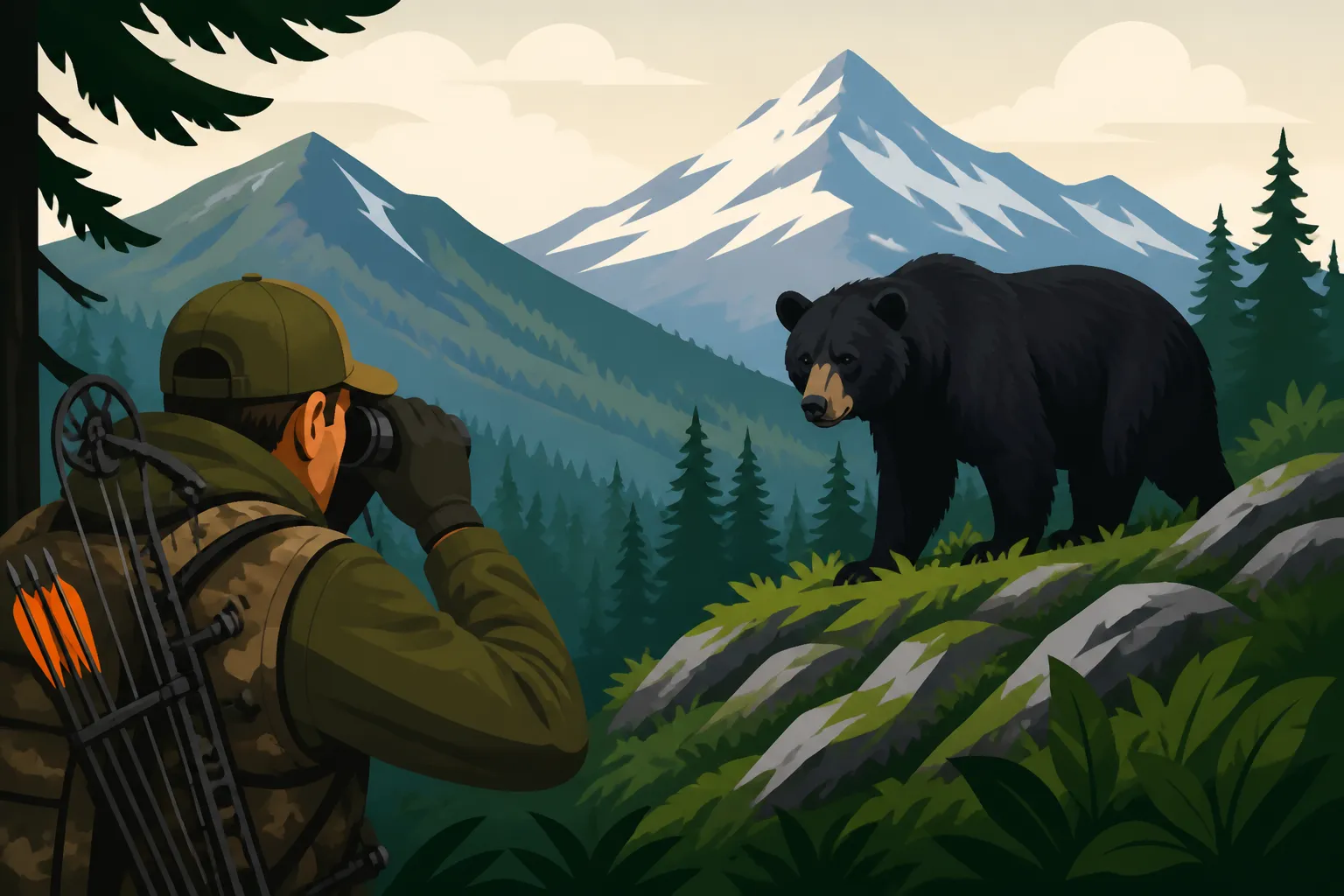
Spot-and-stalk is arguably the most common and effective strategy for bear hunting in Oregon. This involves finding an elevated vantage point that allows you to glass large areas, especially in spring when bears are often out in the open on green-up slopes or in early summer clearcuts. In the Coast Range, this might mean finding a high point overlooking a series of recent logging units or a large valley with scattered openings. In the Cascades, it often means glassing expansive huckleberry patches on mountainsides, old burns, or avalanche chutes. Quality optics, like a good pair of binoculars and a spotting scope, are crucial here.
Once you spot a bear, the real work begins. You need to assess the wind direction, plan your approach to stay downwind and out of sight, and move slowly and deliberately. Black bears have incredible noses and decent eyesight, especially for movement. Use the terrain and vegetation to your advantage, stalking silently and frequently pausing to re-evaluate the bear's position and behavior. This is not a sprint; it's a calculated chess match. Knowing Spotting Bears on Green-Up Slopes is a skill developed over time, combining patience with sharp observation. Remember, bears can blend into the shadows surprisingly well, even large ones.
Still-Hunting and Ambush Tactics
Still-hunting is another highly effective method, particularly in the dense timber of the Coast Range where long-range glassing opportunities are limited. This technique involves moving extremely slowly through the woods, pausing frequently (often for 5-10 minutes or more) to scan, listen, and simply let the woods breathe around you. It's about being incredibly patient, moving only a few steps at a time, and letting your eyes and ears do most of the work. You're trying to detect the subtle movement or sound of a bear before it detects you. Focus on areas with abundant bear sign, like active feeding zones or well-used travel corridors.
Ambush tactics often complement still-hunting or spot-and-stalk. This involves setting up in a location where you anticipate a bear will move through or feed, and patiently waiting. This could be overlooking a specific berry patch, a game trail leading to water, or a pinch point in the terrain. For spring hunts, this might mean sitting on the edge of a south-facing clearcut where new growth is emerging. For fall hunts, it could be near an oak flat where acorns are dropping. Always consider wind direction and potential escape routes for the bear. The key with ambush hunting, much like Setting Up a Caller and Shooter on a Bull for elk, is patience and understanding the animal's predictable movements.
Predator Calling for Bears
While not as universally effective as for coyotes or cougars, predator calling can sometimes work on black bears, especially younger, more curious bears or during the rut when boars are on the move. The most common calls used are distress sounds, mimicking a fawn, rabbit, or other small animal in distress. The idea is to pique the bear's curiosity or, for a hungry bear, suggest an easy meal.
When using a call, find a location with good visibility and a clear shooting lane, with the wind in your favor. Call in short sequences, then remain silent and vigilant for several minutes before calling again. Bears often approach cautiously, circling downwind to get a scent, so be prepared for them to appear from unexpected directions. Electronic calls are legal for bears in Oregon. While Coyote Calling in Open Sage Country is often about high-volume and quick responses, bear calling usually requires more patience and subtlety. It's not a guaranteed method, but it's another tool in your arsenal, especially if you're hunting an area with good bear sign but limited visibility for spot-and-stalk.
Field Dressing, Meat Care, and Reporting Your Bear
Harvesting a black bear is a moment of triumph, but the work isn't over. Proper field dressing, meat care, and fulfilling your mandatory harvest reporting obligations are just as crucial as the hunt itself. Especially in Oregon's varied climate, getting the meat cooled quickly is paramount to prevent spoilage.
Immediate Post-Harvest Steps
Once you've harvested your bear, the absolute first priority is to field dress it. This involves removing the internal organs to allow the carcass to cool down as quickly as possible. Bears have a thick layer of fat, which acts as insulation and can hold heat for a long time, accelerating spoilage. If you're in a warm early-season environment, like during Field Dressing an Elk in Warm Early-Season Weather, speed is of the essence. You'll want to get the hide off the bear as quickly as possible too, as the hide also acts as a massive insulator.
Oregon requires that you salvage the edible meat from any harvested big game animal, including bears. This generally means the quarters and backstraps, though you should familiarize yourself with the specific regulations for the current year. While not as large as an elk, a good-sized boar from the Coast Range can yield a surprising amount of meat. Take care to keep the meat clean, away from dirt, leaves, and internal fluids. Having game bags on hand to protect the meat is a smart move. If you're deep in the backcountry, you'll need to consider how you're Getting Meat Out Before It Spoils, which might mean quartering the bear and making multiple trips or using a pack frame.
Meat Handling in the Field and Transportation
After field dressing and skinning, cut the bear into manageable pieces. For larger bears, this typically means separating the four quarters, removing the backstraps, and potentially the neck meat. Get these pieces into game bags immediately. If you can, hang the meat in the shade, allowing air to circulate around it to further cool it down. In warmer weather, having ice or ice packs ready at your vehicle is a huge advantage. Place the bagged meat directly on ice, ensuring the ice doesn't melt and sit in pooled water, which can contaminate the meat.
When transporting your bear, whether it's the quarters or the whole hide, ensure you have proof of sex naturally attached to the hide (often a patch of hide with external genitalia) if required by regulation, and your tag correctly attached and validated. This is not just a formality; it's a legal requirement and demonstrates respect for the animal and the hunting process. The drive home, especially from areas like Eastern Oregon, requires careful planning to keep meat cool and clean. An Oregon bear can provide a substantial amount of delicious wild game meat for your freezer, but only if handled properly from the moment it hits the ground.
Mandatory Harvest Reporting
Oregon, like many states, has mandatory harvest reporting requirements for big game animals, including black bears. This is a critical step in wildlife management, as the data collected helps ODFW assess populations, success rates, and inform future tag allocations and season structures. Failing to report your harvest can result in penalties, including a fine.
You typically have a specific deadline to report your harvest, usually by the end of January following the close of the season for most species. For bears, this might be a tighter window, so always check the current regulations. You can usually report your harvest online through the ODFW licensing system. You'll need information like your tag number, the date of harvest, the county/unit where the bear was taken, and the sex of the animal. Even if you don't harvest a bear, you may still be required to report an unfilled tag. This data is invaluable for ODFW to understand hunting pressure and success, ensuring the health of Oregon's black bear populations for years to come.
DISCLAIMER
Please remember that hunting regulations, season dates, and access rules can change frequently. Always consult the most current Oregon Department of Fish and Wildlife (ODFW) hunting regulations pamphlet and relevant land management agency rules before planning and engaging in any hunting activities. This guide is for informational purposes only and does not supersede official regulations.