Setting Up a Caller and Shooter on a Bull
That heart-pounding moment when a bull elk answers your call, sending shivers down your spine, is what we all live for as Oregon hunters. But the real challenge isn't just getting him to talk; it's coaxing him into a position for a clean, ethical shot. Many of us have felt the frustration of a bull hanging up just out of range, or worse, circling downwind and vanishing into thin air. This comprehensive guide will break down the art and science of effectively setting up a caller and a shooter to turn those thrilling bugles into successful hunts.
The Critical Dance Between Caller and Shooter
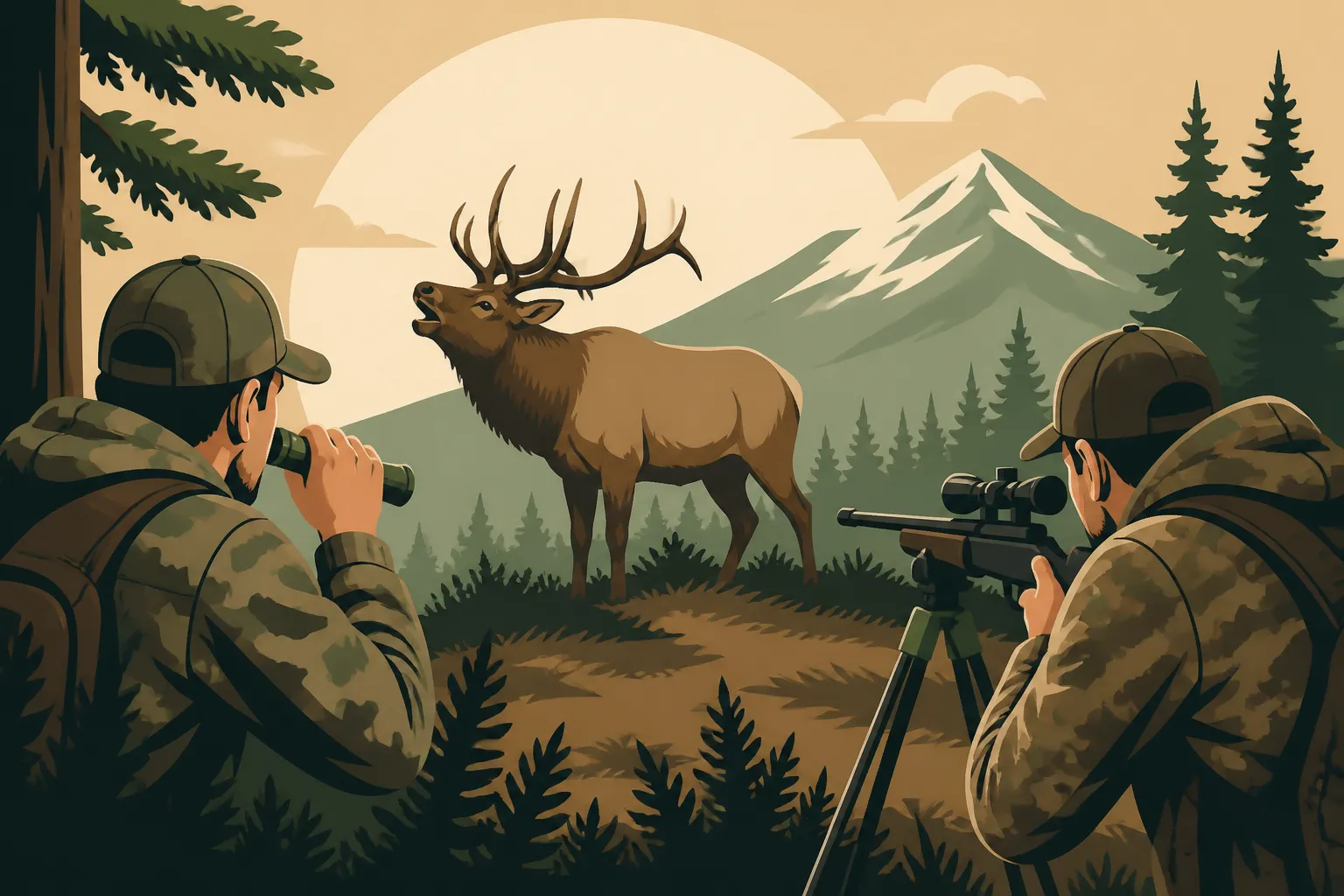
Hunting elk, especially when trying to lure a bull, often benefits immensely from a team approach. The dynamic between a caller and a shooter isn't just about two people in the woods; it's a carefully orchestrated dance designed to exploit the bull's instincts and maximize your odds of success. When a bull commits to your calls, he’s coming in with a mixture of aggression, curiosity, and caution. Understanding these underlying behaviors is paramount to setting up correctly.
Why Teamwork is Non-Negotiable
Trying to call and shoot a bull by yourself can certainly work, and hats off to the hunters who master that difficult solo act. However, in the dense timber of the Coast Range or the rugged canyons of Eastern Oregon, being a solo act often puts you at a significant disadvantage. When you're both calling and trying to get into a shooting position, you create conflicting signals for the bull. Your movements might spook him, or your calling might not sound convincing enough because you're preoccupied.
With a dedicated caller and shooter, you divide the labor. The caller becomes the "target" for the bull's attention, drawing his focus away from the shooter. This allows the shooter to remain virtually invisible, focused solely on finding a clear lane and preparing for the shot. This division of labor allows each person to excel in their specific role, creating a much more realistic and enticing scenario for the bull. It’s like having a dedicated actor on stage, while the camera operator moves into the perfect position to capture the scene. Without this teamwork, you might find yourself constantly moving and stopping, sending confusing signals that make a wary bull think twice.
Understanding Bull Behavior to Inform Your Setup
Before you even consider where to place yourselves, you need a solid grasp of how a bull is likely to approach. A bull answering a call isn't just mindlessly walking toward the sound; he's evaluating the situation. He's looking for the "other elk," listening for more calls, and most critically, he's scent-checking the wind.
Bulls often "hang up," meaning they stop just out of range, trying to locate the source of the calls visually before committing further. They want to see the elk they're hearing. If they don't see anything, or if they see movement that doesn't match the calls, they'll often disengage. Even more common, especially with dominant bulls, is to circle downwind. This is their ultimate defense mechanism – they want to smell you before they see you. If your scent hits them, the game is usually over.
Knowing these tendencies helps you anticipate their movements. Are you in open country where a bull might hang up and scan? Or in thick timber where he's more likely to commit blind but will still try to circle? This understanding, combined with using detailed mapping tools like those found on E-Scouting Oregon Units With Satellite Imagery, can provide crucial insights into terrain features that might funnel a bull or provide him cover for a downwind approach.
Defining Roles and Optimal Positions
A successful setup relies on a clear understanding of each person's role and optimal positioning relative to the expected approach of the bull. This isn't a one-size-fits-all strategy; it adapts to the terrain, wind, and the bull's specific responses.
The Caller's Art: Location, Concealment, and Communication
The caller's job is paramount: be the decoy, the magnet that pulls the bull's attention away from the shooter. This means the caller needs to be in a position that’s both effective for drawing the bull and safe for the shooter. Typically, the caller should position themselves behind the shooter, perhaps 30 to 70 yards back, depending on the density of the cover. This distance creates a sense of depth for the bull, making him believe the "herd" is larger than it is, and encourages him to walk past the shooter to investigate the calls.
Concealment for the caller is non-negotiable. You want to be heard, not seen. Use natural terrain features – a thick patch of timber, a large blowdown, or a rise in the ground – to break up your silhouette. Your calls need to be convincing and varied. Start with the calls that got the bull interested, whether it's an aggressive bugle or a series of soft cow chirps. As the bull approaches, adjust your calling strategy. If he's hot and charging, a few aggressive chuckles or a challenge bugle might pull him in. If he's hesitant, soft cow calls, maybe even some raking sounds to mimic another bull, can often be the convincer. For more on nuanced calling, check out Cow Calling Versus Bugling in Heavy Timber.
Crucially, the caller needs to communicate silently with the shooter. Pre-arranged hand signals for "he's coming," "he's stopped," or "downwind" are vital. Sometimes, the best call you can make is no call at all, especially if the bull is committed and coming in silent. Knowing When Bulls Go Quiet in Late Archery Season can inform these decisions.
The Shooter's Patience and Preparedness
The shooter's role is one of immense patience and absolute readiness. Your objective is to remain perfectly still and unseen, establishing clear shooting lanes, and preparing for the shot. Position yourself where you have good visibility along the bull's most likely approach route, but also where you can remain hidden. Use the terrain to your advantage: kneel behind a log, stand in the shadows of a large tree, or use a natural depression.
Before the bull gets close, identify multiple shooting lanes. A bull rarely walks directly into the lane you hope for. He might step out for a split second in an unexpected spot. Know your distances for each lane. Rangefinders are essential here. Your rifle should be shouldered, your bow drawn, well before the bull is in sight. Any movement once he's close will likely blow the setup. Focus on controlling your breathing and heart rate. Remember, the caller is drawing his attention, so a slight movement might not be immediately detected, but absolute stillness is always the goal. For tips on where to aim, our guide on Shot Placement on a Bull at Close Range can be very helpful.
The Wind: Your Silent Partner or Saboteur
The wind is the single most critical factor in any elk setup. Ignore it at your peril. Elk, like all deer species, rely heavily on their sense of smell, which is far superior to ours. A bull will almost always try to get downwind of the calls to scent-check for danger.
Therefore, your setup must account for the wind. The ideal scenario is to have the wind blowing from the bull to you, or across you, so he can't get your scent. If the wind is swirling or unpredictable, it can make calling a bull in incredibly challenging. Always carry a wind checker – a small bottle of powder or thread – and use it constantly. Before committing to a setup, spend a few minutes analyzing the wind currents. If you can't get the wind in your favor, it's often better to back out and try to reposition, even if it means losing the bull for a short while. Sometimes, a bull will circle a long way to get downwind, and anticipating that with a tool like GoHunt's detailed wind overlays can be a game-changer.
Executing the Setup: Different Scenarios
Putting theory into practice means adapting your setup to the specific environment and the bull's temperament. Oregon's diverse landscapes, from the dense coastal rainforests to the open eastern sagebrush, demand flexibility.
The Classic Front-Facing Trap
This is arguably the most common and effective setup when conditions allow. The shooter is positioned in front of the caller, ideally 40-70 yards away, with good shooting lanes downwind of the caller's position. The bull, drawn by the calls, approaches the caller, ideally walking past the shooter who remains hidden and silent.
Steps for the Front-Facing Trap:
- Locate the Bull: Establish the bull's general location and direction of travel.
- Assess Wind: Determine the prevailing wind direction and anticipate any thermals. Your setup must place the bull in a position where he cannot scent you easily as he approaches the caller.
- Shooter Placement: The shooter moves into position first, finding good cover that offers clear shooting lanes. They should be positioned downwind or crosswind of the bull's likely approach, with the wind blowing towards the bull if possible, but definitely not from the bull directly to the shooter.
- Caller Placement: The caller then moves into position, 30-70 yards behind the shooter, also concealed. The distance ensures the bull focuses on the caller, and any movement by the bull to pinpoint the calls takes him closer to the shooter.
- Initiate Calling: Once both are set, the caller begins calling, mimicking a single cow or a small group. Adjust intensity based on the bull's response.
- Patience is Key: Both caller and shooter remain absolutely still. The caller's job is to keep the bull focused. The shooter's job is to be ready. This is where a good understanding of Calling Bull Elk During Oregon's Archery Season really pays off.
The Downwind Ambush: Anticipating the Circle
Sometimes, a bull is wise to the game, or the terrain dictates that he'll try to circle downwind, regardless of your initial setup. Instead of fighting it, anticipate it and set up an ambush.
Steps for the Downwind Ambush:
- Initial Contact & Wind Check: As soon as you engage a bull and determine he's likely to approach, check the wind. If it's consistently favoring a downwind circle, plan accordingly.
- Shooter Repositioning: The shooter will have to move aggressively, but silently, to a new position along the downwind side of the bull's anticipated circle. This can be tricky and requires speed and stealth.
- Caller Remains Stationary (or repositions subtly): The caller might stay put or move slightly to maintain the "bait" sound, drawing the bull's attention while the shooter executes their maneuver. The caller's calls need to sound like the original source to keep the bull committed to circling towards that sound.
- Concealment and Preparedness: The shooter must find new, immediate cover and be ready, as the bull will be moving with purpose. This requires knowing How Close You Can Get in Coastal Timber for quick adjustments.
This move is high-risk, high-reward, and often requires strong communication and trust between caller and shooter. Using GoHunt's terrain analysis beforehand to identify potential downwind travel corridors can greatly improve your success rate here.
Thick Timber Tactics: Shorter Distances, Tighter Windows
Hunting in Oregon's thick timber, like the old-growth forests of the Coast Range or the dark timber pockets in the Cascades, presents unique challenges. Visibility is often limited to 30-50 yards, making close-range engagements the norm.
Steps for Thick Timber Setups:
- Closer Spacing: The caller and shooter will need to be closer together, perhaps 20-40 yards apart, to maintain communication and ensure the bull passes within the shooter's limited view.
- Sound and Stealth: The caller needs to be subtle with calls – soft cow mews and chirps, interspersed with light branch raking, can be incredibly effective. Aggressive bugles might sound too close and cause the bull to hang up or circle too wide.
- Shooter's Lanes: The shooter focuses on identifying tiny shooting windows between trees and preparing for a quick shot. Patience is even more critical here.
- Utilize Blowdowns: Fallen timber provides excellent natural concealment and can funnel elk movement. Position yourselves near these features. Our guide on Calling Roosevelt Elk in Oregon Rainforest Timber offers more specific advice for this environment.
Common Pitfalls and How to Avoid Them
Even with the best planning, things can go sideways quickly when a 700-pound animal with an incredible sense of smell is involved. Recognizing common mistakes and knowing how to mitigate them is crucial for consistent success.
Losing the Wind: The Hunter's Arch Nemesis
As mentioned, the wind is king. Many a perfectly executed calling sequence has been ruined by a sudden shift in wind or simply ignoring its subtle thermals. The quickest way to send a bull packing is to allow him to get your scent.
How to Avoid:
- Constant Vigilance: Always have a wind checker. Use it frequently, especially as the bull gets closer or if you change positions.
- Plan B: Always have a backup plan for repositioning if the wind shifts unexpectedly. Don't be afraid to back out and try again from a different angle.
- Thermal Awareness: In mountainous or hilly terrain, remember that thermals usually pull air uphill in the morning and push it downhill in the evening. Factor this into your approach and setup times. You can use platforms like GoHunt that integrate detailed wind and thermal data to help you make smarter decisions.
Impatience and Premature Movement
This is perhaps the most common mistake for both callers and shooters. The adrenaline rush of a bugling bull can make even seasoned hunters twitchy.
How to Avoid:
- Shooter: Do not move until the bull's eyes are clearly fixed on the caller, or he is behind thick cover. Even then, movements must be slow, deliberate, and minimal. Resist the urge to peek around a tree too quickly.
- Caller: Don't assume the bull is coming directly towards you. He might be circling, and too much movement can reveal your position or make the calls sound unnatural. Once he's committed, less calling, or even silence, can sometimes be more effective. Trust the setup; let the bull work his way in. Remember, Archery Elk Hunting Oregon's August and September Seasons often demands even greater patience due to the closer ranges.
- Breathing: Focus on deep, slow breaths to manage adrenaline and maintain stillness.
Poor Communication and Misunderstanding Roles
In the heat of the moment, if communication isn't crystal clear, confusion can lead to missed opportunities or, worse, safety issues.
How to Avoid:
- Pre-Hunt Briefing: Before you ever step into the woods, clearly define roles and responsibilities. Discuss hand signals for "stop," "go," "bull coming," "downwind," and "shooter ready."
- Scenario Planning: Talk through various hypothetical scenarios: "What if he circles here?" "What if he hangs up there?" "What if he comes in silent?"
- Practice: If possible, practice these setups in a non-hunting scenario to build muscle memory and trust in your partner. This helps solidify your understanding of Setting Up a Caller and Shooter on a Bull.
Comparing Caller and Shooter Responsibilities
To help visualize the distinct yet interconnected roles, here's a table outlining the primary objectives and key actions for both the caller and the shooter in a two-person elk hunting setup.
| Role | Primary Objective | Key Actions | Common Mistakes | Key Gear |
|---|---|---|---|---|
| Caller | Attract and distract the bull, keep his focus | Realistic calling (bugles, cow calls), raking, subtle movements, maintaining concealment, silent communication | Over-calling, exposing position, not reading bull's mood, calling too aggressively | Bugles, cow calls, diaphragm calls, wind checker, binos |
| Shooter | Remain undetected, prepare for shot, execute shot | Find shooting lanes, check wind, shoulder weapon, control breathing, slow/minimal movement, silent communication | Rushing the shot, poor concealment, unnecessary movement, failure to pre-range | Weapon, optics, rangefinder, wind checker, binos |
Mastering the Setup
Successfully setting up a caller and a shooter on a bugling bull is one of the most rewarding achievements in elk hunting. It requires not just skill with a call or a weapon, but a deep understanding of elk behavior, careful planning, and seamless teamwork. By anticipating the bull's moves, mastering your roles, and meticulously managing the wind, you dramatically increase your odds of punching that coveted tag. So, the next time that thunderous roar echoes through the Oregon timber, you'll be ready to dance.
Disclaimer
The information provided in this guide is for informational purposes only and is not intended as legal advice. Hunting regulations and conditions can change rapidly. Always consult the most current Oregon Department of Fish and Wildlife (ODFW) regulations and local land management rules before planning any hunting trip. Hunter safety is paramount; always follow safe firearm handling practices and be aware of your surroundings and hunting partners.