Calling Bull Elk During Oregon’s Archery Season
There's nothing quite like the rush of an Oregon bull elk responding to your call, especially during archery season. That moment when the timber goes silent, then explodes with a guttural roar, can make your heart pound out of your chest. But let's be honest, getting those bulls to commit, especially the big ones, can feel like trying to solve a cryptic puzzle while navigating a jungle gym. It’s frustrating when they hang up just out of bow range, or worse, ghost you entirely after a single bugle. This comprehensive guide is dedicated to dissecting the art and science of calling bull elk during Oregon's archery season, helping you understand their behavior, master various vocalizations, and set up for success in the diverse landscapes from the Coast Range to the Blue Mountains.
Deciphering Elk Behavior During Oregon's Archery Season
Understanding the specific phases of the elk rut in Oregon is paramount to effective calling. Their vocalizations and responses change dramatically from the hot days of August through the cooler, more frantic pace of September. Trying to call an elk in late August with the same aggressive bugles you'd use in mid-September is a surefire way to educate animals and leave yourself frustrated.
Early Season Dynamics August
As Oregon's archery season kicks off in late August, the elk are still largely in their summer patterns. Bulls, often still carrying velvet (though some will be rubbing it off), are typically found in bachelor groups, focused on feeding and regaining strength after a long winter and spring. The territorial bugling that defines the peak rut is largely absent.
During this period, bulls are generally less vocal and much more wary. They haven’t yet felt the intense drive of breeding, so challenging bugles or aggressive cow calls are often met with silence or, at best, a curious stare from a distance. Your best bet in late August and early September is often subtle cow and calf sounds. Think soft mews and chirps, mimicking a contented herd going about its business. These calls are meant to locate, reassure, and entice curiosity rather than provoke a challenge. If you do get a bull to respond, it will likely be a soft, seeking bugle, not the full-throated roar of a dominant bull. It's crucial to acknowledge that elk behavior shifts based on geography too; a Roosevelt bull in dense western Oregon timber might be slightly more vocal earlier than a Rocky Mountain bull in the open country of Eastern Oregon. For a deeper dive into how to approach the season as a whole, check out our guide on Archery Elk Hunting Oregon's August and September Seasons.
Peak Rut Roar September
This is what most bowhunters dream of: the full-blown, ear-splitting rut of mid-September. As testosterone levels surge, bulls become highly vocal, territorial, and incredibly aggressive. This is when the landscape truly comes alive with the sounds of bugling, raking trees, and the crash of antlers. Bulls are actively gathering cows, defending their harems, and constantly challenging rivals.
During this period, you can employ a much wider and more aggressive range of calls. Locator bugles are great for pinpointing a bull, and once you get a response, don't be afraid to engage with challenge bugles. Intercepting a bull moving with his cows, or pulling him away from his harem, requires confident and often aggressive calling. Estrus cow calls can be incredibly effective, mimicking a receptive cow and driving bulls crazy with desire. However, it's also the time when over-calling or calling too aggressively without proper setup can cause a bull to hang up or circle downwind. They are wary, even when driven by instinct. Learning Best Bugle Sequence for Early September Elk can be a game-changer when engaging these active bulls.
Post-Rut Lull Late September
As September draws to a close, especially in the last week or so, the intense peak of the rut begins to wane. Many cows have been bred, and the most dominant bulls might be exhausted, having spent weeks fighting and chasing. Some bulls might still be bugling, but the frequency and intensity often drop significantly. This phase can be particularly tricky, as elk behavior becomes more unpredictable.
You might encounter "satellite bulls" that are still actively seeking unbred cows, and these younger bulls can sometimes be more responsive to calling than the worn-out herd bulls. However, the overall herd dynamic is changing, and elk are starting to think more about feeding and less about breeding. Aggressive calling might spook them, as they become more cautious after weeks of intense pressure from other bulls and hunters. Soft cow calls, interspersed with very subtle bugles, can still work, but patience becomes an even greater virtue. You'll often hear about When Bulls Go Quiet in Late Archery Season, and understanding this shift is key to adjusting your tactics. This is a time to become more of a stealth hunter, using calls sparingly to confirm presence or draw curiosity rather than trying to instigate a full-blown fight.
Essential Elk Calls and When to Use Them
The market is flooded with elk calls, from diaphragms to external reeds to bugle tubes. The real trick isn't owning every call, but mastering a few and knowing precisely when to deploy them. Each call serves a specific purpose, and misusing them can turn a promising encounter into a silent departure.
Bugles Challenge, Locating, and Indecision
The bugle is the quintessential elk sound and arguably the most exciting. But not all bugles are created equal.
- Locator Bugles: These are typically loud, drawn-out bugles designed to get a response from a bull without sounding overly aggressive. You're essentially asking, "Are you there?" without challenging him directly. Early in the morning or late in the evening, these are excellent for pinpointing where elk are roosting or feeding. A simple, confident bugle without a lot of aggressive chuckles or glottal sounds is perfect for this. When E-Scouting Oregon Units With Satellite Imagery, you might pick out promising timber patches; a locator bugle confirms if elk are indeed using them.
- Challenge Bugles: Once you've located a bull and determined he's receptive (often by him bugling back with some intensity), a challenge bugle is your next step. These are more aggressive, often shorter and punchier, with grunts and chuckles at the end. They say, "I'm here, and I'm coming for your cows!" This is the call that can really get a bull fired up and moving your way during the peak rut. However, deploy them wisely. Too early or too aggressive, and a wary bull might just take his cows and melt away. This is where subtle differences in your bugle, mimicking another bull's size or intent, can make all the difference.
- Indecision Bugles: Sometimes a bull will bugle, but he sounds far off or hesitant. Or he'll cut you off, but never close the distance. An indecision bugle (or even a frustrated, pleading bugle) can sometimes pique his interest further. This might involve a slightly softer, drawn-out bugle, perhaps with a touch of a whiny finish, suggesting a bull that's looking for cows but unsure of himself. It’s less about a direct challenge and more about maintaining engagement and curiosity.
Cow Calls Social, Estrus, and Calming
Cow calls are the bread and butter of elk hunting, often more effective than bugles, especially for drawing in a cautious bull. They come in many forms, each with its own nuance.
- Social Mews and Chirps: These are the general "hello" sounds of the elk world. Soft, short, and reassuring, they mimic a contented herd. Use these constantly, but subtly, as you're moving through the timber or sitting on a stand. They can help calm nervous elk, draw in curious bulls, or even attract other cows, which often bring a bull with them. Think of them as the background chatter of the forest. They’re excellent for locating elk when you don't want to use an aggressive bugle that might spook them, or for reassuring a bull that's approaching.
- Estrus Buzz/Whine: This is the hot call, mimicking a cow in heat. It's often a longer, more drawn-out mew with a distinct, almost pleading tone. During the peak rut, an estrus whine can be irresistible to a bull, drawing him in quickly and often aggressively. This is your power call for bringing a bull into bow range. Practice makes perfect to get the right pitch and duration. Overuse, however, can make a bull suspicious, especially if he’s heard it before. For specific guidance on how these calls differ, our article on Cow Calling Versus Bugling in Heavy Timber is invaluable.
- Calming Mews: When a bull is closing in and you need him to take just a few more steps, a very soft, subtle mew can work wonders. It’s a "come here" call without being demanding, reassuring him that you're a receptive cow. Sometimes, a series of short, soft mews will do the trick, keeping his attention while your shooter prepares for a shot.
Chirps, Mews, and Barks The Subtleties
Beyond the main bugles and cow calls, there are a host of subtle vocalizations that add realism and can make the difference between success and failure.
- Calf Chirps and Mews: These are high-pitched, short mews that sound like a lost or slightly agitated calf. They can be incredibly effective, especially on herd bulls who are protective of their offspring, or on cows who might lead a bull to your location. A bull might come in cautiously, looking for the distressed calf, offering a shot opportunity. They can also draw in a lonely cow looking for her calf, bringing with her a satellite bull.
- Warning Barks: This is a sharp, distinct bark that elk make when they sense danger. While you typically don't want to make this call yourself (it means they're busted!), understanding it is vital. If you hear it, it means you've been detected, and it's time to either freeze, back out, or try a very bold, aggressive tactic if you have nothing to lose. It's the elk's alarm system, and once it goes off, your chances diminish significantly.
- Lip Bawls: A short, sharp whine that often conveys urgency or excitement. Sometimes, a bull or cow will make this sound when separated from the herd or when seeking contact. It can be a good call to mix in when you want to convey a bit more emotion than a simple mew, without going full-estrus.
Setting Up for Success Caller and Shooter Dynamics
Calling elk in archery season isn't often a solo affair, especially with aggressive bulls. The synergy between caller and shooter is critical. A perfectly executed call can be ruined by poor positioning, and even a less-than-perfect call can succeed with a smart setup.
Strategic Positioning for Bowhunters
The caller and shooter must work as a team, using the terrain to their advantage. Ideally, the caller should position themselves 30-80 yards behind and slightly to the side of the shooter. This accomplishes several things. First, it pulls the bull's attention past the shooter, drawing his eyes to where the sounds are coming from. Elk have excellent hearing and can pinpoint sounds with remarkable accuracy, so they'll often try to circle downwind of the caller to get a scent. By placing the shooter forward, the bull walks past them, offering a broadside or quartering-away shot.
Second, this separation helps prevent the bull from "hanging up" just out of range. If the bull can't quite see what's making the sound, he'll often continue to advance cautiously, trying to locate the source. The shooter needs to be in a position with clear shooting lanes, ideally with some cover that allows them to draw their bow undetected. Think about the direction the elk is likely to come from, wind direction, and escape routes for the elk. Remember that in dense areas, like those you find when Hunting Clearcuts on Private Timber Land or in the Coast Range, closing that distance to 30-40 yards is critical.
Communication and Anticipation
Effective communication between caller and shooter doesn't always mean verbal chatter; in fact, silent signals are far better. Before the hunt, establish clear hand signals for "elk coming," "stop," "draw bow," and "shoot." Practice these signals until they're second nature.
Anticipation is also key. The caller should be listening intently to the bull's vocalizations, trying to gauge his mood, his speed of approach, and his likely path. Is he bugling aggressively and moving fast? Is he tentative, only responding with soft mews? This information needs to be relayed to the shooter (through subtle signals or pre-arranged cues) so they can prepare. The caller might mimic a bull raking a tree to indicate aggressive intent, or use soft cow mews to suggest the bull is closing in cautiously. Understanding Setting Up a Caller and Shooter on a Bull is paramount to executing this strategy flawlessly.
Reading the Bull's Approach
An approaching bull is a symphony of subtle cues. Learn to read them. His bugles will become louder and more distinct, sometimes interspersed with grunts and chuckles. You might hear the snapping of branches, the rustle of leaves, or the soft thud of hooves on the forest floor. Crucially, watch the bull's body language. If he's coming in with his head high, ears swiveling, he's actively searching and might be wary. If his head is lower, focused, or he's raking trees, he's likely committed and aggressive.
The caller's job is to keep the bull focused on their location, using calls to guide him past the shooter. If the bull stops and bugles, a soft cow mew might be enough to get him moving again. If he's circling to get downwind, the caller might try to step back slightly, drawing the bull further, while the shooter remains stationary, waiting for the perfect shot opportunity. Always consider How Close You Can Get in Coastal Timber—it's often closer than you think, but you need to be prepared for those tight shots.
Common Calling Mistakes and How to Avoid Them
Even seasoned elk hunters fall victim to common calling errors. The difference between success and failure often hinges on recognizing and correcting these missteps.
Over-Calling and Under-Calling
It's a delicate balance, and there's no single magic formula.
- Over-Calling: This is probably the most common mistake, especially for excited archers. Pounding out too many bugles or cow calls can sound unnatural to an elk. If you're constantly vocalizing, it might sound like an entire herd or an overly aggressive bull, which can spook wary elk or make them suspicious. Imagine walking into a bar where one person is just screaming at the top of their lungs – you'd probably leave. Elk are no different. It can also make a bull hang up, expecting to see the source of all the noise without having to move further. Sometimes, less is more. Let the bull respond, then gauge his reaction before making your next call.
- Under-Calling: On the flip side, not calling enough can also be a problem. If you make one call and then go silent, the bull might lose interest, or simply assume the "elk" has moved on. There are times when subtle, continuous calling – especially soft cow mews – is necessary to keep a bull engaged and moving toward you. If a bull is coming in and then stops, a soft mew or chirp can be the nudge he needs to take those last few critical steps. The key is to respond realistically to the elk's mood and the situation. Are you dealing with a dominant, bugle-crazed bull, or a cautious satellite that only responds to soft reassurance?
Ignoring the Wind and Terrain
Wind direction and terrain are your non-negotiable partners in elk hunting. Ignoring them is a recipe for failure.
- The Wind: Elk rely heavily on their sense of smell. A bull will almost always try to circle downwind to scent-check the source of a call before fully committing. If your scent cone blows directly into his approach path, he'll likely bust you before you even know he's there. Always position yourself and your shooter so the wind is in your favor, blowing your scent away from the likely approach path of the elk. This often means approaching from downwind and setting up with the wind quartering to your face. Regularly checking wind currents with a wind checker is absolutely essential. Many hunters get excited by a bull's bugle and charge in, only to be busted by a swirling wind they didn't account for. E-Scouting Oregon Units With Satellite Imagery can help you identify terrain features that might cause swirling winds, like canyons or saddles.
- The Terrain: Oregon's landscape is rugged and varied. Flat, open terrain is vastly different from thick, dark timber or steep, brushy hillsides. The terrain dictates how far sound carries, how quickly an elk can approach, and what your shooting lanes will look like. In thick timber, calls won't carry as far, and a bull might be on top of you before you realize it, making closer caller-shooter separation necessary. On open ridges, calls carry for miles, but a bull might spot you from a long distance. Use natural features like ridges, draws, and dense cover to conceal your approach and provide natural funnels for the elk. Remember that a Rifle Choice for Oregon Elk and Deer might be different from your bow setup, and your calling strategy should adapt to that.
Not Practicing Realistically
You wouldn't go to the Olympics without training, so why go elk hunting without realistic practice?
- Sound Quality: It's not just about making elk sounds; it's about making realistic elk sounds. Record yourself, listen critically, and compare it to real elk vocalizations. Work on the nuances: the wavering of a bugle, the nasally quality of a mew, the intensity of an estrus whine. An artificial-sounding call will quickly educate or spook a bull. This is where dedicated practice with a variety of calls comes in.
- Calling Sequences: Elk don't just make one sound. They communicate in sequences. Practice entire conversations: a locator bugle, a response, a challenge, followed by some cow mews. Vary the intensity and duration. Practice with a partner, taking turns being the caller and shooter, to simulate real-world scenarios. This will help you refine your timing and learn to read a bull's responses. Many online resources and even apps offer practice tools, but nothing beats actual field practice.
Adapting to Oregon's Diverse Terrain and Elk Subspecies
Oregon is unique in that it hosts two distinct subspecies of elk: the smaller, but still massive, Roosevelt elk in the west, and the larger Rocky Mountain elk in the east. Their habitat and behaviors differ, demanding tailored calling approaches.
Calling Roosevelt Elk in Timber
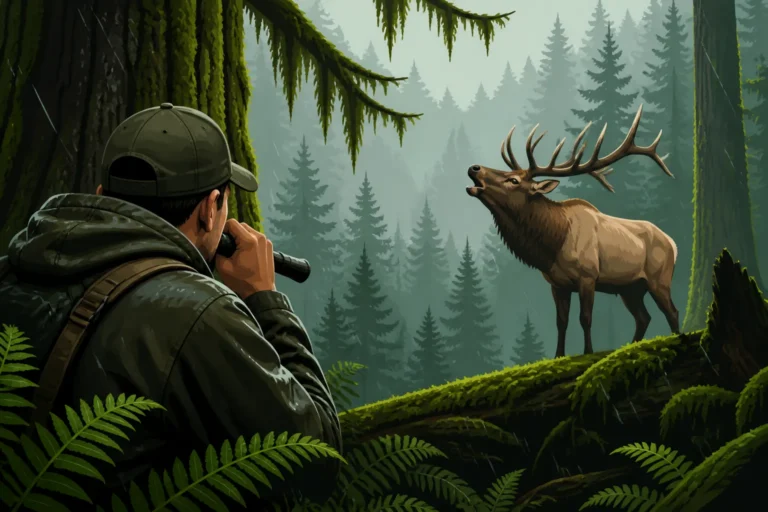
Western Oregon, with its dense rainforests, steep mountains, and thick undergrowth, is home to the majestic Roosevelt elk. Roosevelts are generally less vocal than their Rocky Mountain cousins, particularly the bulls. Their thick timber habitat means they don't need to bugle loudly to communicate across vast distances.
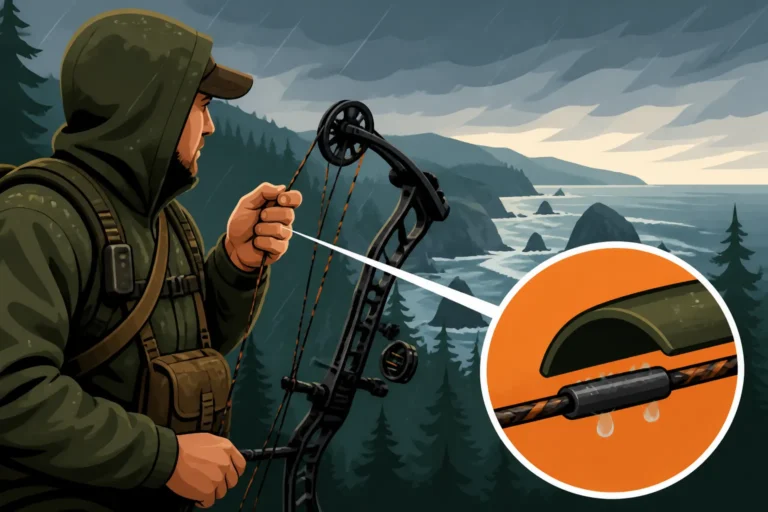
When calling Roosevelt elk, subtlety is often your best friend. Instead of aggressive, open-country bugles, focus on softer, more drawn-out bugles that mimic a bull trying to locate cows within thick cover. Lots of chuckles and grunts can make it sound like a bull moving through the brush. Cow calls, especially social mews and chirps, are incredibly effective. A series of soft mews, mimicking a small group of cows, can often entice a bull to investigate, especially if he thinks he's sneaking into an unpressured group. When you're in dark, wet timber, you often need to consider Archery Setup for Wet Oregon Timber to ensure your gear is ready for the environment. You'll hear more about Calling Roosevelt Elk in Oregon Rainforest Timber and its unique challenges. Patience is key; Roosevelt bulls often move slowly and deliberately, especially in dense fog or drizzle, which is common in their habitat. They also frequently rely on their noses, so wind is always a critical factor.
Engaging Rocky Mountain Elk in Open Country
Eastern Oregon's vast, open sagebrush plains, juniper forests, and rimrock canyons are the domain of the Rocky Mountain elk. These elk tend to be more vocal, using their bugles to communicate across wide-open spaces. Their behavior can also be more aggressive, especially during the rut.
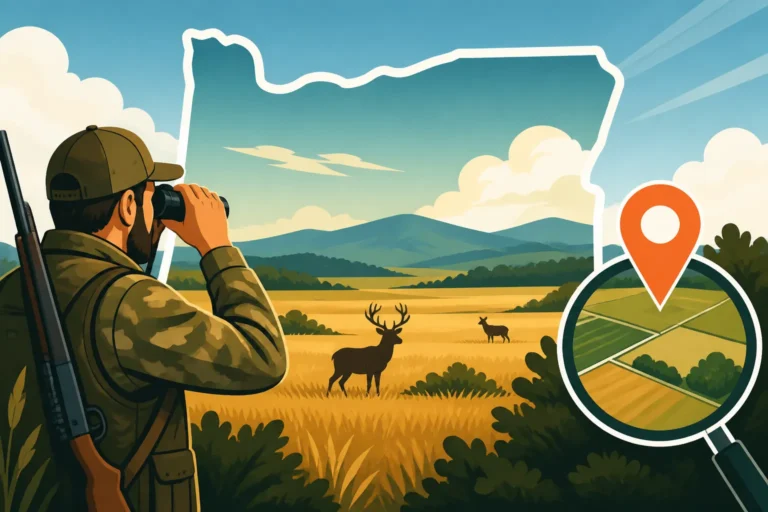
In this expansive landscape, locator bugles can be used to cover vast amounts of ground quickly, helping you pinpoint distant herds. Once a bull responds, you can often engage with more aggressive bugle sequences. However, the open terrain also means they have excellent visibility. You need to be incredibly mindful of cover and your silhouette. Bulls will often try to "hang up" on a ridge or in a draw, bugling back and forth but refusing to close the distance until they can see the source of the sound. This is where subtle cow calls can sometimes coax them closer, or a combination of bugles and raking sounds to mimic a bull moving in heavy cover, even if there isn't much around. Using tools from GoHunt can help you scout these open areas, pinpointing water sources and potential bedding areas where elk might be more concentrated.
Transition Zones and Mixed Tactics
Many Oregon units feature transition zones – areas where dense timber gives way to more open clearcuts, or where the Cascades blend into the high desert. These areas often hold the highest concentrations of elk as they move between different habitat types. Here, a blended calling strategy is most effective.
You might start with a more aggressive Rocky Mountain-style bugle in the open, then switch to softer cow calls or Roosevelt-style bugles as the elk moves into thicker cover. Or, you might use locator bugles from a high point in open country to identify where the elk are feeding, then stalk into the timber and switch to subtle cow calls to draw them out. The key is adaptability. Observe the elk's behavior, the terrain, and the current conditions, and be willing to switch tactics on the fly. This flexibility is crucial to success in Oregon's diverse hunting landscapes. Understanding the differences between Roosevelt Elk in Western Oregon and Rocky Mountain Elk in Eastern Oregon is essential for mastering these mixed tactics.
Advanced Calling Strategies for Tough Bulls
Sometimes, the standard calling sequences just don't cut it. You'll encounter bulls that are "call shy," pressured, or simply too stubborn to commit. That's when you need to dig into your bag of advanced tricks.
Aggressive Play and Herding
For those stubborn bulls, sometimes a bold, aggressive approach is exactly what's needed. This isn't for every situation, but when a bull is bugling back but refusing to close the distance, it can be a game-changer.
- Raking: Mimic a bull raking a tree with his antlers. Use a small branch, rub it against a tree, and snap twigs. This sound of another bull challenging him on his turf can sometimes be enough to push a dominant bull over the edge and make him charge in, looking for a fight. Combine this with aggressive bugles and grunts.
- The "Herding" Bugle: If a bull is moving away with his cows, sometimes an aggressive, drawn-out bugle (often with some chuckles and grunts) can sound like another bull trying to cut off or steal his cows. This might make the herd bull turn back to defend his harem, bringing him closer to you. Be careful with this, as it can also make them bolt faster. It's a high-risk, high-reward tactic.
- Sneaking In: While a caller and shooter setup is often ideal, sometimes the best call is no call at all. For a bull that's particularly call-shy, an aggressive stalk combined with minimal, well-timed cow mews or chirps can bring you into range. This is often necessary when hunting pressured elk on public land where animals have heard every trick in the book.
Silent Approaches and Decoys
Not every setup requires loud calling. In fact, some of the most effective hunts are incredibly quiet.
- Silent Stalks to Bedding Areas: Often, the best strategy is to locate elk by sound in the morning or evening, then plan a silent stalk into their bedding areas during the midday. Once you're close, a single, soft cow mew or a very subtle bugle can often be enough to make a bull stand up, stretch, and offer a shot, or simply reveal his position for a quiet stalk. Knowing how to remain stealthy is critical for Still-Hunting Blacktails in Wet Oregon Coastal Brush, and similar principles apply to elk.
- Decoys: Elk decoys, especially cow decoys, can be incredibly effective when used correctly. If a bull is hanging up and can't quite see the source of your call, a decoy can provide the visual confirmation he needs to commit. Position the decoy slightly in front of your shooter, facing towards the direction you expect the bull to come from. Combine it with soft cow calls to make it look and sound like a lone, receptive cow. Be mindful of hunting safety when using decoys, especially on public land.
Adapting to Pressure and Hunter Density
Oregon's archery season can be busy, especially in easily accessible units. Pressured elk behave differently from unpressured elk.
- "Ghost" Calls: Pressured bulls often go silent or become extremely wary of aggressive calling. In these situations, subtle, soft calls that mimic a small, unassuming group of cows are often more effective. Think about short mews and chirps, almost whispered, to pique curiosity without sounding like a threat or another hunter. You might have to resort to very minimal, almost imperceptible calls, to get them to just take a few more steps.
- Timing Your Calls: On pressured public land, you're not the only one calling. Listen to other hunters. If everyone is bugling aggressively at first light, try waiting an hour or two, then go in with subtle cow calls. Sometimes, a bull will actively avoid areas where he hears a lot of human-made bugles. Also, consider hunting during the middle of the day, when many hunters are back at camp or taking a break. GoHunt often provides insights into hunter pressure in various units.
- Unconventional Approaches: Don't be afraid to try something completely different. If bulls are constantly bugling from a thick canyon and won't come out, consider circling wide to get above them and call down. If they're moving away from calls, try to get in front of them and set up for an ambush with very little calling. The more creative you are, the more likely you are to find success with those truly tough bulls.
| Call Type | Primary Purpose | Best Time/Scenario | Common Mistake |
|---|---|---|---|
| Locator Bugle | Locate distant bulls without aggression | Early morning/late evening, covering ground, thick timber | Too aggressive, using it too often, not listening for response |
| Challenge Bugle | Incite a bull to fight/come closer | Peak rut, bull is responsive and agitated, close quarters | Using on wary bulls, not having a shooter ready, over-bugling |
| Social Mew | Reassure, calm, attract curiosity | Anytime, especially early/late season, moving through timber | Too loud, too frequent, not varying tone |
| Estrus Whine | Mimic a cow in heat, draw in bulls | Peak rut, when a bull is actively seeking cows | Overuse, sounding unnatural, using on non-rutting bulls |
| Calf Chirp | Pique curiosity, draw protective cows | Anytime, especially with wary bulls or cows with calves | Using too loudly, sounding like a distressed animal |
| Raking Sounds | Mimic bull rubbing antlers | When a bull is bugling back but holding up, aggressive play | Making it too fake, using in areas without trees to rub |
Disclaimer
Hunting is an inherently dangerous activity. This guide provides information for educational purposes only and does not endorse unsafe practices. Always prioritize safety, adhere to all local, state, and federal hunting regulations, and consider taking a certified hunter education course. Be aware of your surroundings, properly identify your target, and never shoot without a clear backdrop.