Bear Diet Through the Oregon Seasons
One of the biggest head-scratchers for us Oregon hunters, whether we're chasing elk or deer, is figuring out where the bears are going to be. It can feel like they just vanish, especially when their usual berry patches are picked clean or the acorns haven't dropped yet. Trying to pinpoint these intelligent creatures can be incredibly frustrating. This guide is going to peel back the layers on a black bear's seasonal diet in Oregon, giving you the insights you need to anticipate their movements and increase your odds of an encounter throughout the year.
The Lean Months of Early Spring
When the first hints of warmth start to melt the lingering snows, and you can smell the damp earth waking up, that's when Oregon's black bears begin to stir. Emerging from their dens, often around March or April depending on elevation and the specific year, they're typically pretty lean. Their bodies have been running on stored fat for months, and they're facing a landscape that hasn't quite caught up with their urgent caloric needs. This early spring period is a tough go, and their diet reflects that scarcity.
Emergence and Scavenging
Imagine waking up after a months-long nap, your stomach rumbling, and the fridge is practically empty. That's a bear's reality. When they first push out of their dens, often high in the Cascades or deep within the Coast Range, there's not much green to be found. They're driven by an instinctual need to find anything digestible. This often means they become opportunistic scavengers. They’ll sniff out winter-killed deer, elk, or other unfortunate critters that didn't make it through the colder months. A carcass can be a significant caloric boost in a time when fresh food is practically non-existent. You might find them poking around avalanche chutes, or in creek bottoms where animals concentrate, looking for these vital protein sources. It’s a critical time for them to recover lost weight and regain strength.
First Green-Up Foods
As the snowline recedes and the forest floor begins to thaw, the very first green shoots become a bear's focus. Think about those tender, nutrient-rich plants that pop up before anything else. Skunk cabbage in wetlands, various grasses, and emerging ferns are like gourmet meals to a hungry bear. These early greens, though low in calories, offer crucial vitamins and minerals that help kickstart their digestive systems and replenish their bodies. They'll spend hours grazing in open clearings, along logging roads, or in riparian zones where these first plants appear. Learning to Spotting Bears on Green-Up Slopes can be key during this early season, as they'll often be visible in areas that are soaking up the most sunlight.
Nutritional Needs Post-Hibernation
Coming out of hibernation, a bear's body is in recovery mode. They've essentially been starving, and while they conserve energy during the winter, muscle mass and fat reserves are significantly depleted. Their primary goal is to find easily digestible nutrients to get their metabolism back up and running. This isn't about packing on pounds yet; it's about stabilizing their system. They need water, electrolytes, and those initial doses of plant fiber to get their gut biome working again. You'll often see them moving slower, more deliberately, and focusing on areas where food is concentrated, making every calorie count. Their senses are highly attuned to finding these first signs of spring, often before we even notice them.
Spring Green-Up and the First Bounty
As spring truly blossoms across Oregon, the landscape transforms, and so does the bear's menu. This is when the real "green-up" happens, bringing with it a wave of fresh vegetation and the awakening of insect life. Bears move out of their desperate scavenging phase and start to actively graze and root for more substantial meals. This period, from late April through June, can be a fantastic time to locate bears if you understand what they're truly after.
Foraging on Fresh Vegetation
Once the ground is consistently green, bears become voracious grazers. They’re not just nibbling; they're actively seeking out lush, rapidly growing vegetation. This includes various sedges, clovers, dandelions, and the broad leaves of succulent plants like cow parsnip and false hellebore. These plants, while still relatively low in fat, provide essential bulk and protein, helping them to rebuild muscle and digestive health. They will often concentrate their feeding in south-facing clearcuts and open meadows, areas that warm up faster and offer an abundance of these tender greens. E-scouting tools like GoHunt can be invaluable here, allowing you to identify these open, sunny aspects and potential feed zones long before you set foot in the field. Remember, understanding E-Scouting Oregon Units With Satellite Imagery can save you countless miles of walking.
Early Insect Opportunities
While plants are crucial, bears are also omnivores with a sweet tooth for protein and fat, even in the spring. As the weather warms, insect activity picks up, presenting new opportunities. Ants, especially their protein-rich larvae and pupae found in rotting logs and under rocks, become a significant food source. Bears will spend considerable time flipping over logs and tearing apart stumps to get at these tiny morsels. They also love to raid ground-nesting bee and wasp nests if they can find them, enduring stings for the energy-packed honey and larvae. This is a common activity in the mid-elevation forests where timber is rotting, creating ideal insect habitat.
The Allure of Fresh Forbs
"Forbs" is a fancy word for broad-leaved herbaceous plants, and bears absolutely love them. Think about plants like lupine, vetch, and various types of wild parsley. These plants often grow in dense patches in recently logged areas, along forest edges, or in high-alpine meadows once the snow clears. They are packed with digestible energy and vital nutrients. Hunters observing a bear in spring might see them systematically moving through a patch of forbs, carefully selecting and consuming the most palatable parts. This intensive feeding behavior makes these forb-rich areas prime locations for a patient hunter, especially during Oregon's spring bear season.
Summer's Sweet Harvest: Berries and Soft Mast
As Oregon rolls into summer, typically from July through early September, the landscape explodes with color and, more importantly for bears, with ripe berries and other soft mast. This is often when bears really start to put on serious weight, driven by the abundance of sugary, easily digestible fruits. If you're looking for bears in the dog days of summer, you absolutely need to be thinking about berries.
Dominance of Blackberries and Huckleberries
In many parts of Oregon, particularly the Coast Range and the western slopes of the Cascades, blackberries (both native and invasive Himalayan varieties) and huckleberries are absolute bear magnets. These berries grow in dense thickets, often in clearcuts, along old logging roads, or on the edges of burns. Bears will spend hours, even days, in these patches, methodically stripping berries from the bushes. You'll find their scat loaded with berry seeds, and often see bent branches or disturbed ground where they've been feeding. It’s hard to overstate the importance of these fruits; they are a critical source of carbohydrates and energy for bears in preparation for winter. When looking for potential bear hunting spots, checking areas known for these berries on satellite imagery is a smart move.
Seeking Out Ripening Fruits
Beyond blackberries and huckleberries, bears will key into a wide variety of other ripening fruits as the summer progresses. Wild cherries, serviceberries, thimbleberries, and salal berries are all on the menu, depending on the specific habitat and elevation. In eastern Oregon, chokecherries and wild currants can be important. Orchard-type settings, even abandoned homesteads with old apple or pear trees, become prime attractions. Bears have an incredible sense of smell and will travel considerable distances to find these fruit-laden areas. The timing of ripening is crucial, and it can vary significantly from year to year based on weather patterns. Staying updated on local conditions, perhaps through online forums or by asking local experts, is key.
Insect Protein and Carrion
Even with all the sweet berries around, bears don't completely abandon their taste for protein. Insects remain a good source, especially when found incidentally while rooting through berry patches or exploring the forest floor. They'll also continue to opportunistically feed on carrion. In the warmer months, roadkill or animals that died from natural causes can spoil quickly, but a bear's digestive system is robust. This mixed diet allows them to get both the quick energy from sugars and the essential amino acids from protein, a balanced approach to bulking up.
Autumn's Feast: Preparing for Winter
As summer begins to wane and the crisp air of autumn settles over Oregon, bears enter a critical phase known as hyperphagia. This is a period of intense, almost non-stop eating, where their sole focus is to consume as many calories as possible to build up fat reserves for hibernation. Their diet shifts dramatically from the soft, sugary fruits of summer to the calorie-dense hard mast and other late-season offerings.
Hard Mast: Acorns and Conifer Seeds
In parts of Oregon where oak trees are present, acorns become the gold standard of bear food in the fall. Black oaks, white oaks, and even scrub oaks produce these nutrient-rich nuts that are high in fat and carbohydrates. Bears will spend countless hours under oak groves, vacuuming up acorns as fast as they drop. The same goes for certain conifer seeds, particularly those from ponderosa pines and Douglas firs in good seed years. These seeds, encased in cones, are extracted by bears with remarkable efficiency. Identifying prime oak stands or areas with abundant conifer seed production is paramount for hunters during the fall bear season. Using tools like GoHunt, you can often find overlays that show tree species or forest types, helping you pinpoint these crucial food sources. This knowledge can be as vital as understanding Oregon Elk Hunting Tactics for the November Rifle Seasons for other big game.
Late-Season Berries and Apples
While the peak of berry season has passed, some late-ripening varieties, or even lingering patches of earlier berries, can still be a draw. Huckleberries, particularly at higher elevations, might still be available well into September, especially if there hasn't been a hard freeze. Wild apples, if any are available from abandoned orchards or isolated trees, become incredibly attractive due to their high sugar content. These are often "bonus" foods, sought out if the primary hard mast crops are spotty or haven't fully dropped yet. Bears are incredibly adaptable, always looking for the easiest, most caloric meal available.
Hyperphagia and Calorie Loading
This is the phase where bears become eating machines. Their bodies are signaling an urgent need to store fat. They can consume massive quantities of food, sometimes eating 20,000 calories a day or more. Their digestive systems become incredibly efficient at converting these calories into the thick layer of fat they'll need to survive months without food or water in their dens. You might see them feeding for longer periods, often into the low light of dawn and dusk, pushing the limits of daylight to maximize their intake. This intense feeding can make them somewhat predictable in areas of high food concentration, offering hunters a distinct advantage if they've done their scouting. Understanding the bear's need to fatten up can also help you judge Judging a Boar From a Sow at Distance, as boars often pack on more weight.
Opportunistic Feeding and Scavenging
While black bears are primarily herbivores and omnivores, relying heavily on plant matter, berries, and nuts, they are also incredibly resourceful. When their preferred food sources are scarce, or when an easy meal presents itself, bears won't hesitate to take advantage. This opportunistic feeding can manifest in various ways, from direct predation to scavenging, and unfortunately, sometimes involves venturing too close to human activities.
Predation on Young Ungulates
In late spring and early summer, when elk and deer are dropping their calves and fawns, black bears can become significant predators of these young ungulates. A newborn calf or fawn is a relatively easy target, and the protein and fat it provides are invaluable to a bear that's still recovering from hibernation or building energy reserves. Bears will often patrol calving grounds or areas where deer fawns are likely to be bedded down. While not their primary food source, this predation can be locally significant and provides a substantial caloric boost. This is one reason why understanding the Elk Calf Survival and Predation in Oregon dynamics is important for both elk and bear management.
Scavenging Carcasses and Roadkill
Bears are not picky eaters when it comes to carrion. Any dead animal, whether it's a winter-killed elk, a deer hit by a car, or even a smaller critter, is a potential meal. Their incredible sense of smell allows them to locate carcasses from a remarkable distance. This scavenging activity is year-round but becomes especially important in times of food scarcity. Hunters might discover bear activity around gut piles left from successful hunts, which is why it's always critical to be aware of your surroundings and take precautions when dressing out game, especially in known bear country.
Human-Related Food Sources (and why to avoid them)
Unfortunately, bears are incredibly intelligent and quickly learn that human habitation often means easy calories. Garbage, pet food left outdoors, barbecue grills, bird feeders, and even agricultural crops can attract bears. While this might seem like an "easy" food source for a bear, it almost always leads to trouble. When bears become habituated to human food, they can become bolder, lose their natural fear of people, and are often deemed "nuisance" bears, which can lead to tragic outcomes. For hunters and outdoor enthusiasts, proper food storage, bear-resistant containers, and leaving no trace are paramount to keeping bears wild and safe. This is also Why Oregon Bear Hunters Cannot Use Bait is a key regulation – to prevent this habituation.
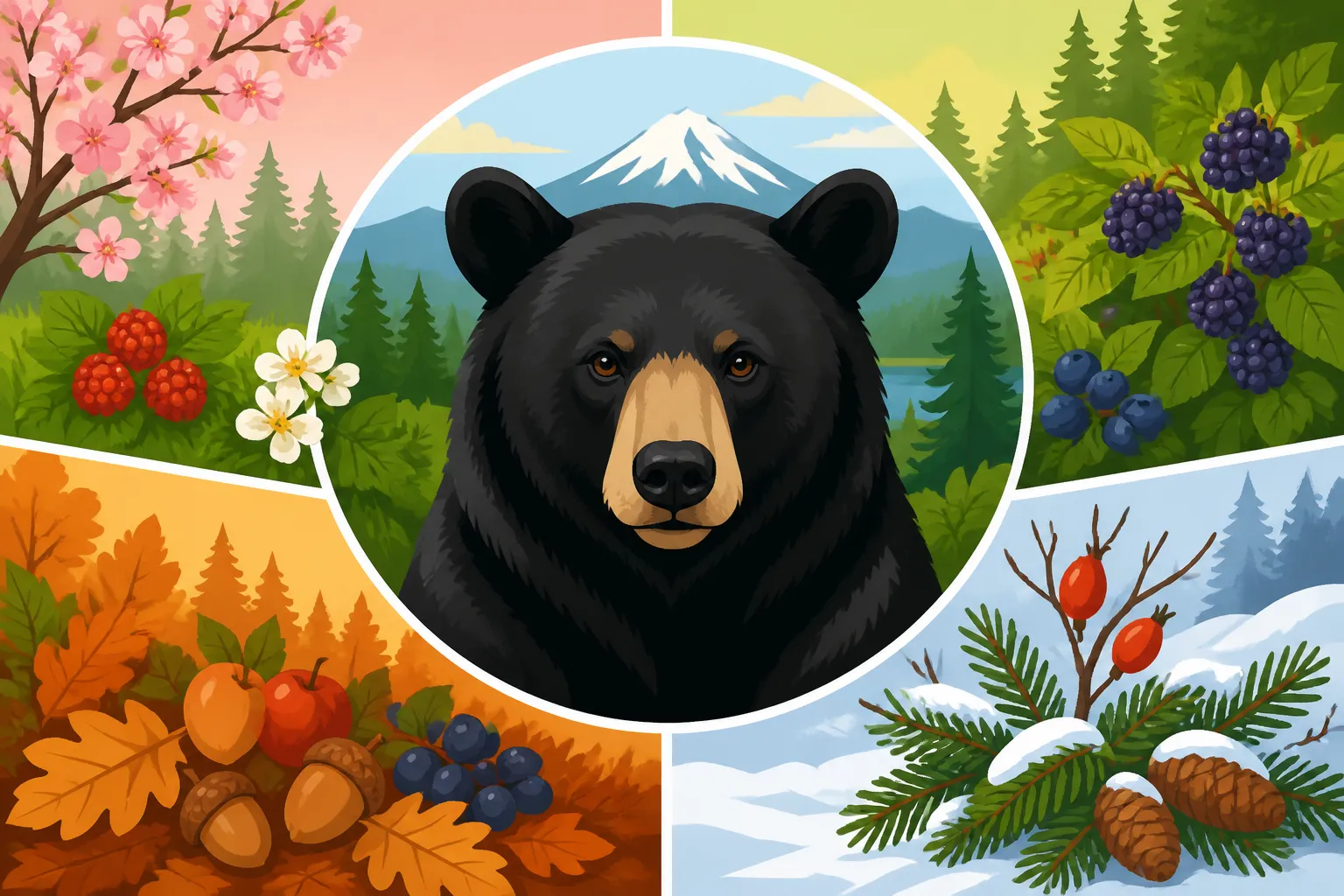
Here's a quick overview of a bear's diet through the Oregon seasons:
| Season | Primary Food Sources | Nutritional Focus | Typical Location |
|---|---|---|---|
| Early Spring | Winter-killed carcasses, first green shoots (skunk cabbage, grasses, dandelions) | Rehydration, minerals, initial protein | Creek bottoms, south-facing slopes, dens |
| Late Spring | Fresh grasses, sedges, forbs (clover, vetch), ants, grubs | Protein, fiber, muscle rebuilding | Clearcuts, meadows, rotting timber |
| Early-Mid Summer | Blackberries, huckleberries, wild cherries, serviceberries, other soft mast, insects | Carbohydrates, quick energy | Berry patches, forest edges, old burns |
| Late Summer-Fall | Acorns, conifer seeds, wild apples, late berries | Fats, complex carbohydrates, calorie loading | Oak groves, conifer stands, orchards |
| Late Fall | Remaining hard mast, last-minute scavenging | Final fat reserves for hibernation | Dense forests, denning areas |
Understanding Bear Habitat and Movement
Knowing what bears eat is only half the battle; the other half is understanding where they find those foods and how that influences their movements across the landscape. Oregon's diverse terrain, from the dense rainforests of the Coast Range to the arid high desert, means bear behavior and diet can vary significantly by region. Successful bear hunting is as much about habitat recognition as it is about tracking sign.
Regional Diet Variations
A bear living in the lush, wet Coast Range might have a diet heavily dominated by salal berries, salmonberries, and lush coastal vegetation, while a bear in the drier eastern Oregon might rely more heavily on bitterbrush, serviceberries, and ponderosa pine seeds. Elevation also plays a massive role. Spring green-up happens earlier at lower elevations, and berry ripening progresses from lower to higher elevations throughout the summer. This means bears will often follow these food waves, moving vertically across the landscape as different food sources become available. Utilizing resources that detail Bear Populations Across Oregon can give you a clearer picture of regional densities and available habitat.
The Influence of Weather and Mast Crops
Weather is a huge factor in a bear's diet. A wet spring can lead to a boom in green forage, while a dry summer might mean a poor berry crop. A late frost can devastate early fruit blossoms, forcing bears to rely more heavily on alternative foods or to travel farther to find sustenance. Mast crops, especially acorns and conifer seeds, are notoriously cyclical. Some years are "bumper" crops, while others are lean. Bears remember these patterns and will concentrate in areas known for good mast production in productive years. This variability makes annual scouting and staying informed about current conditions essential. A tool like GoHunt or local ODFW reports can offer insights into these yearly fluctuations.
Scouting for Bear Sign
Beyond just looking at maps, getting boots on the ground is crucial. You're not just looking for bears; you're looking for their feeding sign. Torn-up logs, flipped rocks, broken berry branches, chewed-on cones, and distinctive scat are all indicators of bear presence. Look for these signs in prime feeding areas. If you find fresh sign, you know you're in the right neighborhood. Trail cameras are also incredibly effective for scouting, allowing you to monitor active feeding sites remotely. Knowing Trail Camera Placement on Public Land and reviewing footage can tell you what bears are eating and when, helping you fine-tune your hunting strategy.
Disclaimer
Please be aware that hunting regulations and wildlife behaviors can change. Always consult the most current Oregon Department of Fish and Wildlife (ODFW) regulations before planning any hunt. This information is for educational purposes and general guidance only.