Spotting Bears on Green-Up Slopes
The spring green-up in Oregon can feel like a tease for bear hunters. You know the bears are out there, stretching their legs and filling their bellies after a long winter, but actually finding them on those vast, freshly sprouted hillsides can feel like looking for a needle in a colossal, green haystack. This guide is all about cutting through that frustration, equipping you with the knowledge and tactics to effectively spot bears on those crucial green-up slopes, turning a challenging hunt into a successful one.
The Irresistible Pull of Green-Up Slopes for Bears
When winter’s icy grip finally loosens its hold on Oregon, a natural phenomenon kicks off that is critical for bear hunters: the spring green-up. For bears emerging from their dens, these new shoots of vegetation aren't just a snack; they're a vital, nutrient-rich buffet. Understanding why these areas are so attractive to bears is the first step in knowing where to point your optics.
Early Spring Foraging and Metabolism
Bears waking up from hibernation are essentially running on fumes. Their fat reserves, built up during the previous fall, are dwindling, and their bodies are screaming for easy-to-digest nutrients. The first fresh growth of spring, often lush grasses, clover, and forbs, is exactly what they need. These plants are packed with protein and water, crucial for rehydrating and rebuilding muscle mass lost over the long winter. You'll find bears are less concerned with high-calorie foods at this stage and more focused on quantity and digestibility. They'll spend hours, sometimes entire days, methodically grazing these slopes, trying to take in as much as possible. It's a critical period for them to regain strength, especially for sows who might have cubs to nurse.
This metabolic need means they're often visible for longer periods, especially in areas where food sources are concentrated. Unlike later in the year when they might be focused on berries or acorns in denser timber, early spring sees them out in the open, almost like livestock, taking advantage of the readily available forage. They're trying to put on weight as efficiently as possible, and these tender, new greens are their primary fuel source.
South-Facing Slopes and Aspect
Not all green-up slopes are created equal, and bears are masters of efficiency. They'll naturally gravitate towards south-facing slopes because these aspects receive the most direct sunlight. This sun exposure means the snow melts earlier, and the soil warms faster, prompting vegetation to sprout sooner than on north-facing or shaded slopes. Think of it as nature’s earliest salad bar. These slopes also tend to dry out quicker, making for easier travel and more comfortable bedding for a bear still shaking off winter's chill.
Beyond just south-facing, look for slopes with a gentler grade or those that offer some scattered timber or rocky outcroppings nearby. These features provide easy access to thicker cover for security or for bedding down during the warmer parts of the day while still being within a stone's throw of their food source. Understanding these preferred aspects and the reasons behind them will significantly narrow down your search area, allowing you to focus your glassing efforts on the most promising terrain. When you're E-Scouting Oregon Units With Satellite Imagery, pay close attention to the orientation of slopes and the presence of older clearcuts or natural openings that receive ample sunlight.
Essential Glassing Strategies for Success
Spotting bears on green-up slopes isn't about aimlessly scanning; it's a methodical process that demands patience and the right tools. The expansive nature of Oregon's spring landscape can quickly overwhelm, so having a focused strategy is key to success.
Timing is Everything
Bears, like many wild animals, are most active during specific times of the day, particularly in the spring. Your best chances for spotting them will be at first light, extending a few hours into the morning, and again in the late afternoon through to last light. During these periods, temperatures are cooler, and the bears feel more comfortable being out in the open, grazing. Midday, especially if the sun is out and it's warming up, they often retreat to the shade of timber edges or bed down in dense cover to conserve energy and escape the heat.
Cloudy or slightly overcast days, particularly if accompanied by a light drizzle, can extend a bear's feeding activity well into the middle of the day. They appreciate the cooler temperatures and the reduced sun glare, which makes foraging more comfortable. Conversely, bright, sunny days with harsh glare can make spotting incredibly difficult and often push bears into hiding. Always keep a close eye on the weather forecast and adjust your glassing schedule accordingly to maximize your time when the bears are most likely to be visible. This flexible approach is crucial for Spot-and-Stalk Spring Bear on Oregon's Green Slopes.
Optics and Tripod Use
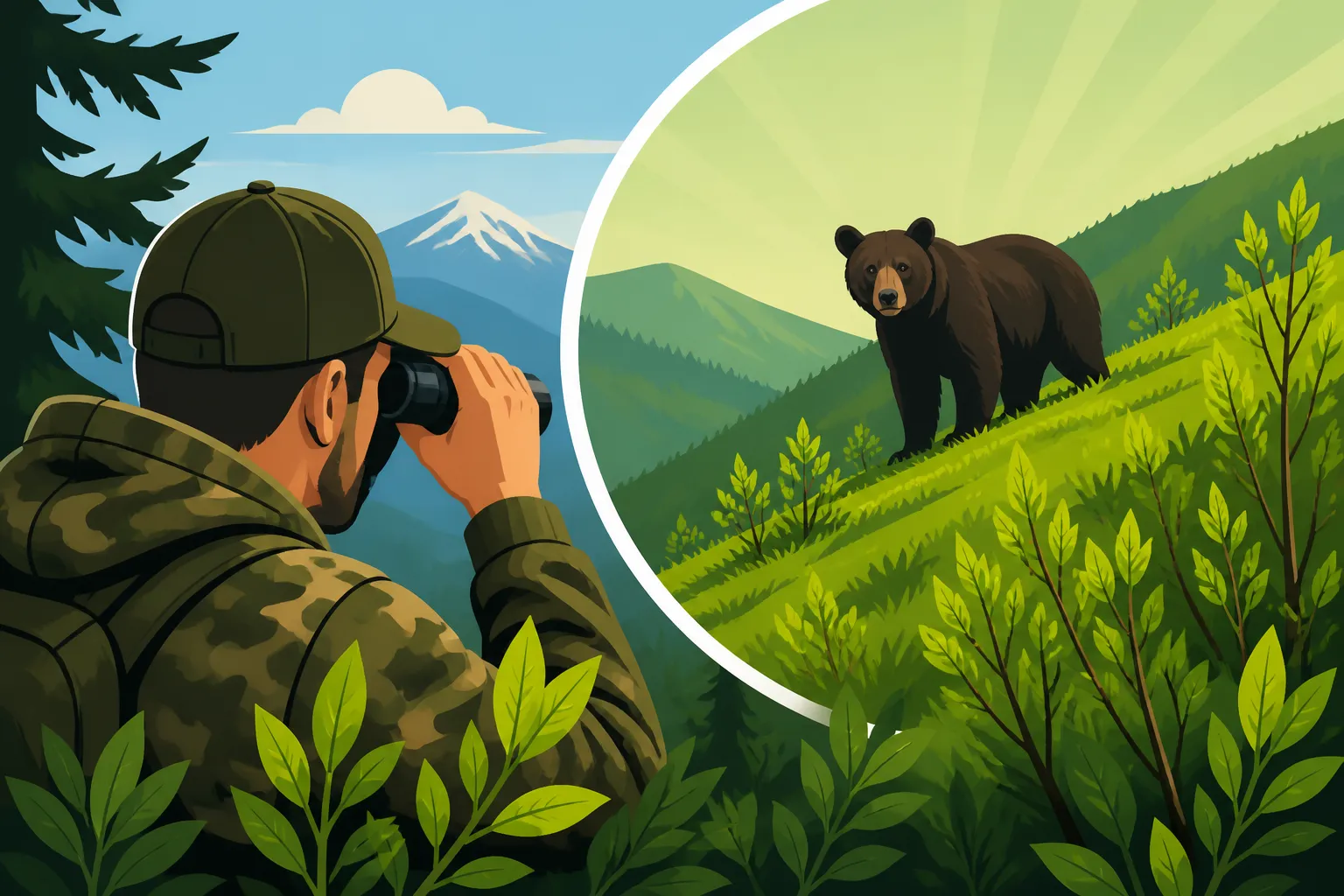
Trying to spot a bear on a vast green slope without quality optics and a stable platform is like trying to read a billboard from a mile away—you just won't see the fine details. A good pair of binoculars (10×42 or 12×50 are common choices) is essential for initial broad scanning, but for truly picking apart a hillside, a spotting scope mounted on a sturdy tripod is indispensable. Magnifications of 20-60x or even higher on a spotting scope allow you to resolve details like the subtle curve of a bear's back against the uneven terrain or the flicker of an ear.
When glassing, set up your tripod in a comfortable position that gives you a commanding view of the target slopes. Systematically grid the area, starting from one edge and slowly working your way across, then down a section, and back across. Don't rush. Pause often, letting your eyes relax and really soak in the details. Often, what looks like a shadow or a stump will resolve into a bear as your eyes adjust or as the bear shifts its position. Investing in quality optics from brands known for their clarity and low-light performance, like Vortex, Leupold, or Swarovski, can make a significant difference. You might also consider utilizing digital scouting tools like GoHunt's mapping platform to identify promising glassing knobs and vantage points before you even leave home. This helps you narrow down potential areas and focus your efforts more efficiently, identifying ideal spots where you can set up for Optics for Dark Timber Versus Open Sage.
Here's a quick comparison of common optics for bear hunting:
| Optic Type | Magnification Range | Objective Lens (mm) | Best Use Cases | Pros | Cons |
|---|---|---|---|---|---|
| Binoculars | 8x – 12x | 42 – 50 | General scanning, quick target acquisition, close-to-mid range observation | Portable, good field of view, excellent for initial sweeps | Limited magnification for detail at long range, can cause arm fatigue |
| Spotting Scope | 15x – 80x | 50 – 95 | Long-range observation, identifying detail, judging animals, extended glassing | High magnification, superior detail, less eye strain over long periods | Requires tripod, less portable, narrower field of view, higher cost |
| Rangefinder Binoculars | 8x – 10x | 42 – 50 | General scanning with integrated rangefinding, quick distance checks | Combines two tools, efficient for shooting preparation | Heavier, more expensive, rangefinding can be affected by vegetation |
Recognizing Bear Sign and Patterns
While direct visual spotting is the ultimate goal, understanding the subtle clues bears leave behind can guide your search to the most productive areas. Bears are creatures of habit, and their patterns, even in the fluidity of spring, often follow predictable routes based on food, water, and security.
Identifying Prime Habitat and Travel Corridors
Bears don't just appear on a slope; they move to and from it. Look for distinct travel corridors that connect green-up slopes to denser cover, water sources, or bedding areas. These might be old logging roads, game trails, or natural funnels created by terrain features like saddles and draws. Pay particular attention to the edges of clearcuts, riparian zones (areas along streams and rivers), and areas of mixed timber and open ground. These transition zones offer both food and immediate escape cover, making them highly attractive to cautious bears.
When you're trying to figure out where to focus your attention, consider the proximity of water sources, even small seeps or springs. Bears need water, especially when consuming dry vegetation or if they're actively foraging for extended periods. Similarly, dense stands of young timber, brushy draws, or rocky ledges offer critical bedding and security cover. A bear won't stay out in the open all day; it will seek refuge within easy reach of its food source. Using mapping applications from services like GoHunt can help you identify these habitat transitions and potential travel routes, especially when scouting for your next Bear Hunting in Oregon Without Bait or Hounds adventure.
Interpreting Fresh Bear Sign
Even if you don't see a bear, fresh sign can tell you they're in the area and where they've been recently. Tracks are a primary indicator. Look for distinct five-toed paw prints with visible claw marks, especially in soft earth near trails or water crossings. A bear's hind track will often look surprisingly human-like. Scat (droppings) is another strong indicator, and in the spring, it will typically be soft, dark, and full of undigested green plant matter. The size of the scat can also give you an idea of the bear's size, helping you in Judging a Boar From a Sow at Distance.
Beyond tracks and scat, look for rub trees—trees, usually small to medium-sized conifers, where bears have rubbed their backs and shoulders to mark territory or scratch an itch. These often have hair stuck to the bark or noticeable wear at chest height. Also, keep an eye out for overturned rocks or logs, which indicate a bear has been foraging for insects or grubs. While not as direct as a sighting, these signs confirm bear presence and activity, validating your decision to glass that specific area. Remember, the timing of these signs correlates strongly with Spring Bear Hunting Timing by Elevation, with lower elevations showing activity earlier in the season.
Overcoming Common Challenges and Mastering Persistence
Spotting bears on Oregon's green-up slopes isn't always straightforward. The weather can be fickle, the terrain vast, and the bears themselves remarkably camouflaged. Anticipating and preparing for these challenges will increase your odds of success.
Dealing with Variable Weather and Visibility
Oregon spring weather is notorious for its unpredictability. One moment it's clear and sunny, the next a thick fog rolls in, or a sudden rain shower drenches everything. Poor visibility due to fog, heavy rain, or even the harsh glare of a bright sun can completely shut down glassing efforts. The key is to be adaptable and persistent. If fog descends, use the downtime to reassess your plan, consult your GoHunt maps, or reposition to a different vantage point that might be above or below the fog line. When rain starts, don't immediately pack it in. Bears often remain active in light rain, so as long as your rain gear is up to snuff (and believe me, good Rain Gear That Actually Stays Dry is a game-changer in Oregon), keep glassing.
Sun glare, especially when looking into the rising or setting sun, can be mitigated somewhat by finding a vantage point that puts the sun at your back or by using a good sunshade on your spotting scope. Sometimes, simply shifting your position by a few yards can make all the difference in cutting down glare. Be prepared for rapid changes; having your optics protected and easily accessible means you can capitalize on those brief windows of clear visibility. Remember that these weather patterns influence Black Bear Populations Across Oregon and their activity.
The Mental Game of Patience and Persistence
Ultimately, spotting bears on green-up slopes often comes down to sheer persistence. These are not typically high-density areas where you'll see a dozen bears in an hour. It's a game of picking apart distant hillsides, focusing on small details, and being ready to spend many hours behind the glass. It's easy to get discouraged when you've glassed an area for hours and seen nothing but deer or stumps. But that one extra scan, that one patient moment, could be when a bear steps out from behind a clump of trees or lifts its head from grazing.
Set realistic expectations. You might cover several square miles with your optics before spotting anything. Break down large slopes into smaller, manageable grids, and commit to thoroughly checking each section before moving on. Take breaks, stretch, and stay hydrated. This methodical approach, combined with the patience of a seasoned hunter, is what truly pays off. Remember, you're looking for a relatively small, dark animal against a vast, often similarly colored backdrop. The reward, however, of finally picking out that tell-tale lumbering shape against the new spring green, is absolutely worth every minute of focused effort. Understanding Elk Behavior After a Wildfire or how other game responds to habitat changes can also provide insight into how bears might use similar areas.
Disclaimer
Hunting involves inherent risks, including but not limited to injuries, dangerous wildlife encounters, and unforeseen environmental conditions. The information provided in this guide is for informational purposes only and should not be considered a substitute for professional guidance, extensive research, or adherence to all local, state, and federal hunting regulations. Always prioritize safety, respect wildlife, and obtain all necessary licenses and permits before engaging in any hunting activity. Familiarize yourself with all Oregon Department of Fish and Wildlife (ODFW) rules and seasonal updates.