Elk Behavior After a Wildfire
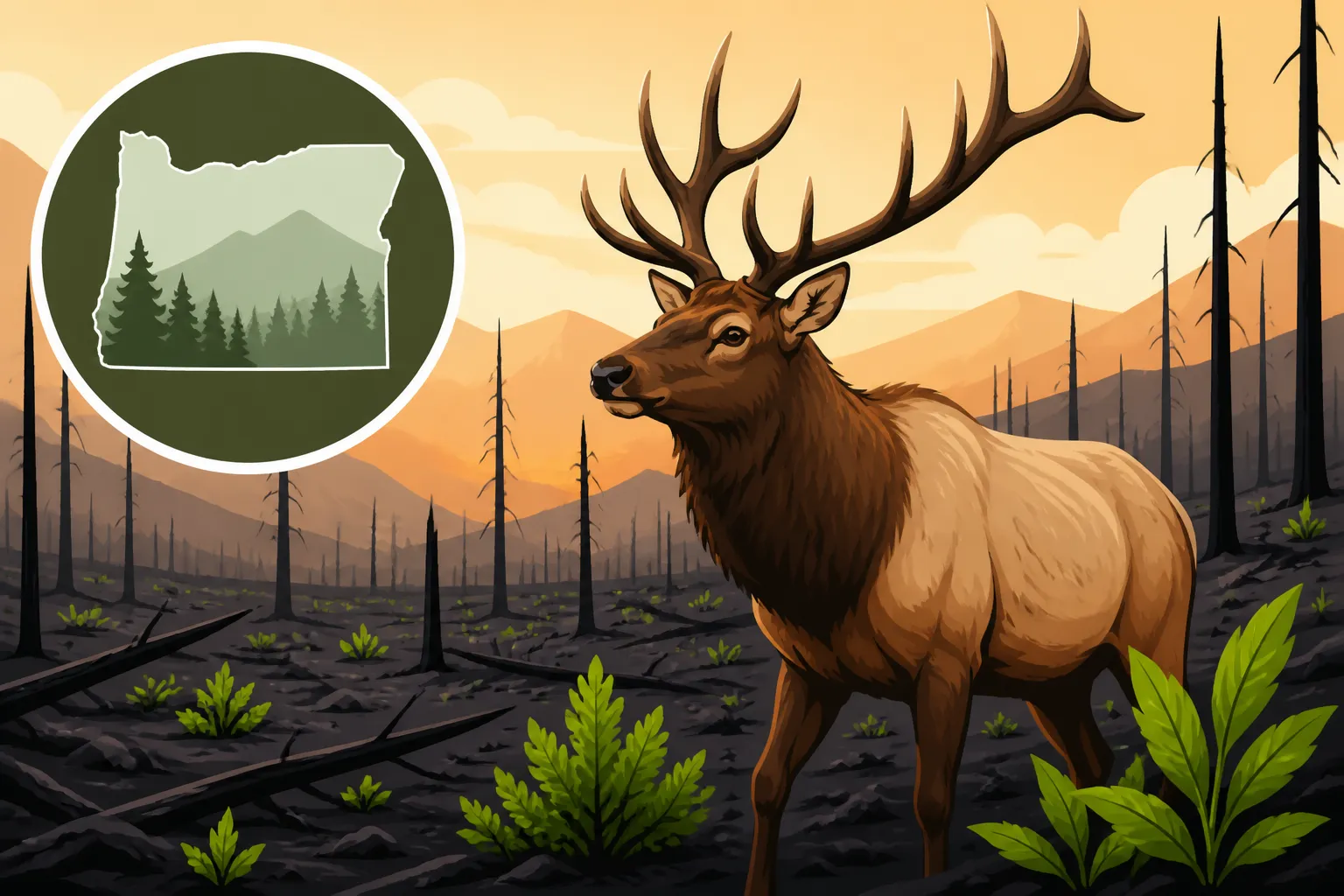
Navigating your familiar hunting grounds after a wildfire can feel like a punch to the gut. The landscape you’ve known, perhaps for decades, is suddenly alien—scorched earth, standing deadfall, and a chilling silence where once there was vibrant life. It’s disorienting, and it leaves many of us wondering: where did the elk go, and will they ever come back? This guide is designed to cut through that uncertainty, offering a realistic look at how wildfires alter elk behavior in Oregon, from their immediate reactions to the long-term changes that can reshape your hunting strategies for years to come.
Immediate Post-Fire Impacts on Elk Behavior
When a wildfire tears through an area, the initial chaos and destruction are profound, and elk, being keenly aware creatures, respond with immediate survival instincts. The landscape transforms overnight, forcing them to make swift decisions about safety, food, and water. Understanding these initial impacts is crucial for anyone hoping to hunt these areas soon after the flames die down.
Survival and Displacement
The first and most urgent concern for elk during an active wildfire is simply escaping the blaze. They are incredibly adept at sensing danger, often moving out of harm's way long before the fire reaches their immediate vicinity. This can lead to significant displacement, pushing entire herds into adjacent, unburned areas. These might be neighboring timber blocks, higher elevations, or even private agricultural lands they wouldn't typically frequent. It's not uncommon for hunters to find elk in unexpected places in the seasons immediately following a large fire, as they seek refuge and adjust to a drastically altered home range. The stress of evacuation, combined with the loss of familiar bedding and security cover, can also make them more wary and prone to flight, a behavior that might persist for some time as they settle into new patterns.
For those animals that don't escape fast enough, the fire can, of course, be devastating. While adult elk are surprisingly tough and can sometimes survive passing ground fires, large, intense crown fires leave little hope. Even survivors might suffer burns or smoke inhalation, impacting their health and future breeding success. These events can drastically reduce local populations, and it takes years, sometimes decades, for those numbers to recover, even with healthy recruitment rates. Knowing the extent of the burn and the intensity of the fire is a critical piece of the puzzle when assessing post-fire elk populations, and tools like GoHunt's mapping overlays can help you visualize the burn severity.
Food Source Availability and Relocation
Wildfires, especially intense ones, obliterate existing forage. Grasses, shrubs, and saplings that elk rely on are consumed, leaving behind ash and bare ground. This immediate loss of food is a primary driver for elk relocation. They simply cannot sustain themselves in an area where their pantry has been emptied. Their movements will be dictated by the nearest available unburned food sources. This often means moving to the edges of the burn, into pockets of unburned forest, or into adjacent meadows and clearcuts that escaped the fire.
However, the picture isn't entirely bleak. While the immediate aftermath is devastating for forage, wildfires also trigger a rapid ecological response. In the following growing season, often with the first rains, a flush of new growth emerges. Fire can act as a natural fertilizer, releasing nutrients back into the soil, and sunlight now reaches the forest floor unhindered by dense canopy. Pioneer plants, many of which are highly palatable and nutritious for elk, will often be the first to colonize these disturbed areas. Think about fireweed, various native grasses, and certain forbs that thrive in nutrient-rich, sun-drenched soil. This early green-up can actually draw elk back to parts of the burned area surprisingly quickly, particularly if security cover is nearby.
Water Access Challenges
One often-overlooked impact of wildfire on elk behavior is the disruption of water sources. Small creeks and springs can dry up or become clogged with ash and debris, making them unusable. In larger fires, riparian zones—the critical areas along rivers and streams—can be severely damaged, leading to increased water temperatures, sedimentation, and a loss of the lush vegetation that usually provides shade and forage around water. Elk, like all wildlife, need consistent access to clean water, and its absence or degradation can force them to move substantial distances.
Conversely, some post-fire landscapes might see temporary improvements in water access in unexpected ways. If the canopy is removed, less water is intercepted by trees, potentially allowing more rainfall to reach the ground and recharge springs or create temporary seeps. However, this is often short-lived as erosion and runoff can quickly turn clear water sources into muddy, unpalatable pools. When you're E-Scouting Burns and Clearcuts From Satellite, pay close attention to the contours of the land and how water might flow or collect, as these areas become even more critical focal points for elk activity. Hunters should also be mindful that natural mineral licks or wallows, which are critical social hubs and sources of essential nutrients for elk, might be damaged or buried under ash, further altering their patterns of movement.
Short-Term Adaptations and Opportunities (1-3 Years Post-Fire)
The initial shock of a wildfire quickly gives way to a period of rapid ecological change, offering both challenges and unique opportunities for elk and, consequently, for hunters. Within one to three years, the landscape begins to reveal its new character, and elk start to adapt to these shifts. This is a dynamic phase that requires hunters to re-evaluate their strategies entirely.
Initial Green-Up and Forage Explosions
One of the most remarkable aspects of a post-wildfire landscape is the incredible surge of new plant growth during the first few growing seasons. Sunlight, once blocked by a dense canopy, now reaches the forest floor, stimulating a bounty of grasses, forbs, and browse. Many of these pioneer species are highly nutritious and incredibly attractive to elk. Areas that were previously dark, unproductive understories can transform into verdant feeding grounds. This "forage explosion" is a major draw, pulling elk back into burned areas that might have seemed barren just months prior.
It's not just the quantity of food, but often the quality. The ash from burned vegetation acts as a natural fertilizer, enriching the soil with minerals and boosting the nutrient content of the emerging plants. Elk will actively seek out these areas, sometimes traveling considerable distances to take advantage of the nutrient-rich browse. Hunters should focus their Public Land Scouting in Oregon Before the Draw Results on the edges of these new growth areas, especially where they transition into unburned timber that can offer security. This is often where you'll find elk feeding heavily in the early mornings and late evenings, making them prime spots for glassing or still-hunting.
Increased Visibility and Hunting Tactics
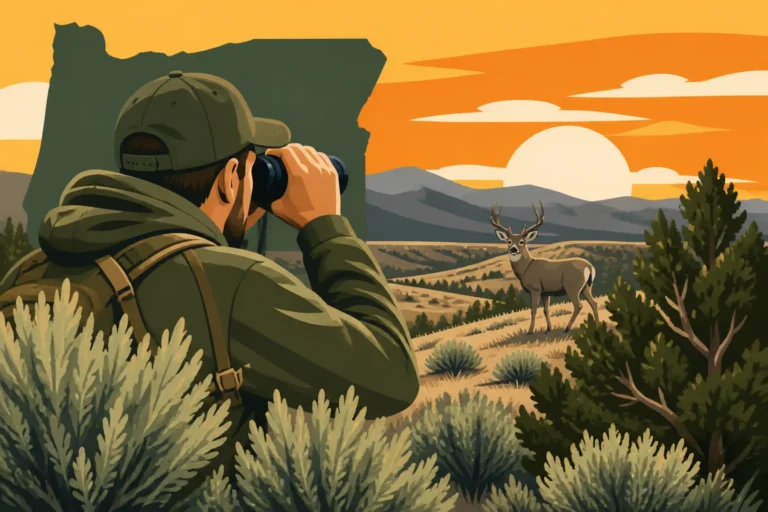
The loss of dense timber and undergrowth due to fire also has a significant impact on visibility, creating a double-edged sword for hunters. On one hand, the ability to see further into the landscape can be a huge advantage. Glassing becomes a more effective tactic, particularly in areas that were once choked with thick brush. You might be able to spot elk from much greater distances, allowing for more strategic stalks. This change in visibility means that tactics often employed in more open country, even similar to Glassing Eastern Oregon Rimrock for Mule Deer, can become surprisingly effective in what was once dense timber.
However, this increased visibility works both ways. Elk also have a much clearer view, making them more difficult to approach undetected. The absence of thick cover for stealthy movement means hunters need to be extra cautious with their wind, scent, and movement. Still-hunting becomes incredibly challenging without adequate cover, demanding exceptional patience and understanding of terrain features that might offer a momentary screen. In heavily burned areas, elk are often more skittish and prone to running at the first sign of danger, requiring hunters to refine their shot placement skills and understand Shot Placement on a Quartering Bull for those fleeting opportunities.
New Bedding and Thermal Cover Needs
While burned areas offer abundant food, they often lack critical bedding and thermal cover, especially in the first few years. Elk need dense stands of timber to feel secure, to bed down out of the wind and rain, and to escape direct sunlight on hot days. When these areas are gone, elk must find alternatives. This typically means they will feed heavily in the burned areas during low-light hours or cooler weather, then retreat to adjacent unburned pockets of timber or dense thickets for security and rest.
These unburned "islands" or transition zones become incredibly important and act as magnets for elk. They might use ridges, deep canyons, or north-facing slopes with residual timber as their new sanctuaries. Understanding this dynamic is key to hunting success. Instead of purely focusing on the feed, hunters need to identify where elk will go to feel safe and rest. This might involve setting up ambushes along travel corridors between prime feeding areas and these new bedding grounds. It's a game of connecting the dots, predicting their movements from the new buffet lines back to their temporary bedrooms.
Long-Term Habitat Evolution and Elk Preferences (3+ Years Post-Fire)
As years turn into a decade or more, a burned landscape continues to evolve, and so do elk preferences and behaviors. This long-term succession creates a completely different set of hunting conditions compared to the immediate aftermath. Patience and a deep understanding of ecological recovery are key to staying successful in these areas.
Regrowth and Succession
Beyond the initial flush of pioneer species, the plant community in a burned area continues to change over time, a process known as ecological succession. After 3-5 years, depending on the severity of the burn and local conditions, shrubs like ceanothus, bitterbrush, and various berry bushes begin to dominate, alongside young conifers. These offer a diverse and often highly nutritious food source for elk, in addition to increasing cover. As saplings grow into young trees, they start to provide more security and thermal cover.
This regrowing forest offers a balance: ample forage that persists for many years, interspersed with increasingly dense thickets and young timber that elk can use for bedding and hiding. Areas that were open and exposed immediately after the fire slowly become brushy and difficult to navigate. Elk will adapt by developing new travel corridors through this developing undergrowth, and they might spend more time within the burned area itself as it provides more comprehensive habitat. Hunters will need to shift from glassing wide-open spaces to learning how to Still-Hunting Blacktails in Wet Oregon Coastal Brush (a technique readily applicable to dense regrowth) or focusing on trails and openings.
Predator Dynamics and Security Cover
Wildfires don't just affect ungulates; they also impact predators like cougars and bears. In the short term, predators might follow their prey out of the burned area. However, as the ecosystem recovers, predator-prey dynamics will also shift. Increased visibility in newly opened areas might initially make prey more vulnerable, but as cover returns, it can provide new ambush opportunities for predators. The regenerating forest, with its mix of open feeding areas and dense cover, can create prime habitat for both elk and their predators.
For elk, the presence of security cover—dense patches of timber, thick stands of regenerating brush, or deep canyons—becomes paramount. While they are drawn to the food, they won't linger in areas where they feel constantly exposed to cougars, bears, or wolves. This means that areas with a good mosaic of regenerating forage and existing or quickly returning cover will be the most attractive. Hunters should consider how these elements intertwine when planning a hunt. Understanding Cougar Calling Techniques That Work in Oregon or looking for signs of other predators can also give you insight into where elk might feel less secure and adjust their movements accordingly.
Water Feature Recovery and Usage
Over the long term, water sources in burned areas typically begin to recover. Ash washes away, debris clears, and riparian vegetation slowly regrows, providing shade and stabilizing stream banks. This allows for cleaner, cooler water, which is essential for elk, particularly during the hot early seasons. New seeps and springs might emerge in areas where the water table has shifted or where the ground has become more permeable after the fire.
Elk will readily return to these restored water sources. Wall-ows, once buried, might reappear or new ones form. These locations become important gathering points, especially during dry periods. However, the exact location and reliability of water can still be unpredictable for many years post-fire. Hunters should still scout these areas thoroughly, even in the long term. A tool like GoHunt's mapping system can help identify potential water sources, but nothing beats boots on the ground to confirm their presence and quality. Knowing where elk can reliably drink and cool off is a cornerstone of effective hunting strategy in any terrain, including recovering burn areas.
Scouting and Hunting Strategies in Burned Areas
Hunting a post-wildfire landscape demands a flexible mindset and a willingness to adapt your strategies. What worked before the fire might be entirely ineffective now. Success hinges on thorough preparation, keen observation, and adjusting your approach to the new reality.
Interpreting Burn Severity Maps
Before you even step foot in a burned area, your research should start with burn severity maps. These maps, often available from agencies like the U.S. Forest Service or through online mapping platforms, use satellite imagery to classify the intensity of the fire across the landscape. Different levels of burn severity will have drastically different impacts on habitat and, consequently, on elk behavior.
| Burn Severity | Immediate Impact | 1-3 Years Post-Fire (Short-Term) | 3+ Years Post-Fire (Long-Term) | Hunting Implications |
|---|---|---|---|---|
| Low Severity | Minimal tree mortality, understory burned. | Quick regrowth of grasses, some browse. | Good mix of forage and existing cover. | Elk return quickly, good traditional hunting. |
| Moderate Severity | Significant understory burn, some tree mortality. | Excellent forage explosion, patchy cover. | Developing mix of young trees, dense brush, good feeding. | Prime feeding areas, but elk seek adjacent heavy cover. |
| High Severity | Complete tree mortality (crown fire), ground intensely burned. | Initial barrenness, then strong pioneer plant growth. | Dense regrowth of shrubs, young conifers, heavy cover; hard to navigate. | Elk use for feeding, retreat to edges. Can be very challenging to hunt due to blowdown and dense brush. |
Understanding these categories is crucial. Areas of low-to-moderate burn severity often become prime feeding grounds due to the rapid green-up and nutrient release. High-severity burns, while eventually producing good forage, often leave vast areas of standing dead timber and blowdown, which can be difficult for both elk and hunters to navigate for many years. Using tools like GoHunt that integrate fire history can give you a powerful edge in identifying promising areas. You need to identify the "sweet spots" where nutritious forage meets accessible escape cover.
E-Scouting and Boots-on-the-Ground
E-scouting is more important than ever when tackling a burned unit. Satellite imagery will show you the extent of the burn, but more recent high-resolution images can often reveal areas of green-up or remaining timber. Pay close attention to the interfaces between burned and unburned areas, as these are critical transition zones. Look for pockets of unburned cover, steep draws that might hold moisture, and the edges of meadows or clearcuts. Terrain features like ridges, saddles, and benches become even more important as travel corridors and bedding areas in a landscape where traditional cover is gone. Detailed mapping applications allow you to mark potential water sources, existing game trails, and escape routes.
However, no amount of e-scouting replaces boots on the ground. Burned areas can be treacherous. Ash can be deep, hiding uneven ground and fallen timber. Snags—standing dead trees—are prone to falling, especially in windy conditions, posing a significant safety hazard. Roads and trails might be overgrown or completely destroyed by downed trees. When Checking Oregon Fire Closures Before the Season, also inquire about burn area access and potential hazards. Plan your reconnaissance trips carefully, focusing on covering ground safely to verify your e-scouting observations. Look for fresh elk sign: tracks, droppings, and rubbed trees. Pay attention to how the elk are using the new terrain, identifying their preferred feeding areas, bedding sites, and the routes they take between them.
Adjusting Your Hunting Approach
Hunting in burned areas requires significant adaptation. Traditional calling methods might be less effective in wide-open, noisy environments with lots of debris underfoot. Instead, consider focusing on ambush points along known travel corridors between feeding and bedding areas. Because of the increased visibility, long-range shooting skills become more valuable, so ensure your Rifle Calibers That Suit Oregon Elk are sighted in for those longer shots. Alternatively, you might need to embrace very slow, deliberate still-hunting in the few remaining pockets of thick cover or along the edges of the burn where elk feel safer.
Weather also plays a magnified role. Burned areas offer little shade, making them incredibly hot during early-season hunts. This means elk will likely be more active during cooler periods of the day and seek shade during midday, making Field Dressing an Elk in Warm Early-Season Weather a crucial skill to master if you're successful. Conversely, in wet or cold weather, the lack of thermal cover can drive elk to seek the densest remaining timber or sheltered leeward slopes. Be prepared for challenging conditions, from navigating treacherous footing to dealing with smoke and reduced visibility if Smoke and Visibility During Fire Season become an issue again. Ultimately, flexibility, patience, and a deep respect for the altered landscape will be your greatest assets when hunting elk after a wildfire in Oregon.
Disclaimer
The information provided in this guide is for general informational purposes only and does not constitute professional advice. Hunting regulations and conditions can change rapidly. Always consult the official Oregon Department of Fish and Wildlife (ODFW) regulations, current fire restrictions, and local land manager rules before planning any hunting trip. Hunt safely and ethically.