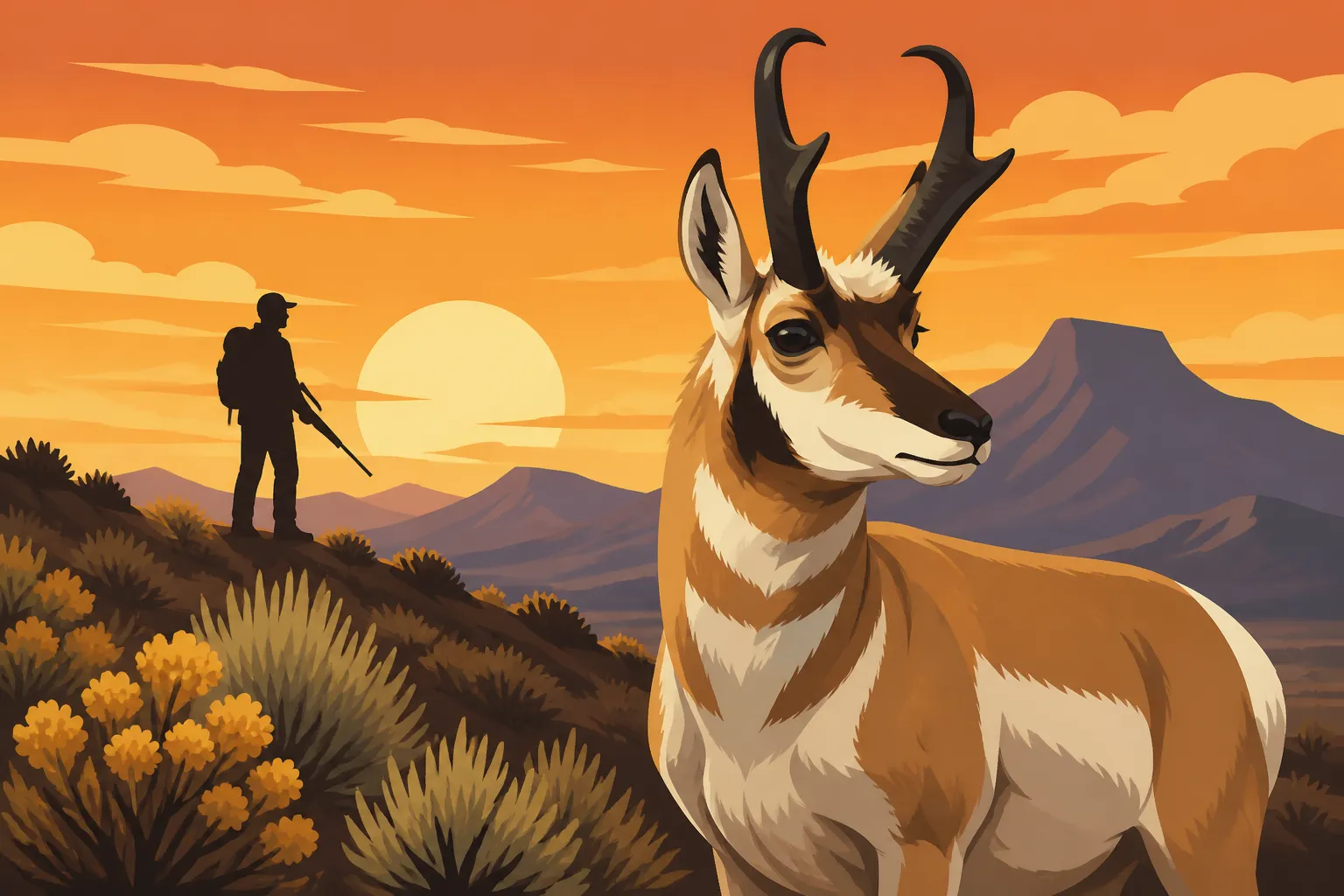
Oregon Pronghorn on the High Desert
The vast, open landscapes of Oregon's high desert hold a unique and exhilarating hunting challenge: the elusive pronghorn. Often called the "speed goats" or "ghosts of the plains," these incredible animals can feel impossible to locate, let alone approach, across miles of sagebrush and rimrock. If you've ever felt overwhelmed by the sheer scale of the landscape or frustrated by the complex draw system just to get a tag, you're not alone. This comprehensive guide will equip you with the knowledge, strategies, and insights needed to confidently plan and execute a successful pronghorn hunt in Oregon, from understanding their habitat to field-dressing your hard-earned animal.
Understanding Oregon's Pronghorn Ecosystem
Oregon's high desert is a land of extremes – scorching summers, freezing winters, and vast expanses of arid country. This unique environment shapes every aspect of the pronghorn's life, from their diet to their movement patterns. To truly understand how to hunt these animals, you first need to grasp the delicate balance of their ecosystem.
Pronghorn Habitat Requirements and Adaptations
Pronghorn are creatures of the open sagebrush steppe, preferring wide-open spaces where their incredible eyesight and speed can be used to full advantage. Unlike deer or elk that often seek dense cover, pronghorn thrive in areas with low-lying shrubs, grasses, and forbs. These areas provide both their primary food sources and the unobstructed views essential for spotting predators from miles away. They prefer rolling topography, often utilizing subtle rises and draws for momentary concealment, but rarely dense timber.
Their physical adaptations are truly remarkable. Pronghorn are the fastest land animals in North America, capable of sustaining speeds over 50 miles per hour for extended periods. This isn't just a party trick; it's a survival mechanism crucial in their wide-open habitat where cover is scarce. Their large windpipe and lungs allow for exceptional oxygen intake, fueling their explosive speed and stamina. Their coat is also unique, featuring hollow hairs that provide excellent insulation, keeping them warm in winter and cool in summer by trapping air or allowing it to escape. Understanding these adaptations helps a hunter appreciate why certain tactics work and others simply don't. You're not just hunting an animal; you're hunting an animal evolved to thrive in one of the most challenging environments on the continent.
Historical and Current Pronghorn Numbers in Oregon
Oregon's pronghorn population has seen its share of ups and downs. Historically, vast herds roamed the high desert, but overhunting, habitat loss, and disease dramatically reduced their numbers by the early 20th century. Thanks to dedicated conservation efforts, including reintroductions and habitat management, the populations have rebounded significantly, though they still face challenges.
Today, Oregon's pronghorn numbers are carefully monitored by the Oregon Department of Fish and Wildlife (ODFW). While exact figures fluctuate annually based on fawn recruitment, drought, and winter severity, the overall trend has been stable to slightly increasing in recent years. The majority of Oregon's pronghorn reside in the southeastern parts of the state, in units like the Whitehorse, Beulah, and Steens. You can find more specific details on Oregon Pronghorn Range and Numbers by checking ODFW's annual big game reports, which are invaluable for understanding herd health and distribution. These reports often highlight factors like Pronghorn Fawn Survival in Dry Years, which directly impacts future hunting opportunities. Hunters play a vital role in this management through mandatory harvest reporting, which provides crucial data for biologists.
Prime Pronghorn Habitats and Key Units
Finding pronghorn in Oregon begins with understanding where they live. The high desert is a massive place, and while pronghorn are spread across much of it, certain areas consistently hold higher concentrations and offer better hunting prospects.
Identifying Productive Pronghorn Areas
When you look at a map of Oregon's high desert, you'll see vast stretches of federal land—primarily Bureau of Land Management (BLM) and US Forest Service (USFS). These public lands are the backbone of Oregon's pronghorn hunting. Within these larger areas, you'll want to focus on specific habitat features. Look for expansive sagebrush flats, especially those interspersed with draws, low hills, and patches of bitterbrush or other palatable shrubs. Water sources, even seasonal ones, are magnets for pronghorn, particularly during the hot early seasons. Old homesteads, abandoned ranches, or areas with historical agricultural activity can also be good indicators, as these often have residual forage or water.
Using tools like GoHunt's mapping system or other satellite imagery can be incredibly helpful for E-Scouting Oregon Units With Satellite Imagery. You can identify potential water holes, distinct changes in vegetation, and subtle topographical features that might hold animals. Look for areas with a mosaic of different forage types rather than monocultures of just one plant. Pronghorn are grazers and browsers, so diversity is key. Additionally, pay attention to the boundaries of private land. While you'll primarily be hunting public land, adjacent private lands can provide sanctuary or act as travel corridors, influencing pronghorn movement on accessible ground.
Top Oregon Pronghorn Hunting Units
Oregon divides its hunting grounds into specific units, and for pronghorn, a few consistently stand out as prime destinations. The most sought-after units are typically in the far southeastern corner of the state, where the habitat is most suitable for these open-country animals.
- Beulah Unit: Located in eastern Oregon, this unit offers classic pronghorn habitat with wide-open sage flats and rolling hills. It's often a popular choice due to good tag numbers and consistent populations.
- Whitehorse Unit: Tucked into the remote southeastern tip of Oregon, the Whitehorse is known for its rugged beauty and significant pronghorn numbers. It can be a challenging hunt due to its remoteness and vastness but offers a true wilderness experience.
- Steens Mountain Unit: This iconic unit is home to some impressive pronghorn, though the terrain can be more varied, including higher elevations and more broken country than other units. Tags here are highly coveted.
- Malheur Unit: A large and diverse unit, the Malheur offers good opportunities, often with a mix of sagebrush flats and more broken, hilly country.
- Juniper Unit: Another strong contender, the Juniper Unit offers good habitat and has a history of producing quality animals.
When researching these units, it's crucial to consult the most recent ODFW hunt regulations. The unit boundaries and hunt codes can change, and understanding Oregon's 22 Herd Ranges and Old Unit Names will help you correlate historical data with current regulations. Each unit will have varying draw odds, so choosing where to apply is a strategic decision that depends on your preference points and desired experience.
| Oregon Pronghorn Unit | General Characteristics | Typical Terrain | Relative Draw Difficulty (Points) | Primary Public Land Type |
|---|---|---|---|---|
| Beulah | Good populations, accessible | Rolling sage flats, low hills | Moderate | BLM, some USFS |
| Whitehorse | Remote, challenging, large bucks | Vast sagebrush, isolated mountain ranges | High | BLM |
| Steens Mountain | Scenic, rugged, quality animals | Mountain slopes, deep canyons, sage flats | Very High | BLM |
| Malheur | Diverse, large area, steady populations | Sagebrush steppe, some rougher country | Moderate | BLM, USFS |
| Juniper | Consistent opportunities | Rolling sage, some rimrock | Moderate to High | BLM, USFS |
Note: Draw difficulty is relative and based on historical data and current point requirements; it can change annually.
Pronghorn Behavior and Sensory Capabilities
Hunting pronghorn successfully requires more than just knowing where they live; you need to understand how they perceive their world and react to threats. Their incredible senses and behavioral patterns dictate how you must approach them.
The Unmatched Eyesight and Speed of Pronghorn
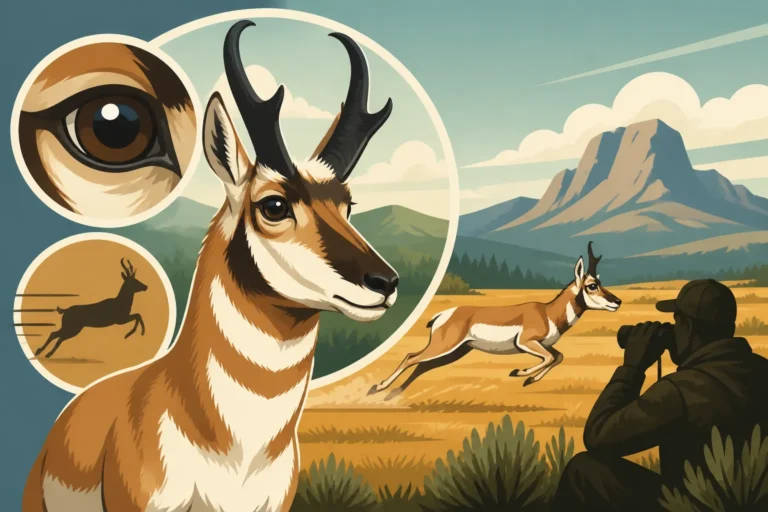
A pronghorn's eyesight is legendary, and for good reason. They possess eyes that are proportionally larger than any other land mammal and are positioned on the sides of their head, giving them an almost 300-degree field of view. They can spot movement and detect danger from incredible distances, often picking up a hunter or vehicle several miles away. This makes "sneaking up" on a pronghorn in open country exceptionally difficult, if not impossible.
Their visual acuity is akin to looking through a powerful set of binoculars. What might appear as a faint speck to the naked human eye, a pronghorn can likely identify as a potential threat. This means glassing is not just a tactic; it's the primary strategy for pronghorn hunting. You'll spend hours behind high-quality Optics for Dark Timber Versus Open Sage, scanning every fold and dip of the landscape. And once they detect you, their speed kicks in. How Fast a Pronghorn Runs isn't just a fun fact; it's a stark reality of their defense mechanism. They'll often bolt for miles without stopping, making a follow-up approach a monumental task.
Social Structure and Daily Routines
Pronghorn social dynamics vary with the season. During the spring and summer, does and fawns typically form small nursery herds, while bucks often roam in bachelor groups or as solitary individuals. As the rut approaches in late summer to early fall (often coinciding with the early archery or rifle seasons in Oregon), bucks become more territorial. A dominant buck will gather a harem of does, aggressively defending them from rival males. These rutting behaviors can offer unique hunting opportunities, as bucks can become momentarily distracted.
Their daily routines are largely dictated by forage, water, and security. Pronghorn feed most actively during the cooler parts of the day, typically early morning and late afternoon. During midday, especially in hot weather, they will often bed down. However, unlike deer or elk, they rarely seek dense cover for bedding. Instead, they'll often bed on open rises, using their superior eyesight to scan for danger, or in shallow depressions that offer a slight reprieve from the sun and wind. They are creatures of habit to some extent, often using the same travel routes between feeding and bedding areas, and regularly visiting water sources. Understanding these routines can help you anticipate their movements, allowing for more strategic ambush or stalking opportunities.
Essential Gear for a High Desert Pronghorn Hunt
Oregon's high desert environment demands specific gear to ensure your safety, comfort, and success. Cutting corners on equipment here can lead to a miserable, and potentially dangerous, experience.
Optics: Your Most Critical Tool
For pronghorn hunting, your optics are arguably more important than your rifle. Given their incredible eyesight and the vastness of the terrain, you'll be spending 90% of your time glassing. A quality pair of 10x binoculars is essential for general scanning and identifying animals. Don't skimp here; clear, bright glass with a wide field of view will reduce eye strain and help you pick out subtle details at long range. Brands like Vortex, Leupold, and Maven offer excellent options at various price points.
Beyond your binos, a spotting scope (15-45x or 20-60x) is non-negotiable. This is what you'll use to confirm if that speck on the horizon is a pronghorn, and more importantly, if it's a buck worth pursuing. A stable tripod for your spotting scope and binoculars (using an adapter) is equally vital. Trying to glass freehand for hours will lead to fatigue and missed details. A good Rangefinders in Steep Country is also crucial for confirming shot distances in open, featureless terrain, as distances can be deceiving. Remember, clarity and stability are paramount for effectively hunting these sharp-eyed animals.
Rifle, Ammunition, and Clothing Choices
When it comes to firearms, accuracy and flat trajectory are key for pronghorn. Shots can often be long, ranging from 200 to 400 yards or even more in some scenarios. Popular calibers include .25-06 Remington, .270 Winchester, 6.5 Creedmoor, and .308 Winchester, all capable of delivering excellent accuracy and sufficient energy for pronghorn. Your rifle should be sighted in precisely, and you should practice shooting from various field positions, including prone with a bipod or backpack rest, at extended ranges. A quality scope with clear glass and reliable turrets for dialing is a huge asset.
Clothing needs to be versatile and layered. Early season hunts can start with freezing mornings and quickly warm to scorching afternoons. Think technical fabrics that wick moisture and breathe well. Lightweight hiking pants, long-sleeve shirts for sun protection, and a good sun hat are essential. You'll also need a lightweight insulated jacket and rain gear, as weather can change rapidly. Camouflage patterns should blend with the sagebrush environment. Finally, comfortable, broken-in hiking boots are a must. You'll be covering many miles, often over uneven and thorny terrain, so blister prevention is key. Pack plenty of water, as reliable water sources are few and far between in the high desert.
Effective Scouting and Hunting Strategies
Hunting pronghorn is largely a game of patience, long-range glassing, and strategic movement. You can't just wander aimlessly and expect to stumble upon them.
Pre-Season E-Scouting and Physical Scouting
Your hunt begins long before opening day. Pre-season E-Scouting Oregon Units With Satellite Imagery is incredibly valuable. Tools like GoHunt's Insider platform, or other mapping applications such as onX Hunt, allow you to study the terrain from home. Look for potential water sources, sagebrush flats, draws, and prominent hillsides that offer good vantage points for glassing. Identify potential bedding areas and travel corridors. Mark areas that appear to be landlocked public land or have limited access, which can often hold undisturbed animals.
Once you have a tag in hand, nothing beats physical scouting. If possible, make a trip or two to your unit before the season opens. Drive the accessible roads, identify good glassing knobs, and hike into areas that look promising. Use your binoculars and spotting scope to locate animals, observe their routines, and identify potential stalk routes. Look for signs like tracks in dusty areas, pronghorn droppings, or buck rubs on small sagebrush plants. This pre-season intelligence will save you invaluable time and effort when the season starts. While scouting, remember to check Reading a Travel Management Area Map Before You Drive to understand road access restrictions, especially those that might affect prime hunting areas.
Spot and Stalk Techniques for Pronghorn
The spot and stalk is the quintessential pronghorn hunting method. It involves finding animals from a distance, planning an approach, and then executing a covert stalk to get within shooting range.
- Spotting: This is where your high-quality optics shine. Get to a high vantage point before first light and systematically glass the entire landscape. Start close and work your way out, paying attention to any movement, unusual shapes, or flashes of white (the pronghorn's rump patch). Use a grid pattern to ensure you don't miss anything. Be patient; it often takes time to locate a good buck. This process is very similar to Glassing Eastern Oregon Rimrock for Mule Deer, just applied to more open terrain.
- Evaluating: Once you spot pronghorn, immediately assess the group. Is there a mature buck? Are there other hunters in the area? Most importantly, study the terrain between you and the animals. Are there enough folds, draws, or tall sagebrush to provide cover for an approach?
- Planning the Stalk: This is the chess match. Use your map and rangefinder to plan a route that keeps you out of sight and downwind. Remember, pronghorn have a keen sense of smell, though their eyesight is their primary defense. Avoid skylineing yourself or moving directly towards them. Often, a stalk will involve a long, circuitous route, sometimes miles of walking, crawling, and waiting. Be prepared to belly crawl the last few hundred yards if necessary. The sun's position can also be a factor; try to keep it at your back or to the side of the animals to avoid casting long shadows or silhouetting yourself.
- Executing the Stalk: Move slowly and deliberately. If the pronghorn are feeding, they might offer brief windows of opportunity when their heads are down. If they bed down, this can be an excellent time to advance, but always be ready for them to stand up and scan. Pay attention to the wind constantly. It's often helpful to have a partner stay behind with a spotting scope, guiding you with hand signals, especially if the terrain is tricky. Get set up for your shot before you're fully exposed, using any available cover as a rest.
This method demands patience, physical fitness, and mental toughness. It's common to have multiple stalks blow up before you get a shot opportunity. Don't get discouraged; learn from each attempt.
Navigating Oregon's Pronghorn Tag Draw
Getting an Oregon pronghorn tag is often the hardest part of the hunt. These tags are highly coveted and awarded through a complex controlled hunt draw system.
Understanding the Controlled Hunt Draw System
Oregon allocates almost all of its big game tags, including pronghorn, through a controlled hunt draw. This means you can't just walk into a store and buy a tag over the counter. You must apply for specific hunt choices during a designated application period, typically in the spring, with the deadline usually around May 15th. For detailed instructions on the application process, you'll want to review How to Apply for an Oregon Controlled Hunt.
The draw system is point-based, meaning applicants with more preference points have a higher probability of drawing a tag. Oregon operates a "75/25" system: 75% of the tags for a given hunt are allocated to applicants with the most preference points, and the remaining 25% are awarded through a random draw among all applicants (including those with zero points). This means even if you have few points, there's always a slim chance of drawing in the random pool. However, to consistently draw a quality pronghorn tag in a desirable unit, accumulating preference points is usually necessary.
Strategies for Applying and Building Points
Given the competitive nature of the pronghorn draw, a strategic approach is vital.
- Preference Points: The most straightforward strategy for drawing a pronghorn tag is to consistently purchase a preference point each year. Even if you don't plan to hunt that season, buying a point ensures you're increasing your odds for future applications. There's a specific Oregon Preference Point Purchase Window if you just want to buy a point without applying for a tag. These points do not expire as long as you apply or purchase a point at least once every five years. Learn more about What Purges Your Oregon Preference Points to avoid losing them.
- Unit Research: Before applying, thoroughly research the draw odds for various units. Resources like ODFW's big game statistics reports, or GoHunt's draw odds data, will show you how many points it historically takes to draw a tag in each unit. Some units require significantly more points than others. Prioritize units that align with your current point total or your long-term point accumulation strategy. Knowing Oregon Pronghorn Application Odds is crucial here.
- First, Second, and Third Choices: You can select up to three choices on your application. Be strategic with these. Your first choice is where your preference points will be considered. Your second and third choices are entered into a random draw only, meaning your points won't increase your odds for these. Many hunters will put their dream hunt (high points required) as their first choice and then a more realistic or random-chance hunt as their second or third. Remember, Why Second Choice Ignores Oregon Points is a key aspect of the Oregon draw.
- Party Applications: If you hunt with a partner or group, you can submit a party application. In Oregon, party applications average the preference points of all applicants. For example, if one hunter has 10 points and another has 2, the party applies with 6 points. This can be beneficial if you have a high-point hunter and a low-point hunter who want to hunt together, but it can also dilute high points if not planned carefully.
Understanding the intricacies of Oregon Controlled Hunt Draw Explained and specific nuances like How Oregon Awards 75 Percent by Points will give you a significant advantage in the application process. Patience is the ultimate virtue when applying for Oregon pronghorn tags; it often takes several years to accumulate enough points for a successful draw in a premier unit.
Field Care and Processing Your Pronghorn
Once you've successfully harvested a pronghorn, the work isn't over. Proper field care is essential to ensure you bring home high-quality meat.
Field Dressing in Warm Early-Season Conditions
Pronghorn season in Oregon often falls during late summer or early fall, meaning temperatures can still be quite warm, especially in the high desert. This makes immediate and thorough field dressing critical to prevent meat spoilage. As soon as your animal is down, get to it quickly.
- Safety First: Ensure the animal is expired and safe to approach.
- Open the Cavity: Make a cut from the sternum down to the pelvis, carefully circling the anus to avoid contaminating the meat. Cut around the diaphragm to release the organs.
- Remove Organs: Reach deep into the chest cavity and sever the trachea and esophagus. Pull all internal organs out. Inspect the liver and lungs for any abnormalities.
- Clean and Cool: Once the cavity is empty, wipe out any blood or debris with a clean cloth or paper towels. If you have water, a quick rinse can help, but ensure the cavity is as dry as possible afterward. The most important step is to get air circulating around the carcass. Prop the cavity open with a stick or hang the animal if possible. This helps dissipate body heat rapidly. Avoid dragging the animal long distances, if possible, as this can bruise meat and pick up dirt. Using a game cart or packing out quarters is preferable.
- Skinning (Optional in Field): While not always necessary immediately, skinning the animal helps cool the meat even faster. If temperatures are high, skinning might be a good idea, especially if you have a long pack out or drive home.
Remember that a pronghorn's body is relatively small compared to an elk or deer, so it cools faster. However, the high desert sun and heat are formidable foes for fresh meat.
Transporting and Preserving Pronghorn Meat
After field dressing, the next challenge is transport and preservation. If you're hunting in a remote area, you'll likely need to quarter the animal to pack it out. Pronghorn quarters are manageable in size and can fit easily into game bags, which protect the meat from flies and dirt while allowing air circulation. When Quartering and Packing an Elk Alone, you understand the importance of quality game bags; the same applies to pronghorn.
Once you get the meat back to your vehicle, it needs to be cooled further. If you're on a multi-day trip, large coolers filled with ice are essential. Layer the meat in game bags with ice, ensuring proper drainage so the meat doesn't sit in melted water. Block ice lasts longer than cubed ice. For a long drive home, understanding Cooling Meat in a Truck Bed and using quality coolers is critical. Ensure your coolers are clean and pre-chilled. Don't overload them; allow space for air circulation and ice.
Upon returning home, either take your pronghorn to a reputable meat processor or butcher it yourself. Pronghorn meat is lean and can be delicious when handled properly. Like venison, it's excellent for steaks, roasts, ground meat, and sausages. Take care to remove all silver skin and fat, as these can contribute to gamey flavors. With proper care, your pronghorn meat will be a rewarding addition to your freezer, a tasty reminder of your high desert adventure.
Pronghorn Conservation and Future Outlook
Oregon's pronghorn population is a testament to dedicated conservation efforts, but like all wildlife, they face ongoing challenges. Understanding these efforts and challenges is key to ensuring the future of pronghorn hunting.
Current Conservation Efforts and Habitat Management
The Oregon Department of Fish and Wildlife (ODFW) actively manages pronghorn populations through various programs. This includes regular aerial surveys to estimate herd numbers, assess fawn recruitment, and monitor overall health. Data gathered from mandatory harvest reporting is also vital for understanding population trends and setting tag quotas. Projects often focus on habitat enhancement, such as improving water sources, reducing juniper encroachment (which can reduce sagebrush habitat), and implementing prescribed burns to rejuvenate forage.
Additionally, ODFW works with private landowners, federal agencies like the BLM and Forest Service, and conservation groups like the Oregon Hunters Association (OHA) and the Oregon Wildlife Foundation. These partnerships are crucial for protecting and restoring critical winter ranges and migration corridors. Pronghorn, with their expansive territories and migratory patterns, rely heavily on connected landscapes, making these broader conservation efforts even more significant. Understanding these initiatives helps hunters appreciate the complex management behind every tag drawn and every animal harvested.
Challenges Facing Oregon's Pronghorn Population
Despite conservation successes, Oregon's pronghorn face several significant challenges that could impact future hunting opportunities.
- Habitat Loss and Fragmentation: As human populations grow and land use changes, pronghorn habitat can be lost to development or fragmented by fences, roads, and agricultural expansion. This disrupts migration routes and reduces the overall carrying capacity of the land.
- Drought and Climate Change: The high desert is naturally arid, but extended periods of drought, exacerbated by climate change, directly impact forage availability and water sources. This can lead to lower fawn survival rates and reduced overall herd health. Pronghorn Fawn Survival in Dry Years is a critical metric for ODFW biologists.
- Disease: While not as prevalent as in some other big game species, diseases can occasionally affect pronghorn populations, leading to localized die-offs. ODFW monitors for diseases and works to mitigate their spread.
- Predation: Coyotes, bobcats, and occasionally cougars, are natural predators of pronghorn, particularly fawns. While predation is a natural part of the ecosystem, severe weather conditions combined with high predator loads can sometimes impact fawn recruitment.
- Energy Development: The high desert is also a target for renewable energy projects, particularly solar and wind farms. While providing clean energy, these large-scale developments can further fragment habitat and disrupt pronghorn movement.
The future of Oregon pronghorn hunting depends on continued vigilance, adaptive management strategies, and sustained investment in habitat conservation. By understanding these challenges, hunters can become better advocates for the species and ensure that these incredible animals continue to thrive in Oregon's unique high desert landscape for generations to come.
Disclaimer
Hunting is an inherently dangerous activity. This guide provides general information and recommendations but does not replace official hunting regulations or professional guidance. Always consult the most current Oregon Department of Fish and Wildlife (ODFW) regulations, obtain all necessary licenses and tags, and prioritize safety in the field. Be aware of local conditions, weather forecasts, and fire restrictions. The author and publisher are not responsible for any incidents that may occur.