Finding Cougar Tracks Without Hounds
Oregon's wild places hold some incredible hunting opportunities, but for those of us drawn to the challenge of pursuing a cougar, there's a unique hurdle right out of the gate: we can't use hounds. This constraint instantly shifts the game, making the art of finding tracks and deciphering sign absolutely paramount. It can feel like looking for a needle in a haystack, especially in the vastness of Oregon's varied terrain, but with the right approach, patience, and a keen eye, you can absolutely increase your chances. This guide will walk you through the nitty-gritty of becoming a proficient track-and-still hunter for cougars in Oregon, focusing on practical methods to locate these elusive predators without relying on dogs.
The Reality of Still-Hunting Cougars in Oregon
Hunting cougars in Oregon without the aid of hounds is a completely different ballgame than what many might be used to in other states. It demands a more intimate understanding of the animal, its habitat, and a deep commitment to old-school woodsmanship. You're not just pursuing a track; you're trying to get into the mind of one of North America's most elusive predators.
Why Hounds Are Not an Option Here
Let's address the elephant in the room first: in Oregon, using hounds to hunt cougars has been illegal since a ballot measure passed back in 1994. This decision reshaped cougar hunting entirely, moving it away from a tradition that relied heavily on canine companions to tree or bay a cat. For many, this was a tough pill to swallow, but it's the reality we operate within. This rule fundamentally changes how we approach cougar hunting; it turns it into a much more demanding, solitary pursuit that hinges on scouting, tracking, and understanding habitat. If you're coming from a state where hounds are legal, you have to completely reframe your strategy, focusing instead on the subtle cues the environment provides. This unique challenge means that hunters here have developed a specialized skill set, honing their abilities to read the landscape for the faintest signs of a passing cat. Understanding why Oregon cougar hunters cannot use hounds is the first step in adapting your approach.
Understanding Cougar Behavior Without the Chase
Since we can't rely on hounds to force a cougar into a visible position, our success hinges entirely on our ability to predict where they might be, based on their natural behaviors. Cougars are ambush predators, meaning they spend a significant amount of time observing, stalking, and waiting for prey. They are incredibly intelligent, solitary, and masters of stealth, often blending seamlessly into their surroundings. Their daily routines are dictated by the availability of prey, security cover, and water. They typically move most actively during crepuscular hours – dawn and dusk – but are largely nocturnal, especially when prey is abundant or human activity is high.
Unlike deer or elk, which might move in predictable herds, cougars are lone hunters with vast territories. Their movements within these territories are often tied to game trails, ridge lines, and thick timber that offers both concealment and strategic viewpoints. Understanding their territorial nature and how they interact with their prey is critical. If you know where the deer and elk are, you're halfway to knowing where the cougar is. Think about how a cougar establishes its territory and where it would look for food. What drives their daily movements? It's often a blend of finding food, avoiding perceived threats, and maintaining their individual space. Learning about cougar territory size and movement can give you a significant advantage.
Where to Begin Your Search: Key Terrain Features
When you're still-hunting for cougars, the landscape itself becomes your primary map. Knowing where to focus your efforts can save you countless hours of wandering aimlessly. Cougars are creatures of efficiency; they'll use the easiest, most covert routes available, and they'll always be close to their food source.
Targeting Travel Corridors and Pinch Points
Cougars, despite their stealth, are opportunistic. They're going to travel paths of least resistance that also offer cover. Think about natural funnels in the landscape: saddles between ridges, narrow canyon bottoms, the edges of dense timber where it meets a more open area, or even riparian zones along creeks and rivers. These are classic travel corridors where any animal, including a cougar, is likely to pass through. A "pinch point" is an even more specific type of corridor—a place where the landscape forces animals into a very confined space, making their movement highly predictable. This could be a rocky outcrop that forces a trail to narrow, a dense stand of timber bordered by impassable terrain, or a deep canyon with only a few viable crossing points.
Focus your scouting on these areas. Look for old logging roads that have grown in, game trails that follow ridge lines, or the transition zones between different types of forest or open ground. Cougars will use these to patrol their territory, search for prey, and move between bedding and feeding areas. If you can identify these natural bottlenecks, you significantly increase your chances of intercepting tracks or even spotting a cat on the move. Mapping tools, like those offered by GoHunt or onX, are invaluable for E-scouting Oregon units with satellite imagery to identify these features before you even step foot in the woods.
Identifying Prime Feeding and Bedding Areas
Cougars are intrinsically linked to their prey base. In Oregon, this primarily means deer and elk. Therefore, finding prime cougar country means finding prime deer and elk country, particularly during their wintering and transition periods. Think about areas with high concentrations of deer or elk: south-facing slopes that melt out first in winter, allowing for early green-up, or dense stands of cover adjacent to open feeding grounds. These are essentially grocery stores for cougars.
Bedding areas for cougars often mirror their prey's, but with an added emphasis on extreme security and vantage points. They prefer thick, almost impenetrable cover—like dense rhododendron thickets in the Coast Range or junipers in Eastern Oregon—where they can rest undisturbed and observe their surroundings without being seen. Look for dense conifer stands, steep rocky bluffs with overhangs, or areas with significant blowdown. These locations provide the perfect combination of concealment, warmth, and an elevated position for scanning for prey. Scouting these areas thoroughly, looking for any sign, is paramount. Often, a cougar will bed on a ridge overlooking a frequented game trail or a feeding meadow, allowing them to survey their domain.
Learning to Read the Ground: What Cougar Tracks Tell You
This is where the rubber meets the road. Without hounds, your success hinges on your ability to find, identify, and interpret cougar tracks. It's an art form developed through countless hours in the field, but there are clear distinctions and clues to guide you.
Differentiating Cougar Tracks from Canines
This is perhaps the most crucial skill for any still-hunter in cougar country. Dog tracks are everywhere, and mistaking one for a cougar's can lead to wasted time and effort. Here's how to tell them apart:
| Feature | Cougar Track | Canine (Dog/Coyote) Track |
|---|---|---|
| Overall Shape | More rounded, symmetrical, generally wider than long | More oval, elongated, often narrower than long |
| Toe Pads | Four distinct, teardrop-shaped toe pads | Four distinct, more oblong toe pads |
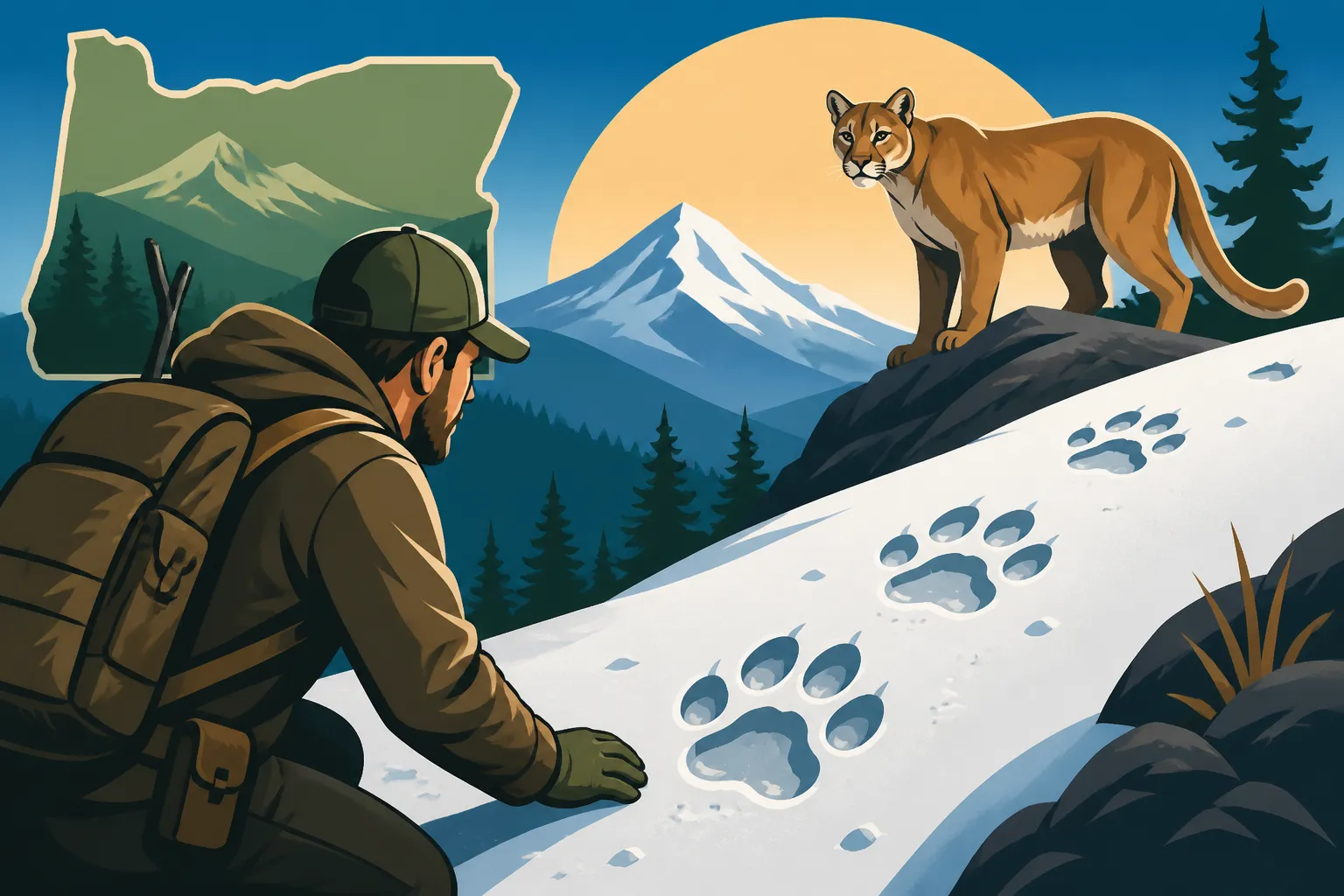
| Heel Pad | Large, trapezoidal, with typically two lobes at the front and three at the rear, often described as having an "M" or "W" shape | Smaller, triangular or roughly oval, with one lobe at the front |
| Claw Marks | Typically no claw marks visible; claws are retractable like a house cat's, only extending for traction (e.g., steep climb, slippery ice) | Almost always visible claw marks; claws are non-retractable |
| Negative Space | A clear "X" or "H" shape can often be seen in the negative space between the heel pad and toe pads | No distinct "X" or "H" in negative space |
| Stride | Often a direct register (hind foot lands in front print), smoother, less meandering | Less consistent direct register, more meandering |
The absence of claw marks is your biggest giveaway for a cougar. While a dog might occasionally track without visible claws on very soft ground, it's rare to see a consistent lack of them over multiple prints. Pay close attention to the shape of the heel pad—a cougar's is distinctive. The overall neatness and rounded appearance are also key. A good rule of thumb: if you see claw marks consistently, it's almost certainly a canine. For a more detailed look, check out our guide on Identifying Cougar Tracks From Dog Tracks.
Interpreting Age and Direction of Tracks
Finding a track is one thing; knowing if it's worth following is another. Fresh tracks are paramount. In soft soil or fresh snow, look for sharp, well-defined edges. Older tracks will show signs of weathering, such as rounded edges, debris in the print, or frost around the edges if it's frozen. A track left overnight might have dew in it in the morning, while one from midday will be dry. The sun and wind also dry out prints, so understanding the recent weather patterns is crucial.
Determining direction is usually straightforward, as the toe pads will point the way. However, pay attention to the displacement of soil or snow at the front of the print, which indicates the direction of travel. Also, look for "kick-out" marks behind the print. A cougar's stride is deliberate and efficient, often exhibiting a "direct register," where the hind foot steps directly into or very close to the print left by the front foot. This creates a neat, linear trail, unlike the more staggered, wandering gait of a dog.
Beyond tracks, look for other signs like scat. Cougar scat is usually segmented, often containing hair and bone fragments from their prey. Unlike canine scat, it's rarely found in large piles. Scrapes are also important: cougars will often scrape the ground with their hind feet, leaving a small mound of debris and sometimes urinating or defecating on it, to mark their territory. These can look like small, elongated piles of leaves or dirt. These signs can tell you not just where a cougar has been, but how recently, and whether it's an active part of its range.
Finding Tracks in Different Substrates
Different terrains present different challenges for finding tracks:
- Snow: Fresh, powdery snow is a tracker's dream, especially when the depth is just right. You'll see every detail. However, old, crusty snow can be difficult, as prints might be distorted. Pay attention to how the snow around the print is disturbed. If it's melting slightly or refrozen, it helps age the track. A very fresh track will still have fluffy snow inside it. You can learn a lot from tracking bucks in fresh Eastern Oregon snow, and many of the principles apply directly to cougars.
- Mud/Soft Soil: This is another excellent medium for tracking. Look for tracks along creek beds, damp game trails, or areas where springs emerge. The softer the ground, the clearer the print. However, mud can also distort prints if it's too thick.
- Dust/Fine Dirt: In dry country, dusty patches on trails or along roadsides can hold clear prints. The key is to look in sheltered areas where the dust isn't easily disturbed by wind.
- Dry Ground/Leaves: This is the most challenging. Here, you're not looking for clear prints as much as disturbed vegetation. A cougar's heavy step will often displace leaves, push down grass, or scuff small rocks. You might only see a faint impression or a slight depression. This requires extreme focus and slow, methodical movement. Sometimes, you'll see a scuff mark where a hind foot pushed off, or a faint print that only becomes visible when viewed from a different angle in relation to the light. This is where truly becoming attuned to the wilderness pays off.
Remember, practice is key. The more time you spend looking at tracks—cougar, deer, dog, coyote—the better you'll become at recognizing the subtle differences.
Tools and Techniques for Track-Focused Hunting
Still-hunting for cougars is a blend of traditional woodsmanship and modern technology. While nothing replaces time in the field, certain tools can significantly enhance your efficiency and increase your odds.
Optimizing Your Scouting with Mapping Tools
In today's hunting world, digital mapping applications like GoHunt, onX Hunt, and BaseMap are indispensable. They provide layers of information that were unimaginable just a couple of decades ago. For cougar hunting, specifically, these tools allow you to:
- Identify Prey Concentration: Use satellite imagery and public land layers to locate known deer and elk winter ranges, migratory corridors, and bedding areas. As we discussed, where the prey is, the cougars will be.
- Locate Terrain Features: Pinpoint potential travel corridors like saddles, ridge lines, and riparian zones. You can mark these pinch points and plan your routes to cover them thoroughly.
- Assess Cover and Escape Routes: Zoom in to identify dense stands of timber, rocky bluffs, and brushy draws that offer prime cougar bedding and ambush cover.
- Verify Land Ownership: Ensure you're on public land or have permission for private parcels, saving you time and avoiding potential trespass issues. Many timber companies like Weyerhaeuser or Hancock have permit systems that can be explored.
- Analyze Historical Data: Some apps allow you to view historical satellite imagery, which can reveal old clearcuts or burn areas that might now be grown over but still offer prime habitat. GoHunt offers specific tools and data for various units that can help identify areas with higher cougar populations or prey density. This kind of e-scouting Oregon units with satellite imagery before you ever leave home can drastically narrow down your search area.
By combining the bird's-eye view of a map with your boots on the ground, you can create a much more efficient and strategic hunting plan.
Best Practices for Still-Hunting and Glassing
Still-hunting is a slow, deliberate method of hunting where you move a few steps, then pause, listen, and observe for extended periods before moving again. For cougars, this method is especially effective given their stealth.
- Slow Movement and Silence: This cannot be stressed enough. Move at a snail's pace, taking only a few steps at a time. Plant each foot carefully, avoiding crunching leaves or breaking twigs. Wear quiet clothing (think wool or fleece) and leave anything that rattles or clangs at home. Your goal is to be a silent shadow, covering ground so slowly that you become part of the environment.
- Use Your Ears: Cougars are incredibly quiet, but sometimes you'll hear the rustle of leaves, a disturbed bird, or the faint sound of them moving through brush. Stop frequently and listen intently.
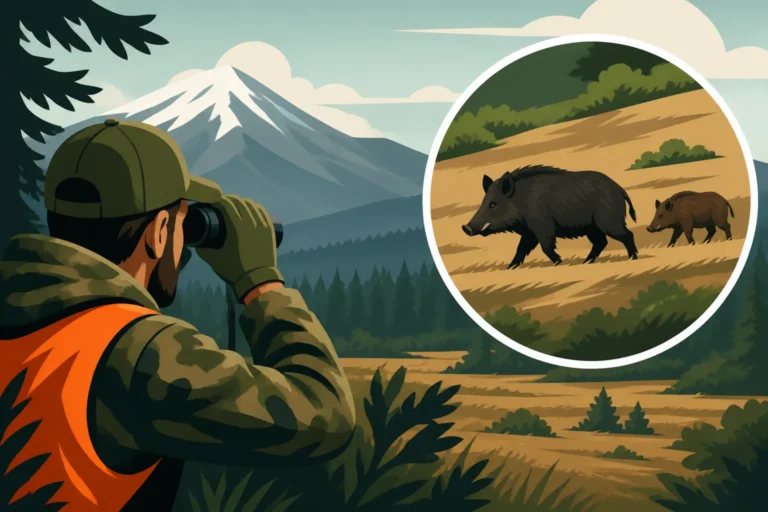
- Visual Scanning (Glassing): High-quality binoculars (10×42 or 12×50) are essential. When you pause, don't just look around; use your optics to systematically scan every shadow, every cluster of trees, every rock face. Look for any anomaly: a horizontal line in a vertical forest, a patch of fur, a twitching tail. Pay particular attention to dense cover and shadowed areas where a cougar might be bedded or stalking. Glassing open sage and juniper for Eastern Oregon mule deer provides good practice for training your eyes to pick out game against a complex background, and those skills translate directly to spotting cougars.
- Wind and Scent: Always hunt into the wind. Cougars have an incredible sense of smell, and if they catch your scent, your hunt is over before it begins. Thermals are also crucial: in the morning, air flows downhill; in the evening, it flows uphill. Plan your hunts to account for these shifts.
- Sun at Your Back: Whenever possible, try to have the sun at your back. This illuminates the landscape in front of you and keeps you less visible, making it easier to spot game and harder for game to spot you.
Incorporating Game Cameras for Patterning
Trail cameras aren't just for deer and elk; they can be incredibly useful for patterning cougar movements, especially when you're restricted from using hounds. However, you need to use them strategically and be aware of regulations.
- Strategic Placement: Place cameras on well-used game trails, especially in pinch points, near known kill sites, or along ridges that cougars use for travel. Look for signs like old tracks or scat to confirm active use. Place them low to the ground, at "cat height," to get clear images of their bodies and paws.
- Targeting Kill Sites: If you find an old deer or elk kill, especially one that has been covered with debris (a cougar's cache), setting a camera nearby can be highly effective. They will often return to these sites.
- Patience is Key: Cougars don't hit every camera every day. It might take weeks to get a picture. Check your cameras regularly (every 1-2 weeks) to minimize disturbance and battery drain.
- Legal Considerations: Always be aware of the specific trail camera rules on Oregon public land. These can vary by agency (ODFW, Forest Service, BLM), so make sure your setup complies with all local regulations regarding placement, identification, and retrieval.
- Patterning: Once you get photos, analyze them. What time of day is the cougar moving? Is it the same individual? What direction is it traveling? This data can inform your still-hunting efforts, helping you determine when and where to focus your personal tracking.
By combining these modern tools with classic still-hunting techniques, you create a comprehensive approach to finding cougar tracks and, hopefully, a cougar itself.
Strategic Timing and Weather Considerations
Just like with any hunting pursuit, timing and weather play enormous roles in still-hunting cougars. Certain conditions can either make your job incredibly difficult or lay out a perfect roadmap to success.
The Advantage of Fresh Snow and Wet Conditions
For the track-focused cougar hunter, fresh snow is the holy grail. It's truly a game changer.
- Fresh Snow: A new blanket of snow acts like a giant, blank canvas that records every movement. Cougars, like all predators, will become more active after a snowfall, looking for vulnerable prey or checking their territory. A snowfall followed by clear, cold weather is ideal. Not only are tracks incredibly easy to spot and follow, but the cold weather often means the cougar will be on the move, maintaining its body temperature and searching for food. The fresher the snow, the easier it is to age a track. A track in fresh, soft snow will have distinct, sharp edges. This is your absolute best bet for finding a hot trail. It allows you to focus on the fine details of the print, confirming it's indeed a cougar and not a dog.
- Wet Conditions (Rain/Drizzle): While not as revealing as snow, wet conditions can also be beneficial. Rain softens the ground, making tracks more visible in mud or damp soil than on dry, hardpack earth. It also washes away older scent, leaving only the freshest odors for you to potentially follow. Additionally, the quietness of rain falling can mask your own sounds, allowing for a stealthier approach while still-hunting. Think of how quiet still-hunting blacktails in wet Oregon coastal brush can be; the same principle applies here, giving you a distinct advantage in hearing subtle movements while masking your own.
These conditions simplify the tracking process immensely. Instead of searching for faint disturbances on dry ground, you're presented with clear, undeniable evidence of a cougar's recent passage.
Best Times of Day for Finding Active Tracks
Cougars are crepuscular and nocturnal by nature. This means their peak activity generally revolves around dawn, dusk, and the overnight hours.
- First Light (Dawn): This is arguably the prime time to find fresh tracks. A cougar that has been hunting all night or just moved into a bedding area before sunrise will leave the freshest tracks. As the sun begins to hit the ground, the contrast of tracks in mud or snow becomes more apparent. Starting your hunt at legal shooting light, already in an area you expect cougar activity, allows you to potentially cut fresh tracks or even spot a cat still on the move before it beds down for the day.
- Last Light (Dusk): Similarly, as evening approaches, cougars become more active, leaving their day beds to begin their nightly hunt. While it's harder to track into the fading light, being in key areas like game trails or pinch points during this time increases your chances of spotting a cougar before it completely disappears into the darkness.
- Mid-Day (Tracking Existing Sign): While cougars are less active during the bright daylight hours, this is when you'll be doing your most diligent tracking. If you've found a fresh track at dawn, the middle of the day is when you'll be slowly and methodically following it, deciphering every twist and turn. They'll often bed down in dense cover during these hours, so your still-hunting and glassing skills become paramount.
The key is to use the low light hours for intercepting fresh activity and the daylight hours for the arduous, painstaking work of following sign. Remember, cougars are incredibly efficient; they don't wander aimlessly. Their tracks will tell a story of their purpose.
Other Sign Beyond Tracks
While tracks are your primary target, a truly successful cougar hunter without hounds will also become adept at finding and interpreting other forms of cougar sign. These pieces of the puzzle help you confirm a cougar's presence, understand its habits, and focus your efforts.
Scat, Scrapes, and Kills
Cougars leave a variety of calling cards besides their paw prints:
- Scat: Cougar scat is distinctive. It's usually rope-like, often segmented, and typically contains a high percentage of hair, bone fragments, and sometimes teeth from their prey. Unlike canine scat, it's rarely found directly on trails but often deposited off to the side, sometimes even in scrapes. The color and consistency can also help you age it, though not as precisely as tracks. If it's fresh, dark, and still moist, it's a recent indicator. Older scat will be dried out, bleached by the sun, and more fragile. Finding cougar scat indicates consistent use of an area.
- Scrapes: These are perhaps one of the most exciting finds, as they are direct territorial markers. A cougar will use its hind feet to scrape a small pile of leaves, dirt, or debris, often urinating or defecating on it. These scrapes are typically 6-10 inches long and look like a miniature raked pile. They're often found along game trails, near territorial boundaries, or on prominent points within a cougar's home range. They serve as a communication tool with other cougars, and finding a fresh scrape is a strong indication that a cat is actively patrolling that area.
- Kills (Caches): Cougars often cache their kills, especially larger animals like deer or elk, by burying them under a pile of leaves, dirt, grass, and other debris to protect them from scavengers. Finding a fresh kill site, particularly one that has been partially covered, is a huge clue. Examine the kill for cougar-specific feeding signs: smaller bite marks, often starting around the neck or head, and sometimes distinctive hair patterns where the cat has groomed itself after feeding. A fresh cache means the cougar is likely nearby, returning to feed over several days. Setting a trail camera discreetly near a fresh cache can be very productive.
These signs, when found in conjunction with tracks, paint a much clearer picture of a cougar's presence and patterns within a specific area. Learning to interpret these can mean the difference between just scouting and actively hunting.
Understanding Cougar Prey Habits
It's been said that to hunt a cougar, you must first hunt what it hunts. This means having a deep understanding of deer and elk behavior in your chosen hunting area.
- Deer and Elk as Primary Prey: In Oregon, mule deer, blacktail deer, and elk form the bulk of a cougar's diet. Knowing where these animals concentrate during different seasons is paramount. For example, during late fall and winter, deer and elk often move to lower elevations or south-facing slopes to find forage and escape deep snow. Cougars will follow them. If you're successful in finding blacktail deer hunting in Oregon's coastal clearcuts, you're likely in prime cougar territory as well.
- Winter Range Significance: Identify key winter ranges for deer and elk in your unit. These areas are magnets for cougars, as the prey is concentrated and often stressed, making them easier targets. However, always be mindful of winter range closures that affect late hunts, as ODFW implements these to protect vulnerable big game.
- Fawn/Calf Season: During spring and early summer, when deer and elk are dropping fawns and calves, cougars will be keenly aware of these easy food sources. Areas where fawns and calves are born and spend their first weeks can become temporary cougar hotspots.
- Behavioral Changes: Pay attention to how deer and elk behave. Are they jumpy? Are there signs of recent disturbance, like fresh blood or scattered hair? Are there fewer deer than usual in an area that used to be productive? These can all be subtle indicators of cougar presence. The impact of cougar prey and deer herd impact is a real phenomenon that experienced hunters observe.
By understanding the ebb and flow of deer and elk populations, their preferred habitats, and their seasonal movements, you essentially gain insight into the cougar's calendar and daily routine. The more you know about the prey, the closer you get to the predator.
Disclaimer
Please note: Hunting regulations can change. Always consult the most current Oregon Department of Fish and Wildlife (ODFW) regulations before planning any hunting trip. This guide is for informational purposes only and does not supersede official ODFW publications or laws. Ensure you have all necessary licenses and tags, and adhere to all legal requirements for hunting in Oregon.