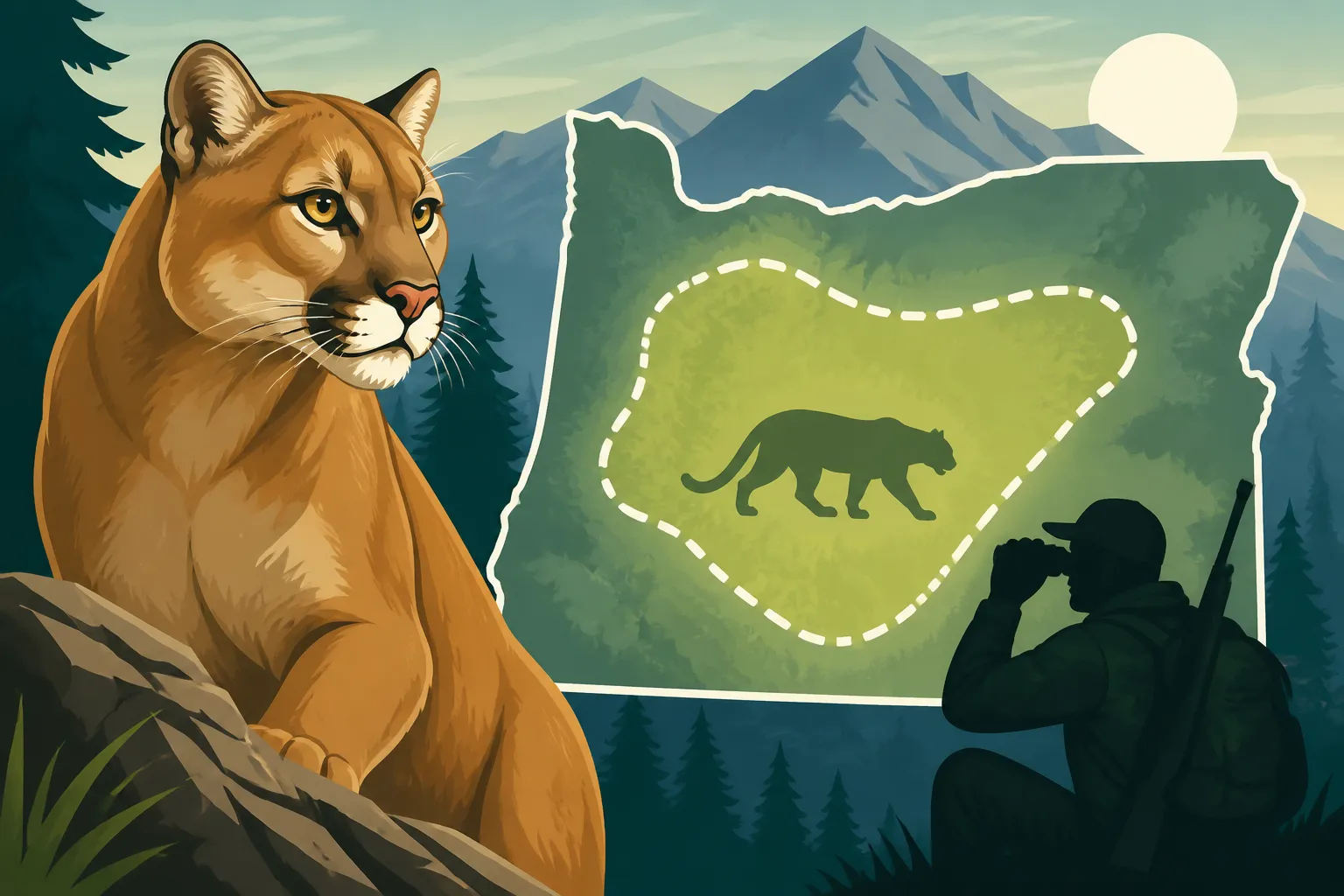
Cougar Home Range Size in Oregon
One of the most perplexing aspects of hunting cougars in Oregon is their uncanny ability to appear and disappear, leaving hunters scratching their heads about where these elusive predators actually live and roam. You might find fresh tracks one day and then nothing for weeks in the same spot, leading you to wonder how much ground these cats really cover. Understanding a cougar's home range size in Oregon is absolutely critical for any hunter hoping to consistently locate and pursue these apex predators, helping you decipher their movements and predict their presence. This guide will explore what defines a cougar's territory, the many environmental and biological factors that influence its size, and how this knowledge can sharpen your hunting strategy.
Understanding Cougar Territories: The Basics
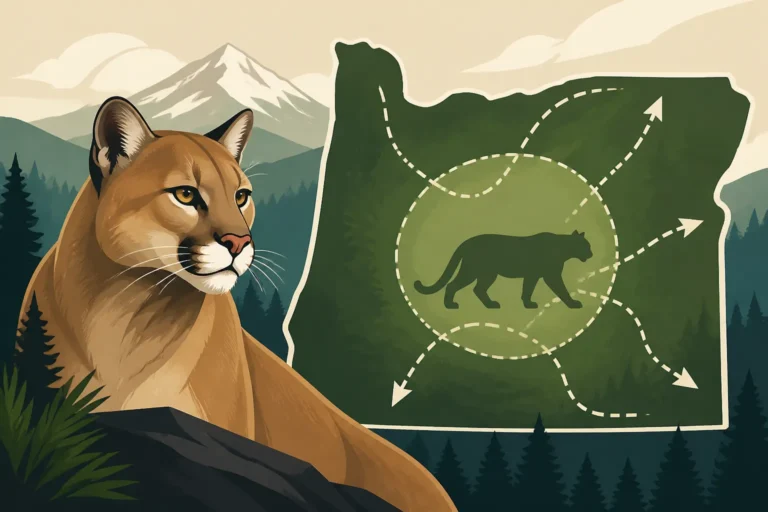
When we talk about a cougar's "home range," we're delving into the actual geographical area that an individual cat utilizes for its daily and seasonal activities. It's not just a random patch of woods; it's their living room, kitchen, and hunting grounds all rolled into one. For hunters, grasping this concept moves us beyond simply looking for tracks to truly understanding the animal's behavior and the landscape it inhabits.
What is a Home Range?
A cougar's home range is essentially the total area an individual animal traverses in its search for food, mates, and shelter over a specific period, often a year or more. It's distinct from a "territory," which is usually a defended area. While cougars are highly territorial, especially males towards other males, their home range is simply the sum total of their movements. Within this larger home range, there are often "core areas" where the cougar spends the majority of its time, perhaps around a specific bedding area, a favored water source, or a particularly rich hunting patch. These core areas are often where you'll find the highest concentration of sign.
Think of it like your own daily routine: you might commute to work (part of your home range), but you spend most of your time in your actual home (your core area). For a cougar, that core area might be a rugged canyon bottom with dense cover, or a series of clearcuts that provide excellent hunting opportunities. Knowing that cougars tend to stick to these core areas, even within a larger range, can help you prioritize your scouting efforts.
General Cougar Behavior and Solitary Nature
Cougars are famously solitary animals. Unlike wolves, which operate in packs with established territories, an adult cougar typically roams alone, only coming together briefly for breeding. This solitary nature directly impacts their home range size and how they use it. Each cat needs enough space to find sufficient prey without constantly competing with neighbors. This means that in areas with abundant food, home ranges might overlap more, but individuals will still try to avoid direct confrontation. In leaner times or areas, ranges might expand significantly to ensure survival.
This solitary lifestyle also means they are incredibly secretive and elusive. They don't typically announce their presence through loud vocalizations like some other predators. Instead, they rely on stealth, keen senses, and a deep understanding of their personal domain. When you're out looking for signs of a cougar, remember you're not looking for signs of a group, but the individual movements of a single, highly efficient predator traversing its established circuit. This is why learning to identify Finding Cougar Tracks Without Hounds is such a critical skill.
Sex-Based Differences in Range
One of the most consistent findings in cougar research is the difference in home range size between male and female cats. Generally, male cougars have significantly larger home ranges than females. This is driven by their biological imperatives: males need to roam widely to find multiple breeding partners and defend their access to females, while females need a more stable, smaller area where they can successfully raise their kittens without traveling excessively.
A male cougar's range might overlap with several female ranges, but he'll actively patrol and scent-mark to ward off other mature males. A female's range, on the other hand, will typically be smaller and more focused on areas with reliable prey and good denning sites. Understanding this means that if you're consistently finding large, fresh male tracks, you're likely in a territory where a mature tom is active, and potentially several females reside. If you're finding smaller tracks and perhaps more localized sign, you might be closer to a female's more concentrated core area.
Factors Influencing Cougar Home Range Size in Oregon
Oregon is a state of incredible ecological diversity, from the dense, wet rainforests of the Coast Range to the vast, arid sagebrush steppes of the high desert. It stands to reason that a cougar's home range won't be a one-size-fits-all measurement here. Several key factors intertwine to determine just how much ground an individual cougar needs to cover to survive and thrive.
Prey Availability and Density
This is arguably the most significant factor influencing a cougar's home range size. Cougars are obligate carnivores, and their lives revolve around finding and killing prey. In areas with abundant, easily accessible prey – think dense populations of deer or elk – cougars don't need to travel as far to fill their bellies. This often leads to smaller, more concentrated home ranges. Conversely, in areas where prey is sparse or widely dispersed, a cougar must expand its range considerably, sometimes traveling vast distances between kills.
Consider the difference between a prime elk unit in the Blue Mountains versus a more marginal mule deer area in the high desert. In the elk country, a cougar might find a steady supply of calves and sub-adult elk, allowing it to maintain a smaller range. However, in an area with fewer Mule Deer Fawn Recruitment Rates and more spread-out populations, that cougar might have to cover hundreds of square miles. Hunters often connect cougar sightings to concentrations of their primary food sources. If you're seeing a lot of deer or Elk Numbers in Oregon's Blue Mountains, chances are there's a cougar not far behind, and its home range likely encompasses those animal strongholds. This relationship is a critical part of understanding Cougar Prey and Deer Herd Impact.
Habitat Type and Quality
The type of habitat a cougar lives in also plays a crucial role. Dense, rugged, and heavily timbered areas, like those found in the Coast Range or Cascades, offer abundant cover for stalking and concealment. While these areas can be challenging for hunters to navigate, they provide excellent hunting grounds for cougars. In such environments, a cougar can often maintain a smaller home range because the dense cover makes hunting more efficient. They don't need to cover as much open ground to find an ambush site.
On the other hand, open landscapes, such as the sagebrush flats of Eastern Oregon, offer less cover. Here, cougars often need larger home ranges to find suitable stalking opportunities and travel between pockets of cover. Think about the difference between a cougar moving through dense rainforest timber versus one traversing large, open expanses of juniper and sage. The former allows for tighter circles; the latter demands greater mileage. Topography, such as steep canyons, rimrock, or river breaks, can also significantly influence how a cougars utilizes its home range, often favoring these rugged features for travel corridors and ambush points.
Topography and Human Presence
The physical layout of the land, including its ruggedness, and the degree of human activity within it are additional significant factors. Extremely rugged topography, with steep canyons, dense brush, and broken country, can sometimes compress home ranges. While the terrain might be challenging to navigate, it often provides excellent refuge and hunting opportunities, allowing a cougar to exploit a smaller geographic area more intensely. These areas are also often less accessible to humans, creating secure core areas for cats.
Conversely, areas with significant human development, roads, or agricultural land can fragment cougar habitat, forcing cats to adapt or seek new ranges. Roads, in particular, can act as barriers or corridors of increased risk, influencing how a cougars moves within its range. They might avoid heavily trafficked roads or use quiet, overgrown logging roads as travel routes. In some cases, cougars may even establish ranges that incorporate the outskirts of human settlements, as evidenced by Cougar Sightings Near Oregon Towns, learning to navigate these landscapes while largely remaining unseen. When planning your hunt, consider consulting resources like GoHunt, which often integrates land ownership and road networks into its mapping tools, helping you visualize potential cougar corridors and refuges.
Tracking and Estimating Cougar Home Ranges
So, how do wildlife biologists and researchers actually figure out how big a cougar's home range is? It's not like these cats wear giant "I'm here!" signs. The process involves a combination of advanced technology and painstaking field research, all of which contributes to our understanding of cougar populations and their movements across Oregon.
Research Methods
The most common and effective method for tracking cougar movements and determining home range size is through GPS collaring. Wildlife biologists will capture a cougar, fit it with a GPS collar that records its location multiple times a day, and then release it. Over weeks, months, or even years, this collar collects thousands of data points, mapping out the animal's exact movements. Once retrieved, either remotely or by recapturing the animal, the data is analyzed using specialized software to calculate the size and shape of its home range, as well as identify those all-important core areas.
Beyond collaring, researchers also use track surveys, particularly in snow or soft ground, to infer movement patterns. Camera traps, strategically placed in areas of high activity or travel corridors, can also provide valuable insights into individual cat presence and general movement. While these methods don't provide the same level of detail as GPS, they offer complementary information, especially in areas where collaring might not be feasible. This extensive research is critical for understanding Oregon Cougar Population Estimates.
How Data Informs Management
The data collected from these studies is invaluable to state wildlife agencies like the Oregon Department of Fish and Wildlife (ODFW). By understanding average home range sizes and how they vary across different habitats and prey densities, ODFW can make informed decisions about cougar management, including setting harvest quotas, identifying critical habitats, and predicting potential conflicts with livestock or humans. This scientific approach ensures that management strategies are grounded in real-world animal behavior rather than guesswork.
For instance, if data shows that cougars in a particular unit have significantly smaller home ranges due to abundant prey, it might indicate a healthy population that can sustain a certain level of harvest without impacting overall numbers. Conversely, if ranges are expanding, it might signal declining prey or habitat fragmentation, prompting a review of management practices. These studies also help define the effectiveness of conservation efforts and identify crucial migration corridors or breeding areas that need protection.
Interpreting Signs on the Ground
For hunters, while we might not have access to GPS collar data, we can still become adept at interpreting the signs cougars leave behind to get a sense of their presence and movement within a potential home range. Fresh tracks, scat, scratch marks on trees, and kill sites are all pieces of a larger puzzle. A consistent pattern of these signs in a particular area, especially repeated over time, suggests you're within an active cougar's home range, and likely a core area.
When you find a kill site, whether it's a deer or elk carcass partially covered, take note of the location, the direction of travel, and any associated tracks. This can tell you a lot about the cat's recent movements. Similarly, looking for Cougar Tracks From Dog Tracks can help you avoid misinterpreting sign. Consistent observation of these signs helps build a mental map of where cats are likely to be operating. Using detailed maps from services like GoHunt or other topographic resources, you can mark these observations and begin to delineate potential travel routes and bedding areas within a cougar's suspected range.
| Factor | Effect on Home Range Size | Typical Oregon Example |
|---|---|---|
| Prey Abundance | High prey = Smaller range | Dense Blacktail deer populations in the Coast Range, abundant elk in certain Blue Mountains units |
| Prey Scarcity | Low prey = Larger range | Dispersed Mule Deer in Eastern Oregon's arid regions, requiring extensive travel between water and cover |
| Habitat Cover | Dense cover = Smaller range | Thick rainforest timber of the Coast Range or dense Cascades forests, offering numerous ambush sites |
| Open Habitat | Sparse cover = Larger range | Wide-open sagebrush flats and juniper draws of the high desert, requiring longer stalks and travel between cover patches |
| Topography | Rugged = Varies (often smaller, but intense use) | Steep canyons, rimrock, and river breaks in Hells Canyon, providing natural travel corridors and concealment |
| Human Activity | High = Displaced/Larger | Areas near agricultural lands, suburban development, or heavily trafficked roads, forcing cats to navigate human presence |
| Sex (Male) | Typically Larger | Males roaming hundreds of square miles to find mates and maintain dominance, overlapping multiple female ranges |
| Sex (Female w/ Cubs) | Typically Smaller | Females with kittens focusing on secure denning sites and reliable prey sources within a more confined area |
How Home Range Knowledge Impacts Your Hunting Strategy
Understanding the dynamics of cougar home ranges isn't just academic; it's a practical tool that can profoundly influence how you plan and execute your hunts. Instead of randomly wandering, you can develop a more focused, efficient, and ultimately more successful approach to pursuing these challenging animals.
Focusing Your Efforts
Knowing that cougars operate within a defined home range, and often frequent specific core areas within that range, allows you to focus your scouting and hunting efforts much more effectively. Instead of covering vast, unproductive ground, you can concentrate on areas that have all the hallmarks of a cougar's prime habitat: dense cover, water sources, and, most importantly, high densities of their primary prey animals. If you're on a Cougar Hunting While Deer Hunting on the Same Trip, pay close attention to where you're seeing consistent deer sign.
For example, if you've identified an area with a good population of Blacktail Deer Density in the Coast Range, especially if it includes rugged timber and reliable water, you're likely within a cougar's active range. Instead of just walking aimlessly, you can develop a systematic approach to still-hunt those areas or set up for calling. You can also prioritize checking new clearcuts or recent burns, as these can be magnets for prey animals, which in turn attract cougars. Focusing on these high-probability areas drastically increases your odds of encountering fresh sign or even the cat itself.
Utilizing E-Scouting and Maps
Modern e-scouting tools and detailed topographic maps are invaluable for understanding and predicting cougar home ranges. Platforms like GoHunt, or even detailed mapping applications, allow you to analyze satellite imagery, topography, and land ownership from the comfort of your home. You can identify potential travel corridors, locate bedding areas, pinpoint water sources, and even visualize the distribution of different habitat types. This kind of preparation is integral to E-Scouting Oregon Units With Satellite Imagery.
By overlaying features like dense timber, rocky outcroppings, and known game trails onto your map, you can begin to delineate areas that are likely to be heavily used by cougars. You can identify potential pinch points, ambush sites, and natural funnels that a cougar might use as it patrols its home range. Knowing the general layout of a cougar's likely territory helps you plan your access points, devise calling setups using Cougar Calling Techniques That Work in Oregon, and predict where a cat might approach from. Whether you're hunting Public Land Scouting in Oregon Before the Draw Results or looking for permission on Hunting Private Timber Land With a Permit, good maps are your best friend.
Persistence and Patience
Ultimately, even with a solid understanding of home range dynamics, hunting cougars in Oregon still demands immense persistence and patience. Cougars are masters of stealth, and even within their established home range, they can be incredibly difficult to spot. They might pass through an area you hunted just hours before, leaving no visible trace of their presence until you return the next day. This is particularly true if you're trying to determine How Long to Sit a Cougar Set after calling.
The key is to remember that while a cougar might not be visible every day, it is regularly traversing its home range. Your consistent effort in scouting, interpreting sign, and returning to high-probability areas within a suspected range will eventually pay off. Don't get discouraged if you don't find a cat on your first few attempts. Keep learning the landscape, keep looking for signs, and remain patient. The more time you spend in a cougar's world, the better your chances of intersecting with its movements. Reviewing resources about Oregon's Wildlife Management Units and New Hunt Areas can give you a better grasp of the overall areas you're dealing with.
Disclaimer
This article is for general informational purposes only and does not constitute professional advice. Laws, prices and regulations vary by location and change over time. Consult a qualified professional for guidance on your specific situation.