Blacktail Deer Density in the Coast Range
Hunting blacktail deer in Oregon's vast and often incredibly dense Coast Range can feel like chasing ghosts. You spend hours, days even, meticulously still-hunting through thick salal and sword fern, seeing nothing but green, and then suddenly a flash of brown, gone before you can even raise your binoculars. The sheer density of the vegetation makes it notoriously difficult to understand where these elusive deer are, let alone how many there might be. This guide is dedicated to pulling back that curtain, helping you understand the real dynamics of blacktail deer density in the Coast Range, what influences it, and how you can use this knowledge to become a more effective and successful hunter in this challenging but rewarding environment.
Understanding Blacktail Deer in the Oregon Coast Range
The Columbian blacktail deer is a magnificent animal, but it's a creature of shadow and cover, especially here in the Oregon Coast Range. Unlike the mule deer of Eastern Oregon that might stand out against sagebrush flats, blacktails blend seamlessly into the seemingly endless green tapestry of our coastal forests. This intrinsic elusiveness is both their greatest defense and our greatest challenge as hunters.
The Elusive Nature of Coastal Blacktails
If you've spent any time hunting blacktails, you know the frustration. They're not like the Rocky Mountain elk that might hold in open timber or the mule deer that sometimes skylines on a ridge. Blacktails live and thrive in some of the thickest, most impenetrable cover imaginable. They are masters of using topography and vegetation to their advantage, often moving silently through brush that would stop a human dead in their tracks. This means that even in areas with decent populations, actually seeing a blacktail can be a rare event.
They often bed down in areas where visibility is limited to mere feet, preferring tangled blowdowns, deep ravines choked with salmonberry, or the dense understory of mature timber. Their wary nature means they'll often hear, see, or smell you long before you ever know they're there, melting away like smoke. This makes traditional "glassing" techniques, so effective in open country, far less fruitful here. Instead, it often comes down to patience, quiet movement, and an intimate understanding of their preferred escape routes and feeding areas. It’s a game of inches, not miles.
Key Characteristics and Habitat Preferences
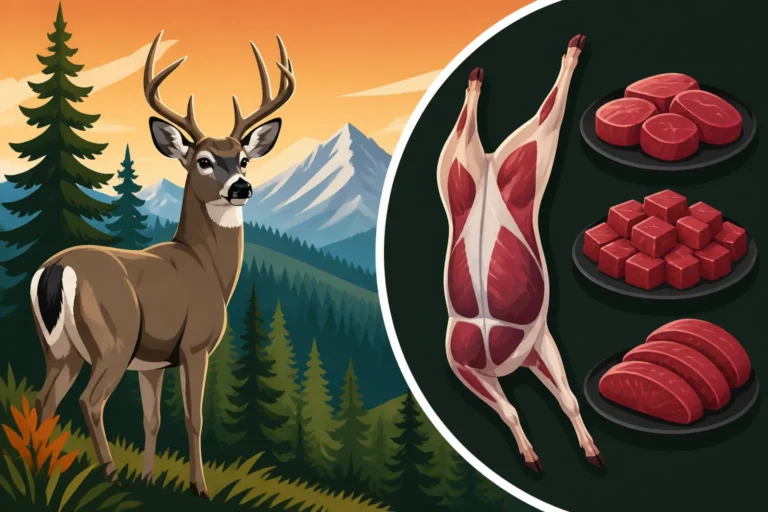
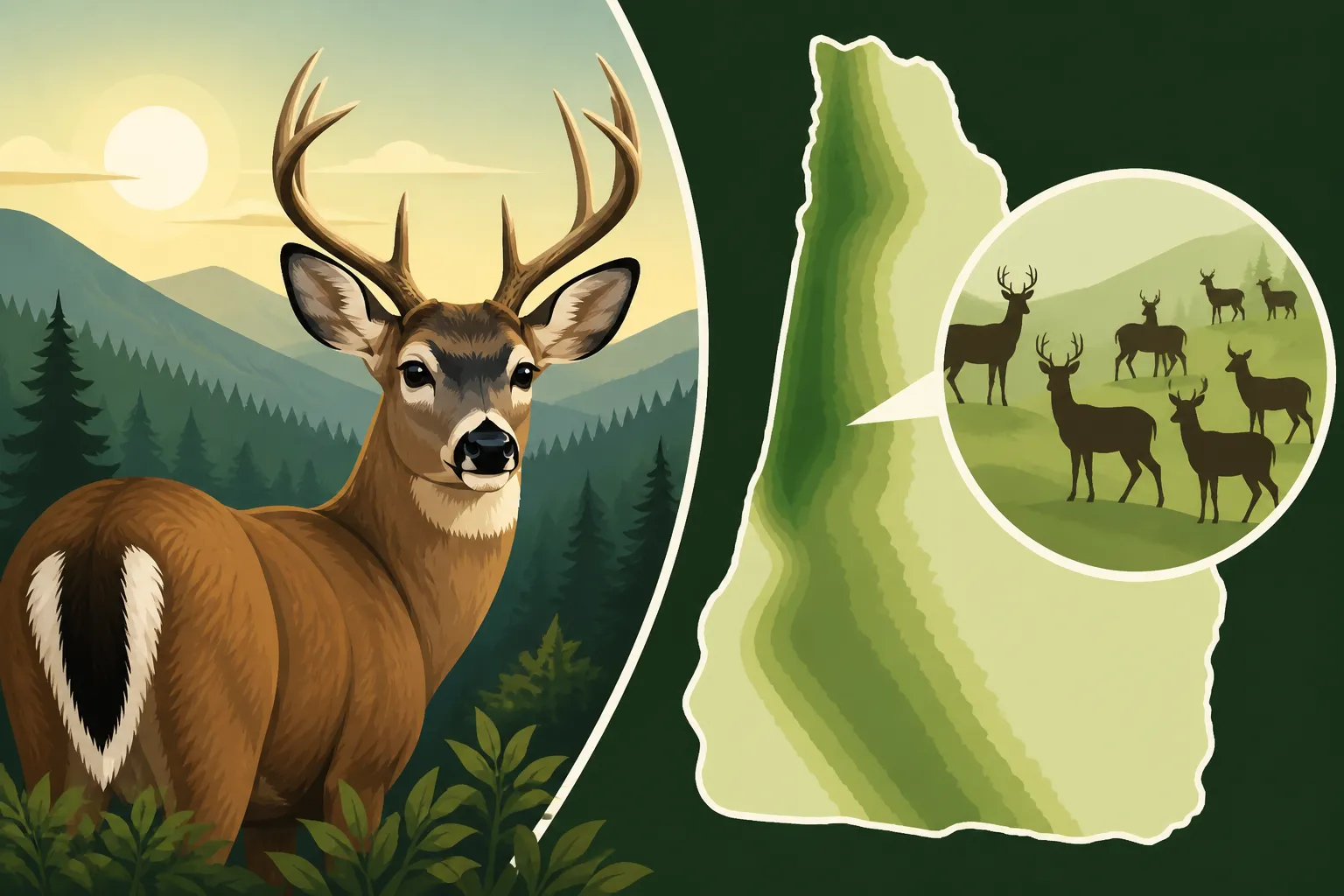
Blacktail deer (specifically Odocoileus hemionus columbianus, a subspecies of mule deer) are smaller than their eastern cousins, the Rocky Mountain mule deer. A mature buck might weigh 150-200 pounds, though many are smaller. Their antlers are typically compact, often exhibiting a bifurcated (forked) branching pattern, rather than the wide, tall racks of eastern mule deer or Roosevelt elk. Their coat is a rich, dark brown, which provides excellent camouflage in the shadows of the coastal forest.
These deer are intrinsically linked to the forest ecosystem. They thrive in a mosaic of habitats, particularly those created by timber harvesting. They prefer areas that offer a mix of dense cover for security and thermal regulation, and more open areas or clearcuts for foraging. You'll find them gravitating towards the edges of recent clearcuts, where new growth provides abundant browse, but always within a short dash of thicker timber. They also utilize riparian zones along creeks and rivers, which offer food, water, and often excellent cover. Understanding where the dense cover blacktails bed in and how they use these edges is paramount.
The Coast Range, with its constant cycle of logging, its varied topography of steep hillsides and numerous drainages, provides an ideal environment for blacktails. They navigate this complex landscape with ease, often sticking to the steepest, nastiest terrain to avoid human encounters. Learning to differentiate the Blacktail Versus Mule Deer Differences will help you focus your efforts.
Factors Influencing Blacktail Deer Density
Understanding the sheer number of blacktail deer in a given area isn't just about looking for tracks. It's about grasping the complex interplay of habitat, predation, climate, and human activity. These factors ebb and flow, creating dynamic pockets of higher or lower density across the Coast Range.
Habitat Quality and Availability
The quality and availability of habitat are by far the most significant drivers of blacktail deer density. These deer are creatures of transition and edge. They don't do well in vast tracts of unbroken, mature forest where sunlight struggles to reach the forest floor, limiting understory vegetation. Conversely, they don't thrive in completely open, devoid-of-cover landscapes either.
What blacktails truly need is a diverse environment:
- Young Clearcuts (1-5 years old): These are prime feeding grounds. After logging, the sunlight floods the forest floor, spurring explosive growth of forbs, grasses, and shrubs like fireweed, huckleberry, and salal. These provide high-quality forage. However, young clearcuts offer minimal cover, so deer will feed in them primarily at dawn, dusk, or during periods of low human activity, always staying close to a timber edge for escape. Learning how to read a two-year-old clearcut for bucks can make all the difference.
- Intermediate Stands (5-20 years old): As clearcuts grow, they begin to offer more cover, becoming "brushy" and harder to navigate. These areas provide excellent bedding and security cover, especially on north-facing slopes or in dense draws. The browse might be less diverse than younger cuts, but the security is paramount.
- Mature Timber: While not primary feeding grounds, mature timber provides crucial thermal cover (protection from harsh winds and extreme temperatures), security cover, and often important riparian zones. It’s where deer feel safe to bed during the day or when pressured.
The constant cycle of logging in the Coast Range ensures this mix of habitat types is usually present, albeit in varying configurations depending on the timber company's rotation and public land management.
Predation and Disease Pressures
Just like any wild animal population, blacktail deer are subject to natural pressures that keep their numbers in check. Predation and disease play significant roles in determining localized deer density.
- Predation: Oregon's Coast Range is home to apex predators like cougars and black bears. Cougars, in particular, are highly effective deer predators. An increase in the Oregon Cougar Population Estimates can directly impact local deer numbers. While a healthy deer herd can sustain some predation, concentrated predator activity in a smaller area can certainly reduce deer density. Bears, especially during the spring, can also prey on fawns. These predators tend to follow deer concentrations, creating a constant dynamic where deer might move to avoid high-pressure areas.
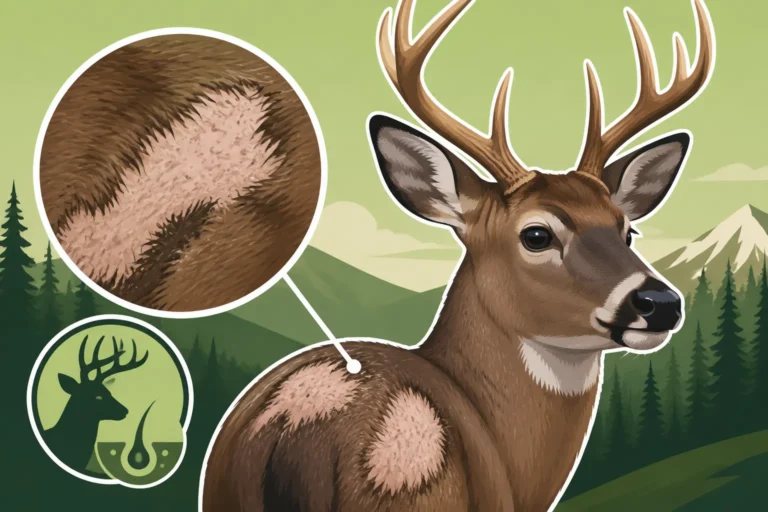
- Disease: Blacktails, unfortunately, are susceptible to certain diseases. One of the most talked-about in Western Oregon is Hair Loss Syndrome (HLS). This condition, caused by external parasites like lice, can severely weaken deer, especially during winter months, making them vulnerable to starvation, exposure, or predation. While HLS doesn't typically wipe out entire populations, it can reduce fawn survival and overall herd health in affected areas, leading to localized dips in density. The Oregon Department of Fish and Wildlife (ODFW) monitors these diseases to understand their broader impact on herds.
Climate and Environmental Conditions
Oregon's Coast Range is renowned for its mild, wet climate, but even subtle shifts in weather patterns can have a profound impact on blacktail deer populations.
- Rainfall and Forage: Abundant rainfall generally means lush vegetation, providing ample forage for deer. However, prolonged periods of drought can stress vegetation, leading to a decline in food quality and quantity. This can affect doe health and, consequently, fawn survival rates.
- Winter Severity: While coastal winters are generally milder than those east of the Cascades, harsh, prolonged cold snaps or heavy snows (especially at higher elevations) can be detrimental. Deep snow limits access to forage, increasing energy expenditure, and making deer more vulnerable. Fawn recruitment is particularly sensitive to winter conditions.
- Wildfires: While less frequent in the notoriously wet Coast Range compared to Eastern Oregon, wildfires do occur. Post-fire landscapes can initially be very beneficial, promoting new growth and creating diverse forage. However, extensive, high-severity fires can destroy large areas of critical cover, displacing deer and temporarily reducing density until the habitat recovers.
These environmental factors, often interacting with each other, create a constantly shifting landscape of resources and challenges for blacktail deer, directly influencing where and in what numbers they can be found.
Estimating Blacktail Deer Density: Challenges and Methods
Trying to pin down an exact number of blacktail deer per square mile in the Oregon Coast Range is a bit like counting raindrops in a hurricane. It's incredibly challenging, and even wildlife biologists rely on a combination of indirect methods and educated estimates rather than precise counts.
Why Counting Blacktails is So Difficult
The primary reason for this difficulty circles back to the blacktail's preferred habitat and behavior. In the dense, often impenetrable coastal forests, traditional wildlife survey methods fall short.
- Visibility: Aerial surveys, a common method for counting elk or mule deer in open country, are largely ineffective in the Coast Range. The thick canopy of Douglas firs, cedars, and dense undergrowth makes it nearly impossible to spot deer from a helicopter or plane. Even walking transects, where observers count animals within a specific strip, are severely hampered by the limited sightlines.
- Secrecy and Camouflage: Blacktails are masters of remaining hidden. Their dark coats blend perfectly with the shadows, and their instinct is to freeze or quietly slip away at the first sign of disturbance. This means that even if you're close, you might never know it.
- Terrain: The Coast Range is rugged. Steep slopes, dense brush, and numerous drainages make accessing and surveying large areas on foot incredibly arduous and time-consuming, further complicating efforts to get accurate counts.
This combination of factors means that ODFW and hunters alike must rely on more indirect indicators and broader observations rather than hard numbers.
ODFW Surveys and Data Limitations
The Oregon Department of Fish and Wildlife (ODFW) uses a variety of methods to monitor blacktail populations, but they readily acknowledge the inherent limitations in getting exact density figures.
- Hunter Harvest Data: This is a crucial piece of the puzzle. Mandatory harvest reporting provides information on the number of deer taken, their sex, and the unit where they were harvested. While not a direct count, trends in harvest rates and success rates can indicate population trends. Remember that Oregon Harvest Report Deadline in January.
- Spotlight Surveys: In some areas with more open terrain or along roads, spotlight surveys are conducted at night. While these can provide some data, they are limited by access and the deer's avoidance of artificial light.
- Pellet Group Counts: Biologists establish transects and count deer pellet groups (feces) within a defined area. The number of pellet groups can be used to estimate deer use of an area over time, which can then be extrapolated to a rough density estimate.
- Track Surveys: Similar to pellet counts, track surveys can indicate the presence and relative abundance of deer in specific areas, especially after a fresh rain or snowfall (though snow is less common and persistent in much of the Coast Range).
- Research Projects: ODFW, in collaboration with universities, sometimes undertakes specific research projects, which might involve radio-collaring deer to track movements, survival rates, and habitat use. These studies provide invaluable insights into localized populations but are often too resource-intensive to apply broadly across the entire Coast Range.
Despite these efforts, ODFW typically provides herd management objectives and population trends (e.g., "stable," "declining," "increasing") rather than precise density numbers for blacktails in Western Oregon, simply because getting accurate counts is so difficult.
Using Technology for Scouting and Density Indicators
For us hunters, while ODFW data gives us a general picture, modern technology can offer valuable localized insights into blacktail activity and, by extension, density. These tools help us infer where deer might be concentrated, even if we can't get an exact count.
- Mapping Applications: Platforms like GoHunt, Gaia GPS, or onX Hunt are indispensable. They allow you to overlay private and public land boundaries, analyze topography (steepness, aspect), identify clearcuts of different ages, and pinpoint water sources. By studying satellite imagery, you can identify transitions between young clearcuts, dense timber, and riparian areas – all prime blacktail habitat. These maps help you plan your approach, understand travel corridors, and visualize areas of potential higher density.
- Satellite Imagery and Historical Views: Looking at current and historical satellite imagery on GoHunt can show you how a clearcut has grown over years, revealing which areas now offer dense cover and which still have abundant forage. This helps you predict deer movement and bedding patterns.
- Trail Cameras: Properly deployed trail cameras are arguably one of the most effective tools for assessing localized deer density and activity. Placing cameras along game trails leading into clearcuts, near water sources, or in known bedding areas can show you not only if deer are present, but also how many, their size, and their movement patterns. This data, over time, gives you a much clearer picture of density in a specific drainage or timber block. Remember to be mindful of Trail Camera Placement on Public Land rules in Oregon.
- Weather Apps and Forecasts: Understanding weather patterns helps you predict deer behavior. Hunting blacktails in fog and drizzle often makes them bolder, as visibility is reduced for both deer and hunter. Knowing when a cold snap might push deer into thermal cover, or when a dry spell might concentrate them around specific water sources, helps you focus your efforts.
By combining these technological aids with traditional boots-on-the-ground scouting, you can develop a much more nuanced understanding of blacktail presence and density in your chosen hunting area.
High-Density Zones and Hunter Strategies
While exact numbers remain elusive, experience and observation point to certain types of areas within the Coast Range that consistently hold higher concentrations of blacktail deer. Understanding these patterns and adapting your hunting strategies accordingly is key to success.
Identifying Productive Coastal Areas
The Coast Range is a vast and varied landscape, but certain characteristics signal higher potential for encountering blacktails. It's rarely about one specific unit, but rather specific habitat features within those units.
- Managed Timberlands: Areas actively managed by timber companies (like Weyerhaeuser or Hancock Forest Management, often requiring permits for access) often create the ideal mosaic of clearcuts and regenerating forests. The Tillamook State Forest and parts of the Siuslaw National Forest are great examples where this cycle benefits blacktails. These areas offer the constant regeneration of forage combined with security cover. Focus on the transitions between dense timber and younger clearcuts.
- Steep, Brushy Drainages: Blacktails love steep, broken country that is difficult for humans to access. Deep canyons, brush-choked draws, and areas with significant blowdown provide excellent security and escape cover. Deer will often bed high on steep slopes, just below the ridge, where they can watch their backtrail and smell anything approaching from below.
- Riparian Corridors: Creeks and rivers often create natural travel corridors and provide consistent water sources and lush vegetation. Following these corridors, especially where they intersect with clearcuts or dense timber, can be highly productive.
- Old Growth Edges: While much less common now, where older growth timber meets younger stands or clearcuts, these edges can be magnets for blacktails, offering dense cover right alongside feeding opportunities.
Look for areas that have a good mix of these features. An excellent tool for this kind of reconnaissance is GoHunt's mapping system, which allows you to visualize these habitat types and terrain features before you even step foot in the woods. This E-Scouting Oregon Units With Satellite Imagery is invaluable.
Hunting Techniques for Dense Cover
Hunting blacktails in the Coast Range demands a completely different approach than hunting in open country. Forget long-range glassing; this is a close-quarters game where stealth and patience reign supreme.
- Still-Hunting: This is the quintessential blacktail hunting method. It involves moving incredibly slowly, taking one or two steps, then stopping to scan, listen, and glass every patch of cover. It's about being observant, looking for a horizontal line, a flick of an ear, or an unnatural shadow in a vertical world. Your Still-Hunting Speed in Wet Brush needs to be snail-like, sometimes taking an hour to cover a hundred yards.
- Tracking: In the wet conditions of the Coast Range, deer tracks can often be found. If you find fresh tracks, especially those of a good-sized buck, following them quietly and patiently can lead you directly to the deer. This requires keen observation and an understanding of deer behavior, anticipating where they might go and when they might stop.
- Ambush Hunting: Identifying key travel corridors, pinch points, or feeding areas (like a lush clearcut edge) and setting up an ambush point can be effective. This is particularly useful during the Blacktail Rut Timing in Western Oregon when bucks are more actively moving. Being patient and waiting for the deer to come to you, rather than trying to push through thick cover, often yields better results.
- Calling: While less common than for elk, some hunters use soft deer calls, like a fawn bleat or a doe grunt, to pique the curiosity of blacktails, especially bucks during the rut. It's a subtle art and generally requires the deer to be relatively close already.
Regardless of the technique, quiet footwear (Boots for Wet Coastal Hunting are essential), good rain gear, and absolute patience are your best friends.
Impact of Logging on Deer Distribution
Logging practices are an intrinsic part of the Coast Range landscape and have a direct, often beneficial, impact on blacktail deer. However, not all logging is equal in its effect on deer distribution and density.
- Patchwork Logging: The ideal scenario for blacktails is a diverse patchwork of logging activities. Small to medium-sized clearcuts (20-80 acres) surrounded by mature or regenerating timber create maximum "edge" habitat. This provides deer with immediate access to forage in the clearcut and security in the adjacent cover.
- Timing of Harvest: The timing of logging can influence deer distribution. Fresh clearcuts immediately after logging won't offer much initially, but as browse sprouts, they become magnets. Older clearcuts (20+ years) that have grown into dense, impenetrable thickets might become less attractive for feeding, but still provide exceptional bedding cover.
- Road Systems: Logging necessitates extensive road networks. While these roads provide access for hunters, they can also displace deer, pushing them into more remote or thicker areas. Understanding Oregon's 300-Foot Rule Beside an Open Road and other travel management restrictions is vital. However, deer often use older, overgrown logging roads as travel corridors, especially where they provide sheltered passage through dense forest.
- Clearcut Edges: The interface where a clearcut meets standing timber is a critical area. Deer will often stage in the timber before entering a clearcut to feed, or retreat into the timber at the first sign of danger. Understanding how to hunt these Edge Cover Blacktails Bed In effectively is crucial.
By studying maps, observing vegetation, and understanding the history of logging in an area, you can predict where blacktails are likely to be found, increasing your chances of success.
Conservation and Future of Blacktail Density
The future of blacktail deer density in the Coast Range isn't solely dependent on natural cycles; it's also shaped by active conservation efforts and the responsible actions of hunters. Protecting and enhancing habitat, coupled with sound management, ensures these elusive deer will continue to thrive for generations to come.
Habitat Management and Restoration Efforts
Recognizing the critical link between habitat and healthy deer populations, various entities are involved in managing and restoring blacktail habitat across the Coast Range.
- ODFW Programs: The Oregon Department of Fish and Wildlife actively works to manage deer habitat on public lands. This includes prescribed burns (where appropriate), forest thinning to encourage understory growth, and planting native forage species. They also collaborate with private landowners to implement habitat improvement projects.
- Timber Company Practices: While their primary goal is timber production, many large timber companies are increasingly adopting sustainable forestry practices that consider wildlife habitat. This can include leaving riparian buffers, varying clearcut sizes, and implementing longer rotation cycles to ensure a diversity of forest ages. Some even engage in specific programs to enhance deer winter range or create more varied forage options.
- Conservation Organizations: Groups like the Oregon Hunters Association (OHA), Rocky Mountain Elk Foundation (RMEF), and local conservation districts contribute significantly. They often fund and volunteer for habitat restoration projects, such as planting native shrubs, improving water sources, or maintaining crucial winter ranges. These efforts are vital in areas where natural processes might be insufficient or where past practices have degraded habitat.
These collaborative efforts aim to create a resilient and diverse ecosystem that can support robust blacktail populations even in the face of environmental changes.
Hunter Contributions to Data and Conservation
Hunters play an absolutely vital role in both providing data for wildlife management and actively contributing to conservation efforts. Without hunter participation, ODFW's ability to monitor and manage blacktail populations would be severely hampered.
- Mandatory Harvest Reporting: Every hunter who harvests a deer in Oregon is required to report their take to ODFW. This data — including the hunt unit, sex, and date of harvest — is aggregated and analyzed to assess population trends, estimate harvest rates, and inform future tag allocations. An increase or decrease in reported harvest can indicate shifts in deer density, even if exact counts are impossible. It’s important to understand the Oregon Mandatory Harvest Reporting and the $25 Penalty for non-compliance.
- License and Tag Fees: A significant portion of the revenue generated from hunting licenses and tags directly funds ODFW's wildlife management, research, and habitat conservation programs. When you buy your deer tag, you are directly contributing to the conservation of blacktails and their habitat. The Oregon Hunting Licenses and the Sports Pac are crucial for this funding.
- On-the-Ground Observations: Hunters are often the "eyes and ears" in remote areas. Reporting unusual sightings of sick deer, observing shifts in deer distribution, or noting habitat changes can provide valuable information to ODFW biologists. This citizen science aspect is an often-underestimated but incredibly important contribution.
- Ethical Hunting Practices: Adhering to ethical hunting practices and regulations ensures sustainable harvest levels, preventing over-hunting and allowing populations to remain healthy. This includes understanding shot placement, following up on marginal hits, and respecting private property and public land rules.
By actively participating in these ways, hunters ensure that future generations will also have the opportunity to experience the challenge and reward of pursuing the elusive blacktail deer in the Oregon Coast Range.
Disclaimer
Please remember that hunting regulations, seasons, and access rules can change frequently. Always consult the most current Oregon Department of Fish and Wildlife (ODFW) regulations and specific land management agency rules before planning any hunting trip. This guide is for informational purposes only and should not replace official sources.