Bear Damage to Timber Plantations
For timberland managers, private landowners, and even just curious hunters, discovering bear damage to young timber plantations in Oregon can be incredibly frustrating. You’ve invested time, money, and effort into cultivating those trees, only to find sections of them stripped of bark, leaving behind scarred, damaged, or even dead saplings. This guide will walk you through exactly what this damage looks like, why bears engage in this behavior, and what strategies are available to mitigate the impact on Oregon's valuable timber resources.
Understanding the Problem: What Bear Damage Looks Like in Oregon's Timber
When black bears decide to strip bark from young trees, it's not always obvious what you're seeing at first glance. Unlike deer browse or rubbing, which leave distinct marks, bear damage has its own unique signature. Recognizing it quickly is the first step toward understanding the scale of the problem and figuring out potential solutions.
Identifying Bark Stripping and Scars
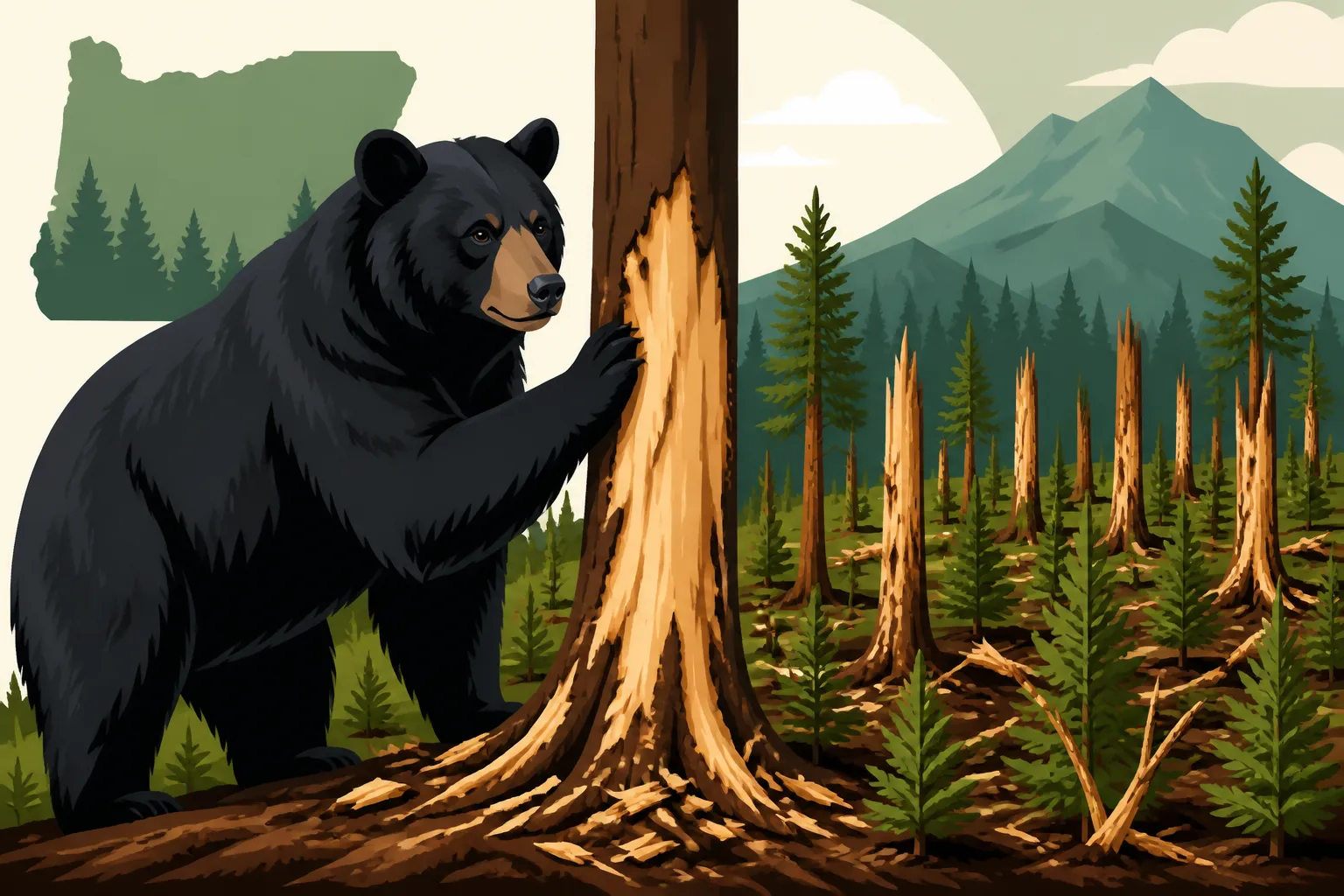
The primary form of bear damage to timber plantations is bark stripping. Bears, particularly black bears, use their teeth to peel away the outer bark of young conifer trees, often in the spring and early summer. You'll typically find long, vertical strips of bark pulled away, exposing the lighter cambium layer underneath. These strips can range from a few inches to several feet in length, sometimes even spiraling around the trunk. The exposed wood will often have distinct tooth marks where the bear used its incisors to get a purchase on the bark. If the damage girdles the tree – meaning it goes all the way around the trunk – that tree is almost certainly doomed. Even partial stripping can severely stunt growth, make the tree susceptible to disease and insects, and ultimately reduce its commercial value. The scars left behind are deep and permanent, deforming the trunk and creating weak points. You might also find claw marks on the upper trunk or branches where the bear climbed to access the bark.
Consider a recent planting in the Coast Range, perhaps near Tillamook State Forest. You’ve got thousands of vigorous young Douglas firs reaching for the sky. You walk through one morning and notice a distinct change – patches of white or light green wood on trees that should be uniformly brown. Closer inspection reveals those tell-tale tooth marks and torn strips of bark hanging down like tattered ribbons. This isn't random; it's specific and deliberate damage, and it’s a clear sign you’re dealing with bears.
When and Where Damage Occurs
Bear damage is highly seasonal, peaking in late spring and early summer, typically from April through July. This timing is crucial because it corresponds to a period when other natural food sources for bears might be scarce or less nutritious, and the cambium layer under the bark is rich in sugars and easily accessible. As the season progresses and berries, forbs, and other food items become abundant, bears generally switch their diet and move away from tree damage.
Geographically, this problem isn't confined to a single corner of Oregon. While it's particularly pronounced in areas with high black bear populations and extensive timber operations, such as the Coast Range, parts of the Cascades, and the Blue Mountains, any area with suitable bear habitat and young timber is vulnerable. Plantations of 10 to 30-year-old conifers, especially Douglas fir, western hemlock, and grand fir, are most commonly targeted. These trees are at a sweet spot: young enough to have tender, palatable cambium but large enough to offer a significant meal. Bears might work an entire stand, moving from tree to tree, or focus on specific "hotspots" within a plantation. If you're scouting for Bear Populations Across Oregon, understanding where and when this damage occurs can give you insight into bear activity patterns.
The Economic Impact of Tree Damage
For timber companies and private landowners, bear damage isn't just an aesthetic issue; it's a significant financial drain. Each damaged tree represents a direct loss in future timber value, as girdled trees die, and scarred trees are downgraded in quality. This translates to reduced yields at harvest time, meaning less revenue from logging operations. Beyond the immediate loss, there are costs associated with replanting damaged areas, which can be substantial, including labor, seedling costs, and site preparation.
Imagine a small private woodlot owner in Western Oregon who has spent years nurturing a stand of timber, seeing it as a long-term investment or even a retirement fund. A severe season of bear damage can wipe out a significant portion of that future value, setting back their financial plans by decades. The frustration is immense, especially since these are long-term crops that take a lifetime to mature. This economic impact affects not just individual landowners, but also the broader timber industry, which is a cornerstone of Oregon's economy.
Why Bears Target Young Trees: Unpacking Their Behavior
It’s easy to get angry at a bear for damaging your trees, but understanding why they do it can help you approach management more effectively. It’s not out of malice; it’s a biological imperative driven by their diet and habitat.
Nutritional Gaps and the Search for Sugars
Black bears are omnivores, and their diet is incredibly diverse, shifting with the seasons. However, in the spring and early summer, they often face a "nutritional gap." They've just emerged from hibernation, their fat reserves are depleted, and the lush, calorie-rich berries and salmon runs of summer are still a ways off. During this lean period, the cambium layer of certain young conifer trees becomes an attractive food source. This soft, inner bark layer is surprisingly rich in carbohydrates (sugars), which provide a quick and easily digestible energy boost for bears at a critical time when they are trying to rebuild their strength and prepare for breeding.
Think of it like a bear's version of a sugary energy drink when other healthy options are scarce. They're not looking for lumber; they're looking for calories. This behavioral pattern is well-documented in studies of Bear Diet Through the Oregon Seasons, showing a clear shift in food preferences as seasonal availability changes. If you’re seeing significant bark stripping, it’s a strong indicator that bears in that area are experiencing a dietary crunch.
Habitat and Preferred Tree Species
Not all trees are equally appealing to a hungry bear. They tend to target specific species that have a palatable cambium, such as Douglas fir, western hemlock, and grand fir. Furthermore, the size and age of the trees matter. Young, vigorously growing trees, typically between 10 and 30 years old, have bark that is thin enough to strip easily but thick enough to offer a substantial amount of cambium. Older trees have tougher, thicker bark, while very young seedlings don't provide enough reward for the effort.
Bear habitat also plays a critical role. Areas with a mix of dense timber, open clearcuts, and nearby water sources provide ideal conditions for bears. Plantations located near good cover, such as dense second-growth or brushy riparian zones, are often more vulnerable because bears can access the trees while remaining close to escape routes and bedding areas. The presence of these elements means bears can easily move into and out of the damaged areas undetected. This interplay between food availability, tree characteristics, and habitat suitability creates the perfect storm for timber damage.
Population Dynamics and Damage Severity
The severity of bear damage can often be correlated with local black bear population densities. In areas where bear numbers are high, competition for food sources can increase, driving more bears to seek alternative sustenance like tree cambium. Environmental factors, such as particularly cold or wet springs that delay the ripening of natural foods, can also exacerbate the problem, pushing bears towards timber earlier in the season and for longer durations.
However, it's not simply about total bear numbers. A certain percentage of individual bears are "problem bears" that develop a habit of stripping bark, and they can cause a disproportionate amount of damage. Once a bear learns this behavior, it may return to the same areas year after year. Understanding these dynamics can inform management decisions, helping to identify areas where targeted efforts might be most effective. GoHunt's mapping tools can be invaluable here, helping to overlay bear habitat data with timber plantation locations to identify potential conflict zones.
Strategies for Mitigating Bear Damage on Timberlands
Dealing with bear damage requires a multi-faceted approach, balancing wildlife management with timber production goals. There's no single magic bullet, but a combination of deterrents and management tools can help reduce the impact.
Deterrent Methods and Their Effectiveness
Several non-lethal deterrent methods have been explored to prevent bear damage. These range from physical barriers to chemical repellents, though their effectiveness can vary greatly and often comes with significant cost and labor.
- Fencing: Installing bear-proof fencing around plantations can be effective but is incredibly expensive and impractical for large-scale operations. It’s usually only feasible for small, high-value nursery plots.
- Repellents: Some landowners experiment with chemical repellents, often derived from predator urine or capsaicin (chili pepper extract). While these might deter a bear initially, their effectiveness often wanes over time, especially after rainfall, requiring frequent reapplication. Bears are intelligent and adaptable, quickly learning if a deterrent poses a real threat or just an inconvenience.
- Alternative Food Sources: In some cases, providing alternative food sources has been considered, but this is a complex and often controversial strategy. It can unintentionally concentrate bears, lead to habituation, and potentially create more problems than it solves. It's generally not recommended for wild bear populations.
- Silvicultural Practices: Modifying planting densities or encouraging the growth of non-preferred tree species in certain buffer zones might offer some long-term, landscape-level benefits, but these are large-scale changes that take time to implement and show results.
Ultimately, these deterrents often prove cost-prohibitive or have limited long-term success on the vast acreages of Oregon's timberlands.
Targeted Bear Hunting as a Management Tool
One of the most effective and widely used strategies for mitigating bear damage, particularly in commercial timberlands, is targeted hunting. In areas experiencing significant damage, increasing hunting pressure can help manage bear populations, reduce densities, and specifically remove individual bears that have developed a habit of bark stripping.
Oregon has both spring and fall general bear seasons, and these can be crucial opportunities for landowners and hunters to help address the issue. Unlike states that allow baiting, Why Oregon Bear Hunters Cannot Use Bait, hunters in Oregon rely on methods like Spot-and-Stalk Spring Bear on Oregon's Green Slopes or still-hunting to find bears. This requires skill and knowledge of bear behavior and habitat. By targeting bears in affected areas during the appropriate seasons, hunters contribute directly to reducing timber damage. Landowners, in cooperation with wildlife agencies, can also sometimes issue damage tags to specific individuals to remove problem bears outside of general seasons, though this is typically a last resort for severe cases.
Table: Comparing Bear Damage Mitigation Strategies
| Strategy | Primary Method | Advantages | Disadvantages | Best Application |
|---|---|---|---|---|
| Targeted Hunting | Regulated harvest of black bears | Reduces population, removes problem individuals | Requires hunter access, public perception, not 100% | Large timberlands, chronic damage areas |
| Fencing | Physical barrier | Highly effective if bear-proof and maintained | Very expensive, labor-intensive, aesthetic impact | Small, high-value plots, nurseries |
| Chemical Repellents | Scent/taste deterrents | Non-lethal, easy initial application | Limited effectiveness, short-lived, reapplication | Small areas, temporary solutions, low pressure |
| Silvicultural Practices | Tree species choice, density management | Long-term, habitat-level solution | Slow to implement, takes years for results | Integrated forest management plans |
| Harassment (e.g., hazing) | Scaring bears away | Non-lethal, can be immediate | Bears habituate quickly, labor-intensive | Temporary, nuisance bears, high-traffic areas |
For hunters interested in assisting with bear management, knowing the Oregon Spring and Fall Bear Seasons is vital. Tools like GoHunt can help you e-scout and identify potential bear habitat overlapping with timber plantations where damage might be occurring, helping you plan your hunt more effectively. Information on Black Bear Populations Across Oregon can further inform where to focus efforts.
Collaborative Management Efforts
Solving the issue of bear damage to timber isn't just up to individual landowners or hunters; it often requires a collaborative effort between timber companies, state wildlife agencies like the Oregon Department of Fish and Wildlife (ODFW), and conservation groups. ODFW monitors bear populations and sets hunting regulations, taking into account various factors including potential timber damage. Timber companies can implement management practices that consider wildlife habitat while still pursuing their economic goals.
For example, large industrial timberland owners sometimes participate in access programs or offer permits, which can increase hunter access and help manage bear numbers. Hunting Private Timber Land With a Permit can be an excellent way for hunters to access prime bear habitat while helping landowners protect their investments. These partnerships ensure that bear populations are managed sustainably, providing hunting opportunities while also minimizing negative impacts on other industries. Sharing data and research on bear movements and damage patterns can help refine strategies over time.
The Broader Ecological Picture: Bears, Timber, and Ecosystem Health
Understanding bear damage isn’t just about the trees or the bears; it’s about the intricate balance of Oregon's diverse ecosystems. Effective management means looking at the bigger picture and striving for coexistence.
Balancing Timber Production with Wildlife Needs
Oregon's landscapes are a mosaic of working forests, wildlife habitats, and human communities. The challenge lies in finding a balance where timber production can thrive while also supporting healthy wildlife populations, including black bears. When bears are excessively damaging timber, it signals an imbalance, often stemming from specific seasonal food shortages or localized bear densities.
Responsible forest management increasingly incorporates wildlife considerations. This might involve leaving wildlife corridors, retaining certain old-growth structures, or creating diverse forest stands that offer a broader range of natural food sources for bears and other wildlife. For instance, promoting berry-producing shrubs or mast-producing hardwoods in certain areas could potentially divert bears from timber plantations. However, these are long-term strategies that require careful planning and often come with trade-offs. It's a continuous effort to ensure that our forests remain both economically productive and ecologically rich.
The Role of Hunters in Sustainable Management
Hunters are often the most direct and effective tool in managing wildlife populations, and their role in addressing bear damage to timber is significant. Through regulated hunting seasons, hunters help maintain bear populations at healthy levels, preventing overpopulation in specific areas that could lead to increased timber damage. They are also often the "eyes and ears" on the ground, reporting observations of damage or high bear activity to landowners or ODFW.
Consider a hunter who uses E-Scouting Oregon Units With Satellite Imagery to identify potential bear habitat and then follows up with Public Land Scouting in Oregon Before the Draw Results. If they find extensive bear sign and evidence of bark stripping, they not only gain valuable intel for their hunt but also indirectly contribute to a broader understanding of the issue. By participating in ethical and legal hunting practices, hunters become active conservationists, directly contributing to the health of both the ecosystem and the timber industry.
Long-Term Solutions for Coexistence
Ultimately, the goal is to foster coexistence between black bears and timber operations. This means moving beyond reactive measures to proactive, integrated management strategies. Research into bear behavior, particularly into what drives individual bears to become "problem" bark strippers, is ongoing. Understanding the nutritional needs of bears, the specific conditions that trigger bark stripping, and how different silvicultural practices might influence bear behavior can lead to more effective long-term solutions.
This might involve experimenting with different tree species in vulnerable areas, adjusting harvest cycles, or developing more sophisticated, species-specific deterrents. It also means continuing to support robust hunting seasons as a primary management tool. The conversation about bear damage to timber plantations is complex, touching on economics, ecology, and human-wildlife interactions. By staying informed, collaborating, and employing a range of strategies, we can work towards a future where both Oregon's timber industry and its black bear populations can thrive.
Disclaimer
This article is for general informational purposes only and does not constitute professional advice. Laws, prices and regulations vary by location and change over time. Consult a qualified professional for guidance on your specific situation.