What a Cougar Kills in a Year
It's a question many Oregon hunters and outdoor enthusiasts ponder: just how many animals does a cougar take down in a year? This isn't just a matter of morbid curiosity; understanding the feeding habits of these elusive predators is crucial for appreciating their role in our state's ecosystems and can even influence our own hunting strategies. This guide will dive deep into the diet of Oregon's cougars, the factors that shape their annual kill count, and what that means for our deer and elk populations.
The Apex Predator's Diet: Understanding Cougar Ecology in Oregon
Cougars, often referred to as mountain lions or pumas, are the largest feline predators in Oregon, and they truly sit at the top of the food chain. Their presence is a sign of a healthy ecosystem, even if their predatory prowess can sometimes feel intimidating to hunters hoping to fill their tags. These magnificent cats are incredibly adaptable, thriving across diverse habitats from the dense coastal rainforests to the arid high desert of Eastern Oregon.
Generalist vs. Specialist: Why Cougars Aren't Picky Eaters
While cougars are often considered specialists in hunting deer, they are, in truth, quite the generalists when it comes to their diet. This means they'll take advantage of whatever prey is most readily available, making them highly effective hunters in varied environments. Their agility, strength, and stealth allow them to tackle a wide range of animals.
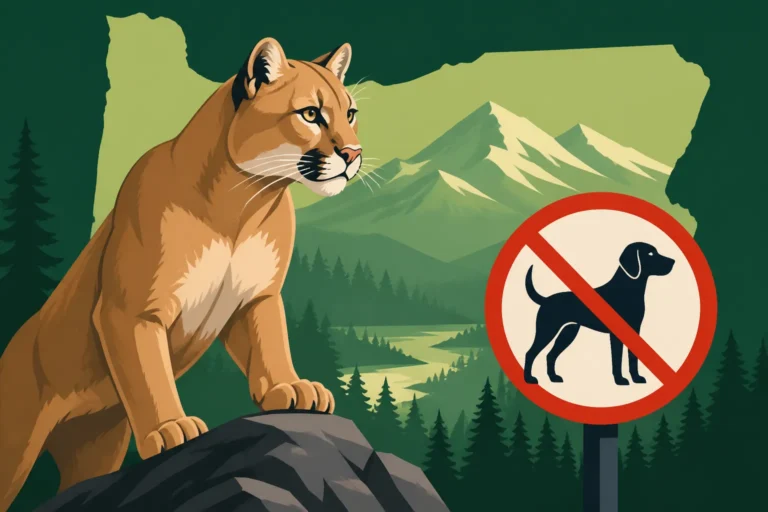
Think of a cougar stalking through a dense thicket of salal in the Coast Range. While their primary focus might be a Columbian blacktail deer, if they encounter a healthy porcupine or a band of turkeys, they won't necessarily pass up the opportunity. This adaptability is key to their survival and explains why they've managed to maintain strong populations across the state, even after changes like the Why Oregon Cougar Hunters Cannot Use Hounds. They're not just waiting for one specific meal; they're constantly assessing the landscape for any potential food source that presents itself.
Oregon's Primary Prey Species for Cougars
Despite their generalist tendencies, certain species form the cornerstone of a cougar's diet in Oregon. The overwhelming majority of their kills consist of deer and elk, which provide the substantial caloric intake necessary to sustain such a large predator.
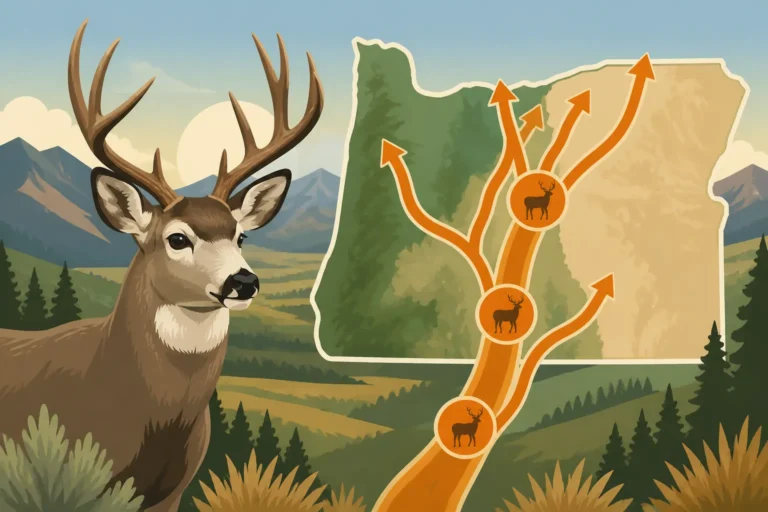
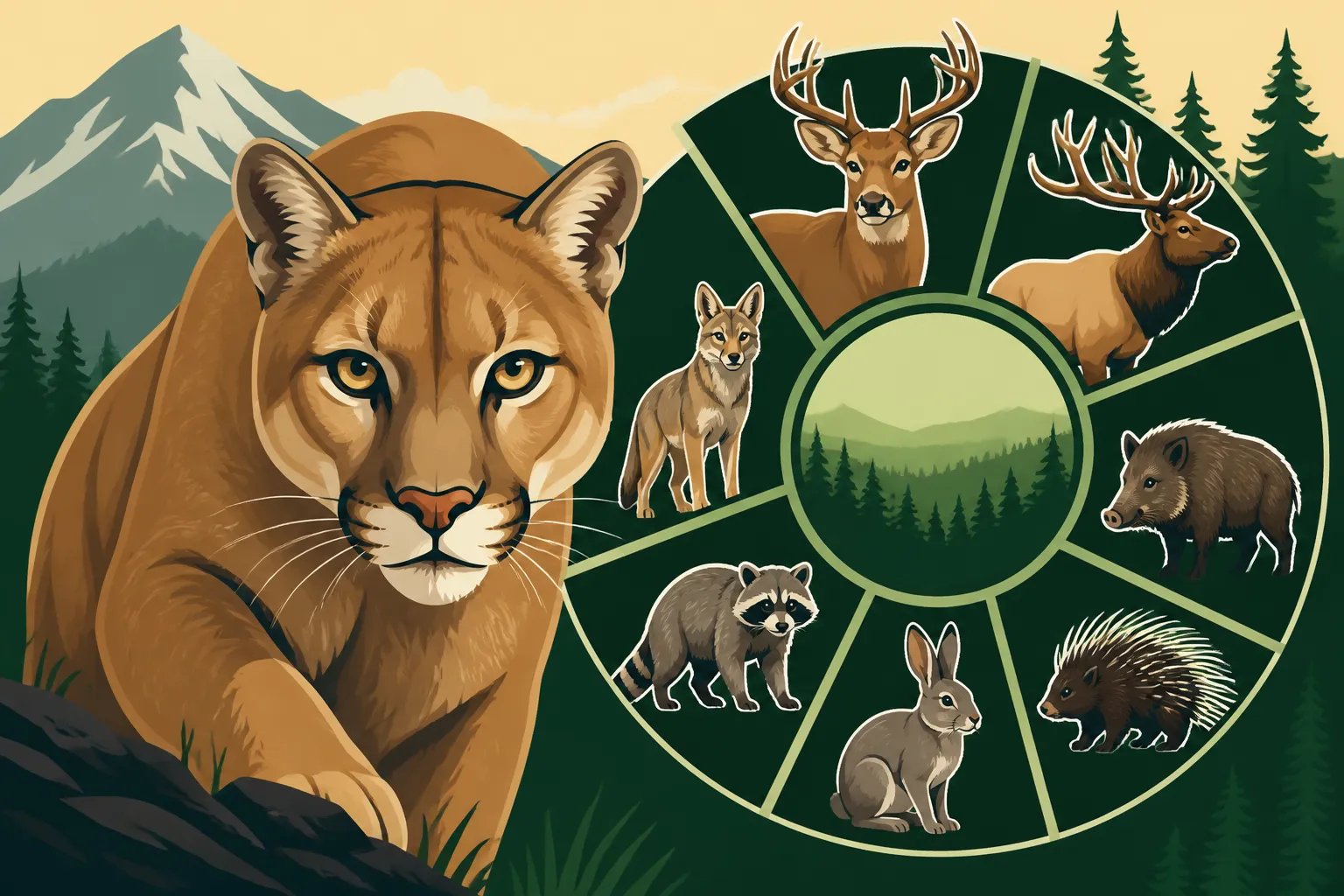
In Western Oregon, the Columbian blacktail deer is undoubtedly the cougar's main course. These deer thrive in the same dense, brushy terrain that cougars prefer, creating ample opportunities for ambush. A cougar might target an unsuspecting buck browsing on a clearcut edge or a doe moving through a timber stand. Over in Eastern Oregon, where mule deer are more prevalent, those become the primary target. We've seen shifts in deer populations over the years, and understanding the role of predators like cougars is part of the ongoing conversation about Oregon Mule Deer and the Herd Range Decline. Beyond deer, cougars are significant predators of elk, particularly calves. Young elk, especially during the vulnerable calving season, represent an easier target than a full-grown bull. While adult elk are formidable, a cougar will occasionally take down a sick, old, or otherwise weakened adult. Occasionally, a cougar might supplement its diet with smaller mammals like rabbits, raccoons, or even coyotes, and birds, but these typically don't sustain them long-term.
The Numbers Game: How Often Cougars Kill and What Influences It
Trying to put an exact number on how many animals a cougar kills in a year is like trying to count raindrops in a thunderstorm – it's incredibly complex and varies wildly. However, wildlife biologists have made significant strides in estimating these figures through various research methods, giving us a clearer picture of their predatory rhythm.
Estimating Kill Rates: A Complex Equation
There's no single, definitive answer to how many animals a cougar kills annually because it's influenced by so many dynamic variables. Imagine a young, inexperienced cougar trying to learn the ropes compared to an old, savvy tom with a lifetime of hunting under his belt; their success rates will be vastly different. The reproductive status of a female cougar also plays a huge role. A solitary male might kill every 10-14 days, but a female with multiple hungry cubs could be killing every 3-5 days to meet the increased energy demands of her offspring.
Wildlife researchers often use sophisticated tools like GPS collars to track cougar movements and identify kill sites. By revisiting these sites, they can determine what was killed, how much was consumed, and estimate the interval between kills. This kind of data provides invaluable insights into Oregon Cougar Population Estimates and their impact. While these studies provide estimates, it’s important to remember they are averages, and individual cougars will deviate from these norms based on their unique circumstances and hunting prowess.
Factors Affecting a Cougar's Annual Kill Count
Several environmental and individual factors profoundly impact how many animals a cougar will dispatch over a year. It's a dance between the predator's needs and the opportunities presented by its environment.
- Habitat Richness: The type of habitat a cougar occupies makes a huge difference. In areas with abundant, easily accessible prey and plenty of cover for ambushing, a cougar might kill more frequently. Think of the dense, brushy clearcuts of the Coast Range, which offer both excellent cover and prime blacktail deer habitat. Conversely, in more open, sparse environments with lower prey density, a cougar might have to work harder and kill less often, covering greater distances, which ties into understanding Cougar Territory Size and Movement.
- Prey Availability and Density: This is perhaps the most significant factor. If deer and elk populations are robust in a particular area, cougars will naturally have more success. Conversely, if prey numbers are low due to habitat loss, harsh winters, or other factors, cougars will struggle and their kill rates might decline, or they might turn to less common prey. When you're scouting new areas, using tools like GoHunt can help you visualize areas with dense cover and potential prey concentrations, giving you an edge in understanding the ecosystem dynamics.
- Seasonality: The time of year impacts kill rates significantly. During spring, when deer and elk are dropping fawns and calves, these vulnerable young animals become easy targets, leading to a spike in kills. This is a critical period for Elk Calf Survival and Predation in Oregon and deer fawn recruitment. Harsh winters can also concentrate prey, making them easier to hunt, especially when deep snow limits their mobility.
- Individual Cougar Traits: As mentioned earlier, age, sex, and experience are crucial. A prime-age male cougar is likely a more efficient killer than a juvenile or an old, ailing animal. Females raising cubs have to kill far more frequently to feed their growing family. A hunter looking to understand how these factors interact might use resources like GoHunt's mapping features to overlay habitat types with known game ranges, helping them predict where cougars, and thus their prey, might be active. For instance, knowing how to interpret E-Scouting Oregon Units With Satellite Imagery can reveal prime cougar ambush spots.
| Factor | Impact on Cougar Kill Rate | Notes |
|---|---|---|
| Prey Density | High density = More kills | Less effort for cougar to find and ambush prey |
| Cougar's Age/Health | Prime, healthy cougars = More successful kills | Young or old/injured cougars have lower success rates |
| Reproductive Status | Females with cubs = Significantly more kills | Need to feed multiple offspring; higher energy demand |
| Habitat Complexity | Dense cover = More kills (ambush opportunities) | Open terrain requires more effort, less successful ambushes |
| Seasonality | Spring (fawning/calving) = Spike in kills | Vulnerable young prey; easier targets |
| Winter Severity | Deep snow/cold = Can increase kills (concentrated/weakened prey) | Can also make hunting harder for cougar if prey is too dispersed |
Beyond the Immediate Kill: Consumption, Scavenging, and Impact
When a cougar makes a kill, it's not just the end of one animal's life; it's the beginning of a complex chain reaction that involves many other creatures in the ecosystem. Understanding what happens after the kill paints a fuller picture of the cougar's impact.
Eating Habits and Carcass Utilization
Cougars are typically solitary hunters and, once they've secured a kill, they'll usually try to consume a significant portion of it. Unlike wolves, which often hunt in packs and can consume a large animal quickly with their group, a lone cougar needs to protect its meal. They often drag their kill to a secluded spot, then cache or bury the remains with leaves, dirt, or snow to protect it from scavengers.
They will return to this cache over several days, feeding until much of the usable meat is gone. However, cougars are not always able to consume an entire carcass, especially larger animals like elk. This is where other scavengers come into play. Coyotes, bears (when not denning), bobcats, eagles, and a myriad of smaller creatures will all benefit from a cougar's leftovers. This natural recycling of nutrients is a vital part of ecosystem health. Sometimes, when a hunter finds a partially consumed deer or elk that has been covered, it's often a cougar's cached meal. Knowing what to look for can help in Identifying Cougar Tracks From Dog Tracks around such sites.
Cougar Predation and its Role in Oregon's Ecosystems
The impact of cougar predation extends far beyond the individual animals they kill. Cougars play a critical role in maintaining the health and balance of Oregon's deer and elk herds. They are natural selective pressures, often targeting the weakest, sickest, or oldest animals in a herd. This 'culling' helps to prevent the spread of disease, strengthen the genetic pool of prey populations, and keep herd sizes in check relative to available habitat.
While some hunters might feel that cougars are directly competing with them for game, it's more accurate to view them as a natural management tool. Their presence forces prey animals to be more vigilant, to move more, and to utilize a wider range of habitat, which can lead to healthier, more resilient herds overall. The relationship between predators and prey is complex, and many studies delve into Cougar Prey and Deer Herd Impact to understand these dynamics. In some areas, high cougar densities combined with other factors like habitat loss or harsh winters can contribute to declines in specific deer or elk populations, prompting wildlife managers to adjust cougar harvest quotas.
What This Means for Oregon Hunters and Wildlife Management
For those of us who hunt in Oregon, understanding cougars isn't just academic; it can influence our strategies in the field. Beyond that, cougars are a managed species, and their presence impacts how wildlife agencies approach conservation.
Understanding Cougar Behavior for Better Hunting Strategy
Knowing how cougars hunt and what they target can indirectly help you become a more effective deer or elk hunter. For instance, if you're hunting in an area with a known cougar presence, you might expect deer to be more wary, move through thicker cover, or use different bedding areas than in areas with less predation pressure. This vigilance means you need to hone your own stealth and observation skills.
Consider this: if cougars are primarily targeting fawns and calves in the spring, it might mean that mature deer and elk have developed stronger survival instincts. If you're planning an archery hunt, understanding these dynamics can help you choose a more productive area or adjust your calling strategy. For example, learning Cougar Calling Techniques That Work in Oregon might be useful if you're targeting cougars, but understanding why deer react nervously to certain sounds can inform your deer calling as well. When you're glassing a clearcut for blacktail bucks, remember that the edges of that clearcut are also prime ambush spots for a cougar. You might find it beneficial to explore how these animals interact, especially if you're considering Cougar Hunting While Deer Hunting on the Same Trip.
Coexisting with Cougars: Safety and Management Efforts
Living and recreating in Oregon means sharing the landscape with cougars. While attacks on humans are extremely rare, it's always wise to be "cougar aware," especially in prime cougar habitat. This means hiking in groups, keeping children and pets close, and knowing how to react if you encounter a cougar (make yourself look big, make noise, don't run).
From a wildlife management perspective, the Oregon Department of Fish and Wildlife (ODFW) actively monitors cougar populations. They set quotas and regulations to ensure healthy cougar numbers while also addressing conflicts with livestock and domestic animals, or localized impacts on big game populations. These management decisions are based on ongoing research, population estimates, and public input, aiming for a balance that supports healthy ecosystems and human-wildlife coexistence. For hunters, knowing these regulations is key, as they dictate everything from tag availability to season dates.
Disclaimer
This article is for general informational purposes only and does not constitute professional advice. Laws, prices and regulations vary by location and change over time. Consult a qualified professional for guidance on your specific situation.