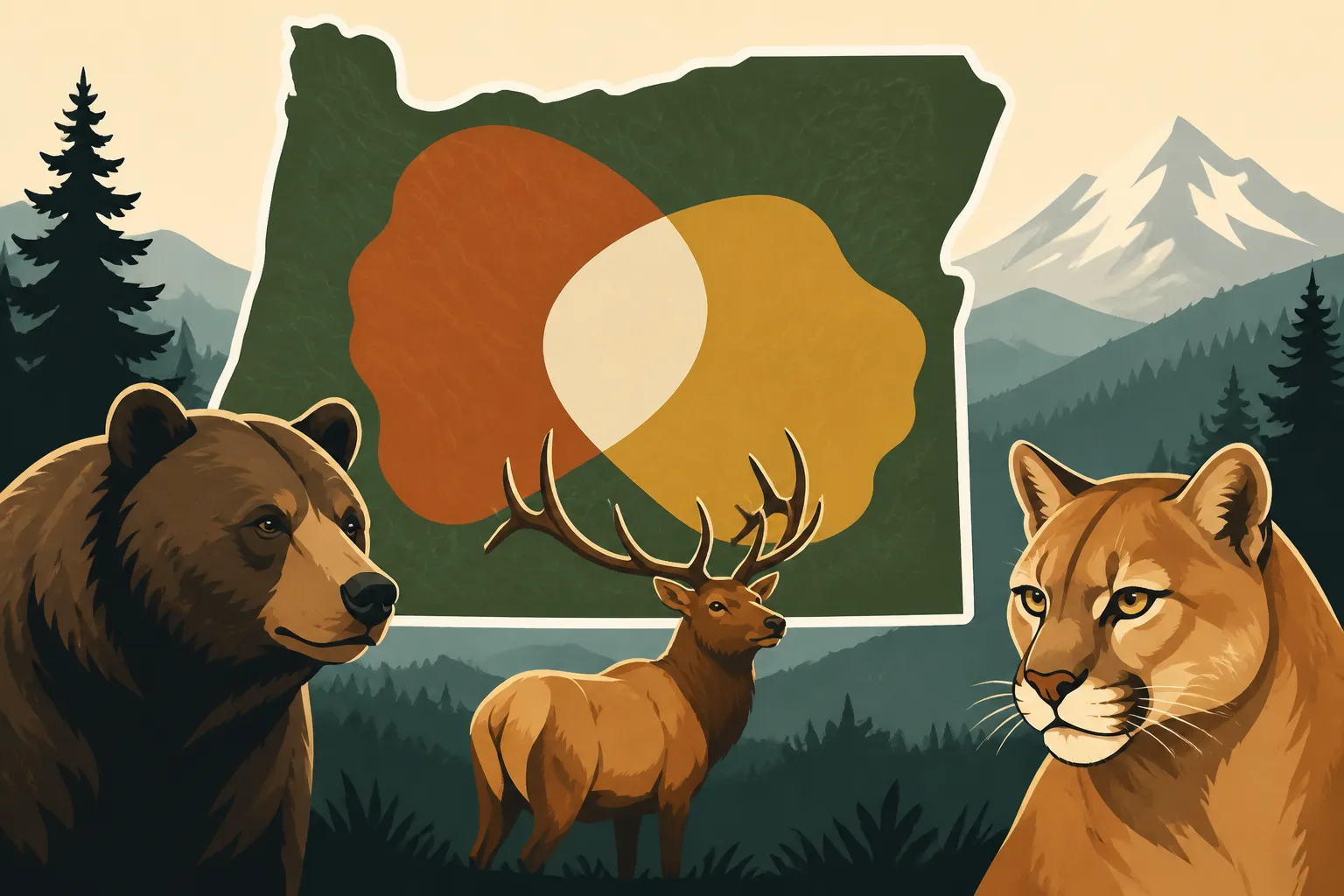
Bear and Cougar Overlap With Elk Range
There’s a unique challenge many of us face when chasing elk through Oregon's dense timber or across its vast eastern plains: the knowledge that we're not just sharing the woods with elk, but also with their most formidable predators. It can be unnerving, feeling like you're constantly looking over your shoulder, but understanding the intricate overlap between bear, cougar, and elk habitat isn't just about safety; it's a critical component of becoming a more effective and aware hunter. This guide will walk you through why these magnificent animals often occupy the same spaces and how you can leverage that knowledge to your advantage, while staying safe in the process.
The Inevitable Overlap: Why Predators and Prey Share Space
When you're out hunting elk in Oregon, whether it's the giant Roosevelt bulls of the Coast Range or the Rocky Mountain elk in the Blue Mountains, you're squarely in the living room of black bears and cougars, too. It’s not a coincidence; it’s a fundamental ecological truth. Predators don't just wander randomly; they go where the food is, and for bears and cougars, elk, especially calves and vulnerable adults, represent a significant part of their diet.
Habitat Preferences: What Draws Them Together
Think about what an elk needs: abundant forage, water sources, and protective cover for bedding and calving. Places like the mosaic of clearcuts and regenerating timber in Western Oregon, or the juniper-studded draws and rimrock country of the east, offer precisely these things. These environments aren't just perfect for elk; they're also prime real estate for bears and cougars. Bears, for instance, thrive in areas with diverse vegetation where they can find berries, grubs, and the occasional carrion, all of which are plentiful in healthy elk habitat. Cougars, on the other hand, are ambush predators, and they need dense cover – thickets, downed timber, rocky outcrops – to stalk their prey effectively. Guess what? Elk need that same cover to feel secure. The same creek bottom that funnels elk down to water is often a natural travel corridor for a cougar. The dense canopy of an old-growth forest, while offering refuge for a bull, also provides ideal concealment for a stalking cat. This shared need for water, cover, and food creates a natural convergence zone.
You might be deep in the Calling Roosevelt Elk in Oregon Rainforest Timber and suddenly notice claw marks high on a tree, or find some bear scat rich with berries. These aren't anomalies; they're just signs that you're in a rich ecosystem that supports all its players. This intimate connection means that if you've found good elk sign, you've likely found good predator sign, even if you don't immediately recognize it.
Food Chain Dynamics: Elk as a Primary Food Source
Let's be blunt: elk are a meal ticket for bears and cougars. While black bears are often opportunistic omnivores, happy to munch on huckleberries or raid an ant hill, they certainly won't pass up an easy protein source. Elk calves, especially during the spring and early summer, are highly vulnerable. A bear might stumble upon a hidden calf and make a quick meal of it. Even adult elk, particularly those weakened by winter or disease, can fall prey to a bear.
Cougars, however, are far more specialized predators when it comes to elk. Their entire hunting strategy revolves around taking down large ungulates. An adult cow or even a sub-legal bull can provide a cougar with several days' worth of food. They will often follow elk herds, patiently waiting for the right moment or targeting an isolated individual. If you're out Archery Elk Hunting Oregon's August and September Seasons, remember that cougars are also keying in on those same groups of elk. A fresh elk carcass, even one that's been scavenged, is a huge draw for both bears and cougars. This makes finding old kill sites an indicator, not just of a cougar's presence, but also of where elk might have been recently. Understanding Elk Calf Survival and Predation in Oregon reveals just how significant predators are to herd dynamics.
Understanding Bear and Cougar Behavior in Elk Country
Knowing that bears and cougars are in elk country is one thing; understanding how they behave there is another entirely. This knowledge is paramount for any hunter navigating Oregon's wild spaces. Their habits directly influence your safety and your hunting strategy.
Bear Habits in Elk Range
Oregon's black bears are incredibly adaptable, and their behavior shifts significantly with the seasons and the specific region. In the lush Coast Range, where rainfall is plentiful and berry bushes proliferate, bears might spend more time foraging for vegetation and insects. However, come spring, as elk calves are being born, these bears are keenly aware of the opportunity for an easy meal. During late summer and fall, when berries like huckleberries and salal ripen, bears can be found gorging themselves in the same clearcuts and forest edges where elk also feed. This seasonal shift means your chances of encountering a bear can vary.
When you're still-hunting through thick timber or working a clearcut edge, remember that bears often use the same game trails as elk. They're curious animals, but generally more interested in avoiding you than confronting you. Look for signs like fresh tracks in muddy areas, overturned rocks or logs from foraging, and, of course, scat. Bear scat can tell you a lot about their diet and how recently they've been in the area. If it's full of berries, they're likely focused on food, but if you find hair and bone fragments, it's a sign they've been feeding on meat. In areas where bears are more accustomed to human presence, perhaps near hiking trails or popular camping spots, they might be less shy. Always make noise when moving through dense cover, especially near water sources or food plots, to avoid surprising a bear. For more on these incredible animals, check out Oregon Black Bears in the Coast Range and Cascades.
Cougar Habits in Elk Range
Cougars are the ultimate stealth predators, and their presence is often felt more than seen. Unlike bears, which can be fairly noisy while foraging, cougars move through the forest like ghosts. They are masters of ambush, preferring to stalk and pounce from close range, often breaking the neck of their prey. This means they are almost always found in areas with sufficient cover – dense underbrush, rocky ledges, or blowdown thickets – perfect for staging an attack. If you're in an area that feels "tight" and offers good concealment, a cougar might be watching.
Cougars are highly territorial, and a mature tom might have a home range that spans hundreds of square miles, often overlapping with several elk herds. They are attracted to areas with high elk density, and will follow the herds' movements seasonally. When you're trying Oregon Elk Hunting Tactics for the November Rifle Seasons, remember that the cougars are also tracking those same elk. Look for definitive cougar tracks – they're typically rounder than a dog's, with no claw marks visible (unless they're slipping), and their stride is very direct. Scat often contains large amounts of hair and bone, and sometimes you'll find "scrapes" – small piles of dirt and debris that male cougars use to mark their territory. Pay attention to any unusual sounds from other wildlife, like agitated birds or deer snorting, as these can be indicators of a predator in the vicinity. Cougars in Oregon After the Hound Ban details more about their current status.
Here's a quick comparison of common signs:
| Sign Type | Black Bear | Cougar |
|---|---|---|
| Tracks | Larger, wider, distinct toe pads, claw marks often visible; pigeon-toed walk. | Rounder, no claw marks (usually), more symmetrical toe pads; direct register walk. |
| Scat | Variable; often contains berries, nuts, insects, grass; can also contain hair/bone. | Almost exclusively hair and bone from prey; distinct segments. |
| Tree Marks | Claw marks (climbing), rubs on trees (scratching post). | Scratches on logs or trees (sharpening claws), occasional urine sprays. |
| Kill Sites | Often messy, prey partially consumed, viscera scattered. | Prey usually dragged to cover, carefully cached, often covered with debris for later feeding. |
| Sounds | Grunts, snorts, jaw popping; cubs whimper. | Rarely vocal; growls, hisses, purrs; some communicate with chirps. |
Strategies for Hunters in Overlap Zones
Hunting in Oregon means being prepared for anything, especially when you're in prime elk habitat that also supports healthy populations of bears and cougars. It's not about being afraid, but about being aware and proactive. Incorporating predator awareness into your routine makes you a more complete woodsman.
Enhanced Situational Awareness
The most crucial strategy you can adopt is heightened situational awareness. This goes beyond just looking for elk. Train yourself to look for the subtle clues that indicate the presence of bears or cougars. Are there fresh tracks along the creek bottom? Is there a peculiar smell in the air that suggests an animal kill or strong musk? Using quality optics, like those you might use for Glassing Sage and Juniper for Eastern Oregon Mule Deer, can also help you spot movement or signs from a distance, not just of your target species but also potential predators.
Always carry bear spray, especially when traveling in dense cover or when alone. Know how to access it quickly and how to use it effectively. When hiking in, consider making noise – singing, talking loudly, or wearing a bell – to alert animals to your presence and prevent a surprise encounter. This is especially true if you are Still-Hunting Blacktails in Wet Oregon Coastal Brush where visibility is often limited. Being alert also means understanding animal body language; a bear standing on its hind legs is likely curious, not aggressive. A cougar may disappear before you ever know it was there, but knowing the signs of its recent activity can influence your path. Think about your approach to a harvested animal. A downed elk can draw predators in quickly. When approaching a kill, make sure to do so cautiously, making noise and scanning the area, particularly if you leave it overnight. Having a partner with you is also a significant advantage in these situations. And absolutely, always pack a First Aid Kit Items for a Remote Hunt.
Adapting Hunting Tactics
Understanding predator overlap can actually refine your elk hunting tactics. For instance, if you stumble upon a fresh cougar kill, it tells you a few things: there are cougars in the area, and more importantly, there were elk there recently. While you don't want to disturb a kill site, observing it from a safe distance can provide valuable insight into elk travel patterns or preferred bedding areas. If the kill is very fresh, it’s a sign that the cougar is likely nearby and may return.
Consider your calling strategy. If you're doing aggressive Cow Calling Versus Bugling in Heavy Timber, you're not just signaling to bulls; you could be drawing in a curious bear or cougar. While this rarely leads to an aggressive encounter, it's something to be mindful of. Sometimes, a predator's presence can even push elk into unexpected areas, forcing them to be more vigilant and less predictable, which can be both a challenge and an opportunity. A valuable tip is to use digital mapping tools like GoHunt. You can layer public land boundaries, historical burn areas, and even general vegetation types to predict where elk will be, and by extension, where their predators will be lurking. This helps you identify natural pinch points or dense cover that might serve as ambush points for a cougar.
Using Resources to Pinpoint Overlap Areas
Becoming proficient at hunting in Oregon’s diverse landscapes means leveraging every tool at your disposal. This includes not just your woodsmanship skills but also modern technology and invaluable local knowledge. Identifying where bear and cougar ranges precisely overlap with elk areas can be the difference between a successful, safe hunt and one fraught with uncertainty.
Maps and Digital Tools for Predator Hotspots
Gone are the days when a paper map was your only guide (though you should always carry one as a backup!). Today, powerful digital mapping applications have revolutionized how hunters scout and navigate. Services like GoHunt allow you to dissect a unit down to incredible detail. You can use these tools to identify prime habitat for all three species. Look for key features that appeal to both prey and predator: dense conifer stands, riparian areas, steep canyons, and large tracts of undisturbed timber. A dense north-facing slope might be excellent bedding for elk, but it's also perfect for a cougar to set an ambush. Clear, detailed satellite imagery on platforms like GoHunt can help you visualize these areas, marking potential ambush points or travel corridors.
Consider using layers that show timber harvest history. Two-to-ten-year-old clearcuts are often phenomenal for elk forage, drawing them in. But the edge of those clearcuts, bordering older timber, is a classic location for cougars to lurk, waiting for elk to step out. Bears will also frequent these edges, foraging on berries and grasses that thrive in the open. By meticulously scouting these digital maps, you can arrive in the field with a much clearer understanding of not just where the elk might be, but also where you might encounter their natural adversaries. This level of preparation reduces surprises and enhances your overall confidence.
Local Knowledge and ODFW Reports
While digital maps are fantastic, nothing truly replaces on-the-ground intelligence. This comes from two main sources: experienced locals and official wildlife agencies. Don't underestimate the value of striking up a conversation with a seasoned hunter at a local diner or gear shop, especially if they've been hunting the area for decades. They often possess an encyclopedic knowledge of game movements, including subtle nuances about where predators tend to den, cross, or target prey in specific conditions. They might share stories of seeing cougars near particular waterholes or fresh bear sign in a certain canyon.
Furthermore, the Oregon Department of Fish and Wildlife (ODFW) publishes annual hunt statistics and unit-specific reports. While these primarily focus on elk harvest, they often contain valuable context about predator populations. Look for any mentions of bear or cougar harvest numbers within specific units or regions. These reports can indicate a robust predator population, signaling that you should be extra vigilant. Sometimes, biologists might comment on particular areas with higher predator activity. Visiting the local ODFW office or calling a wildlife biologist for your specific unit can provide insights that aren't readily available online. They understand Elk Herd Numbers by Region and can often give you specific advice on managing potential predator encounters in those areas. This combination of technological scouting and human intelligence paints the most comprehensive picture for any hunter.
Disclaimer
This article is for general informational purposes only and does not constitute professional advice. Laws, prices and regulations vary by location and change over time. Consult a qualified professional for guidance on your specific situation.