Why Roosevelt Bulls Bugle Less Than Rocky Mountain Bulls
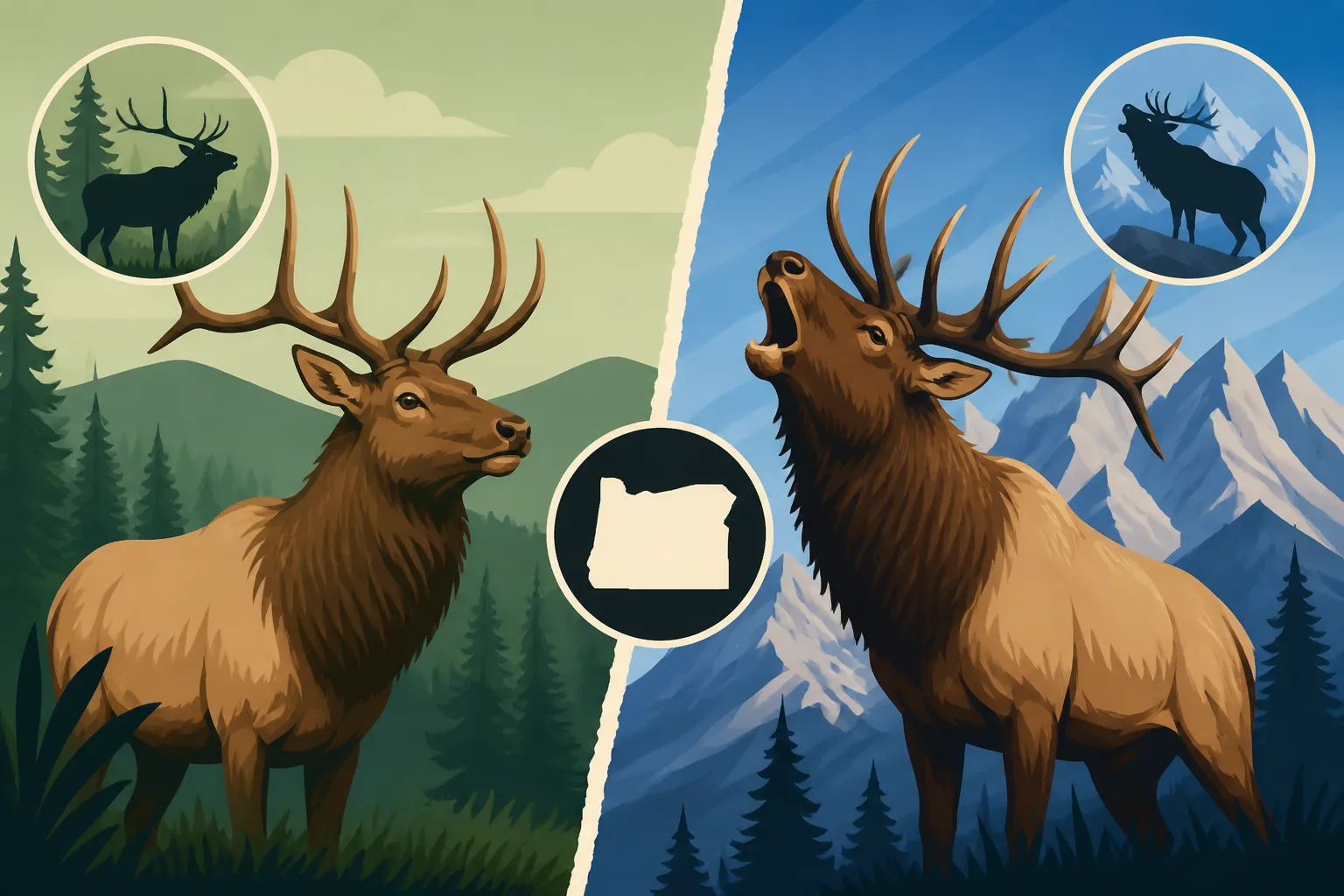
Ever spent hours trying to strike a bull elk in Oregon's dense Coast Range, only to be met with frustrating silence? Meanwhile, you hear tales from eastern Oregon or other Rocky Mountain states where bulls seem to bugle non-stop, practically inviting hunters in. It’s a common observation and a real head-scratcher for many hunters, especially those new to hunting Oregon's varied landscapes. This guide will delve deep into the nuanced reasons why Roosevelt bulls in Oregon tend to be significantly less vocal and publicly expressive than their Rocky Mountain counterparts, helping you understand their behavior and adjust your hunting strategy.
The Influence of Habitat and Terrain on Elk Vocalizations
One of the most profound factors dictating the vocal behavior of elk is the environment they call home. Oregon is a state of dramatic contrasts, from the soaking wet, dense rainforests of the Coast Range to the vast, arid sagebrush country and timbered mountains of eastern Oregon. These vastly different habitats naturally foster different behaviors, especially when it comes to communication.
Dense Cover Limits Sound Travel
Imagine trying to shout across a football field versus trying to communicate with someone in a dense thicket of blackberry bushes and alder. The difference is stark, right? Roosevelt elk primarily inhabit the rugged, heavily timbered, and often incredibly steep terrain of western Oregon, particularly within the Coast Range and the western slopes of the Cascades. This environment is characterized by thick canopy, dense undergrowth, and a lot of moisture that can absorb or muffle sound. A bull's bugle in such an environment, even a robust one, simply doesn't travel as far or as clearly as it would in more open country.
Hunters often find themselves deep in areas like the Tillamook State Forest or the Willamette National Forest, where visibility can be limited to mere yards. In these settings, a bugle that might carry for miles in open sage flats might only be audible for a few hundred yards, if that, before being swallowed by the dense foliage. This environmental reality likely shapes the elk's evolutionary strategy: if your primary communication tool isn't effective over distance, you rely on other senses and more subtle cues. Instead of shouting across valleys, they might focus on scent, tracks, or occasional, softer contact calls when within closer proximity to their herd. This is a crucial distinction when comparing Roosevelt Elk in Western Oregon with their eastern cousins.
Open Landscapes Amplify Communication
Now, shift your mental picture to the expansive, often rugged, but significantly more open landscapes of eastern Oregon, where Rocky Mountain elk thrive. Units like the Wenaha, Starkey, or Mount Emily offer vast canyons, sweeping timbered ridges, and large clearings. Here, a bull's bugle can echo across canyons and travel for incredible distances, carrying its message of dominance or challenge far and wide. The drier air and less dense vegetation act as natural conduits for sound.
In such an environment, vocal communication becomes a highly effective tool for Rocky Mountain bulls. They can advertise their presence, challenge rivals, and gather their cows over long distances without needing to physically move into closer proximity. This leads to a more vocally aggressive and demonstrative style, making them seem "bugle-happy" to hunters accustomed to the quieter Roosevelts. This distinction is one of many ways How Roosevelt and Rocky Mountain Elk Differ impacts hunting strategies. Tools like GoHunt can be incredibly helpful when researching the specific habitat types within Oregon's diverse hunting units, allowing you to anticipate whether you're heading into dense Roosevelt country or more open Rocky Mountain terrain.
Herd Dynamics and Social Structure
The way elk herds are structured and interact also plays a significant role in their vocal tendencies. Different environments often lead to different social arrangements, and these arrangements directly influence how much and when bulls choose to vocalize.
Roosevelt Herds: Smaller, More Fragmented, and Stealthier
In the dense, broken terrain favored by Roosevelt elk, maintaining large, cohesive herds is incredibly challenging. The thick timber breaks up sightlines, makes travel difficult, and provides ample hiding spots. Consequently, Roosevelt herds tend to be smaller and more fragmented. Cows and calves might form smaller family groups, and bulls, especially during the non-rut, might be solitary or form bachelor groups that are less focused on displays of dominance.
During the rut, a Roosevelt bull might gather a small harem of cows, but he's often operating in a stealthier mode. Constant bugling would draw attention, not just from other bulls he might wish to challenge, but also from predators. Given the close quarters of the rainforest, relying on visual cues, scent marking, and subtle grunts and chirps becomes more efficient than loud, prolonged bugling. Their entire existence in this habitat leans towards evasion and quiet movement, which explains why trying to Call Roosevelt Elk in Oregon Rainforest Timber often requires a much more nuanced approach than the aggressive bugling typical for Rocky Mountains.
Rocky Mountain Herds: Larger, More Centralized, and Competitive
Conversely, Rocky Mountain elk, particularly in areas like those in the Blue Mountains, often form much larger herds. The more open terrain allows for easier gathering and movement of large groups. During the rut, dominant bulls will try to gather as many cows as possible, leading to intense competition. This is where bugling truly shines as a communication and dominance display.
A bull's bugle in an open basin serves multiple purposes: it advertises his presence and fitness to potential mates, warns off rival bulls, and helps him keep his harem together. The sheer number of elk in these larger aggregations creates a more competitive social environment where vocal challenges are a primary method of establishing and maintaining hierarchy. This constant "talking" among bulls is what creates the vibrant, loud rutting activity that many hunters associate with elk hunting, making strategies like Calling Bull Elk During Oregon's Archery Season a cornerstone of their success. When planning a hunt, checking specific unit data on platforms like GoHunt can help you understand the typical herd sizes and distribution in different parts of Oregon, which might hint at the local elk's vocal tendencies.
Predator Pressure and Learned Behaviors
The presence and historical impact of predators also significantly influence how vocal an elk species might be. Both Roosevelt and Rocky Mountain elk face predation, but the specific predators and the historical context can lead to different learned behaviors over generations.
Cougars and Bears: A Constant Threat in Roosevelt Country
While both subspecies contend with black bears and cougars, the dense cover of western Oregon provides abundant ambush habitat for these stealthy predators. Cougars, in particular, are masters of the surprise attack, and their presence is felt acutely by Roosevelt elk. A loud, repetitive bugle in thick cover essentially broadcasts an elk's location, making it an easier target for a stalking cat. This is especially true after the Cougars in Oregon After the Hound Ban have become even more adept at silent hunting.
Over generations, this constant pressure would likely select for quieter individuals. Bulls that bugled less and moved more stealthily would have a higher survival rate, passing on those quieter genes and behaviors to their offspring. This makes a lot of sense when considering Elk Calf Survival and Predation in Oregon; protecting the young means drawing less attention. Roosevelt bulls are still capable of bugling, but they often reserve it for specific moments of close-range challenge or communication within a small, tight group, rather than the extended, booming displays of their eastern counterparts.
Wolves and Bears in Rocky Mountain Elk Range
Rocky Mountain elk in eastern Oregon and other western states have a long history with apex predators like wolves and grizzlies (though grizzlies are no longer present in Oregon). While these predators also benefit from an easy meal, their hunting strategies can differ. Wolves, for instance, often rely on pursuit and pack dynamics. In more open country, a bugle might indeed attract a wolf, but the elk's primary defense often involves flight or group defense, rather than absolute silence.
In areas where wolves have re-established themselves, there's ongoing research into how elk behavior is shifting. Some studies suggest that elk might become warier or change their movement patterns, but a complete cessation of vocalization is less likely, especially in the context of rutting competition where the benefits of attracting cows and challenging rivals often outweigh the risk of attracting a distant predator that might be spotted or heard itself. This constant balancing act between communication and predator avoidance shapes the complex soundscape of elk country. Knowing Where Highway 97 Splits Oregon's Two Elk Subspecies helps define these different predator environments.
Genetic Predisposition and Evolutionary Adaptations
Beyond immediate environmental and social factors, there's also the possibility of inherent genetic differences and long-term evolutionary adaptations that contribute to the vocal disparities between Roosevelt and Rocky Mountain elk. While they are both subspecies of Cervus canadensis, their long-term separation in distinct ecosystems could have led to different evolutionary paths in terms of communication.
Roosevelt: Adapting to the Rainforest's Demands
Roosevelt elk have spent millennia adapting to the unique demands of coastal and heavily forested environments. This includes not just their robust body size and dark coloration, but potentially their vocal repertoire. In a world where sound doesn't travel far and stealth is key to survival, investing a huge amount of energy into loud, prolonged bugling might not have been a beneficial evolutionary trait. Instead, selection may have favored individuals who could communicate effectively with more subtle calls – softer grunts, mews, and shorter, less resonant bugles – or through non-vocal means entirely. Their primary communication might be more focused on close-range interaction.
Think about it this way: a powerful, far-reaching bugle is a feature that's less "useful" if its range is inherently limited by the physical environment. Over countless generations, the selective pressures of dense rainforests could have led to Roosevelts simply having a less developed or less used capacity for the booming, drawn-out bugles typical of Rocky Mountain elk. This is an important consideration when thinking about Why Roosevelt Bulls Bugle Less Than Rocky Mountain Bulls – it's not just about what they can do, but what they've been optimized to do over evolutionary time.
Rocky Mountain: The Voice of the Open Range
Rocky Mountain elk, conversely, evolved in a more open, expansive landscape where vocal communication serves a clear and critical role in territory defense, harem control, and attracting mates over long distances. For them, a powerful, varied bugle is a highly advantageous trait. Bulls that could bugle louder, longer, or with more intricate calls might have had greater reproductive success, passing on those traits.
This isn't to say Roosevelt bulls can't bugle; they absolutely do! But their bugles often sound different – perhaps less prolonged, less varied, or simply less frequently deployed than those of Rocky Mountain bulls. Their call can be deeper, often ending in more of a series of guttural grunts rather than the clear, high-pitched scream that often characterizes a Rocky Mountain bull's challenge. Learning the subtle differences between these calls is part of becoming a more effective elk hunter in Oregon. Understanding Oregon Elk Herd Numbers by Region can further illuminate the context for these behavioral adaptations.
Strategies for Hunting Quieter Roosevelt Bulls
Understanding why Roosevelt bulls bugle less than Rocky Mountain bulls is critical for adjusting your hunting strategy in western Oregon. You can't just expect to set up on a ridge and call in a bull across a mile-wide canyon like you might in eastern Oregon.
Focus on Silent Tracking and Still-Hunting
Since bugling isn't their primary mode of advertising, your ears might be less useful than your eyes and nose in Roosevelt country. Become a master of Still-Hunting Blacktails in Wet Oregon Coastal Brush (the same principles apply to elk). Move slowly, take a few steps, then stop and glass thoroughly. Look for fresh tracks, broken branches, rubbed trees, and most importantly, listen for the subtle sounds of elk moving through the timber – a snapped twig, a soft moan, the splash of water.
Employ Close-Range Calling Tactics
When you do use calls for Roosevelt elk, think close-range and subtle. Aggressive, long-range bugling might alert every elk in the drainage to your presence without drawing them in. Instead, focus on cow and calf calls, soft mews, and light chirps to simulate a contented herd. If you hear a bull, try to pinpoint his location and then use softer, less challenging bugles mixed with cow calls to make him think there's a receptive cow nearby, rather than a rival bull. Remember, these bulls are often reluctant to expose themselves. If you're on a multi-day hunt, learning to identify prime areas for Multi-Day Camps in Oregon's Roadless Country can put you deeper into their quieter strongholds.
Leverage Terrain and Wind
In dense cover, wind is your absolute best friend and worst enemy. Roosevelts will almost always travel into the wind to scent-check what's ahead. Plan your approach routes carefully, using saddles, draws, and ridge lines to your advantage while always paying close attention to the wind direction. Topographic maps, like those available on GoHunt, are invaluable for this, helping you identify natural travel corridors and ambush points where elk might pass, even if they're not making much noise. Finding water sources that hold deer in dry country can also apply to elk in specific parts of their range, hinting at their movement patterns.
Table: Factors Influencing Elk Vocalization Tendencies
| Factor | Roosevelt Elk (Western Oregon) | Rocky Mountain Elk (Eastern Oregon) |
|---|---|---|
| Primary Habitat | Dense, wet coastal rainforests, thick timber | More open forests, sagebrush flats, mountain valleys |
| Sound Travel | Limited range, muffled by dense vegetation, high humidity | Far-reaching, clear, amplified by open spaces |
| Herd Size & Structure | Smaller, fragmented groups, often stealthier | Larger, more cohesive herds, more direct competition |
| Vocalization Frequency | Less frequent, often softer, shorter calls, more grunts | More frequent, louder, prolonged bugles, varied calls |
| Primary Predators | Cougars, Black Bears | Wolves (where present), Cougars, Black Bears |
| Predator Influence | Strong selection for stealth and quiet movement to avoid ambush | Communication balanced with predator avoidance, group defense |
| Evolutionary Tendency | Adapted for subtle, close-range communication | Adapted for loud, long-range communication for dominance/mating |
Conclusion
The differences in vocalization between Roosevelt and Rocky Mountain elk in Oregon are not arbitrary; they are deeply rooted in ecology, evolution, and environment. From the dense, sound-absorbing rainforests of the Coast Range to the expansive, echoing canyons of eastern Oregon, habitat plays a primary role. These environmental pressures, combined with distinct herd dynamics and varying predator loads, have shaped Roosevelt bulls into quieter, more cautious animals compared to their often boisterous Rocky Mountain cousins.
For the Oregon hunter, understanding these nuances isn't just academic; it's essential for success. It means trading the aggressive bugle-in for patient still-hunting, focusing on subtle cow calls rather than challenging screams, and truly learning to read the quiet language of the forest. The silence of a Roosevelt bull isn't an absence of elk; it's an invitation to a different, perhaps more challenging, but ultimately incredibly rewarding style of hunting.
Disclaimer
The information provided in this guide is for general informational purposes only and does not constitute professional hunting advice. Hunting regulations, seasons, and wildlife behaviors can change. Always consult the latest Oregon Department of Fish and Wildlife (ODFW) regulations and acquire the necessary licenses and tags before planning any hunting trip. Practice ethical hunting and responsible outdoor recreation.