Guide Experience in a Specific Oregon Unit
It's incredibly frustrating when you're planning a big Oregon hunt, investing your hard-earned money and precious time, only to wonder if the guide you're considering truly knows the specific unit you'll be hunting. This guide is here to help you navigate that uncertainty, revealing how to thoroughly vet a guide's real, boots-on-the-ground experience in a particular Oregon unit, and why that specialized knowledge can make or break your hunt.
Why Unit-Specific Experience is Your Secret Weapon
Let's be real: Oregon is a vast and varied state. What works for chasing mule deer in the high desert sagebrush of the Hart Mountain Refuge Hunting Rules in Oregon unit is entirely different from stalking a Roosevelt elk in the dense, wet timber of the Coast Range's Trask Unit Coast Range Access. A guide who claims to "hunt all over Oregon" might sound versatile, but in reality, they might not possess the deep, nuanced understanding of your chosen unit that leads to success.
Think about it this way: every unit has its own personality. It has unique terrain, specific vegetation patterns, historical animal movements, prevailing wind directions, water sources that hold game, and even local hunting pressure points that shift year after year. A guide with true unit-specific experience has likely spent hundreds, if not thousands, of hours observing these subtle changes, learning the "secret spots" that aren't on any map, and understanding how the animals react to different weather conditions or human intrusion. They know where the elk will head when the first rifle shot rings out, or where a blacktail buck might seek refuge during a particularly heavy rain. This isn't knowledge you can gain from a quick map study; it's earned through seasons of sweat, frustration, and eventual triumph.
Moreover, true unit expertise extends beyond just finding animals. It includes knowing the best access points, understanding the intricacies of Reading Green Roads on an Oregon Travel Management Map, identifying reliable water sources, and recognizing key bedding or feeding areas that only reveal themselves after extensive scouting. Without this intimate familiarity, a guide might spend valuable hunting time learning the unit alongside you, rather than putting you directly on game. That’s a costly gamble for your dream hunt.
Evaluating a Guide's Unit Expertise
So, how do you peel back the layers and truly assess a guide's claims about their unit knowledge? It's not about asking "Do you know this unit?" (because everyone will say yes!). It's about asking targeted, specific questions that demand detailed, personal answers. You want stories, not platitudes.
Asking the Right Questions
When you're interviewing potential outfitters, whether through a service like BookYourHunt or directly, don't be shy about drilling down. Start with the basics: "How many seasons have you personally guided in the Stott Mountain Unit Access for elk?" or "What's your preferred approach for hunting the north-facing slopes of the Ukiah and Heppner Unit Access during archery season?" Listen for specifics. A guide with deep knowledge will describe particular drainages, specific timber stands, or even mention a local landmark that wouldn't be on a general map.
Ask about past successes and failures within that specific unit. "Can you tell me about a particularly challenging hunt you guided in this unit, and how you adapted?" A good guide will share a story, explaining how they changed tactics due to unexpected weather, shifting animal patterns, or increased pressure, and what they learned from it. This shows adaptability rooted in experience, not just a canned routine. Inquire about how they scout the unit – do they do year-round scouting, or just a few weeks before the season? What tools do they use? While many guides will leverage technology like E-Scouting Oregon Units With Satellite Imagery, the best ones combine that with old-fashioned boots-on-the-ground recon.
Verifying Their Claims and Reputation
Don't just take their word for it. After your initial conversation, ask for references – and make sure they are references from clients who hunted that specific unit with that guide in recent years. Contact those references and ask them direct questions about the guide's unit knowledge. Did the guide seem to know where the animals would be? Were they familiar with the terrain and able to navigate it efficiently? Did they have backup plans when things didn't go as expected? This is where platforms like GoHunt's community forums can also be invaluable, offering peer-to-peer insights and reviews that might hint at a guide's true expertise in certain areas.
Another subtle way to gauge their knowledge is to ask about specific local regulations or challenges that might not be widely published. For example, "What are the common challenges hunters face with Hunting Camp Fire Restrictions in Dry Years in this particular unit?" or "Are there any specific Oregon Roads Closed to Protect Wintering Deer that impact early season access here?" A truly local guide will be intimately familiar with these kinds of details.
Here's a quick checklist of questions to ask to gauge a guide's unit experience:
| Question Category | Specific Questions to Ask | What to Listen For |
|---|---|---|
| Duration & Specificity | How many seasons have you personally guided in this specific unit for this particular species? | Specific numbers, not vague "many years." Reference to particular seasons (e.g., "early archery," "late rifle"). |
| Terrain & Access | Can you describe the typical terrain in the areas we'd be hunting? What are the common access challenges? | Detailed descriptions (e.g., "steep draws," "dense clearcuts," "rimrock canyons"), specific road names or trailhead conditions. |
| Animal Behavior | How do the elk/deer typically behave in this unit during our hunt dates? Where do they bed, feed, and water? | Explanations tied to weather, pressure, and specific landmarks (e.g., "they'll drop into the north timber when it rains"). |
| Scouting Methods | How do you scout this unit? What kind of pre-season work do you do? | Mentions of year-round efforts, specific trail camera strategies on Trail Camera Placement on Public Land, physical scouting trips. |
| Past Experiences | Tell me about a challenging hunt in this unit. How did you adapt? What did you learn? | A detailed story, demonstrating problem-solving and deep understanding of the unit's quirks, not just successes. |
| Local Knowledge | Are there any unique local regulations, closures, or nuances in this unit I should be aware of? | Details about seasonal road closures, private land boundaries, fire restrictions, or specific land use rules. |
| References | Can you provide references from clients who hunted this unit with you in the last two seasons? | Fresh, relevant contacts. Be wary of older references or those who hunted different units. |
Red Flags and How to Avoid Them
Not all guides are created equal, and some may oversell their capabilities. It’s important to be vigilant for certain red flags that suggest a guide might not have the depth of unit-specific knowledge you need for a successful hunt.
Generic Answers and Vague Promises
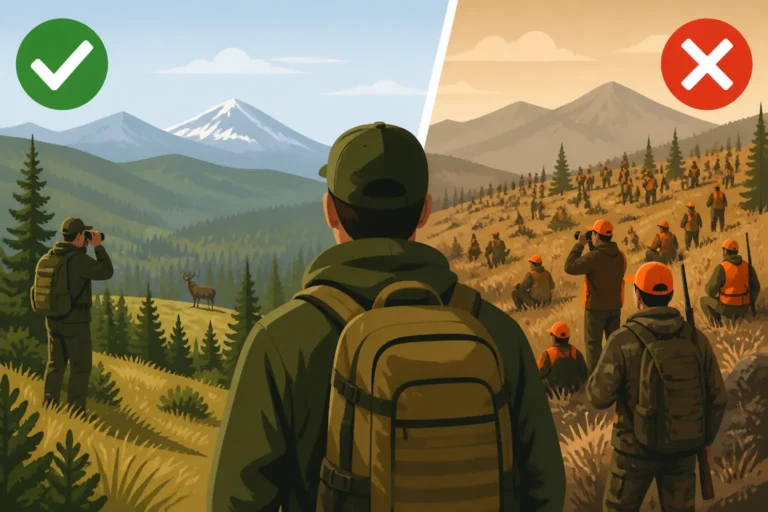
One of the biggest red flags is a guide who provides only generic, high-level answers to your specific questions. If you ask about a particular ridge or drainage and they respond with a vague statement about "good elk country everywhere," that should raise an eyebrow. A truly experienced guide in that unit will have opinions, specific spots, and detailed reasons why certain areas are better than others, depending on the conditions. They won't just paint with broad strokes; they'll use fine brushes.
Be wary of guides who don't ask you many questions about your experience, fitness, or expectations for that specific unit. A professional who knows their area well will want to match your capabilities and desires to the realities of hunting that particular piece of ground. If they just say "we'll get you an animal" without understanding if you can hike the steep canyons of the Hells Canyon Access for Oregon Hunters or sit for hours in the dense Blood Trailing in Oregon Rainforest Understory, they might not be giving you realistic expectations or have a solid plan tailored to you and the unit.
Lack of Specialization or Over-Promising
Some outfitters cast a wide net, offering hunts for every species in every corner of the state. While some large operations might have multiple specialized guides for different areas, a single guide claiming to be an expert in Oregon Elk Hunting Tactics for the November Rifle Seasons in the Blues and also a master of Spot-and-Stalk Cougar Hunting in Oregon Without Dogs in the Cascades and a pro at Glassing Sage and Juniper for Eastern Oregon Mule Deer in the high desert should be scrutinized closely. True expertise usually comes with some degree of specialization. A guide can be proficient in multiple areas, but claiming to be the absolute best in wildly different habitats across the state is difficult to achieve.
Another red flag is over-promising. No ethical guide can guarantee an animal. The best they can offer is a high opportunity rate, based on their knowledge and effort. If a guide makes grand guarantees, especially for a tough unit or species, they might be more interested in booking your trip than providing a realistic, ethical hunt. The guide with deep unit experience knows the challenges intimately and will communicate them clearly, along with their strategy to overcome them. They won't hide the difficulty; they'll explain how their knowledge helps them tackle it.
The Tangible Benefits of a Truly Local Guide
Choosing a guide with genuine, deep experience in your specific Oregon unit isn't just about feeling confident; it translates into concrete advantages that significantly improve your hunting experience and success potential.
Higher Success Rates and Quality Opportunities
When a guide knows a unit inside and out, they understand the subtle movements of game animals – where they feed after a storm, where they bed when pressure increases, and which Water Sources That Hold Deer in Dry Country are reliable. This intimate knowledge allows them to anticipate animal behavior and position you in the right place at the right time. They won't waste precious hunting hours stumbling around or trying to locate fresh sign. Instead, they'll navigate directly to prime locations, increasing your chances of encountering legal game.
Furthermore, a guide with specific unit expertise can often get you on higher-quality animals. They know the historical patterns of trophy animals, where they tend to hold out, and how to approach them without spooking them. For instance, a guide familiar with a particular section of the Wallowa Unit Elk Access in Oregon might know a specific basin where older bulls like to congregate, and how to make a strategic move to Calling Bull Elk During Oregon's Archery Season in that precise terrain. This isn't luck; it's the product of years of observation and refined strategy.
Enhanced Safety and Efficiency
Hunting in Oregon, especially in rugged units, can present significant safety challenges. Steep terrain, unpredictable weather, dense timber, and remote locations all demand respect. A guide with deep unit experience is not only familiar with the best hunting grounds but also with the safest routes, potential hazards, and emergency protocols for that specific area. They know where the cell service drops out, where the tricky creek crossings are, and what to do if an unexpected snowstorm rolls in. This local knowledge is invaluable for ensuring your safety and minimizing risks in unfamiliar territory.
Efficiency is another huge benefit. Instead of wasting time on outdated maps or guessing game movements, a knowledgeable guide streamlines the entire hunt. They know the most efficient travel routes, how to minimize noise, and where to set up for optimal calling or glassing scenarios. This means more productive hunting time and less wasted effort. For example, a guide who specializes in Calling Roosevelt Elk in Oregon Rainforest Timber will know exactly how to navigate the thick undergrowth, where to set up for a shot, and how to effectively retrieve an animal, making the entire process smoother and more successful. This efficiency also extends to tasks like Field Dressing an Elk in Warm Early-Season Weather or Quartering and Packing an Elk Alone, ensuring your valuable meat is handled properly.
In conclusion, when you're planning your next Oregon hunting adventure, prioritizing a guide's unit-specific experience is paramount. It’s the difference between a potentially frustrating guessing game and a well-orchestrated, rewarding outdoor experience. Do your homework, ask the hard questions, and trust your instincts – your dream hunt deserves nothing less.
Disclaimer
This article is for general informational purposes only and does not constitute professional advice. Laws, prices and regulations vary by location and change over time. Consult a qualified professional for guidance on your specific situation.